Second Hand Books and The World of Movie Making

Million Dollar Movie by Michael Powell.

poweelbookI really do love books, especially second hand books. I think that what is so wonderful about a second hand book is that the book has told its story before to someone else, and now if you have just bought it, its going to tell it’s story to you. I spend a lot of time browsing in book shops, both physically in actual shops or on-line in virtual book stores. The thing about on-line book stores is that you have to have a starting point, it’s no fun browsing through lists of books so I tend to browse on-line only when there is a particular book I want. In an actual book store I scan through the various sections and although I tend to linger on biographies and books about film, anything can catch my eye. A while ago I was reading a book by movie director Michael Powell called ‘A Life in Movies.’ It was a pretty thick book and took a fair old while to read and when I got the end there didn’t seem to be any indication there was another volume.

Of course, Powell was quite old when he wrote his autobiography, perhaps he thought that there wouldn’t be time for another book. Well, I’m happy to say he did write another volume and this is it, Million Dollar Movie. Powell continues the story of his life in his usual random fashion, jumping to things out of context and out of sequence. Just because he happens to visiting Hollywood for instance, he will go on to talk about Hollywood and movie people he knows there and so on. Powell made some great movies alongside collaborator Emeric Pressburger but his career stalled when he made a shocking film called Peeping Tom about a disturbed cameraman who murders his subjects and films them as he does so. Audiences were shocked and Powell’s directing career ended, although in later years fellow directors like Martin Scorcese praised the film as a classic. Liz bought me this book as a gift and the copy she tracked down comes from Austin Public library in Texas in the United States. Provenance is a word they use in the antiques business; It’s to do with the background of an item, and that is what makes this copy so wonderful; How it has come so far, from the USA to England, just so I can sit back and enjoy it.

Bring on the Empty Horses by David Niven.

bringontheYou might be thinking, looking at the picture here: Couldn’t the author have found a better picture? Looking at the picture again I suppose that particular copy is just a little tatty. That’s because it’s my travel copy. I’ve got another copy, a much nicer version that resides in my bookcase that I browse through now and again. The reason I’ve got two versions is because my travel copy goes all over the place with me. If I’m travelling somewhere on the bus or train, that slightly tatty copy goes easily into my pocket or my bag because I can read it time and time again. Not only is it the best ever book written about the golden age of Hollywood, it’s also by far the most accessible and readable book on the subject ever.

Niven’s first book was his autobiography; ‘The Moon’s a Balloon’. In it Niven told how he came over to Hollywood from the UK and made the incredible leap from movie extra to movie star. The title of this book comes from Hungarian director Michael Curtiz. When filming ‘The Charge of the Light Brigade’ Curtiz wanted a hundred riderless horses to come into shot so he boomed on his megaphone ‘Bring on the Empty Horses!’ Niven and fellow actor Errol Flynn collapsed into laughter and Niven filed away the phrase for later use. The book covers the Hollywood years from 1935 to 1960 and Niven paints vivid portraits of Hollywood itself and long vanished watering holes like the Brown Derby and Romanoffs. He looks at some of the stars he has known like Errol Flynn, Clark Gable, Ronald Colman, and Constance Bennett. Other chapters profile producers like Sam Goldwyn and many other famous Hollywood personalities of the time. All his stories are told with great affection and I particularly liked the portrait of Mike Romanoff, the restaurateur who tried to pass himself off, in a slightly tongue in cheek way, as a member of the Russian Romanov family. If ever I’m travelling and need something to read on the journey I’ll always have this copy on hand. It’s like an old wine that improves with age!


What to do next:

Share this post on your favourite social media!

Hit the Subscribe button. Never miss another post!

Buy the book! Click here to purchase my new poetry anthology.

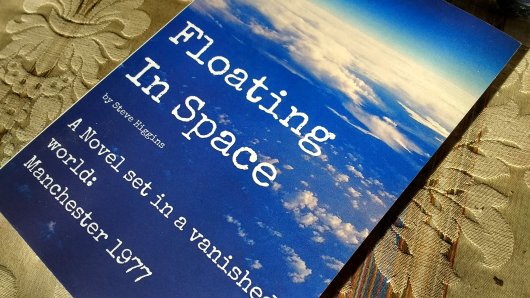
Click here to visit Amazon and download Floating in Space to your Kindle or order the paperback version.


3 Books you should read about the JFK Assassination

quotescover-JPG-43The 22nd November is the anniversary of the assassination of John F Kennedy; one of the most shocking events of the twentieth century. It’s something I’ve been interested in ever since I was a boy and I’ve collected many books about the subject.

I’m still fascinated by the mystery: Did Lee Oswald shoot the President? Did he act alone? Why did Jack Ruby shoot Oswald? Was the CIA involved? Very few of those questions will ever be answered but it’s clear that the findings of the Warren Commission, the investigative body set up by President Lyndon Johnson are not definitive. Indeed the senate investigation in the 1970’s concluded that the President was assassinated ‘probably’ by a conspiracy. Even so, no attempts to investigate further or take action have been made. If you want to find out more, what should you read? Well, there are numerous books on the subject you might try but here below are three key and classic books you need to read:

Mark_Lane_Rush_to_Judgment_coverRush To Judgement by Mark Lane
This was one of the first books to take a critical look at the Warren Commission report and say, ‘hang on, some things don’t add up here!’ Lane deals with a lot of the minutiae of the assassination and Lee Harvey Oswald’s activities.

One interesting element to me was the murder weapon; the Mannlicher-Carcano rifle bought through mail order and sent to a post office box that Oswald rented. The gun was oily. The scope on the gun was not aligned properly, in fact the FBI found that it could not be aligned at all and had to add metal shims in order to align the scope, meaning that it was test fired by the FBI in a condition that was not available to Oswald!

The first officer to find the rifle even signed an affidavit that the rifle was a Mauser and not a Mannlicher-Carcano! Quite a mistake for an American police officer who would surely be familiar with firearms.

sixsecondsSix seconds in Dallas by Josiah Thompson
Thompson argued in favour of a conspiracy by analysing the Zapruder film of the assassination. In the film shot by local businessman Abraham Zapruder the last two shots come close together, meaning that one of them could not have come from Oswald’s rifle because it took 1.7 seconds to eject the used cartridge and make ready to fire again. This clearly occurred to the people in the Warren Commission as one of its members (Arlen Specter, a lawyer not a forensic expert) put forward the so called ‘single bullet theory’ which argued that a single bullet hit President Kennedy in the back, exited his throat and then struck Governor Connelly who was sitting ahead of Kennedy in the Presidential limousine.

This bullet was found on a stretcher in almost pristine condition which many commentators have asserted means it could not have passed through two bodies and inflicted so much damage.

In 1979 the Select Committee on Assassinations heard evidence of tests that showed the firing could have taken place in only 1.66 seconds per shot. Oswald’s original rifle however, was in too poor a condition to be used for the tests and another was substituted. Even so, none of the test shooters were able to replicate Oswald’s marksmanship despite Oswald being at best only a reasonable shot. An interesting, readable and thoughtful book but rather rare.

Best Evidence by David Lifton.

best evidence

best evidence

This is an excellent book in many ways. It’s not just about the assassination itself, the author spends a lot of time describing his personal fascination in the Kennedy case and how his interest has evolved and developed. He has followed the growth of theories and new revelations over the years and made efforts to meet and interview many of the witnesses involved.

Lifton puts forward an argument that is a little unbelievable, certainly to me, that Kennedy’s body was spirited away and the injuries changed to fit in with the theory that Oswald shot Kennedy from the rear. The doctors at Parkland Hospital all clearly state that Kennedy had a massive exit wound in the back of his head indicating a shot from the front but the autopsy report concluded Kennedy was shot from the rear.

I can understand where Lifton was coming from, the autopsy result and recollections of medical staff at Parkland clearly don’t match, but altering the President’s body? I don’t think so. The President’s body would have had to have been pried from the Secret Service who were with it from Dealey Plaza, to Parkland, and Air Force One to Bethesda Naval Hospital.

Some of those whom Lifton interviewed claimed a helicopter landed and the President’s body arrived, implying it came by helicopter when in fact it came by motorcade in an ambulance with the First Lady aboard. One interviewee stated that at Parkland Hospital the body was wrapped in sheets and placed in a coffin. Another spoke of taking the President’s body out of a body bag at Bethesda so clearly these accounts do not match up.

This book also did a lot to help me reconcile the workings of the Warren Commission. It is often dismissed by many people as a cover up but in fact the Warren Commission reacted to the evidence presented to it by the FBI as any other court or legal body would do: It processed the assassination according to the evidence.

Did anyone see someone shooting from the grassy knoll? No. Did anyone see a shooter in the Texas schoolbook depository? Yes. Was a rifle found in the sniper’s nest at the Texas School Book Depository? Yes. Was it delivered to a PO box belonging to Lee Oswald? Yes.

As you can imagine, the Warren Commission found Lee Oswald guilty of the assassination. What else could they do? However, many people not heard or dismissed by the commission heard gunfire and shots from the grassy knoll.

One Police Officer dropped his motorcycle and ran up there only to encounter a scruffy man looking like an auto mechanic. The man had Secret Service credentials and the officer let him go. There were no Secret Service there that day. They were all in the motorcade or waiting at the Trade Mart where the President’s next stop should have been, so who was the man? What was he doing there on the grassy knoll?

As you read more and more about the assassination, more stories like that come to light and the accumulated weight of these revelations is what fuels the enduring mystery. I do love a mystery and my interest in the JFK assassination, like Lifton’s has endured for a long time.

I’m not sure just how to describe to you just how fascinated I am in this story but if you’ve seen that part in the Woody Allen film Annie Hall, where Woody is trying to seduce someone but finds himself consumed by thoughts about the assassination then you’ve got the idea.

To find out more about the assassination try the JFK Lancer website at http://www.jfklancer.com

On a less serious note, here’s the Woody Allen clip:


If you enjoyed this post why not try my book Floating in Space set in Manchester, 1977? Click the links at the top of the page for more information.

How to deal with Laptop Failure and the Rules of Writing

quotescover-JPG-23Take a look at the picture just below. Not a particularly outstanding picture I know but that house is the one where I grew up. I took the picture a while ago after a sort of nostalgic drive around the old neighbourhood. Yes, the house with the white door, that’s my old home. It’s changed a bit since I lived there. The privet hedge has gone and the car space is new. One amazing thing I found out on that visit is that the walk to my old junior school, which seemed to be a heck of a walk as I remember it; surely at least a thirty minute walk, was actually more of a ten minute walk: Well, it was a long time since I walked to my junior school. I stopped in the road, took my picture, became lost in thought for a moment as a thousand memories crowded my mind, then drove off.

14nuffieldThose memories and other ones always come back every time I look at that picture. I happened to be looking at it because my new laptop finally arrived and all my files had been moved over by the guys in the computer shop and I was just checking through them. It’s been over a week since my trusty old laptop overheated and expired and I’ve missed it. I’ve not been separated from my e-mails because I have a tablet, actually a Blackberry Playbook which is good but there’s a lot I just can’t do on a pad. Writing is difficult; in fact, it’s not unlike writing a text on a mobile phone and there’s no way I could write a blog post using it.

It was quite a shock, my laptop failing as most of my digital life is stored there. Luckily I have a portable drive on which I store my files although I mostly save completed works; fully edited videos, fully written blogs, that sort of thing. The half-finished ones, and believe me I have plenty; half-finished scripts, fragments of poems, ideas for blog posts; they were all there on the hard drive of that old laptop.

I felt a little like Carrie in Sex and the City. Remember that episode when Carrie’s laptop –an apple mac actually- conks out? Her boyfriend Aiden vainly hits the control alt and delete keys and makes things worse and Carrie, a writer with a column in a New York newspaper had lost all her work. Now I know how she felt.

Just looking at the clip above brought it all back. I was just as wound up as Carrie. My laptop couldn’t be repaired but not long ago I’d picked up a laptop that had a broken screen at a car boot sale. It was a sort of impulse buy but at least the computer guys could fix it and transfer my data over. I’d had the other laptop four years and it lasted longer than my previous two laptops. Wonder how long laptop number four will last?

One more connection with that picture and it’s to do with writing. Creative writing. I subscribe to a lot of blogs and groups and on Facebook there’s this writer’s group I’m a member of and members are always, naturally, posting stuff about writing. One post I read recently was ‘never start a novel off with the beginning of a day.’ Why the heck not I thought? It seems to me a pretty normal way to start a novel: The hero wakes up and the writer describes the surroundings and introduces the characters naturally as we meet them and so on. In fact, my novel, Floating In Space, starts off in exactly that way with my main character, Stuart Hill, waking up and getting ready for work.

Another thing you see on this writers’ page are graphics. You’ve probably seen the sort of thing I mean all over the internet. This particular one was about rules of writing. Rules? What rules? Well it said that if you’re describing something, some incident, your description shouldn’t last longer than the actual event! Now that just sounds bonkers to me on a whole lot of levels. Where did the writer get that information? Who decided on that ‘rule’? The only rules that I stick to as a writer are the rules of grammar, and believe me, a lot of the time, either accidentally or on purpose, I bend those rules too! One more thing; did Dickens and F Scott Fitzgerald and Hemingway and all the other great authors adhere to these ‘rules’? Did they even know about them? I doubt it!

Anyway, I decided to comment on this graphic. I said that it didn’t matter whether the real event was long or short-lived, it’s the importance of the event to the narrative that matters, and that all depends on the author. The person who posted the item replied by adding a comment that included a link to a police report that showed that when shocking events happen, people don’t always take much in. Anyway, what that meant I don’t know so I added another comment about how the writer should take control of the reader and make events either important or unimportant depending entirely on his vision of the novel.

Straight away another comment came back at me saying it was the reader in charge, not the writer. Well, of course the reader is in charge as to whether he reads your book or not, but as soon as he does decide to read, it’s the author who is in control, it’s the author who shows the reader what he wants to show him, hides what he wants to hide, and reveals in whatever way he wants, whatever he wants to reveal. Anyway this annoyed the other guy no end and a sort of internet argument began. The sort of thing you’ve seen before probably. After a while I stepped back before things got nasty. I do hate those internet arguments you see in the comments section of posts and anyway, I’m convinced I am right and the other guy was a complete plonker. Tempted as I was to say that on the post, I’m happy to say I resisted!

That of course brings me back to the picture of my old home. The photo only took a moment to take but it’s nice to think about that house and all the happy times I had there. Not only that, my Grandma and Grandad lived there before us. They moved to Prestatyn in Wales and my Mum and Dad took over the house when they were first married. I could go on and on about that house: about how I learned to ride a two-wheeler bike just in front of it: About the soap box cart I made with my friends with some wood and parts of an old pram and how we careered through the streets with it. One time my friend Gary Chapman was given a set of walkie talkies by his dad for Christmas and he and I used to chat to each other at night as our houses were pretty close together. I could tell you much more but the thing is, if I did go on and on I’d go over my allotted time.

Dear me, can’t go breaking the writing rules can we?


If you liked this book, why not try my novel, Floating In Space, set in Manchester in 1977? Click the links at the top of the page for more information or click the image below to go straight to amazon.


12 Chart Hits from a Decade when Pop Music was Fun!

quotescover-JPG-88Bored by the latest music chart? Remember when the music charts were fun? Well, maybe you don’t but back in the 1970’s, the decade covered in my book ‘Floating In Space’, the music charts were a whole different ball game. Every taste of music was covered from soul to rock and back again. TV theme tunes made it into the charts, as did comedy and novelty records. Here’s a quick selection of ten of the most memorable. Can you think of any others?

Toast by Street Band (1978. Can you spot a young Paul Young?)

King of the Cops (1975)

Mr Jaws by Dickie Goodman. (1975)

Renta Santa by Chris Hill (A sort of British Mr Jaws using the same idea of music clips. 1975.)

Theme from Van Der Valk by the Simon Park Orchestra (a number 1 hit in 1973!)

Ernie, the Fastest Milkman in the West (Benny Hill reached the Christmas number 1 slot in 1971)

The Monster Mash (Bobby Boris Picket and the Crypt-Kickers! originally from 1962 but re-released in 1970.)

The Wombles (1974)

Convoy: C W McCall (1975)

Convoy GB By Laurie Lingo and the Dipsticks (1976)

Ugly duckling Mike Reid (Number 10 in 1975!)

Car 67 by Driver 67 (My favourite oddball hit  of all time from 1978!)


Floating in Space is a novel by Steve Higgins set in Manchester, 1977. Click the links at the top of the page to buy or for more information!

TV Movies and a Serious Case of Deja Vu!

children-403582_1920I don’t know about you but there are certain things I hang on to in life. One of those things are my diaries. The other day, looking through my schoolboy diary from 1973 I noticed that one entry mentions that I watched a film called The Inspector with Stephen Boyd. It was a movie made in 1962 and it’s about a jewish girl trying to get into Palestine. It’s not a classic movie but I’ve always liked Stephen Boyd and he was rather good in movies like Fantastic Voyage where a mini submarine and her crew were shrunk to minute size and then injected into a man’s body. Have you ever seen The Inspector? I doubt very much if you have, in fact I can’t remember ever seeing that movie again on TV. There are plenty of movies I have seen, some of them over and over though, here are a few of them;

The Great Escape. Ok I love it, I really do but I know the script off by heart I’ve seen it that many times!

Great Expectations. David Lean’s cinematic version of Dicken’s novel. Great movie but I’m fed up of seeing it on Film 4!

The Man In The Iron Mask! Seen this so many times with Richard Chamberlain and Patrick McGoohan and of course it was re made in 1998 with Leonardo Di Caprio but what about showing the 1952 version with Louis Hayward? Now that is a movie I’d love to see again.

Goldfinger, or any of the Bond films. As much as I love James Bond 007, most of the films, especially the older ones, I have seen again and again so I need a break from them. Strangely, I have a few of my favourite Bonds on DVD. I don’t think I ever watch them but I’m so familiar with the Bonds that if I come home from work and one is on TV and I’ve missed the first thirty minutes – well, it doesn’t matter!

So who is it at the BBC or Channel 4 or Sky who decides what films we can see and why is it that some are shown over and over and some only get aired rarely? What happens in the world of the TV scheduler? I really hope those guys are reading this blog because there are movies out there I want to see and a whole bunch of ones, like those above that I am fed up of seeing! Anway, here are a few recommendations for any TV schedulers reading!

CBubblesCharlie Bubbles. This is a great film penned by northern writer Shelagh Delaney and it’s about a (surprise) northern writer played by Albert Finney who journeys back up north from London to see his son. It’s a well observed and fascinating film and for a northerner like me it’s great to see the Manchester of the 1960’s up there on the movie screen. Writer Shelagh Delaney shot to fame in the sixties when she wrote her play ‘A Taste Of Honey’ and had it accepted and performed by Joan Littlewood’s theatre workshop. There’s a rather telling line in the movie when a waiter played by Joe Gladwin, (an actor familiar to UK TV audiences of the 70’s), asks Charlie, played by Finney, “are you still working or do you just do the writing?” Somehow I can imagine that line came from Delaney’s personal experience! Interestingly, this movie marked Albert Finney’s debut as a director. Have you seen the movie? I don’t think you have unless maybe you’ve sourced the DVD version.

In my large but slightly redundant VHS video box I’ve a copy of a wonderful film starring Alec Guinness called ‘Last Holiday’. Guinness plays a pleasant mild mannered salesman called George Bird who has no friends or family and finds out he only has a few weeks to live.

He decides to spend the time he has left by going to a rather posh residential hotel where the residents find him a sort of enigma. His star rises here as he becomes involved with the residents and staff and people start to wonder about him. Who is he? Is he rich? Lucrative job offers come his way as well as love but only one person knows his secret, a member of staff that he confides in.

In the end Mr Bird finds out he was wrongly diagnosed but the film ends on a sad note when he is killed in a car crash. Penned by author J.B.Priestley, it’s another wonderful British picture full of excellent performances with a whiff of sadness and poignancy about it. Have you seen it on TV? Well, not recently because the last time I have noticed it broadcast was in the 1980’s when I taped it with my trusty VHS video recorder. What happens to classic movies like this and why are they rarely seen on British TV? I wish I knew but I’d love to see this movie again.

Pygmalion Movie Poster

Pygmalion. You’ve probably seen the movie ‘My Fair Lady’ with Rex Harrison as Professor Higgins and Audrey Hepburn as Eliza Doolittle but I’d be surprised if you’ve seen this, the original, non-musical version, on TV. Leslie Howard plays Higgins and Wendy Hiller plays Eliza. Hiller is much more believable as Eliza, no disrespect to Audrey Hepburn and Howard is a bright, eccentric Higgins. I’ve never seen this version on TV at all, in fact I picked up the movie on one those free newspaper DVDs. What is interesting from researching the film on the internet is that a controversial (at the time) line was included in the film: Eliza saying ‘Not Bloody Likely!’ This made Wendy Hiller the first person ever to swear in a British film. Dear me, how times change!

Robinson Crusoe on Mars. Sounds a bit mad doesn’t it, a sort of 1950’s B picture. In fact this was shot in colour in 1964 and starred an actor called Paul Mantee who appears in many US TV series of the 1970’s and 1980’s. It pretty much follows the original story of Robinson Crusoe only it’s about an astronaut who crash lands on Mars. He thinks he’s had it but finds that certain rocks contain oxygen which is released when they are heated so he is able to replenish his oxygen supplies. He even finds an alien ‘Friday’ on Mars who has escaped from an alien slave camp. Sounds a little far-fetched I know but it was actually a pretty good movie. I remember watching it on TV on a cold weekday afternoon in the early eighties and it certainly warmed me up. Since then I have never seen it on British TV but it’s well worth a search on e-bay for the DVD version. The day they show it again on TV I’ll be parked up on my favourite armchair ready to enjoy! Come on TV schedulers, get your act together!

Which movies would you like to see on the small screen?


If you liked this post, then why not try my book, ‘Floating In Space’? Click the links at the top of the page for more information.

Sunday Lunch with My Arch Enemy.

I published this post some time ago but sadly, my arch enemy passed away a few days ago on the 22nd October. He wasn’t really my arch enemy just a lovely old man who liked to engage in some cheerful banter. Sunday lunch will sadly never be the same again. RIP Harry.

quotescover-JPG-20Sunday afternoon and my arch enemy is about to arrive. Zoe, Liz’s daughter has picked him up and I can hear them at the front door. I’ve lit the coal fire and done a quick tidy up and Zoe is showing him through. In the hallway he asks “Is the Mad Monk in?”

That’s me by the way, the Mad Monk.

“Bloody hell Zoe,” I say. “I had that door locked to keep the riff raff out!”

“Stephen,” he says using my Sunday name as he comes into the lounge. “We don’t mind slumming it with the riff-raff. Anyway, how lovely to see you!”

“Always a pleasure to see you, Harry,” I reply.

Harry is just approaching ninety years of age and all his faculties are in order although his memory is perhaps not as good as it used to be.

“Take a seat Harry,” I say. “What can I get you? A glass of water? Lemonade? A cup of tea perhaps?”

Harry turns to Zoe, a fake look of disdain on his face.

“Pillock!” he murmurs.

Liz brings him a glass of French sherry..

“That’s more like it,” he says.

The women go off into the kitchen to sort the dinner and Harry and I chat about various things. Once Liz and Zoe come back though, we resume battle.

“Harry went for a brain operation the other day,” I announce, matter of factly. “It was free but they charged him £2000 search fees.”

“Dear me, I wish you’d try some new jokes Stephen,” comments Harry. “If you had a brain you’d be dangerous,”

Over seventy five years ago when war broke out Harry decided the army wasn’t for him so he went on a wireless operators course in Preston then signed up in the merchant navy as a ‘sparks’.

His first voyage took him down through the Mediterranean to the Persian Gulf and Iraq. One day while his ship was being refuelled he went for a walk and he heard a voice call his name. He turned to find one of his old schoolmates hailing him. Frank and Harry went to school together, both went to sea and bumped into each other in Basra, along the Shatt-Al-Arab river,  a place Harry called the ‘arsehole of the world.’

Harry had no money on him but his friend Frank treated him to a meal and a few beers and they didn’t see each other again until Harry’s fiftieth birthday, many years later.

“That doesn’t surprise me Harry,” I say. “That poor fella, having to pay for everything. No wonder he didn’t want to see you again.”

“Stephen. What you don’t realise is how hurtful insinuations like that are to a sensitive man like me.”

“I’ve not noticed your sensitive side Harry.”

“Well, you will in a minute if you don’t top my wine up, garcon!”

The wine is topped up and Liz calls for a ‘skivvy’ to help in the kitchen.

“That’s a good word for you Stephen, skivvy. Off you go and if you do a good job there might be a tip in it for you!”

Atlantic convoys during World War 2 were a lifeline for the UK. Bringing in food and supplies and munitions as we fought alone against the Nazis after the fall of France. U boats were a deadly menace to our ships and Harry told me once how he lay on his bunk shivering with fear during an attack. If a ship went down there was no one to help. Other ships couldn’t stop for survivors as they too might be torpedoed. After a while though Harry told me you just got used to the threat and got on with your job. He told me of trips to the Middle East taking tanks and equipment for the Middle Eastern campaigns. A trip from Argentina to the UK with a cargo of rice. A visit to Rio and a trip to New York.

We eat our Sunday dinner with little let up in the banter. Later when it’s time to go Harry turns to Liz and says, “Lovely meal darling.” Then with a wink he says, “pity about the company though.”

So, let me finish Harry with the toast that you so often give to me,

“May your shadow never grow less.”

Why I love Casablanca (and why you should too!)

casablancalead1After a hard shift at work, it’s nice to go home, pour yourself a drink and settle down by the TV to watch something while you unwind. Now despite these days of multiple TV channels it’s not always easy to find something worth watching. I remember the days when there were only three channels but strangely, even though we have have undergone the digital revolution and have cable and satellite channels, sometimes we find ourselves clicking the remote vainly in search of something that is even remotely interesting. Happily, over there in the DVD cupboard, I have plenty of things I enjoy watching. One of those is my much watched DVD of Casablanca, the classic Hollywood movie. I can watch it time after time and there is so much to enjoy in the movie; the wonderful Humphrey Bogart, The suave Paul Henreid, the rotund Sydney Greenstreet, the villainous Conrad Veidt, the slimy Peter Lorre and my favourite character in the film, Claude Rains, not to mention the lovely Ingrid Bergman.

Casablanca was only Bergman’s fifth Hollywood movie. She had been brought over from Sweden by producer David O Selznik to star in the English language version of Intermezzo, a successful Swedish film. She spoke no English but learned quickly. Ingrid expected to make the movie and then return to her career in Sweden, so much so that her husband did not even come to Hollywood with her. However, Ingrid made more movies in Hollywood, then came Casablanca; a movie that was a product of the Hollywood studio system. It was filmed at the Warner Brothers studios in Burbank with one location shoot, a short sequence at Van Nuys airport. Shot in 1942, Casablanca made Ingrid a star and remains probably her best known role. Released in the USA at the end of 1942 and internationally in 1943, the film won three Oscars. Its reputation has grown over time, eventually becoming known as one of the all-time classic motion pictures. Berman herself once commented that the film had a life of its own. The great performances, the memorable lines and the film’s music all contributed to the public affection for the movie. There’s a great sequence in When Harry Met Sally, where Meg Ryan and Billy Crystal discuss the ending and Sally, the Meg Ryan character, asserts that Ingrid Bergman would rather leave with Henreid and be the first lady of Czechoslovakia than stay with a man who runs a bar in Casablanca.

I’ve always liked Claude Rains and I like the way it becomes apparent that his character is not a Nazi or even a Nazi sympathiser, but someone who is something of a rascal, who uses his position for his own ends but also someone who chooses his own friends and his own path, as he does at the end of the movie. My favourite sequence is where he closes down Rick’s bar at the request of Conrad Veidt’s Nazi officer. Humphrey Bogart complains, “How can you close me up? On what grounds?” Rains replies, “Rick, I’m shocked to learn there is gambling on the premises!”

Just then the croupier arrives with some money, “Sir, your winnings!”

Ingrid Bergman became a great Hollywood star and perhaps was associated too much in the eyes of the public with her role of Joan of Arc, because when she fell from Grace, she fell big style.

Bergman was fascinated with the work of Italian director Roberto Rossellini and in 1949 she wrote to him expressing a wish to work in one of his pictures. He cast her in his film ‘Stromboli’ and during the production Bergman fell in love with him, had an affair and became pregnant with his son. This led to a huge scandal in the USA and a divorce and custody battle with her Swedish husband Petter Lindstrom. She eventually married Rossellini and had more children including future actress Isabella Rossellini. She was never reconciled with her former husband but Hollywood welcomed her back in 1956 when she starred in the movie Anastasia for which she won an Oscar.

Humphrey Bogart went on to make many classic movies. He died from cancer in 1957 aged 57. He had been a heavy smoker and drinker.

Claude Rains died in 1967. His last film appearances were in ‘Laurence of Arabia‘ and the ‘The Greatest Story Ever Told.’

Conrad Veidt fled the terrors of Nazi Germany in 1933. He was a fervent anti-Nazi donating his personal fortune to the British government to help in the war against Nazi Germany. He died in 1943 of a heart attack aged only 43.

Sydney Greenstreet died in 1954. He was 62 when his movie career began. He made his debut on the stage in 1902.

Hungarian born Peter Lorre was another refugee from Hitler’s Germany. He appeared in the German movie ‘M’ directed by Fritz Lang but fled Germany in 1933. He died in 1964 aged 59.

Paul Henreid came from an aristocratic background and was born in Trieste, then part of the Austrian-Hungarian empire in 1908. He has many credits to his name as an actor and director. He died in 1992.

The movie was directed by Fritz Lang, another refugee from Europe. Lang had a lifetime of problems with the English language, so much so that David Niven named his book of Hollywood reminiscences after one of his sayings. When he wanted a posse of riderless horses to come into the scene he shouted ‘bring on the empty horses!’


What to do next: Here are a few options.

Share this post on your favourite social media!

Hit the Subscribe button. Never miss another post!

Listen to my podcast Click here.

Buy the book! Click here to purchase my new poetry anthology.

Click here to visit Amazon and download Floating in Space to your Kindle or order the paperback version.

my novel


5 Steps to Creating that Post!

creatingthatpostOne primary question to ask yourself before you start blogging is this: Why do you want to write a blog and what are you going to write about?

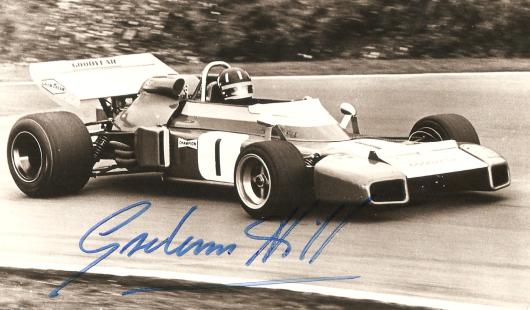
It’s deep in the psyche, this need to communicate and express yourself but bloggers blog for a number of reasons. One is that we have a particular interest or passion that we just have to talk about. It might be a sporting interest or a hobby that we love. It could be a love of poetry or books. If you spend a lot of your free time cycling for instance you might want to indulge your love of this hobby by writing about it and discussing cycling issues or sharing information and tips about cycles. I subscribe to a lot of blogs about my favourite sport, F1 racing, as well as blogs about writing and my favourite movie directors for instance.

Another reason for blogging is to promote a business. There are many photographer blogs on the web, some are from amateurs who want others to see and comment on their work, some are by professionals who are actively promoting themselves and their business.

Authors are frequent bloggers, perhaps because publishing has been turned on it’s head by the internet and the digital revolution. No longer must we writers wait for the publisher to find us, we can get our work out there straight away and build up an internet presence which in turn benefits our self published works. Whether self publishing is a good thing I’m not so sure. I feel that personally I’ve rushed a little too quickly down the self publishing route but the experience has been good for me. I originally thought I had a pretty good manuscript but self publishing showed me very quickly that this wasn’t the case and I had to do a lot of work to update my grammatical errors and sort out problems with page breaks and other bits and pieces. The process I’ve gone through at createspace has been a big learning curve but as a result my manuscript has been well and truly re-hashed and edited. I personally love paperback books but it’s the Kindle version and it’s user friendly instant download facility that, in the case of my book, is much more popular.

Blogging for me is primarily to promote my work but I do love writing and I do love writing my little blog. One good thing about blogging is that it gets the creative juices flowing. It gets you thinking, what can I write about? What can I write about next time? So far the ideas have kept on coming and I’ve got six or seven draft blogs in the pipeline although I have to say two have them have been there so long I think they may be heading for the trash file shortly. Many people ask me how do I do it, how do I come up with a new post every week? Well, good job I don’t have to write a daily blog, I’d be pretty pushed to do that I can tell you! Anyway what I do is this, I keep an eye and an ear out for a blog idea all the time. I read a lot and one of my great loves is trolling round for second hand books so if I’m stuck I’ll write about books or writers. I’ve already done posts about James Hilton and Dylan Thomas, two of my favourite writers, and I recently wrote a second post about my finds in second hand bookshops. If ever I see something on TV that might inspire a blog post, I jot it down in my notebook or even sometimes on my mobile. In my car, which believe it or not, is a prime creative space for me, I have a small hand held tape recorder and I can be seen frequently jabbering into it as I drive to and from work.

Recently I switched on the television and an old James Bond movie was showing. Now, I’ve read all of Ian Fleming’s Bond books and seen all the films so that looked to me to be a prime target for a blog. A little research on the internet will tell you that a lot of popular posts will have a number in the title, things like ’10 different ways to promote your blog’ or ’20 ways to get more blog traffic.’ Ok I thought, how about ‘8 Things you didn’t know about James Bond!

Now, once you get an idea like that, a factual idea, you need to do a little research. I quickly jotted down the few things I knew about Bond and then researched the rest on the internet. I put together my facts and figures, made sure it all made sense, added a little graphic and there’s the next blog post ready. Of course, if you write something, it stands to reason you will want someone to read it so make sure you promote your posts on Google+, Twitter and Facebook and anywhere else you can think of.  Have a look at the infographic below:

The Creative Processs-2

It’s quite easy to make your own infographic, just as I did on http://www.canva.com

Enjoyed this post? Then why not click the links at the top of the page and find out more about my book!

A Sci-Fi DVD and an Incredible Moment of Self Discovery

Something incredible happened to me this week: I found out I wasn’t the oddball nerd I thought I was in my youth, or at least I was but I found out there were others like me, I wasn’t alone and the nerdy things I used to do were done by many others!

So what nerdy things did I do? Well, here’s one example. In the seventies, before the age of the video recorder I had a small audio cassette recorder and did all sorts of things with it as a teenager. I wrote a number of comedy plays which my poor brother was roped into and we performed these little comedy sketches to the microphone. I did enjoy making the sound effects. One that comes to mind was my brother being sick which involved him making a retching sound then pouring a bucket of water down the toilet! I also used to record some of my favourite radio and TV programmes. I bought a second hand radio cassette recorder which enabled me to record the top twenty every week (dud records edited out of course) but TV presented another challenge. I would record a show using the microphone placed near to the TV speaker. Trial and error found the correct spot; not too close, not too far away and my family were sworn to silence during the recordings, not that that would stop my brother, or even my dad making some small comment towards the end of the show!

Photo0033So, how did this realisation that I was not alone in my nerdiness – or even a nerd at all- come about?
This realisation came about because of a gift. My brother, I might add, who is not a man known for his giving of gifts, had been given some DVDs that were of no interest to him so he passed them to me. They were BBC DVDs of the long running TV series, Doctor Who. Now I have been a Doctor Who fan for many years. I faintly remember the original Doctor Who, the grumpy bad tempered chap played by William Hartnell. The very first episode of Doctor Who, ‘An Unearthly Child’, is one of the highlights of my DVD collection and interestingly it was broadcast on the 22nd November 1963, the day of the John F Kennedy assassination. Because of the tragedy the BBC re ran the episode the following week which is perhaps why the original has survived. The thing is, back in the 60s when digital recordings and home video were just a gleam in some inventor’s eye, the archives at the BBC were getting a little crammed so what did they decide to do about it? Two things, One; they would wipe the tapes and reuse them for other shows and two, they would simply get rid of them!

Crazy, but of course, the value of these old TV shows was not understood then and many hours of classic TV was lost in this way. Not just Doctor Who but Not Only But Also, the Peter Cook and Dudley Moore shows, Doomwatch, Hancock and many others, all lost.

Anyway, one of the DVDs my brother gave me was ‘the Invasion’ from 1968 with the second Doctor Who, Patrick Troughton. The Invasion was made up of eight half hour shows and two of the eight had been lost or junked. Now many TV shows of the time, recorded on video were copied onto film by a telecine machine so the tape could be reused and the show broadcast again or sent to other parts of the world for broadcasting on foreign networks such as South Africa, Canada and so on. Many of these telecine recordings survive. Some have even known to have been rescued from tips or skips by BBC employees and even members of the public. Recently a lost episode of Doctor Who was found in Nigeria!

Anyway, here’s the punch line to this whole blog: When the BBC guys decided to reconstruct the missing episodes guess where they got the audio from? From audio recordings made by members of the public! Yes, Doctor Who fans who as youngsters recorded their favourite shows on audio cassettes, just as I did by placing  a microphone by the TV. So there we have it, conclusive proof that I wasn’t a nerd after all, or at least the nerdy activities of my youth were the same nerdy activities that other youngsters were involved in too!


If you enjoyed this post, why not try my book? Click the links at the top of the page to buy or for more information!


5 Incredible Trigger Points to my Personal Timeline!

quotescover-JPG-44Time moves on as we go about our daily lives but there are always connections back to the past. The things we see, the things we hear, in fact anything we come across, even something as vague as a scent can be a trigger point that takes us back to a time and place we loved, or sadly, perhaps even hated. Memories are intrinsic to our personal selves, they are what makes us who we are.

I don’t know if you remember that TV series from a long time back with James Burke. It was called Connections and it showed how unrelated events from the past were connected to things in the present. Anyway, here’s my take on some personal connections to the past.

1.
Some time ago, and I’m going back a few years because this incident took place in Woolworths in St Annes and Woolworths, that shop that was always there in my youth went bankrupt and disappeared a few years ago. Anyway, I have always been one for skimming through records and CDs, especially when the word ‘sale’ can be seen. In Woolworths I picked up a compilation CD. It had some really nice tracks and a few I’d never heard of but I chose it particularly because of one track, ‘Horse with no name’ by America. I’ve always loved that song and I don’t have a copy of it so I bought the CD. Later when I had got home and played the album I was surprised to find another track that I hadn’t spotted earlier, it was Desiderata, a poem by Max Ehrman made into a pop song, of sorts, by an American guy called Les Crane.
Now not only is that poem one of my favourites but so is the musical version. It was played a lot at school by our headmaster in the morning services and as soon as I heard it again it brought memories of those long ago schooldays flooding back to me: The registrations, the morning assembly, the prayers. Back in the late sixties a lot of those morning assemblies were about Vietnam and how our headmaster, Mr Trickett wove his morning address from Vietnam to the Desiderata, I do not know but that musical version was something I loved and finding it again on a CD was like getting part of my youth back.

2.
I’ve related this story in another blog but this is a great connection so I’ll tell it quickly again. In 1992 I decided to have a last stab at my ambition to break into the TV and film world. I enrolled on a video production course in Manchester. It was only a short course and it was aimed at unemployed people which at the time, I was. Anyway, I had to make a presentation about TV and film and why I wanted to work in video and happily I was accepted. On the course we were split into small groups of three and were tasked to make a short film. After some discussion with my new colleagues we chose as our subject taxi drivers in Manchester. We made a quick outline of what to do, what to film and so on and after familiarisation with our fairly bulky camera and various training modules we went off to make our film. It’s not easy to make a film with two other people: All three of us all had our own ideas about the direction of the film, how to edit it together and so on but we discussed everything, tried to work each other’s viewpoints into the video and eventually came up with a pretty good rough cut. At this point we had to present the cut to the assembled video school and take questions and comments from the audience which was something of an ordeal but we survived and went on to fine tune our cut.
When the video was finished I tried to get TV companies interested in making a full length version for TV but without success, in fact you can read how I fared with Channel 4 here but I still have the video and what is so wonderful about the digital world is that now I’ve uploaded it to youtube, everyone can take a look at our film about taxi drivers in Manchester in the early nineties. In the time before the internet, my tape would be languishing in a cupboard with only ever having been seen by a few friends. Now the video is on the internet it’s my very own connection back to the nineties!

3.
While we were on holiday last week in the Cher region of France we came across a marker by the road. There are many such markers by French villages telling us about battles and incidents of the first and second world wars. We had actually stopped to consult our map as we wandered down a quiet country lane when we saw the plaque. It was showing us that the dividing line between occupied and unoccupied France in the Second World War was here. Sadly, I didn’t have my camera on hand to snap a picture and I can’t even really tell you where we were, except we were close to the village of Germigny L’Exempt. Marshall Petain was the leader of unoccupied France during World War 2 and General de Gaulle the leader of the free French forces. When Nazi Germany was defeated France was reunited under the provisional government of De Gaulle. Petain was tried as a traitor and sentenced to life imprisonment. He died in 1951 and is buried at the Cimetière communal de Port-Joinville on the Île d’Yeu, a small island off the French Atlantic coast where he served his sentence. I wonder what Petain himself thought of the situation, did he think of himself as a traitor or was he doing what he thought was right under the circumstances? Anyway, there it was, a quick stop on a country lane to check the map and a small connection with the 1940’s.
4.
Visiting historic places and sites is a great way of connecting to the past. As I have said, there are many sites in France relating to the two world wars. One that we visited in northern France some years ago was a great concrete structure where the invading Nazis were planning to fire V1 and V2 rockets at the UK. Happily, daring raids by the RAF made this impossible but the structure is still there today. As you stand and stare as a tourist today, you can only imagine the heroism of all those who fought for a free world in the past.

Eperleques, France

Eperleque, France

5.
To finish with, another more personal connection. When I lived in Didsbury, back in the mid-eighties, I had a much shorter commute to work than I do now. I worked in Stockport and it took me about fifteen minutes or less to get to work, unlike the forty five minutes of motorway driving it takes me now. Back then I was still a great record collector spending a lot of my free time flipping through vinyl singles in record shops and making up my own cassette tapes to play in my car. I had a favourite tape back then and it was a compilation of TV themes, dialogue from movies, and bits and bobs I had recorded from the radio world. Not so long ago I bought myself some software that lets you record analogue sound from records and tapes and convert them to a digital format and one of the first things I converted was that favourite tape from the eighties. I burned the compilation to a CD and now, here in 2015, I’m travelling into work listening to the same favourites I used to play in my car all those years ago!


Hope you enjoyed this post! If you did why not try my book? Available in paperback or Kindle versions from Amazon! Click the links at the top of the page for more information!