Touching The Glass

The 2014 formula one season is well under way and like me, many people must speculate about those who race these incredible machines at such high speeds. Measuring high speed lap times against car control and the desire to go ever faster is the juggling act performed by the Grand Prix drivers every time they step into their high-tech carbon fibre cockpits. The consequences of a mistake can range from an embarrassing spin in the gravel trap to a cruel death.

sennab copyeditbbThis year, 2014, marks the twentieth anniversary of the death of Ayrton Senna, one of the greatest racing drivers of all time. Aryton was killed on the 1st of May 1994 at the San Marino Grand Prix at Imola in Italy. Anyone who knows anything about motor sport can tell you that. The date lingers in the back of the collective mind of all racing fans, along with other tragedies of the sport, like the deaths of Gilles Villeneuve and Jim Clark to name but two. Clark’s death is unexplained to this day. His formula two Lotus left the track at an easy, straight section of road. The facts of Villeneuve’s accident are well known -he crashed into a slow moving car- but his death is perhaps only really explained under close analysis. Villeneuve was on a slowing down lap, on his way back to the pits after a handful of fast qualifying laps but still, he kept the hammer down, his right foot pressed down to the floor when there was no real need for absolute speed. So why? Why was he going so fast?

One answer is simply that was the way he drove; fast. Foot down to the floor. Full stop. Another was that he was still estranged from team mate Didier Pironi, who he thought had unfairly beaten him in the previous Grand Prix at San Marino in Italy. The two had diced together for the length of the race, team leader Villeneuve thought they were putting on a show, Pironi thought they were racing. When Pironi took the chequered flag it was an act of betrayal, or so Villeneuve thought and when they arrived at Zolder for what would be Villeneuve’s last Grand Prix, Villeneuve was still seething. And so perhaps that state of passion was a factor on his last lap.

For Ayrton Senna in 1994 that intense rivalry with a fellow driver seemed to be a thing of the past. Together, Senna, Alain Prost, and Nigel Mansell dominated most of the eighties and early nineties in formula one racing. Mansell had left the stage for Indycar racing in the United States and Prost had retired leaving Senna to take his vacant seat at Williams, or perhaps he retired because Senna had been offered a seat at Williams –it depends on which story you believe. Certainly after the intense animosity that developed between the two at McLaren you can hardly blame Prost for not wanting to work in that same situation again.

So now, the Young Pretender had become the Elder Statesman of Grand Prix motor racing and his two closest competitors had gone. Perhaps he even hoped that he could relax, let up the pace a little bit, just as Prost had thought in 1988 before Senna began to push him harder. But a new phase had begun for Aryton Senna, a new Young Pretender had appeared to challenge him in the shape of Michael Schumacher. Schumacher had won the first two Grands Prix of the year and Senna came to Imola without a single point. “For us the championship starts here” he told the TV cameras, “fourteen races instead of sixteen.” Further pressure mounted on Senna when fellow Brazilian Rubens Barrichello was injured in a crash and then Roland Ratzenberger was killed, the first fatality at a Grand Prix meeting since that of Riccardo Paletti 12 years before.

Many sources have said that after these twin disasters Ayrton did not want to race in the Grand Prix. It is hard to believe, Senna -not wanting to race? The man for whom racing was everything? Could it be that he was finally becoming more like his once deadly rival Alain Prost? Prost had always put his own life before winning motor races and as a consequence had driven a dismal race at the rain soaked 1988 British Grand Prix and completed only a token lap at the similarly affected 1990 Australian Grand Prix. Events may have pushed Ayrton’s thinking from the neutrality and detachment of the past towards a greater concern, a concern beyond the continual winning of races.
Whatever his inner feelings he started the San Marino Grand Prix in his usual fashion, leading into the first corner from pole position. Behind him though, JJ Lehto stalled his Benneton and was hit from behind by Pedro Lamy. Lesser events had stopped races in the past but on this occasion the organisers sent out the new safety car and the grid cruised round after it in formation for five laps while the crash debris was removed.

At the end of the fifth cruising lap the safety car pulled off, the lights turned to green and Senna, Schumacher and the rest floored their throttles. The Williams was not handling well and it felt nervous through Tamburello, that evocatively named but most dangerous of corners. Still, Senna kept ahead of Schumacher, he kept the hammer down. On lap six the Williams entered deep into Tamburello and Schumacher saw the spray of sparks as the car bottomed out and side stepped slightly. Senna caught and corrected the Williams and throttled onwards for the charge down to Tosa, the next bend. Both Senna and team mate Damon Hill knew their cars were nervous and to a certain extent unsuited to the bumpy surface at Imola. Someone like Alain Prost might have eased off slightly, settled for second or third, collected some points, and used the rest of the San Marino Grand Prix as part of a learning curve, collecting mental and electronic data to develop the car into another Williams race winner. For Ayrton Senna, a third defeat by Michael Schumacher was not acceptable. Putting points on the scoreboard held no interest for him either, except for the ten points that came for a win.

The next time round Ayrton entered Tamburello at 192 mph. We know his exact speed from his car’s electronic management system, which records such data. Tremors went through the car as it bottomed out again on the undulating track surface. This time Senna couldn’t catch the Williams, or perhaps something failed on the car. Later on the steering column was found to be fractured. Did it fail before the crash or was it damaged in the impact?. Some have speculated that his tyres were not up to pressure after many laps circling the track at low speed. We will never know. Whatever happened, the car went straight on towards the tyre barrier masking the concrete wall that lay behind. Senna’s last act was to slow the car down to 131 mph, but it was not enough.

I have never met Ayrton Senna. The last time I had seen him, in person, was at the Silverstone tyre tests of 1991 and even then he was a blur of yellow in the red and white of his McLaren. To understand someone we have never known is not an easy task. Sometimes we can only do so by looking into ourselves and searching for similar experiences. A long time ago, I must have been eight or nine, my Mother took me to visit my Grandmother. Sitting alone in the lounge while the two women gossiped in the kitchen, I became fascinated by my Grandmother’s new fireplace. It was a coal fire and the fire glowed dormantly behind a glass door. A real fire was not new to me, indeed we had one at home but the glass door seemed to attract me, so much so that I reached forward and held my hand a fraction of an inch from the glass. On an impulse I reached out further and put my hand on the glass. As you can imagine, I recoiled in agony having burnt my hand.

That moment, in 1994, as I watched my television images in disbelief, I came to think of that small boy, reaching out towards the glass door that enclosed a coal fire almost as one with Ayrton Senna, reaching towards the barriers of absolute speed, touching the zenith of his car control and going ever so slightly over his limits. He had done it before and had come back from the brink. Indeed it may have even been vital to him to occasionally push and go over his limits just to fix in his own mind where those limits lay. Ayrton was a man who could learn from his mistakes and could go on to better and faster things, but on that tragic day fate stepped in and stopped the process. A suspension arm crushed in the impact sprang back and hit Ayrton, piercing his most vulnerable point, the visor of his helmet.

sennab copy

Senna at the German GP 1988. Photo by the author.

Prost and Stewart, two of the all time greats of motor sport were men who came closer than anyone to touching the glass -without ever being burned. Perhaps that was their secret. Stewart was a man in absolute control of his skills as a racing driver, both on and off the track. After three world championships and twenty-seven grand prix wins Stewart was able to say goodbye to it all without ever looking back. What other driver can boast of doing that? Schumacher retired again after a disappointing comeback only for tragedy to strike while skiing. The careers of both Nelson Piquet and Gerhard Berger fizzled out inconsistently at Benneton. Mansell called it a day after joining McLaren and then realising that their epic run of success had run out of steam. Alain Prost retired after cantering to his fourth championship. It was clear that in Prost’s final year he was no longer willing to push hard. The motivation of his youth had evaporated with the grand prix seasons and with the relentless high-speed sprints of formula one. The day had arrived, as it will no doubt one day arrive for Hamilton, Alonso, and Vettel, when he was no longer trying to touch the glass.


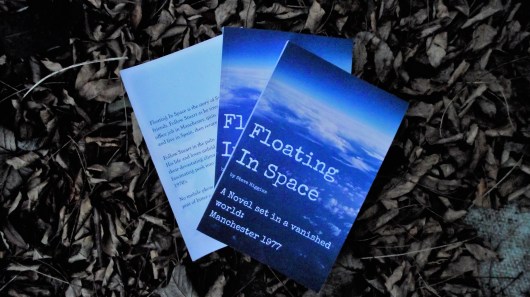
If you enjoyed this post why not try my book Floating in Space, a novel set in Manchester 1977. Click the links at the top of the page for more information.

Fathers Day and the Green shoots of an Apple Tree

DadSunday, yesterday as I write this was Fathers day in the UK and I thought I’d take a few minutes to look back at my Dad who died in, well, I was going to write the year but was it 2000 or 2001? Can you believe that, I can’t even remember the year he died!

The thing is, the year isn’t really important, what matters is that he’s no longer here and what’s worse is that me and my old Dad spent a lot of time not getting on with each other and that was a lot of wasted time, time that neither of us will ever get back.

My Dad and I were from different generations. Dad was born in 1928 and he was part of the World War II era. A time of shortages, of national emergency and an uncertain time when you weren’t sure if you or your loved ones were going to make it through that next air raid. Christmas for my Dad, he once told me, was an apple and an orange and maybe, just maybe, an out of the blue present like a tin of lead soldiers that were, of course, second-hand. Anyway, perhaps that’s why he couldn’t really relate to TV obsessed youngsters like me and my brother who were given a pillow case full of gifts on Christmas morning. In the seventies when I was a teenager my long hair and my denim outfits didn’t sit well with my Dad either who used to put a tie on to take the dog for a walk!

Anyway, the good thing is that when something really dreadful happened to me in my late twenties I told him about it rather than my Mum and instead of the usual moans and groans I had come to expect, when the chips were down he stood up and supported me. I’ll always remember him saying to me ‘don’t worry about your Mum, I’ll talk to her.’ It always seems to me looking back that that was the start of our relationship proper.

I describe my Dad pretty accurately in my kindle book ‘Floating In Space’. He was a big man but he was quiet and cat-like too. Everything he did had the same qualities of quiet and calm. He worked for the Manchester Highways department building roads and pavements and every day of his working life, come rain or shine, he set out for work on his old pushbike. One day the gears on his bike stripped and he took it in to the bike shop for a repair. They couldn’t fix it there and then so Dad had to borrow my bike to get to work the next day. What he didn’t know was that at the time there was a new craze -the chopper bike- and as I couldn’t afford an actual chopper bike, I had bought a chopper seat for my bike and fitted it the previous day. Looking back that bike looked pretty ludicrous and later I reverted to the normal seat but I can still see my Dads face as he pulled my bike out of the out house where it was stored and then me and my brother watched as this middle aged man set out for work on his hybrid chopper bike!

For fathers day many years ago I bought him an apple tree to plant in his back garden. When I turned up late on the Sunday my Mum was really pleased to see me and said that my Dad apparently was feeling a little neglected that day as until then, neither me nor my brother had turned up to see him.

We planted the tree in the back garden and years later, whenever I looked at that tree it reminded me of him. Of his quiet ways, of his ‘lets get on with it’ nature, of his spirit so like my Mum’s really of never letting anything get them down. Imagine my feeling one day last year when I looked out of my Mum’s back window to see the tree had been chopped down! I was seething and was all ready to get on the phone and give Manchester City Council some major grief when Mum told me she had asked for the tree to be cut down. What on earth for I asked?

Well, my Mum is a little unsteady on her feet and the tree was crowding her washing line and she was worried about falling over. So, she got the council to chop it down. It was clear she didn’t see the tree as I saw it, as a sort of living, growing, monument to the man I had given it to many years ago. Still, last time I was there, only last week, there were green shoots growing from the stump. The tree had beaten the man from the council and its indomitable spirit was still alive. I am sure my Dad, who loved nature in all its forms, would have smiled.


If you liked this post why not try my novel, ‘Floating In Space’ set in Manchester 1977? Click the links at the top of the page for more information.

James Hilton, Shangri-la, and Hollywood

james hilton autog

James Hilton is one of my personal writing heroes and yet his name may be unfamiliar to many of you reading this blog. He was a journalist and an author and made the trip from his home in Leigh, Lancashire, in the UK to the Hollywood hills in the United States to become a screen writer. He is probably more well known for his book ‘Goodbye Mr Chips’ which was made into a film with Robert Donat (actually another northerner from Didsbury in Manchester) but my favourite of his books and quite possibly my all-time favourite book is ‘Lost Horizon’.

Lost Horizon is a book I found in a second-hand shop many years ago. A battered 1940s paperback I paid twenty-five pence for and yet that small investment has paid me back many times over for sheer reading pleasure as Lost Horizon is a book I re read every year or so and I often pull it down from my bookshelf when a current read fails to entertain me.

Lost Horizon is a completely original idea and is about British consul Robert Conway in the dark days before World War II. Conway is helping his fellow British citizens escape from civil war in China and he and his small party escape in the last plane only to be kidnapped and taken to a distant Tibetan monastery. Conway meets the High lama and after a time it is revealed that the Tibetans  want to preserve the best of world culture and art and make it safe from the coming war.

Hilton is one of those few people who have invented a word or coined a phrase that has become part of the English language. In this case it was the name of the Tibetan monastery, Shangri-la which has since become a byword for a peaceful paradise, a distant haven. Camp David, the US President’s retreat was originally called Shangi-la until renamed by Eisenhower for his son, David.

Hilton’s journey from Leigh to Hollywood must have been a magical one and one I envy, especially as his time in Hollywood was a golden age for movie making. Lost Horizon was made into a movie by Hollywood director Frank Capra and starred Ronald Colman as the urbane British diplomat of the novel. It’s a movie that was recently restored and is a great DVD if you happen to see it. Colman also starred in another movie authored by Hilton :‘Random Harvest ‘.

Hilton settled in Hollywood and wrote a number of screenplays for classic Hollywood movies such as ‘Mrs Miniver ‘. Sadly he died from cancer in 1954.

WordPress of course is an American site and I wonder sometimes if a bored Hollywood production executive may decide to sit down one day with his Ipad and search idly across the site in search of movie ideas. My own book; Floating In space’ could easily be relocated from Manchester to Los Angeles and I am available for writing the screenplay.

Well, may keep my flight bag packed, just in case . . .


If you enjoyed this post, why not try my novel, Floating In Space? Click the links at the top of the page for more information.

Does size really matter?

DSCF0008

Well, actually it does, especially when we are talking about paperbacks. Paperbacks that we want to stuff in our beach bags for a good holiday read, or the novel you have in with your sandwiches for a lunch time read.

When the parcel came from http://www.createspace.com I was over the moon and couldn’t wait to look. Pity I’d cocked up on the self publishing front as that guy from the Reginald Perrin sit com might say.

Oh well. My book comes complete with a notes section at the back to explain some distinctly 1977 terms, TV shows and some now forgotten events so while I was trying to keep the page numbering intact it looks like I’ve made the book too big!

Oh well, back to the drawing board!

Saturday Night, a bar called ‘The Playground’ and that first pint . .

As a younger man Saturday night was everything to me and my friends. Nights out, beer, music and the ritual ‘chatting up’ of girls was our ‘raison d’etre’

In my book ‘Floating in Space’ a lot of the action takes place in bars and pubs and one of my favourite places in late seventies Manchester was the ‘Playground’, a disco bar on Oxford street. Here’s an extract from the book where I introduce the venue;

The main venue that night, and on many other Saturday nights like it, was the ‘Playground’, a small disco bar on Oxford Rd in the town centre. Flickering multi- coloured spotlights rotated across the red carpeted room, which, on Fridays and Saturdays was generally packed. It had a small dance floor sunk low like a pit, where people up on the raised bar level could look down at the gyrating girls, and where also, on week day lunchtimes, a topless dancer appeared at the stroke of one o’clock to translate the soul and disco music of the time into pulsating physical motion, the eyes of jaded office workers glued to her as she did so.

My friend ‘Matty’ Edwards and I used to meet up in the Salisbury, by Oxford Rd station, have a few pints and a bit of a natter to any Regal Insurance cronies who we might find there, then make the short walk to the Playground. There was a paltry fifty pence charge to get in, the solitary bouncer was silent, but not unpleasant, and the DJ, who always began the night with ‘Loves Theme’ by the Love Unlimited Orchestra, played alternate sessions of rock, disco, and chart music. We were both mad about Jenny, the barmaid. She was lovely. She had a kind of round, open face, framed by thick blonde hair and her skin was a creamy white. She served us Worthington ‘E’ and we melted into the hubbub of people on their Saturday night out while the music of the seventies drifted through us.
Matty was tall, he had lazy, rather hayfevered eyes, and a biggish nose over thin lips. His brown hair was short and untidy and he was smart, but had a sort of ‘middle of the road’ taste in clothes.
“Jenny’s looking gorgeous tonight” he told me over his pint of Worthington’s.
We were propped up at the bar at a convenient spot where we could eye up any possible female talent, and cast a fond eye over Jenny’s appealing form.
“You’re not wrong mate” I agreed. “I wouldn’t mind getting a grip of that myself.”
I caught Jenny’s eye and ordered two more pints of Worthington ‘E’. It wasn’t a great drink but we were tuned into it now for the rest of the evening, and anyway, I hadn’t as yet developed any clearly defined tastes in beer. The first pint I ever ordered myself was a pint of mild, and that was because I had nervously entered a Cheshire country pub after a long cycle ride and hesitatingly asked for a pint of ‘beer’.
“A beer?” asked the barmaid.
“Yes,” I replied, “A pint, please.”
“A pint of what?”

I realised, uncomfortably, that something more was required. I had thought that ‘a pint of beer’ would have been enough, but what the barmaid wanted to know was did I want bitter, or mild, or lager even? My first tentative forays into the world of the alcoholic drink were with my friend Mike Larini and it was always he who had done the ordering. What did he ask for, I thought? I couldn’t remember but down the bar the faint voice of an old man asking for half of mild drifted along to me, and so I went on to drink mild. Later I changed to bitter, and even now I was currently considering another change as someone had given me the cheerful news that bitter ‘rots your guts’. Perhaps it had been that eternal pessimist Matty Edwards with his inside knowledge of beer. His father was a Didsbury publican, and Matty’s drink changed from pub to pub. Sometimes it was lager, sometimes bitter, but here, in the Playground, it was that now long departed brew, Worthington ‘E’.


You can read more about that night out in either the kindle or paperback version of my book available at amazon. Click the icon below for more details.

Personal Heroes and bonne sante

Picture courtesy wikipedia

Everyone has their heroes, writers perhaps more so than other people because it’s our personal heroes that inspire us or perhaps even make us want to write. I come from a working class area of Manchester called Wythenshawe and when I get a bit down and look at my pile of rejected screenplays, essays and novels that seems to get bigger monthly, I wonder if I will never make it to the big time as a writer. That’s when I think about four working class northern men who did make it big, who worked hard at their craft and had incredible success. They weren’t authors but musicians; the Beatles!

One hundred percent northern through and through, John Lennon, Paul McCartney, George Harrison and Ringo Starr became the Beatles and didn’t just make it to the top of the hit parade they reinvented the pop music industry and their genius as both writers and performers will live on as long as music is listened to.

Many moons ago when I worked for a cigarette vending company I used to visit a small pub in Woolton and the owners of the pub were two retired ex shell tanker drivers. They were both friendly guys but one in particular was outgoing and talkative and if he was on duty at the bar we would always have a good chat while I sorted out the cigarette machine. One day we got onto the subject of the Beatles and Lennon’s working class background and I was surprised to hear that Lennon’s house was just around the corner. Woolton is a very pleasant middle class suburb of Liverpool and I remember thinking what? This is where Lennon was brought up? John Lennon always struck me as a typical working class guy and his image as a sort of working class hero led me to assume he had a background in a rough and tumble area of Liverpool, like the Dingle where Ringo was brought up. The truth was different. Perhaps Lennon fermented the working class hero thing, perhaps the fault was mine, I just assumed something without knowing the facts.

Driving round the corner I found Lennon’s old house, 251 Menlove Avenue. This was where Lennon lived with his aunt Mimi from the age of five. He was living here when he started his first band, the Quarrymen and also when he met Paul McCartney. Lennon’s life was one heck of a journey taking him around the world with the Beatles and finally to New York with Yoko Ono where he was shot and killed in 1980.

This blog is about personal heroes and I’ll introduce you to more of them in another blog but for now I’d like to finish by wandering off the subject and returning to that pub in Woolton.

I’m not totally sure but I think the pub was the Derby Arms and the owner, whose name I cannot remember told me a story about the death of his father. His father was an old chap, a veteran of the first world war and had picked up a habit in France of always having water with his meals and he would always raise his glass and toast ‘bonne sante’ to whoever he was with.

My friend went to visit him in hospital on his deathbed and asked the nurse how his was. ‘OK’ they replied ‘but a little dehydrated. Try and get him to drink a little water’
In the hospital ward the son passed a glass of water to his father’s lips and the father murmured ‘bonne sante’ before passing away.


So to all you who are reading, let me wish you ‘good health’ and if you enjoy my writing  why not take a look at my book. Click the links at the top of the page to buy or for more information.

The French Grand Prix

The European grand prix season is well underway and it would have been rather nice to have combined my visit to France with a trip to the French F1 event, of course that’s clearly impossible as despite being the most historic race of all -there is no French Grand Prix.

Why ever not you may ask? The answer is this : the formula one season is a tv event first and foremost. It is the tv companies of the world that pay money into Bernie  Ecclestone’s F1  franchise and a race in France doesn’t fit into his the global tv vision of F1.

What does fit in then?  The Abu Dhabi grand prix,  with its multi million dollar circuit that is used only a handful of times  per year? Where there is no local motor sporting infrastructure, no local race teams and no local race drivers, in fact no local interest at all! There is interest though in publicising this small Arab nation to the western world through the power of tv and the same holds for Bahrain, another new race in the F1 firmament where the primary focus is Bahrain, not F1. Similar events now crowd the F1 calendar, China, Korea, Russia,  and Singapore.  Speciality non events far from the hub of traditional formula one racing like Spa Francorchamps, Monza, Zandvort, Silverstone, and the Nurburgring.

Recently Bernie Ecclestone was asked about the return of the French race. No, he said we will be having a race in Azerbaijan next year!  What? Can this man be serious? Clearly he is.

Ecclestone, who is currently facing bribery charges in a Munich court can clearly see the cash register jingling on the F1 till.  Still, when you consider he has been accused of slipping someone a forty four million dollar bribe, well,  the potential profits in that deal must presumably be in excess of, well, forty four million dollars!

The time has come for formula one racing to hand the managerial reins over to someone who is more interested in the sport than the million dollar pay check. OK, the sport has to make money, who would argue with that?  After all, the costs of todays race machinery, cars, engines, race tracks, drivers and logistics, are fantastic and teams like Marussia are desperate for points in order to tap into the incoming TV revenue to stay afloat.Even though, we do need some semblance of a sporting ethos in our sport. It is still a sport not just a million dollar business, isn’t it?

My advice as a long time race fan; ditch Bernie, ditch the exotic locations and go back to basics. recruit a CEO like Jackie Stewart, a highly respected F1 elder statesman who loves the sport and from that one standpoint will be on a level field with formula one fans the world over.


What happens with the cheese -stays with the cheese!

quotescover-JPG-36Not so long ago my team and I had a team night out. It was great for work colleagues to have the chance for a good get together, have a few beers and some food, and talk about things that were UN- work related. It was a pretty good evening, all arranged by me I might add, and the pub I chose for a meeting place was just opposite Manchester’s Chinatown, so when we were all ready it was just a case of popping across the road for our meal.

I was not amused then when the evening was hijacked by one of our group who wanted to go to a tapas bar on the other side of town. To cut a long story short, I had far too much to drink and gave some no holds barred stick to the perpetrator of this infamy, who just so happened to be my boss!

Next week at work I approached my boss meekly with a prepared apology only to be stopped in my tracks.’ Steve’, my boss said, ‘what happens on the night out, stays on the night out!’

Due credit to the boss for his understanding attitude and in a roundabout way that brings me to another thought on this last night of my French holiday :

In previous years, as well as stocking la voiture with French wine, I always used to take back a considerable supply of cheese -not anymore! I’ve come to feel that French cheese, as much as I love it, doesn’t sit well on an English table. Our food doesn’t suit the cheese, and drinking and eating habits change when we get home. So leave your French cheese in France, in a sunny pavement cafe, where you can enjoy it with some French bread and a lovely glass of French red.

Oh well, here’s to l’annee prochaine!

Image

On the bridge

It was me that found you on that lonely road that night

I spied you on the cameras around midnight

You looked cold on top of that bridge,

I suppose you thought you’d see things in a different kind of light,

Way up on the bridge

In the middle of the night.

The ambulance was on stand by anyway

And I know you had your problems

If only you could have let on, hinted to someone

Maybe you wouldn’t have given us such a fright

But I prefer to believe you were coming down

And that you tripped or were nudged by the wind

It’s a sad place to die in the middle of a road

No one heard you call or shout

And darkness came when the lights went out.


 Image

Its a really tragic thing when death occurs on the motorway. Even though the individual will not be known to us the sadness is still there, knowing that we were unable to prevent this tragedy.

My freedom of information request to the UK highways agency revealed that there were 652 suicide attempts on the motorway in 2013;

https://www.whatdotheyknow.com/request/motorway_suicides#incoming-523298

652! That’s a heck of a lot of distraught, sad people.

A French evening In

France2010 320

I’m coming to end of my three week stay in France now and here in the rural part of the Vendee a night out at a restaurant is pretty much a waste of time. The thing is this; the rural French are not interested in a night out. Friday night at your local restaurant means nothing to them. Lunch however, lunch is a whole new ball game. Lunch in France is twelve till two. Shops close, offices shut. The lunch is all important. Trying to get a table in Lucon our local town is a pretty tall order but come Friday night at seven, take your pick, any table in the house and oh, who’s that at the other table, yes, another couple of Brits!

Tomorrow night’s tea looks like being something like a sandwich as we’ll be packing up so we can make the early ferry next morning from St Malo. Tonight we went Italian; The starter was goats cheese and spinach with chilli oil served with French bread and a nice tomato and onion salad. Main course; stir fried chicken livers with garlic and chilli and green peppers and of course, more French bread. Throw in a lovely garden and patio, some hot vendee sun, some lovely French red wine and the result is an unbeatable dinner for two.

A pretty European collaboration I suppose; Italian food, French bread and wine, and two English tourists!