Three Oscar Winners

The Academy Awards are the premier awards for artistic and technical expertise in the motion picture industry. The awards are given annually to mark various categories of cinema excellence. The award statuettes are known as Oscars and were first awarded in 1929 at a ceremony hosted by Douglas Fairbanks at the Hollywood Roosevelt Hotel. The very first film to be voted as Best Picture was Wings, a first world war silent film starring Clara Bow, Charles Roger and Richard Arlen. In my DVD collection I have quite a few Oscar winners but here I’d like to look closer at three in particular. Two fairly recent films and one absolute classic.

The Shape of Water
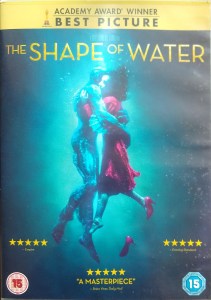
Now, there are those who seem to think I only ever look at black and white classic movies. Not so, I like modern films too and just to prove it I picked up The Shape of Water not long ago for a few pounds on Ebay. You may remember that the film won the Oscar for Best Film at the 2018 awards and it looked pretty interesting in the various clips I have seen. Everything I had heard about the film was positive so I decided to search the internet for the DVD version. The first warning sign was the extensive availability of DVDs of the film on Ebay and the second was the rather low prices those DVDs were fetching. Anyway, I got my copy and watched it and how this film won an Oscar I really do not know.

Yes it is well acted. The photography was excellent although everything is presented in a sort of greenish hue that the director perhaps feels enshrouded late fifties and early sixties America. However the content just didn’t do it for me. It’s about a young mute woman cleaner in a top secret government installation who falls in love with a strange creature, half man, half fish, that is held captive there. She and her father rescue the fish man and take him back to their apartment high over a cinema and install the creature in the bath.

The Guardian said this about the film: ‘Guillermo del Toro’s escapist fantasy-romance The Shape of Water was the biggest winner, (at the Oscars) the story of a young woman’s love for a captured sea creature — with best picture and best director, setting the official seal of approval on what is, by any measure, a beautifully made movie to which audiences have responded with distinctively sensual delight.’

Don’t believe a word of it, the fact is The Shape of Water is a dismal weird film that completely failed to engage me and my copy will soon be available once again on Ebay. It was so bad it even made me hunger for one of Roger Moore’s dreadful Bond Films.


Nomadland
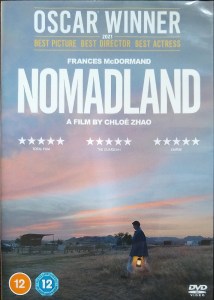
Now that I’ve retired I’ve often thought about spending more time in my motorhome and it’s only Liz’s recent hip operation that has prevented us from travelling over to France for some exploring. Could I live full time in a motorhome though? I’m not so sure. Everything is fine in the summer but I doubt if I could cope with the cold of the winter. Of course, we could always drive south towards somewhere a little warmer, even perhaps our beloved Lanzarote but van life isn’t, I suspect, as romantic as it sounds. Nomadland is a film that addresses this subject. A woman loses her job when the US Gypsum plant closes down in her town. Her husband has died so she decides to buy a van and go in search of work. She works for a while at an Amazon packing centre and when that job ends she goes off to Arizona where she heard fellow nomads will be meeting.

She makes new friends among the nomad community and has to overcome various problems, mainly issue with her van. At the end of the film she returns to her home town where all her possessions are in storage and finally sells them all before going back on the road again. After the first thirty minutes or so the film seemed like an actual documentary with real people rather than actors, so much so I had to pick up the DVD box and double check. It’s a slow film with little dialogue but even so it is original and realistic and examines the lives of a new breed of Americans, nomads who live in vans and spend their lives on the move, settling down where there is work and moving on when the work runs out. A flat tyre can be not just an inconvenience but a disaster as well as other problems which for us are merely distractions. Washing and showering for instance, not so easy when you have to consider whether there is enough water in the tank, where to do the laundry and so on. When a major van repair is needed the heroine of the film has to leave the van -her home- at a garage and check into a hotel while it is repaired.

I’ve got mixed feelings about this film. It’s good and well worth watching but whether it’s worthy of an Oscar I’m not so sure.

Silence of the Lambs
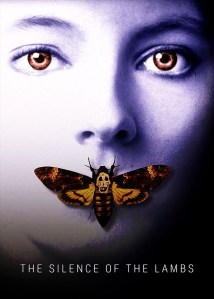
After watching the above two Oscar winners on DVD I fancied something a little different. The very first horror film to win an Oscar was Silence of the Lambs. It’s a gruesome film in many ways following the FBI as they try to track down a serial killer who has just abducted the daughter of a US senator. The killer known as Buffalo Bill, imprisons his victims then kills and skins them. (Told you it was gruesome!) To try and get a lead on the killer the FBI send trainee agent Clarice Starling to interview the incarcerated murderer and psychiatrist Dr Hannibal Lector to see if he can give any insight into the murders, a new perspective that might help the FBI investigation.

Lector is played by Anthony Hopkins and Jodie Foster plays agent Starling. She wants to work in the Behavioural Science Unit of the FBI and Lector, chillingly played by Hopkins, finds her interesting. He seems willing to give information about Buffalo Bill but in return he wants information about Clarice herself. He initiates a quid pro quo, he gives her information and observations about Bill and in return she must reveals snippets of information about herself, her background and her life.

Clarice becomes a pawn when Jack Crawford, the head of behavioural science, makes a fake offer to Lector. They promise that Lector will be moved to a secure unit on an island with a view of nature and wildlife in return for more information. The head of the secure unit where Lector is currently held, Dr Chiltern makes a rival offer which Lector accepts but passes on fake information about Buffalo Bill.

Clarice meets Lector again and presses Lector for the real information but Lector wants only to hear about her life, in particular when she was orphaned and terrified when lambs were slaughtered on the farm where she was staying. Lector tells her that all the relevant information to find the killer is in the case file which he has been allowed to read.

Later, FBI agents approach the suspected home of Buffalo Bill. At the same time Clarice is following a lead based on some advice from Lector. The two situations are presented in alternate clips. The FBI ring the bell of Bill’s supposed home. Clarice rings the bell of her suspect. When the FBI burst in and the house is empty, Jack Crawford, and we the viewers, realise that Starling has stumbled on the real Buffalo Bill.

Much of the content of the film is terrifying but at the same time, it is a compelling film and comes together in an exciting climax.

The film spawned numerous sequels. Hopkins reprised his role as Lector twice but Jodie Foster declined to play Clarice again blaming scheduling conflicts. Clarice was played by Julianne Moore in the follow up film, Hannibal.

Silence of The Lambs won five Oscars, Best Picture, Best Director (Jonathon Demme) Best Actor (Anthony Hopkins) Best Actress (Jodie Foster) and Best Adapted Screenplay (Ted Tally).

Do you have a favourite Oscar winning film?

What to do next: Here are a few options.

Share this post on your favourite social media!

Hit the Subscribe button. Never miss another post!

Listen to my podcast Click here.

Buy the book! Click here to purchase my new poetry anthology.

Click here to visit Amazon and download Floating in Space to your Kindle or order the paperback version.

The Human Eye and A Handful of Film Directors

I wrote a blog post a while ago about the 60s TV show the Time Tunnel. I used to love that show when I was about 12 years old but watching it these days it isn’t quite as good as I remember. If the time tunnel was real and I could sneak inside and send myself back in time the place I’d like to go would probably be the early days of cinema in Hollywood.

Back then when the cinema was new and the job of film director was something that didn’t require a degree, I reckon I might have been in with a chance of getting to direct a film. These days I have to content myself with being an amateur video maker. Anyway, I may not be a director but I can certainly write about film directors if nothing else.

Charlie Chaplin

I’m going to start off with Chaplin because he was one of the very first to give actual direction to a motion picture. Charlie came to Hollywood after a career in Fred Karno’s musical halls in England. Karno was a successful impresario and producer and when his productions became successful, he decided to export them and sent various troupes on tours of the USA. On one of those tours Chaplin was spotted by slapstick film maker Mack Sennet and Chaplin began to appear in early Hollywood comedy shows. In those days there were no scripts. The actors and directors threw a few ideas about and then the cameras began to roll. The short films were made quickly and then sent off for distribution across the USA and even the world.

Chaplin clashed frequently with his directors when his ideas or suggestions were dismissed but after exhibitors asked Sennett for more Chaplin films, he was allowed to direct his own. When his contract expired in 1914 Chaplin asked for 1000 dollars per week. Mack Sennett complained that that figure was more than he was getting and refused. Another film company Essanay, offered him $1200 per week and a signing fee and Chaplin signed. He wasn’t initially happy with Essanay and didn’t like their studios in Chicago, preferring to work in California.

Chaplin was also unhappy after he finished his contract at Essanay because they continued to make lucrative Chaplin comedies by utilising his out-takes. Chaplin was however an astute businessman. In his new contracts the negative and film rights reverted to Chaplin after a certain amount of time. This was in the days when a movie had a life of months, if not weeks.

I can’t honestly say that I’ve ever thought of Chaplin as a genius but he was clearly one of the first to realise a film needed a structure and that comedy films didn’t need to be gag after gag after gag. They needed a story, the audience needed to sympathise with the characters and so on. Whatever you think of Charlie Chaplin, his contribution to the film world was immense.

Billy Wilder

My favourite Billy Wilder story goes like this: In his later years he wanted, as usual, to make a movie. He approached a studio and was invited in to make his pitch, as they call it in the movie world. The executive who met with Billy was a young man. He said to Billy, “I’m not familiar with your work could you tell me about it?”

Wilder replied, “of course, after you!”

Wilder was born in 1906 in Austria. He became a screenwriter while living in Berlin but left when the Nazi party began their rise to power. In 1933 he moved to Hollywood where many artists and film makers fled to escape the Nazis. Wilder wrote numerous screenplays with his co-writer Charles Brackett and in 1942 made his directing debut with The Major and the Minor.

A big hit for wilder was the film Double Indemnity. Wilder co-wrote the script with Raymond Chandler and the film was nominated for 7 academy awards as well as becoming a classic of film noir.

By far my favourite Wilder film though was Sunset Boulevard. The film follows William Holden as screenwriter Joe Gillis who is down on his luck and is about to have his car repossessed. To escape the repo men, Holden drives into what he thinks is a deserted house on Sunset Boulevard. To his surprise he finds reclusive film star Gloria Swanson living there. Swanson plays Norma Desmond, once a star of the silent era who is planning her return to the screen.

Norma engages Joe to edit a script she has written herself and Joe soon finds himself seduced by the affection and money she lavishes on him. Some of Swanson’s own silent films are used within the production and one of her old directors, Erich Von Stroheim plays the part of her butler and former husband. The final scene of Joe floating dead in Norma’s pool took was a difficult shot to film. Wilder eventually did it by putting a mirror in the bottom of the pool.

Wilder died in 2002. He is buried in Los Angeles and on his grave is inscribed. ‘Billy Wilder. I’m a writer but then, nobody’s perfect’, a reference to the final line in Some Like It Hot.

Oliver Stone

Oliver Stone enlisted in the US Army in 1967 and served in Vietnam with the 25th Infantry and later the 1st Cavalry.
Back in the USA he enrolled at university in New York and studied filmmaking. Martin Scorsese was one of his teachers. Vietnam was among the first subjects of his student films.

Stone graduated in 1971 and took on various jobs while he wrote screenplays. His breakthrough success was in 1978 with the screenplay for the film Midnight Express for which he won the Academy Award for best adapted screenplay.

The first Oliver Stone movie I ever saw was the 1986 movie ‘Platoon.’ Stone wrote and directed the movie set during the Vietnam War and based on some of his own experiences.

He followed up with another Vietnam film, ‘Born on the 4th of July’ about Vietnam veteran Ron Kovic. A third film completed Oliver Stone’s Vietnam trilogy, Heaven and Earth released in 1993.

Wall Street was a hit movie for Oliver Stone in the eighties and the character of Gordon Gekko played by Michael Douglas became an eighties screen icon. In Wall Street Stone first developed a mesmerising visual style almost akin to a music video and it is a style that many film-makers seem to have picked up.

In JFK, Stone takes this visual style to another level and combines various film formats to produce a stylish visual montage. The subject is a controversial one, the shooting of President John Kennedy in Dallas in 1963. Stone decides to use the investigation by New Orleans District Attorney Jim Garrison as a vehicle to explore the various theories about the shooting although ultimately an amorphous military industrial complex is blamed for the conspiracy. Criticism rained down on Oliver Stone from anti conspiracy theorists but I personally felt that the movie was a fair one and everything that was conjecture was shown as conjecture. The great treat for me was the combining of the different visuals and the inter weaving of documentary film with new footage. Stone went on to make two more films about American presidents, Nixon and W, the latter film about George W Bush.

George Stevens

George Stevens made many memorable films and I’ve including him in this handful of directors because if I was a director, I reckon I’d make my films the way George did. George directed the classic western Shane starring Alan Ladd. Shane is one of the great film westerns and one that tried to show the west as it really was. Stevens also directed Giant, James Dean’s last film. Giant is about Bick Benedict, a Texas rancher played by Rock Hudson and Dean plays Jett Rink, a surly ranch hand who is fired by Benedict. Benedict’s sister however, has a soft spot for Jett and when she is unexpectedly killed in a fall from a horse, we find that she has gifted a small piece of land to Jett. Bick wants to keep the ranch together and offers Jett a large sum of money for the property but he declines and goes on to strike oil on the land. Stevens filmed his actors with many cameras and liked to shoot everything he could then sit back and work his way through the resulting footage and slowly figure out how to edit it together, which is pretty much what I do with my short amateur YouTube videos.

Alfred Hitchcock

Hitchcock was a British director who began in the days of silent films and came to be known as the master of suspense. Blackmail made in 1929 was the first British Talkie and 10 years later producer David O Selznick lured him to Hollywood where he made many films that are now regarded as classics, films like North by Northwest, Dial M for Murder, Rear Window, The Birds and Pyscho. Hitchcock might also be seen as one of the first celebrity directors. He became popular because of his habit of appearing, however briefly in all of his films, sitting on a bus for instance, just missing the bus in another. He also became well known by introducing his television series, Alfred Hitchcock Presents.

Alfred Hitchcock (Picture courtesy Wikipedia)

There are some directors who have tried to make films that show events the way the human eye sees things. Roberto Rossellini was one. Another surprisingly was Hitchcock himself.

In 1948 he made the film The Rope. It was an unusual film in many ways, especially for Hitchcock. The length of a film magazine back then was ten minutes so Hitchcock decided to shoot the film in a series of 10 minute takes each take morphing smoothly into the next one. The set was built with moveable walls which were able to be moved swiftly out of the way by the prop men to accommodate the very large film camera of the time as it moved about the set.

Making a film without the usual cuts and edits would create a viewer experience more akin to the way a human being sees things, or so Hitchcock thought. My personal view is that we see things with our mind more than the eye. The human eye is constantly scanning the scene before us and these scans are used by the mind to put together an image for us. Some of that image will be up to date, especially whatever it is we are concentrating on. Other elements, things in our peripheral vision for instance may be seconds out of date because that element of the image we are seeing was scanned seconds or even minutes ago. That’s my theory anyway. For me the director who films in the way the human eye sees things is Woody Allen.

Woody Allen

I’ve written plenty about Woody before so I won’t go on about him here too long. The great thing about Woody’s films is that they don’t follow the usual film school format of close up, medium shot and wide shot. Woody usually makes a one or two camera set up with few if any close ups and that’s it. In one shot in Hannah and Her Sisters, Michael Caine is talking to someone, it might have been Mia Farrow but I can’t remember off the top of my head and the Mia character goes into the bedroom but continues to talk with Caine. Michael expected there to be a second set up filming Mia in the bedroom but there wasn’t. He asked Woody why not and Woody answered why do we need to see the other person in the bedroom? We can hear their voice that’s all we need. If the character was hiding a gun in their purse or pocket or something pursuant to the plot then we need to see that but otherwise, what’s the point? That’s what I like about Woody’s films, their economical use of film and the lack of multiple set ups.

Those then are my handful of film directors. Who are your favourites?


What to do next: Here are a few options.

Share this post on your favourite social media!

Hit the Subscribe button. Never miss another post!

Listen to my podcast Click here.

Buy the book! Click here to purchase my new poetry anthology.

Click here to visit Amazon and download Floating in Space to your Kindle or order the paperback version.


A Series of Random Classic Film Connections

Back in the 1960’s I was a big fan of the Apollo moon missions and on UK TV one of the presenters was James Burke. Burke also did a TV show called Connections. It was a really fascinating series which connected various historical events to make a sort of chain which led up to something which was pretty unexpected. The episode that stands out in my memory was one about the atom bomb, various unconnected events and discoveries that together, led to the splitting of the atom. In today’s post, I’ve tried to do something similar but all relating to the world of film, so here are five fascinating connections.

Casablanca.

Casablanca is one of my very favourite films, in fact a while back, I did an entire blog post dedicated to the film. Humphrey Bogart starred as Rick who runs a popular café in the city of Casablanca. Set in the 1940’s during the Second World War, refugees are everywhere, fleeing from the Nazi menace. Certain letters of transit have disappeared guaranteeing the owner free travel out of occupied lands to freedom and various people want them, in particular freedom fighter Victor Lazlo and his wife Lisa played by Paul Henreid and Ingrid Bergman.

The Chief of Police, Captain Louis Renault, is out to stop them and perhaps even out to make a little money for himself on the side. The film was made in 1942 entirely at the Warner Brothers studio in Hollywood apart from one scene at Van Nuys Airport in Los Angeles. The film won the Oscar for best picture, best adapted screenplay and also one for best director for Michael Curtiz. The film has grown in popularity ever since and always ranks highly in any list of the greatest ever films.

Captain Louis Renault was played by Claude Rains. Rains was a British actor who became one of the screen’s great character actors. He died in 1967 but one of his last films was Lawrence of Arabia, made in 1962.

Lawrence of Arabia.

Lawrence is another great classic of the cinema. Filmed in 70mm and directed by David Lean, the films tells the story of TE Lawrence played by Peter O’Toole and like Casablanca it is a classic of the cinema. The film was made in 1962 on location in Jordan, Spain and Morocco.

There are numerous stars in the film as well as Claude Rains but the one I want to highlight is Alec Guinness. Guinness made his film debut in another David Lean film Great Expectations made in 1946. In 1955 Guinness was in Hollywood having been nominated for an Oscar. One night he went out and was struggling to find a table in a restaurant. At one establishment where he was turned away a young man came after him and asked him to join him for a meal. That man was James Dean. Dean insisted on showing Alec his new Porsche Spyder and when he saw the car Guinness was apparently overcome by a strange feeling and told Dean never to drive the car and that if he did, he would be dead by the following week. Guinness was not someone who regularly made predictions of the future and was probably as taken aback by this feeling as Dean was.

A week later, Dean was driving the Porsche to a race in Salinas when he was killed in a car crash.

Giant

James Dean had just finished the movie Giant only weeks before his death. Giant starred Rock Hudson as Texas rancher Bick Benedict with Dean playing the third lead of Jett Rink. Rink is a no good cowboy who works for Bick Benedict. Bick and Jett don’t get on well but Luz, Bick’s sister has a soft spot for Jett and re-employs him after Bick has fired him. Later, Jett Rink inherits a small piece of land after the death of Luz. He goes on to find oil on the land and becomes a millionaire. The film’s other lead star was Elizabeth Taylor. She plays Leslie who marries Bick Benedict.

Elizabeth Taylor was born in 1932 and began her career as a child actress in the 1940’s. She was one of Hollywood’s most highly paid stars and was married eight times including twice to Richard Burton. Her second husband was Mike Todd. He was an entrepreneur and producer who decided to try his hand at film production. His company developed the Todd AO Process, a widescreen film process that was based on Cinerama, a technique that used three projectors. He was sadly killed in a plane crash after completing Around the World in 80 Days, a film that showcased the process.

Around the World in 80 Days

Around the World in 80 days was a film version of the novel by Jules Verne. David Niven starred as Phileas Fogg, an English gentleman who takes part in a bet at the London Reform Club, in which he wagers that he can successfully circumnavigate the globe in 80 days. The film was shot in 70mm using the Todd AO process mentioned above. The film starred numerous celebrities in small parts and was filmed all over the world.

David Niven was perfect for the role as Phileas Fogg. He was an English actor and former army officer who arrived in Hollywood in the early 1930s. He worked as an extra and was one of the few people who went from extra to film stardom. He was put under contract by Sam Goldwyn.

The Charge of the Light Brigade

In 1936 Niven starred with close friend Errol Flynn in the Hollywood film version of The Charge of The Light Brigade, transferred by Warner Brothers from the Crimea to India. Flynn and Olivia De Havilland were the main stars and Niven writes about the production in his wonderful book, Bring On The Empty Horses.

The book was named after a phrase uttered by the director to begin a scene calling for a number of riderless horses. The director was none other than Michael Curtiz, who also directed Casablanca, which makes our film connections complete.


What to do next: Here are a few options.

Share this post on your favourite social media!

Hit the Subscribe button. Never miss another post!

Listen to my podcast Click here.

Buy the book! Click here to purchase my new poetry anthology.

Click here to visit Amazon and download Floating in Space to your Kindle or order the paperback version.

The Essential Englishman (Part 2)

I published a post quite a while back called The Essential Englishman. I say a while back but now that I’ve looked, it was 2017. Anyway, as a working-class council house boy I’ve always envied those well-dressed gentlemen who look impeccable and talk ‘proper’, dropping witty comments here and there with apparent ease. I wrote about six Englishmen who all rather impressed me either themselves or in the characters they played on screen so I thought it might be time to look at some more candidates.

Roger Moore.

I’ve always liked the debonair Roger Moore. Many people think he was good as James Bond 007 but sorry Roger, I wasn’t impressed. His other famous character did impress me; Simon Templar alias the Saint. The Saint was based on the books by Leslie Charteris about an adventurer called Simon Templar. Templar seems to have no job but owns a smart London flat, drives a white Volvo with the registration plate ST1 and sets about helping damsels in distress and solving various crimes. The police, in particular Templar’s nemesis, Inspector Teal of Scotland Yard view Templar as a criminal and are determined to put him behind bars.

Moore had always wanted to film the Saint and in fact bought into the latter part of the series becoming a co producer. Most of the clothes worn in the series were Roger’s own clothes too showing how keen Roger was about the way he looked. Later, when the series ended, Moore co-starred with Tony Curtis in the Persuaders, another action series, although the Persuaders was filmed all over the world whilst the Saint, despite all the various locations portrayed in the series, was filmed almost entirely at Elstree studios in the UK.

One of the best elements of the series was the pre-title sequence where Moore turns to talk to the camera. In later episodes there is a voice over instead but someone usually recognises the famous Simon Templar. Cue an animated halo appearing over Roger’s head which he looks up at just before the title sequence begins.

Moore played James Bond in seven feature films. The last one was A View to a Kill in 1985. He died from cancer in 2017.

Ronald Colman

Colman was born in 1891 and became a well-known amateur actor in his native Surrey. He joined the army when the first world war began. He was seriously injured at the battle of Messines in 1914 and was invalided out. When his wartime wounds healed, he resumed his acting career and eventually graduated to films. In the USA he became a famous silent film star but it was not until the talkies began that he could use his best asset, his wonderful voice. According to Wikipedia, he mirrored the stereotypical English gentleman and he went on to great success in the golden age of Hollywood. He appeared in many famous films like The Prisoner of Zenda and two of my personal favourites, Lost Horizon and Random Harvest.

Colman died in 1958 aged 67.

Wilfrid Hyde-White

Hyde-White was born in 1903 and trained at RADA, the Royal Academy of Dramatic Arts. He once famously said that at RADA he learned two things; ’One, I couldn’t act and two, it didn’t matter.’

He became almost a fixture of many British films of the 1950’s and in fact his film credits are almost too numerous to mention. He appeared in some of my favourite films such as The Third Man, Last Holiday, The Browning Version, My Fair Lady and many others. In Hollywood he appeared with Marilyn Monroe in Let’s Make Love. In later life he also appeared in many US television series including two episodes of Columbo. Hyde-White was apparently in trouble with the inland revenue and was declared bankrupt in 1979. He died a few days prior to his 88th birthday and his body was flown back to the UK for burial.

Kenneth More

More epitomised the English officer gentleman in many films, most notably with his portrayal of Douglas Bader in the film Reach for the Sky. He played an officer aboard the Titanic in A Night to Remember and a naval officer in Sink The Bismark.

He was under contract to the Rank organisation but was dropped by Rank after swearing and heckling their managing director at a BAFTA award ceremony.

In later life he had further success on TV playing the part of Jolyon Forsyte in the Forsyte Saga and later the title role in Father Brown. He died in 1982.

Terry-Thomas

Thomas was a comedy actor who found fame in many British radio shows and films of the 50s and 60s. He typically played an upper-class rogue or bounder and his distinctive upper-class accent is fondly remembered by many, including me. According to Wikipedia in 1921 he began to develop his distinctive, well-spoken voice, thinking that “using good speech automatically suggested that you were well-educated and made people look up to you”. He apparently was impressed by Douglas Fairbanks so much so that he began to imitate Fairbanks’ debonair dress sense.

Thomas played a similar character in most of his films and was a great success in films like Carlton-Browne of the FO, I’m All Right Jack and School for Scoundrels. He appeared in a number of Hollywood films such as How to Murder Your Wife in which he played the genteel English butler to comic strip author Jack Lemmon. He is probably best remembered for his portrayal of the scheming rotter in Those Magnificent men in Their Flying Machines. Thomas died in sad circumstances in 1990 after suffering with Parkinson’s disease and spending most of his fortune on medical bills

C Aubrey Smith

C Aubrey Smith is perhaps an unfamiliar name on this list to anyone who is not a fan of classic films. Smith was born in 1848 and became a stage actor only after retiring from an early career as a cricketer. He appeared in some early British films but went to Hollywood in the 1930s where he carved out a career playing an English officer and gentleman. He was Colonel Zapt in the Prisoner of Zenda and played another colonel in Hitchcock’s Rebecca. In Hollywood he was the acknowledged leader of the British contingent and in 1932 founded the Hollywood Cricket Club. Other film stars considered to be “members” of his select social group were David Niven, Ronald Colman, Rex Harrison, Robert Coote, Basil Rathbone, Nigel Bruce and Leslie Howard.
Smith died in 1948 aged 85.

Hugh Grant

There are others I could possibly mention here, stars like Christopher Lee, Dirk Bogarde, Basil Rathbone, Dennis Price and Jack Hawkins but perhaps it’s time to look at some more modern actors. Hugh Grant has played the essential Englishman in a number of film roles starting with his part in Four Weddings and a Funeral, the 1994 British comedy written by Richard Curtis. Four Weddings is a direct successor to the Ealing comedies of the 1950s and 60s and Grant’s persona is in the same way, a successor to Ronald Colman, David Niven and many others of the same ilk.

I’ve always thought that Four Weddings was one of the best British comedy films ever, only marred by the constant use of the ‘f’ word. I was happy to hear that American audiences agreed with me and in the US version, the word ‘bugger’ was substituted.

Hugh Grant was born in 1960 and is still working in film and TV. He recently starred with Nicole Kidman in the TV mini series The Undoing.


What to do next: Here are a few options.

Share this post on your favourite social media!

Hit the Subscribe button. Never miss another post!

Listen to my podcast Click here.

Buy the book! Click here to purchase my new poetry anthology.

Click here to visit Amazon and download Floating in Space to your Kindle or order the paperback version.

The Old, the New, Covid and 2022

My first post of 2022 was just a review of 2021 so this one is really my first proper 2022 post. I was due to be working on New Year’s Eve but that scourge of our modern times, Covid 19, stepped in and I had to call in sick.

Covid.

Both Liz and I had been suffering with bad colds and hers was getting worse with a bad headache and a loss of taste and smell. We did Covid tests and Liz was positive. My test was negative which was a surprise but then I haven’t had the headache or the loss of taste. I’m not sure when Liz was exposed to Covid, after all we haven’t been out much lately apart from some last minute shopping and a visit to quiz night at a local pub, the Lord Derby. Anyway, we were of course condemned to a minimum seven day lockdown so that meant no work on New Year’s Eve and no going out either.
We lit the fire, got the red wine on the hearth and settled down while we waited for our curry takeaway to be delivered.

The New.

Just lately I’ve been watching a whole lot of TV. Some of it new and some of it old. I mentioned a few weeks ago about watching And Just Like That, a new series of Sex and the City. Happily, it wasn’t on some subscription TV channel but on normal TV so I was able to watch it. I gave it another try the other day but I wasn’t impressed. Carrie had some hip surgery and Miranda got involved with a lesbian comedian. All pretty routine stuff for modern New Yorkers I suppose but it really wasn’t for me. Another new series was the latest four part JFK documentary by director Oliver Stone. I’ve been interested in the JFK assassination since I was a child and although I didn’t quite expect any new revelations in this new documentary series, I was surprised to find there were.

The so called magic bullet was given a severe bashing by various experts and so was the actual provenance of the bullet. The chain of evidence regarding the bullet was shown to be completely compromised as various new records released by the JFK Assassinations Records Review Board were shown to be either false or incorrect by the hard work of various investigators. The ARRB came into effect after the outcry from Oliver Stone’s 1991 film JFK and the documentary was fascinating but a little disjointed as instead of covering each issue in full, the films returned to the same subjects again in later episodes. Apart from that it was very convincing despite the poor review I read in the Guardian recently.

The Old.

There were the usual films shown over the Christmas period. Many films like Ghost for instance look pretty modern but it was technology that betrayed how old they were.

In Ghost banker Patrick Swayze was using one of those old computers with green text while Tom Hanks and Meg Ryan in the film You’ve Got Mail were still using dial up to get online and pick up their email messages. You’ve Got Mail was released in 1998 and Ghost in1990 making it 32 years old this year, would you believe it! Another film I saw that was also dated by technology was The Net with Sandra Bullock. The Net was a thriller about a computer programmer who gets involved in a conspiracy by a computer security company to mine and manipulate information. Made in 1995, dial up internet and green text were evident and there must have been many young people watching and wondering what exactly a floppy disc was.

Making Bread.

One thing that I really love and could never give up is bread. Yes, some may say it’s fattening and full of calories but it’s a food that has nurtured mankind for many centuries and anyone who tries to keep me away from a ham salad on granary is risking their life. When a bread shortage began to rear its ugly head here in Liz’s kitchen a state of panic began to mount. We were self-isolating so I couldn’t go to the shops, what could be done?

The obvious answer was to bring down my bread maker from the dusty shelf where it had lain for the past god knows how many years and to wipe it down and crank it up. I suppose I’ve had that bread maker for about twenty years. Once I got pretty interested in bread making. I had a few recipe books, I bought flour and yeast and started baking. I had a number of disasters along the way but eventually I managed to make some reasonable bread. Then, some new gadget caught my interest and the bread maker was left on the shelf. Why on earth did I stop making bread when I love it so much?

A quick search in the cupboard produced some flour and some packets of yeast and it was time to start up my bread maker once again. The thing is, making bread takes time. First the machine has to mix the ingredients then the mixture has to prove and rise. Then it gets another mix and finally the gizmo starts to bake. I waited patiently looking forward to warm fresh bread and then, many hours later when a huge rock hard inedible blob emerged I finally remembered why the bread maker had been lying on the shelf for so long.

More Old.

The Net was by no means a great film but Ghost was. I remember seeing it at the cinema back in the 1990s and it was one of those word-of-mouth films where the word was, this is a pretty good film, make sure you watch it. Patrick Swayze plays Sam Wheat, a banker who gets murdered. When his spirit is about to be pulled upward into the next world he looks back towards his girlfriend Demi Moore who is shattered and cradling his dead body and Sam realises it is not time for him to go yet. The ghostly Swayze later finds that his killer is stalking Demi. Frustrated and not knowing what to do, Sam wanders New York and finds a medium played by Whoopi Goldberg with whom he can communicate. Whoopi tells Demi about the stalker and Sam’s best friend Carl goes to find out what is happening. Sam is shocked to see that the murderer and stalker is actually acting on the orders of Carl. Maybe Ghost is a little too sentimental in parts but what the heck, I’ve always enjoyed it.

More New.

One new film (well new to me anyway) I did watch was The Time of Their Lives. It was a 2017 film starring Joan Collins and Pauline Collins. It was on in the background while I was tapping away on my laptop. I didn’t catch much of the beginning but Joan Collins is a faded movie star living in a home who decides to go to the funeral of her film director ex-lover in the hope of somehow breaking back into the film business. The funeral is in France and she somehow persuades Pauline Collins to go with her on the trip so it becomes a sort of French road trip. Over in France they meet an Italian artist played by Franco Nero, the one time spaghetti western star. Joan Collins is wonderful in the part of the former film star and I ended up putting my laptop down and giving the film my full attention. Very enjoyable it was too.

2022.

Most years I make the same New Year resolutions. They usually go something like this; finish my new book. Finish my latest screenplay. Write more poetry. Make better videos. This year I decided not to make any resolutions. I thought why not make 2022 a pressure free year? After all, I never make good on any of those resolutions anyway.

Have a great 2022 and by the way, did you make any resolutions?


What to do next: Here are a few options.

Share this post on your favourite social media!

Hit the Subscribe button. Never miss another post!

Listen to my podcast Click here.

Buy the book! Click here to purchase my new poetry anthology.

Click here to visit Amazon and download Floating in Space to your Kindle or order the paperback version.

More ‘Didn’t Quite Make it’ Cinema Stories

I did a post a while ago about actors who came close to the role of a lifetime but didn’t quite make it to the screen. Here are a few more and a film itself that also didn’t quite make it to the screen.

Lawrence of Arabia

Director David Lean made many classic films and Steven Spielberg famously said that it was Lean who caused him to become a film director. Lean’s most famous film was the story of TE Lawrence aka Lawrence of Arabia. That name, Lawrence of Arabia, was coined by Lowell Thomas, an American journalist who wrote about Lawrence’s role in the desert revolt in Arabia during the First World War.

Lean was fascinated by the subject and various scripts were produced, the final one by Robert Bolt, but who would play the enigmatic Lawrence? Lean chose a young actor called Albert Finney. Finney was not widely known at the time. He had starred in Saturday Night and Sunday Morning and apparently two days of filming in the role of Lawrence were done before he was either sacked or departed. Other sources say that he filmed an extensive four-day screen test but would not sign a long-term contract with producer Sam Spiegel and so left the production. Not so long ago I watched an interview with Finney on BBC’s Talking Pictures series in which he said pretty much the same, that Spiegel wanted him to sign a seven year contract and he didn’t want to be tied to a producer in such a way.

According to Wikipedia, Marlon Brando and Montgomery Clift were considered for the part before Peter O’Toole was cast.

The film was a huge success and has since been acclaimed as one of the greatest films of all time. It won seven academy awards. Missing out on the role didn’t affect the career of Albert Finney. When he died in 2019 he left behind an impressive collection of film, TV and theatre performances. His last screen appearance was in the 2012 James Bond film Skyfall.

The Tin Man from The Wizard of Oz.

Buddy Ebson is a name you might remember from the TV comedy The Beverly Hillbillies. Buddy played the part of Jed Clampett, the head of a country family which discovered oil on their property, became rich and moved to Beverly Hills. Ebson started out as a dancer and appeared in many Broadway musicals. In 1935 he signed a two year contract with MGM after a successful screen test and made his film debut in Broadway Melody of 1936. In 1939 he won the part of the Scarecrow in the Wizard of Oz but swapped parts with Ray Bolger who wanted to play the Scarecrow rather than the Tin man. Ebson recorded all his songs and worked through the rehearsals but during filming became very ill. It was found he was having an allergic reaction to the make up used for the Tin Man and Buddy was unable to continue. Jack Haley took over the role and the make up was changed to something safer. According to Wikipedia, they didn’t bother to tell Buddy that the make up had caused his problem until much later.

Buddy Ebson went on to appear in the Beverly Hillbillies and Barnaby Jones and numerous other productions. He made a cameo appearance in the film version of the Beverly Hillbillies in 1993. He died in 2003 aged 95.

Clemenza from The Godfather.

Sometimes an actor plays a great part in a film and then when the time comes for a sequel, he tries to use a little leverage to get a better deal. In the Godfather, Richard S Castellano plays the part of Clemenza, one of Don Corleone’s Caporegimes. A Caporegime is a sort of captain in the mafia who heads a team of ‘soldiers’. He plays a pivotal part in the original film and it is clear by the film’s end he is one of new Godfather Michael’s most trusted lieutenants.

When it came to Godfather II, Castellano wanted more money as well as wanting to write his own dialogue. According to a post I found on whatculture.com Castellano was the highest paid actor on The Godfather. Brando was considered pretty much washed up before the Godfather and had to do a screen test to get the part. Al Pacino was a complete unknown and James Caan and Robert Duvall were not well known at the time whereas Castellano came straight to the project from an Academy Award nomination. For Godfather II, having an actor write his own dialogue was a complete no-no for director Francis Ford Coppola so the character was written out and a new character, Frank Pentangeli was brought in to take Clemenza’s place.

Richard S Castellano died in 1988 aged only 55.

All The Money in The World

Here is one final story concerning an actor. It is slightly different to the ones above as the actor concerned was hired for the role, he played the part, the film was completed and ready for its première and then they cut the actor out. They then recast the role and added the new actor. The actor concerned was Kevin Spacey and he appeared as J. Paul Getty in the 2017 film All the Money in the World. The film was directed by Ridley Scott and is about the kidnapping of Getty’s grandson and Getty’s refusal to pay the ransom.

After completion of the film various allegations of sexual misconduct appeared against Spacey, notably one by an actor called Anthony Rapp, who claimed Spacey had made sexual advances towards him when he was only 14. Spacey responding by apologising and saying if he had acted in that way his behaviour would have been deeply inappropriate. However more complaints against Spacey came forward and TV producers of the series House of Cards dropped Spacey from the show. It seems that the producers of All the Money in the World must have been getting nervous about their production and the possibility of Kevin Spacey spoiling their box office takings so director Ridley Scott engaged Christopher Plummer to play the part. A partial reshoot of Spacey’s scenes were done with Plummer, the film was re-edited and Spacey was out and Plummer was in.

Kevin Spacey has not worked since but I did notice an article in the news that he had been signed to play a detective in a film directed by Franco Nero.

David Lean and Nostromo

David Lean had been inactive as a director since the poor reception of his film Ryan’s Daughter. He was apparently so upset over the critics dislike of the film that he had not made another film until his adaptation of E.M. Forster’s A Passage to India in 1984. That and the restoration of his classic Lawrence of Arabia, in which around 35 minutes of cuts had been edited back into the film had put him back on top of the film business.

He started pre-production on various projects in his final years. One was a version of Mutiny on the Bounty. Lean dropped out after his preferred screen writer Robert Bolt suffered from a stroke. Star Mel Gibson brought in Roger Donaldson as director and the film was finally released as the Bounty.

Lean also began work on Empire of the Sun which Steven Spielberg took over when Lean again dropped out.

David put together a stellar cast for Nostromo including Marlon Brando, Paul Schofield and Peter O’Toole. Spielberg wanted to work with his directorial hero and signed on as producer but Lean wasn’t amused when Spielberg criticised the screenplay.

Lean once again turned to Robert Bolt who had recovered somewhat from his stroke and rewrote the screenplay. Not long ago I finished Sarah Miles’ autobiography. Sarah was Bolt’s wife and she tells how Bolt and Lean began to work together again and the many meetings they had in Lean’s impressive London home. Lean had bought two warehouses in a street near to the Tower of London. He knocked one down to create a lovely garden and the other he and his wife transformed into a wonderful riverside home. There, the two worked on Nostromo. The novel was written in 1904 and is set in South America. A man called Nostromo helps hide the silver from a mine which is then used to prop up the government which the mine owner, Charles Gould, believes will bring stability to the region.

I’m not quite sure what attracted Lean to the project but he was extremely keen on the story and worked hard to complete the film. Numerous storyboards were made for the project which Lean wanted to shoot on 65mm film. The budget grew to $46 million.

David Lean sadly contracted throat cancer and became very ill just before the cameras were ready to turn. In her book Sarah tells of a phone call from set designer John Box talking about the sets that had been built at Pinewood Studios, ‘Those sets’ he said to Sarah, ‘my best work ever.’

The sets were never used. Lean passed away on 16th April 1991. He was 83 and without him, Nostromo collapsed.

There is an interesting documentary film to be found about the production of Nostromo, here is a clip I found on YouTube:


What to do next: Here are a few options.

Share this post on your favourite social media!

Hit the Subscribe button. Never miss another post!

Listen to my podcast Click here.

Buy the book! Click here to purchase my new poetry anthology.

Click here to visit Amazon and download Floating in Space to your Kindle or order the paperback version.

TV, Westerns and The Outlaw

Once upon a time Howard Hughes was the richest man in the world. In today’s society being the richest man requires some serious wealth and Howard Hughes ticked all the financial boxes you can think of. He inherited his father’s tool company when he was very young. Too young in fact to take control but he found a law that said if he could prove he was capable of running the company then he could take control. He proved he could and did just that, took control. His father had designed a tool bit that was essential to America’s oil industry but instead of selling the drill bit he patented it and then rented it out. Howard Hughes though had other ambitions which did not involve oil or drilling but the profits from the Hughes Tool Company were vital for his ambitions in aviation and film making.

Hughes combined those two interests in making the WW1 movie ‘Hell’s Angels’ about fighter pilots and for the shoot he assembled the largest private air force in the world. Towards the end of the shooting, sound pictures made their appearance so what did Howard do? He reshot the entire film with sound equipment!

The_Outlaw-poster-trimAnother movie Hughes made that is famous, or perhaps infamous, was the 1943 Movie ‘Outlaw’ starring Jane Russell. Hughes appeared to be obsessed with Jane’s breasts, even to the extent of designing a new bra for her and reshooting a famous close up of her time after time. Hughes clearly had some psychological issues; he was a compulsive, obsessive man. He usually had the same meal when he went out with one of the many starlets he courted. Jane Greer recounted in a TV interview how Hughes would eat things in the same order; the peas first, then the potatoes and finally the meat. Once when they dined Hughes came back to the table and Jane noticed that his shirt was wet. Hughes had spilt something onto his shirt so he had washed the shirt in the men’s room, rinsed and squeezed it out, then put it back on.

As his mental health deteriorated, Hughes retreated into a world of blacked out penthouse suites and midnight telephone calls to his army of assistants, some of whom were private investigators keeping close tabs on anyone Hughes had an interest in, particularly starlets he had signed to personal contracts and his girlfriends like Katharine Hepburn or Jean Peters whom he later married.

Anyway, this isn’t a post about Hughes, it’s about TV and looking through my old posts I noticed a couple that caught my attention. One was about Hughes and I have to confess, I pinched the text above from that post, and another was about my life as a couch potato and avid TV viewer. A few days ago, staying at my mother’s house I once again had a few couch potato days. On the first one I was tapping away on my laptop with the TV on but no sound. On Mum’s old TV you can go through the on screen menu and choose programmes you want to watch and the TV will flip to that channel at the appointed time. It was Saturday afternoon and even though that Saturday’s post had just been published, as usual I was already worrying about the next one.

As I looked up from my laptop I could see a new film had started. I switched on the volume and was surprised to find it was The Outlaw, the Hughes film I mentioned above. I had never seen the film and everything I knew about it came from either books, documentaries or films like the Aviator, the Martin Scorsese film about Hughes himself. Hughes filmed The Outlaw in 1941 but had trouble with the film censors of the time. He had to cut half a minute from the film where the camera had lingered for too long on Jane Russell’s ample bosom. 20th Century Fox however decided not to release the film thinking perhaps it was too hot to handle. Hughes decided to build his publicity on that very idea. The film was released for a quick showing and then Hughes put the film under wraps for the next few years while his publicity people whipped up controversy and hysteria, meaning that when it opened in 1946, released finally by RKO, the film was a huge hit.

Even over half a century later people like me are still liable to be caught up in the controversy because I always thought the film was about Rio, the character played by Jane Russell and was of a risqué nature, or at least as risqué as films could get in 1941. I have to admit I missed the beginning of the film the other day and the famous scene of Jane Russell in the hay must have occurred either before I looked up from my laptop or when I was in the kitchen making a brew.

Hughes seemed to be obsessed with Jane’s breasts and wasn’t happy with the way they looked on screen, so much so he designed a new cantilevered bra for her, perhaps the first push up bra ever made. Russell later claimed that the bra was a nightmare to wear so she simply used her own but padded the cups with tissue, which apparently achieved the effect that Hughes wanted.

The action, such as it was, seemed to revolve around the friendship which blossomed between Billy the Kid and Doc Holliday which seems to make Pat Garrett very jealous as he considered himself a better friend to the Doc than Billy. It was actually a quirky sort of film. Walter Huston, father of film director John, played the part of Doc Holliday and Jack Buetel, an actor I don’t think I’ve heard of before, played Billy.

Billy the Kid has been portrayed a number of times in films, as have Pat Garrett and Doc Holliday. Paul Newman played Billy in The Left Handed Gun, a part originally earmarked for James Dean until Dean was killed in a car crash. In the 1970’s Sam Peckinpah directed Pat Garret and Billy The Kid starring James Coburn as Pat Garret and Kris Kristofferson as Billy. Bob Dylan also had a small part as well as writing the music for the film including the hit single Knockin’ on Heaven’s Door.

Billy the Kid was killed in 1881 by Pat Garrett. There were rumours however that Pat staged Billy’s death so that he would be free of pursuit by the law. That scenario was used in the end of The Outlaw, although in the film it was Doc Holliday who gets the bullet but it was Billy’s name on the gravestone.

One of my favourite cowboy/outlaw films has to be Jesse James, the 1939 film starring Tyrone Power as Jesse and Henry Fonda as his brother. The film was so successful that they made a sequel, The Return of Frank James starring Henry Fonda as Frank on track to find his brother’s killer.

Two more outlaws whose fame has lasted right down to the present day were Butch Cassidy and The Sundance Kid and the two were played by Paul Newman and Robert Redford in a film called just that: Butch Cassidy and the Sundance Kid. I saw a film programme a while back on the BBC where Paul Newman explained that screenwriter William Goldman had approached him about making the film and starring as Butch. Various people were suggested for the Sundance Kid and Newman even met with Steve McQueen about the part but eventually it was Robert Redford who won the role.

The film was released in 1969 but has a very 1970’s feel about it. There is even a musical interlude in the film where Paul Newman tries out a new fangled bicycle with Sundance’s girlfriend Etta to the tune of Raindrops Keep Fallin’ on my Head.

My two favourite westerns both star John Wayne, the quintessential cowboy hero. Wayne starred in The Searchers, directed by John Ford. Wayne stars as a civil war veteran whose niece has been kidnapped by a band of warlike Commanches. Ethan Edwards takes his adoptive nephew on a long search for the kidnapped girl until they finally rescue her.

My other favourite is The Man Who Shot Liberty Valance. Lee Marvin plays a brilliant part in that of Liberty Valance, a mean, no good bully who terrorises a western town until lawyer James Stewart manages to shoot him dead, or so we think. Later, when Stewart decides he is unwilling to base his career on being the man who shot Valance, John Wayne reveals what really happened.

Back in the fifties and sixties was probably the heyday of cowboy films and TV shows. Today it seems that the western is a genre that has been almost forgotten. As a schoolkid I was an avid watcher of The Lone Ranger, Branded, The Virginian, Bonanza, Casey Jones and many others. One of my favourites was Alias Smith and Jones, a series about two outlaws, Kid Curry and Hannibal Hayes who are on the run but have been offered an amnesty on the condition that they give up crime and go straight. They adopt new identities, that of Smith and Jones and try to live law abiding lives. It was a great series with some excellent episodes but in December 1971, Pete Duel, the actor who had played Hannibal Hayes committed suicide. Another actor was substituted in the role but the series was never as popular afterwards.

Another great western was Kung Fu. Kung Fu was an oddball western in many ways; it was about a half Chinese, half American called Kwai Chang Caine played by David Carradine. Caine becomes a Shaolin monk after he has been taken in by the monastery as an orphan. Caine has been tutored in the Buddhist religion and martial arts by master Po. When Po is murdered by the Emperor’s son, Caine retaliates and kills him. Now with a price on his head Caine flees to the USA. In the USA of the old west, Caine encounters many situations which then cause him to reflect on his own upbringing and tutoring in China, shown in many flashback sequences. Caine defends himself in many situations with his mastery of Kung Fu and the series became not only a great success but the forerunner in a world wide Kung Fu craze with many Hong Kong martial arts films also becoming popular.

The western film and TV shows seemed to have all fizzled out by the end of the 1970’s. Perhaps these days audiences prefer sci fi series like Star Wars and Star Trek. Tastes change of course and one day perhaps audiences will once again want more westerns. For now I think I’ll settle down after a busy shift, pour myself a glass of wine and wind down with my copy of John Ford’s The Searchers.


What to do next: Here are a few options.

Share this post on your favourite social media!

Hit the Subscribe button. Never miss another post!

Listen to my podcast Click here.

Buy the book! Click here to purchase my new poetry anthology.

Click here to visit Amazon and download Floating in Space to your Kindle or order the paperback version.

The Film of the Book or the Book of the Film Pt 3

Papillon by Henri Charrière

Papillon is a book by Frenchman Henri Charrière. It is an autobiographical novel about Charrière’s imprisonment in the French penal colony of French Guiana and covers a period of about fifteen years. The original novel was written on a series of exercise books and is presented in just that way. Charrière describes his experience of imprisonment as a terrible one. He escaped and was recaptured many times and ended up in solitary imprisonment twice. The first time was for two years and he was kept in solitary for 24 hours a day. In his second bout of solitary a new officer takes over the running of the area and prisoners are let out for exercise every day. At one point in his escape Charrière encounters a tribe of Indians and joins them for many months, even marrying one of the Indian girls but despite finding this apparent paradise, he leaves and is imprisoned again. He eventually escapes from Devil’s Island by jumping into the sea aboard a sack filled with coconuts. The book is an incredible read and I found it one I just couldn’t put down. It is filled with action and adventure but also with thoughtful observations about the human condition and there are many moments when simple acts of kindness stand out to the author against a background of cruelty and inhumanity.

The book was an instant hit when it was published in France in 1969 and the author, Henri Charrière, nicknamed Papillon because of a tattoo of a butterfly on his chest, became a French celebrity. He died in 1973 but always maintained the book was true and based on his own recollections despite claims to the contrary. Whatever its origins the book is a true classic adventure story.

The Film

On paper this should have been a brilliant film; Steve McQueen and Dustin Hoffman star, there was a screenplay by Dalton Trumbo and Lorenzo Semple Jr and music by Jerry Goldsmith. The director was Franklin J Shaffner, who I’ve not heard of but there are plenty of big names involved who would normally guarantee a great film. They even had author Henri Charrière who acted as an advisor to the production. Somehow though, they managed to turn out something of a dud. It’s hard to put the finger on what went wrong but reviewer Robert Ebert said the big flaw was that the audience failed to gain interest in the McQueen and Hoffman characters. I think the big problem was that the book was a long book, packed with incident and instead of trying to cram the whole book into a film, perhaps the producers should have concentrated on just a part of it. Steve McQueen was a reasonable actor and he was good in basic action roles but I just don’t think he was good enough to play Papillon. The film skips over many interesting elements of the book and at the end of the film when Charrière is imprisoned on Devil’s Island, McQueen appears to be an old man which wasn’t the case in real life. My advice: Don’t bother with the film, read the book.

The Wooden Horse by Eric Williams

I’ve been trying to remember which came first for me, the book or the film. After some reflection, it was probably the film but I read the book soon afterwards. I found a copy in a box of paperbacks someone had given to my Father. The book is a classic escape story from World War II. It’s a great read and the story starts with a usual day in the POW camp which consists of tea making, cooking and cleaning and exercising by walking a circuit around the camp. The author, real life escapee Eric Williams, tells the reader about the everyday problems of living in a hut full of bored officers looking forward to either red cross parcels, letters from home or escaping. The problems of escaping are many. The soil is soft and sandy meaning that a tunnel would be liable to collapse and the soil cleared from underground is different to the grey topsoil making it difficult to hide from the German guards. The main problem is the distance from the huts to the camp perimeter but the author and a friend hit on the idea of taking a vaulting horse and placing it near to the perimeter fence and having a tunnel dug from there with the prisoners exercised by vaulting over the horse and masking the escape operation. The POW camp, Stalag Luft III was also the same camp where the events depicted in The Great Escape took place.

The Film

The film is pretty faithful to the book and stars the usual stalwarts of British films in the 1950’s, actors like Leo Genn, Anthony Steel and David Tomlinson. It’s a nicely paced film showing the boredom of camp life and then the idea for the vaulting horse and its preparation and use. Various problems have to be overcome including tunnel cave ins and disposal of the resulting excavated sand but all goes well. The two escapees decide to add another man to their escape team and one night the three emerge from the tunnel into freedom. Of course the escape is not over; two of the men make their way to the Baltic port of Lubeck and manage to escape to neutral Sweden with the help of the Danish resistance by stowing away on a Danish ship. The third escapee also makes his way to freedom separately and all three meet up in neutral Sweden.

On her Majesty’s Secret Service by Ian Fleming

This book as you probably know is one of the James Bond series of books and is one of the last in the series. As usual, the book is well written and James Bond 007 is on the lookout for Ernst Stavro Blofeld whose fiendish plot was thwarted by Bond in the previous book, Thunderball. In this one Bond is close to resigning but after being given some holiday leave from work, meets a young girl, Tracy, who appears to be suicidal. After saving her from one such attempt Bond is introduced to her father Draco, who is head of a Corsican crime syndicate. Draco gives Bond a lead on Blofeld who appears to be trying to establish that he is in fact a baronet. Anyway, without going on and explaining the plot in detail, the book is an excellent read, one of the best in the Bond series.

The Film

The film was notable for being the first in the film franchise without Sean Connery as James Bond. Connery was tired of playing the part and so a search for a new Bond had begun. The new actor chosen was George Lazenby whose only claim to fame at the time was appearing in a TV advertisement for a Big Fry chocolate bar. For me, Lazenby was the perfect Bond. He looked the part, in fact I’ve always thought that he fitted Ian Fleming’s description perfectly. The film is a fast paced thriller and is one of the more serious of the Bond films. Diana Rigg plays Contessa Tracy Di Vincezo who Bond saves from a suicide attempt, just as he does in the book. Tracy’s father Marc Ange Draco who happens to be an underworld boss, gives Bond a tip as to Blofeld’s whereabouts. Bond, masquerading as Sir Hilary Bray, a representative of the College of Arms meets Blofeld in Switzerland on the pretext of confirming Blofeld as a baronet. Bond arrives at the ski resort of Piz Gloria and finds Blofeld is engaged on a new plot against the UK. The film throws in some great fight scenes, car chases and also an exciting ski chase sequence. It was directed by Peter Hunt and is still a favourite today amongst Bond fans. Sadly Lazenby decided not to play Bond again and Sean Connery returned for another outing as 007 in Diamonds are Forever.

Hamish Macbeth

This last entry is a little of a cheat really as the Hamish Macbeth series of books were made into a TV series rather than a film but here we go anyway.

Robert Carlyle played the eponymous TV police officer in the BBC series which first aired in 1995. The series is about a local Bobby based in the village of Lochdubh in the Scottish Highlands. Macbeth applies the rule of law in his own way and dispenses his own brand of laid back justice. Although successful at solving numerous crimes Macbeth avoids promotion in order to stay in the village.

Three series of Hamish Macbeth were produced with six episodes each. Although the series was based on the books by MC Beaton, the TV series differs greatly from the books, with new characters devised by the TV producers and various other aspects changed. I enjoyed the series enormously and even once visited Plockton, the Highland village that doubles for Lochdubh on television. MC Beaton, whose real name is Marion Chesney, apparently hated the TV production which I can understand as they changed her work considerably, adding and changing characters. I have to say though, I’ve always liked it.

Death of A Dreamer by MC Beaton

I picked up this copy of one of MC Beaton’s books in a second hand bookshop in Skipton. At first I wasn’t sure if it was a book for me but I soon settled into the story and it bumbles along nicely with a few twists and turns on the way. A lady artist, Effie Gerrard, arrives in the village and develops an obsession with another artist named Jock. Later Effie is found dead. Was it a suicide or was it murder? The police decide it was suicide but Hamish is not so sure and he decides to make further investigations.

In the books Hamish has a dog and a wild cat as pets unlike the TV show where his only pet is ‘Wee Jock’, a highland Westie dog. The book is heavy on dialogue and light on descriptive passages but it was an easy and enjoyable read and I liked it immensely. The only annoying thing was that after finishing the book, the first chapter of the next book had been added to tempt the reader I suppose into buying that one. I read that and found myself wanting the next book in the series so it might be time to begin scouring the bookshops of St Annes for more books in the series.


What to do next: Here are a few options.

Share this post on your favourite social media!

Hit the Subscribe button. Never miss another post!

Listen to my podcast Click here.

Buy the book! Click here to purchase my new poetry anthology.

Click here to visit Amazon and download Floating in Space to your Kindle or order the paperback version.

Star Trek: The Blog Post

On many of the posts in this blog you will find references to Star Trek. I’ve been a big fan of Star Trek for many years and even though I’m not an actual ‘Trekkie’, visiting conventions and dressing up as a Klingon and so on, I do love a good episode of Star Trek so it’s high time I put all my Trek thoughts into one handy blog post.

Star Trek the Original series.

Here is something that may be a revelation to you; if you don’t know it already it will vastly improve your understanding of Star Trek. It’s a simple truth and here it is, Star Trek is about three guys, Captain Kirk, Mr Spock and Doctor McCoy. Sometimes there are four, we can maybe throw in Scotty but that’s it, that’s the essential truth about Star Trek and that’s why things like the Next Generation and Deep Space 9 will never come up to scratch, simply because Kirk, Spock and McCoy are not involved. Even the Star Trek people themselves understand this, which is why Star Trek has been reinvented (re-imagined to use movie speak) with new actors playing Kirk and his crew in the latest Trek movies.

The first series of Star Trek starred William Shatner as Captain James T Kirk. Forget Captain pointy head Picard, Kirk is a proper Captain and after a good twenty minutes of any episode he will usually have blasted a number of aliens with his phaser (a sort of ray gun) and done some pretty serious kissing of any beautiful girl, alien, android or otherwise, within a 100 yard area. Mr Spock was played by Leonard Nimoy. He is the ship’s science officer and as a Vulcan rarely displays emotion, logic being his primary motivation. Doctor McCoy played by DeForest Kelley is a doctor of the old school and he and Spock frequently get into verbal confrontations. Together they are the chief officers of the starship Enterprise on its five year mission to go where no man has gone before.

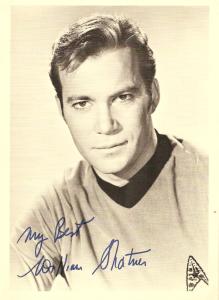
william_shatnerAs a schoolboy I wrote to Desilu studios where I believed Star Trek was made, based on credits shown at the end of the show. After a while I received a set of glossy pictures of the show’s stars. They were all signed by the various actors, Shatner, Nimoy and so on but the signatures, I have long suspected, were made by a machine.
The original Star Trek, like many TV programmes of the sixties was shot on film and today it looks pretty sharp compared to shows from the 80’s that were shot straight to video. It was given a digital makeover a few years back with digital effects and new CGI spacecraft and is looking pretty good these days. Which was my favourite episode? Well I’d have to say it was the one that fans voted the best Star Trek episode ever; City on the Edge of Forever. The crew of the Enterprise arrive at a distant planet searching for the source of some time displacement. The source is a time portal, left among the ruins of an ancient civilisation which although abandoned, still emits waves of time displacement. In the meantime, Doctor McCoy is suffering from paranoia brought on by an accidental overdose of the wonder drug cordrazine which any Star Trek fan will tell you can cure any known Galactic ailment. McCoy in his crazed state bumbles through the time portal, back to 1930’s America (handy for that old 1930’s set on the Paramount back lot) and changes history. Kirk and Spock are forced to also go back in time, stop McCoy from changing history and restore things to the way they were. Joan Collins plays a charity worker at the core of events; does she have to die in order to restore normality?

Star Trek the Motion Picture

After three series the show was cancelled but was remade a few years later as a TV cartoon. The huge fan base of the series caused the producers to think again and in 1977 they decided to make a big screen version of the show to cash in on the huge success of Star Wars. Star Trek the Motion Picture was released in 1979 and was directed by Robert Wise who was one of the editors on the film classic, Citizen Kane. I enjoyed the film very much although I feel the story was a little lacking. An entity called Vega is on the way to destroy the earth and the only starship in interception range is the recently refurbished Enterprise. All the favourites from the TV series make their return with a few additions. It was a good film but not a great one.

The Next Generation

The success of the film made the producers think about a new TV series, not with Kirk, Spock and McCoy but with a new crew. The Next Generation is set further into the future than the original series. Patrick Stewart plays the Captain and Jonathan Frakes is the first officer. There is no Vulcan science officer like Mr Spock but Brent Spiner plays a similar character; Data, an android.

The Next Generation is something I have always found rather lacking. I wasn’t keen on Mr Pointy-head Captain Picard and the cocktail lounge style bridge on his version of the starship Enterprise. Why on earth does he have to run every decision by his first officer, his councillor and everyone else on the bridge when Kirk would have just sorted that situation out like a shot, fired off a few photon torpedos and would even have found a pretty girl to flirt with too? The series was filmed on video and doesn’t look as good today when compared to the pin sharp original series.

Deep Space 9.

What can I say about this series? My knee jerk reaction was that it’s a load of old tosh might sound a bit mean to die hard Trek fans, but it was never my cup of tea. The only episode I ever enjoyed was an episode in which the crew of Deep Space 9 return to the past and get involved in the old original series episode ‘The Trouble with Tribbles’ using some pretty nifty special effects.

Star Trek Voyager.

I wasn’t so keen on Voyager at first, but I have to say I do like the later episodes when Captain Janeway finally got rid of her early weird hair styles and the drippy alien Kes got the bullet from the show.

Captain Janeway was the Star Trek world’s first female captain and as she began to look more normal as far as her hair, the writers decided to shake things up with the new and pretty sexy Seven of Nine character. She was rescued from the Borg, an alien race whose catchphrase is you will be assimilated. Seven was given a very appealing tight fitting catsuit to wear instead of the Space Federation regulation uniform. Catsuits are OK and maybe they are pretty popular in the 24th century but they never seem to have any pockets. What Seven does with her handkerchiefs, lip gloss, mobile phone and purse I really don’t know. In the future people must prefer looking sexy rather than worrying about their stuff, at least they do in the eyes of the Star Trek writers.

Seven is the nucleus of some great episodes especially one where we go back and see how young Annika Hanson (Seven as a young girl), and her family were assimilated by the Borg. The Borg are a race of aliens who assimilate other species into their own and at their centre is the Borg Queen who really likes the idea of Seven coming back to her ‘collective’.

Star Trek Enterprise.

This is supposed to be a prequel to the original series. I can’t say I’ve ever got through a complete episode. My only observations are that the crew go around in overalls and the Captain is played by the guy who used to be in the time travel show Quantum Leap.

Star Trek Discovery.

The latest series in the franchise is Star Trek Discovery, which is rather like watching a very fast music video, I gave it a good 15 minutes and then had to switch off. Sorry, it’s just not my cup of sci-fi.

Star Trek Picard.

Picard airs on Netflix or Amazon or some such channel that I have no access to and have no intention of subscribing to, mainly because I am allergic to opening up my wallet. After watching a few clips of Picard on YouTube I actually found it quite appealing so I decided to search for a cheap DVD of the episodes on eBay. Picard, I have to say is a pretty amazing slice of sci-fi. It’s not perfect and in fact it is rather complicated but it’s about a mystery at the heart of Star Fleet and Admiral Picard, no longer a member of Star Fleet, is determined to find out. Along the way he meets Seven of Nine and various other favourites from the old TV shows. Some of the episodes have been a little slow and yes, I know I’ve slagged off Captain Picard before but for the most part this series has been pretty good and anyone wanting to buy my DVDs is welcome to make me an offer as soon as I have got through series one.

William Shatner has reached the venerable age of 90 this year so it was good to read in the media that he is still going strong. Wonder if there is any chance of him playing Kirk again just one last time? Star Trek Kirk sounds good to me.

More on the Star Trek Films.

Getting back to the Star Trek films; Paramount studios decided to have another go at filming Star Trek for the big screen. For the second film they decided to employ producer Harve Bennett to make a better and cheaper Star Trek film. He apparently watched all the episodes of the TV series and decided to bring back the character of Khan who had once attempted to take over the Enterprise and was later left on a distant planet to start a new life with his crew. In Star Trek II: The Wrath of Khan Mr Chekhov finds that the planet Khan was abandoned on has become a desert and Kahn isn’t happy; he wants revenge on Kirk. Wrath of Khan is a really good film, much more like the original TV episodes than Motion Picture. The crew all sport some new natty uniforms and clearly it must be a little chilly on the Enterprise because all the staff seem to be wearing woolly jumpers and jackets. I don’t remember the Apollo astronauts ever wearing woolly jumpers but maybe astronauts in the 24th century are not made of such stern stuff. Of course it could be that they just have never thought about turning up the central heating.

Trek III was another excellent film. In this one we find that although Spock died in the previous film, his body has been regenerated by the Genesis project. In Star Trek IV the crew return to the 1980’s in order to bring a whale back to the future for reasons which I won’t even begin to get into. Watch out for the scene where Spock deals with a guy playing loud music on the bus; I loved it.

The character of Captain Kirk was actually killed off in the movie Generations which started off pretty well, combining the usual sci-fi elements of Star Trek with an intriguing mystery; who is the mysterious Soran and what is he up to? As it happened what he was up to wasn’t really that interesting, but the film marked the cinema handover from the original Star Trek cast to the new one. Pity really because as I mentioned above, I never really took to the Next Generation.

Just as I’d got to the end of this post I thought it might be an idea to actually watch some Star Trek again for some final opinions. After a quick scan through my DVDs I came across Star Trek III in which the crew of the Enterprise are grieving over the loss of Mr Spock in the previous film. Captain Kirk finds that Spock, who knew he was about to die, had left his Katra, his soul, in the mind of Dr McCoy and the crew undertake to take McCoy and Spock’s body back to the planet Vulcan, Spock’s home. A lot of stuff happens along the way and of course they finally succeed in reuniting Spock’s body with his Katra, although sadly, Kirk’s son is murdered by the Klingons along the way. It’s a great film, very reminiscent of the original episodes but a big factor in the film is the performance of William Shatner. He really is an outstanding actor and I think the success of Star Trek is in no small measure due to him. Shatner went on to play many other roles on TV so he can hardly claim to be type cast but I wonder if he hadn’t played Kirk, would he have gone on to a better career as a film actor.

Star Trek is ultimately about three people, Kirk, Spock and McCoy and the producers probably realised that which is why, in the latest Trek films, a new generation of actors have been asked to recreate the old characters meaning that Captain Kirk lives on again for a new generation of sci-fi fans.


What to do next: Here are a few options.

Listen to my podcast Click here.

Share this post on your favourite social media!

Hit the Subscribe button. Never miss another post!

Buy the book! Click here to purchase my new poetry anthology.

Click here to visit Amazon and download Floating in Space to your Kindle or order the paperback version.

A Slice of my Locked Down Life

When I used to work a nine to five job, I always looked forward to a bank holiday. It meant only working four days instead of five. Nowadays when I work shifts, I sometimes end up working the bank holiday but when it comes down to it, I don’t really care. It’s actually nicer having a break when the holiday resorts and seaside destinations are not packed. This bank holiday I wasn’t working but the weather in the UK, at least in the northwest where I live, was dreadful. It was cold and did nothing but rain so I spent the day watching TV.

The lockdown is easing in the UK and pubs and restaurants are open but, and it’s a rather big but, for outdoors only. We went to our favourite restaurant the other week. It had been a pretty warm day but it was cooling quickly by the time our table was ready. Luckily they have those outside heaters which helped but not that much. I couldn’t help comparing the situation to eating out in Lanzarote in January 2020. The restaurants over there have much more effective patio heaters but either way, it was good to be out again.

Last week we tried eating out again. This time we went to the 54 bistro in St Annes. It describes itself as a Mediterranean restaurant and it serves mainly tapas. Liz always goes for the fish platter they serve there. For me, I went for bruschetta followed by spicy pasta and some cheesy flatbread. The restaurant was still pretty busy and various potential diners got turned away while we were eating as the small dining area was either full or waiting for diners who had booked a table. There were patio heaters but up at a high level and they were not particularly effective. Maybe no one had told them that heat rises. We were dining at about six and by seven it had gone a lot cooler. Towards the end of the meal, it was actually really cold and despite my thick cardigan I was really chilled.

For some mad reason we decided to have a quick pint, our first of 2021 sat outside Wetherspoons and by the time I had supped my beer I was frozen to the bone. Roll on summer!

I don’t know if you remember but a few years back an aircraft that had just taken off from New York had to ditch in the Hudson river. For some reason Clint Eastwood decided to make a film about it and they showed it last week on BBC1.

I’ve actually always wondered how could they make a whole film about that short event. The aircraft takes off, hits a flock of birds, the engines get jammed up and this being New York, a pretty densely populated place, there was nowhere to land except in the river.

The film which was called Sully, after the pilot’s nickname, shows the plane landing in the river quite a few times. Pilot Sully played by Tom Hanks calls his wife up after the rescue to say he is OK. OK she asks? OK how? What has happened? Turn on the TV he says and you’ll see. The film then goes on to show Sully as a young pilot and later as an air force jet pilot following a colleague with a problem aircraft back to base.

Sully then has an interview with his bosses from the airline who, rather than being pleased he saved all those lives, seem to think Sully could have got the aircraft back to the airfield and the rest of the film tends to focus on that. Sully becomes a bit of a New York celebrity but early investigation reports also seem to indicate that the pilots could have made it back to LaGuardia airport. Sully says they could not have done so as both engines failed but the aircraft telemetry suggested that one engine was OK.

At the investigation hearing, a flight simulation is shown where various pilots easily turn back to the airport. Simulations are fine but as Sully points out, a simulation is just that, a simulation not reality. How many tries did the simulator pilots have? The answer was 17! Sully and his co-pilot only got one chance and after adding 35 seconds on to the simulator, for decision time, the simulator pilots all crashed. Later when the aircraft engines are raised from the river bed and checked, it is confirmed that both engines failed, just as the pilots said.

I have to say although parts of the film were interesting, as a whole it didn’t work for me. I remember seeing a film years ago where an aircraft ran out of fuel. I think they may have just changed from imperial measurement to metric and there was some confusion. Anyway the plane ran out of fuel somewhere over the USA but happily the pilots were able to glide down to earth using an unused airfield that the pilot happened to know about. That as I remember was a very good film with a really exciting build up of tension.(After some quick research I found it was called Freefall: Flight 174.)

Getting back to Sully I read somewhere that the whole incident was a tonic to New York as the previous aircraft disaster in the city, the 9/11 disaster did not have a happy ending, unlike this one.

In my draft folder I’ve got a post started called The Best Worst films of All Time. You might be confused by that at first but just think for a moment, how many crap films are there that you actually enjoy and continue to watch again and again every time they pop up on your TV screen. One of the films on the list was a film I watched last week and I must have watched it fifty times at least. It’s called Uncle Buck. I know, it’s a complete load of old tosh but I just seem to be drawn to it like a moth to a flame. Never seen it? Really? OK it’s a sort of variant on the film Home Alone and in fact one of the characters is played by that kid from the Home Alone films, Macauley Culkin.

In this movie a couple have to leave home because the wife’s mother has suddenly passed away. Who can they get to babysit the three kids? No one is available so the no good bum of a brother in law is roped in, you guessed it, Uncle Buck. Uncle Buck is played by the late John Candy and he has to contend with kids he doesn’t even know including, as well as young Mr Culkin, two screen sisters, one of them a teenage girl with a big attitude problem. She is completely embarrassed by her uncouth uncle and his smoke screen producing old banger automobile and even though the film is just a notch above rubbish, it’s actually quite fun in parts.

Buck sorts out ‘Bug’, the teenage girl’s cheating boyfriend and in doing so finally makes friends with his teenage niece. Uncle Buck is a great film to watch when you’re tired and not really paying attention and I always get the feeling it was written by a sort of committee of writers. (Probably the same committee that wrote Home Alone and Three Men and a Baby and so on.) I remember once seeing a documentary about the US sitcom Friends. The show is not one of my favourite programmes but in the documentary they showed how Friends was recorded in front of a live audience. If a bit of business didn’t quite work out, the recording was stopped while a whole bunch of writers and producers had a chat about things. Then a new line or even a section of dialogue was inserted or some of the action was changed. That was then run past the live audience. If it still wasn’t quite right the laughter track was updated to fill in. Writing by committee, interesting.

Anyway, that’s my draft post about great but crap films rendered completely useless even though I only had two other films on my list. Still by the time I finally finish it in about six months, this post will just be a distant memory for regular readers so maybe I can still use it after all.

Getting back to Sully, the actual plane crash (sorry, water landing as the pilots called it) happened on January 15th 2009. It was a freezing day and those passengers looked particularly cold when I checked out the newsreel video from back then. That was just how I felt shivering outside Wetherspoons last week. At least I was able to call a cab, rush back home and light the fire!


What to do next: Here are a few options.

Listen to my podcast Click here.

Share this post on your favourite social media!

Hit the Subscribe button. Never miss another post!

Buy the book! Click here to purchase my new poetry anthology.

Click here to visit Amazon and download Floating in Space to your Kindle or order the paperback version.