Making the VLOG (or I’m Ready for my Close-up Mr De Mille!)

Sunset Boulevard is an outstanding film and due credit must go to the great Billy Wilder who not only directed but also wrote the screenplay, and he even got famous director Cecil B De Mille to play himself in the movie. Even if you’re not a classic movie buff like me, you’ve probably guessed that the quote in the title ‘I’m ready for my close up Mr De Mille’ comes from the movie. There are some even better lines from earlier in the picture when William Holden recognises Norma; ‘You’re Norma Desmond, you used to be in silent pictures. You used to be big’, to which Desmond replies, ‘I am big. It’s the pictures that got small!‘ They just don’t write dialogue like that any more. Anyway, over to the other part of this post, the bit about the vlog.

I follow a number of you tube channels and one of them is ‘I’m Emily’. Emily makes a Vlog, a video blog, every single day! That’s pretty impressive, I mean, I only produce a blog once a week and sometimes I’m pushed to make that target but a video blog, that includes not only recording the content but editing and uploading and so on, all on top of her full time job. I take my hat off to you, Emily.

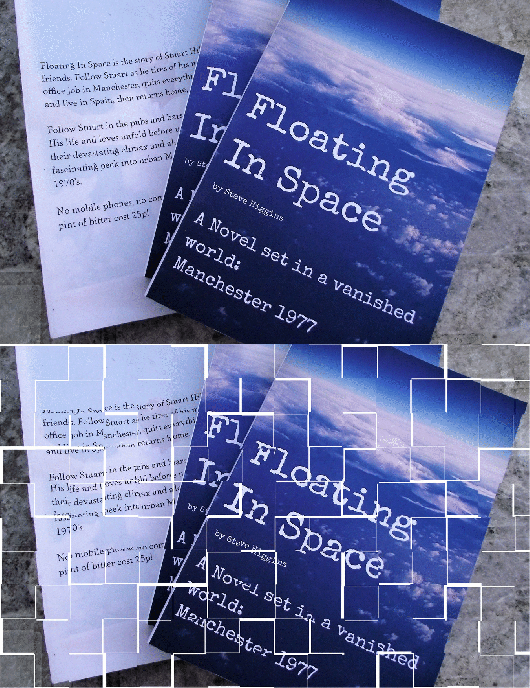
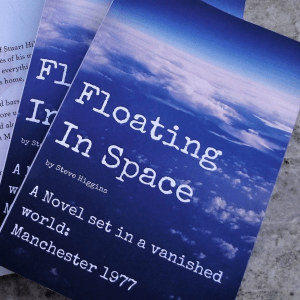
On my YouTube channel, my videos are mostly about my book, Floating in Space. They are all mini adverts I suppose, usually with me talking to the camera explaining why you should buy my book and sometimes why you should try my web page and point your browser at posts just like this one.

Anyway, while on holiday in Lanzarote I wrote once again about my holiday book bag so I thought, hey, I bet I could make that into a vlog too. Should be easy enough. The blog is about my five holiday books, so I imagined myself talking to the camera with the five books all handy in front of me. Sounds easy enough. The aforementioned Emily shoots her vlog on an iPhone which of course has a self facing camera, so if you are filming yourself you can see exactly what is being recorded. Now my video camera is pretty good, it’s a Panasonic HD camera but the screen naturally is at the back and you can’t see the video image as you film. However, whilst out at the market in Marina Rubicon here in Lanzarote I came across a sort of selfie gadget: A clamp that clips onto a table or some other support, grips your camera or camcorder at the other end and has a sort of bendy bit in the middle so you can position everything and then record or photograph yourself. So, one sunny day after breakfast I got set up. Table, chair, books and camera all positioned nicely with the swimming pool in the background. I soon found it was not that easy to frame your shot as the clamp on the selfie gadget masks the camera screen so after a few ‘testing 123’ shots to find the best camera position I was ready for take 1.

Take 1. OK, went pretty well, I blathered on a bit and forgot the author of one book so time for take 2.

Take 2. OK but I’m holding the books slightly out of camera shot.

Take 3. I lift the books higher but gradually as the take goes on the books are getting lower and dropping out of shot. Cut, I shout, getting my director hat on.

Take 4. I’ve reframed and lowered the camera a little. I’ve actually cropped off the top of my head but the books are centre stage. I fluffed one of my lines calling Noel Coward an historical figure instead of a theatrical one but recovered that one OK with a little laugh at myself. I also say the Germans were ‘disappointed’ with Hitler at the end of World War Two when discussing a book about Albert Speer, one of Hitler’s ministers. Bit of an understatement there, I meant to say shocked or devastated, anyway, time for take 5.

Take 5. Start to stumble a little here, perhaps I need cue cards. Dorothy Parker wrote what for New York Magazines? Check the blurb on the back of her book again and time for take 6.

Take 6. Looked pretty good. Wait a minute, did I really say ‘my holiday book blag‘? Time for take 7.

Take 7. Radical re think needed here I think so I’ve smartened myself up a little, put on my favourite holiday shirt and re positioned the camera and my clamp gadget. Wish I’d brought my tripod along! Anyway here we go. Action: ‘Hi I’m Steve Higgins and I’m here in . . er . . ‘ CUT! It’s Lanzarote!

Take 8. Slight camera adjustment as take 7 wasn’t particularly well framed. Forgot to mention who Albert Speer actually was. Will people know who he was? Well, if they are interested in history and World War Two yes, otherwise no . .

Take 9. ‘Bleak House by David Copperfield’? What is this guy talking about? Cut!

Take 10. Not too bad, faltered a few times over some words, mumbled  a little perhaps but generally not bad. Sure I can do better though; still a little slow. Needs more pace.

Take 11: Whoa, slow down boy! I said pace not rabbit on and on without taking a breath!

Take 12: Not happening! Time for a swim!

Well, not quite as easy as I had thought it was going to be. I eventually settled for take 4. Better hold off with my application to the BBC just now, still, bit of practice, a few more videos and – ‘I’m ready for my close up Mr De Mille!’

Here’s the completed video blog:


If you liked this post, why not try my book? Click the links at the top of the page for more information or click the icon below-


6 Great Kitchen Sink Dramas

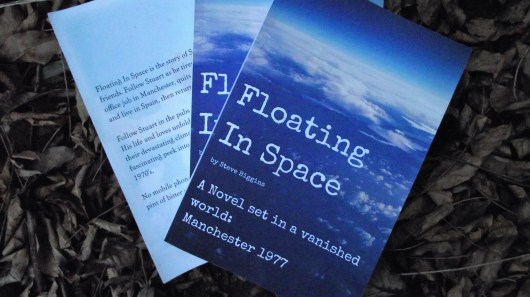
So what exactly is a kitchen sink drama? If you’ve read through the pages on my site that deal with my book ‘Floating In Space,’ you’ll know that this is a phrase I use to describe my book. When I first added Floating In Space to Amazon through the Amazon sister site Createspace I came to a point where I had to define the genre of the book. If you’ve written something that falls easily into a particular niche then that’s not a big deal. Things like romance, thrillers, science fiction, and YA (young adult) are pretty easily definable but my novel is something on the lines of working class fiction from the sixties; books like A Kind of Loving, A Taste of Honey, Saturday Night and Sunday Morning, Alfie and Billy Liar. All of those works were made into films and three of them, Billy Liar, Alfie and A Taste of Honey were also stage plays but what exactly is ‘Kitchen sink drama’?
Wikipedia describes it as a British Cultural movement that developed in the late 1950’s and early 1960’s and enveloped the theatre, art, literature, television and film. It identifies the John Osborne play ‘Look Back in Anger’ as being the start of the movement and afterwards, many people who identified with the movement were known as ‘Angry Young Men.’ Osborne’s play was a sort of backlash against the theatre of Noel Coward and Terrence Rattigan and represented a move away from polite drawing rooms into council house back rooms.

Richard Burton starred in ‘Look Back in Anger’ and as much as I love the richness of his voice, his portrayal of the leading character of Jimmy Porter hardly represents the working class despite Burton’s own personal origins in a Welsh mining village. A much more representative working class voice, certainly for the North West of England is the character of Arthur Seaton played convincingly by Salford actor Albert Finney in the movie Saturday Night and Sunday Morning.

Saturday Night and Sunday Morning. 1960

Saturday Night and Sunday Morning is set in working class Nottingham. Arthur Seaton is a rebellious factory worker who works hard in the factory by day, but at the weekend he spends his money in the pubs and clubs of the town. He is involved with a married woman but starts to lose interest when he meets a single girl called Doreen and begins a relationship with her. My favourite line from the book and the movie is this: “I’m not barmy, I’m a fighting pit prop that wants a pint of beer, that’s me. But if any knowing bastard says that’s me I’ll tell them I’m a dynamite dealer waiting to blow the factory to kingdom come. I’m me and nobody else. Whatever people say I am, that’s what I’m not because they don’t know a bloody thing about me! God knows what I am.

A Taste of Honey. 1961

Written as a play by Shelagh Delaney when she was only eighteen, the work was first performed at Joan Littlewood’s theatre workshop in 1958. The movie version opened in 1961 adapted by Delaney herself and directed by Tony Richardson, who incidentally also directed the film version of ‘Look Back in Anger.’ The movie features outstanding performances by Dora Bryan and Rita Tushingham.

Alfie. 1966

Alfie was directed by Lewis Gilbert who directed some of the earlier Bond films. The script was produced by Bill Naughton and adapted from his own book and play. Alfie is a fascinating film on many levels. It’s a peek back at the swinging sixties; it explores the elements of comedy versus drama, something I’ve always loved and which I looked at recently in a post about the TV show MASH. Once again it’s about the working class and features great performances from all the principal and supporting actors. One fabulous feature is how Alfie talks directly to the camera and sometimes even says things that directly contradict something he is doing or saying to another character. In the opening sequence Michael Caine as Alfie addresses the audience and tells them not to expect any titles. There are none, except for the film title itself and the closing credits feature photos of the cast and crew. Many actors turned down the chance to play Alfie on film, including Caine’s then flat mate Terence Stamp who played the part on Broadway. Laurence Harvey, James Booth and Richard Harris all turned down the role, and Alfie became a breakthrough movie for Michael Caine. My favourite line from the film comes right at the end when Alfie is reflecting about his life: “What have I got? Really? Some money in my pocket. Some nice threads, fancy car at my disposal, and I’m single. Yeah… unattached, free as a bird… I don’t depend on nobody. Nobody depends on me. My life’s my own. But I don’t have peace of mind. And if you don’t have that, you’ve got nothing. So… So what’s the answer? That’s what I keep asking myself. What’s it all about? You know what I mean? “

Billy Liar. 1963

Billy Liar is based on the book by Keith Waterhouse and was directed by John Schlessinger. Tom Courtney played the title role and many faces familiar to TV viewers appear in the cast such as Wilfred Pickles, Rodney Bewes, and Leonard Rossiter. Billy has an imaginary world in which he plays out many daydreams and fantasies. His ambition though is to become a comedy scriptwriter and his friend Liz played by Julie Christie offers to go with him to London. In the final scenes however, Billy loses his nerve and contrives to miss his train, something that Liz has foreseen and has conveniently left his suitcase on the platform for him.

A Kind of Loving. 1962

This is another 60’s classic directed by John Schelssinger. Adapted from the book by Stan Barstow (one of my all time favourite books) with a script by Keith Waterhouse (who wrote Billy Liar) and Wallis Hall. The story is a very simple one; Vic Brown (Alan Bates)  is a draughtsman in a Manchester factory and he gets involved with secretary called Ingrid played by June Ritchie. When Vic learns Ingrid is pregnant, he does the ‘proper’ thing for the 1960s and offers to marry her. Sounds simple but this is a complex and fascinating film and looks at the subtleties of relationships and how the characters make their way through a series of difficult choices. For a northerner like me, it’s also nice to see places I recognise on film. St Annes On Sea looks a little grim, or did do in the 1960’s. Today it’s a lovely place to live.

Spring and Port Wine. 1969

Hollywood movie star James Mason, famous for roles like the drunken movie star in A Star is Born and the suave villain in Hitchcock’s North by Northwest, left Hollywood in 1963, settled in Switzerland and embarked on a more transatlantic career. One of those projects was Spring and Port Wine. The movie is set in Bolton and is about factory worker Rafe Crompton and his family. His daughter played by Susan George is acting strangely and Rafe struggles to dominate her, his other daughter played by Hannah Gordon and his sons, Rodney Bewes and Len Jones. It later transpires the Susan George character may be pregnant and the family rally round to help her.

The Family Way 1966

The Family Way is one of my very favourite films and like Spring and Port Wine above, features a classic movie actor, John Mills, in a very different role. Saying that, Mills’ film career was diverse to say the least and in this movie he plays Ezra Fitton whose son has just married Jenny, played by Mills’ real life daughter, Hayley. Various problems plague the newly weds, in particular a holiday that never happens due to a travel agent absconding with their funds. Hints are made during the film that Ezra’s son may not even be his son after all. When the truth dawns on Ezra his son asks what is wrong and Ezra replies with the most memorable line in the film; “It’s life lad. Sometimes it’ll make you laugh and sometimes it’ll make you bloody cry!” Time and time again, and I don’t know if you have ever found the same thing, but certain movies I love always seem to have a common denominator. In this case Spring and Port Wine, The Family Way, and Alfie were all penned by the same author, Bill Naughton.


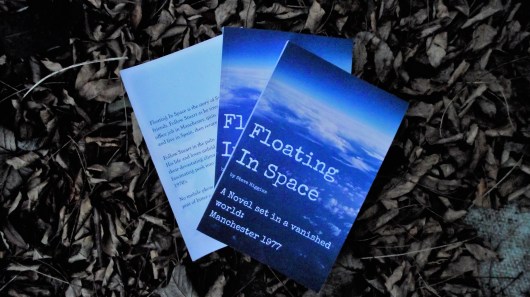
One final kitchen sink drama: ‘Floating In Space’ by Steve Higgins. Click the icon below to go to my Amazon page or check out the links at the top of the page.

The Blogger Recognition Award

blogger-recognition-awardFriends and Bloggers. I have recently been made the recipient of a Blogger Recognition Award. I feel very humble in accepting this and I have to thank my fellow blogger Dave Kingsbury for his nomination. Thanks Dave, much appreciated. If can you let me know when the silver cup and cash bonus will be coming my way I would really appreciate it!

The rules for this award are very specific:

1. Select 15 other blogs you want to give the award to.

2. You cannot nominate yourself or the person who has nominated you.

3. Write a post to show your award.

4. Give a brief story of how your blog started.

5. Give a piece of advice or two to new bloggers.

6. Thank whoever nominated you and provide a link to their blog.

7. Attach the award badge to the post (right click and save, then upload.)

8. Comment on each blog and let them know you have nominated them.

9. Provide a link  to the original post on Edge of Night 

Well, first of all, here are 15 other blogs I’d like to give the award to. I love them all but the fact of the matter is this, 15 blogs, that’s a bit of a handfull; 5 would have been easier. Anyway, I’ve got stuff to do, places to go so I picked 15 sites very quickly from sites I happen to follow and they must be good otherwise I wouldn’t follow them! (Unless I only followed them because they said they’d follow me if I followed them. That’s the blogging world for you – fickle.)

https://larryhancock.wordpress.com/ Thanks for keeping me up to date with the JFK assassination news Larry.

The B Movie Blog

I Started Late and forgot the Dog

http://journeysinclassicfilm.com/

http://abbyhasissues.com/

https://kaitkingthewriter.wordpress.com/

https://manchesterarchiveplus.wordpress.com/ (Hey, as a pround Mancunian I always check the archives blog!)

https://iheartingrid.wordpress.com/

Home

http://mostlyblogging.com/

https://unsolicitedtidbits.wordpress.com/

http://filmdoctor.co.uk/

http://aopinionatedman.com/

https://alicerene.wordpress.com/

https://pleasureforpleasure.wordpress.com/

https://wayneej.wordpress.com/

OK, what’s the next thing? How did I start my blog?
Blogging for me is primarily to promote my work but I do love writing and I do love writing my blog. One good thing about blogging is that it gets the creative juices flowing. It gets you thinking, what can I write about? What can I write about next time? So far the ideas have kept on coming and I’ve got six or seven draft blogs in the pipeline although I do worry about the day the ideas will dry up. When that day comes I’ll probably pack the whole thing in. Many people ask me how do I do it, how do I come up with a new post every week? Well it’s a good job I don’t have to write a daily blog; I’d be pretty pushed to do that I can tell you! Anyway what I do is this: I keep an eye and an ear out for a blog idea all the time. I read a lot and one of my great loves is trolling round for second hand books so if I’m stuck I’ll write about books or writers. I’ve already done posts about James Hilton and Dylan Thomas, two of my favourite writers, and I recently wrote a second post about my finds in second hand bookshops. If ever I see something on TV that might inspire a blog post, I jot it down in my notebook or even sometimes on my mobile. In my car, which believe it or not, is a prime creative space for me, I have a small hand held tape recorder and I can be seen frequently jabbering into it as I drive to and from work.

Recently I switched on the television and an old James Bond movie was showing. Now, I’ve read all of Ian Fleming’s Bond books and seen all the films so that looked to me to be a prime target for a blog. A little research on the internet will tell you that a lot of popular posts will have a number in the title, things like ’10 different ways to promote your blog’ or ’20 ways to get more blog traffic.’ OK I thought, how about ‘8 Things you didn’t know about James Bond!

Advice for Bloggers: Read other blogs. See how they are put together. Use good graphics and pictures as they pull the readers in, I create mine on sites like picmonkey and quotescover. Write about things you like and things you are interested in. If you’re not interested in something, how can you expect to interest others?

If you like humour, books and classic films, check out the blog list above. If you would like to read more of my work, why not try my book, Floating In Space? Click the links at the top of the page for more info!


Second Hand Books and The World of Movie Making

Million Dollar Movie by Michael Powell.

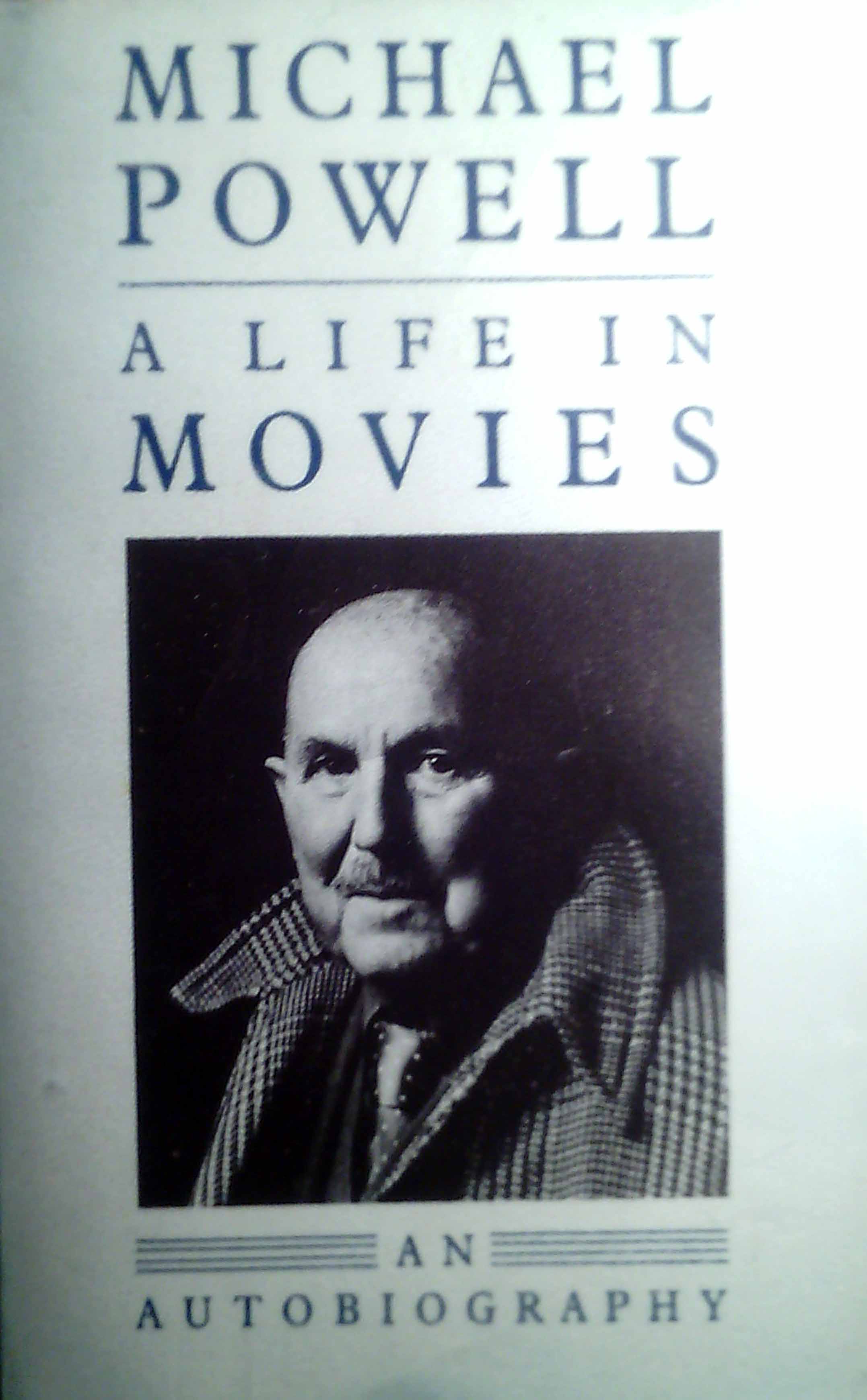
poweelbookI really do love books, especially second hand books. I think that what is so wonderful about a second hand book is that the book has told its story before to someone else, and now if you have just bought it, its going to tell it’s story to you. I spend a lot of time browsing in book shops, both physically in actual shops or on-line in virtual book stores. The thing about on-line book stores is that you have to have a starting point, it’s no fun browsing through lists of books so I tend to browse on-line only when there is a particular book I want. In an actual book store I scan through the various sections and although I tend to linger on biographies and books about film, anything can catch my eye. A while ago I was reading a book by movie director Michael Powell called ‘A Life in Movies.’ It was a pretty thick book and took a fair old while to read and when I got the end there didn’t seem to be any indication there was another volume.
Of course, Powell was quite old when he wrote his autobiography, perhaps he thought that there wouldn’t be time for another book. Well, I’m happy to say he did write another volume and this is it, Million Dollar Movie. Powell continues the story of his life in his usual random fashion, jumping to things out of context and out of sequence. Just because he happens to visiting Hollywood for instance, he will go on to talk about Hollywood and movie people he knows there and so on. Powell made some great movies alongside collaborator Emeric Pressburger but his career stalled when he made a shocking film called Peeping Tom about a disturbed cameraman who murders his subjects and films them as he does so. Audiences were shocked and Powell’s directing career ended, although in later years fellow directors like Martin Scorcese praised the film as a classic. Liz bought me this book as a gift and the copy she tracked down comes from Austin Public library in Texas in the United States. Provenance is a word they use in the antiques business; It’s to do with the background of an item, and that is what makes this copy so wonderful; How it has come so far, from the USA to England, just so I can sit back and enjoy it.

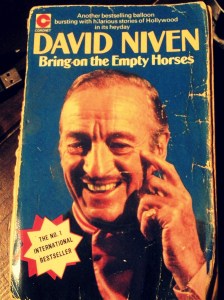
Bring on the Empty Horses by David Niven.

bringontheYou might be thinking, looking at the picture here: Couldn’t the author have found a better picture? Looking at the picture again I suppose that particular copy is just a little tatty. That’s because it’s my travel copy. I’ve got another copy, a much nicer version that resides in my bookcase that I browse through now and again. The reason I’ve got two versions is because my travel copy goes all over the place with me. If I’m travelling somewhere on the bus or train, that slightly tatty copy goes easily into my pocket or my bag because I can read it time and time again. Not only is it the best ever book written about the golden age of Hollywood, it’s also by far the most accessible and readable book on the subject ever.
Niven’s first book was his autobiography; ‘The Moon’s a Balloon’. In it Niven told how he came over to Hollywood from the UK and made the incredible leap from movie extra to movie star. The title of this book comes from Hungarian director Michael Curtiz. When filming ‘The Charge of the Light Brigade’ Curtiz wanted a hundred riderless horses to come into shot so he boomed on his megaphone ‘Bring on the Empty Horses!’ Niven and fellow actor Errol Flynn collapsed into laughter and Niven filed away the phrase for later use. The book covers the Hollywood years from 1935 to 1960 and Niven paints vivid portraits of Hollywood itself and long vanished watering holes like the Brown Derby and Romanoffs. He looks at some of the stars he has known like Errol Flynn, Clark Gable, Ronald Colman, and Constance Bennett. Other chapters profile producers like Sam Goldwyn and many other famous Hollywood personalities of the time. All his stories are told with great affection and I particularly liked the portrait of Mike Romanoff, the restaurateur who tried to pass himself off, in a slightly tongue in cheek way, as a member of the Russian Romanov family. If ever I’m travelling and need something to read on the journey I’ll always have this copy on hand. It’s like an old wine that improves with age!


What to do next:

Share this post on your favourite social media!

Hit the Subscribe button. Never miss another post!

Buy the book! Click here to purchase my new poetry anthology.

Click here to visit Amazon and download Floating in Space to your Kindle or order the paperback version.


3 Books you should read about the JFK Assassination

quotescover-JPG-43The 22nd November is the anniversary of the assassination of John F Kennedy; one of the most shocking events of the twentieth century. It’s something I’ve been interested in ever since I was a boy and I’ve collected many books about the subject.

I’m still fascinated by the mystery: Did Lee Oswald shoot the President? Did he act alone? Why did Jack Ruby shoot Oswald? Was the CIA involved? Very few of those questions will ever be answered but it’s clear that the findings of the Warren Commission, the investigative body set up by President Lyndon Johnson are not definitive. Indeed the senate investigation in the 1970’s concluded that the President was assassinated ‘probably’ by a conspiracy. Even so, no attempts to investigate further or take action have been made. If you want to find out more, what should you read? Well, there are numerous books on the subject you might try but here below are three key and classic books you need to read:

Mark_Lane_Rush_to_Judgment_coverRush To Judgement by Mark Lane
This was one of the first books to take a critical look at the Warren Commission report and say, ‘hang on, some things don’t add up here!’ Lane deals with a lot of the minutiae of the assassination and Lee Harvey Oswald’s activities.

One interesting element to me was the murder weapon; the Mannlicher-Carcano rifle bought through mail order and sent to a post office box that Oswald rented. The gun was oily. The scope on the gun was not aligned properly, in fact the FBI found that it could not be aligned at all and had to add metal shims in order to align the scope, meaning that it was test fired by the FBI in a condition that was not available to Oswald!

The first officer to find the rifle even signed an affidavit that the rifle was a Mauser and not a Mannlicher-Carcano! Quite a mistake for an American police officer who would surely be familiar with firearms.

sixsecondsSix seconds in Dallas by Josiah Thompson
Thompson argued in favour of a conspiracy by analysing the Zapruder film of the assassination. In the film shot by local businessman Abraham Zapruder the last two shots come close together, meaning that one of them could not have come from Oswald’s rifle because it took 1.7 seconds to eject the used cartridge and make ready to fire again. This clearly occurred to the people in the Warren Commission as one of its members (Arlen Specter, a lawyer not a forensic expert) put forward the so called ‘single bullet theory’ which argued that a single bullet hit President Kennedy in the back, exited his throat and then struck Governor Connelly who was sitting ahead of Kennedy in the Presidential limousine.

This bullet was found on a stretcher in almost pristine condition which many commentators have asserted means it could not have passed through two bodies and inflicted so much damage.

In 1979 the Select Committee on Assassinations heard evidence of tests that showed the firing could have taken place in only 1.66 seconds per shot. Oswald’s original rifle however, was in too poor a condition to be used for the tests and another was substituted. Even so, none of the test shooters were able to replicate Oswald’s marksmanship despite Oswald being at best only a reasonable shot. An interesting, readable and thoughtful book but rather rare.

Best Evidence by David Lifton.

best evidence

best evidence

This is an excellent book in many ways. It’s not just about the assassination itself, the author spends a lot of time describing his personal fascination in the Kennedy case and how his interest has evolved and developed. He has followed the growth of theories and new revelations over the years and made efforts to meet and interview many of the witnesses involved.

Lifton puts forward an argument that is a little unbelievable, certainly to me, that Kennedy’s body was spirited away and the injuries changed to fit in with the theory that Oswald shot Kennedy from the rear. The doctors at Parkland Hospital all clearly state that Kennedy had a massive exit wound in the back of his head indicating a shot from the front but the autopsy report concluded Kennedy was shot from the rear.

I can understand where Lifton was coming from, the autopsy result and recollections of medical staff at Parkland clearly don’t match, but altering the President’s body? I don’t think so. The President’s body would have had to have been pried from the Secret Service who were with it from Dealey Plaza, to Parkland, and Air Force One to Bethesda Naval Hospital.

Some of those whom Lifton interviewed claimed a helicopter landed and the President’s body arrived, implying it came by helicopter when in fact it came by motorcade in an ambulance with the First Lady aboard. One interviewee stated that at Parkland Hospital the body was wrapped in sheets and placed in a coffin. Another spoke of taking the President’s body out of a body bag at Bethesda so clearly these accounts do not match up.

This book also did a lot to help me reconcile the workings of the Warren Commission. It is often dismissed by many people as a cover up but in fact the Warren Commission reacted to the evidence presented to it by the FBI as any other court or legal body would do: It processed the assassination according to the evidence.

Did anyone see someone shooting from the grassy knoll? No. Did anyone see a shooter in the Texas schoolbook depository? Yes. Was a rifle found in the sniper’s nest at the Texas School Book Depository? Yes. Was it delivered to a PO box belonging to Lee Oswald? Yes.

As you can imagine, the Warren Commission found Lee Oswald guilty of the assassination. What else could they do? However, many people not heard or dismissed by the commission heard gunfire and shots from the grassy knoll.

One Police Officer dropped his motorcycle and ran up there only to encounter a scruffy man looking like an auto mechanic. The man had Secret Service credentials and the officer let him go. There were no Secret Service there that day. They were all in the motorcade or waiting at the Trade Mart where the President’s next stop should have been, so who was the man? What was he doing there on the grassy knoll?

As you read more and more about the assassination, more stories like that come to light and the accumulated weight of these revelations is what fuels the enduring mystery. I do love a mystery and my interest in the JFK assassination, like Lifton’s has endured for a long time.

I’m not sure just how to describe to you just how fascinated I am in this story but if you’ve seen that part in the Woody Allen film Annie Hall, where Woody is trying to seduce someone but finds himself consumed by thoughts about the assassination then you’ve got the idea.

To find out more about the assassination try the JFK Lancer website at http://www.jfklancer.com

On a less serious note, here’s the Woody Allen clip:


If you enjoyed this post why not try my book Floating in Space set in Manchester, 1977? Click the links at the top of the page for more information.

My Holiday Book Bag

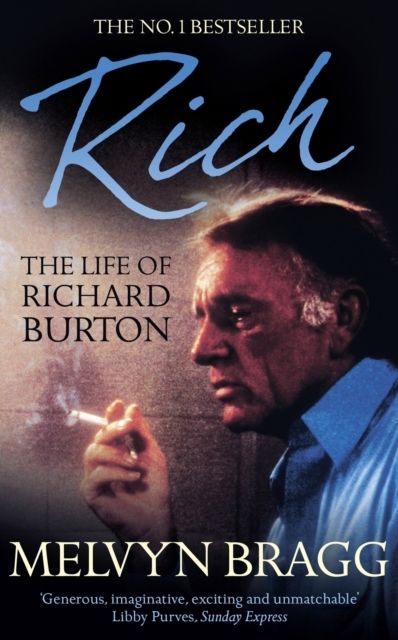
richA long time ago I was reading a biography about Richard Burton, in fact it must have been ‘Rich,’ the biography by Melvyn Bragg. Bragg used Burton’s own diaries in his work and wrote, among other things, about Burton’s love of books and when Burton went on holiday he looked forward with delight to the contents of his ‘book bag.’ I know it’s a pretty tenuous link but one thing I have in common with Richard Burton is a love of books and when I go on holiday, one of the delights of lying under a warm sun on my sun bed is a good undisturbed read. OK, I read a lot at home and on my lunch breaks at work but it’s a few minutes here and a few minutes there and whenever I get interrupted it kind of breaks the flow. Some books, as we all know, are just made for a really long, uninterrupted read.

I’m currently on holiday in France and I thought I might share the contents of my ‘book bag’ with you. I’m a really big second hand book buyer and I buy my books from many sources. Second hand book shops, car boot sales, charity shops and of course, the internet. Even the occasional book comes my way as a gift. Anyway, without further ado, here are my holiday books:

Holiday Books

Holiday Books

Muhammad Ali:  His Life and Times by Thomas Hauser

This is an interesting biography and Muhammad Ali, once known as Cassius Clay has led an eventful life. The text is based on numerous interviews made by the author with Ali, his friends, and others involved in his life. The early part of the book dealing with Ali’s career in boxing is good but the book falters a little with the subject’s later life. In fact, I’m not sure what Ali does in his later life apart from travel and talk about the Koran. The author also tries to put Ali’s sporting achievements in context by comparing him with other greats of American sport but apart from Joe DiMaggio, I’d never heard of them. Perhaps that’s a telling point, indicating that Ali’s fame is not just boxing related. George Foreman and Joe Frazier may not be that famous outside of boxing but Ali certainly is. Having said that I’m not sure I’d be interested in Ali at all if not for my Dad. My Dad was a great boxing fan and I was brought up with tales of all the great boxers like Joe Louis, Sonny Liston and so on. His favourite boxer was Rocky Marciano and he disliked Ali with a passion and always, always referred to him as Cassius Clay. From reading this book, that was a feeling many boxing fans had in common and a lot of that dislike for Ali came from his refusal to join the army and fight in Vietnam which resulted in the loss of his world heavyweight crown and his boxing licence. Years later, when an anti-Vietnam focus had taken precedence in the US, people began to view Ali in a more favourable light and so began his rise to popularity. Ali regained his boxing crown as heavyweight champion of the world and has become the most famous boxer, and perhaps even the most famous sportsman of the 20th century.

Seven Pillars of Wisdom by T E Laurence.

I read this book many years ago but when I saw it again, lying there all forlorn on the shelf of a charity shop, well, I bought it for a few pennies and here it is in my holiday book bag. If you have ever seen the film ‘Laurence of Arabia’ then you will know what this book is about; the exploits of T E Laurence in Arabia during the First World War. Laurence set out to write a classic of literature and not necessarily a history book and to a great extent he succeeded but not without a lot of controversy along the way. After the war an American journalist called Lowell Thomas created a lecture and slide show featuring the exploits in the desert of Laurence and his irregular Arab army. The public were fascinated and the show made Laurence into a household name. Despite going on to become a Colonel, Laurence later resigned from the army and joined the RAF as an aircraftsman under a pseudonym. He seemed to be a man who wanted to court the spotlight and at the same time avoid it. He was killed in 1935 in a motorcycle accident as he swerved to avoid two boys on bicycles. The movie Laurence of Arabia opens with this same incident.

An Autobiography by M K Ghandi.

I’m looking forward to reading this, the thoughts of Ghandi, a man who changed an entire nation whilst embracing the values of non-violence.

No Bed of Roses by Joan Fontaine.

I bought this book from the internet and probably paid more in postage than the actual price of the book. That can be a problem when buying books over the net, especially heavy hard backed ones but to be fair I only paid three or four pounds in total. This autobiography by Hollywood actress Joan Fontaine was a fairly interesting read which took me through my first week of sunbathing in the Central region of France but I have to say, as much as I like Joan the Hollywood actress, I didn’t much care for her style of writing or for most of the content. In many ways the book reads like a run through of her old itineraries or diaries and despite working on movies like Rebecca and Suspicion, both directed by Hitchcock, we hear little about the making of those movies. Some things were very surprising like her random adoption of a Peruvian girl who she later fell out with and stopped speaking to and of course, her famous ‘feud’ with sister Olivia De Havilland. All in all not a bad read but I was surprised to find a little dig in the text at David Niven’s two books of Hollywood memoires. David’s books ‘The Moon’s a balloon’ and ‘Bring on the Empty Horses’ are two of the best books of movie reminiscences I have ever read!

The New York Trilogy by Paul Auster.

I’ve not started this book either but you can click on this link for a review. One thing I’ve always found a little funny about books is that the more you want a book and the more you think about it, that book will eventually come to you! I’d read about Paul Auster’s New York trilogy in an internet list of great books. I’d never heard of the book or the writer before but not long afterwards, I spotted a copy at a car boot sale in St Annes! Looking forward to reading this soon, especially as it’s the only novel I have brought on holiday!

Which books are you taking to read on holiday?


If you enjoyed this post, why not try my book, Floating In Space? Click the links at the top of the page for more information.

The Joys of a Second Hand Bookshop (Part 2)

You can’t beat a second hand book shop and an afternoon is never wasted when spent rummaging through the stock of a really good one. What’s so good about a second hand book is that its story, its message has been sent already to someone else and now that same message, that same story is coming to you; If you buy the book. I love it when I pick up a book and there is an inscription on the front page: ‘Best wishes and happy birthday John, love Anne.’ I spend a lot of time wondering who Anne was and where she is now. Who was John and why has he decided to part with this book? Anyway, here are two selections from my book collection.

Miscellany One by Dylan Thomas.
IMG_20150729_113409I love lots of writers but probably my all-time favourite is Dylan Thomas. I love the outstanding power of his writing, his incredible imagery, and the wonderful pictures he creates with his words.

‘Miscellany One’ is a collection of poems, stories and broadcasts by Dylan and I picked it up one windy afternoon at a bookshop in Morecambe.

Dylan is the sort of writer I’ve always wanted to be: A bohemian, pub crawling, boozing writer who fought with himself as he laboured to paint his word pictures. Whether that was really the case I don’t know but Dylan did like his pubs and he did enjoy a drink.

The fact of the matter is that I’m nothing like Dylan, except we both share a love of words, particularly the sound of words, which is the key to the richness of Dylan’s work, especially his poetry.

If you think about it, there must be a connection between the sound of a word and its meaning, a deep organic connection. After all, how did words begin? Imagine some ancient caveman, just wanting to get some concept over to his mate. What are the deepest and strongest feelings for a human being? Well, for a caveman food must be one, and love too. Surely love was present in those primordial days when every caveman went out on Saturday with his club looking for his mate. There must have been a moment when ancient man strived to say something to his mate, tried to express his feeling and a sound that was the precursor to the word love slipped uneasily from his lips.

If you have read any of Dylan’s poems and are yet to understand his magic, let me give you a tiny bit of advice: Listen to Dylan’s voice. Yes, Dylan, like many poets wrote for his own voice and if you click on to any Dylan Thomas page or search anywhere on the internet you are bound to come across some old recording of his voice. Don’t make do with lesser voices, even when we are talking about great actors like Richard Burton or Anthony Hopkins. Search out Dylan himself and you will be won over, like me, by the power of his voice.

It’s not just his poems that are rich with the power of words. Dylan wrote and performed a good many radio plays and broadcasts and my very favourite is ‘Return Journey’ which can be found within this slim volume. It’s about Dylan himself returning to Swansea in search of his former self ‘Young Thomas.’ He visits young Thomas’ old haunts and meets with people who knew him fleetingly; like the barmaid who used to serve him, journalists who worked with him and even the park keeper where Dylan and his young friends would play in the park. It’s a lovely piece where drama merges with prose and we slip in and out of the two as the story progresses.

Many years ago I visited Dylan’s former home in Laugharne, now a museum dedicated to Dylan. I can only say I loved the place and didn’t want to leave. I wandered through its rooms and looked at the black and white photos on the walls and tried to imagine Dylan living here and banging out his poems and stories in his writing shed then later ambling down to the pub for a pint. I had to leave early the day I visited, so I went back the next day and the staff recognised me and let me in without paying, so in return I bought some books about Dylan and a copy of his collected stories. Keep a look out for Miscellany One and its companion volumes, you’ll love them.

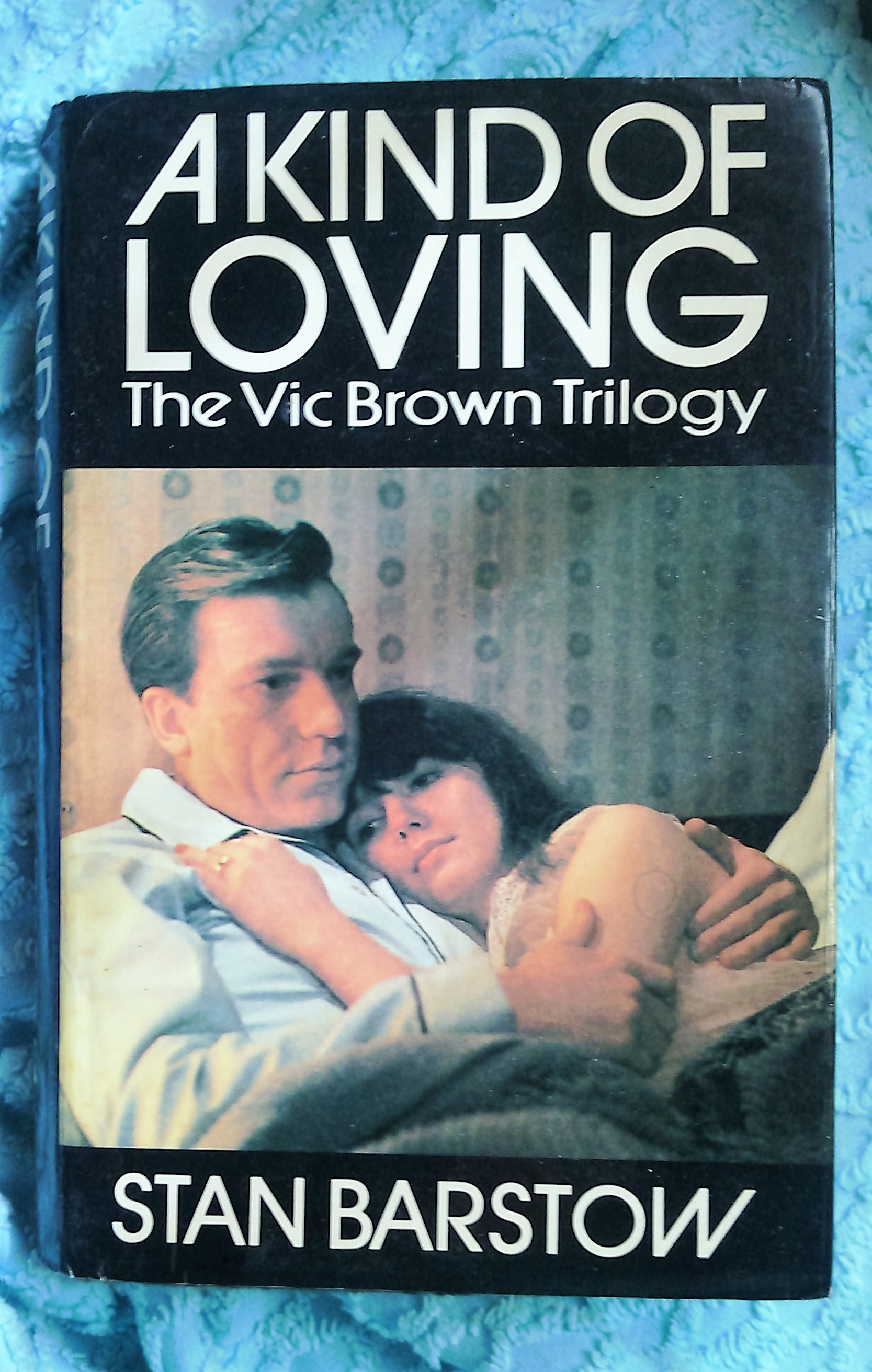
A Kind Of Loving by Stan Barstow.
IMG_20150729_113646 (2)In the late fifties and the early sixties the UK film industry underwent a minor revolution. A new type of gritty realism began to emerge in a series of films like ‘A Taste of Honey’, ‘Saturday Night and Sunday Morning’, ‘Alfie’, ‘Georgy Girl’ and of course, ‘A Kind Of Loving’.

The movie is a wonderful slice of early sixties northern life and for a northern lad myself a great chance to see the north represented in the cinema. The movie was based on the book by Stan Barstow and it was another find in a second hand book shop.

The book shown here is actually a trilogy, three books in a series about the main character Vic Brown: ‘A Kind of Loving’, ‘Watchers On the Shore’ and ‘The Right True End’ and the cover pictures are not from the film but the TV version that was made in the eighties.

The story is a simple one, boy meets girl, she gets pregnant, the boy doesn’t really love her but gets married to her anyway. Reading this book brought back my own early childhood and all the stories about office working and family weddings all ring true for me, so much so that sometimes I felt as though I was reading about myself.

I do love that in a book when the writer finds something inside me, the reader, and turns it round to make a personal connection between reader and writer. Stan Barstow was born in the west Riding of Yorkshire. He was the son of a coal miner and worked in a drawing office like his character Vic brown. He died in 2011 aged 83.

To read part one of my second hand books post, click here.


If you liked this post, why not buy my book? Click here to go to amazon or click the links at the top of the page to find out more.


The Joy of a Second Hand Bookshop (and two particular gems)

There is nothing more pleasurable, certainly to me, than messing about, not in boats but in a second hand book shop. I do love flicking through the old and worn books on the shelves and if you persevere and have patience you will always find at least one book worthy of your attention. Here are two of my finds, one new and one old.

Michael Powell: a life in the movies.
IMG_20150608_221725edMichael Powell is perhaps not a name that leaps out at you but he was a movie director who made movies in partnership with screenwriter Emeric Pressburger. His most famous film is probably ‘A Matter of Life and Death’, a movie starring David Niven and Kim Hunter. Niven plays a pilot who miraculously survives certain death in plane crash returning from a bombing mission in World War 2 Germany. He is then visited by a conductor from the next world, advising that his survival is a mistake and he should be dead and he now must be prepared to enter the next world. Niven decides this is not on at all as now he has fallen in love with Kim Hunter and he decides to appeal. This fantasy is interwoven with another explanation of his issue, that of a serious brain trauma that needs the help of a neurosurgeon. I loved that movie and you can see it for yourself as it’s regularly shown on British TV.
Powell and Pressburger made numerous movies together but hit a downturn in their fortunes when they made the controversial film ‘Peeping Tom’. The film was about a murderer who films the death of his victims and was not well received at the time.
Years later, directors like Martin Scorsese revived the film and praised it as a lost classic but at the time Powell and Pressburger’s career stalled fatally.
Powell’s autobiography is a wonderful read. His career as a film maker spanned some exciting times in the industry and the book is divided into three sections: Silent, Sound, and Colour. Not many directors can boast of covering a filmmaking span like that. The book is a wandering, meandering look at Powell’s life and career. It’s a rather disjointed read -Powell tends to go off at a tangent about various things- but somehow that seems to add to the enjoyment of the book rather than detract from it.

Little bit disappointed though to get to the end of this pretty hefty book to find that it’s only volume one! Better get back to the shop and see if they have volume two!

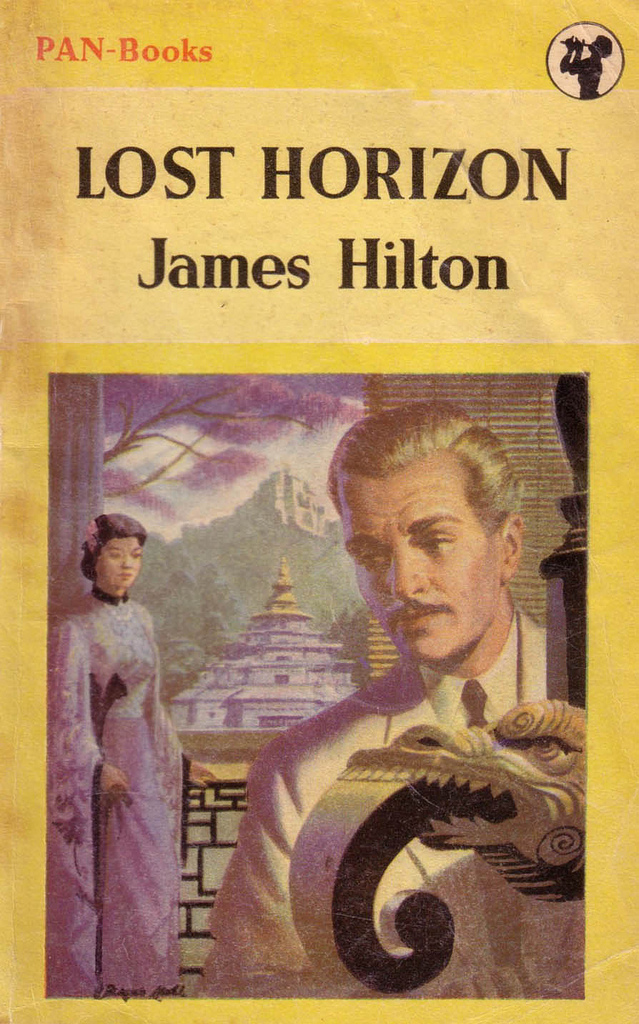
James Hilton: Lost Horizon.
8391034163_f7c1b5accb_bI picked up this wonderful gem of a book at charity shop years ago for the bargain price of twenty five pence and if I could convert the pleasure this book has given me into pounds, shillings, and pence, it would be a figure that far eclipses that initial outlay. James Hilton has become one of my favourite writers and one of my personal writing heroes. (Check out my blog about him here!) This highly original novel reflects the fear and sadness that many must have felt in the days prior to World War 2. There must have been a feeling then that with new technology the approaching conflict could be the end of civilisation.
In this wonderful book, a group of lamas in a monastery hidden from the world by a chance of geographical fate decide to look ahead and ensure that the riches of the world, not gold or silver, but literature, art and music, should be preserved should a holocaust engulf the world. To ensure that their creed of respect and compassion endures they select a British diplomat, Conway, to carry on their work and set about bringing him to Shangri-La. Shangri La is a small community in Tibet insulated from the world by mountains on all sides and the people here enjoy unheard of longevity.
Despite his capture Conway is taken into the confidence of the High Lama and given his task of continuing the community and its traditions but his fellow captives have differing ideas, especially Mallinson, his young vice-consul who is desperate to escape.
I won’t spoil things for you just in case you come across the book, or the outstanding 1937 movie directed by Frank Capra but I will say that this novel is one of my top ten books of all time, and one I return to time after time.


What to do next:

Share this post on your favourite social media!

Hit the Subscribe button. Never miss another post!

Buy the book! Click here to purchase my new poetry anthology.

Click here to visit Amazon and download Floating in Space to your Kindle or order the paperback version.


Why I wrote a Novel and 10 Reasons Why You Should Buy It!

Why write a book? Why indeed. Why would anyone want to spend months, or in my case years, writing a book? There is so much to it, and so much involved. It’s so difficult and once done writers are instantly faced with another question; why would anyone want to spend a lot of their hard earned money buying it?

Screenshot 2015-02-08 15.55blog title ed2Well, to start with the writing part first. Why write? The answer is easy for me because I’ve always wanted to be a writer, I write for me, for my own personal pleasure and enjoyment and if anyone reads my work, well that’s just a bonus!

I love reading and I love movies and TV, and remember; before a word can be filmed on a movie, we need a script, and scripts need writers! As long as I can remember I’ve always had ideas forming in my head: Scenarios and stories, and I’ve always written them down. My home is full of old notebooks and computer files littered with half started stories and story ideas. When I was a school boy I used to write scripts and always noted down who would play the character on screen but looking back at one of them in particular, I think my producers would have been hard pushed to attract Steve McQueen to play a secret agent based in Manchester!

So there it is; I write because I want to, and because my imagination is at work churning out ideas randomly. Some time ago though, I looked at the things I was writing and felt that in order to be saying something worthwhile I had to turn away from sci fi and espionage and write about the life that was right in front of me, working class life in Manchester and the North West of England. I’ve spun a story in my book ‘Floating In Space’ that was more observation than anything; a northern world from the late seventies recreated not necessarily with accuracy but pretty much how I remember it. Buses with bus conductors, pubs and barmaids, music and beer, and men and women and their attraction to each other. I suppose it’s a bit of a flashback to fiction from an earlier generation. Remember those working class ‘kitchen sink dramas’ from the late fifties and early sixties, things like ‘A Kind Of loving’ and ‘Saturday Night and Sunday Morning’? Floating In Space is similar to those works but set in the late seventies and I’ve tried to recreate the atmosphere of the pubs and bars of those times, especially the busman’s working men’s club, as well as I can.

The answer then is that I like to write, in fact I love writing and as I have said so often before, my blog gives me a taste, be it ever so small, of being a real writer and putting something together every week for my deadline, my one weekly deadline of Saturday morning.
Next question: So why should you buy it? Why should you shell out your hard earned cash to read my book when you can go out and buy the two classics mentioned above straight away for a guaranteed wonderful read?
Well, here are a few reasons:

1. Support new writers! If we don’t support new and up and coming writers then the publishing industry will die on its feet and what are we hungry readers going to read then?
2. The Kindle version is just over a pound so surely it’s worth taking a chance for a measly one pound ten pence!
3. You might just enjoy it!
4. Think about me up there in the rainy north of England! Who is going to support me if you don’t buy my book?
5. Still unsure? Why not go to the Floating In Space page here and check out some more information?
6. Even better, check out this video of me talking about my book!
7. For two unbiased, impartial reviews go to my amazon page here! (No they absolutely were not written by two of my mates who had been plied with alcohol!)
8. For a little taster have a look at this excerpt when two of the characters visit an Oxford Road pub!
9. I’ll be upset if you don’t buy it!
10. After all the months and years of writing, editing and re-editing, would you really deny a new writer the chance to be heard?

Anyway, that’s your ten reasons, so why not buy the book: Click the links at the top of the page for more information!

Floating In Space: Last day to download free on Kindle!

Yes, you can download ‘Floating In Space’ free for your Kindle until 22nd January.

It’s a novel following the adventures of a young man in Manchester in 1977. No mobile phones, no Internet and a pint of bitter cost only 25p. Here’s me talking about it in Manchester;