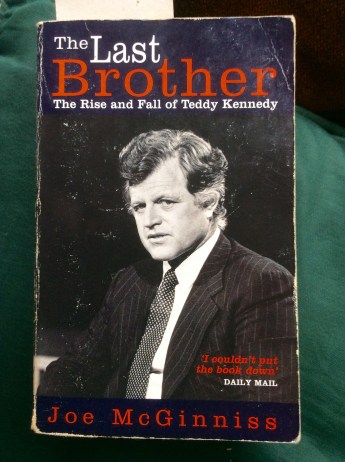
The Last Brother as you can see, is subtitled, the Rise and fall of Teddy Kennedy. In a lot of ways Teddy is only incidental to the story told here because it is really the story of his father, Joe Kennedy, and his rise to success. Joe’s success lay not only in the business of banking but during the prohibition years he made a fortune in bootlegging and naturally rubbed shoulders with a number of gangsters. When he became successful, Joe wanted something more; he wanted political power. It was then that he attached himself to Franklin D Roosevelt. He helped Roosevelt’s campaign in many ways and when Roosevelt became president, he, like all presidents, had to reward those who had helped him. Joe became ambassador to the UK and it was there that his fall from grace began.
The ambassador and his family quickly became celebrities in England. In fact, Teddy Kennedy made his first public appearance as a young boy, the ‘baby’ of the Kennedy family and the son of the Ambassador, when he was invited to open pets’ corner at London Zoo.
However, In Joe’s eyes the coming war with Nazi Germany spelled the end of all he had worked for. He could not see how the UK could resist the might of the Nazis and was not slow in saying so. Kennedy advised Roosevelt that the British were finished. However, when Winston Churchill became prime minister in 1940, Churchill opened up direct communications with Roosevelt himself making Ambassador Kennedy almost superfluous. Later, the family returned to America with Joe not perhaps in disgrace but acutely out of step, and the relationship between Churchill and Roosevelt flourished.
The Kennedy Family at Hyannis Port, 1931. L-R: Robert Kennedy, John F. Kennedy, Eunice Kennedy, Jean Kennedy (on lap of) Joseph P. Kennedy Sr., Rose Fitzgerald Kennedy (behind) Patricia Kennedy, Kathleen Kennedy, Joseph P. Kennedy Jr. (behind) Rosemary Kennedy. Dog in foreground is “Buddy”. Photograph by Richard Sears in the John F. Kennedy Presidential Library and Museum, Boston.
Kennedy left the Roosevelt administration but he wanted political power for himself and made sure he would find it through his financial wealth, and through his sons.
Joe Kennedy junior was the son that Joe meant to make into America’s first catholic president. His brother, John Kennedy, known as Jack by the family, was a poorly lad afflicted by Addisons disease and constant back pain. In World War 2 Jack joined the navy but began an affair with a Dutch journalist, Inga Arvad. Inga was thought to be a Nazi spy so Joe immediately arranged for Jack to be posted well away from Inga to South Carolina. Bored with his desk job in South Carolina, Kennedy volunteered for the Motor Torpedo Boat Squadrons and later took charge of his own boat, PT 109. He was awarded the Purple Heart for his bravery in rescuing his men when his torpedo boat was sliced in two by a Japanese destroyer.
Joe Kennedy Jr was not at all happy when he heard about the award. Competitiveness was drilled into the Kennedy clan from an early age and Joe did not want his younger brother to top him. Perhaps that is why he volunteered for a dangerous mission. The mission involved a radio controlled plane, full of explosives that were to be remotely steered to a target in Germany. Joe’s job was to take the aircraft into the air then bale out when the radio control was activated. Sadly the aircraft’s explosives were detonated prematurely and Joe was killed.
Jack knew then that it was he who would have to fulfil his father’s desire for the presidency.
Joe used his influence, and his money, to get Jack first a seat in congress and then a seat in the senate. In 1960 it was time for him to fulfil his father’s dream and go for the presidency. Lyndon Johnson wanted the democratic ticket that year and he began by attacking the the Kennedy candidacy. He described him as ‘a little scrawny fellow with rickets’ but soon the influence of father Joe came to bear and Johnson ceased his attacks. Johnson knew that that Joe Kennedy would pull out all the stops for his son to win but he hoped that if the vote wasn’t decisive on the first ballot he would have a chance on the second one. As it happened, John F Kennedy won the nomination on the first ballot. According to McGinnis it was Joe who wanted Johnson as JFK’s running mate; perhaps that was payback for Johnson laying off his attacks on Kennedy’s health issues.
The election was close, very close indeed and Joe decided he needed help from a rather unsavoury corner; he turned to his former prohibition gangster contacts, notably Sam Giancana to help him secure victory for his son. That help would come at a price. Giancana wanted back the casinos in Cuba that used to make millions for the mob until Castro overthrew the Batista regime, closed down the casinos and threw the gangsters out of Cuba. Giancana wanted them back.
Kennedy won the election by a narrow margin but things went wrong almost straight away. CIA backed revolutionaries were training in secret Florida locations for an assault on Cuba but the plans were in disarray and the president rejected many of them, When the attack came it was a disaster. Kennedy accused the CIA of trying to force him into a full scale US assault on Cuba and he would have none of it. Giancana would not get his casinos back. Worse, the president had engaged his brother, Robert Kennedy as attorney general and he began an assault on organised crime in the USA. One of the mafia bosses was heard to mutter in Sicilian, “who will get the stone out of my shoe?” It was more of a threat than a question.
Joe Kennedy was struck down by a stroke at the age of 88 and rendered unable to speak. The chief fixer, paymaster and head of the Kennedys was unable to carry on talks with the mafia and the time had come to remove the stone from Giancana’s shoe.
Dallas 1963
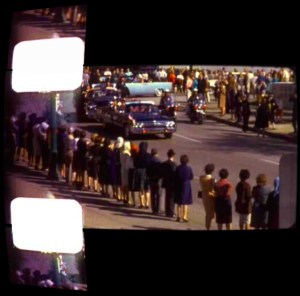
President Kennedy was assassinated in Dallas in 1963 and his presumed assassin Lee Oswald murdered days later inside the Dallas Police headquarters. At the Kennedy home in Hyannis Port nobody wanted to tell Joe. He must have known something was wrong but he could only point numbly at the TV in his room that remained firmly switched off. Ted Kennedy, who was sent to tell his father the news, struggled to get the words out until his sister Eunice blurted out the truth.
Robert Kennedy was shot in 1968 as he prepared for a late campaign for the Democratic ticket. After winning the California primary he said a few words to his supporters and was shot moments later.
Ted Kennedy now had a surplus of Kennedy advisors and aides, all willing him on to go forward and run for the presidency. He declined even though a ‘draft Ted Kennedy’ movement had started to gain momentum. Instead people looked forward to 1972 when Teddy, the last remaining Kennedy brother would restore the lost kingdom, the lost Kennedy leadership but it was not to be.
In 1969 Kennedy attended a boating regatta at a small island called Chappaquiddick. Numerous parties were planned for the weekend; one was a gathering of the so-called ‘boiler room girls’ – a group of women who had been part of Robert Kennedy’s campaign team in 1968.
Kennedy apparently left the party late in the evening, supposedly to go to the island ferry with one of the girls, Mary Jo Kopechne but instead turned across a small bridge that led to the beach. Kennedy lost control of the car and the vehicle plunged upside down into a small lake. Kennedy somehow escaped leaving Mary to die in the car. Police divers found her body the next day, her head in a small air pocket in the foot well of the upside down car. Kennedy did not report the incident until nine hours later. What happened in those nine hours is open to question but the Police seemed to gloss over the numerous inconsistencies in Kennedy’s story and eventually he received a suspended sentence for leaving the scene of an accident.
On the cover of the book is a remark from the Daily Mail reviewer that he couldn’t put the book down. I was just the same and was engrossed from beginning to end. The writer seems convinced of his central thesis, that Joe Kennedy’s pact with the mafia was a poisoned chalice that became the downfall of his sons and his family. Maybe that is true, maybe not but McGinniss puts forward an interesting theory and a fabulous read.
Joe Kennedy died in 1969, his dream of securing the presidency for his sons lay in ruins, leaving nothing but heartache and sadness. Fate had delivered many cruel blows to him but lying mute and unable to communicate while his family suffered must have been the worst.
Ted Kennedy continued in the senate until his death in 2009 from brain cancer.
What to do next:
Share this post on your favourite social media!
Hit the Subscribe button. Never miss another post!
Buy the book! Click here to purchase my new poetry anthology.
Click here to visit Amazon and download Floating in Space to your Kindle or order the paperback version.
I don’t think there is any nicer feeling than to take a dip in a swimming pool and then after a few lengths, return to your sun lounger and lie there peacefully while the hot sun dries your body. You can feel little rivulets of water dripping away and in time the sun will gradually dry you. It’s almost like a sort of rebirth or a least a refreshing of the soul. The only sounds in this remote hamlet where we are staying are the gentle breeze swaying through the branches of a nearby tree, the quiet humming of insects, some bird song and the occasional drone of a far away car or tractor.
You might be thinking hang on, why is this guy waxing lyrical about lying on a sun bed? Yes it’s that time of year again, holiday time. Once again Liz and I have travelled to France to spend time in a beautiful gîte in the Cher region of France.
Travelling down here was a little bit of a trial though. Coming down the M6 in the north-west we had to travel through the roadworks for the new Smart motorway scheme. I don’t know that Smart is really the right name for this concept but the idea is that the traffic runs along the hard shoulder in the busy periods thus shifting more traffic. So the experts say, anyway. Whether that will happen I really don’t know but at the moment the whole area is bit of a nightmare and when we finally got through that we came across more delays round about junction 13. Throw in some torrential rain and spray, creating really poor driving conditions and you begin to get the picture. Anyway, we made it to the terminal in Folkestone with about ten minutes to spare; many thanks to Liz for her fabulous driving.
One thing I noticed during the journey down here was the enormous amount of tyre carcasses in the central reservation. It really seems to me that Highways England need to pull their finger out and clean up the motorway otherwise I may just start up a scrap rubber company and pick up all those discarded tyres, and believe me I’ve counted a hell of a lot of tyres on the way south. I reckon I can make an absolute fortune flogging all those tyres to Goodyear or Pirelli or even some rubber recycling company. Come on Highways, get your act together!
After the hell of UK motorway travel, the roads of France are just a delight. OK, it might be busy round Paris and other large towns but out in the countryside driving is once again an enjoyable experience. Stopping at the services is much nicer too. Not for us the packed UK services charging ridiculous amounts for a cup of tea. The French aires are quiet and picturesque. Nice rural stopping places with picnic tables and nice clean toilets. Lovely.
In the UK I have had a great deal of trouble with my back. The doctor offered me pain killers which I declined, well, I must admit I did take some, the pain was that bad. Anyway I asked to be referred to a physiotherapist. Get the problem sorted out at the source I thought. This gets complicated here so bear with me: I started off with a telephone appointment, one in which you are supposed to make an ‘actual’ appointment. It did not go well because although I rang at the specified time, I was given several messages to listen to and options to choose so when I eventually got through, the lady at the other end thought I was late for an ‘actual’ appointment, not a telephone appointment and could not arrange it for me as I was two minutes late. Anyway, to cut a long story short I spoke to her boss and made an appointment (an ‘actual’ appointment) and arrived on the day only to find that my ‘actual’ appointment had been cancelled due to a bereavement at the hospital. Pity they didn’t tell me in advance. (They said that they had left a message on my mobile – which I never received, although on the same day my garage had managed to leave me a message about my car and my brother had also left a message. Strange that two others had no problem leaving messages.)
Anyway, with me so far? Another appointment was duly made and then two days before that appointment I received a letter saying that had been cancelled too. I called to complain only to be told I had cancelled the appointment! I most certainly did not, I said in my best aggrieved customer voice. I eventually spoke to a manager and she managed to arrange another date which fitted into my calendar just nicely between work and leaving for France.
When I finally found myself face to face with a physiotherapist, or at least someone who claimed to be a physiotherapist, he spent a lot of time asking me questions about my pain, which, when it first occurred three months previously had been very severe but now it wasn’t so bad, in fact the actual spot in the middle of my back seemed OK but the pain was now in my neck and lower back. Sadly, those areas were not the ones that I had been referred for via my GP. Now those two areas, the neck and lower back, happen to be a matter of inches from the source of the original pain so let me throw out a crazy mad concept here: could they be related? Well, we’ll never know because as my physio pointed out yet again; my GP had not referred me for those areas! After a lengthy consultation of which perhaps five minutes was actual hands on my back stuff, my physio declared my back was ‘mechanically’ sound. How did he explain the pain I asked? Well, that was a muscular issue due to my ‘sedentary’ life style. As we were on the way out he mentioned it was perhaps ‘not worth seeing me again.’
Interesting. Perhaps the problem solving concept was not something this guy covered at university, perhaps they don’t even teach that kind of stuff any more. I know that if I was a physio and someone came to me with back pain my job would be trying to find the source of that pain and cure it or ease it or suggest further treatment for my patient. It’s rather like having a problem with your car and telling the customer, well, we can’t fix that, perhaps it’s time to get a new motor. In this case, no new motor is available! I’m tempted to apply my usual rule here, that names have been changed to protect the innocent but Clifton Hospital in St Annes, Lancashire, you have gone way down in my estimation!
Anyway, the temperature here in our little village is currently in the 90s. (Fahrenheit of course. If you want that in Celsius, I don’t do metric, work it out yourself!) Time for a read, perhaps a short doze, then another swim in the pool. After all, exercise is good for your back!
Make sure your click back here next Saturday for at look at my Holiday Book Bag!
If you liked this post, why not try my book, Floating In Space. Click the links at the top of the page for more information!
The very first book I picked up about Marilyn Monroe was the biography by Fred Laurence Guiles. ‘Norma Jean, the life of Marilyn Monroe’. It’s a particularly well researched book and for a great many people, fans and writers alike, it has become the definitive biography of Marilyn, the place you go to find out all those facts and figures about her life, especially her early life. Her death is not really discussed in the same fashion as in later books, some of which are wholly devoted to the mystery of her passing. In my edition which I bought in the seventies, Bobby Kennedy is referred to only as ‘the easterner’ and it was only in later years that Bobby Kennedy and his brother, President John Kennedy became publically identified with Marilyn.
Norman Mailer apparently used Guiles book as a guide when writing his own book about Marilyn. Simply called ‘Marilyn, a biography’ the book is a large format book for which Mailer, the celebrated American writer supplied the text, and numerous photographers supplied the impressive array of photographs. The New York Times review online says the book is the ‘Glossiest of glossy books’ and further goes on to remark about the cover picture; ‘Marilyn Monroe has that blurry, slugged look of her later years: fleshy but pasty.’ I’m not sure what the writer was thinking about but personally, I rather like that cover picture of Marilyn.
A slim volume appeared in 1964 called ‘The Strange Death of ‘Marilyn Monroe’. It was this book that kick started rumours of strange goings on in the hours leading up to Marilyn’s death but the first book I read about the mystery (and I do love modern mysteries) was the book by Anthony Summers; Goddess: The Secret Lives of Marilyn Monroe. Summers is a veteran journalistic investigator and has written books about J Edgar Hoover, Richard Nixon and the JFK assassination. Was Marilyn murdered or did she commit suicide?
Another author who thinks she was murdered was Robert F Slatzer who wrote a book called The Life and Curious Death of Marilyn Monroe. I couldn’t find my copy when I came to photograph my Marilyn books but I do have it somewhere. Slatzer made a number of claims, one of which was that he actually married Marilyn but her studio bosses forced her to annul the union immediately and remove all the evidence that it ever took place.
Marilyn Monroe: Private and Undisclosed is a book I picked up quite recently. It is written by a British author, Michelle Morgan, and is similar to Fred Guiles book of Marilyn, very well researched but focusses on various people associated with Marilyn who have not been interviewed before. After reading this and other books, I get the impression that Marilyn compartmented her life, and those that were in one compartment, were not necessarily aware of people who were in the other ones.
Talking about J Edgar Hoover, here’s another book I picked up about Marilyn. This was a remainder book and concerns the information about Marilyn in Hoover’s FBI files. Marilyn: The FBI Files by Tim Coates. It’s an interesting addition to the many books about Marilyn with pages of FBI files concerning Marilyn, many of them redacted with various names and details blanked out.
The Assassination of Marilyn Monroe by Donald Wolfe. Wolfe is a journalist who has done a great deal of digging and research and one of his interviewees was the brother in law of Marilyn’s housekeeper, Eunice Murray. He reveals first hand that Bobby Kennedy was at Marilyn’s home on the day she died.
Donald Wolfe wrote another book; ‘The Last Days of Marilyn Monroe’. I’ve not read this one yet, it’s one I’m saving for my holidays.
Finally, Fragments, edited by Stanley Buchthal and Bernard Comment. When Marilyn died in 1962 she left all her possessions to her acting mentor and head of the Actors Studio in New York, Lee Strasberg. When he passed away Marilyn’s effects went to his daughter and now it seems many will be auctioned off. This book is a look at the letters and notes she made, fragments of poems and thoughts scribbled in notebooks, on hotel stationary and envelopes. Marilyn’s thoughts and written meanderings show her to be a thoughtful woman who cared about what she saw and heard. Marilyn was a great reader and left behind a large book collection, part of which is listed in this book. Click here to read about all the 430 books she left behind.
Hope you enjoyed this post. If you did you might want to try my book, Floating In Space. Click the links at the top of the page for more information.
Special Bank Holiday Post! (Or what happens when you press the ‘publish’ button instead of the ‘save draft’!)
It was reported today that Mr Steve Higgins the Manchester author has sold his first 2016 copy of Floating In Space.
Mr Higgins said today that “2016 sales have been slow, especially in January, February and March but it’s great to see April off to a flying start with these new sales. I mean, sale.”
Mr Higgins was reportedly considering the cancellation of his order to Ferrari for the latest 590 GTO.
“Yes,” he said exclusively to stevehigginslive.com today, “I’ve had to do the dirty deed. I wasn’t happy as my Hillman Imp is getting a little knackered but even top authors have to tighten up their wallets in the current financial climate.”
Sales of his book reached £14.68 in 2015 and this caused numerous headaches for Mr Higgins. What to spend it on? How to invest it?
When pressed, Mr Higgins advised he spent the money in a ‘one off blow out’ at Wetherspoons in St Annes on Sea, a lovely seaside town in the North West of England. “It was a good session,” he added, “but I eventually ended up blowing £30 so I went way over budget. But, what can you do? Sometimes you have got to go for it.”
Mrs Liz Morrison said “Steve doesn’t mind spending a few bob but he was a little disappointed when the bar staff refused to change a ten shilling note!”
Mrs Liz Morrison, a widow, said she was Mr Higgins’ financier. She was asked do you mean fiancée but replied that she was correct the first time.
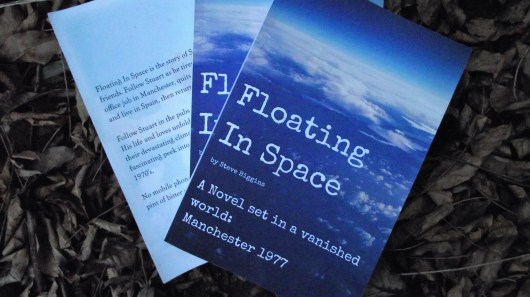
When asked about the future of his self published novel ‘Floating In Space‘ Mr Higgins went on to say he had plans for another update of the work including a new cover. “Yes, I think something more dramatic is required to pull the readers in and I am aware of a few minor grammatical errors that need attention. There is a sequel in the pipeline but it’s quite a long way down the pipeline at present!”
Mr Higgins also scotched rumours of a free Kindle version of the book. “Yes,” he said. “Numerous Kindle readers have asked about a free version but sadly, that is against my religion. I recently converted to orthodox tightwad!”
Mr Higgins was also asked about rumours of a multi million pound Hollywood version of the novel. He commented, “Yes, you must mean the youtube promo version. It only lasts a minute but there’s a great soundtrack: It’s well worth watching!”
Click the links at the top of the page for more information about ‘Floating In Space’ or click here to go to my amazon page.
Perhaps you won’t see straight away what I did there in that title. If I go on to say I’m going to talk about remainder books then you might start to get the picture. I’ve spoken before in this blog about my passion for books, especially second hand books. I also have quite a few books that should have been very expensive but were greatly reduced in price. Why? Because they were remainder books. So what exactly are remainder books?
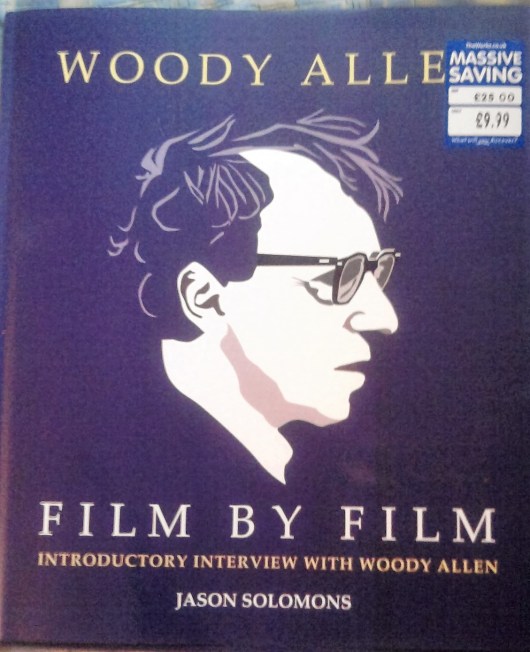
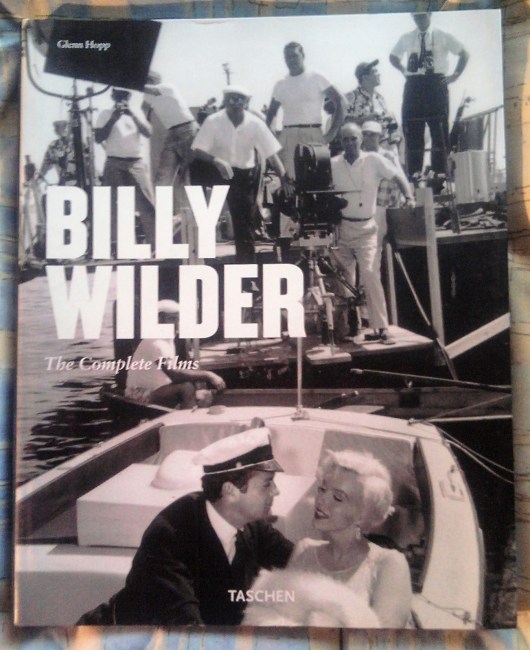
Well, they are copies of a book left over after a print run which are then sold off quickly at a cheap price. Many stores like the Works specialise in these types of books. There is a Works store in the Arndale Centre in Manchester where you will find me flipping through numerous books when I have any free time, looking to nail myself a bargain. Here are three ‘remaindered’ books in my collection, all about movie directors.
Woody Allen.
Now I’ve kept the price on this book so you can see what a big saving I’ve made: A hefty fifteen pounds and a penny and in return for my £9.99 I get a big full colour hard back book which itemises all Woody’s movies all the way from ‘What’s New Pussycat’ to his 2015 offering ‘Irrational Man’. Now, I have to say that the aforementioned ‘What’s New Pussycat’ is one of my favourites of Woody’s movies although in the book it doesn’t get such a great review. Pity because it’s a great sixties classic. You can read more about Woody Allen in one of my previous posts.
David Lean
Illustrated with over 400 pictures this is a lovely book to have, detailing the life and work of director Sir David Lean and written by his widow Lady Sandra Lean. David Lean is probably best remembered for his big screen epics like Laurence of Arabia, Doctor Zhivago and Bridge on the River Kwai. He started out as a teaboy with Gaumont Studios in London, later became a film editor and then moved on to become a director. He co-directed ‘In Which We Serve’ with Noel Coward although he later said Coward soon became bored with directing and left the whole thing to Lean. He would never share the directing credit again although his next three movies were adaptations of work by Noel Coward. Surprisingly, he only directed seventeen movies; I always thought his list of credits would be a lot longer. He won two best director Oscars and as a filmaker he inspired many directors like Steven Spielberg and Martin Scorcese. He died in 1991 from throat cancer.
Billy Wilder
All three of the books here are big picture books with many behind the scenes photographs. If you are like me and love to hear about how movies are made then you will love all these books. Billy Wilder was an Austrian born filmmaker who fled from Berlin and the Nazis in the early 1930s, moving first to Paris and then later to Hollywood. Wilder made some classic films like ‘Sunset Boulevard’, ‘Double Indemnity’ and ‘Sabrina.’ The cover picture you can see above shows Tony Curtis and Marilyn Monroe in ‘Some Like it Hot’ made by Wilder in 1959. It’s a great movie but mostly famous for the multiple retakes required by Marilyn. It took 47 takes for Wilder to get a shot in the can where all Marilyn had to say, ‘It’s me, Sugar!’
Billy Wilder died in 2002 at the age of 95.
Just to finish off, here’s my favourite Billy Wilder story and it goes like this : In his later years he wanted, as usual, to make a movie. He approached a studio and was invited in to make his pitch, as they call it in the movie world. The executive who met with Billy was a young man. He said to Billy, “I’m not familiar with your work, could you tell me about some of your films?”
Wilder replied, “Of course; but you first!”
If you liked this book why not buy my book, ‘Floating In Space’? Click the links at the top of the page for more information or here to go straight to my Amazon page.
Sunset Boulevard is an outstanding film and due credit must go to the great Billy Wilder who not only directed but also wrote the screenplay, and he even got famous director Cecil B De Mille to play himself in the movie. Even if you’re not a classic movie buff like me, you’ve probably guessed that the quote in the title ‘I’m ready for my close up Mr De Mille’ comes from the movie. There are some even better lines from earlier in the picture when William Holden recognises Norma; ‘You’re Norma Desmond, you used to be in silent pictures. You used to be big’, to which Desmond replies, ‘I am big. It’s the pictures that got small!‘ They just don’t write dialogue like that any more. Anyway, over to the other part of this post, the bit about the vlog.
I follow a number of you tube channels and one of them is ‘I’m Emily’. Emily makes a Vlog, a video blog, every single day! That’s pretty impressive, I mean, I only produce a blog once a week and sometimes I’m pushed to make that target but a video blog, that includes not only recording the content but editing and uploading and so on, all on top of her full time job. I take my hat off to you, Emily.
On my YouTube channel, my videos are mostly about my book, Floating in Space. They are all mini adverts I suppose, usually with me talking to the camera explaining why you should buy my book and sometimes why you should try my web page and point your browser at posts just like this one.
Anyway, while on holiday in Lanzarote I wrote once again about my holiday book bag so I thought, hey, I bet I could make that into a vlog too. Should be easy enough. The blog is about my five holiday books, so I imagined myself talking to the camera with the five books all handy in front of me. Sounds easy enough. The aforementioned Emily shoots her vlog on an iPhone which of course has a self facing camera, so if you are filming yourself you can see exactly what is being recorded. Now my video camera is pretty good, it’s a Panasonic HD camera but the screen naturally is at the back and you can’t see the video image as you film. However, whilst out at the market in Marina Rubicon here in Lanzarote I came across a sort of selfie gadget: A clamp that clips onto a table or some other support, grips your camera or camcorder at the other end and has a sort of bendy bit in the middle so you can position everything and then record or photograph yourself. So, one sunny day after breakfast I got set up. Table, chair, books and camera all positioned nicely with the swimming pool in the background. I soon found it was not that easy to frame your shot as the clamp on the selfie gadget masks the camera screen so after a few ‘testing 123’ shots to find the best camera position I was ready for take 1.
Take 1. OK, went pretty well, I blathered on a bit and forgot the author of one book so time for take 2.
Take 2. OK but I’m holding the books slightly out of camera shot.
Take 3. I lift the books higher but gradually as the take goes on the books are getting lower and dropping out of shot. Cut, I shout, getting my director hat on.
Take 4. I’ve reframed and lowered the camera a little. I’ve actually cropped off the top of my head but the books are centre stage. I fluffed one of my lines calling Noel Coward an historical figure instead of a theatrical one but recovered that one OK with a little laugh at myself. I also say the Germans were ‘disappointed’ with Hitler at the end of World War Two when discussing a book about Albert Speer, one of Hitler’s ministers. Bit of an understatement there, I meant to say shocked or devastated, anyway, time for take 5.
Take 5. Start to stumble a little here, perhaps I need cue cards. Dorothy Parker wrote what for New York Magazines? Check the blurb on the back of her book again and time for take 6.
Take 6. Looked pretty good. Wait a minute, did I really say ‘my holiday book blag‘? Time for take 7.
Take 7. Radical re think needed here I think so I’ve smartened myself up a little, put on my favourite holiday shirt and re positioned the camera and my clamp gadget. Wish I’d brought my tripod along! Anyway here we go. Action: ‘Hi I’m Steve Higgins and I’m here in . . er . . ‘ CUT! It’s Lanzarote!
Take 8. Slight camera adjustment as take 7 wasn’t particularly well framed. Forgot to mention who Albert Speer actually was. Will people know who he was? Well, if they are interested in history and World War Two yes, otherwise no . .
Take 9. ‘Bleak House by David Copperfield’? What is this guy talking about? Cut!
Take 10. Not too bad, faltered a few times over some words, mumbled a little perhaps but generally not bad. Sure I can do better though; still a little slow. Needs more pace.
Take 11: Whoa, slow down boy! I said pace not rabbit on and on without taking a breath!
Take 12: Not happening! Time for a swim!
Well, not quite as easy as I had thought it was going to be. I eventually settled for take 4. Better hold off with my application to the BBC just now, still, bit of practice, a few more videos and – ‘I’m ready for my close up Mr De Mille!’
Here’s the completed video blog:
If you liked this post, why not try my book? Click the links at the top of the page for more information or click the icon below-
So what exactly is a kitchen sink drama? If you’ve read through the pages on my site that deal with my book ‘Floating In Space,’ you’ll know that this is a phrase I use to describe my book. When I first added Floating In Space to Amazon through the Amazon sister site Createspace I came to a point where I had to define the genre of the book. If you’ve written something that falls easily into a particular niche then that’s not a big deal. Things like romance, thrillers, science fiction, and YA (young adult) are pretty easily definable but my novel is something on the lines of working class fiction from the sixties; books like A Kind of Loving, A Taste of Honey, Saturday Night and Sunday Morning, Alfie and Billy Liar. All of those works were made into films and three of them, Billy Liar, Alfie and A Taste of Honey were also stage plays but what exactly is ‘Kitchen sink drama’?
Wikipedia describes it as a British Cultural movement that developed in the late 1950’s and early 1960’s and enveloped the theatre, art, literature, television and film. It identifies the John Osborne play ‘Look Back in Anger’ as being the start of the movement and afterwards, many people who identified with the movement were known as ‘Angry Young Men.’ Osborne’s play was a sort of backlash against the theatre of Noel Coward and Terrence Rattigan and represented a move away from polite drawing rooms into council house back rooms.
Richard Burton starred in ‘Look Back in Anger’ and as much as I love the richness of his voice, his portrayal of the leading character of Jimmy Porter hardly represents the working class despite Burton’s own personal origins in a Welsh mining village. A much more representative working class voice, certainly for the North West of England is the character of Arthur Seaton played convincingly by Salford actor Albert Finney in the movie Saturday Night and Sunday Morning.
Saturday Night and Sunday Morning. 1960
Saturday Night and Sunday Morning is set in working class Nottingham. Arthur Seaton is a rebellious factory worker who works hard in the factory by day, but at the weekend he spends his money in the pubs and clubs of the town. He is involved with a married woman but starts to lose interest when he meets a single girl called Doreen and begins a relationship with her. My favourite line from the book and the movie is this: “I’m not barmy, I’m a fighting pit prop that wants a pint of beer, that’s me. But if any knowing bastard says that’s me I’ll tell them I’m a dynamite dealer waiting to blow the factory to kingdom come. I’m me and nobody else. Whatever people say I am, that’s what I’m not because they don’t know a bloody thing about me! God knows what I am.
A Taste of Honey. 1961
Written as a play by Shelagh Delaney when she was only eighteen, the work was first performed at Joan Littlewood’s theatre workshop in 1958. The movie version opened in 1961 adapted by Delaney herself and directed by Tony Richardson, who incidentally also directed the film version of ‘Look Back in Anger.’ The movie features outstanding performances by Dora Bryan and Rita Tushingham.
Alfie. 1966
Alfie was directed by Lewis Gilbert who directed some of the earlier Bond films. The script was produced by Bill Naughton and adapted from his own book and play. Alfie is a fascinating film on many levels. It’s a peek back at the swinging sixties; it explores the elements of comedy versus drama, something I’ve always loved and which I looked at recently in a post about the TV show MASH. Once again it’s about the working class and features great performances from all the principal and supporting actors. One fabulous feature is how Alfie talks directly to the camera and sometimes even says things that directly contradict something he is doing or saying to another character. In the opening sequence Michael Caine as Alfie addresses the audience and tells them not to expect any titles. There are none, except for the film title itself and the closing credits feature photos of the cast and crew. Many actors turned down the chance to play Alfie on film, including Caine’s then flat mate Terence Stamp who played the part on Broadway. Laurence Harvey, James Booth and Richard Harris all turned down the role, and Alfie became a breakthrough movie for Michael Caine. My favourite line from the film comes right at the end when Alfie is reflecting about his life: “What have I got? Really? Some money in my pocket. Some nice threads, fancy car at my disposal, and I’m single. Yeah… unattached, free as a bird… I don’t depend on nobody. Nobody depends on me. My life’s my own. But I don’t have peace of mind. And if you don’t have that, you’ve got nothing. So… So what’s the answer? That’s what I keep asking myself. What’s it all about? You know what I mean? “
Billy Liar. 1963
Billy Liar is based on the book by Keith Waterhouse and was directed by John Schlessinger. Tom Courtney played the title role and many faces familiar to TV viewers appear in the cast such as Wilfred Pickles, Rodney Bewes, and Leonard Rossiter. Billy has an imaginary world in which he plays out many daydreams and fantasies. His ambition though is to become a comedy scriptwriter and his friend Liz played by Julie Christie offers to go with him to London. In the final scenes however, Billy loses his nerve and contrives to miss his train, something that Liz has foreseen and has conveniently left his suitcase on the platform for him.
A Kind of Loving. 1962
This is another 60’s classic directed by John Schelssinger. Adapted from the book by Stan Barstow (one of my all time favourite books) with a script by Keith Waterhouse (who wrote Billy Liar) and Wallis Hall. The story is a very simple one; Vic Brown (Alan Bates) is a draughtsman in a Manchester factory and he gets involved with secretary called Ingrid played by June Ritchie. When Vic learns Ingrid is pregnant, he does the ‘proper’ thing for the 1960s and offers to marry her. Sounds simple but this is a complex and fascinating film and looks at the subtleties of relationships and how the characters make their way through a series of difficult choices. For a northerner like me, it’s also nice to see places I recognise on film. St Annes On Sea looks a little grim, or did do in the 1960’s. Today it’s a lovely place to live.
Spring and Port Wine. 1969
Hollywood movie star James Mason, famous for roles like the drunken movie star in A Star is Born and the suave villain in Hitchcock’s North by Northwest, left Hollywood in 1963, settled in Switzerland and embarked on a more transatlantic career. One of those projects was Spring and Port Wine. The movie is set in Bolton and is about factory worker Rafe Crompton and his family. His daughter played by Susan George is acting strangely and Rafe struggles to dominate her, his other daughter played by Hannah Gordon and his sons, Rodney Bewes and Len Jones. It later transpires the Susan George character may be pregnant and the family rally round to help her.
The Family Way 1966
The Family Way is one of my very favourite films and like Spring and Port Wine above, features a classic movie actor, John Mills, in a very different role. Saying that, Mills’ film career was diverse to say the least and in this movie he plays Ezra Fitton whose son has just married Jenny, played by Mills’ real life daughter, Hayley. Various problems plague the newly weds, in particular a holiday that never happens due to a travel agent absconding with their funds. Hints are made during the film that Ezra’s son may not even be his son after all. When the truth dawns on Ezra his son asks what is wrong and Ezra replies with the most memorable line in the film; “It’s life lad. Sometimes it’ll make you laugh and sometimes it’ll make you bloody cry!” Time and time again, and I don’t know if you have ever found the same thing, but certain movies I love always seem to have a common denominator. In this case Spring and Port Wine, The Family Way, and Alfie were all penned by the same author, Bill Naughton.
One final kitchen sink drama: ‘Floating In Space’ by Steve Higgins. Click the icon below to go to my Amazon page or check out the links at the top of the page.
Friends and Bloggers. I have recently been made the recipient of a Blogger Recognition Award. I feel very humble in accepting this and I have to thank my fellow blogger Dave Kingsbury for his nomination. Thanks Dave, much appreciated. If can you let me know when the silver cup and cash bonus will be coming my way I would really appreciate it!
The rules for this award are very specific:
1. Select 15 other blogs you want to give the award to.
2. You cannot nominate yourself or the person who has nominated you.
3. Write a post to show your award.
4. Give a brief story of how your blog started.
5. Give a piece of advice or two to new bloggers.
6. Thank whoever nominated you and provide a link to their blog.
7. Attach the award badge to the post (right click and save, then upload.)
8. Comment on each blog and let them know you have nominated them.
9. Provide a link to the original post on Edge of Night
Well, first of all, here are 15 other blogs I’d like to give the award to. I love them all but the fact of the matter is this, 15 blogs, that’s a bit of a handfull; 5 would have been easier. Anyway, I’ve got stuff to do, places to go so I picked 15 sites very quickly from sites I happen to follow and they must be good otherwise I wouldn’t follow them! (Unless I only followed them because they said they’d follow me if I followed them. That’s the blogging world for you – fickle.)
OK, what’s the next thing? How did I start my blog?
Blogging for me is primarily to promote my work but I do love writing and I do love writing my blog. One good thing about blogging is that it gets the creative juices flowing. It gets you thinking, what can I write about? What can I write about next time? So far the ideas have kept on coming and I’ve got six or seven draft blogs in the pipeline although I do worry about the day the ideas will dry up. When that day comes I’ll probably pack the whole thing in. Many people ask me how do I do it, how do I come up with a new post every week? Well it’s a good job I don’t have to write a daily blog; I’d be pretty pushed to do that I can tell you! Anyway what I do is this: I keep an eye and an ear out for a blog idea all the time. I read a lot and one of my great loves is trolling round for second hand books so if I’m stuck I’ll write about books or writers. I’ve already done posts about James Hilton and Dylan Thomas, two of my favourite writers, and I recently wrote a second post about my finds in second hand bookshops. If ever I see something on TV that might inspire a blog post, I jot it down in my notebook or even sometimes on my mobile. In my car, which believe it or not, is a prime creative space for me, I have a small hand held tape recorder and I can be seen frequently jabbering into it as I drive to and from work.
Recently I switched on the television and an old James Bond movie was showing. Now, I’ve read all of Ian Fleming’s Bond books and seen all the films so that looked to me to be a prime target for a blog. A little research on the internet will tell you that a lot of popular posts will have a number in the title, things like ’10 different ways to promote your blog’ or ’20 ways to get more blog traffic.’ OK I thought, how about ‘8 Things you didn’t know about James Bond!‘
Advice for Bloggers: Read other blogs. See how they are put together. Use good graphics and pictures as they pull the readers in, I create mine on sites like picmonkey and quotescover. Write about things you like and things you are interested in. If you’re not interested in something, how can you expect to interest others?
If you like humour, books and classic films, check out the blog list above. If you would like to read more of my work, why not try my book, Floating In Space? Click the links at the top of the page for more info!
I really do love books, especially second hand books. I think that what is so wonderful about a second hand book is that the book has told its story before to someone else, and now if you have just bought it, its going to tell it’s story to you. I spend a lot of time browsing in book shops, both physically in actual shops or on-line in virtual book stores. The thing about on-line book stores is that you have to have a starting point, it’s no fun browsing through lists of books so I tend to browse on-line only when there is a particular book I want. In an actual book store I scan through the various sections and although I tend to linger on biographies and books about film, anything can catch my eye. A while ago I was reading a book by movie director Michael Powell called ‘A Life in Movies.’ It was a pretty thick book and took a fair old while to read and when I got the end there didn’t seem to be any indication there was another volume.
Of course, Powell was quite old when he wrote his autobiography, perhaps he thought that there wouldn’t be time for another book. Well, I’m happy to say he did write another volume and this is it, Million Dollar Movie. Powell continues the story of his life in his usual random fashion, jumping to things out of context and out of sequence. Just because he happens to visiting Hollywood for instance, he will go on to talk about Hollywood and movie people he knows there and so on. Powell made some great movies alongside collaborator Emeric Pressburger but his career stalled when he made a shocking film called Peeping Tom about a disturbed cameraman who murders his subjects and films them as he does so. Audiences were shocked and Powell’s directing career ended, although in later years fellow directors like Martin Scorcese praised the film as a classic. Liz bought me this book as a gift and the copy she tracked down comes from Austin Public library in Texas in the United States. Provenance is a word they use in the antiques business; It’s to do with the background of an item, and that is what makes this copy so wonderful; How it has come so far, from the USA to England, just so I can sit back and enjoy it.
Bring on the Empty Horses by David Niven.
You might be thinking, looking at the picture here: Couldn’t the author have found a better picture? Looking at the picture again I suppose that particular copy is just a little tatty. That’s because it’s my travel copy. I’ve got another copy, a much nicer version that resides in my bookcase that I browse through now and again. The reason I’ve got two versions is because my travel copy goes all over the place with me. If I’m travelling somewhere on the bus or train, that slightly tatty copy goes easily into my pocket or my bag because I can read it time and time again. Not only is it the best ever book written about the golden age of Hollywood, it’s also by far the most accessible and readable book on the subject ever.
Niven’s first book was his autobiography; ‘The Moon’s a Balloon’. In it Niven told how he came over to Hollywood from the UK and made the incredible leap from movie extra to movie star. The title of this book comes from Hungarian director Michael Curtiz. When filming ‘The Charge of the Light Brigade’ Curtiz wanted a hundred riderless horses to come into shot so he boomed on his megaphone ‘Bring on the Empty Horses!’ Niven and fellow actor Errol Flynn collapsed into laughter and Niven filed away the phrase for later use. The book covers the Hollywood years from 1935 to 1960 and Niven paints vivid portraits of Hollywood itself and long vanished watering holes like the Brown Derby and Romanoffs. He looks at some of the stars he has known like Errol Flynn, Clark Gable, Ronald Colman, and Constance Bennett. Other chapters profile producers like Sam Goldwyn and many other famous Hollywood personalities of the time. All his stories are told with great affection and I particularly liked the portrait of Mike Romanoff, the restaurateur who tried to pass himself off, in a slightly tongue in cheek way, as a member of the Russian Romanov family. If ever I’m travelling and need something to read on the journey I’ll always have this copy on hand. It’s like an old wine that improves with age!
What to do next:
Share this post on your favourite social media!
Hit the Subscribe button. Never miss another post!
Buy the book! Click here to purchase my new poetry anthology.
Click here to visit Amazon and download Floating in Space to your Kindle or order the paperback version.
 The Last Brother by Joe McGinniss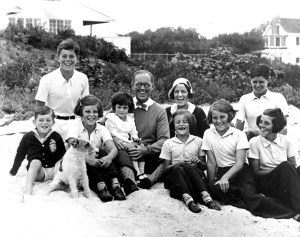
 I don’t think there is any nicer feeling than to take a dip in a swimming pool and then after a few lengths, return to your sun lounger and lie there peacefully while the hot sun dries your body. You can feel little rivulets of water dripping away and in time the sun will gradually dry you. It’s almost like a sort of rebirth or a least a refreshing of the soul. The only sounds in this remote hamlet where we are staying are the gentle breeze swaying through the branches of a nearby tree, the quiet humming of insects, some bird song and the occasional drone of a far away car or tractor.
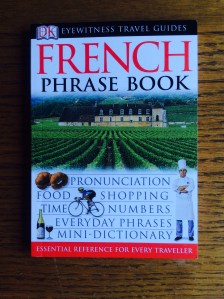 After the hell of UK motorway travel, the roads of France are just a delight. OK, it might be busy round Paris and other large towns but out in the countryside driving is once again an enjoyable experience. Stopping at the services is much nicer too. Not for us the packed UK services charging ridiculous amounts for a cup of tea. The French aires are quiet and picturesque. Nice rural stopping places with picnic tables and nice clean toilets. Lovely.
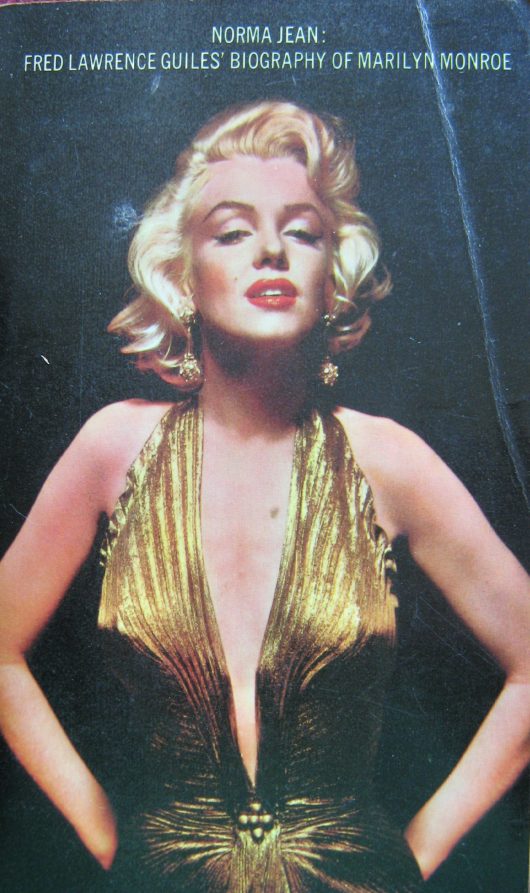 The very first book I picked up about Marilyn Monroe was the biography by Fred Laurence Guiles. ‘Norma Jean, the life of Marilyn Monroe’. It’s a particularly well researched book and for a great many people, fans and writers alike, it has become the definitive biography of Marilyn, the place you go to find out all those facts and figures about her life, especially her early life. Her death is not really discussed in the same fashion as in later books, some of which are wholly devoted to the mystery of her passing. In my edition which I bought in the seventies, Bobby Kennedy is referred to only as ‘the easterner’ and it was only in later years that Bobby Kennedy and his brother, President John Kennedy became publically identified with Marilyn.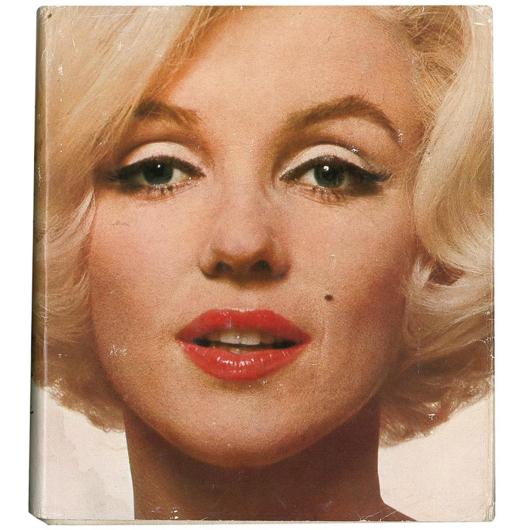
 A slim volume appeared in 1964 called ‘The Strange Death of ‘Marilyn Monroe’. It was this book that kick started rumours of strange goings on in the hours leading up to
 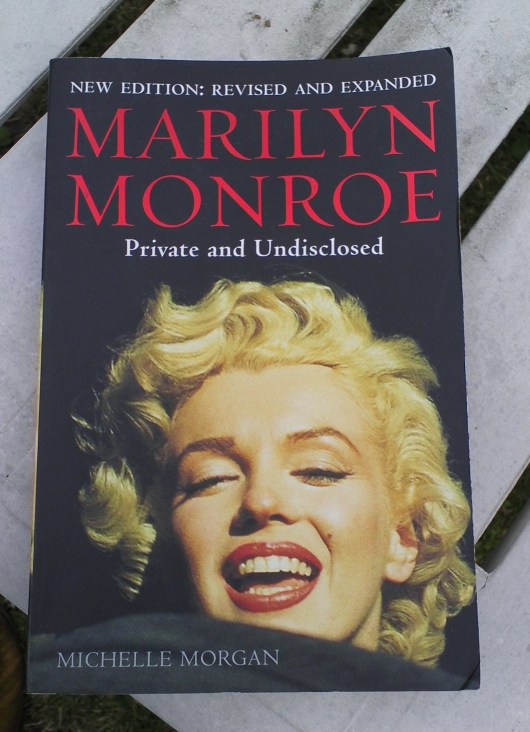 Marilyn Monroe: Private and Undisclosed is a book I picked up quite recently. It is written by a British author, Michelle Morgan, and is similar to Fred Guiles book of Marilyn, very well researched but focusses on various people associated with Marilyn who have not been interviewed before. After reading this and other books, I get the impression that Marilyn compartmented her life, and those that were in one compartment, were not necessarily aware of people who were in the other ones.
 Talking about J Edgar Hoover, here’s another book I picked up about Marilyn. This was a remainder book and concerns the information about Marilyn in Hoover’s FBI files. Marilyn: The FBI Files by Tim Coates. It’s an interesting addition to the many books about Marilyn with pages of FBI files concerning Marilyn, many of them redacted with various names and details blanked out.
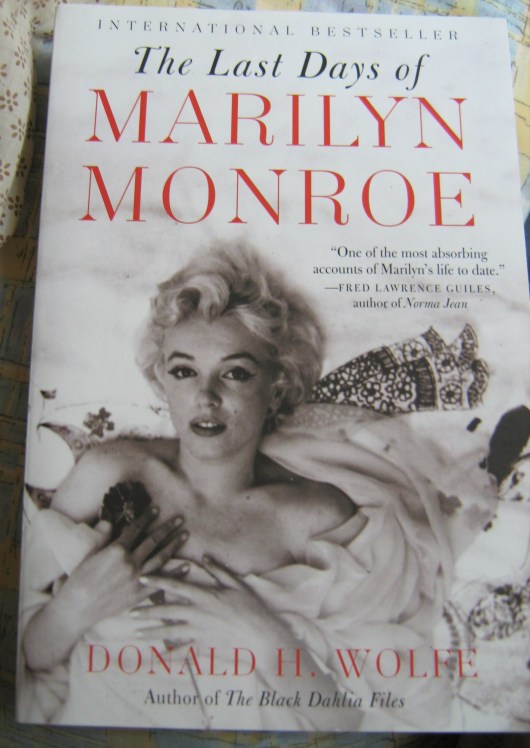 Donald Wolfe wrote another book; ‘The Last Days of Marilyn Monroe’. I’ve not read this one yet, it’s one I’m saving for my holidays.
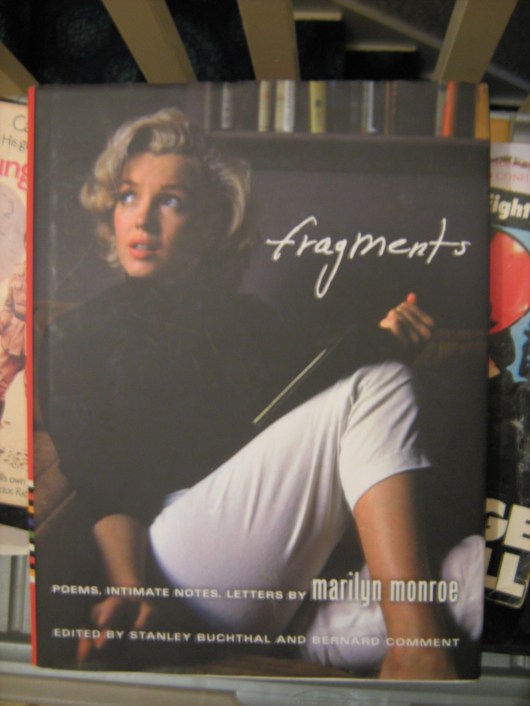 Finally, Fragments, edited by Stanley Buchthal and Bernard Comment. When Marilyn died in 1962 she left all her possessions to her acting mentor and head of the Actors Studio in New York, Lee Strasberg. When he passed away Marilyn’s effects went to his daughter and now it seems many will be auctioned off. This book is a look at the letters and notes she made, fragments of poems and thoughts scribbled in notebooks, on hotel stationary and envelopes. Marilyn’s thoughts and written meanderings show her to be a thoughtful woman who cared about what she saw and heard. Marilyn was a great reader and left behind a large book collection, part of which is listed in this book. Click
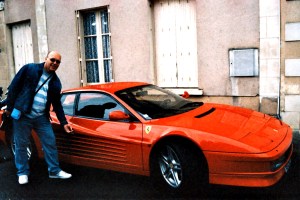 “Yes,” he said exclusively to stevehigginslive.com today, “I’ve had to do the dirty deed. I wasn’t happy as my Hillman Imp is getting a little knackered but even top authors have to tighten up their wallets in the current financial climate.”
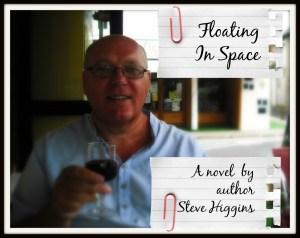 When asked about the future of his self published novel ‘Floating In Space‘ Mr Higgins went on to say he had plans for another update of the work including a new cover. “Yes, I think something more dramatic is required to pull the readers in and I am aware of a few minor grammatical errors that need attention. There is a sequel in the pipeline but it’s quite a long way down the pipeline at present!”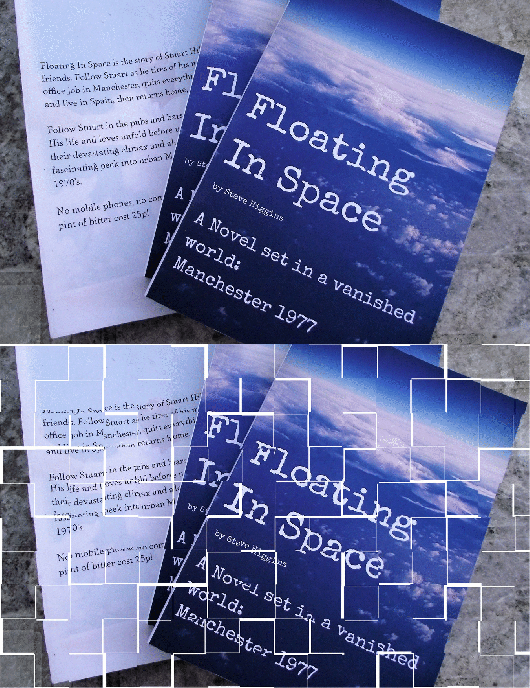

 Sunset Boulevard is an outstanding film and due credit must go to the great Billy Wilder who not only directed but also wrote the screenplay, and he even got famous director Cecil B De Mille to play himself in the movie. Even if you’re not a classic movie buff like me, you’ve probably guessed that the quote in the title ‘I’m ready for my close up Mr De Mille’ comes from the movie. There are some even better lines from earlier in the picture when William Holden recognises Norma; ‘You’re Norma Desmond, you used to be in silent pictures. You used to be big’, to which Desmond replies, ‘I am big. It’s the pictures that got small!‘ They just don’t write dialogue like that any more. Anyway, over to the other part of this post, the bit about the vlog.
 So what exactly is a kitchen sink drama? If you’ve read through the pages on my site that deal with my book ‘
 Friends and Bloggers. I have recently been made the recipient of a Blogger Recognition Award. I feel very humble in accepting this and I have to thank my fellow blogger
  I really do love books, especially second hand books. I think that what is so wonderful about a second hand book is that the book has told its story before to someone else, and now if you have just bought it, its going to tell it’s story to you. I spend a lot of time browsing in book shops, both physically in actual shops or on-line in virtual book stores. The thing about on-line book stores is that you have to have a starting point, it’s no fun browsing through lists of books so I tend to browse on-line only when there is a particular book I want. In an actual book store I scan through the various sections and although I tend to linger on biographies and books about film, anything can catch my eye. A while ago I was reading a book by movie director Michael Powell called ‘A Life in Movies.’ It was a pretty thick book and took a fair old while to read and when I got the end there didn’t seem to be any indication there was another volume.
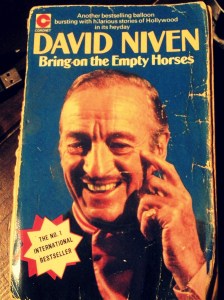 You might be thinking, looking at the picture here: Couldn’t the author have found a better picture? Looking at the picture again I suppose that particular copy is just a little tatty. That’s because it’s my travel copy. I’ve got another copy, a much nicer version that resides in my bookcase that I browse through now and again. The reason I’ve got two versions is because my travel copy goes all over the place with me. If I’m travelling somewhere on the bus or train, that slightly tatty copy goes easily into my pocket or my bag because I can read it time and time again. Not only is it the best ever book written about the golden age of Hollywood, it’s also by far the most accessible and readable book on the subject ever.
