Remembering James Dean

Back in the 1970s my Saturday ritual involved getting the bus into town and scouring book and record shops for, yes, you’ve guessed it, books and records. One day back then I was flipping through the posters in one particular shop. The posters were the music stars of the 70s; Elton John, Mick Jagger, Suzi Quatro, David Bowie and so on but one was a picture of a really good looking guy with a fifties combed back hair style. In some pictures he was dressed like a cowboy and in others in a red jacket and denim jeans. The guy behind the counter must have seen me wondering who the guy was and he told me he was a film star called James Dean. He handed me a paperback book about the actor and I took it home and read it and very soon I was trying to find out everything I could about him.

James Dean had been killed in a car crash in 1955 and had only appeared in three films and at the time of his death, only one of those films had been released. I read a great deal about Dean when I was in my late teens and from what I could find out, the biography to read was written by his best friend, William Bast. I never managed to get a copy of that book back then but Bast produced a made for TV film version, James Dean: Portrait of a friend with Stephen McHattie as Dean.

As TV biopics go, Portrait of a Friend was pretty enjoyable but I don’t think I’ve ever seen it repeated on TV. I used to have a VHS recording of the film but when I looked recently I was unable to find it. Funnily enough, not long ago I was in one of those budget shops, it might have been Poundstretchers and I saw a copy of the film on DVD. It was a very poor version, in fact it looked as though it had been copied straight from an old VHS tape but even so, it was interesting to see it again.

Watching that DVD got me interested in Dean again and so I had a search through my book collection to see what books I had on the subject.

The paperback book I bought that day in the record shop in the 1970’s was probably James Dean: A Short Life by Venable Herndon. It wasn’t a great book but an interesting introduction to Dean and who he was. It detailed his struggle for acting roles, TV work in New York, his apartment at 19 West Sixty-Eighth Street, his three films, his doomed affair with Pier Angeli and of course his death.

A similar book although bigger and with more photographs was a biography by John Howlet. I couldn’t find that particular book although I’m certain I wouldn’t have given it away or thrown it out.

A slightly different book I bought back in the 1970’s was a Japanese book about Dean. I’m not sure of the title, there are some Japanese ideograms and the name in English, James Dean, on the back cover. There is little text inside the book, basically it’s just a picture album and I guess the Japanese read books from right to left as the book starts with his last film and then finishes with his first film.

My Japanese James Dean book.

James Dean by David Dalton was another purchase back in the 1970s. It’s a much more in depth look at Dean’s life and skimming through it I came across a few pages about Dean’s last day, Friday September 30th, 1955. The author presented a short timeline of that day starting from 8am when Dean picked up his silver Porsche from Competition Motors in Hollywood to 5.45pm when he was killed in a car accident.

James Dean was competing in a car race in Salinas and had decided to drive his competition car, the Porsche, to the event as the car was brand new and Dean wanted to get some miles on the clock.

As well as my books on the famous actor I also have a box set containing his three films.

East of Eden is based on the final part of the book by John Steinbeck. It’s about two brothers who compete for the love of their father. Dean played the ‘bad’ brother and the father was played by veteran actor Raymond Massey who was continually shocked by Dean’s bad language and sullen and moody demeanour.

Rebel Without a Cause is probably the most well known of Dean’s three films. Dean plays Jim Stark, a rebellious teenager who has been in trouble at school and has either been expelled or forced to leave. The film follows him on his first day at the new school as he attempts to make friends with a group of fellow classmates but the result is that he makes more enemies. He gets involved in a ‘chicken run’ with fellow classmate Buzz in which the two have to drive a stolen car towards a cliff edge and the last one to jump out is ‘chicken’. Buzz fails to exit his car and is killed.

It’s a great film even though James Dean looks far too old to be still going to school.

His final film was Giant based on a novel by Edna Ferber. The film is set in Texas and is about millionaire ranchers and cattlemen. Dean plays Jett Rink, a sullen ranch hand who unexpectedly inherits some land, finds oil there and suddenly becomes rich. After punching ranch owner Rock Hudson, Dean, covered in oil after striking oil, drives away as Chill Wills says, ‘you should have shot that fella a long time ago. Now he’s too rich to kill.’

Another book I picked up only recently was another picture album James Dean: Portrait of Cool edited by Leith Adams and Keith Burns. It’s an album of photographs found in the Warner Bros archive and some have not been published before. Included are all sorts of documents such as casting sheets, production notes and messages. Dean’s address is listed as 3908 West Olive Avenue which I think might have been a place he shared with Dick Davalos who played his brother in East of Eden. During Rebel Without a Cause, Dean was listed as living at 1541 Sunset Plaza Drive.

1541 sunset Plaza Drive today from Google Maps.

Last Christmas Liz bought me one of my favourite presents, a copy of the Bill Bast memoir I mentioned earlier. Bill Bast shared apartments in both Hollywood and New York with Dean. In Hollywood, Bast became frustrated sharing a home with his friend. In the book, Bast accuses Dean of being untidy and moody and seemed to feel that he was subsidising Dean at one point as Bast was the only one with a job. After a dispute Bill decided to move to another apartment although the two remained friends. The book is written almost as if Dean was the love of Bast’s life and perhaps he was. In later life Bast wrote another memoir in which he claimed he and Dean had a gay relationship.

I’m not sure why someone like me, a council house boy from Northern England, should connect so closely with James Dean but back in the seventies the late star became one of my personal heroes. I remember going to a cinema on Oxford Road in Manchester to see back to back showings of East of Eden and Rebel Without a Cause on a very hot summer’s day. I bought a soundtrack album of those movies too, in the days before video and DVD.

Dean was a counterpoint to actors like Richard Burton; he mumbled and mispronounced things. I think that was what I liked about him; he was natural and imperfect. He had an image more rock star than 50’s actor. There was a great documentary about him made in the 70s and the music of the times, Bowie and Elton John featured heavily. Anyone remember that Eagles track ‘James Dean’?

Dean met his end on September 30th 1955 as he sped towards a race meeting in Salinas. He had already been stopped by the police and given a speeding ticket while driving his Porsche. In the passenger seat was his mechanic Rolf Weutherich and following behind was photographer Sandforth Roth and his friend Bill Hickman. They were towing the trailer on which the Porsche was originally mounted before Dean decided to drive.

As Dean approached the intersection of routes 466 and 41 in Chalome, a Ford station wagon turned across the path of the Porsche. “That guy up there’s gotta stop.” said Dean. The two cars collided. Rolf was thrown clear but James Dean was killed.

Today, years later, thousands of fans make pilgrimages every year to see Dean’s home in Fairmount, Indiana and to the intersection on highway 466 where he died. At his graveside in Fairmount fans chisel away bits of his gravestone for mementos and a bust of Dean by the sculptor Kenneth Kendall was ripped from its plinth. In 1977 a Japanese businessman named Seita Ohnishi had a chromium sculpture erected at the crash site on highway 466 in memory of Dean.

So why do people still hanker after James Dean all these years later? Well, I simply don’t know. As a young man I thought Dean was the epitome of cool and like many others I made him into my hero. Whilst doing some research about Jimmy Dean I came across this line on another site: “Some people are living lodestones. They get under the skin of people. You can’t explain why.” I can’t disagree.

Still, heroes come and heroes fade away. My heroes today are not the ones I used to love and worship thirty years ago. The thing is though, after writing this essay about Jimmy Dean I felt that I must find the time to look at some of his films again. Now where did I put that James Dean box set?


What to do next: Here are a few options.

Share this post on your favourite social media!

Hit the Subscribe button. Never miss another post!

Listen to my podcast Click here.

Buy the book! Click here to purchase my new poetry anthology.

Click here to visit Amazon and download Floating in Space to your Kindle or order the paperback version.


Famous People and Favourite Books

This isn’t a post about my favourite books. I’m pretty certain I’ve done that one already but I thought I’d talk about the favourite books of some famous people and I’d like to start with one of my film heroes, James Dean.

James Dean and The Little Prince

Back in the 1970s my Saturday ritual involved getting the bus into town and scouring book and record shops for books and records. One day back then I was flipping through the posters in one particular shop. The posters were the music stars of the 70s, Elton John, Mick Jagger, Suzi Quatro, David Bowie and so on but one was a picture of a really good looking guy with a fifties combed back hair style. In some pictures he was dressed like a cowboy and in others in a red jacket and denim jeans. The guy behind the counter must have seen me wondering who the guy was and he told me he was a film star called James Dean. He handed me a paperback book about the actor and I took it home and read it and very soon I was trying to find out everything I could about Dean.

Dean had been killed in a car crash in 1955 and had only appeared in three films and at the time of his death, only one of those films had been released. I read a great deal about Dean and from what I could find out, the biography to read was written by his best friend, William Bast. I never managed to get a copy of that book but Bast produced a made for TV film version, James Dean: Portrait of a Friend with Stephen McHattie as Dean.

In the film William Bast played by Michael Brandon, leaves Dean in a restaurant and Dean later asks why Bast left. Bast was intimidated by Dean’s important looking friends and Dean replies that he was judging by surface appearances. When Bast questions Dean further, Dean produces his favourite book, The Little Prince and then goes on to read his favourite passage.
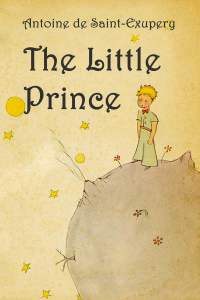
In the book Dean explains, the Little Prince is from a distant planet. He meets a fox but the fox won’t play with the prince because he hasn’t been tamed.

Later the fox gives the prince a secret which is this: It is only with the heart that one can see rightly, what is essential is invisible to the eye, something which Bast claimed was the secret to Dean’s style of acting.

James Dean was killed in 1955 and in later life William Bast wrote another book about James Dean claiming that the two were lovers and that Dean was gay.

The Little Prince was written by Antoine De Saint-Exupéry and according to Wikipedia has sold an estimated 140 million copies. It is also the second most translated work ever, only beaten by the Bible.

What did Dean see in the book? Well, it was a childhood favourite of his so perhaps it brought back memories of happy times, or perhaps it was just the undeniable charm of the book that appealed to him.

Donald Campbell and 1001 Nights

Donald Campbell was the son of a famous racing driver and record breaker, Sir Malcolm Campbell. Campbell first broke the land speed record in 1924 at Pendine Sands in Wales which was the first of his nine land speed records. He also set the water speed record in his boat Bluebird K4. He was knighted in 1931 and died in 1948 aged 63. He was one of the few racing drivers and land speed record holders of his era to die of natural causes as many of his rivals were killed in crashes. His son, Donald Campbell, was determined to equal and even surpass his father’s achievements.

He set about doing so with the help of his father’s engineer, Leo Villa. He made various runs at the land speed record, his last was in Australia. He chose to run his Bluebird car at Lake Eyrie and the vast dry salt lake bed offered the perfect course. It hadn’t rained there for nine years but Campbell had just started his trials when the rains came and ruined the course. Eventually Campbell managed to raise the record to 403.10 mph in 1964 but the huge expense and difficulties of the project cast a great strain on Campbell. In November of 1966 he tried for a new water speed record at Lake Coniston but once again, bad weather caused problems. He was still at Coniston in the following January and when the weather improved, he tried for the record. He was killed in his Bluebird boat on the 4th January 1967.

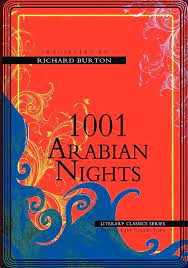
In the BBC film Across the Lake, Campbell was played by Anthony Hopkins and claims his favourite book was 1001 Nights. The book is a collection of Arabian folk tales perhaps more well known in England as The Arabian Nights. The book is about a king who after finding that his brother’s wife has been unfaithful, decides that all women are the same. He decides then to marry a succession of virgins and after their wedding night have them executed to make way for the next, One day he marries Scheherazade who tells the king a story but promises to finish it the next night. The king delays her execution wanting to hear the end of the story but the next night she starts another one, again promising to finish the story the following night. The stories go on for a thousand and one nights, Scheherazade telling more stories in order to save herself from execution.

The screenplay for Across the Lake was written by Roger Milner and was based on true events although whether that includes Campbell’s love of 1001 Nights or not, I’m not sure. In the film Campbell gives a girlfriend a necklace inscribed with a quotation from the book. ‘Beautiful of face with attributes of grace’, a reference to Scheherazade herself.

Noel Coward and The Railway Children

This is perhaps where this post might start to unravel. I know the Donald Campbell link was a little tenuous and only based on a film but this next one was based on my own memory which can be prone to failure. I knew Noel was a great fan of the children’s writer E Nesbit and I’m sure I had heard or read somewhere that when he died, he was reading his favourite of that author’s books, The Railway Children. A quick bit of internet research and I see that Noel died after reading Nesbit’s The Enchanted Castle. Coward was a lifelong fan of E Nesbit who wrote a series of children’s books. He discovered the books as a child and revisited them many times during his life. In his diary he wrote this about the author:

“Sunday 3rd February 1957. I am reading again through all the dear E. Nesbits and they seem to me to be more charming and evocative than ever. It is strange that after half a century I can still get such lovely pleasure from them. Her writing is so light and unforced, her humour so sure and her narrative quality so strong that the stories, which I know backwards, rivet me as much now as they did when I was a little boy. Even more so in one way because I can now enjoy her actual talent and her extraordinary power of describing hot summer days in England in the beginning years of the century.

All the pleasant memories of my own childhood jump up at me from the pages… E. Nesbit knew all the things that stay in the mind, all the happy treasures. I suppose she, of all the writers I have ever read, has given me over the years the most complete satisfaction and, incidentally, a great deal of inspiration. I am glad I knew her in the last years of her life.””

The Enchanted Castle is about a country estate and three youngsters who meet a princess and discover a magical ring. I have never read either that or the Railway Children although I did find a copy of that latter book not long ago. The film version is a delightful adaptation that has been seen and loved by many generations of children and adults since it was released in 1970. It was written and directed by Lionel Jefferies and stars Jenny Agutter and Bernard Cribbins.

Noel Coward died at his home in Jamaica in March of 1973.

Woody Allen and The Catcher in the Rye

Woody is one of my favourite film directors and after a search on the internet looking for more favourite books from my favourite people, I found he was apparently greatly inspired by The Catcher in the Rye by J D Salinger. Woody had this to say about the book:

“The Catcher in the Rye has always had special meaning for me because I read it when I was young – 18 or so. It resonated with my fantasies about Manhattan, the Upper East Side and New York City in general.

It was such a relief from the other books I was reading at the time, which all had a quality of homework to them. For me, reading Middlemarch or Sentimental Education was work, whereas reading The Catcher in the Rye was pure pleasure. The burden of entertainment is on the author. Salinger fulfils that obligation from the first sentence on.”

I can understand Woody when he talks about books that have a quality of homework about them. Many classic books I’ve tried to read, particularly in recent years, have left me disappointed and with that same feeling that Woody describes.

I read Catcher in the Rye a long time ago and rather than inspiring me, I found it dreadfully boring and pointless. The hero, Holden Caulfield goes to New York and basically moans about all the things he finds false and ‘phoney’ about the city and its people. Mark Chapman, the murderer of John Lennon, was obsessed with the novel and left behind a copy after he had shot Lennon with a note saying ‘this is my statement’.

Sorry Woody, you and I will have to disagree about Catcher in the Rye.

So what is my favourite book? Well, I’ve got quite an extended shortlist but I think I’d have to plump for David Copperfield by the wonderful Charles Dickens. I first read it many years ago and perhaps the moral of this post is that the books we love in our youth are the ones that continue to give us pleasure in later life.

What is your personal favourite?


Sources:

James Dean: My own imperfect memory.

Donald Campbell; the film Across the Lake.

Noel Coward: https://www.noelcoward.com/

Woody Allen: https://fivebooks.com/best-books/woody-allen-on-inspiration/


What to do next: Here are a few options.

Share this post on your favourite social media!

Hit the Subscribe button. Never miss another post!

Listen to my podcast Click here.

Buy the book! Click here to purchase my new poetry anthology.

Click here to visit Amazon and download Floating in Space to your Kindle or order the paperback version.


James Dean and A Manchester Record Store

James DeanMany years ago in my mid-teens I was in Manchester doing pretty much what I have always done, then and now, whenever I have free time on a Saturday, either looking at records in a music store or looking at books in a book shop.
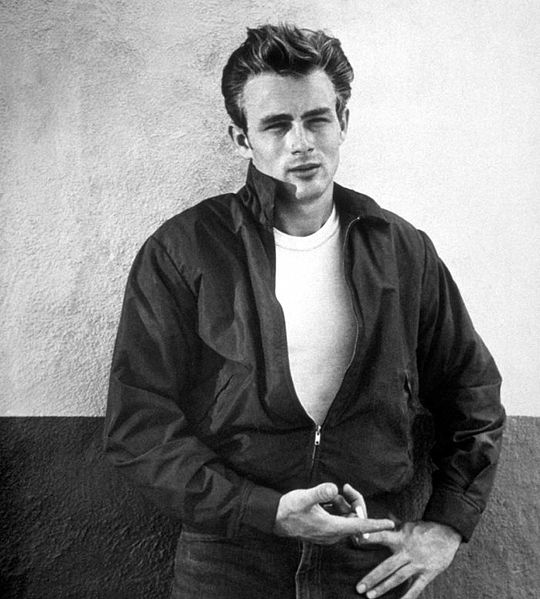
In 2015 there are not many record stores left; the whole culture of buying records is a different ball game these days, downloading instead of taking home a hard physical copy. Anyway, that’s a whole different blog. To get back to this one, back in that record shop I’d thumbed through the discs, checked out all the cheap records and then began flipping through the posters. This must have been mid-seventies so the posters were people like David Bowie, Marc Bolan, Elton John, Rod Stewart but there was one poster of a man in his mid-twenties wearing a white t-shirt and jeans. He was pulling a moody sort of look but there was something about him that was interesting. Anyway, he turned out to be an actor that I’d never heard of and the shop assistant pointed out a book about him in the store, a paperback, so I picked it up and read about the actor’s life. He was called James Dean.

James Dean courtesy wikipedia.

James Dean courtesy wikipedia.

Dean was born in Indiana and his mother died of cancer when Dean was only nine years old. There is a haunting passage in that paperback I bought that tells of how Dean’s father, Winton, sent little Jimmy Dean back to his Aunt and Uncle’s home in Indiana on the train carrying his mother’s coffin. Jimmy was brought up in Marion, Indiana by his Aunt Ortense and Uncle Marcus and later went to college to study acting.

His first movie was East of Eden directed by Elia Kazan who had introduced method acting to the American stage and had worked with Marlon Brando in ‘A Streetcar named Desire’. ‘Rebel Without a Cause’ was Dean’s second cinematic outing. Directed by Nick Ray it is probably Dean’s most iconic film. This is the movie in which he wears his famous outfit of red jacket, white t-shirt, and jeans.

His third and final movie was ‘Giant’ in which he stars with Elizabeth Taylor and Rock Hudson and plays Texan bad boy Jett Rink. Dean was killed in a car crash only days after finishing shooting. He was a keen amateur racer and had bought a new Porsche speedster only days earlier. The car, nicknamed ‘little bastard’ had collided with another vehicle, a station wagon at the junction of route 41 and 466. Dean suffered a broken neck and was declared dead on arrival at a hospital in Paso Robles.

I was looking through my old VHS videos the other day and I came across a documentary called ‘James Dean’s last day’. It’s an interesting film and a sad one too as it counts down Dean’s last hours, his leaving Hollywood and his departure for a racing event at Salinas. There are so many ‘if onlys’ that unfold before me as I watch the film: I keep thinking if only Dean had left the Porsche on the trailer instead of driving it to the race track. If only the speeding ticket he was given a few hours earlier had made him slow down. If only a man called Donald Turnupseed had seen Dean and not turned across him. Such a shame, such a tragedy. Dean, I’m sure, would have gone on to make so many more great films and perhaps would even have directed some too.

I’m not sure why a council house boy from Northern England should connect so closely with James Dean, an American actor but back in the seventies Dean became one of my personal heroes. I remember going to a cinema in Oxford road to see back to back showings of East of Eden and Rebel Without a Cause on a very hot summers day. I bought a soundtrack album of those movies too, in the days before video and DVD. Dean was a counterpoint to actors like Richard Burton; he mumbled and mispronounced things. I think that was what I liked about him, he was natural and imperfect. He had an image more rock star than 50’s actor. There was a great documentary about him made in the 70s and the music of the times, Bowie and Elton John featured heavily. Anyone remember that eagles track ‘James Dean?’

Today, years later, thousands of fans make pilgrimages every year to see Dean’s home in Fairmount, Indiana, and to the intersection on highway 466 where he died. At his graveside in Fairmount fans chisel away bits of his gravestone for mementos and a bust of Dean by the sculptor Kenneth Kendall was ripped from its plinth. In 1977 a Japanese businessman named Seita Ohnishi had a chromium sculpture erected at the crash site on highway 466 in memory of Dean.

So why do people still hanker after James Dean all these years later? Well, I simply don’t know. As a young man I thought Dean was the epitome of cool and like many others I made him into my hero. Whilst doing some research about Jimmy Dean I came across this line on another site: “Some people are living lodestones. They get under the skin of people. You can’t explain why.” I can’t disagree.

Still, heroes come and heroes fade away. My heroes today are not the ones I used to love and worship thirty years ago. The thing is though, after writing this essay about Jimmy Dean I felt that I must find the time to look at some of his films again. Did I happen to mention what I bought in the HMV sale not long ago? The James Dean Box Set. Perhaps old heroes never completely fade away.


What to do next: Here are a few options.

Share this post on your favourite social media!

Hit the Subscribe button. Never miss another post!

Listen to my podcast Click here.

Buy the book! Click here to purchase my new poetry anthology.

Click here to visit Amazon and download Floating in Space to your Kindle or order the paperback version.


10 Things you didn’t know about American Pie

71WZbVhqbkL._SL1300b_Well, here’s the first thing that perhaps you didn’t know; The lyrics to American Pie, or more correctly, writer Don McLean’s sixteen page original draft of the song was sold recently at an auction in the USA for 1.2 million dollars, that’s £806,000 for us here in the UK. That’s a hell of a lot for a few song lyrics but to be fair, American Pie has the most interesting and fascinating lyrics of any pop song ever.

American Pie debuted in 1972 and reached number 2 in the UK charts. I didn’t really get interested in music until 1973 when I started buying singles but also, in that same year, a magazine was launched in the UK called ‘The Story of Pop’ and in one of the issues there was a lengthy article about the song and what it meant and ever since then I’ve been fascinated by the lyrics and what they may or may not mean.

The day the music died

This is generally thought to refer to Buddy Holly’s sad death in 1959 at the age of 22. Holly was only at the beginning of his career and would have gone on to greater success. Even so, he was inducted into the rock n roll hall of fame in 1986.

The Jester

The Jester is Bob Dylan and the coat he borrowed from James Dean can be seen on the cover of Dylan’s album ‘The Freewheelin’ Bob Dylan.’

The King

The King is of course the King of rock n roll, Elvis Presley, and it was his crown that the Jester stole when the King was looking down.

The beginning of the song looks back to a golden time for Don McLean, the fifties and the birth of rock n roll and artists like Presley and Holly. The sixties gave birth to a new freedom for young people and it was expressed in music and in the use of drugs like marihuana. No wonder the ‘half time air was sweet perfume!’

The Sergeants played a marching tune

The Beatles are the Sergeants, fresh, no doubt, from their Sergeant Pepper album.

I saw Satan laughing with delight, the day the music died

Jack Flash is the Rolling Stone’s Mick Jagger and it is he that McLean sees as Satan. ‘No angel born in hell could break that Satan’s spell.’

This part of the song refers to the Rolling Stones’ concert at Altamont Speedway in northern California. The event was a free one and was anticipated as a sort of ‘Woodstock west’. Various bands played including Santana, Crosby, Stills and Nash, and The Grateful Dead. The fans however, were stoned on drugs and drink and the atmosphere deteriorated, so much so that the Grateful Dead declined to play. The local chapter of the Hells Angels motorcycle gang were hired, supposedly, to take care of security but they later denied this and said they had been promised $500 dollars’ worth of beer merely to keep people away from the stage.

During the concert a fan by the name of Meredith Hunter was killed by a Hells Angel. Hunter had tried to get on the stage during the Stones performance and the Hells Angels had pushed him away. Hunter returned and pulled out a revolver from his jacket. Hells Angel Alan Pissaro charged Hunter; pushed the gun aside and stabbed him. The incident was caught by a film crew which helped Pissaro’s self-defence plea later on in court. Pisarro was acquitted. The clock had turned full circle from the innocence of the fifties to the disillusionment of the late sixties and Don Mclean’s classic song is a wonderful and lyrical evocation of the times.

Click on the video below and enjoy American Pie for yourself.


What to do next: Here are a few options.

Share this post on your favourite social media!

Hit the Subscribe button. Never miss another post!

Listen to my podcast Click here.

Click here to visit Amazon and download Floating in Space to your Kindle or order the paperback version.

Buy the book! Click here to purchase my new poetry anthology.

If Only . .

Just looking through my old videos the other day and I came across a documentary about James Dean called ‘James Dean’s last day’. It’s an interesting film and a sad one too as it counts down Dean’s last day, his leaving Hollywood and his departure for a racing event at Salinas. If you don’t know much about Dean then you won’t know he was an amateur racing driver and was killed in a car crash in his new Porsche.There are so many ifs and as I watch the film I keep thinking if only Dean had left the Porsche on the trailer instead of driving it to the race track. If only the speeding ticket he was given had made him slow down. If only a man called Donald Turnupseed had seen Dean and not turned across him. Such a shame, such a tragedy. Dean, I’m sure, would have gone on to make so many great films and one day he would have directed some too.

Racing driver Ayrton Senna is a man would have gone on to greater things too, more world championships and more race wins. I even read something by Ron Dennis the other day in which the McLaren boss said that Senna had political ambitions too. Could he have run for the Brazilian Presidency? We’ll never know because Senna was killed at San Marino in 1994 and we are left only with the on car video pictures of him as his car slipped from under him and hurtled towards the crash barrier. The on car pictures fail before the final moments of impact when a suspension arm was flung back and pierced his helmet, causing his death.

A video that did show someone’s final moments was one I saw the other day. I was lying outside in the sun and I could hear a video playing on Liz’s I-pad. It was a woman talking about her son’s motorbike crash and hoping the video would help other road users, particularly car drivers who need to look out for bikes. I was reading a book at the time and the video distracted me, then I heard the sound of the bike, the rushing of the wind and then the impact.

“What was that?” I asked, “Was the crash filmed?”

Indeed it was. The rider was wearing a helmet camera and his fatal crash had been recorded. Later I took a look for myself. The rider was a relatively young man, only thirty eight years old and the video starts off as he waves goodbye to his friends at an air base and immediately he leaves the car park he is gunning his bike very, very, fast. As his mother talks sadly about her lost son, holding back the tears we cut again to her son, riding extremely fast and passing cars quickly on a single carriageway road. He pulls out and slips quickly past a car. As he pulls back in front of the car he reaches a junction, another car pulls across to turn right in front of him and he has only time to shout ‘No’ and he hits the car and tumbles onto the verge. The impact is shocking, so shocking I awoke last night still thinking off it. The rider had been doing 97 mph and had no chance whatsoever of surviving or avoiding the crash. Why was he going so fast? If only he had tucked in behind the car at the junction he would have avoided the crash altogether.

These are questions without answers. Riding a bike very fast is exhilarating and exciting but a rider needs to be so very aware of what he is doing, what is happening ahead and he must react so much quicker than a car driver as he is so much more vulnerable. Listening to the video, as I first did when it played on Liz’s I-pad, it seemed to me that the clip was aimed at motorists who do not look properly, who do not check properly for other vehicles before turning. After actually watching the video it is clear that the speed of the rider, 97mph on a sixty mph road, was the main factor in the accident and it meant that the rider had no time almost to react other than to hit his brakes. Still, if the car driver had taken a second look up the road, a second glance, he might have seen the bike and stopped. If only.

I’ve had a few scary moments on my motorbikes but I don’t think I ever hit 97 mph, even on the motorway but then I’m not sure the 125 and 250cc bikes I had could go that fast. At work they used to call me the fair weather rider because if it was raining I would always get the bus to work. When I bought  my first car I hung up my helmet for good apart from a brief fling with a Kawasaki 500 when I had split up with my girlfriend.

The car driver was prosecuted and had his licence suspended for 18 months and was also sentenced to 130 hours of community work. The Bike rider lost his entire life, his whole future that was ahead of him, gone, just like that of James Dean and Ayrton Senna. He wasn’t a famous man and wouldn’t have, I suppose, made any great movies or won any motor races but he would have married, perhaps had children and gone on to live a happy, contented life. All lost in a single moment.

A Manchester record store and James Dean

Many years ago in my mid-teens I was in Manchester doing pretty much what I have always done, then and now, whenever I have free time on a Saturday, either looking at records in a music store or looking at books in a book shop.

In 2014 there are not many record stores left; the whole culture of buying records is a different ball game these days, downloading instead of taking home a hard physical copy. Anyway, that’s a whole different blog. To get back to this one, back in that record shop I’d thumbed through the discs, checked out all the cheap records and then began flipping through the posters. This must have been mid-seventies so the posters were people like David Bowie, Marc Bolan, Elton John, Rod Stewart but there was one poster of a man in his mid-twenties wearing a white tee shirt and jeans. He was pulling a moody sort of look but there was something about him that was interesting. Anyway, he turned out to be an actor that I’d never heard of and the shop assistant pointed out a book about him in the store, a paperback, so I picked it up and read about the actor’s life. He was called James Dean.

James Dean courtesy wikipedia.

James Dean courtesy wikipedia.

Dean was born in Indiana and his mother died of cancer when Dean was only nine years old. There is a haunting passage in that paperback I bought that tells of how Dean’s father, Winton, sent little Jimmy Dean back to his Aunt and Uncle’s home in Indiana on the train carrying his mother’s coffin. Jimmy was brought up in Marion, Indiana by his Aunt Ortense and Uncle Marcus and later went to college to study acting.

His first movie was East of Eden directed by Elia Kazan who had introduced method acting to the American stage and had worked with Marlon Brando in ‘A Streetcar named Desire’. ‘Rebel Without a cause’ was Dean’s next movie. Directed by Nick Ray it is probably Dean’s most iconic film. This is the movie in which Dean wears his famous outfit of red jacket, white t shirt, and jeans.

His third and last movie was ‘Giant’ in which he stars with Elizabeth Taylor and Rock Hudson and plays Texan bad boy Jett Rink. Dean was killed in car crash only days after finishing shooting. He was a keen amateur racer and had bought a new Porsche speedster only days earlier. The car, nicknamed ‘little bastard’ had collided with another vehicle, a station wagon at the junction of route 41 and 466. Dean suffered a broken neck and was declared dead on arrival at a hospital in Paso Robles.

I’m not sure why a council house boy from Northern England should connect so closely with James Dean, an American actor. but back in the seventies Dean became one of my personal heroes. I remember going to a cinema in Oxford road to see back to back showings of East of Eden and Rebel Without a Cause on a very hot summers day. I bought a soundtrack album of those movies too, in the days before video and DVD. Dean was a counterpoint to actors like Richard Burton, he mumbled and mispronounced things. I think that was what I liked about him, he was natural and imperfect. He had an image more rock star than 50s actor. There was a great documentary about him made in the 70s and the music of the times, Bowie and Elton John featured heavily. Anyone remember that eagles track ‘James Dean?’

Well, after writing this quick essay about Jimmy Dean I must find the time to take a look at some of his films again. Did I happen to mention what I bought in the HMV sale not long ago? The James Dean Box set, but I’m sure you had guessed that anyway. .