I’m not one for writing topical blog posts. I pretty much write about whatever comes into my head but this week it’s the 50th anniversary of the Apollo 11 moon landing, something that made a deep impression on me as a 12 year old boy in June, 1969.
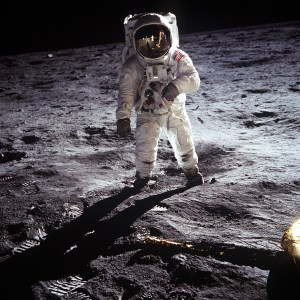
By NASA – http://grin.hq.nasa.gov/ABSTRACTS/GPN-2001-000013.html, Public Domain, https://commons.wikimedia.org/w/index.php?curid=32049
There have been lots of anniversary programmes on TV about the moon shots and Apollo 11 and for me who was once obsessed by the Apollo missions they were all pretty interesting.
One was a programme I have seen before about Neil Armstrong which involved his friends and family talking about the late astronaut. Armstrong was a quiet man who took lessons at his local aerodrome and learned to fly before he could drive. He joined the US air force and became a pilot in the Korean War before returning home to study aeronautics at university.
Later he joined NASA and became an astronaut and apparently the first his family knew about it was when NASA introduced its new trainees on the television news.
Armstrong was a talented pilot who went from testing aircraft like the experimental X15 to become part of the manned spaceflight program and later from being an unknown astronaut to perhaps the most famous man in the world. Everyone wanted to meet the first man on the moon and perhaps get his autograph.
Later on he declined to sign autographs when he found that people were selling them on.
Armstrong resigned from NASA in 1971 and decided to take up a professorship at the University of Cincinnati.
He seemed reluctant to talk about Apollo 11 and I even remember back on the 25th anniversary, the BBC ran a documentary in which Buzz Aldrin did most of the talking, explaining how Neil landed the Lunar Module Eagle on the moon’s surface.
On the way down the Eagle’s computer kept throwing up ‘1201’ and ‘1202’ program alarms. Neither Armstrong nor Aldrin knew what that was but the controllers at mission control knew. The on-board computer which had less memory than a modern mobile phone, could not deal with all the data is was receiving. Armstrong switched over to manual flight, hopped the lunar lander over a rocky area then finally dropped down safely onto the lunar surface with only a scant few seconds of fuel remaining.
Anyway, getting back to July, 1969, I don’t know if you can imagine the excitement of a twelve year old boy, getting up for school one morning to find the TV on and Neil Armstrong walking on the moon when the usual TV broadcast at that time would have been the test card!
Those black and white ghostlike TV images enthralled me that July morning and how my Mother eventually managed to pack me off to school I do not know. Back then I was glued to the BBC transmissions about the Apollo programme and I was a great fan of James Burke who gave us concise updates on what was happening in space and at mission control.
Another BBC programme I saw recently was one about the BBC broadcasts of those days and James Burke himself looked back at film from the late sixties. Video tape was apparently in short supply at the BBC back then and most of his broadcasts were deleted but many of the filmed inserts, broadcast presumably when not much was happening live, were really interesting.
In one, Burke gets inside the cramped command module and shows us just how small it actually was. Apparently in zero g: weightlessness, it appeared bigger because then one could float off into a corner that was normally inaccessible and go to sleep.
In another Burke goes aboard a NASA plane which makes a steep descent creating a few moments of weightlessness which was important for astronaut training.
I often think about that day in 1969, watching the Apollo 11 crew on the moon. The images looked ethereal and ghostly as the two astronauts bobbed about in the low gravity of the moon. I used to wonder just what it was like for Aldrin and Armstrong and what it was like also for Mike Collins, waiting patiently orbiting above in the Command Module Columbia.
Collins must have been the loneliest man in the world just then.
Later in the Apollo program, the TV pictures improved enormously but it was the pictures and cine film that the astronauts brought back which were really amazing.
You might be forgiven for thinking that with the moon landing being 50 years ago, manned space exploration has gone on to bigger and better things. Not so. The Apollo program was incredibly expensive: 25.4 billion dollars according to a quick search on Google: Money that of course the US government could well use elsewhere and after Apollo 17 the moon landing programme was shut down.
Still, think about the spin offs in technology, not only rocketry but computers and electronics and so on. I once read that the secret to the US winning the space race was computer technology and that many calculations done by the Soviets were done by teams of mathematicians using abacuses!
The space race was also part of the cold war and although the Soviets seemed to excel in the early part of the 1960’s, it was the USA that finally put a man on the moon and that man, the first man, was Neil Armstrong who went from relative obscurity to the most famous man in the world. The only other person I can really think of with a similar fame was Charlie Chaplin, whose films, in the days of silent films, went all the way around the world.
One interesting thing to finish with: On one of the BBC documentaries, one of Armstrong’s friends, or perhaps it was his brother, remembered Neil as having a regular dream when he was a child.
Armstrong dreamt that he could float in the air by holding his breath! Quite an interesting dream for a future astronaut!
 One of my workmates asked me recently if I had written a new blog post lately. Yes, I answered, a new post every Saturday.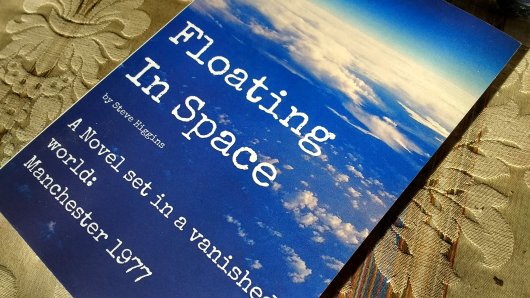
 Film sets? Rooms? What exactly is this guy going to write about rooms you might think? Well, this idea about rooms might take me a while to explain so here we go.
 Steve, how are you? I’m just trying to visualise myself when I was 16. Yes, you’re ok. I know how hard things are for you just now, dealing with that overpowering shyness that has dogged you for so long and will continue to hold you back for a very long time.
 Question 1:
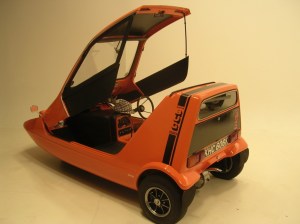 It was actually a pretty eye catching car for a three wheeler. No doors but the roof lifted up to gain access and the side windows were plastic held on by Velcro. I always remember bringing it home and showing it off to my family with a certain amount of pride and my Dad looking at it and saying “How are we all going to get into that?” Perhaps he thought I was going to take us all away for a holiday!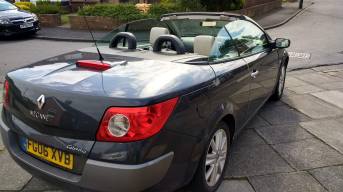
 This new purchase meant I had to sell my trusty old motor myself so this being 2019 I nipped outside, took a few pictures on my mobile phone and put a short advert on Facebook. I sold the car the same day, not for a great price but much more than webuyanycar were offering!
 Also in the case is my Olympus OM2SP complete with spot programme technology. As you may probably know, a modern camera tends to average out the light that comes into the lens giving a slightly false reading or at least an overall reading which when shooting scenes with dark and bright elements can cause confusion. The spot meter in the OM2SP means the user can choose a single spot from which to take a light reading and set the camera accordingly so that the point of interest would always be perfectly lit.

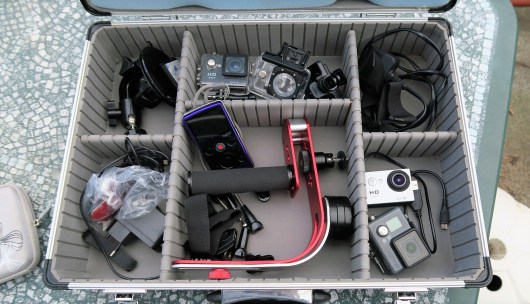
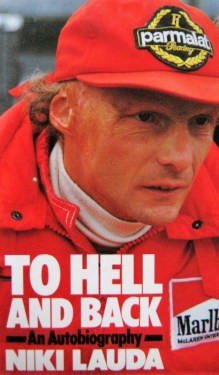 One of my favourite motor racing books is his autobiography titled To Hell and Back. This is what I wrote in one my reviews.
 I spend a lot of time these days looking after my mother who will be 90 later this year. Her memory is not what is was, in fact sometimes she’ll have breakfast, fall asleep in the chair and wake up wanting her breakfast. My brother and I think of it as her reset mode, as if someone has pressed control alt and delete on her personal memory bank and all that has gone before has been wiped clean.
 One of the bylines I use on Twitter is ‘hear it straight from a self-published author’ so I thought it might be an idea to write a post about just that, about being a self-published author.
 Letters from an Unknown Author!