 Classical Music and Three of my Movie Favourites
I’m not a great lover of classical music but the classical music I do know and love has come to me through the medium of film. Yes, movies have inspired almost all of my favourite classical music choices.
The Blue Danube
The Blue Danube is a waltz written by the composer Johann Strauss II. He was an Austrian composer known as the ‘Waltz King’ and was largely responsible for the popularity of the waltz in Vienna in the 19th century. I first heard the music in the movie 2001: A Space Odyssey, the memorable sci-fi movie directed by Stanley Kubrick. Kubrick used numerous classical pieces in the movie and the Blue Danube is used during the space station docking and lunar landing sequences.
I first saw the film in the summer of 1968. I was only 11 at the time and I remember my Mum being surprised I had spent hours at the cinema on a lovely hot day. I watched the film in the huge movie theatre in Northenden, now a Jehovah’s Witness assembly hall. There were only a few people in the picture house that day and it was wonderful having this huge place almost to myself and seeing this incredible film in 70mm on the big screen. I recall being somewhat confused by it all, especially the jump from neanderthal times to the future, until I bought the novel by Arthur C Clarke which explained things in a way the movie did not.
2001 is a particularly visual film. Kubrick cut out a lot of dialogue because he wanted the film to stand as “basically a visual, nonverbal experience” that “hits the viewer at an inner level of consciousness, just as music does, or painting.”

Picture courtesy Flickr.com
According to Wikipedia, despite the few people in the cinema with me that day in 1968, the movie went on to become the highest grossing North American movie of that year.
2001 set the pace for the sci-fi movie with its depiction of spacecraft drifting slowly and silently through space. The first Star Trek movie was heavily influenced by 2001 which made it look a little dated when the movie Star Wars was released and did the opposite thing, showing spacecraft whooshing across the screen at incredible speeds.
2001 is a wonderful movie and as well as continual enjoyment, it has also given me a love of Johann Strauss.
March of Pomp and Circumstance.
The March of Pomp and Circumstance was written by Sir Edward Elgar and there are actually six marches altogether. The most famous is the ‘Land of Hope and Glory’ march which traditionally ends the last night at the proms. I first heard this classical piece in the movie ‘Young Winston.’
The music for the movie was written by Alfred Ralston and includes his original work as well as arrangements of Elgar’s music. I used to have the soundtrack to Young Winston on vinyl and on the back cover there were extensive notes by the producer. He rather pompously announced that neither he nor Richard Attenborough, the director, had any interest in making a film about the British Empire, which is rather sad because the British Empire, in my view, was something we British should be rightly proud of. Anyway, Churchill himself was certainly proud of the Empire and his part in it, and in making this film the producers therefore did what they say they didn’t want to do. The movie is based on Winston’s early life, indeed his autobiography of his early days was entitled just that: ‘My Early Life.’ It is a wonderful read and has been made into a lovely film.
One interesting feature of ‘Young Winston’ is that at the end of the film there is a rather poignant scene where Winston, in his later years, falls asleep in his study and has a dream about his late father, his relationship with whom, as we see in the movie, was not good. In the sequence his father, Randolph Churchill, returns to him; he and Winston discuss life and finally part with a sort of understanding nod to each other. I have always thought that it finished the film off rather nicely but whenever I see Young Winston on TV, that scene has been cut. Years ago I bought the video version and the scene had been cut on the video too, so if I ever decide to buy the DVD version, I’ll be checking the running time before I buy!
Manhattan
Manhattan is Woody Allen’s ode to New York. I have always loved that opening sequence with the monologue by Woody. He narrates the opening of his book and is not satisfied with it so starts the book over again. The dialogue goes something like this;
‘Chapter one. He adored New York City. He idolised it out of all proportion.
No, make that he romanticised it out of all proportion.
To him, no matter what the season was, it was a town that existed in black and white and pulsated to the great tunes of George Gershwyn.
Oh no, let me start this over.
Chapter one . . .’
When he finally gets the book opening he wants, then the music of Gershwin’s ‘Rhapsody In Blue’ roars into focus. Manhattan is a movie shot in black and white and is one of Woody Allen’s most famous and successful films. Allen plays a 42-year-old writer who is involved with a 17-year-old girl played by Mariel Hemingway. The photography is wonderful as is the movie. There is a lovely part played by Meryl Streep who plays the part of Allen’s ex-wife who has written a book about their former life together.
How have the movies influenced your music choices?
 It’s always a good feeling when you watch a movie you have really enjoyed. If you are like me then you will usually take a scan through the credits and look for familiar names. Sometimes you will see one that rings a bell; Hey, that director is the same guy who directed one of your real favourites or, that screen writer is the same writer who wrote another movie you enjoyed. That’s what I call a movie connection.
 Asquith was the son of the British Prime Minister Herbert Asquith. He was a great friend of Terence Rattigan and they collaborated on 10 films together but it’s Rattigan I want to write about here. Who who was he? Well, he was a playwright who wrote a number of west end hits, many of which were made into films. You may recognise some from this list; The Way to the Stars, The Winslow Boy, The Browning Version, The Deep Blue Sea, The Price and the Showgirl, Separate Tables, The Sound Barrier and the Yellow Rolls Royce.
 Robert Donat relished the role of Sir Robert Morton in the Winslow Boy. Morton is an MP cum barrister who takes the British Admiralty to court over the sacking of Cadet Winslow. In my favourite scene, Sir Robert Morton questions Ronnie Winslow about the incident in question, that of the theft of a postal order. The questioning goes fairly gently until Sir Robert ups the ante when Ronnie, the Winslow Boy himself, mentions talking to another boy;


 Now that the X Files has returned to our TV screens I thought I might just take a quick look at TV spies and secret agents. I’ve always been interested in espionage, and the earliest TV spy show I can remember was the Man from Uncle. In case you don’t remember, the show starred David McCallum as Ilya Kuryakin and Robert Vaughn as Napoleon Solo. It was one of those slick and smooth TV shows from the USA and I even read somewhere that Ian Fleming, the creator of James Bond, had a hand in producing the series format.
 They recently remade the Man from Uncle into a big screen movie but looking at the trailer, a lot of the best elements were not there; the music, the suave Robert Vaughn, the boyish David McCallum. To be fair I should save my judgement until I’ve seen the film but can you really recreate something like the Man from Uncle on the screen, years later? I’m not so sure.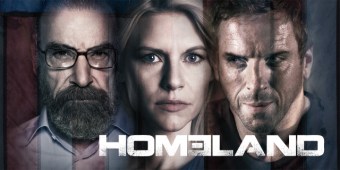
 So what exactly is a kitchen sink drama? If you’ve read through the pages on my site that deal with my book ‘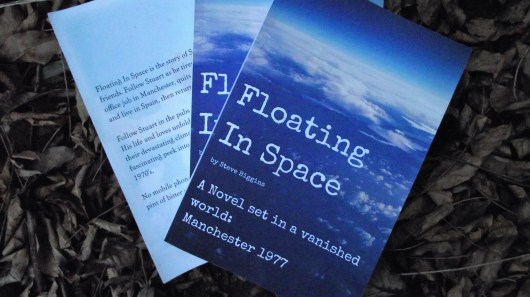
 MASH has always been one of my very favourite TV comedy programmes. You may have read in another post about how I used to
  Now, you might be wondering about that other part of this post’s title, the bit about the emotional indicator. Yes, I thought you might. It’s not so easy to explain but here goes. Most TV shows and movies have a sort of standard emotional indicator that stays pretty constant throughout the show. Take a look at the graph over to the left and let’s put some numbers up. Say a baseline of zero for a standard, calm emotional level. Now, when the show gets funny that level goes up to something like 15 for instance and I’d even say that in a movie like Police Academy that 15 or higher would be a constant throughout the film, well for me certainly. The original Police Academy movie is one of my favourites and I tend to start laughing round about the start of the film with the scene in the parking lot where Steve Guttenberg says the parking lot is full and then the guy comes in and says ‘park the car dirt bag!’ I usually stop laughing round about the end credits but on a normal film there’s a constant up and down: up when the film gets funny and down to nil when we get back to normal.
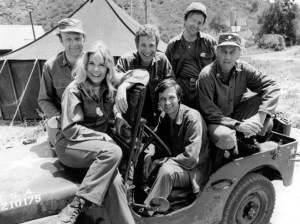 Mash ran for 11 seasons and an incredible 256 episodes. Trapper, played by Wayne Rogers, was my favourite character after Hawkeye and he left the series after season three to be replaced by Mike Farrell playing new doctor B J Hunnicut. Colonel Blake (McLean Stevenson) also left at the end of season three. His character was discharged but right at the very end of the episode news came through to the MASH that the Colonel’s aircraft had crashed with no survivors. This episode prompted an outpouring of grief and resentment from fans at the death of the character. I could understand perhaps Colonel Blake dying part way through the episode and the second part showing the sadness and grief of the rest of the characters but it seemed to me that Colonel Blake’s death was almost an afterthought, just tagged on to the end of the episode. As time went on many of the other series regulars left including Gary Burghof (Radar) and Larry Linville (Frank Burns) and for me personally, the series was never the same.
 I really do love books, especially second hand books. I think that what is so wonderful about a second hand book is that the book has told its story before to someone else, and now if you have just bought it, its going to tell it’s story to you. I spend a lot of time browsing in book shops, both physically in actual shops or on-line in virtual book stores. The thing about on-line book stores is that you have to have a starting point, it’s no fun browsing through lists of books so I tend to browse on-line only when there is a particular book I want. In an actual book store I scan through the various sections and although I tend to linger on biographies and books about film, anything can catch my eye. A while ago I was reading a book by movie director Michael Powell called ‘A Life in Movies.’ It was a pretty thick book and took a fair old while to read and when I got the end there didn’t seem to be any indication there was another volume.
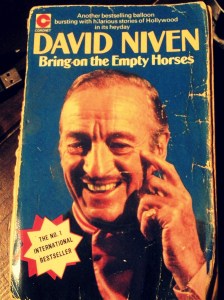 You might be thinking, looking at the picture here: Couldn’t the author have found a better picture? Looking at the picture again I suppose that particular copy is just a little tatty. That’s because it’s my travel copy. I’ve got another copy, a much nicer version that resides in my bookcase that I browse through now and again. The reason I’ve got two versions is because my travel copy goes all over the place with me. If I’m travelling somewhere on the bus or train, that slightly tatty copy goes easily into my pocket or my bag because I can read it time and time again. Not only is it the best ever book written about the golden age of Hollywood, it’s also by far the most accessible and readable book on the subject ever.

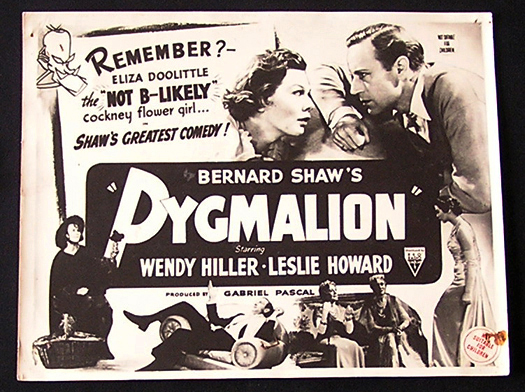
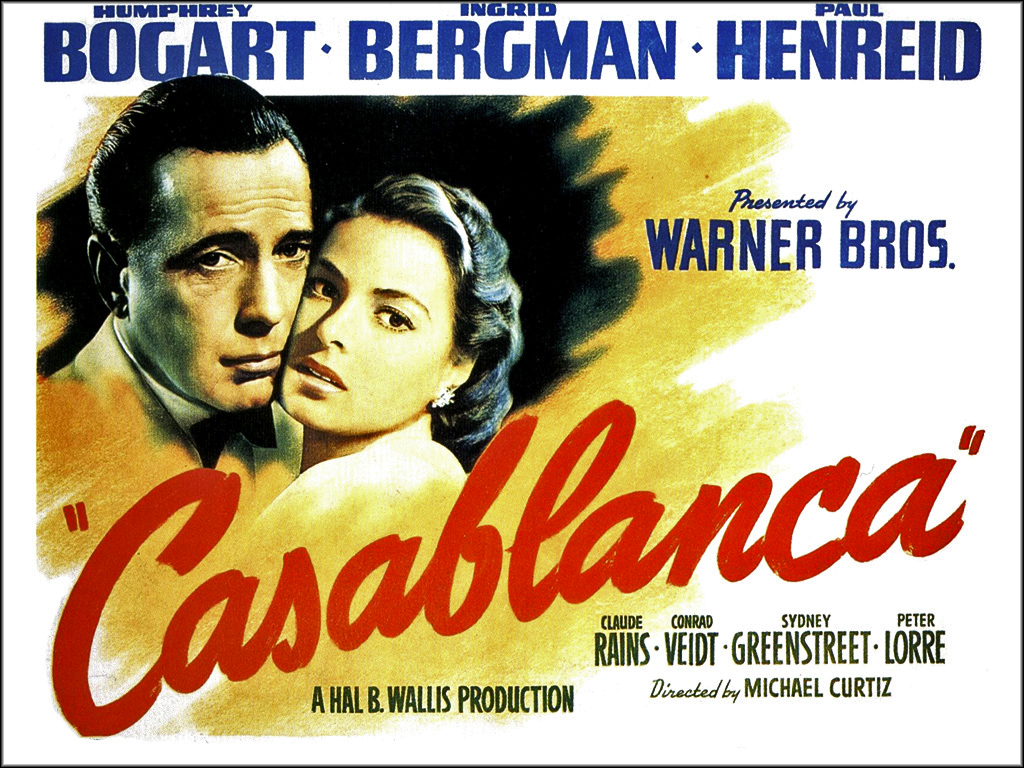
 Something incredible happened to me this week: I found out I wasn’t the oddball nerd I thought I was in my youth, or at least I was but I found out there were others like me, I wasn’t alone and the nerdy things I used to do were done by many others!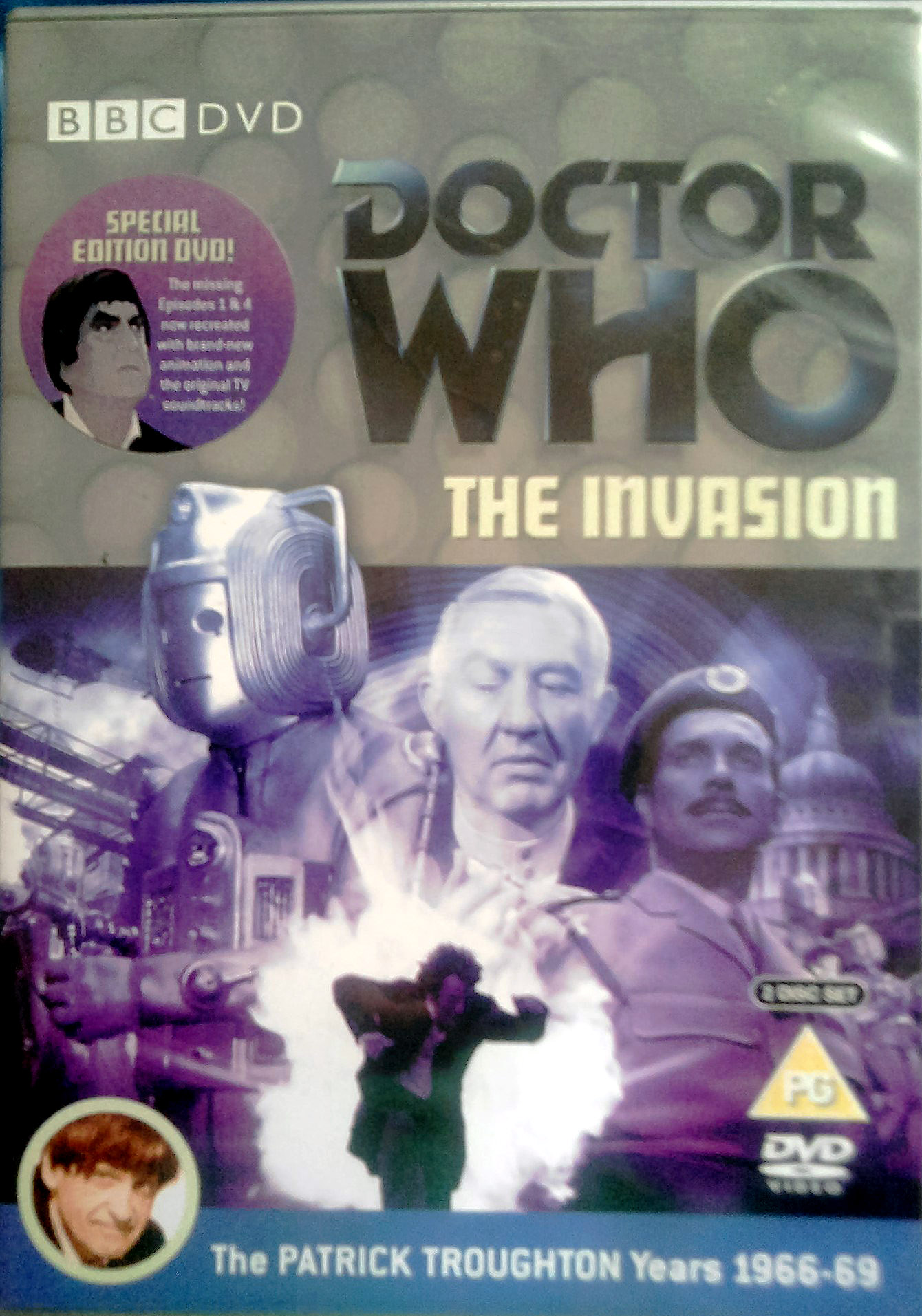
 Letters from an Unknown Author!