6 Great Kitchen Sink Dramas

So what exactly is a kitchen sink drama? If you’ve read through the pages on my site that deal with my book ‘Floating In Space,’ you’ll know that this is a phrase I use to describe my book. When I first added Floating In Space to Amazon through the Amazon sister site Createspace I came to a point where I had to define the genre of the book. If you’ve written something that falls easily into a particular niche then that’s not a big deal. Things like romance, thrillers, science fiction, and YA (young adult) are pretty easily definable but my novel is something on the lines of working class fiction from the sixties; books like A Kind of Loving, A Taste of Honey, Saturday Night and Sunday Morning, Alfie and Billy Liar. All of those works were made into films and three of them, Billy Liar, Alfie and A Taste of Honey were also stage plays but what exactly is ‘Kitchen sink drama’?
Wikipedia describes it as a British Cultural movement that developed in the late 1950’s and early 1960’s and enveloped the theatre, art, literature, television and film. It identifies the John Osborne play ‘Look Back in Anger’ as being the start of the movement and afterwards, many people who identified with the movement were known as ‘Angry Young Men.’ Osborne’s play was a sort of backlash against the theatre of Noel Coward and Terrence Rattigan and represented a move away from polite drawing rooms into council house back rooms.

Richard Burton starred in ‘Look Back in Anger’ and as much as I love the richness of his voice, his portrayal of the leading character of Jimmy Porter hardly represents the working class despite Burton’s own personal origins in a Welsh mining village. A much more representative working class voice, certainly for the North West of England is the character of Arthur Seaton played convincingly by Salford actor Albert Finney in the movie Saturday Night and Sunday Morning.

Saturday Night and Sunday Morning. 1960

Saturday Night and Sunday Morning is set in working class Nottingham. Arthur Seaton is a rebellious factory worker who works hard in the factory by day, but at the weekend he spends his money in the pubs and clubs of the town. He is involved with a married woman but starts to lose interest when he meets a single girl called Doreen and begins a relationship with her. My favourite line from the book and the movie is this: “I’m not barmy, I’m a fighting pit prop that wants a pint of beer, that’s me. But if any knowing bastard says that’s me I’ll tell them I’m a dynamite dealer waiting to blow the factory to kingdom come. I’m me and nobody else. Whatever people say I am, that’s what I’m not because they don’t know a bloody thing about me! God knows what I am.

A Taste of Honey. 1961

Written as a play by Shelagh Delaney when she was only eighteen, the work was first performed at Joan Littlewood’s theatre workshop in 1958. The movie version opened in 1961 adapted by Delaney herself and directed by Tony Richardson, who incidentally also directed the film version of ‘Look Back in Anger.’ The movie features outstanding performances by Dora Bryan and Rita Tushingham.

Alfie. 1966

Alfie was directed by Lewis Gilbert who directed some of the earlier Bond films. The script was produced by Bill Naughton and adapted from his own book and play. Alfie is a fascinating film on many levels. It’s a peek back at the swinging sixties; it explores the elements of comedy versus drama, something I’ve always loved and which I looked at recently in a post about the TV show MASH. Once again it’s about the working class and features great performances from all the principal and supporting actors. One fabulous feature is how Alfie talks directly to the camera and sometimes even says things that directly contradict something he is doing or saying to another character. In the opening sequence Michael Caine as Alfie addresses the audience and tells them not to expect any titles. There are none, except for the film title itself and the closing credits feature photos of the cast and crew. Many actors turned down the chance to play Alfie on film, including Caine’s then flat mate Terence Stamp who played the part on Broadway. Laurence Harvey, James Booth and Richard Harris all turned down the role, and Alfie became a breakthrough movie for Michael Caine. My favourite line from the film comes right at the end when Alfie is reflecting about his life: “What have I got? Really? Some money in my pocket. Some nice threads, fancy car at my disposal, and I’m single. Yeah… unattached, free as a bird… I don’t depend on nobody. Nobody depends on me. My life’s my own. But I don’t have peace of mind. And if you don’t have that, you’ve got nothing. So… So what’s the answer? That’s what I keep asking myself. What’s it all about? You know what I mean? “

Billy Liar. 1963

Billy Liar is based on the book by Keith Waterhouse and was directed by John Schlessinger. Tom Courtney played the title role and many faces familiar to TV viewers appear in the cast such as Wilfred Pickles, Rodney Bewes, and Leonard Rossiter. Billy has an imaginary world in which he plays out many daydreams and fantasies. His ambition though is to become a comedy scriptwriter and his friend Liz played by Julie Christie offers to go with him to London. In the final scenes however, Billy loses his nerve and contrives to miss his train, something that Liz has foreseen and has conveniently left his suitcase on the platform for him.

A Kind of Loving. 1962

This is another 60’s classic directed by John Schelssinger. Adapted from the book by Stan Barstow (one of my all time favourite books) with a script by Keith Waterhouse (who wrote Billy Liar) and Wallis Hall. The story is a very simple one; Vic Brown (Alan Bates)  is a draughtsman in a Manchester factory and he gets involved with secretary called Ingrid played by June Ritchie. When Vic learns Ingrid is pregnant, he does the ‘proper’ thing for the 1960s and offers to marry her. Sounds simple but this is a complex and fascinating film and looks at the subtleties of relationships and how the characters make their way through a series of difficult choices. For a northerner like me, it’s also nice to see places I recognise on film. St Annes On Sea looks a little grim, or did do in the 1960’s. Today it’s a lovely place to live.

Spring and Port Wine. 1969

Hollywood movie star James Mason, famous for roles like the drunken movie star in A Star is Born and the suave villain in Hitchcock’s North by Northwest, left Hollywood in 1963, settled in Switzerland and embarked on a more transatlantic career. One of those projects was Spring and Port Wine. The movie is set in Bolton and is about factory worker Rafe Crompton and his family. His daughter played by Susan George is acting strangely and Rafe struggles to dominate her, his other daughter played by Hannah Gordon and his sons, Rodney Bewes and Len Jones. It later transpires the Susan George character may be pregnant and the family rally round to help her.

The Family Way 1966

The Family Way is one of my very favourite films and like Spring and Port Wine above, features a classic movie actor, John Mills, in a very different role. Saying that, Mills’ film career was diverse to say the least and in this movie he plays Ezra Fitton whose son has just married Jenny, played by Mills’ real life daughter, Hayley. Various problems plague the newly weds, in particular a holiday that never happens due to a travel agent absconding with their funds. Hints are made during the film that Ezra’s son may not even be his son after all. When the truth dawns on Ezra his son asks what is wrong and Ezra replies with the most memorable line in the film; “It’s life lad. Sometimes it’ll make you laugh and sometimes it’ll make you bloody cry!” Time and time again, and I don’t know if you have ever found the same thing, but certain movies I love always seem to have a common denominator. In this case Spring and Port Wine, The Family Way, and Alfie were all penned by the same author, Bill Naughton.


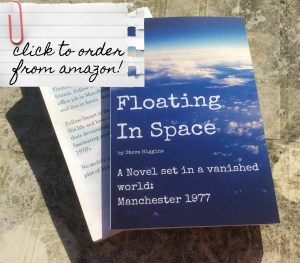
One final kitchen sink drama: ‘Floating In Space’ by Steve Higgins. Click the icon below to go to my Amazon page or check out the links at the top of the page.

MASH and the Emotional Leap Indicator

mash-title-960x590MASH has always been one of my very favourite TV comedy programmes. You may have read in another post about how I used to record the programme back in the early seventies with my cassette tape recorder. Later when video tape recorders appeared I used to tape many episodes of the show and now, here in the DVD age I have a number of box sets of the series.

One of the things I have always loved about the show was how they could take zany and surreal humour, not unlike that of the Monty Python guys, and set it down in a real place; Korea in the 1950s. Some of the lines that came from the mouths of the characters were not only zany and funny but also very witty and clever. Apart from that, the characters themselves, Hawkeye, Trapper John, Frank Burns, Hotlips, Colonel Blake and Radar were interesting and likeable and I, like most viewers, began a strong emotional attachment with the cast.
graph4Now, you might be wondering about that other part of this post’s title, the bit about the emotional indicator. Yes, I thought you might. It’s not so easy to explain but here goes. Most TV shows and movies have a sort of standard emotional indicator that stays pretty constant throughout the show. Take a look at the graph over to the left and let’s put some numbers up. Say a baseline of zero for a standard, calm emotional level. Now, when the show gets funny that level goes up to something like 15 for instance and I’d even say that in a movie like Police Academy that 15 or higher would be a constant throughout the film, well for me certainly. The original Police Academy movie is one of my favourites and I tend to start laughing round about the start of the film with the scene in the parking lot where Steve Guttenberg says the parking lot is full and then the guy comes in and says ‘park the car dirt bag!’ I usually stop laughing round about the end credits but on a normal film there’s a constant up and down: up when the film gets funny and down to nil when we get back to normal.
Now in MASH, where surreal humour is combined with drama, it’s a different ball game. Many times not only does the viewer hit a 20 or higher and then drop down to zero,  he also drops down further, perhaps down to a -10 or lower in the really sad moments. In the graph you can see a really funny moment that comes before a really sad moment. Here’s a prime example from my favourite ever MASH episode, it was called ‘Sometimes you Hear the Bullet.’

Hawkeye’s friend Tommy comes to visit the 4077th MASH. He’s a journalist who wants to write the story of the Korean War from the point of view of the soldier, not the journalist. So he’s not a correspondent, he’s a fully signed up member of a platoon. He stops in and visits with Hawkeye for a while and the usual zany humour ensues. Tommy then has to return to the war. A side story is one where a wounded young lad (played by future film director Ron Howard) admits he is under age but joined up to prove to his girl that he was a man. In one scene he tells Hawkeye that he is out to get him some ‘gooks’ and Hawkeye replies calmly that another word for gooks is people.

Hawkeye and Trapper plan to steal Major Frank Burns’ Purple Heart- he had an accident and because it happened in a war zone he is eligible for the award -and pass it on to the young lad so he can impress his girl back home. Anyway, later in the episode, Tommy the journalist returns to the MASH, only this time he is seriously wounded. He was planning on writing a book called ‘They Never Hear the Bullet’ but this time he heard the bullet. ‘Never mind’ says Hawkeye, ‘just change the name. Sometimes you hear the bullet, it’s a better title anyway.’ Tommy is anaesthetised and Hawkeye gets to work. Sadly, Tommy dies on the operating table. Colonel Blake has to remind Hawkeye about the queue of wounded and Hawkeye, tragedy etched on his face (an outstanding performance by Alan Alda) has to carry on with his next patient. Every time I watch that episode I sob my heart out, just as I did years ago when I first saw that episode on my Mum and Dad’s old black and white TV. Now I know why; because it wasn’t a case of just dropping down from 0 to minus 36 on the emotional scale, I was already up there on +45 so I had to drop way, way down. That’s why I love MASH: Humour, drama, and tragedy, all mixed into one.

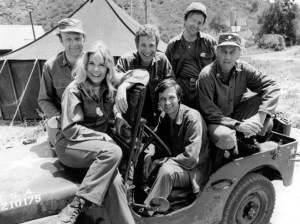
MASH_TV_cast_1974Mash ran for 11 seasons and an incredible 256 episodes. Trapper, played by Wayne Rogers, was my favourite character after Hawkeye and he left the series after season three to be replaced by Mike Farrell playing new doctor B J Hunnicut. Colonel Blake (McLean Stevenson) also left at the end of season three. His character was discharged but right at the very end of the episode news came through to the MASH that the Colonel’s aircraft had crashed with no survivors. This episode prompted an outpouring of grief and resentment from fans at the death of the character. I could understand perhaps Colonel Blake dying part way through the episode and the second part showing the sadness and grief of the rest of the characters but it seemed to me that Colonel Blake’s death was almost an afterthought, just tagged on to the end of the episode. As time went on many of the other series regulars left including Gary Burghof (Radar) and Larry Linville (Frank Burns) and for me personally, the series was never the same.
The last ever episode was aired in 1983 and became the most watched TV episode ever in the USA at the time.

Keep an eye out for Sometimes You Hear The Bullet. It’s well worth watching!


What to do next: Here are a few options.

Share this post on your favourite social media!

Hit the Subscribe button. Never miss another post!

Listen to my podcast Click here.

Buy the book! Click here to purchase my new poetry anthology.

Click here to visit Amazon and download Floating in Space to your Kindle or order the paperback version.

Second Hand Books and The World of Movie Making

Million Dollar Movie by Michael Powell.

poweelbookI really do love books, especially second hand books. I think that what is so wonderful about a second hand book is that the book has told its story before to someone else, and now if you have just bought it, its going to tell it’s story to you. I spend a lot of time browsing in book shops, both physically in actual shops or on-line in virtual book stores. The thing about on-line book stores is that you have to have a starting point, it’s no fun browsing through lists of books so I tend to browse on-line only when there is a particular book I want. In an actual book store I scan through the various sections and although I tend to linger on biographies and books about film, anything can catch my eye. A while ago I was reading a book by movie director Michael Powell called ‘A Life in Movies.’ It was a pretty thick book and took a fair old while to read and when I got the end there didn’t seem to be any indication there was another volume.
Of course, Powell was quite old when he wrote his autobiography, perhaps he thought that there wouldn’t be time for another book. Well, I’m happy to say he did write another volume and this is it, Million Dollar Movie. Powell continues the story of his life in his usual random fashion, jumping to things out of context and out of sequence. Just because he happens to visiting Hollywood for instance, he will go on to talk about Hollywood and movie people he knows there and so on. Powell made some great movies alongside collaborator Emeric Pressburger but his career stalled when he made a shocking film called Peeping Tom about a disturbed cameraman who murders his subjects and films them as he does so. Audiences were shocked and Powell’s directing career ended, although in later years fellow directors like Martin Scorcese praised the film as a classic. Liz bought me this book as a gift and the copy she tracked down comes from Austin Public library in Texas in the United States. Provenance is a word they use in the antiques business; It’s to do with the background of an item, and that is what makes this copy so wonderful; How it has come so far, from the USA to England, just so I can sit back and enjoy it.

Bring on the Empty Horses by David Niven.

bringontheYou might be thinking, looking at the picture here: Couldn’t the author have found a better picture? Looking at the picture again I suppose that particular copy is just a little tatty. That’s because it’s my travel copy. I’ve got another copy, a much nicer version that resides in my bookcase that I browse through now and again. The reason I’ve got two versions is because my travel copy goes all over the place with me. If I’m travelling somewhere on the bus or train, that slightly tatty copy goes easily into my pocket or my bag because I can read it time and time again. Not only is it the best ever book written about the golden age of Hollywood, it’s also by far the most accessible and readable book on the subject ever.
Niven’s first book was his autobiography; ‘The Moon’s a Balloon’. In it Niven told how he came over to Hollywood from the UK and made the incredible leap from movie extra to movie star. The title of this book comes from Hungarian director Michael Curtiz. When filming ‘The Charge of the Light Brigade’ Curtiz wanted a hundred riderless horses to come into shot so he boomed on his megaphone ‘Bring on the Empty Horses!’ Niven and fellow actor Errol Flynn collapsed into laughter and Niven filed away the phrase for later use. The book covers the Hollywood years from 1935 to 1960 and Niven paints vivid portraits of Hollywood itself and long vanished watering holes like the Brown Derby and Romanoffs. He looks at some of the stars he has known like Errol Flynn, Clark Gable, Ronald Colman, and Constance Bennett. Other chapters profile producers like Sam Goldwyn and many other famous Hollywood personalities of the time. All his stories are told with great affection and I particularly liked the portrait of Mike Romanoff, the restaurateur who tried to pass himself off, in a slightly tongue in cheek way, as a member of the Russian Romanov family. If ever I’m travelling and need something to read on the journey I’ll always have this copy on hand. It’s like an old wine that improves with age!


What to do next:

Share this post on your favourite social media!

Hit the Subscribe button. Never miss another post!

Buy the book! Click here to purchase my new poetry anthology.

Click here to visit Amazon and download Floating in Space to your Kindle or order the paperback version.


TV Movies and a Serious Case of Deja Vu!

children-403582_1920I don’t know about you but there are certain things I hang on to in life. One of those things are my diaries. The other day, looking through my schoolboy diary from 1973 I noticed that one entry mentions that I watched a film called The Inspector with Stephen Boyd. It was a movie made in 1962 and it’s about a jewish girl trying to get into Palestine. It’s not a classic movie but I’ve always liked Stephen Boyd and he was rather good in movies like Fantastic Voyage where a mini submarine and her crew were shrunk to minute size and then injected into a man’s body. Have you ever seen The Inspector? I doubt very much if you have, in fact I can’t remember ever seeing that movie again on TV. There are plenty of movies I have seen, some of them over and over though, here are a few of them;

The Great Escape. Ok I love it, I really do but I know the script off by heart I’ve seen it that many times!

Great Expectations. David Lean’s cinematic version of Dicken’s novel. Great movie but I’m fed up of seeing it on Film 4!

The Man In The Iron Mask! Seen this so many times with Richard Chamberlain and Patrick McGoohan and of course it was re made in 1998 with Leonardo Di Caprio but what about showing the 1952 version with Louis Hayward? Now that is a movie I’d love to see again.

Goldfinger, or any of the Bond films. As much as I love James Bond 007, most of the films, especially the older ones, I have seen again and again so I need a break from them. Strangely, I have a few of my favourite Bonds on DVD. I don’t think I ever watch them but I’m so familiar with the Bonds that if I come home from work and one is on TV and I’ve missed the first thirty minutes – well, it doesn’t matter!

So who is it at the BBC or Channel 4 or Sky who decides what films we can see and why is it that some are shown over and over and some only get aired rarely? What happens in the world of the TV scheduler? I really hope those guys are reading this blog because there are movies out there I want to see and a whole bunch of ones, like those above that I am fed up of seeing! Anway, here are a few recommendations for any TV schedulers reading!

CBubblesCharlie Bubbles. This is a great film penned by northern writer Shelagh Delaney and it’s about a (surprise) northern writer played by Albert Finney who journeys back up north from London to see his son. It’s a well observed and fascinating film and for a northerner like me it’s great to see the Manchester of the 1960’s up there on the movie screen. Writer Shelagh Delaney shot to fame in the sixties when she wrote her play ‘A Taste Of Honey’ and had it accepted and performed by Joan Littlewood’s theatre workshop. There’s a rather telling line in the movie when a waiter played by Joe Gladwin, (an actor familiar to UK TV audiences of the 70’s), asks Charlie, played by Finney, “are you still working or do you just do the writing?” Somehow I can imagine that line came from Delaney’s personal experience! Interestingly, this movie marked Albert Finney’s debut as a director. Have you seen the movie? I don’t think you have unless maybe you’ve sourced the DVD version.

In my large but slightly redundant VHS video box I’ve a copy of a wonderful film starring Alec Guinness called ‘Last Holiday’. Guinness plays a pleasant mild mannered salesman called George Bird who has no friends or family and finds out he only has a few weeks to live.

He decides to spend the time he has left by going to a rather posh residential hotel where the residents find him a sort of enigma. His star rises here as he becomes involved with the residents and staff and people start to wonder about him. Who is he? Is he rich? Lucrative job offers come his way as well as love but only one person knows his secret, a member of staff that he confides in.

In the end Mr Bird finds out he was wrongly diagnosed but the film ends on a sad note when he is killed in a car crash. Penned by author J.B.Priestley, it’s another wonderful British picture full of excellent performances with a whiff of sadness and poignancy about it. Have you seen it on TV? Well, not recently because the last time I have noticed it broadcast was in the 1980’s when I taped it with my trusty VHS video recorder. What happens to classic movies like this and why are they rarely seen on British TV? I wish I knew but I’d love to see this movie again.

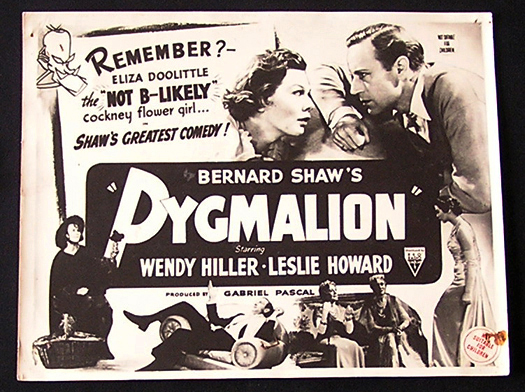
Pygmalion Movie Poster

Pygmalion. You’ve probably seen the movie ‘My Fair Lady’ with Rex Harrison as Professor Higgins and Audrey Hepburn as Eliza Doolittle but I’d be surprised if you’ve seen this, the original, non-musical version, on TV. Leslie Howard plays Higgins and Wendy Hiller plays Eliza. Hiller is much more believable as Eliza, no disrespect to Audrey Hepburn and Howard is a bright, eccentric Higgins. I’ve never seen this version on TV at all, in fact I picked up the movie on one those free newspaper DVDs. What is interesting from researching the film on the internet is that a controversial (at the time) line was included in the film: Eliza saying ‘Not Bloody Likely!’ This made Wendy Hiller the first person ever to swear in a British film. Dear me, how times change!

Robinson Crusoe on Mars. Sounds a bit mad doesn’t it, a sort of 1950’s B picture. In fact this was shot in colour in 1964 and starred an actor called Paul Mantee who appears in many US TV series of the 1970’s and 1980’s. It pretty much follows the original story of Robinson Crusoe only it’s about an astronaut who crash lands on Mars. He thinks he’s had it but finds that certain rocks contain oxygen which is released when they are heated so he is able to replenish his oxygen supplies. He even finds an alien ‘Friday’ on Mars who has escaped from an alien slave camp. Sounds a little far-fetched I know but it was actually a pretty good movie. I remember watching it on TV on a cold weekday afternoon in the early eighties and it certainly warmed me up. Since then I have never seen it on British TV but it’s well worth a search on e-bay for the DVD version. The day they show it again on TV I’ll be parked up on my favourite armchair ready to enjoy! Come on TV schedulers, get your act together!

Which movies would you like to see on the small screen?


If you liked this post, then why not try my book, ‘Floating In Space’? Click the links at the top of the page for more information.

Why I love Casablanca (and why you should too!)

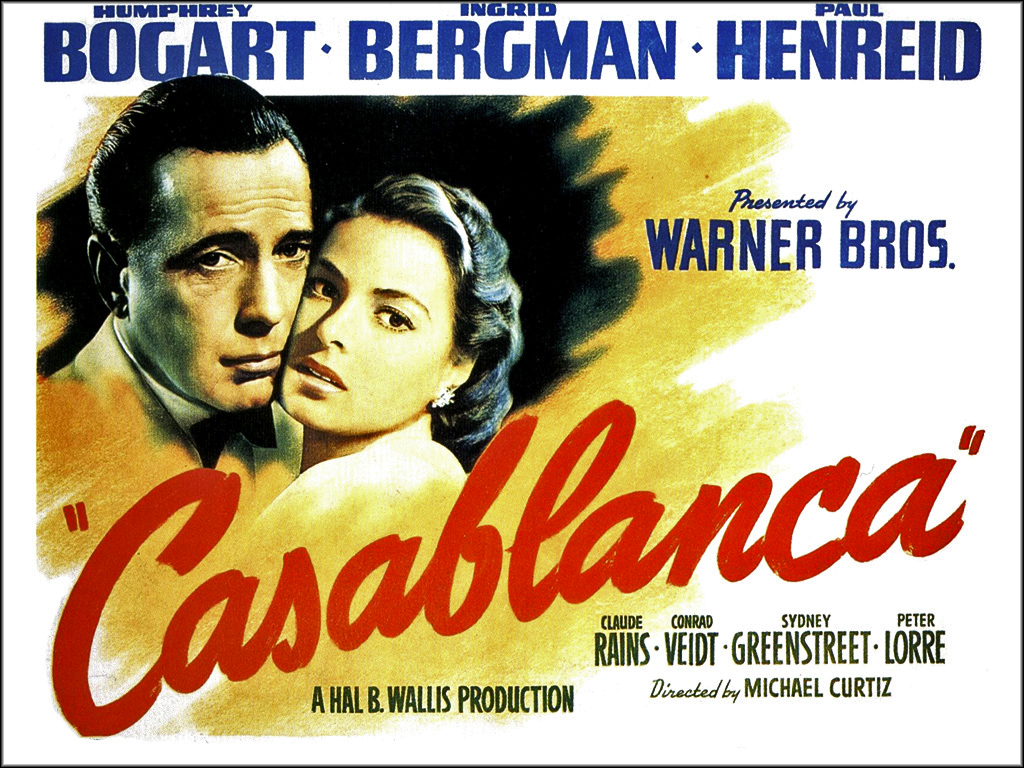
casablancalead1After a hard shift at work, it’s nice to go home, pour yourself a drink and settle down by the TV to watch something while you unwind. Now despite these days of multiple TV channels it’s not always easy to find something worth watching. I remember the days when there were only three channels but strangely, even though we have have undergone the digital revolution and have cable and satellite channels, sometimes we find ourselves clicking the remote vainly in search of something that is even remotely interesting. Happily, over there in the DVD cupboard, I have plenty of things I enjoy watching. One of those is my much watched DVD of Casablanca, the classic Hollywood movie. I can watch it time after time and there is so much to enjoy in the movie; the wonderful Humphrey Bogart, The suave Paul Henreid, the rotund Sydney Greenstreet, the villainous Conrad Veidt, the slimy Peter Lorre and my favourite character in the film, Claude Rains, not to mention the lovely Ingrid Bergman.

Casablanca was only Bergman’s fifth Hollywood movie. She had been brought over from Sweden by producer David O Selznik to star in the English language version of Intermezzo, a successful Swedish film. She spoke no English but learned quickly. Ingrid expected to make the movie and then return to her career in Sweden, so much so that her husband did not even come to Hollywood with her. However, Ingrid made more movies in Hollywood, then came Casablanca; a movie that was a product of the Hollywood studio system. It was filmed at the Warner Brothers studios in Burbank with one location shoot, a short sequence at Van Nuys airport. Shot in 1942, Casablanca made Ingrid a star and remains probably her best known role. Released in the USA at the end of 1942 and internationally in 1943, the film won three Oscars. Its reputation has grown over time, eventually becoming known as one of the all-time classic motion pictures. Berman herself once commented that the film had a life of its own. The great performances, the memorable lines and the film’s music all contributed to the public affection for the movie. There’s a great sequence in When Harry Met Sally, where Meg Ryan and Billy Crystal discuss the ending and Sally, the Meg Ryan character, asserts that Ingrid Bergman would rather leave with Henreid and be the first lady of Czechoslovakia than stay with a man who runs a bar in Casablanca.

I’ve always liked Claude Rains and I like the way it becomes apparent that his character is not a Nazi or even a Nazi sympathiser, but someone who is something of a rascal, who uses his position for his own ends but also someone who chooses his own friends and his own path, as he does at the end of the movie. My favourite sequence is where he closes down Rick’s bar at the request of Conrad Veidt’s Nazi officer. Humphrey Bogart complains, “How can you close me up? On what grounds?” Rains replies, “Rick, I’m shocked to learn there is gambling on the premises!”

Just then the croupier arrives with some money, “Sir, your winnings!”

Ingrid Bergman became a great Hollywood star and perhaps was associated too much in the eyes of the public with her role of Joan of Arc, because when she fell from Grace, she fell big style.

Bergman was fascinated with the work of Italian director Roberto Rossellini and in 1949 she wrote to him expressing a wish to work in one of his pictures. He cast her in his film ‘Stromboli’ and during the production Bergman fell in love with him, had an affair and became pregnant with his son. This led to a huge scandal in the USA and a divorce and custody battle with her Swedish husband Petter Lindstrom. She eventually married Rossellini and had more children including future actress Isabella Rossellini. She was never reconciled with her former husband but Hollywood welcomed her back in 1956 when she starred in the movie Anastasia for which she won an Oscar.

Humphrey Bogart went on to make many classic movies. He died from cancer in 1957 aged 57. He had been a heavy smoker and drinker.

Claude Rains died in 1967. His last film appearances were in ‘Laurence of Arabia‘ and the ‘The Greatest Story Ever Told.’

Conrad Veidt fled the terrors of Nazi Germany in 1933. He was a fervent anti-Nazi donating his personal fortune to the British government to help in the war against Nazi Germany. He died in 1943 of a heart attack aged only 43.

Sydney Greenstreet died in 1954. He was 62 when his movie career began. He made his debut on the stage in 1902.

Hungarian born Peter Lorre was another refugee from Hitler’s Germany. He appeared in the German movie ‘M’ directed by Fritz Lang but fled Germany in 1933. He died in 1964 aged 59.

Paul Henreid came from an aristocratic background and was born in Trieste, then part of the Austrian-Hungarian empire in 1908. He has many credits to his name as an actor and director. He died in 1992.

The movie was directed by Fritz Lang, another refugee from Europe. Lang had a lifetime of problems with the English language, so much so that David Niven named his book of Hollywood reminiscences after one of his sayings. When he wanted a posse of riderless horses to come into the scene he shouted ‘bring on the empty horses!’


What to do next: Here are a few options.

Share this post on your favourite social media!

Hit the Subscribe button. Never miss another post!

Listen to my podcast Click here.

Buy the book! Click here to purchase my new poetry anthology.

Click here to visit Amazon and download Floating in Space to your Kindle or order the paperback version.

my novel


A Sci-Fi DVD and an Incredible Moment of Self Discovery

Something incredible happened to me this week: I found out I wasn’t the oddball nerd I thought I was in my youth, or at least I was but I found out there were others like me, I wasn’t alone and the nerdy things I used to do were done by many others!

So what nerdy things did I do? Well, here’s one example. In the seventies, before the age of the video recorder I had a small audio cassette recorder and did all sorts of things with it as a teenager. I wrote a number of comedy plays which my poor brother was roped into and we performed these little comedy sketches to the microphone. I did enjoy making the sound effects. One that comes to mind was my brother being sick which involved him making a retching sound then pouring a bucket of water down the toilet! I also used to record some of my favourite radio and TV programmes. I bought a second hand radio cassette recorder which enabled me to record the top twenty every week (dud records edited out of course) but TV presented another challenge. I would record a show using the microphone placed near to the TV speaker. Trial and error found the correct spot; not too close, not too far away and my family were sworn to silence during the recordings, not that that would stop my brother, or even my dad making some small comment towards the end of the show!

Photo0033So, how did this realisation that I was not alone in my nerdiness – or even a nerd at all- come about?
This realisation came about because of a gift. My brother, I might add, who is not a man known for his giving of gifts, had been given some DVDs that were of no interest to him so he passed them to me. They were BBC DVDs of the long running TV series, Doctor Who. Now I have been a Doctor Who fan for many years. I faintly remember the original Doctor Who, the grumpy bad tempered chap played by William Hartnell. The very first episode of Doctor Who, ‘An Unearthly Child’, is one of the highlights of my DVD collection and interestingly it was broadcast on the 22nd November 1963, the day of the John F Kennedy assassination. Because of the tragedy the BBC re ran the episode the following week which is perhaps why the original has survived. The thing is, back in the 60s when digital recordings and home video were just a gleam in some inventor’s eye, the archives at the BBC were getting a little crammed so what did they decide to do about it? Two things, One; they would wipe the tapes and reuse them for other shows and two, they would simply get rid of them!

Crazy, but of course, the value of these old TV shows was not understood then and many hours of classic TV was lost in this way. Not just Doctor Who but Not Only But Also, the Peter Cook and Dudley Moore shows, Doomwatch, Hancock and many others, all lost.

Anyway, one of the DVDs my brother gave me was ‘the Invasion’ from 1968 with the second Doctor Who, Patrick Troughton. The Invasion was made up of eight half hour shows and two of the eight had been lost or junked. Now many TV shows of the time, recorded on video were copied onto film by a telecine machine so the tape could be reused and the show broadcast again or sent to other parts of the world for broadcasting on foreign networks such as South Africa, Canada and so on. Many of these telecine recordings survive. Some have even known to have been rescued from tips or skips by BBC employees and even members of the public. Recently a lost episode of Doctor Who was found in Nigeria!

Anyway, here’s the punch line to this whole blog: When the BBC guys decided to reconstruct the missing episodes guess where they got the audio from? From audio recordings made by members of the public! Yes, Doctor Who fans who as youngsters recorded their favourite shows on audio cassettes, just as I did by placing  a microphone by the TV. So there we have it, conclusive proof that I wasn’t a nerd after all, or at least the nerdy activities of my youth were the same nerdy activities that other youngsters were involved in too!


If you enjoyed this post, why not try my book? Click the links at the top of the page to buy or for more information!


100 Great Movies you Must See!

I really do love movies. Well, my movies, my own personal favourite movies and I don’t always care for other people’s movies. I tend to like classic movies rather than modern ones, not that I’m denigrating modern film. Anyway, I started off trying to work out my top 10 and ended up with, well, a hundred!

Yes, I can also tell you that because of the list maniac that I am, I decided to make the list into a spreadsheet which is great because I can sort the data and throw certain things back at myself, or in this case, at you, the reader. Here are a few examples; A Number of directors had multiple entries, people like Oliver Stone, Michael Curtiz, Martin Scorcese, John Ford, and David Lean (all with three entries.) My top two directors came out as Woody Allen and Stanley Kubrick each with five entries. Woody Allen, Robert Redford and Humphrey Bogart were my favourite leading men and Liz Taylor and Mia Farrow my favourite leading ladies. My favourite years for movies appears to be 1946 with four favourite films and 1956 with five. Anyway, the complete list is below, in no particular order:

A Kind of Loving
A Taste of Honey
Alfie
Blithe Spirit
Broadway Danny Rose
Casablanca
Charlie Bubbles
Dead of Night
It’s a Wonderful Life
Lost Horizon
On the Waterfront
Radio days
Rebecca
Saturday night and Sunday Morning
Serpico
Seven days in May
Spartacus
Sunset Boulevarde
Sweet Smell of Success
The Bad and the Beautiful
The French Connection
The Last Picture Show
The Long Arm
The Maltese falcon
The Man in the White Suit
The Quiet man
The Searchers
The spy who came in from the cold
The Treasure of the Sierra Madre
The VIP’s
2001 A Space Odyessy
A Hard Days Night
A Man for all Seasons
A Matter of Life and Death
Alien
All the President’s men
Angels One Five
Angels with dirty faces
Annie Hall
Around the world in eighty days
Awakenings
Back to the Future
Billy Liar
Bullitt
Citizen Kane
Crimes and Misdemeanors
Dances with Wolves
Desperately Seeking Susan
Dog Day Afternoon
Fail Safe
Fatal Attraction
Four Weddings and a Funeral
Get Carter
Get Shorty
Giant
Gladiator
Goodfellas
Great Expectations
Green for Danger
Gregorys Girl
Hannah and Her Sisters
JFK
Kes
Lawrence of Arabia
Little Man Tate
Lost in Translation
night Of The Demon
North by Northwest
On Her Majestys Secret Service
One Flew over the Cuckoos nest
Paths Of Glory
Platoon
Pulp Fiction
Rocky
Shane
Smokey and the Bandit
Snow White and the Seven dwarfs
Some Like it Hot
Taxi Driver
The Adventures of Robin Hood
The Big Sleep
The Candidate
The Cincinatti Kid
The Cruel Sea
The Dambusters
The day the Earth stood still
The Godfather
The Graduate
The Great gatsby
The Ipcress File
The King of Comedy
The man who shot Liberty Valance
The Misfits
The Shining
The Silence of the Lambs
The Thief of Bagdad
The Third Man
The Wizard of Oz
Three days of the Condor
To Catch a Thief
Viva Zapata
Wall Street
Whats new Pussycat?
Whats up Doc?
When Harry met sally

Hope you enjoyed the list. What are your personal favourites?

If you liked this post, why not try my book? More details on the ‘Floating In Space’ link above.

8 Things You Didn’t Know about James Bond, 007

bondblogI’ve been a big James Bond fan since I was a schoolboy and you may have noticed a couple of other Bond posts that I’ve written previously. The first Bond book I ever read was The Man with the Golden Gun which is a rather poor entry into the Bond world. Author Ian Fleming wrote the first draft but died before revising the book. His method was to write a first draft and then on the second, add in all the little bits of detail, such as Bond’s meals, drinks, clothing and so on that made the books so fascinating. I persevered, found the correct sequence of the novels, and have been a Bond fan ever since. Anyway, I’m getting away from my theme, eight things you may not know about 007.

1: The Longest Serving Bond.
Roger Moore made the most Bond films starting with Live and Let Die in 1973 and finishing with A View to A Kill in 1985. As much as I love Roger Moore, I really do feel he was the worst James Bond ever, totally unsuited for the role and a prime factor in me stopping watching the films during the 80’s. Adam West, TV’s Batman, Clint Eastwood and Burt Reynolds were all once in the running to play 007 but all declined, believing Bond should be played by a British actor. Cary Grant was also approached but turned down the role believing he was too old.

2: The Shortest Serving Bond.
George Lazenby was recruited to carry on as 007 when original Bond actor Sean Connery left. Lazenby was an Australian actor and the star of The Fry’s Chocolate Cream TV adverts. Lazenby was my personal favourite Bond actor and the one I’ve always felt that most resembled Ian Fleming’s description of Bond. He had the authentic black comma of hair that Fleming described in the books and his one Bond movie, ‘On Her Majesty’s Secret Service’ was one of the very best. Such a pity that Lazenby didn’t go on to make more Bond films. He was given poor advice about the movie business; in particular he was advised that the Bond movies were on the way out. Away from the Bond set Lazenby dressed like a seventies hippy with long hair and a beard, none of which went down well with his movie bosses and PR men so Lazenby was out and Sean Connery asked back for one last 007 movie.

image courtesy flickr.com

image courtesy flickr.com

3: Who wrote the Bond books and where were they written?
Ian Fleming wrote the Bond books. After the war finished Fleming began work as foreign manager for the Kemsley newspaper group and as his contract with them gave provision for three months holiday during the
winter months, Fleming spent the time in Jamaica where he bought a house. He named the house after a wartime operation known as operation Goldeneye. He returned there every summer where he would work on the next Bond book. When all the books had been made into films, Eon productions, the makers of the Bond movies had to create new stories and new plots. The seventeenth Bond film Goldeneye was named after Ian Fleming’s Jamaica home.
Goldeneye the movie marked the debut of Pierce Brosnan as 007 when the movie franchise returned to the cinema screens after a brief hiatus. Apart from a rather silly tank chase, Goldeneye was one of the very best Bond movies.

4: Was there a real James Bond?
Indeed there was a real James Bond. When Fleming was planning his original novel he was looking around for the blandest and most anonymous name he could think of, and that’s when he came across a book called ‘Birds Of The West Indies’ by ornithologist James Bond. In 1964 Fleming gave Bond a first edition copy of ‘You Only Live twice’ inscribed by Fleming ‘to the real James Bond from the thief of his identity.’ When the book was auctioned in 2008 it fetched £56,000.
Many magazines and newspaper articles have put forward theories as to who the real Bond was but the fact is that while many of Fleming’s colleagues in the wartime SOE (Special Operations Executive) may have inspired him, the character of Bond was inspired by Fleming himself. Fleming was a commander in naval intelligence during the war, just like 007, and it was Fleming who drank the vodka martinis that James Bond liked so much. It was Fleming who wore the Sea Island cotton shirts that appear in the novels and it was Fleming who favoured scrambled eggs for breakfast, just like his creation, James Bond.

5: Which was the highest grossing Bond movie?

image courtesy flickr.com

image courtesy flickr.com

It was actually ‘Skyfall’, the 2012 Bond movie starring Daniel Craig as 007. The movie is easily the best of the Daniel Craig Bond films and there are some interesting aspects to the film in particular a visual homage to past Bond movies using a vintage Aston Martin. Until recently the top grossing movie was ‘Thunderball’ with Sean Connery.

6: How did two independent Bond movies come to be made?
Ian Fleming sold the movie rights to Casino Royale separately from the rest of the books and this enabled producer Charles K Feldman to produce a movie independently from Eon productions who own the rights to the other books. Feeling that he could not compete with the mainstream movies, he decided to make Casino Royale into a comedy version. David Niven starred as Sir James Bond and interestingly, Fleming had mooted Niven as a possible Bond when casting Dr No, the first movie in the series.
The other independent movie, ‘Never say Never Again’, came about due to a legal squabble. Fleming began work with producer Kevin McCLory and writer Jack Whittingham on a script which never came to fruition. Like many writers, Fleming was reluctant to waste this material and used it in his book Thunderball but did not credit McClory or Whittingham. McClory sued Fleming and won certain rights to the story. This enabled him to make what was essentially a remake of Thunderball in 1983 with Sean Connery returning for a last bow as 007.

7: Did the author ever kill off 007?
Not exactly but at the end of ‘You Only Live Twice’ in the novel, Bond is presumed dead or missing and M, the head of the secret service and 007’s boss, writes Bond’s obituary for the Times. It is quite interesting to read and M mentions that Bond was born of a Scottish father and French mother. The Bond family motto as we learn from ‘On Her Majesty’s Secret Service’ is ‘the world is not enough,’ a phrase that later became the title for the 19th Bond movie.

8: Bond girls and voice overs.
A quick internet search tells me there have been 75 Bond girls but I’m not sure whether that includes minor flirtations or ladies like the formidable Miss Moneypenny herself. Two Bond girls were veterans of the British TV espionage series the Avengers: Diana Rigg played Tracy in ‘On her Majesty’s Secret Service’ and Honor Blackman was Pussy Galore in ‘Goldfinger.’ Terri Hatcher, formerly Lois Lane in the TV series of Superman played Bond’s love interest in Tomorrow Never Dies and Eva Green played Vesper Lynd in the new version of Casino Royale. The most famous is probably Ursula Andress who played the first ever Bond girl Honeychile Ryder in Doctor No. Interestingly, Ursula Andress’ voice was dubbed in the film by Nikki van der Zyl who did voice overs for many Bond girls. Apparently Ursula Andress was felt by the producers to have had too strong a German accent. Shirley Eaton played Jill Masterton in Goldfinger and it was she who was famously covered in gold paint. Jill’s voice was dubbed by Nikki in order to give her a softer voice. French actress Claudine Auger who played Domino in Thunderball was also dubbed by Nikki.
Miss Moneypenny, M’s secretary is not necessarily considered to be a Bond girl; however, in the films Moneypenny and Bond always have a certain amount of banter. Lois Maxwell played Moneypenny in the first fourteen Bond films. My personal favourite was Samantha Bond who played the role four times in the Pierce Brosnan era. The current Miss Moneypenny has been given a sort of backstory in Skyfall, that of a former field agent assigned to a desk role.

The 24th and latest Bond movie ‘Spectre,’ premiers later this year. Watch the trailer below!


If you liked my blog, why not try my book! Click the icon below to go straight to my Amazon page or click the links at the top of the page for more information.

Marilyn Monroe: Suicide, the Kennedys, and a Red Notebook

mmpicmonkey-imageIn my book collection, which is pretty big, I’ve probably got more books about Marilyn Monroe than any other single subject although I only have two of her movies on DVD. Some like it Hot directed by the Great Billy Wilder and her very last completed movie, The Misfits. I suppose I’m just more interested in her, the woman herself rather than her films. The woman born Norma Jeane Mortensen, according to her birth certificate, who went on to become the movie star Marilyn Monroe.

Funnily enough, June the 1st, only a few days ago as I write this post, would have been Marilyn’s 89th birthday. It’s hard to imagine Marilyn, this icon of movie star allure as an old woman. Marilyn will never age and our image of her is fixed not only by her movies but by the many clips and photographs of her that fill cyberspace. She was a woman loved by the camera but she had a hard battle to become the person she wanted to be, a serious actress in charge of her own fate as a movie star and in control of her career and her roles.

It seems to me after reading many books about Marilyn, she lived her life in compartments and in each separate compartment were different and separate people. You may have read a book about her by Robert F Slatzer, ‘The Life and Curious Death of Marilyn Monroe,’ who claimed to have married Marilyn only to have had the marriage annulled at the request of her movie bosses. Slatzer was kept in a separate compartment from Bill Purcell, who features in my most recent Marilyn book purchase; IMGA0351‘Marilyn Monroe: Private and Undisclosed’ in which the author refers to a long time relationship between him and Marilyn. Slatzer and Purcell, and indeed her three husbands, Jim Dougherty, Arthur Miller and Joe DiMaggio, were all kept by Marilyn in separate compartments which only occasionally connected.

Marilyn claimed she only wanted to settle down and have children but stardom was something she could never give up. She had worked so hard for it and when her struggles to have a child failed, or when her relationships themselves failed, her movie career was always there to fall back on.

She died in 1962 aged 36. The coroner said she died as a result of a probable overdose. Indeed, she had a history of overdosing and Arthur Miller, her third husband, saved her from death more than once. Many writers have attributed her sacking from her final film ‘Something’s Got To Give’ as a contributing factor in her suicide but in fact Marilyn had been reinstated to the film at an increased salary. On top of that she had many film projects planned, including a movie biopic about Jean Harlow, so did she commit suicide? Was it an accidental overdose, or was she murdered? Who would want to murder Marilyn Monroe and why?

The fact of the matter is that Marilyn had become rather dangerous to quite a few people and she was in possession of some pretty interesting information because of her involvement with President John Kennedy. Kennedy, who was a serial womaniser, was not amused at her overtly sexual performance at his birthday party and decided to end his association with her. FBI boss J Edgar Hoover had made Kennedy painfully aware he knew of his trysts with another woman named Judith Campbell, who was also intimate with mafia boss Sam Giancana. Anxious perhaps not to give Hoover further ammunition against him, the President tasked his brother, Attorney General Bobby Kennedy to do the dirty work and smooth over things with Marilyn.

Some books and articles claim that was exactly Bobby Kennedy’s mission with Marilyn; damage limitation and keeping her quiet. Others say things had gone further and Marilyn had another affair, this time with Bobby Kennedy himself. Marilyn was someone who had spent a lifetime trying to better herself in the arts and literature. She was a great reader and she began taking notes of her conversations with the Attorney General in order to research their topics and appear confident and knowledgeable. Those conversations included, incredibly, highly secret things within the US government including attempts to topple the communist government of Fidel Castro in Cuba. She wrote these notes down in a red notebook which she showed to Robert Slatzer. He advised her it was an extremely dangerous notebook to have but as her affair with Bobby Kennedy cooled, if indeed it was an affair, Marilyn grew more and more angry. She claimed to friends she was fed up of being tossed around ‘like a piece of meat’ and threatened to blow the lid on her dealings with the Kennedys in a press conference. Bobby Kennedy wanted that notebook destroyed and Marilyn kept quiet. The mafia wanted derogatory information on the Kennedys and had even had Marilyn’s home bugged. The press conference was arranged for Monday August 6th, 1962. Sadly, Marilyn was found dead in the early hours of the 5th.

mm5409683410_8350501c78_oOn the last day of her life, August 4th, 1962, Marilyn was not depressed but making plans for the future. The day before, the 3rd, she spoke on the telephone with handyman Ray Tolman and arranged for him to visit the next week to sort out some repairs on her house, 12305 5th Helena Drive in Brentwood. She also ordered various plants and shrubs for her garden. She spoke with her publicist Pat Newcomb and invited Pat to stay the night. The two women dined locally and turned in to bed early.

The next day, 4th August, Marilyn was awake when the housekeeper arrived at 8am. She spoke with numerous people on the telephone and arranged for Masseur Ralph Roberts to come over for a barbeque the next night.
Pat Newcomb arose around 12 noon and felt that Marilyn was not in a good mood. Pat had slept well while Marilyn, who had a long history of sleeping problems, had slept badly. This seemed to cause some friction between the two women. Shortly after 1 pm Ralph Greenson, Marilyn’s psychiatrist arrived. Marilyn and Greenson had a therapy session together while Pat spent the afternoon sunbathing by the pool as previously arranged.

At around 3pm Pat Newcomb says Greenson asked her to leave as he wanted to work alone with Marilyn.
Later, Eunice Murray, Marilyn’s housekeeper dropped Marilyn off at Peter Lawford’s beach house while she did some shopping. At about 4pm she returned home and Doctor Greenson also returned for presumably, more therapy.

At 5pm Peter Lawford called and asked Marilyn to a supper later that evening but she declined. Marilyn received numerous telephone calls during the day some of which Eunice Murray had fielded by telling callers Marilyn was busy or not at home. Many times this was simply not true. A call from Ralph Roberts was answered by Dr Greenson who said sharply “Not here,” and put down the phone.

At 7 pm Greenson says he left, leaving Marilyn alone with housekeeper Eunice Murray. At around this time Marilyn took a call from Joe DiMaggio Jr. Joe had broken off his engagement to his fiancée and found Marilyn to be in good spirits. At about 7.30 Peter Lawford called again to ask Marilyn to dinner. His description of Marilyn contrasts with Joe Jr as Lawford states Marilyn’s speech was slurred and that she appeared disorientated. Towards the end of the call Lawford stated famously that Marilyn said, “say goodbye to the President and say goodbye to yourself because you’re a nice guy.” Mexican actor Jose Balleros also claimed to have spoken on the telephone with Marilyn that night, he claims Marilyn was lucid and awake in contrast to Peter Lawford’s statements. The fact is Lawford and Eunice Murray both gave varying reports of what happened on Marilyn’s last evening and neither’s statements can be completely trusted.

According to Murray she noticed a light on under Marilyn’s door but the door was locked. She went outside and saw Marilyn either asleep or unconscious on the bed. This was 10 pm in the first version Eunice told. Later on it was moved forward to 3 am. She called Ralph Greenson who advised her to break a window with a poker. Greenson himself then arrived at the house, broke another window and gained entry through the window and found Marilyn dead.

When Police Sgt Clemmons arrived at 4.25 am he saw Marilyn lying face down in what he called the ‘soldier’s position.’ He said “her hands were by her side and her legs perfectly straight. It was the most obviously staged death scene I have ever seen.” Not only that, all the sheets on the bed were clean and Mrs Murray was busy doing the laundry. Clemmons also noted the unusually long time that had elapsed before calling the police and asked why wait until gone 4 in the morning? Greenson and Murray said the film studios had to be informed first. Later, Murray changed her story saying she saw the light on in Marilyn’s room at midnight, went back to bed then awoke later and saw it was still on at 3am then she called Greenson. Greenson then called Doctor Hyman Engleberg and both doctors arrived shortly after. It was Hyman Engleberg who pronounced Marilyn dead.

Eunice Murray admitted in a BBC interview in 1985 for the documentary say Goodbye to the President that Bobby Kennedy was at Marilyn’s house on the day of her death. Eunice’s son in law and Marilyn’s handyman, Norman Jefferies told author Donald Wolfe that Bobby Kennedy arrived late on the Saturday evening with two unknown men and asked Jefferies and Murray to leave while he spoke with Marilyn alone. When they returned Marilyn was comatose in one of the guest cottages attached to her house. Jefferies and Murray called an ambulance but Marilyn died from an overdose. Was it a suicide or an accident? Was it murder? It seems to me that at this late stage we can never know but the autopsy showed that Marilyn’s blood level contained a lethal level of Chloral hydrate and Nembutal but there was no residue from the pills in her stomach, in fact, Marilyn would have had to swallow 38 to 66 capsules of Nembutal plus the chloral hydrate, and would have lost consciousness long before swallowing all of the pills. Was an injection given? The autopsy showed no trace of any needle marks and the final result was noted as a ‘probable suicide.’ Other versions of this story state that an ambulance was called and Marilyn expired on the way to hospital. Presumably it was the ambulance crew that pumped her stomach removing the pill residue. Recently an ambulance driver named James Hall claimed he attended Marilyn’s home that night and Marilyn was responding to treatment when a doctor whom he identified as Ralph Greenson injected Marilyn in the chest with a hypodermic syringe with a long needle. It was he said an inept amateur injection that broke one of her ribs however, these claims were not substantiated by the autopsy. The body was then returned to her home in order to give Robert Kennedy time to leave Los Angeles. I cannot for a moment imagine Bobby Kennedy as a murderer but he certainly would not want to be associated in any way with a movie star suicide. To this day John Bates, a friend of Kennedy’s claims that Bobby and his family spent the weekend with him at his ranch in Gilroy, south of San Francisco.

The final tragedy of this drama is that former husband Joe DiMaggio was set to remarry Marilyn. The date of the wedding should have been August 8th. Instead Joe attended Marilyn’s funeral on that day.

DiMaggio sent half a dozen red roses to her crypt three times a week for the next twenty years. He died in 1999 aged 84 and never remarried. He never spoke about Marilyn publically ever again. When Robert Kennedy visited the Yankee stadium in 1965, DiMaggio took a discreet step back when it was time to shake Kennedy’s hand.

"Marilyn Monroe crypt2" by User:Oleg Alexandrov. Original uploader was Oleg Alexandrov at en.wikipedia - Transferred from en.wikipedia(Original text : Made by Kodak Easy Share camera by User:Oleg Alexandrov). Licensed under Public Domain via Wikimedia Commons - https://commons.wikimedia.org/wiki/File:Marilyn_Monroe_crypt2.jpg#/media/File:Marilyn_Monroe_crypt2.jpg

“Marilyn Monroe crypt2” by User:Oleg Alexandrov. Original uploader was Oleg Alexandrov at en.wikipedia – Transferred from en.wikipedia(Original text : Made by Kodak Easy Share camera by User:Oleg Alexandrov). Licensed under Public Domain via Wikimedia Commons – https://commons.wikimedia.org/wiki/File:Marilyn_Monroe_crypt2.jpg#/media/File:Marilyn_Monroe_crypt2.jpg

Sources: The Assassination of Marilyn Monroe by Donald Wolfe

Marilyn Monroe: Private and Undisclosed by Michelle Morgan

Goddess by Anthony Summers

Say Goodbye to the President: 1985 BBC documentary

Websites: http://www.lovingmarilyn.com

http://www.cursumperficio.net

For a recent daily Mail article, click here.


My Love Affair With Back To The Future

The world of the cinema is filled with great movies; Stanley Kubrick’s 2001: A Space Odyssey, Orson Welles’ Citizen Kane, John Ford’s The Searchers and Michael Curtiz’ Casablanca, to name but a few.
One movie, that I saw described on one web page as a ‘phenomenon of popular culture’ is a movie as good, certainly as entertaining and probably more accessible than any in the list above. Yes, I’m talking about Back To The Future.
The movie was directed by Robert Zemeckis. Zemeckis and Bob Gale wrote the screenplay and Steven Speilberg produced and the stars of the picture were Michael J Fox and Christopher Lloyd.

5274270428_c4dff8b634_bIt was released in 1985 and was the biggest grossing movie of that year. It was also in the headlines again this year because 2015 was featured in Back To The Future 2 and the reality in 2015 was a little different to what the producers imagined! No hover boards, no self tying shoelaces!
Even so, Back To The Future is one of those movies that I loved straight from the opening titles and one that gets a regular airing on my DVD player.

Just in case you didn’t know, the movie is about a scientist called Doctor Emmet Brown who invents a time machine and installs it in his DeLorean. Michael J Fox plays Marty McFly who is helping him in his experiments but things go awry and it’s Marty who ends up in 1955 and he turns to the Doc’s younger self for help. The younger Doc Brown agrees to assist but warns Marty not to interact with anyone from 1955 in case the future is affected. Too late because Marty’s Mum – the 1955 version that is – already has a crush on him and Marty needs to get her focussed on his future Dad George, otherwise he’ll cease to exist!

Now what I really love about the movie is that all the little things that you see come together to make the plot work. The lady in the town square who is collecting for the clock tower restoration fund and the flyer she gives away that proves to be the key to getting 20,000 gigawatts of power into the time machine. (That’s the time machine that’s built in the Docs car, a DeLorean DNC-12.) The guy who works in the coffee shop who we know will become Mayor in 1985. The ‘enchantment under the sea’ ball where we know Marty’s Mum and Dad will fall for each other. I could go on, so there’s so much I love in this movie!

Huey Lewis and the News play the wonderful title track ‘The Power of Love’ and Huey himself makes an appearance in the movie as a judge at a talent competition who rejects Marty and his band for being too loud.

To finish here’s a couple of things you didn’t know about Back To The Future:

Michael J Fox was the first choice to play Marty McFly but the producers of his TV show Family Ties refused to release him from the show. The producers then engaged Eric Stoltz to play the role, however during filming, Zemeckis felt that Stoltz’ portrayal was a little dramatic. They were after someone more like, well more like Michael J Fox, so they went back to the TV show producers, came to an agreement and Michael was given the OK to star in the movie, but only after his day’s shooting was finished on the TV show. That meant a full day on the TV set for Michael, and then he started shooting on Back To The Future in the afternoons and evenings. Most of the daytime shots were done on the weekends as of course on a weekday he was still doing the TV show. Must have been one heck of a work schedule for Michael!

Ever wonder why Marty’s Dad doesn’t appear much in the sequels? Crispin Glover played the part of George McFly, Marty’s dad and both he and Lea Thompson who played Marty’s mum had to age from teenagers to middle age in the movie. Glover fell into a dispute with the producers because he asked for too much money to appear in part 2, so they dropped him. That’s the reason!

US President Ronald Reagan quoted the film in his 1986 State of the Union Address. Apparently when he first saw the joke about him being President, he asked the projectionist to stop the film, rewind and play the sequence again.

This year, 2015, the thirtieth anniversary of the film’s original release should see the first performance of a Back To the Future musical based on the original movie.


What to do next: Here are a few options.

Share this post on your favourite social media!

Hit the Subscribe button. Never miss another post!

Listen to my podcast Click here.

Buy the book! Click here to purchase my new poetry collection.

Click here to visit Amazon and download Floating in Space to your Kindle or order the paperback version.

Click here to visit amazon and purchase Timeline, my new anthology.