A Man, his TV, and A DVD Box Set

picmonkey-imageI’ve spent a couple of afternoons this week slumped in front of the TV after an early morning shift. Starting at 6 in the morning does tend to knacker you out and although many times I start to think I can sort this or that out in the afternoon, the lure of the TV set is sometimes too much. Over Christmas I bid on a box of Doctor Who DVDs on the shopping site E-Bay. I didn’t bid that much, in fact I only remembered about the bid when an e-mail popped up asking me to pay. A large cardboard box duly arrived. I scanned through the box and found various box sets like Frontier in Space, Planet of the Daleks, The Silver Nemesis and various others. I stashed the box away, not far from the DVD player waiting for a quiet moment to commence my viewing pleasure.

Over Christmas I watched the Doctor Who Christmas Special and I have to say I was disappointed. Current Doctor Who Peter Capaldi plays a good part and the effects and production values in the series are excellent but the stories seem a little bit lacking if you ask me. The Christmas special was about a young lad, accidentally given super powers by a chance meeting with the Doctor. When he grows up he uses his powers to become a super hero and we are left with a sort of spoof on the Superman/ Clark Kent/ Lois Lane story. I know it was the Christmas special and it was supposed to be a bit quirky but it just all seemed a bit daft to me.

Now I think of it, last year’s Christmas Doctor Who didn’t do it for me either; it was too full of sci-fi gobbledygook language. You know the sort of thing. Doctor, the Tardis is heading into the sun, what can we do? Well, if we reroute the dark matter converters into the phase drive and reverse the polarity. . You get the sort of thing I’m sure.

Anyway. Let’s fast forward to the other day and there’s me, arriving home all tired and grumpy after an early morning shift. I get a quick wash, sort out a brew, crank up the DVD player and insert Planet of the Daleks, a six part serial from 1973 into the DVD player. Then I settle down on the settee with a ham sandwich in one hand and the remote control firmly in the other and press play. I emerge a few hours later, rumpled, unshaven but happy. Planet of the Daleks was an enjoyable jaunt back to the TV of the 1970’s. Ok, the sets were a little on the cardboard side, the Spirodons, the resident aliens, when they weren’t invisible, were just blokes covered with big fur coats but throw in the Daleks, Doctor Who and his lovely assistant Jo Grant and I was as happy as Larry in TV heaven. The Doctor’s assistant was played by Katy Manning and it was nice to see Jo in her 1970’s gear and hairstyle once again. It was a shame when the very 70’s chic jacket she was wearing was thrown away because some very nasty jungle plants had sprayed it with some fungus.

pixabaytardis-1816598_1920Back in the 1970’s Jon Pertwee took over the role of Doctor Who from Patrick Troughton. William Hartnell had played the original Doctor as a grumpy and unpredictable old man, Troughton was the celestial comic and hobo and Jon Pertwee made the Doctor into a suave, smooth talking, velvet jacketed action hero with a penchant for Venusian karate. I wasn’t completely convinced at the time by Jon Pertwee’s Doctor Who but looking back I feel that his Doctor was one of the very best. All the others, even the modern ones, have kept on board elements of the first two doctors characters but Pertwee’s characterisation is just ever so slightly different. I can’t say I remember the first episode of Doctor Who being shown, I was only seven at the time but I Do remember William Hartnell and the strange thing is that I have grown up from a child to a middle aged man with this TV show always in the background. Jon Pertwee was with me in the seventies, Tom Baker in the eighties and so on and when the Doctor returned after a long absence in 2005 with the part played by Christopher Eccleston, it was like the return of a long lost friend.

An interesting bonus on the DVD was that episode three, for which only a black and white version was available, was restored to full colour using a variety of new techniques. Back in the 1970’s of course, the future home video industry was not even a twinkle in the eye of the BBC bosses and they routinely taped over Doctor Who episodes for reasons of storage space, scarcity of new tapes and a belief that the tapes were of no commercial value. Not only Doctor Who but many other programmes were lost in this way until the BBC revised its policy in 1978 and began to keep a proper archive of recordings.

Pixabay.com

Pixabay.com

Ninety-seven episodes from Doctor Who’s first six years are missing. Some tele cine copies have been found in various TV stations around the world as the BBC copied tapes onto film for showing by other broadcasters.
I mention all this because included in the special features of the DVD was an item about Doctor Who videos. When video recording emerged in the 1980’s many people, like myself, started to record programmes like Doctor Who for home viewing. Fans interviewed for the feature spoke about attending fan conventions and hearing that various recordings of old shows were available. Many came from Australia where local broadcasters began showing old episodes of Doctor Who on Australian TV. Word got back to fans in the UK and considerable sums were exchanged for VHS copies of the episodes. One of the problems was that many of the copies were second, third, or even tenth generation copies but clearly there was a great demand from viewers for old episodes and eventually, the BBC began releasing episodes on video and later, DVD. I do love watching these extra segments on DVDs and the Doctor Who ones especially because as I mentioned in an earlier post, I’m not the TV sc-fi nerd I thought I was, or least I am but there are plenty of other fellow sci-fi nerds about too.

Anyway, the Jon Pertwee Doctor Who experience was a very pleasant and enjoyable one and perfect for a cold wintry afternoon. Turn up the fire, get the kettle on and settle down with an old favourite TV show from 1973, the year I left school and started work at the tender age of sixteen. What could be nicer?

Anyway, it just goes to show that successful TV series sc-fi is more, much more than special effects and top class production. Perhaps the producers of Doctor Who in 2017 should take heed.


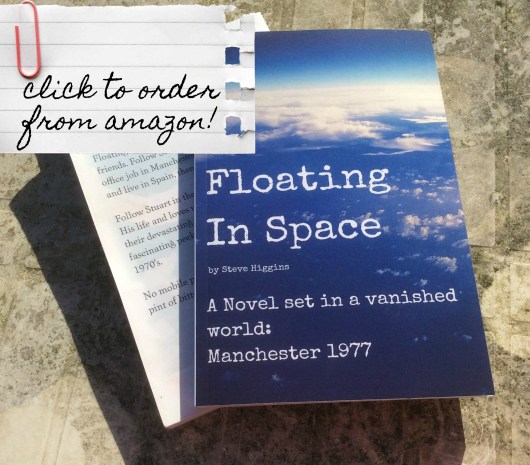
If you liked this post, why not try my book, Floating In Space? Click the links at the top of the page for more information.

32228185135_8057048450_o

Three Restored Movie Classics

edclapperboard-311792_1280So what actually is a ‘restored’ movie? Well, it is simply this; an old movie restored to its original condition, with deleted scenes added, lost scenes and dialogue inserted and basically restored to its former glory. In some cases, movies are restored to more than their former glory as on many occasions, producers, sensitive to preview audiences and running times, have unscrupulously cut movies and left many a director fuming. A lot of older films, unless preserved in the studio vault have been lost and restorers have hunted down copies of those lost films and those excised scenes that have been lost over the years. Here are three classic restored films.
Lost Horizon
Directed by Frank Capra and starring Ronald Colman, Lost Horizon was shot in 1936 and seriously went over budget. Issues that contributed were scenes shot in a cold storage area, used to replicate the cold of Tibet: The cold affected the film equipment and caused delays. There was also a great deal of location shooting and scenes where Capra used multiple cameras shooting lots of film. Wikipedia reports that the first cut of the film ran for six hours! Studio Boss Harry Cohn was apparently unhappy with the film and edited it himself, producing a version that ran for 132 minutes. Further cuts were later made and as a result, Capra filed suit against Columbia pictures. The issue was later resolved in Capra’s favour. The film did not turn a profit until it was re-released in 1942. A frame by frame digital restoration of the film was made in 2013 and various missing elements of the film were returned, including an alternative ending.
Lost Horizon is one of my favourite books ever and this movie adaptation is nothing short of wonderful, in fact it is one of my favourite films of all time. The casting of the urbane Ronald Colman as diploment Robert Conway is perfect. If you see this movie on DVD make sure you take it home and settle down for a wonderful film experience.

Spartacus.
You probably thought film restoration was only about really old films from the early years of cinema but it’s about any classic film that needs work. Spartacus was made in 1960 meaning it is 56 years old this year and was restored in 1991. The movie was produced by and starred Kirk Douglas and was directed by Stanley Kubrick, whom Douglas brought in to direct after becoming disenchanted with the original director, Anthony Mann. The film is the story of a revolution, or at least a near revolution in ancient Rome. Spartacus, played by Kirk Douglas is a slave who starts off a rebellion in a gladiator camp; the rebellion gets bigger and bigger until it threatens the entire fabric of ancient Rome. Laurence Olivier played the part of the Roman general and politician Marcus Licinius Crassus who uses the rebellion to further his own dreams of dictatorship. Peter Ustinov plays the gladiator school owner and Charles Laughton plays Roman senator Gracchus. Ustinov, Olivier, and Laughton are a wonderful trio, their performances superb, so much so that other actors who share the screen with them seem to pale in comparison.
Tony Curtis plays another slave who calls out famously; ‘I am Spartacus’ towards the end of the film, heralding a chorus of similar calls.
In the restoration, 37 mins of cuts were restored to the film including a scene where Anthony Hopkins had to dub the sound for a sequence involving Laurence Olivier who had died two years previously.

Lawrence of Arabia.

Directed by David Lean from a screenplay by Robert Bolt, Lawrence of Arabia is a visually stunning film, shot in 70mm. The movie is based on the book ‘Seven Pillars of Wisdom’ by the enigmatic T.E. Lawrence himself, and won seven academy awards including Best Director and best Picture.
Peter O’Toole stars as Lawrence although he was not the first choice for the part. Lean actually wanted Albert Finney but Finney had reservations about the film and wasn’t keen on being locked into a long term contract so he declined, despite shooting an expensive test at MGM studios in Borhamwood. It was then that Lean cast O’Toole after being impressed by his performance in ‘The Day they robbed the Bank of England’.
Director Lean wasn’t too pleased with the original script so Robert Bolt was brought in to essentially rewrite the film. A further complication was added when Bolt was arrested for his part in an anti-nuclear protest in London and so the production started without Bolt’s completed re write.
The film is famous for a number of classic shots. One is the cut from Lawrence blowing out a match to a shot of the rising sun in the desert and another is the famous long shot of Sherif Ali, played by Omar Sharif, who trots from the horizon astride his camel towards the well where Lawrence has stopped for water.

Steven Speilberg has been quoted as saying that this was the film that made him want to be a director and perhaps that is why so many of his productions have a sort of ‘David Lean’ feel about them.

The film was restored in 1989 with various cuts returned to the film. One sequence involved the late actor Jack Hawkins and Charles Gray had to dub dialogue for Hawkins’ character.


If you enjoyed this post, why not try my book, Floating In Space, a novel set in Manchester, 1977. Click the links at the top of the page for more information, or the icon below to go straight to Amazon.

Favourite Movie Directors Part 2 Oliver Stone

oliver stoneFavourite movie director part 1, which you can read by clicking here, is about Woody Allen. Allen has a directoral style that lets the viewer’s eye roam roam the scene. Oliver Stone on the other hand has a much more forceful style, a highly visual style which takes a firmer hand with the viewer.

To start with, here’s some biographical stuff about Stone:

Oliver Stone was born on September 15th, 1945. The only son of Louis Stone, a successful stockbroker and Jacqueline Goddet. His mother was a French student who his father, then in the Army, eloped with as a war bride in Paris in 1945. He grew up in New York and attended Trinity School on the west side of Manhattan and later attended The Hill, a boarding school in Pottstown, Pennsylvania.

Stone attended Yale University in 1964-65 but dropped out after one year. In 1967 he enlisted in the US Army and served in Vietnam with the 25th Infantry and later the 1st Cavalry.
Back in the USA he enrolled at university in New York and studied filmmaking. Martin Scorsese was one of his teachers. Vietnam was among the first subjects of his student films.

Oliver Stone

Image courtesy Wikipedia

Stone graduated in 1971 and took on various jobs while he wrote screenplays. His breakthrough success was in 1978 with the screenplay for the film Midnight Express for which he won the Academy Award for best adapted screenplay.

The first Oliver Stone movie I ever saw was the 1986 movie ‘Platoon.’ Stone wrote and directed the movie set during the Vietnam War and based on some of his own experiences. It focuses on a new recruit, played by Charlie Sheen and follows through pretty much what happened to Stone himself when he arrived in Vietnam. It shows Sheen getting used to the situation in Vietnam, the weather, the jungle patrols and so on. It also shows the disregard that the other soldiers have for Sheen and any other soldier new to the front line. A newcomer’s life was less valuable than the others who had served their time and put years into the war. It’s a reversal of what you might expect in warfare but the Vietnam conflict was a different war. The combatants were wondering what were they doing there, thousands of miles away from home and for what, and who, were they fighting ? That sort of thinking bred a selfish soldier. Platoon tells the story of those soldiers, all of whom are brutalised in some way by the conflict.

Oliver Stone followed up the movie with another Vietnam film, ‘Born on the 4th of July’ about Vietnam veteran Ron Kovic. Kovic was a Vietnam vet shot and paralysed from the waist down in the jungle and it is a truly shocking film, perhaps even more so than Platoon. After he has been wounded, Kovic returns to a veteran’s hospital in the USA that is grim and disgusting and as I watched it, it contrasted sharply with another war film from a different era, Reach for the Sky. Kenneth More stars as Douglas Bader who, after a terrible crash, is taken to a hospital full of crisp white sheets and antiseptic cleanliness. The contrast between the two hospitals is shocking. A third film completed Oliver Stone’s Vietnam trilogy, Heaven and Earth released in 1993.

Wall Street was a hit movie for Oliver Stone in the eighties and the character of Gordon Gekko played by Michael Douglas became an eighties screen icon. Gekko is a ruthless Wall Street player, a stockbroker and financier who looks at a hundred deals a day. Martin Sheen plays Bud Fox, a young salesman determined that one of those deals will be with him. Fox is ultimately corrupted by Gekko as he becomes involved in many shady schemes but in the end he betrays Gekko to the authorities. In Wall Street Stone first develops a mesmerising visual style almost akin to a music video and it is a style that many film-makers seem to have picked up.

In JFK, Stone takes this visual style to another level and combines various film formats to produce a stylish visual montage. The subject is a controversial one, the shooting of President John Kennedy in Dallas in 1963. Stone decides to use the investigation by New Orleans District Attorney Jim Garrison as a vehicle to explore the various theories about the shooting although ultimately an amorphous military industrial complex is blamed for the conspiracy. Criticism rained down on Oliver Stone from anti conspiracy theorists but I personally felt that the movie was a fair one and everything that was conjecture was shown as conjecture. The great treat for me was the combining of the different visuals and the inter weaving of documentary film with new footage. The movie also led to calls to release more information and led to the Assassinations Records Review Board recommending that all assassination materials be released by 2017. The John F Kennedy Assassinations Records Collection Act 1992 has since become known as the JFK act. Stone went on to make two more films about American presidents, Nixon and W, the latter film about George W Bush.

In recent years Stone made a TV series called ‘Oliver Stone’s Untold History of the USA.‘ I thought, or was led to believe by the hype, that this TV series would be a complete retelling of history. Secrets hidden from the public would perhaps emerge to show how history and events have been manipulated. To be fair, there is some of that. The dropping of Henry Wallace from Franklin D Roosevelt’s Presidential ticket was shown as a blatant manipulation of the democratic process. I might have felt more sympathy for Henry Wallace had the show not preceded this by a disparaging of Churchill in a prior segment. Stone seemed to think that Roosevelt was a man who had the measure of Stalin, especially at their last meeting but it is clear to me that in fact it was Churchill who understood Stalin and Roosevelt who only thought he did.

I have a number of Oliver Stone DVD’s in my collection. Platoon, Born on the 4th of July, JFK, Wall Street, The Doors, not to mention the TV series mentioned above which I have only just started to watch. I still think of Oliver Stone as one of the great movie directors. He is passionate about cinema and has highly political views and yet is still able to laugh at himself. In 1993 he played a small part in the movie ‘Dave’ playing himself as a conspiracy theorist who believes the President has been replaced by a double. Actually, if you have seen the movie, he has!

Oliver Stone’s latest movie is Snowden, the incredible untold personal story of Edward Snowden, the polarizing figure who exposed shocking illegal surveillance activities by the NSA and became one of the most wanted men in the world. He is considered a hero by some, and a traitor by others.


If you liked this post, why not try my novel, Floating In Space. Click the links at the top of the page or the icon below to go to Amazon!

(Almost) Unseen TV

tv documentaryIt’s interesting that on TV, the same movies come at us time after time. The Great Escape, wonderful film though it is, has been broadcast so many times I know the script off by heart. The Bond films are a staple of UK TV. They and the Die Hard films, the Carry on series and a hundred others–they are all constantly on British TV. Old TV shows are another staple of the new free view channels.
In fact, just lately a lot of my favourite shows from when I was a school boy are currently being shown on TV: The Saint, Land of the Giants, The Invaders and many more. (Wish they’d get around to showing the Time Tunnel though!) Some things that rarely, if ever, are repeated, are old TV documentaries and old made for TV movies. Here are three of my favourites, two documentaries and one made for TV movie, preserved for my viewing pleasure on trusty old VHS video tape.

The Peter Sellers Story: As He Filmed It.

The BBC Arena team made this film about Peter Sellers in 1995. It was created largely from cine film shot by Sellers himself, who was a lifelong camera enthusiast. The original documentary was made in 1995 and if I remember correctly, Sellers’ widow, Lynne Frederick had died and left behind a lot of Sellers’ effects, including his home movies which is how the film came to be made.

Normally, I’d say that you have to be interested in movie people and how movies are made to like this documentary but this film is so special I don’t think that rule applies.

The original film was in three parts and began with Sellers’ early days, and his early films. The first cine films we see are black and white movies and as Sellers’ career takes off, his cine equipment also improves and he upgrades to colour and then on to sound. His own images show his young self as a sort of ‘spiv’, a Flash Harry sort of character with his double-breasted and shoulder padded jackets. An uneasy relationship with his mother emerges, as does a rather spoilt and volatile personality. His first wife talks about their early days and their life together and friends like Spike Milligan talk happily about successes like the Goon show and their beginnings in show business. Milligan had a 8mm camera and Sellars a 16mm one. Of course ‘Peter was richer,’ comments Milligan. ‘Richer by 8 millimetres!’

Sellers’ cine film is blended with interviews from various people who played a part in Sellers’ life.

Sellers as Group Captain Mandrake in Dr Strangelove.

Sellers as Group Captain Mandrake in Dr Strangelove.

A fascinating section concerned Casino Royale, the spoof James Bond film. Various directors were involved but Joe McGrath shot one segment with Peter Sellers and Orson Welles. McGrath was a TV director relishing the move into feature films, that is until Sellers told him he didn’t want to be in the same shot as co-star  Welles. A heated debate ensued which became physical. Sellers said he was going off to calm down. He never returned and if you ever see the completed movie, you’ll understand why Sellers’ character abruptly disappears too!

Sellers claimed to have no personality of his own and ‘borrowed’ them from the characters he impersonated. It’s interesting to watch the TV interviews  included in the film where Sellers seems to mimic the Yorkshire tones of Michael Parkinson and again, in other snippets he is taking on the accents and style of his interviewers.

The film overall has a sort of melancholy feeling which I feel accurately represents Sellers’ persona. He was a sad character, disappointed in his life and loves. He was not happy with his last wife, Lynne Frederick and he even junked many of his cine films prior to his death as they didn’t seem to match his expectations. The mood of the film is further enhanced by a wonderful soundtrack full of sad saxophones and jazz tones.

There are some that put down documentaries that are full of so-called ‘talking heads’ but personally, if the talking head has something interesting to say, I like to hear them. However, in 2002 the BBC re edited the film by taking the soundtracks from the ‘talking heads’ and combined them with Sellers’ self filmed visuals. The result is now available as a BBC DVD. The original is much better though.

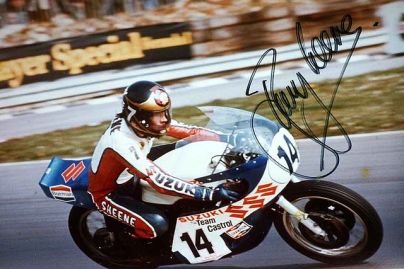
Barry Sheene. Photo courtesy Wikipedia

Barry Sheene. Photo courtesy Wikipedia

Barry Sheene. Daytona 1975.

This is a film about the late motorcycle racer Barry Sheene. He was a star of the 1970’s motorcycle racing scene. A long-haired, chain-smoking racer who had Donald Duck on his crash helmet and who famously gave the V sign to one of his opponents, I think it was Kenny Roberts, at a race at Silverstone in 1979. In this film Sheene goes to Daytona and is flat-out testing his bike when the engine locks up. He yanks in the clutch but is still sent hurtling along the track breaking several bones in the process. The film follows him to hospital where he joked with colleagues, even saying to his team manager, ‘the staff really hurt me. I’m glad I didn’t tell them about that pain I’ve got in my shoulder.’ His manager looks confused for a moment and says, ‘well, don’t you think you should tell them?’

Sheene is pinned back together with various metal rods and is later seen hobbling away from the hospital but even so, later in the film, we see him back on his motorbike once again.

The film was produced and directed by Canadian documentary maker Frank Cvitanovich and is a fascinating insight into the world of Barry Sheene. It is clear he lived and breathed motorcycles. In later life he retired and became a sports commentator in Australia. He died of cancer at the age of only 52

Across the Lake.

Across the Lake was a BBC film made in 1988. It starred Anthony Hopkins as speed king Donald Campbell in the final days of his life as he tried to raise the water speed record to over 300 miles per hour. Hopkins gives a lovely performance as Donald Campbell, a man who believed himself to be living in the shadow of his father, record breaker Sir Malcolm Campbell. He decided to take his old Bluebird boat, update her and try to break the 300 mph mark on Coniston water in the lake district. The jet boat flipped over and Campbell was killed. His body was not found until 2001.

The film shows the unglamorous side to record-breaking. Waiting in poor weather, the endless delays, the mechanical issues, the press waiting for something to happen. Something drove Campbell onwards in his pursuit of records. He was short of money and had sold all sorts of rights to his name, his films of record-breaking and so on. This was all before the days of big time sponsorship in the speed and motor racing industry and Hopkins shows us a Donald Campbell undefeated, perhaps even a little desperate but still with considerable style.

The record-breaking team disperse for Christmas and then return after the holidays. They begin their preparations again until a fine January morning appeared. Campbell powered up his speedboat and did a run of 297 mph but lost his life on his second run.

Having written this post about three old films I watch now and again on my old TV with the built-in VHS cassette player, it was interesting to find, during research, that all three can be seen online.

The original three-part version of The Peter Sellers Story: As he filmed it can be seen on vimeo. Click here to watch it.

Frank Cvitanovich’s Barry Sheene Daytona 1975 documentary is on you tube. Watch it here.

Across the Lake is also on youtube. Watch it here.

Perhaps those old films are not as unseen as I thought!


If you enjoyed this post, why not try my book, Floating In Space, a novel set in Manchester, 1977. Click the links at the top of the page for more information, or the picture below to go straight to my amazon page.

Floating in Space

Aliens, Frank Sinatra, and Three Days in the Life of a Couch Potato

Day 1

In this technological age, one item in particular has come to the aid of the dedicated couch potato and that is the hard drive recorder. It’s a wonderful invention which enables the recording and playback of programmes at the touch of a button.

Last Sunday was my first day off and I had planned, unbeknown to my lovely lady Liz, a day of rest, self indulgence, and laziness, including Internet surfing and of course, TV watching.

She on the other hand had other ideas, in particular, a trip to the combination music and kite festival down on the beach. Anyway, all that went ok, the kites were flying well and the music was good. We went back home for some dinner and then it was time to get down to some TV viewing.

Now the Sunday lunch over ran a little making me late for my appointment with the German Grand Prix on Channel 4. Here, however, is where the hard drive recorder comes into its own because of one very simple fact: You can start watching the recorded programme even before it has finished! Technology; incredible isn’t it?

Anyway, The German Grand Prix from Hockenheim wasn’t a classic race but for an F1 fan like me it was well worth watching: Lewis Hamilton won and Nico Rosberg had a penalty but the real joy of watching the race just slightly behind the broadcast time is you can catch up by fast forwarding through the boring stuff from the drivers; “the team did a great job today in qually” and “I’d like to thank the guys back at the factory,” and so on. There is also the questions to the drivers which are well worth fast forwarding through: “You’re in second position on the grid, what can you do today?”
Not much of a record for a TV couch potato but I had big plans for day 2!

Day 2

Now day 2 promised much more TV watching than day 1. Liz was off to work round about twelve, leaving me time to check my e-mails, sort out a few social media updates plugging blog posts like this one, and then a whole afternoon of serious TV watching.

For starters I had Aliens, the sci-fi movie to watch, recorded from ITV 2 some weeks earlier. I have seen it before but some movies just get better over time. I do love the opening of Aliens: The music gradually fades in as we come across a lifeboat drifting through space. Yes, the lifeboat holds astronaut Ripley, sleeping soundly in suspended animation after her adventures in the previous movie, Alien. Ripley has been abandoned in space for 57 years and it turned out that this version was a director’s cut with a restored back story about Ripley’s daughter who we find has died recently as an old lady. The story gives an added poignancy to the film later on and we understand why Ripley is so passionate about rescuing the young girl ‘newt’ who we meet later in the film.

Time for a cuppa when we get to the adverts and then we follow Ripley through the committee meeting where it is revealed that the spacecraft Nostromo, which Ripley self-destructed, caused a loss of over 64 million adjusted dollars. Another committee member advises that LV426, the planet where the Nostromo landed was ‘a rock’ with no indigenous life forms. I can feel Ripley’s frustration when she says, “Did IQ levels just drop while I was away?” She tries to tell the group about a derelict alien vessel containing alien eggs but the meeting ends and Ripley’s story is not believed.

Now before Liz went to work she had left me a couple of jobs and the thought of them threatens my TV watching marathon so I decide to get them out of the way. One of them involved mowing the lawn so I put Aliens on pause and sorted out the mower and strimmer. I was actually immersed in my mowing when Liz popped back in and caught me doing a bit of grafting! This was great because she could see with her own eyes I’m not just sprawled on the couch watching TV! Result!

Anyway, job done and it’s time for some more TV. I fancy a change from Aliens so I finish off an episode of The Saint I watched part way through last week. A TV Diva is kidnapped but Simon Templar saves the day and rescues the lady. Nice to see these old TV shows from my school years still looking good and getting another airing on TV.

Time for a brew and a cheese sarnie, the Saint episode is deleted (that space on the hard drive is in constant demand!) and I’m ready for something more serious. I crank up a BBC 4 documentary about Frank Sinatra. I was planning to listen to it and simultaneously surf the net on my iPad but it’s so engrossing I have to put the pad down.

Six o’Clock and Liz is home and asking why am I not ready yet? Ready? Of course, we have a family meal planned for tonight. “Just about to get changed, love” I say quickly! (Phew!)

DAY 3

Day three and Liz is off to work at the usual time, twelve-ish. The breakfast pots are duly washed and the only cloud on the horizon is that I need to get some eggs and some milk in. Should I leave it until later or sort it now? Tell you what, time for a quick Saint episode (series record, I love that button on the recorder!) and a cuppa. The episode is one about the Saint receiving threats on his life and it’s a bit of a naff one with the back lot at Elstree or Pinewood trying desperately to look like swinging sixties London and wait a minute, isn’t that lady reporter played by the same lady who played the film actress diva in the last episode? The Saint, the more you watch it increasingly becomes like a little TV repertory company, with increasingly familiar faces, even in the bit parts. Anyway, I fast forward through most of it and then it’s off to the shops for the milk and eggs.

Sigourney Weaver as Ripley

Sigourney Weaver as Ripley

Back home and it’s time for some more Aliens. I don’t know about you but I tend to watch a lot of recorded films in two or more parts. I settle down with Aliens and the Slimy Carter Burke has enticed Ripley on a trip to LV426 with the tough hombres of the Space Marine Chore. They drop into orbit over the planet, now inhabited by terraformers with their atmosphere processors and Ripley, Burke and the marines awake from hibernation. I think for a moment that if LV426 is that far away enough for the crew to hibernate while travelling there, it isn’t that much of an emergency rescue mission but hey, what do I know? Later they arrive on the planet in a pretty exciting drop from the mother craft. The marines secure the area but then find that the Aliens have taken the humans into the atmosphere processor to use their bodies to hatch more of their creatures. Aliens is a sort of hybrid film; a sci-fi horror action movie, combining two or even three genres. The rest of the series was a little poor if you ask me but the first two in the series: Alien and Aliens, are classic cinema. Sigourney Weaver creates a memorable movie character in Ripley, tough and uncompromising, she is a sort of female John McClane. (Remember the Bruce Willis character from Die Hard?)

Anyway, time for the usual afternoon cheese sarnie and a brew and I settle down to watch the end of the Frank Sinatra documentary. I found it highly interesting as the film explored Sinatra’s relationships and associations and shows how the Kennedys dumped him, not wanting to be associated with him when his friendships with mafia figures became public. Later, in the eighties, Sinatra, a lifelong Democrat allied himself with republican Ronald Reagan.

A quick check of my e-mails and some more posts sorted on Twitter and Google+ and time for another cuppa. (Choccy biscuit? Don’t mind if I do!) Time to crank up Aliens again and this time the action heats up as Carter Burke decides Ripley knows too much and he locks her in the med lab with one of the alien parasites. It’s a pretty scary sequence. Ripley gets away but the Aliens are trying to break through into the complex. Why are the radar tracker signs showing the Aliens inside? Look at the roof, people!

Enough scary stuff for today. Liz comes in and asks “Is my dinner ready?” in a tone that suggests she doesn’t think it is. I need to think fast and quickly come up with: “Thought we might go to the Turkish Restaurant darlin’.”  “Well,” she says, “sounds nice, better get ready then.” As I leave to follow her I glance at myself in the mirror and hear myself saying: ‘Top TV couch potato? Steve, you are the man!’

What to do next:

Share this post on your favourite social media!

Hit the Subscribe button. Never miss another post!

Buy the book! Click here to purchase my new poetry anthology.

Click here to visit Amazon and download Floating in Space to your Kindle or order the paperback version.


The Saint, James Bond, and a Rather Hot Afternoon.

The Saint and James BondI spent a lot of time last week trolling through my book collection and photographing the books for last week’s post about Marilyn Monroe. It wasn’t quite that easy because since my divorce my books have been boxed up in the spare room at my Mum’s house and it took me a while to search through the boxes and find the books I wanted. The other problem was that being a bit of a book fanatic, I kept coming across books I’d not read for ages or forgotten about and my original task was put on hold while I sat and started reading! I came across my James Bond book collection and as you will know from reading these posts I do love James Bond.

One of the Bond books I found was ‘Live and Let Die’. It’s not one of the best in the book series but it’s pretty good. Roger Moore played Bond in the movie version, in fact it was Moore’s first Bond movie and I have to say, Roger just didn’t do it for me as Bond. He just didn’t look the part unlike the previous 007, George Lazenby, who completely fitted in with the Bond of my imagination.

Live and let DieSadly, Lazenby listened to some poor advice which advised him that secret agent espionage films were on the way out: They weren’t, but it turned out Lazenby was. Sean Connery filled in for one more Bond film, Diamonds are Forever, until Moore took over on Live and Let Die.

Moore was a poor Bond. He looked like a sort of tailor’s dummy all the way through the film and was unable to present that hard edge that a real spy must have had. Don’t get the idea that I don’t like Roger Moore though because the fact is he’s one of my favourite TV and film actors and was great in the TV version of the Saint. His slightly flippant, happy go lucky personality was perfect for Simon Templar, the playboy cum adventurer of the TV series.

I have always loved that opening sequence in the Saint. You know, the bit where he meets some pretty girl, something happens like an attempted robbery or something, Templar saves the day and the girl says, ‘aren’t you the famous Simon Templar?’ Moore then looks up, raises an eyebrow, a halo appears and then we cut into the theme tune and the opening titles.

Funnily enough, The Saint is currently being reshown on ITV4 during the day and as I have come into possession of one of those freeview digital recorders it’s so easy to record all the episodes. Just a touch of the series link button and there they are, queuing up on the hard drive waiting for my viewing pleasure.

I started watching one today; it was an episode about an actress who is what they call today a ‘diva’. The Saint was invited to watch some filming by his old friend Lois Maxwell who would one day play Miss Moneypenny to Moore’s James Bond. The actress threw a bit of a wobbler and retreated into her caravan which was then hijacked right out of the studio and the actress held to ransom. I’m not sure how the episode ended because it was so hot (Tuesday as I write this) I had to get outside for some fresh air.

That’s the thing about the UK. You know how it is -once a year the temperature in Manchester is higher than in Barcelona and the newspapers suddenly revert from Celsius to Fahrenheit because 100 degrees is so much more exciting than 37.7!

The other thing is that in Spain, if it’s too warm you automatically go indoors, because indoors in Spain is so much cooler. In the UK it’s the opposite, it’s warmer indoors!

Looks like I’ll just have to wait for a much cooler evening to find out what happened to the Saint and the actress!


If you liked this post, why not try my book, Floating In Space? Check out the links at the top of the page for more information or click here to go to my Amazon page! Why not take a gander at the video below and hear the author talk about the openeing paragraphs?


Have Movies Influenced your Music Choices?

classical music + moviesClassical Music and Three of my Movie Favourites

I’m not a great lover of classical music but the classical music I do know and love has come to me through the medium of film. Yes, movies have inspired almost all of my favourite classical music choices.

The Blue Danube

The Blue Danube is a waltz written by the composer Johann Strauss II. He was an Austrian composer known as the ‘Waltz King’ and was largely responsible for the popularity of the waltz in Vienna in the 19th century. I first heard the music in the movie 2001: A Space Odyssey, the memorable sci-fi movie directed by Stanley Kubrick. Kubrick used numerous classical pieces in the movie and the Blue Danube is used during the space station docking and lunar landing sequences.

I first saw the film in the summer of 1968. I was only 11 at the time and I remember my Mum being surprised I had spent hours at the cinema on a lovely hot day. I watched the film in the huge movie theatre in Northenden, now a Jehovah’s Witness assembly hall. There were only a few people in the picture house that day and it was wonderful having this huge place almost to myself and seeing this incredible film in 70mm on the big screen. I recall being somewhat confused by it all, especially the jump from neanderthal times to the future, until I bought the novel by Arthur C Clarke which explained things in a way the movie did not.

2001 is a particularly visual film. Kubrick cut out a lot of dialogue because he wanted the film to stand as “basically a visual, nonverbal experience” that “hits the viewer at an inner level of consciousness, just as music does, or painting.”

2001

Picture courtesy Flickr.com

According to Wikipedia, despite the few people in the cinema with me that day in 1968, the movie went on to become the highest grossing North American movie of that year.

2001 set the pace for the sci-fi movie with its depiction of spacecraft drifting slowly and silently through space. The first Star Trek movie was heavily influenced by 2001 which made it look a little dated when the movie Star Wars was released and did the opposite thing, showing spacecraft whooshing across the screen at incredible speeds.

2001 is a wonderful movie and as well as continual enjoyment, it has also given me a love of Johann Strauss.

March of Pomp and Circumstance.

The March of Pomp and Circumstance was written by Sir Edward Elgar and there are actually six marches altogether. The most famous is the ‘Land of Hope and Glory’ march which traditionally ends the last night at the proms. I first heard this classical piece in the movie ‘Young Winston.’

The music for the movie was written by Alfred Ralston and includes his original work as well as arrangements of Elgar’s music. I used to have the soundtrack to Young Winston on vinyl and on the back cover there were extensive notes by the producer. He rather pompously announced that neither he nor Richard Attenborough, the director, had any interest in making a film about the British Empire, which is rather sad because the British Empire, in my view, was something we British should be rightly proud of. Anyway, Churchill himself was certainly proud of the Empire and his part in it, and in making this film the producers therefore did what they say they didn’t want to do. The movie is based on Winston’s early life, indeed his autobiography of his early days was entitled just that: ‘My Early Life.’ It is a wonderful read and has been made into a lovely film.

One interesting feature of ‘Young Winston’ is that at the end of the film there is a rather poignant scene where Winston, in his later years, falls asleep in his study and has a dream about his late father, his relationship with whom, as we see in the movie, was not good. In the sequence his father, Randolph Churchill, returns to him; he and Winston discuss life and finally part with a sort of understanding nod to each other. I have always thought that it finished the film off rather nicely but whenever I see Young Winston on TV, that scene has been cut. Years ago I bought the video version and the scene had been cut on the video too, so if I ever decide to buy the DVD version, I’ll be checking the running time before I buy!

Manhattan

Manhattan is Woody Allen’s ode to New York. I have always loved that opening sequence with the monologue by Woody. He narrates the opening of his book and is not satisfied with it so starts the book over again. The dialogue goes something like this;

‘Chapter one. He adored New York City. He idolised it out of all proportion.

No, make that he romanticised it out of all proportion.

To him, no matter what the season was, it was a town that existed in black and white and pulsated to the great tunes of George Gershwyn.

Oh no, let me start this over.

Chapter one . . .’

When he finally gets the book opening he wants, then the music of Gershwin’s ‘Rhapsody In Blue’ roars into focus. Manhattan is a movie shot in black and white and is one of Woody Allen’s most famous and successful films. Allen plays a 42-year-old writer who is involved with a 17-year-old girl played by Mariel Hemingway. The photography is wonderful as is the movie. There is a lovely part played by Meryl Streep who plays the part of Allen’s ex-wife who has written a book about their former life together.

How have the movies influenced your music choices?


What to do next: Here are a few options.

Share this post on your favourite social media!

Hit the Subscribe button. Never miss another post!

Listen to my podcast Click here.

Buy the book! Click here to purchase my new poetry anthology.

Click here to visit Amazon and download Floating in Space to your Kindle or order the paperback version.

Terence Rattigan and my Movie Connections.

terence RattiganIt’s always a good feeling when you watch a movie you have really enjoyed. If you are like me then you will usually take a scan through the credits and look for familiar names. Sometimes you will see one that rings a bell; Hey, that director is the same guy who directed one of your real favourites or, that screen writer is the same writer who wrote another movie you enjoyed. That’s what I call a movie connection.

The Winslow Boy is one of my favourite old movies. It was written by Terence Rattigan and adapted from his own play. The original starred Robert Donat (who hailed from Withington in Manchester) playing the part of Sir Robert Morton and was directed by Antony Asquith. You may be more familiar with the recent version starring Jeremy Northam and Nigel Hawthorne which, all things considered, wasn’t a bad film. Anyway, the first time I saw the original movie I made a mental note of Terence Rattigan for future reference.

Here’s another movie: The VIPs, a film about various characters delayed at London Airport due to weather. It’s a lovely movie with great performances by Richard Burton, Elizabeth Taylor and Margaret Rutherford. It was a movie I really enjoyed so I checked the credits and what did I find? Screenplay by Terence Rattigan. Directed by Anthony Asquith. Yes, I thought, that rings a bell.

A great Sunday afternoon film is The Yellow Rolls Royce. I don’t know if you’ve ever seen it but it is three separate stories, all connected by the Yellow Rolls Royce. My favourite episode is one starring Shirley Maclaine. She is involved with gangster George C Scott and they are on holiday in Italy. When her gangster lover has to return to New York to sort out ‘some business,’ Shirley is left alone with young Italian Alain Delon. She falls in love with him but realises that when George returns, her new lover’s life expectancy will be very short. So, she tells him she doesn’t love him at all and returns to the USA with gangster George. Although he doesn’t realise it, Shirley has saved Alain’s life. As I watched the credits pass by, there were those names again, Anthony Asquith and Terence Rattigan.

rattiganAsquith was the son of the British Prime Minister Herbert Asquith. He was a great friend of Terence Rattigan and they collaborated on 10 films together but it’s Rattigan I want to write about here. Who who was he? Well, he was a playwright who wrote a number of west end hits, many of which were made into films. You may recognise some from this list; The Way to the Stars,  The Winslow Boy, The Browning Version, The Deep Blue Sea, The Price and the Showgirl, Separate Tables, The Sound Barrier and the Yellow Rolls Royce.
Wikipedia says Rattigan was a ‘troubled homosexual, who saw himself as an outsider, and that his plays ‘confronted issues of sexual frustration, failed relationships and adultery.’

He was born in 1911, had quite a privileged upbringing and was educated at Harrow. His first play was ‘French Without Tears’ about a crammer where English students go to learn French. Rattigan joined the Royal Air force at the outbreak of the Second World War and became an air gunner. He used his experiences to write a play called ‘Flare Path’ which eventually became the movie ‘The Way to the Stars’, also directed by Asquith, the DVD version of which resides happily on my DVD shelf.

Terrance RattiganRobert Donat relished the role of Sir Robert Morton in the Winslow Boy. Morton is an MP cum barrister who takes the British Admiralty to court over the sacking of Cadet Winslow. In my favourite scene, Sir Robert Morton questions Ronnie Winslow about the incident in question, that of the theft of a postal order. The questioning goes fairly gently until Sir Robert ups the ante when Ronnie, the Winslow Boy himself, mentions talking to another boy;

RONNIE I said, “Come down to the Post Office with me. I’m going to
cash a postal order.”

SIR ROBERT ‘Cash’ a postal order?

RONNIE I mean ‘get’.

SIR ROBERT You said ‘cash’. Why did you say ‘cash’ if you meant ‘get’?

RONNIE I don’t know.

SIR ROBERT I suggest ‘cash’ was the truth.

RONNIE No, no. It wasn’t, really. You’re muddling me.

SIR ROBERT You seem easily muddled. How many other lies have you told?

RONNIE None. Really, I haven’t.

SIR ROBERT I suggest your whole testimony is a lie.

RONNIE No, it’s the truth.

SIR ROBERT I suggest there is barely one single word of truth in anything you’ve said either to me or to the Judge Advocate or to the Commander. I suggest that you broke into Elliot’s locker, that you stole the postal order for five shillings belonging to Elliot, that you cashed it by means of forging his name.

RONNIE I didn’t. I didn’t.

SIR ROBERT
I suggest that by continuing to deny your guilt you’re causing great hardship to your own family and considerable annoyance to high and important persons in this country.

CATHERINE
That is a disgraceful thing to say.

SIR ROBERT
I suggest that the time has at last come for you to undo some of the misery you have caused by confessing to us all now that you are a forger, a liar, and a thief!

CATHERINE
How dare you!

RONNIE
I’m not. I’m not. I didn’t do it.

It looks like everything is all over then Sir Robert asks for all the available papers to be sent to him. ‘Is that necessary now?’ asks someone.

‘Of course’, replies Morton. ‘The boy is plainly innocent. I accept the brief.’

There is also a rather subtle flirtation between Catherine, Ronnie Winslow’s elder sister and Sir Robert. Catherine comments ‘how little you know about women’ to Sir Robert after an exchange between the two. He later replies to her when she doubts she will see him again, ‘How little you know about men, Miss Winslow!’

The Winslow Boy is a delightful film which captures perfectly that ‘upstairs, downstairs’ life in the early part of the twentieth century. Look out for excellent supporting performances from Jack Watling and Kathleen Harrison as well as those of the feature players, Robert Donat and Margaret Leighton. You may have to search ebay for the DVD version as the movie is not one of those we see often on terrestrial TV.

Remember, don’t forget to check the credits on a film. You may find a lot of familiar names on the movies you love!


What to do next: Here are a few options.

Share this post on your favourite social media!

Hit the Subscribe button. Never miss another post!

Listen to my podcast Click here.

Buy the book! Click here to purchase my new poetry anthology.

Click here to visit Amazon and download Floating in Space to your Kindle or order the paperback version.


A Visit to Hollywood -with Google Maps!

There are plenty of places I’d like to visit in the world but there are always problems of time and money. I sometimes think that maybe one day when I retire I’ll jump on a plane and visit all those places I’d like to see but the crazy thing is -with the Internet and Google maps- I can do it now! Here are a few of the places I’d head for in Hollywood!

1.The Charlie Chaplin Studios on La Brea and Sunset.

Charlie Chaplin studios

Charlie Chaplin built his studio just south of the corner of La Brea and Sunset Boulevarde in 1917. At the time it was a residential area and Chaplin built a facade of cottages in the manner of an English street so the studios would blend into the neighbourhood more effectively. Chaplin sold the studios when he left America in 1953 and although the property was earmarked for redevelopment, that never happened. The 1950’s TV version of Superman was shot there and later the Red Skelton TV series. In 2000 the Jim Henson company bought the studios and later installed a twelve foot statue of the Muppets Kermit the frog by the gates. In homage to Chaplin, Kermit was dressed as the little tramp.

2. The Old RKO Studios

RKO studios

Between 1921 and 1927 the Robertson Cole Company, later known as FBO, Film Booking Office (once partly owned by Joe Kennedy, father of President John Kennedy) established their basic studio on Gower St. It was later taken over by RKO and expanded. The main entrance was at 780 North Gower St and many classic movies were made in the RKO days such as King Kong and Citizen Kane. In later years the studios were owned by Howard Hughes who in turn sold the studios to Lucille Ball and Desi Arnez and it became the home of their company, Desilu Productions. Later still the studios were acquired by Paramount for their television operations and Paramount own the studio today.

3. The Samuel Goldwyn Studios AKA ‘The Lot.’

Samuel Goldwyn Studios
The studio site was bought by Douglas Fairbanks and Mary Pickford in 1919 and was known as the United Artists Studio from 1928. It was used by many producers involved with United Artists but Sam Goldwyn won sole control in 1955 and the facilities became the Samuel Goldwyn Studios until Warner Brothers purchased the site in 1980. Today the facilities are known as ‘The Lot’ and the owners lease offices and soundstages to various production companies.

4. 7000 Romaine Street.

Romaine st Hollywood
Even though Howard Hughes owned RKO he never had an office there. Instead for a long time he had his headquarters at 7000 Romaine Street in Hollywood. He set up a central switchboard here and the place was at the hub of his vast empire for many years.

5.Lana Turner’s Hollywood home.

Lana Turner Hollywood Home

Lana Turner rented the house above in the spring of 1958 and lived here with her daughter, Cheryl. On the night of April 4th, 1958, Lana was involved in yet another argument with her boyfriend, gangster Johnny Stompanato. He was threatening Lana with violence and fourteen year old Cheryl, fearing for her mother, armed herself with a knife and listened outside her mother’s room. The door burst open, Lana ran out, Stompanato ran out after her with his arm raised as if to strike Lana and ran into the knife held by Cheryl. The inquest ruled that the murder was justifiable homicide and Cheryl was acquitted.

6.Paramount Studios

paramount studios
Paramount Studios are still going strong today. There’s even a Paramount Studio tour which looks pretty interesting for a film buff like me!

7.James Dean and Blackwells Corner
James Dean
This is actually outside of Hollywood but still Hollywood and cinema related. If you’ve read my blog posts before you must have read this post about James Dean. He was killed in a car crash in 1955 while on his way to a race meeting in Salinas. He was driving his new car, a Porsche nicknamed ‘little bastard.’ Blackwell’s corner was where Dean and his friends made a last refreshment stop before the fatal crash.

8.Highway 66, the site of James Dean’s Fatal Crash.

highway 66
James Dean had already been stopped for speeding earlier and now at about 5.45 pm on September 30th, 1955, he was still driving fast. Up ahead of him a 24 year old college student named Donald Turnupseed turned left onto highway 41. He cut across Dean, apparently not seeing the low profile Porsche until the last moment. Dean tried to turn the wheel but the cars collided and Dean was killed. A memorial stands by the scene erected by Seita Ohnishi, a Japanese fan.

(All pictures courtesy google maps. )

So, where would you visit in Hollywood?


Floating in Space is a novel by Steve Higgins. Click the links at the top of the page to buy or for more information!


A Brief History of TV Spies

quotescover-JPG-40Now that the X Files has returned to our TV screens I thought I might just take a quick look at TV spies and secret agents. I’ve always been interested in espionage, and the earliest TV spy show I can remember was the Man from Uncle. In case you don’t remember, the show starred David McCallum as Ilya Kuryakin and Robert Vaughn as Napoleon Solo. It was one of those slick and smooth TV shows from the USA and I even read somewhere that Ian Fleming, the creator of James Bond, had a hand in producing the series format.

Solo and Kuryakin were agents of UNCLE (United Network Command for Law and Enforcement) and used a various array of gadgets in their persecution of criminal organisation THRUSH (Can’t remember what THRUSH stood for!) They had pens that were communicators; ‘open channel D please‘ was something we used to hear our heroes say frequently, explosive devices hidden in the heels of their shoes and I loved every moment of it. The Head of UNCLE, Mr Waverly was played by film actor Leo G Carroll and he worked in a secret headquarters in New York accessed via a dry cleaning store. There was even a spin off series called the Girl from Uncle which starred Stephanie Powers.

1000501009DVDFLT_33df324They recently remade the Man from Uncle into a big screen movie but looking at the trailer, a lot of the best elements were not there; the music, the suave Robert Vaughn, the boyish David McCallum. To be fair I should save my judgement until I’ve seen the film but can you really recreate  something like the Man from Uncle on the screen, years later? I’m not so sure.

In the sixties and seventies there were plenty of crime and espionage series, things like The Avengers with Patrick MacNee as John Steed and his lovely sidekicks Cathy Gale, (Honor Blackman) Emma Peel, (Diana Rigg) and Tara King (Linda Thorson.) The Avengers was a thoroughly British tongue in cheek espionage show which was revived in the eighties as ‘the New Avengers‘ with Joanna Lumley as Steed’s new assistant, Purdey. Back in the sixties though there were other shows like Danger Man with Patrick McGoohan and the Prisoner, which was a sort of secret agent show with a twist. It starred McGoohan as a former agent trapped in a mysterious village. Perhaps he was the character from Danger Man, perhaps not, but those who ran the village wanted information and Patrick McGoohan’s character, number 6, wasn’t ready to give it!

In the 1970’s there was the Six Million Dollar Man starring Lee Majors as astronaut Steve Austin. Austin is injured in a testing accident but as they said in the opening titles, ‘gentlemen, we can rebuild him, we have the technology to make the world’s first bionic man!’ Steve Austin with his bionic legs could run faster than before, see better and hear better because of ‘bionic’ technology and he became a super agent for his boss Oscar Goldman.

In 1979 the BBC produced a TV version of Tinker, Tailor, Soldier, Spy, the novel by John Le Carre. A little slow and at times even tedious, it was a view of the other side of the spy world: Shabby men in overcoats and rain macs. The thankless tasks of checking files and sifting information to find a ‘mole’, an agent in the UK working for Moscow centre. The series was remade into a feature film in 2011 which I found rather dull although plenty of great reviews of the film can be found on the internet.

In the 90’s US TV brought us the X Files, a mix of spies, espionage, crime and sci-fi. Personally I rather liked the series but I always had the feeling that the writers had written themselves into a sort of hole and didn’t know the way out. What was the big alien secret? Who was the cigarette smoking man? Yes, I don’t think the writers ever knew. My all time favourite episode of the X-Files was a two parter where agent Mulder is somehow morphed into the body of a CIA man and the CIA man morphs into Mulder’s body.

In 2001, a new fast moving spy drama hit the TV screens; 24. I loved 24 with its  high tech control rooms and the ease at which staff members sent maps, CCTV images, Satellite pictures, and all sorts to Jack Bauer’s gadgets. The idea of 24 was that a complete story covering a full twenty four hours was told in real time, each episode being an hour of the day. Funny though, no one ever had a sleep in those twenty four hours!

Homeland

Homeland

Recently I picked up a DVD of the US series Homeland. It was season 1 when UK TV is just showing season 4 and the series was fantastic. Great acting, some tight direction. Excellent camera work and some really taut and intelligent writing. It’s more of a psychological drama than an action series and I love it. The only problem is I’m three series behind. Do I wait for re-runs or do I get series 2 on DVD?

Anyway, getting back to the X-Files, what do you think of new 2016 series? All the original stars are present, it was made by the original production team and even used the same opening titles so you’d think the result would be pretty good. Actually Mulder looks a little tired. Scully isn’t quite so alluring as she used to be and the first episode seemed to play up all the aspects I didn’t like about the original, especially the ‘conspiracy’ and ‘alternate government’ paranoia stuff. I wasn’t hooked enough to watch episode 2 but wonder of it’s worth doing a quick ebay search for the Man from Uncle on DVD. 1960’s version, of course!


If you liked this post why not try my book Floating in Space? Click the links at the top of the page for more information or click the picture below to go straight to amazon.