Floating In Space One Minute Promo


The Rise and Fall of the Kennedys

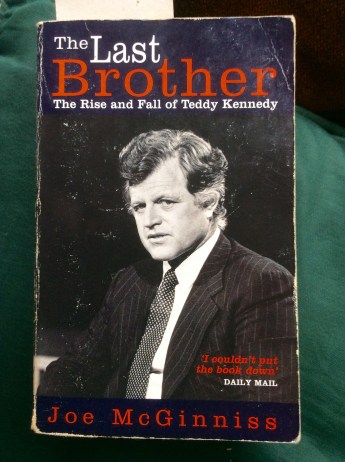
The Last brotherThe Last Brother by Joe McGinniss

The Last Brother as you can see, is subtitled, the Rise and fall of Teddy Kennedy. In a lot of ways Teddy is only incidental to the story told here because it is really the story of his father, Joe Kennedy, and his rise to success. Joe’s success lay not only in the business of banking but during the prohibition years he made a fortune in bootlegging and naturally rubbed shoulders with a number of gangsters. When he became successful, Joe wanted something more; he wanted political power. It was then that he attached himself to Franklin D Roosevelt. He helped Roosevelt’s campaign in many ways and when Roosevelt became president, he, like all presidents, had to reward those who had helped him. Joe became ambassador to the UK and it was there that his fall from grace began.

The ambassador and his family quickly became celebrities in England. In fact, Teddy Kennedy made his first public appearance as a young boy, the ‘baby’ of the Kennedy family and the son of the Ambassador, when he was invited to open pets’ corner at London Zoo.

However, In Joe’s eyes the coming war with Nazi Germany spelled the end of all he had worked for. He could not see how the UK could resist the might of the Nazis and was not slow in saying so. Kennedy advised Roosevelt that the British were finished. However, when Winston Churchill became prime minister in 1940, Churchill opened up direct communications with Roosevelt himself making Ambassador Kennedy almost superfluous.   Later, the family returned to America with Joe not perhaps in disgrace but acutely out of step, and the relationship between Churchill and Roosevelt flourished.

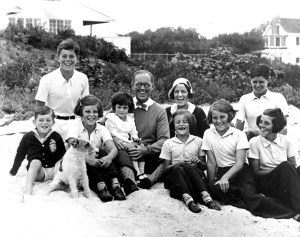
PC 8 The Kennedy Family at Hyannis Port, 1931. L-R: Robert Kennedy, John F. Kennedy, Eunice Kennedy, Jean Kennedy (on lap of) Joseph P. Kennedy Sr., Rose Fitzgerald Kennedy (behind) Patricia Kennedy, Kathleen Kennedy, Joseph P. Kennedy Jr. (behind) Rosemary Kennedy. Dog in foreground is "Buddy". Photograph by Richard Sears in the John F. Kennedy Presidential Library and Museum, Boston.

The Kennedy Family at Hyannis Port, 1931. L-R: Robert Kennedy, John F. Kennedy, Eunice Kennedy, Jean Kennedy (on lap of) Joseph P. Kennedy Sr., Rose Fitzgerald Kennedy (behind) Patricia Kennedy, Kathleen Kennedy, Joseph P. Kennedy Jr. (behind) Rosemary Kennedy. Dog in foreground is “Buddy”. Photograph by Richard Sears in the John F. Kennedy Presidential Library and Museum, Boston.

Kennedy left the Roosevelt administration but he wanted political power for himself and made sure he would find it through his financial wealth, and through his sons.

Joe Kennedy junior was the son that Joe meant to make into America’s first catholic president. His brother, John Kennedy, known as Jack by the family, was a poorly lad afflicted by Addisons disease and constant back pain. In World War 2 Jack joined the navy but began an affair with a Dutch journalist, Inga Arvad. Inga was thought to be a Nazi spy so Joe immediately arranged for Jack to be posted well away from Inga to South Carolina. Bored with his desk job in South Carolina, Kennedy volunteered for the Motor Torpedo Boat Squadrons and later took charge of his own boat, PT 109. He was awarded the Purple Heart for his bravery in rescuing his men when his torpedo boat was sliced in two by a Japanese destroyer.

Joe Kennedy Jr was not at all happy when he heard about the award. Competitiveness was drilled into the Kennedy clan from an early age and Joe did not want his younger brother to top him. Perhaps that is why he volunteered for a dangerous mission. The mission involved a radio controlled plane, full of explosives that were to be remotely steered to a target in Germany. Joe’s job was to take the aircraft into the air then bale out when the radio control was activated. Sadly the aircraft’s explosives were detonated prematurely and Joe was killed.

Jack knew then that it was he who would have to fulfil his father’s desire for the presidency.

Joe used his influence, and his money, to get Jack first a seat in congress and then a seat in the senate. In 1960 it was time for him to fulfil his father’s dream and go for the presidency. Lyndon Johnson wanted the democratic ticket that year and he began by attacking the the Kennedy candidacy. He described him as ‘a little scrawny fellow with rickets’ but soon the influence of father Joe came to bear and Johnson ceased his attacks. Johnson knew that that Joe Kennedy would pull out all the stops for his son to win but he hoped that if the vote wasn’t decisive on the first ballot he would have a chance on the second one. As it happened, John F Kennedy won the nomination on the first ballot. According to McGinnis it was Joe who wanted Johnson as JFK’s running mate; perhaps that was payback for Johnson laying off his attacks on Kennedy’s health issues.

The election was close, very close indeed and Joe decided he needed help from a rather unsavoury corner; he turned to his former prohibition gangster contacts, notably Sam Giancana to help him secure victory for his son. That help would come at a price. Giancana wanted back the casinos in Cuba that used to make millions for the mob until Castro overthrew the Batista regime, closed down the casinos and threw the gangsters out of Cuba. Giancana wanted them back.

Kennedy won the election by a narrow margin but things went wrong almost straight away. CIA backed revolutionaries were training in secret Florida locations for an assault on Cuba but the plans were in disarray and the president rejected many of them, When the attack came it was a disaster. Kennedy accused the CIA of trying to force him into a full scale US assault on Cuba and he would have none of it. Giancana would not get his casinos back. Worse, the president had engaged his brother, Robert Kennedy as attorney general and he began an assault on organised crime in the USA. One of the mafia bosses was heard to mutter in Sicilian, “who will get the stone out of my shoe?” It was more of a threat than a question.

Joe Kennedy was struck down by a stroke at the age of 88 and rendered unable to speak. The chief fixer, paymaster and head of the Kennedys was unable to carry on talks with the mafia and the time had come to remove the stone from Giancana’s shoe.

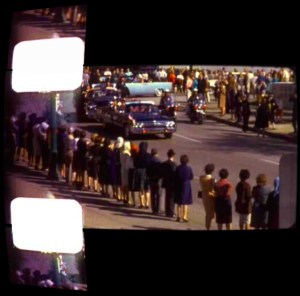
Dealey Plaza

Dallas 1963

President Kennedy was assassinated in Dallas in 1963 and his presumed assassin Lee Oswald murdered days later inside the Dallas Police headquarters. At the Kennedy home in Hyannis Port nobody wanted to tell Joe. He must have known something was wrong but he could only point numbly at the TV in his room that remained firmly switched off. Ted Kennedy, who was sent to tell his father the news, struggled to get the words out until his sister Eunice blurted out the truth.

Robert Kennedy was shot in 1968 as he prepared for a late campaign for the Democratic ticket. After winning the California primary he said a few words to his supporters and was shot moments later.

Ted Kennedy now had a surplus of Kennedy advisors and aides, all willing him on to go forward and run for the presidency. He declined even though a ‘draft Ted Kennedy’ movement had started to gain momentum. Instead people looked forward to 1972 when Teddy, the last remaining Kennedy brother would restore the lost kingdom, the lost Kennedy leadership but it was not to be.

In 1969 Kennedy attended a boating regatta at a small island called Chappaquiddick. Numerous parties were planned for the weekend; one was a gathering of the so-called ‘boiler room girls’ – a group of women who had been part of Robert Kennedy’s campaign team in 1968.

Kennedy apparently left the party late in the evening, supposedly to go to the island ferry with one of the girls, Mary Jo Kopechne but instead turned across a small bridge that led to the beach. Kennedy lost control of the car and the vehicle plunged upside down into a small lake. Kennedy somehow escaped leaving Mary to die in the car. Police divers found her body the next day, her head in a small air pocket in the foot well of the upside down car. Kennedy did not report the incident until nine hours later. What happened in those nine hours is open to question but the Police seemed to gloss over the numerous inconsistencies in Kennedy’s story and eventually he received a suspended sentence for leaving the scene of an accident.

On the cover of the book is a remark from the Daily Mail reviewer that he couldn’t put the book down. I was just the same and was engrossed from beginning to end. The writer seems convinced of his central thesis, that Joe Kennedy’s pact with the mafia was a poisoned chalice that became the downfall of his sons and his family. Maybe that is true, maybe not but McGinniss puts forward an interesting theory and a fabulous read.

Joe Kennedy died in 1969, his dream of securing the presidency for his sons lay in ruins, leaving nothing but heartache and sadness. Fate had delivered many cruel blows to him but lying mute and unable to communicate while his family suffered must have been the worst.

Ted Kennedy continued in the senate until his death in 2009 from brain cancer.

What to do next:

Share this post on your favourite social media!

Hit the Subscribe button. Never miss another post!

Buy the book! Click here to purchase my new poetry anthology.

Click here to visit Amazon and download Floating in Space to your Kindle or order the paperback version.


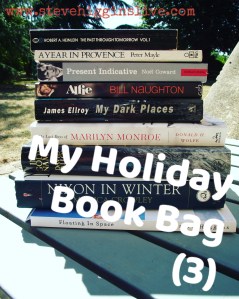
My Holiday Book bag (3)

obook bagI’m just not into busy, rushed holidays. I prefer the quiet, relaxing type; the ones that involve sunny days, swimming pools and plenty of leisure time to read books. I read at home too but that is a different sort of reading; a few minutes here, a few minutes there. I’ll read on my lunch break at work in between eating my sandwiches and drinking tea but the best way to read, the way to really get into a book is a long uninterrupted read while you lie on your sun lounger with the pool handy nearby for when it gets a little too hot. A quick dip then you are back to the thoughts of your chosen author.
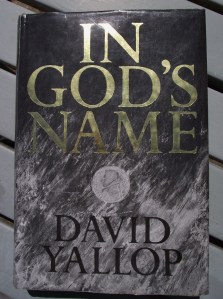
Here’s my holiday book bag for this year. Paperbacks are usually my preferred choice for holidays but as we’re travelling to France by car, there’s a little extra room for a few hardbacks.

In God’s Name by David Yallop.

DSCF1024I bought this book originally on the 3rd March, 1987.  I know that for a fact because back then I used to write the date on all my book and record purchases. I have read it a number of times and it is a fascinating read. It ticks all my personal boxes of history and modern mysteries. Why, you might ask would anyone want to murder the Pope? Good question and the answer, according to the author is the Vatican Bank. The Vatican, thanks to Mussolini, is a separate independent state and so the Vatican bank, registered in the Vatican state is not answerable to the banking laws and inspectors of Italy. This idea appealed to various unscrupulous individuals, notably Licio Gelli – the head of an illegal and secret masonic organisation known as P2, Roberto Calvi – a banker with ties to P2 and the Mafia, and Michele Sindona, another criminal. Together they engineered the movement of various shares and monies, using the Vatican bank. A man called Albino Luciano, the bishop of Venice, became aware gradually of various wrongdoings in the bank and was particularly dismayed by the action, or inaction of Bishop Paul Marchinkus, the head of the Vatican Bank. In 1978, after the death of Pope Paul VI, Luciano was elected Pope. He was a man dedicated to the ideas of Jesus, a simple carpenter from Nazareth and he wanted the church to follow his example. He did not want a church that had a multi million dollar profit in stocks and shares, he wanted a poor church, a church that properly reflected the feelings of its founder. When he was elected the new Pope, Luciano’s ideas and those of the aforementioned individuals were on a collision course. David Yallop’s investigation is intensive and revealing and I came away from the book feeling an intense sadness that a good and decent man, a man who would have been a great Pope and spiritual leader had been stolen from us by the greed of a few men.

Alfie by Bill Naughton.

I do like to buy books with a film tie in cover. I have all the Bond books, some in paperback, some in hardback and I am always on the look out for the film cover versions. This book has the movie cover that links not to the classic Michael Caine version, but the poor, the very, very poor, Jude Law version. I suppose in some ways you can sympathise with the movie moguls. Alfie was a great hit in the 60’s. Hey, they must have thought, we can transfer the location from Swinging 60’s London to cosmopolitan New York in the 21st century, the result will be dynamite! Wrong! The result was dreadful. Anyway, the novel is brilliant. Written in the first person the writer, just like Alfie in the movie, talks directly to you, the reader and tells you about his life, in his own words, his own accent, and with his own logic. Just about the best free thinking, verbatim (so it seems) book I have ever read. The great thing is when the dialogue tells you one thing, and his inner voice tells you another! Brilliant.

a-year-in-provence_28624048773_oA Year in Provence by Peter Mayle.

They made this book into a TV series years ago. It starred the late John Thaw and the reviewers panned it mercilessly. TV seems to do working class pretty well, what with its soaps and dramas and made for TV films but middle class, that is for some reason a different story. Middle class is a big no no for TV. Strange but true. The producers might have been better making a movie out of this book. I can see a movie version in the tradition of say, Four Weddings and a Funeral or Notting Hill looking good. Anyway, enough about the TV version because the book itself is just a minor classic. I’ve read it before and it is just a joy to read. No deaths or murders or violence. No bad language just a middle class couple who decide to pack everything in and go and live in Provence, that lovely department in the South of France. It’s about wine and food. About gardens and kitchen refurbs. Truffle hunting and vine planting. Swimming pools and life in the country; the French country. If you see a copy in your local book shop, snap it up! It’s well worth a read: A gentle, relaxing, summer read.

Nixon In Winter by Monica Crowley.

Richard Nixon is not perhaps the most enigmatic of presidents but he and his presidency are very, very interesting. He could have very easily become president in 1960 but he was narrowly beaten by John F Kennedy. I can’t think of anyone else, beaten in an election who managed to come back again as his party’s presidential candidate. Probably the closest is Hilary Clinton, beaten by Obama in the Democratic primarys eight years ago and has now risen again to finally become the new 2016 Democratic candidate. Nixon won the election in 1968 with a promise to end the Vietnam war with honour and to bring people together. He did just that, he ended the war and brought people together, all though not in the way he wanted. He brought them together in a determination to remove him from office and as the Watergate scandal escalated, he finally resigned. Strange how Nixon is suddenly much in the forefront of popular media. Oliver Stone made a film about him – Nixon, starring Anthony Hopkins. There was a recent film about the Nixon/Frost interviews starring Frank Langella and Michael Sheen, which was a fabulous movie and I hear there is a new film being released this year about the meeting between Nixon and Elvis, when Elvis, a collector of law enforcement badges, wanted to be sworn in as a Bureau of Narcotics agent. This book is written by Monica Crowley who became his research assistant in his later years and is based on her daily diary of conversations with the former president. Nixon died in 1994.

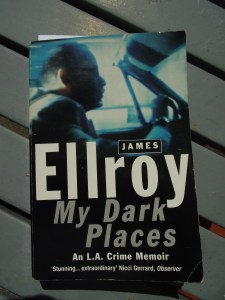
James ElroyMy Dark Places by James Elroy.

This was my first read on this holiday and I wondered at the time if any of my other books could live up to this one. Elroy as you may know is a writer of crime novels. If you haven’t read his books you may have seen the movie adaptations like LA Confidential. Elroy is a modern crime noir writer, following in the footsteps of Chandler and Dashiel Hammet. This book is a diversion for him. Part autobiography, part investigation into his mother’s murder in 1958. In the book Elroy bares his soul to the reader and explores all his inner most feelings; his early life, his thoughts; in effect, all his dark places. An incredible read. A fast moving, inward looking memoir and a man looking for answers to his life. I’ve already been searching abebooks for copies of his other works.

Present Indicative by Noel Coward.

Recently I picked up a few of Coward’s plays in paperback form and was totally taken aback by the witty repartee, the humour and the freshness of Coward’s work. You might think as a devotee of ‘Kitchen Sink Drama’ Coward’s work might be anathema to  me. Nothing could be further from the truth. In art as in literature, there is room for all genres and all tastes. On my last holiday in Lanzarote I read The Life of Noel Coward by his partner, Cole Lesley and it just made me want to read more of Coward’s own work. I look forward to reading about Noel’s early life in his own words.

The Last Days of Marilyn Monroe by Donald Wolfe.

I’ve been reading this book for the last few days and like the really good read that it is, the author has sucked me in to Los Angeles and its environs in the post war years and those people who made a beeline for Hollywood, thinking that they could be discovered and take a short cut to fame and fortune. Norma Jeane Mortensen was a dreamer, a girl who dreamed of being a star and for her it came true when she became Marilyn Monroe. From a factory girl to model, and model to movie stardom and then to an untimely end. This is her story. I’ve read one of Wolfe’s other books on Marilyn, The Assassination of Marilyn Monroe, and so far this is just as good if not better. Monroe, Hollywood, the Kennedys and murder is a very heady mix indeed. If you want a very brief rundown of Marilyn’s last hours, take a look at this post from last year.

The Past Through Tomorrow by Robert Heinlein.

When I was younger I used to read a lot of sci-fi although these days I prefer the genre in TV or movie format. Heinlein is a classic writer and I picked up this volume in a second-hand book shop. I made a pretty late snap decision to throw this into my book bag and I’m not sure how things will turn out, if I’ll enjoy it or not. But, if the book is not my cup of tea I’ve always got the pool open nearby ready for some serious swimming.

Floating In Space by Steve Higgins.

Of course, this is my very own book: A kitchen sink drama set in the late seventies. My top proofreader Liz Morrison scanned through this a while ago and pointed out numerous grammar issues. On this holiday I’m hoping to rectify them. Also, I’ve never been really satisfied with the cover. I always envisaged a young man seen from behind, floating before the earth and I did my best with the createspace templates that were at hand. When I finally sort out those grammatical errors I’ve got a new cover in mind. In the meantime if you fancy reading Floating In Space, click here for my Amazon page or click the links at the top of this page for more information.


Thoughts from a Sun lounger (Part 4)

Sun LoungerI don’t think there is any nicer feeling than to take a dip in a swimming pool and then after a few lengths, return to your sun lounger and lie there peacefully while the hot sun dries your body. You can feel little rivulets of water dripping away and in time the sun will gradually dry you. It’s almost like a sort of rebirth or a least a refreshing of the soul. The only sounds in this remote hamlet where we are staying are the gentle breeze swaying through the branches of a nearby tree, the quiet humming of insects, some bird song and the occasional drone of a far away car or tractor.
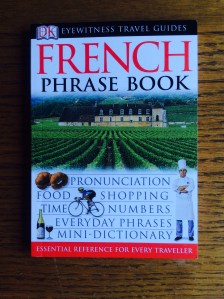
You might be thinking hang on, why is this guy waxing lyrical about lying on a sun bed? Yes it’s that time of year again, holiday time. Once again Liz and I have travelled to France to spend time in a beautiful gîte in the Cher region of France.

Travelling down here was a little bit of a trial though. Coming down the M6 in  the north-west we had to travel through the roadworks for the new Smart motorway scheme. I don’t know that Smart is really the right name for this concept but the idea is that the traffic runs along the hard shoulder in the busy periods thus shifting more traffic. So the experts say, anyway. Whether that will happen I really don’t know but at the moment the whole area is bit of a nightmare and when we finally got through that we came across more delays round about junction 13. Throw in some torrential rain and spray, creating really poor driving conditions and you begin to get the picture. Anyway, we made it to the terminal in Folkestone with about ten minutes to spare; many thanks to Liz for her fabulous driving.

One thing I noticed during the journey down here was the enormous amount of tyre carcasses in the central reservation. It really seems to me that Highways England need to pull their finger out and clean up the motorway otherwise I may just start up a scrap rubber company and pick up all those discarded tyres, and believe me I’ve counted a hell of a lot of tyres on the way south. I reckon I can make an absolute fortune flogging all those tyres to Goodyear or Pirelli or even some rubber recycling company. Come on Highways, get your act together!

French phrase book After the hell of UK motorway travel, the roads of France are just a delight. OK, it might be busy round Paris and other large towns but out in the countryside driving is once again an enjoyable experience. Stopping at the services is much nicer too. Not for us the packed UK services charging ridiculous amounts for a cup of tea. The French aires are quiet and picturesque. Nice rural stopping places with picnic tables and nice clean toilets. Lovely.

In the UK I have had a great deal of trouble with my back. The doctor offered me pain killers which I declined, well, I must admit I did take some, the pain was that bad. Anyway I asked to be referred to a physiotherapist. Get the problem sorted out at the source I thought. This gets complicated here so bear with me: I started off with a telephone appointment, one in which you are supposed to make an ‘actual’ appointment. It did not go well because although I rang at the specified time, I was given several messages to listen to and options to choose so when I eventually got through, the lady at the other end thought I was late for an ‘actual’ appointment, not a telephone appointment and could not arrange it for me as I was two minutes late. Anyway, to cut a long story short I spoke to her boss and made an appointment (an ‘actual’ appointment) and arrived on the day only to find that my ‘actual’ appointment had been cancelled due to a bereavement at the hospital. Pity they didn’t tell me in advance. (They said that they had left a message on my mobile – which I never received, although on the same day my garage had managed to leave me a message about my car and my brother had also left a message. Strange that two others had no problem leaving messages.)

Anyway, with me so far? Another appointment was duly made and then two days before that appointment I received a letter saying that had been cancelled too. I called  to complain only to be told I had cancelled the appointment! I most certainly did not, I said in my best aggrieved customer voice. I eventually spoke to a manager and she managed to arrange another date which fitted into my calendar just nicely between work and leaving for France.

When I finally found myself face to face with a physiotherapist, or at least someone who claimed to be a physiotherapist, he spent a lot of time asking me questions about my pain, which, when it first occurred three months previously had been very severe but now it wasn’t so bad, in fact the actual spot in the middle of my back seemed OK but the pain was now in my neck and lower back. Sadly, those areas were not the ones that I had been referred for via my GP. Now those two areas, the neck and lower back, happen to be a matter of inches from the source of the original pain so let me throw out a crazy mad concept here: could they be related? Well, we’ll never know because as my physio pointed out yet again; my GP had not referred me for those areas! After a lengthy consultation of which perhaps five minutes was actual hands on my back stuff, my physio declared my back was ‘mechanically’ sound. How did he explain the pain I asked? Well, that was a muscular issue due to my ‘sedentary’ life style. As we were on the way out he mentioned it was perhaps ‘not worth seeing me again.’

Interesting. Perhaps the problem solving concept was not something this guy covered at university, perhaps they don’t even teach that kind of stuff any more. I know that if I was a physio and someone came to me with back pain my job would be trying to find the source of that pain and cure it or ease it or suggest further treatment for my patient. It’s rather like having a problem with your car and telling the customer, well, we can’t fix that, perhaps it’s time to get a new motor. In this case, no new motor is available! I’m tempted to apply my usual rule here, that names have been changed to protect the innocent but Clifton Hospital in St Annes, Lancashire, you have gone way down in my estimation!

Anyway, the temperature here in our little village is currently in the 90s. (Fahrenheit of course. If you want that in Celsius, I don’t do metric, work it out yourself!) Time for a read, perhaps a short doze, then another swim in the pool. After all, exercise is good for your back!


Make sure your click back here next Saturday for at look at my Holiday Book Bag!


If you liked this post, why not try my book, Floating In Space. Click the links at the top of the page for more information!

The Author’s Guide to Book Trailers.

Book TrailersOne of the objects of this blog is to publicise my novel, Floating In Space. In these digital hi-tech days it’s just not enough to whack out a novel then expect people to clamour around wanting to buy it. How will they know it even exists? Well, as I said in Confessions of a Self-Published Author, the writing of a novel is only the first part, then comes the promotion of the book. Yes, this blog, of course, is a great part of that, as are my posts on Twitter, Facebook, Google+, Pinterest and elsewhere. Anywhere in fact that I have a social presence, I will be knocking out a post either directly or indirectly related to my book.
The important thing is not to keep going on about it; that is probably the social media equivalent of knocking on someone’s door and saying “Hi. Buy this book and it will change your life!” Floating In Space will not change your life but it will give you a few hours of enjoyment, taking you back into the world of the 1970’s, a world so different, and yet so similar to that of today.

Another way of connecting with those potential readers is the video and that is where the book trailer comes in. Back in the 1990’s I went on various courses in video production so I know the basic principles of shooting and editing but nowadays I make use of on line editing sites like animoto.com which can be used to build your video.  Here’s an updated version of the first book trailer I made using nothing more than still images uploaded to one of Animoto’s templates:

One of the great things about YouTube is that you can add annotations to the video: Links to other videos, links to my Google+ page and YouTube cards which open up when you hover over with your mouse and can be customised with web links. You can also add little information boxes which clarify or expand on information that is given in the video.

Here are a few tips for making your own.

1 Use a tripod. I’ve experimented with grips and clamps and selfie devices but the best way to shoot is to put your camera on a tripod, set up your shot and press record.

2. Keep it simple. Make sure you know what your message is and put it over quickly and simply. Attention spans are short these days for video. If people don’t like what they see, and believe it or not they make that decision in the first few seconds, then they just click away from your video to something more interesting.

3. Plan ahead before you shoot. Make a list of what you are going to do or say in the video. Even consider making a short script.

4. You Tube is the second most popular search engine after Google, so work hard on your video’s title!

5. 13% of video plays were made using mobile devices so make sure your video is mobile friendly! Click here to read some more interesting stats!

Not only do I have my videos on YouTube, I also have a few on Vimeo. Vimeo.com presents the video in a more stylish way but the cards and annotations that can be utilised on YouTube are not available. Here’s my very latest promo. Shot with my camera on a tripod and edited using windows movie maker.

https://vimeo.com/169686229

I’m quite pleased with the fact that I only took eleven takes to make this one. In the first few I didn’t like my shirt so I changed. Then it became rather windy which ruined the sound. Then just when I was about to pack up, I popped on another shirt and did a few more. The take above was somewhere around the take seven mark! Here’s another video, this time made with Animoto templates.

Weather’s looking good lately, why not make a start on your video promo?


If this post has got you interested in Floating in Space, click the links at the top of the page for more information. Click the icon below to visit my Amazon page.

An Interview with the author of Floating In Space!

Special Bank Holiday Post! (Or what happens when you press the ‘publish’ button instead of the ‘save draft’!)

An Interview with the author

It was reported today that Mr Steve Higgins the Manchester author has sold his first 2016 copy of Floating In Space.

Mr Higgins said today that “2016 sales have been slow, especially in January, February and March but it’s great to see April off to a flying start with these new sales. I mean, sale.”
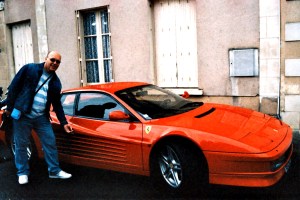
Mr Higgins was reportedly considering the cancellation of his order to Ferrari for the latest 590 GTO.

Ferrari“Yes,” he said exclusively to stevehigginslive.com today, “I’ve had to do the dirty deed. I wasn’t happy as my Hillman Imp is getting a little knackered but even top authors have to tighten up their wallets in the current financial climate.”
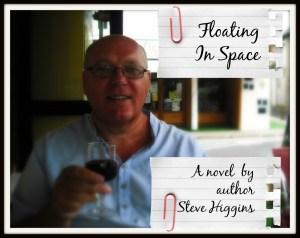
Sales of his book reached £14.68 in 2015 and this caused numerous headaches for Mr Higgins. What to spend it on? How to invest it?

When pressed, Mr Higgins advised he spent the money in a ‘one off blow out’ at Wetherspoons in St Annes on Sea, a lovely seaside town in the North West of England. “It was a good session,” he added, “but I eventually ended up blowing £30 so I went way over budget. But, what can you do? Sometimes you have got to go for it.”

Mrs Liz Morrison said “Steve doesn’t mind spending a few bob but he was a little disappointed when the bar staff refused to change a ten shilling note!”

Mrs Liz Morrison, a widow, said she was Mr Higgins’ financier. She was asked do you mean fiancée but  replied that she was correct the first time.

Author Steve HigginsWhen asked about the future of his self published novel ‘Floating In Space‘ Mr Higgins went on to say he had plans for another update of the work including a new cover. “Yes, I think something more dramatic is required to pull the readers in and I am aware of a few minor grammatical errors that need attention. There is a sequel in the pipeline but it’s quite a long way down the pipeline at present!”
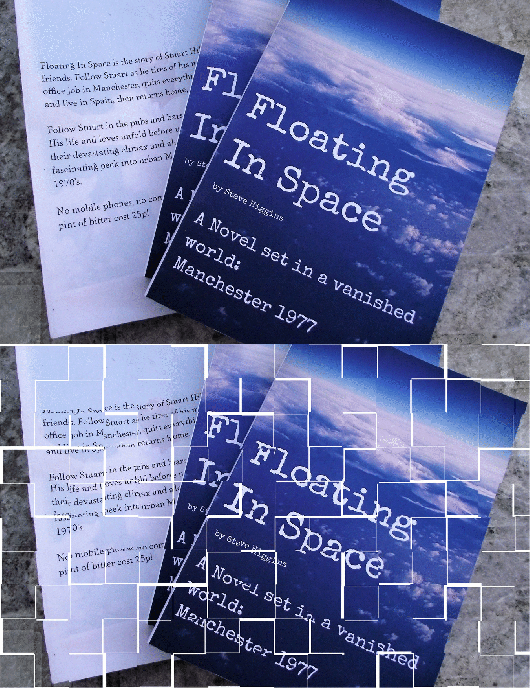
Mr Higgins also scotched rumours of a free Kindle version of the book. “Yes,” he said. “Numerous Kindle readers have asked about a free version but sadly, that is against my religion. I recently converted to orthodox tightwad!”

Mr Higgins was also asked about rumours of a multi million pound Hollywood version of the novel. He commented, “Yes, you must mean the youtube promo version. It only lasts a minute but there’s a great soundtrack: It’s well worth watching!”


Click the links at the top of the page for more information about ‘Floating In Space’ or click here to go to my amazon page.

Making the VLOG (or I’m Ready for my Close-up Mr De Mille!)

Sunset Boulevard is an outstanding film and due credit must go to the great Billy Wilder who not only directed but also wrote the screenplay, and he even got famous director Cecil B De Mille to play himself in the movie. Even if you’re not a classic movie buff like me, you’ve probably guessed that the quote in the title ‘I’m ready for my close up Mr De Mille’ comes from the movie. There are some even better lines from earlier in the picture when William Holden recognises Norma; ‘You’re Norma Desmond, you used to be in silent pictures. You used to be big’, to which Desmond replies, ‘I am big. It’s the pictures that got small!‘ They just don’t write dialogue like that any more. Anyway, over to the other part of this post, the bit about the vlog.
I follow a number of you tube channels and one of them is ‘I’m Emily’. Emily makes a Vlog, a video blog, every single day! That’s pretty impressive, I mean, I only produce a blog once a week and sometimes I’m pushed to make that target but a video blog, that includes not only recording the content but editing and uploading and so on, all on top of her full time job. I take my hat off to you, Emily.

On my YouTube channel, my videos are mostly about my book, Floating in Space. They are all mini adverts I suppose, usually with me talking to the camera explaining why you should buy my book and sometimes why you should try my web page and point your browser at posts just like this one.

Anyway, while on holiday in Lanzarote I wrote once again about my holiday book bag so I thought, hey, I bet I could make that into a vlog too. Should be easy enough. The blog is about my five holiday books, so I imagined myself talking to the camera with the five books all handy in front of me. Sounds easy enough. The aforementioned Emily shoots her vlog on an iPhone which of course has a self facing camera, so if you are filming yourself you can see exactly what is being recorded. Now my video camera is pretty good, it’s a Panasonic HD camera but the screen naturally is at the back and you can’t see the video image as you film. However, whilst out at the market in Marina Rubicon here in Lanzarote I came across a sort of selfie gadget: A clamp that clips onto a table or some other support, grips your camera or camcorder at the other end and has a sort of bendy bit in the middle so you can position everything and then record or photograph yourself. So, one sunny day after breakfast I got set up. Table, chair, books and camera all positioned nicely with the swimming pool in the background. I soon found it was not that easy to frame your shot as the clamp on the selfie gadget masks the camera screen so after a few ‘testing 123’ shots to find the best camera position I was ready for take 1.

Take 1. OK, went pretty well, I blathered on a bit and forgot the author of one book so time for take 2.

Take 2. OK but I’m holding the books slightly out of camera shot.

Take 3. I lift the books higher but gradually as the take goes on the books are getting lower and dropping out of shot. Cut, I shout, getting my director hat on.

Take 4. I’ve reframed and lowered the camera a little. I’ve actually cropped off the top of my head but the books are centre stage. I fluffed one of my lines calling Noel Coward an historical figure instead of a theatrical one but recovered that one OK with a little laugh at myself. I also say the Germans were ‘disappointed’ with Hitler at the end of World War Two when discussing a book about Albert Speer, one of Hitler’s ministers. Bit of an understatement there, I meant to say shocked or devastated, anyway, time for take 5.

Take 5. Start to stumble a little here, perhaps I need cue cards. Dorothy Parker wrote what for New York Magazines? Check the blurb on the back of her book again and time for take 6.

Take 6. Looked pretty good. Wait a minute, did I really say ‘my holiday book blag‘? Time for take 7.

Take 7. Radical re think needed here I think so I’ve smartened myself up a little, put on my favourite holiday shirt and re positioned the camera and my clamp gadget. Wish I’d brought my tripod along! Anyway here we go. Action: ‘Hi I’m Steve Higgins and I’m here in . . er . . ‘ CUT! It’s Lanzarote!

Take 8. Slight camera adjustment as take 7 wasn’t particularly well framed. Forgot to mention who Albert Speer actually was. Will people know who he was? Well, if they are interested in history and World War Two yes, otherwise no . .

Take 9. ‘Bleak House by David Copperfield’? What is this guy talking about? Cut!

Take 10. Not too bad, faltered a few times over some words, mumbled  a little perhaps but generally not bad. Sure I can do better though; still a little slow. Needs more pace.

Take 11: Whoa, slow down boy! I said pace not rabbit on and on without taking a breath!

Take 12: Not happening! Time for a swim!

Well, not quite as easy as I had thought it was going to be. I eventually settled for take 4. Better hold off with my application to the BBC just now, still, bit of practice, a few more videos and – ‘I’m ready for my close up Mr De Mille!’

Here’s the completed video blog:


If you liked this post, why not try my book? Click the links at the top of the page for more information or click the icon below-


My Holiday Book Bag (2)

A long time ago I was reading a biography about Richard Burton, in fact it I think it was ‘Rich,’ the biography by Melvyn Bragg. Bragg used Burton’s own diaries in his work and wrote, amongst other things, about Burton’s love of books and when Burton went on holiday he looked forward with delight to the contents of his ‘book bag.’ I know it’s a pretty tenuous link but one thing I have in common with Richard Burton is a love of books and when I go on holiday, one of the delights of lying under a warm sun on my sun bed is a good undisturbed read. OK, I read a lot at home and on my lunch breaks at work but it’s a few minutes here and a few minutes there and whenever I get interrupted it kind of breaks the flow. Some books, as we all know, are just made for a really long, uninterrupted read.

DSCF0004edOK, That was the intro copied from my earlier post Holiday Book Bag part 1. You might be thinking what is this about? A Holiday book bag in January? Yes, well here’s the thing, I’ve saved up my holidays for a winter escape from the UK and believe me, there is nothing more satisfying that calling up friends in the UK from sunny Lanzarote, where we are staying for six (yes six) weeks and asking ‘What’s the weather like back in the UK?’ Especially when they answer, as you knew they would, ‘It’s freezing cold and lashing it down!’
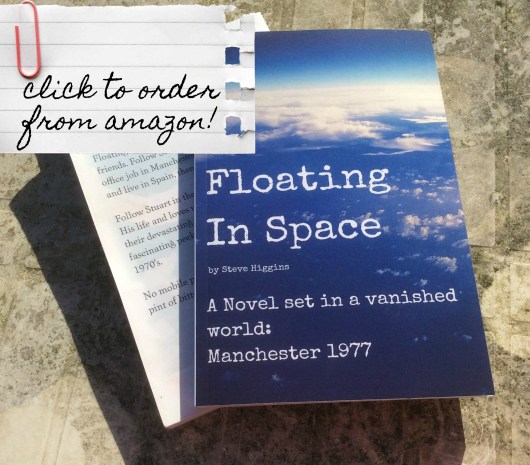
Anyway, I’m sure it’ll still be cold in February when we return so let’s move quickly on to the book bag. There is nothing more exciting for an avid reader like me, and the aforementioned Richard Burton, to plan what to pop into a book bag. Going to Lanzarote there are some restraints of course. One, we are flying so we only have limited luggage space so straight away I eliminated my hard back books which is something of a pity as I have some cracking hardbacks ready to be read. Anyway, I’ve stuck with paperbacks, some I have purchased recently and some have come my way as Christmas presents. Here is my final list.

Charlie Chaplin by Peter Ackroyd.

Peter wrote an excellent book about one of my writing heroes, Charles Dickens and I felt that this book was going to be in the same sort of mould. Long, intense and full of detail. Actually it’s a pretty slim volume and not the intense scrutiny of Chaplin that I was expecting. However, on the credit side, it’s a thoughtful and detailed look at Chaplin, his movies and his personal life and a cracking read it is too. One hundred years ago Chaplin was the most famous man in the world. I’m not sure who would qualify for that title today as despite global communications and the Internet age, the world is separated by many different languages and cultures. A hundred years ago there was no language barrier for Chaplin, and his silent films with their universal language of comedy, went all the way round the globe and he was as famous in countries such as Russia or Africa as he was in Europe or the USA.

Albert Speer: His Battle With Truth by Gitta Sereny.

This is a classic of World War 2 literature and concerns Albert Speer who was Hitler’s architect and then rose quickly in the ranks of the Nazi hierarchy to become Armaments Minister. He was spared the fate of hanging at the Nuremberg trials after admitting that the Nazi leadership, himself included, should take responsibility for the crimes of the Third Reich. What is interesting about the Nazi years is the way Hitler himself seemed to entrance people by the power of his personality. Much has been written about his speeches to the Nazi faithful and the many Nazi rallies of the 20’s and 30’s and yet, looking back at archive film, he looks to be almost something of a madman. However, those who attended the rallies speak of his almost magnetic power as an orator. Speer himself was surprised at first seeing Hitler speak because the speech he heard that day was about unifying Germany, bringing back employment and pride to the German worker, not about death to the Jews. It struck a chord with Speer and he began to follow him. It was the same with many people and as is pointed out in this book, had Hitler died in 1937, he would perhaps have gone down in history as a great German, not the mass murderer he turned out to be. There is an embarrassment among Germans of Speers’ generation; a feeling of how could Hitler have lied to them, how could he have done those terrible things? Something repeated many times is the feeling ‘if only the Führer knew! The fact is, Hitler did know but did Speer know too? An answer, of sorts, is the conclusion to the book.

One of the great aspects of this book is that the author’s journey into Speer’s life is a personal journey and one she shares with the reader. In the final pages we hear about how the author returns home after a weekend away and sees her telephone answering machine winking with various messages. The first one is a message from Speer himself, saying he was in London for a BBC interview and wondered if Gitta and her husband wanted to meet up. The next message is one from a television news company asking her to comment on the death of Speer!

Bleak House by Charles Dickens.

David Copperfield is my favourite Dickens book and one of my favourite books ever but I’ve had difficulty getting into Dickens’ other books. I gave up on the Pickwick Papers, although I liked Oliver Twist and Great Expectations but that’s about it. Hope this will be a good read especially as it’s the only novel I have brought.

The Life of Noel Coward by Cole Lesley.

I do love biographies and this memoir of Noel Coward’s life looks good. One of the reviewers quoted on the back cover says reading this is like ‘a holiday in a rented Rolls!’ One aspect of the earlier part of the book -I’m only partway through as I write this- is Coward’s visits to Manchester where he stayed at the Midland hotel when he was in his late teens. Even then he was a self assured young man about town and on the verge of fame. He charmed many of the rich and famous of the time and was always in demand as a country manor guest for weekends at home or abroad. Noel was a man who liked to travel, especially after a long spell of hard work, and he liked, at times, to travel alone. Indeed, the author quotes from a poem by Noel which reads in part; ‘ When the dream is ended and passion has flown, I  travel alone.’ Noel always took with him on holiday a portable typewriter, lined foolscap writing pads, and his ‘bursting’ book bag. This apparently contained the latest good novels, two or three classics and always Roget’s Thesaurus and Clement Wood’s Rhyming Dictionary.  Not a bad choice! I look forward to reading more about the witty Noel Coward and his life.

The Collected Dorothy Parker by Dorothy Parker.

Dorothy Parker was a jazz age writer and she chronicled the decadent twenties and thirties in her witty stories and reviews. Born in 1893 Parker sold her first poem to Vanity Fair magazine in 1914 and was then engaged by the magazine to write captions for fashion photographs and drawings. She later became drama critic for Vanity Fair and the central figure of the famous Algonquin Hotel Round Table, a group of celebrated authors and writers. I’ve already had a glance through the first few short stories and they look very well observed and entertaining so far.

Those are my January holiday books. Check out the video version of this post below!


If you are already planning for your holidays don’t neglect your reading matter. Why not take a copy of ‘Floating In Space’ along? Click the links at the top of the page or click on the icon below . .

Floating in Space

6 Great Kitchen Sink Dramas

So what exactly is a kitchen sink drama? If you’ve read through the pages on my site that deal with my book ‘Floating In Space,’ you’ll know that this is a phrase I use to describe my book. When I first added Floating In Space to Amazon through the Amazon sister site Createspace I came to a point where I had to define the genre of the book. If you’ve written something that falls easily into a particular niche then that’s not a big deal. Things like romance, thrillers, science fiction, and YA (young adult) are pretty easily definable but my novel is something on the lines of working class fiction from the sixties; books like A Kind of Loving, A Taste of Honey, Saturday Night and Sunday Morning, Alfie and Billy Liar. All of those works were made into films and three of them, Billy Liar, Alfie and A Taste of Honey were also stage plays but what exactly is ‘Kitchen sink drama’?
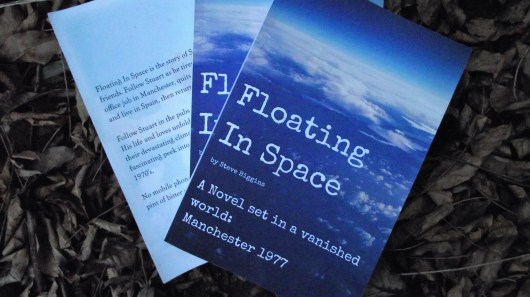
Wikipedia describes it as a British Cultural movement that developed in the late 1950’s and early 1960’s and enveloped the theatre, art, literature, television and film. It identifies the John Osborne play ‘Look Back in Anger’ as being the start of the movement and afterwards, many people who identified with the movement were known as ‘Angry Young Men.’ Osborne’s play was a sort of backlash against the theatre of Noel Coward and Terrence Rattigan and represented a move away from polite drawing rooms into council house back rooms.

Richard Burton starred in ‘Look Back in Anger’ and as much as I love the richness of his voice, his portrayal of the leading character of Jimmy Porter hardly represents the working class despite Burton’s own personal origins in a Welsh mining village. A much more representative working class voice, certainly for the North West of England is the character of Arthur Seaton played convincingly by Salford actor Albert Finney in the movie Saturday Night and Sunday Morning.

Saturday Night and Sunday Morning. 1960

Saturday Night and Sunday Morning is set in working class Nottingham. Arthur Seaton is a rebellious factory worker who works hard in the factory by day, but at the weekend he spends his money in the pubs and clubs of the town. He is involved with a married woman but starts to lose interest when he meets a single girl called Doreen and begins a relationship with her. My favourite line from the book and the movie is this: “I’m not barmy, I’m a fighting pit prop that wants a pint of beer, that’s me. But if any knowing bastard says that’s me I’ll tell them I’m a dynamite dealer waiting to blow the factory to kingdom come. I’m me and nobody else. Whatever people say I am, that’s what I’m not because they don’t know a bloody thing about me! God knows what I am.

A Taste of Honey. 1961

Written as a play by Shelagh Delaney when she was only eighteen, the work was first performed at Joan Littlewood’s theatre workshop in 1958. The movie version opened in 1961 adapted by Delaney herself and directed by Tony Richardson, who incidentally also directed the film version of ‘Look Back in Anger.’ The movie features outstanding performances by Dora Bryan and Rita Tushingham.

Alfie. 1966

Alfie was directed by Lewis Gilbert who directed some of the earlier Bond films. The script was produced by Bill Naughton and adapted from his own book and play. Alfie is a fascinating film on many levels. It’s a peek back at the swinging sixties; it explores the elements of comedy versus drama, something I’ve always loved and which I looked at recently in a post about the TV show MASH. Once again it’s about the working class and features great performances from all the principal and supporting actors. One fabulous feature is how Alfie talks directly to the camera and sometimes even says things that directly contradict something he is doing or saying to another character. In the opening sequence Michael Caine as Alfie addresses the audience and tells them not to expect any titles. There are none, except for the film title itself and the closing credits feature photos of the cast and crew. Many actors turned down the chance to play Alfie on film, including Caine’s then flat mate Terence Stamp who played the part on Broadway. Laurence Harvey, James Booth and Richard Harris all turned down the role, and Alfie became a breakthrough movie for Michael Caine. My favourite line from the film comes right at the end when Alfie is reflecting about his life: “What have I got? Really? Some money in my pocket. Some nice threads, fancy car at my disposal, and I’m single. Yeah… unattached, free as a bird… I don’t depend on nobody. Nobody depends on me. My life’s my own. But I don’t have peace of mind. And if you don’t have that, you’ve got nothing. So… So what’s the answer? That’s what I keep asking myself. What’s it all about? You know what I mean? “

Billy Liar. 1963

Billy Liar is based on the book by Keith Waterhouse and was directed by John Schlessinger. Tom Courtney played the title role and many faces familiar to TV viewers appear in the cast such as Wilfred Pickles, Rodney Bewes, and Leonard Rossiter. Billy has an imaginary world in which he plays out many daydreams and fantasies. His ambition though is to become a comedy scriptwriter and his friend Liz played by Julie Christie offers to go with him to London. In the final scenes however, Billy loses his nerve and contrives to miss his train, something that Liz has foreseen and has conveniently left his suitcase on the platform for him.

A Kind of Loving. 1962

This is another 60’s classic directed by John Schelssinger. Adapted from the book by Stan Barstow (one of my all time favourite books) with a script by Keith Waterhouse (who wrote Billy Liar) and Wallis Hall. The story is a very simple one; Vic Brown (Alan Bates)  is a draughtsman in a Manchester factory and he gets involved with secretary called Ingrid played by June Ritchie. When Vic learns Ingrid is pregnant, he does the ‘proper’ thing for the 1960s and offers to marry her. Sounds simple but this is a complex and fascinating film and looks at the subtleties of relationships and how the characters make their way through a series of difficult choices. For a northerner like me, it’s also nice to see places I recognise on film. St Annes On Sea looks a little grim, or did do in the 1960’s. Today it’s a lovely place to live.

Spring and Port Wine. 1969

Hollywood movie star James Mason, famous for roles like the drunken movie star in A Star is Born and the suave villain in Hitchcock’s North by Northwest, left Hollywood in 1963, settled in Switzerland and embarked on a more transatlantic career. One of those projects was Spring and Port Wine. The movie is set in Bolton and is about factory worker Rafe Crompton and his family. His daughter played by Susan George is acting strangely and Rafe struggles to dominate her, his other daughter played by Hannah Gordon and his sons, Rodney Bewes and Len Jones. It later transpires the Susan George character may be pregnant and the family rally round to help her.

The Family Way 1966

The Family Way is one of my very favourite films and like Spring and Port Wine above, features a classic movie actor, John Mills, in a very different role. Saying that, Mills’ film career was diverse to say the least and in this movie he plays Ezra Fitton whose son has just married Jenny, played by Mills’ real life daughter, Hayley. Various problems plague the newly weds, in particular a holiday that never happens due to a travel agent absconding with their funds. Hints are made during the film that Ezra’s son may not even be his son after all. When the truth dawns on Ezra his son asks what is wrong and Ezra replies with the most memorable line in the film; “It’s life lad. Sometimes it’ll make you laugh and sometimes it’ll make you bloody cry!” Time and time again, and I don’t know if you have ever found the same thing, but certain movies I love always seem to have a common denominator. In this case Spring and Port Wine, The Family Way, and Alfie were all penned by the same author, Bill Naughton.


One final kitchen sink drama: ‘Floating In Space’ by Steve Higgins. Click the icon below to go to my Amazon page or check out the links at the top of the page.

5 Steps to Creating that Post!

creatingthatpostOne primary question to ask yourself before you start blogging is this: Why do you want to write a blog and what are you going to write about?

It’s deep in the psyche, this need to communicate and express yourself but bloggers blog for a number of reasons. One is that we have a particular interest or passion that we just have to talk about. It might be a sporting interest or a hobby that we love. It could be a love of poetry or books. If you spend a lot of your free time cycling for instance you might want to indulge your love of this hobby by writing about it and discussing cycling issues or sharing information and tips about cycles. I subscribe to a lot of blogs about my favourite sport, F1 racing, as well as blogs about writing and my favourite movie directors for instance.

Another reason for blogging is to promote a business. There are many photographer blogs on the web, some are from amateurs who want others to see and comment on their work, some are by professionals who are actively promoting themselves and their business.

Authors are frequent bloggers, perhaps because publishing has been turned on it’s head by the internet and the digital revolution. No longer must we writers wait for the publisher to find us, we can get our work out there straight away and build up an internet presence which in turn benefits our self published works. Whether self publishing is a good thing I’m not so sure. I feel that personally I’ve rushed a little too quickly down the self publishing route but the experience has been good for me. I originally thought I had a pretty good manuscript but self publishing showed me very quickly that this wasn’t the case and I had to do a lot of work to update my grammatical errors and sort out problems with page breaks and other bits and pieces. The process I’ve gone through at createspace has been a big learning curve but as a result my manuscript has been well and truly re-hashed and edited. I personally love paperback books but it’s the Kindle version and it’s user friendly instant download facility that, in the case of my book, is much more popular.

Blogging for me is primarily to promote my work but I do love writing and I do love writing my little blog. One good thing about blogging is that it gets the creative juices flowing. It gets you thinking, what can I write about? What can I write about next time? So far the ideas have kept on coming and I’ve got six or seven draft blogs in the pipeline although I have to say two have them have been there so long I think they may be heading for the trash file shortly. Many people ask me how do I do it, how do I come up with a new post every week? Well, good job I don’t have to write a daily blog, I’d be pretty pushed to do that I can tell you! Anyway what I do is this, I keep an eye and an ear out for a blog idea all the time. I read a lot and one of my great loves is trolling round for second hand books so if I’m stuck I’ll write about books or writers. I’ve already done posts about James Hilton and Dylan Thomas, two of my favourite writers, and I recently wrote a second post about my finds in second hand bookshops. If ever I see something on TV that might inspire a blog post, I jot it down in my notebook or even sometimes on my mobile. In my car, which believe it or not, is a prime creative space for me, I have a small hand held tape recorder and I can be seen frequently jabbering into it as I drive to and from work.

Recently I switched on the television and an old James Bond movie was showing. Now, I’ve read all of Ian Fleming’s Bond books and seen all the films so that looked to me to be a prime target for a blog. A little research on the internet will tell you that a lot of popular posts will have a number in the title, things like ’10 different ways to promote your blog’ or ’20 ways to get more blog traffic.’ Ok I thought, how about ‘8 Things you didn’t know about James Bond!

Now, once you get an idea like that, a factual idea, you need to do a little research. I quickly jotted down the few things I knew about Bond and then researched the rest on the internet. I put together my facts and figures, made sure it all made sense, added a little graphic and there’s the next blog post ready. Of course, if you write something, it stands to reason you will want someone to read it so make sure you promote your posts on Google+, Twitter and Facebook and anywhere else you can think of.  Have a look at the infographic below:

The Creative Processs-2

It’s quite easy to make your own infographic, just as I did on http://www.canva.com

Enjoyed this post? Then why not click the links at the top of the page and find out more about my book!