Happy Christmas and I hope you are having a good one wherever you are. It’s not every year that my scheduled regular post ends up going out on Christmas day so should I make the most of it and deliver a sensational blog post or should I just recognise that today people have other things on their minds than reading a blog post?
Tough call.
Still, when people have finished opening their presents and have had their fill of Christmas dinner, pudding, drinks and nibbles, perhaps there might be a small opening for readers to open up their computers or tablets and have a read of my blog. Let’s give it a shot, anyway.
I caught the end of a documentary on TV the other day about Charles Dickens and how he apparently is the man who invented the modern Christmas just by publishing a short story about Christmas called A Christmas Carol. That sounded pretty interesting to me so as I had missed most of it, I thought I’d do a little internet research.
Charles Dickens was born in 1812 and in 1836 he published his first book, The Pickwick Papers. The Pickwick Papers became a publishing phenomenon by introducing serial publication; the book was published in serial form and it kept the readers wanting to find out what would happen next. In the TV show I watched they had someone on from Eastenders who claimed that if Dickens lived today, he would be working in TV, responsible for the cliff hangers that today’s soaps end with.
A Christmas Carol was published in 1843 and sold 6000 copies in just six days. It was not initially a great financial success for Dickens as he had decided to publish an edition with colour pictures. No colour printing was possible at the time and so the colour pictures were hand coloured by teams of people, all of which added to the expense of publication.
Dickens_by_Watkins_1858
Dickens himself was very fond of Christmas and the description in the book of the party at Scrooge’s nephew’s house was similar to the celebrations at Dickens’ own home. The piano was played, there was dancing, Christmas trees had become popular and Christmas carols were sung. The phrase ‘Merry Christmas’ became popular because of its use in ‘A Christmas Carol’.
The tradition of having a turkey dinner for Christmas began with Henry VIII but became popular in Victorian times. Prior to that a typical Christmas dinner involved goose. In A Christmas Carol, Scrooge buys a huge turkey for Bob Cratchit and his family and again that only increased the popularity of a Christmas turkey.
Another company produced an unauthorised edition of the book and Dickens sued, only for the rogue publisher to declare themselves bankrupt, leaving the author to pay for his costs despite winning his case.
Dickens was in need of money and he began a series of readings of his works which were lucrative and incredibly popular. These readings occupied most of his time in the last ten years of his life. He divorced his wife which was highly unusual for the time. He had met a young actress called Ellen Ternan who was 27 years younger than him and he remained passionate about her for the rest of his life. In 1860 he started a huge bonfire at his house, Gads Hill Place in Kent, in which he burned all his correspondence. Ellen too destroyed all her letters from Dickens so the full details of their relationship has never been known. Were they lovers? Possibly, but we can never know for sure.
On June 8th 1870, Dickens had a stroke after working on his last book, The Mystery of Edwin Drood. He died the next day without regaining consciousness. Some have speculated that he died at Ellen Ternan’s house, and she had him taken back to Gads Hill to prevent a scandal.
He was laid to rest in Poets Corner at Westminster Abbey and A Christmas Carol remains one of his best-known works and the name of his main character, Scrooge has entered into the English language as meaning a miserly person. To this day, the book has never been out of print and a first edition copy would set you back about 10 to 15 thousand pounds.
More film versions have been made of A Christmas Carol than any other of Dicken’s works but the one that is head and shoulders above the others is the Alastair Sim version made in 1951. Take a look through your TV schedule and I’m pretty sure you’ll find it showing somewhere.
Have a great Christmas.
What to do next: Here are a few options.
Share this post on your favourite social media!
Hit the Subscribe button. Never miss another post!
The 27th of October was the birthday of one of my favourite writers. I love lots of writers but probably my all-time favourite is Dylan Thomas. I love the outstanding power of his writing, his incredible imagery, and the wonderful pictures he creates with his words.
Dylan also is the sort of writer I’ve always wanted to be: A bohemian, pub crawling, boozing writer who fought with himself as he laboured to paint his word pictures. Whether that was really the case I don’t know but Dylan did like his pubs and he did enjoy a drink.
The fact of the matter is that I’m nothing like Dylan, except we both share a love of words, particularly the sound of words, which is the key to the richness of Dylan’s work, especially his poetry. If you think about it, there must be a connection between the sound of a word and its meaning, a deep organic connection. After all, how did words begin? Imagine some ancient caveman, just wanting to get some concept over to his mate. What are the deepest and strongest feelings for a human being? Well, for a caveman food must be one, and love too. Surely love was present in those primordial days when every caveman went out on Saturday with his club looking for his mate. There must have been a moment when ancient man strived to say something to his mate, tried to express his feeling and a sound that was the precursor to the word love slipped uneasily from his lips.
If you have read any of Dylan’s poems and are yet to understand his magic, let me give you a tiny bit of advice: Listen to Dylan’s voice. Yes, Dylan, like many poets wrote for his own voice and if you click on to any Dylan Thomas page or search anywhere on the internet you are bound to come across some old recording of his voice. Don’t make do with lesser voices, even when we are talking about great actors like Richard Burton or Anthony Hopkins. Search out Dylan himself and you will be won over, like me, by the power of his voice.
It’s not just his poems that are rich with the power of words. Dylan wrote and performed a good many radio plays and broadcasts and my very favourite is ‘Return Journey.’ It’s about Dylan himself returning to Swansea in search of his former self ‘Young Thomas’. He visits young Thomas’ old haunts and meets with people who knew him fleetingly; the barmaid who used to serve him, journalists who worked with him and even the park keeper where Dylan and his young friends would play in the park. It’s a lovely piece where fantasy merges with reality and we slip in and out of the two as the story progresses.
Many years ago I visited Dylan Thomas’ house in Wales. The house is in the village of Laugharne and is not far from one of his famous watering holes, the Brown’s Hotel which I’m pretty sure was bought by one of the comedians from TV’s Men Behaving Badly.
The boathouse was bought by a trust some years ago which saved the property from collapsing into the sea. It’s a lovely place and on the day I visited, we had to leave early although I can’t remember why. I came back the next day and the staff remembered I had left early previously and let me in for free. I wandered about Dylan’s old house and sucked in the atmosphere before buying various books and pamphlets about Dylan and his works.
In another old TV documentary I tend to watch now and again, the presenter, a poet himself, visited the house and ventured that he thought he could imagine the conversations of Dylan and his wife, the chit chatting, the arguing and the making up later, or so he supposed.
I took a primitive digital camera with me and took a few shots of the house and Dylan’s famous writing shed. I read somewhere recently that the shed has now been removed and taken to a museum with a duplicate shed now occupying the site.
I enjoyed my visit and Dylan’s own poem always makes me think of it:
In the mustardseed sun, By full tilt river and switchback sea Where the cormorants scud, In his house on stilts high among beaks And palavers of birds . . .
As you might have guessed from reading these posts, I really do love my books. One particular book pictured here, about the last days of poet Dylan Thomas is one I’ve had a long time but have not got around to reading until more recently. I do endlessly peruse our local secondhand shops for books but I have a feeling I bought this one from one of two online bookshops, either Abebooks or Awesome books, both of which I use especially when there is a particular book that I am after.
This book is a rather slow one but it details Dylan’s last days and ultimately his death in New York in the USA.
Dylan was a slow worker when it came to writing and there was always something, usually a pub, to draw him away from his work. In his latter days he was concerned that his talent or his inspiration had gone and that all his best work was perhaps behind him. He was short of money as usual and that is what drove him to accept an offer to go to the USA on a poetry tour by Canadian poet John Brinnin. Brinnin was the director of a poetry centre in New York and the trips Dylan undertook there were very lucrative for the always hard up poet. Thomas had a number of wealthy patrons, in fact his famous house in Laugharne was bought by for him by an admirer but money went through Dylan’s hands quickly.
He had travelled there before and on his penultimate visit had become romantically involved with a lady called Liz Reitel who worked for Brinnin at the poetry centre. When Dylan arrived for his last visit Reital was shocked to see the poet looking poorly and ‘not his usual robust self’. Dylan was in an odd mood and related a strange story of an encounter on the aircraft with a priest. Over the next few days his mood alternated between being tired and poorly and getting drunk with some moments of normality. I get the impression from the book that Dylan liked attention, he liked admirers and although he was in the middle of an affair with Liz Reitel, he was not averse to enjoying the attention he received from other women.
At the poetry centre, preparations were under way for a recital of the newly finished Under Milk Wood for which Dylan had produced some new edits and updates. Towards the end of the book Liz mentions that she was disappointed that these revisions were not included in the published versions of the play despite the fact that she personally typed them up and passed them on to Dylan’s publishers.
The recital went well and was in fact tape recorded by someone at the time with Dylan taking the part of the narrator.
The book goes on to detail Dylan’s various moods and the symptoms of whatever was ailing him.
Liz called a doctor when Dylan became unwell again and the doctor gave Dylan an injection of morphine sulphate which may or may not have helped him.
After a night of drinking at the White Horse Tavern in Greenwich Village, Dylan returned to the Chelsea hotel claiming famously that he had downed ‘eighteen straight whiskies. I think that’s the record!’
Dylan’s breathing became difficult later in the evening and an ambulance was summoned. Thomas slipped into a coma from which he never awoke and later died on the 9th of November, 1953. He was only 53 years old and died with assets of only £100.
I was always under the impression that Dylan had drunk himself to death but that may not be the case. The autopsy did not find any evidence of liver cirrhosis and his death may have been due to pneumonia and bronchitis as well as the injections he had received from the doctor. It was later thought that the morphine may have inhibited Dylan’s breathing rather than easing his pain.
This was a good read although the author’s style was not completely to my liking. One interesting thing about it was that in my copy, it was a second hand book remember, there was an inscription on the first page. The book was clearly a gift. Did the owner pass away? Did his family send for the house clearance man and clear away his belongings? Who was Kate, the lady who signed the book in 1992?
Who was the person she loved and thought the world of?
In a way it is almost like Under Milk Wood itself, where the dead come alive again at night as time passes . .
This post was compiled from my previous posts about Dylan Thomas
What to do next: Here are a few options.
Share this post on your favourite social media!
Hit the Subscribe button. Never miss another post!
I’ve been off work for quite a while with my sore arm and neck and even though I don’t feel quite right I’ve started to think that perhaps I won’t ever be fully ‘normal’ again. I said as much to my physio and he didn’t agree. Keep doing the exercises he reckons and one day I’ll be back to my usual fitness. OK, that’s pretty positive so I’ll just keep calm and carry on, what else can anyone do? Well, I can go back to work for a start, which is what I did this week. It was a little odd at first but by the second day, it felt as if I’d never been away.
As my time off has come to an end you might think that as an enthusiastic writer, I might have completed a draft of a new book or screenplay. Well actually no, I didn’t. It was the same old story and once again I succumbed to laziness or procrastination or being me, probably both.
I read a blog post on Medium the other day in which the writer rejected all those terms which writers like me cling to and put forward another one. Unwillingness. That’s right. It’s not laziness that stops us writing but an unwillingness to write. In order to write said the author, we must be willing to write, we must sort out a writing space, sort out a writing time and just write. It was actually a pretty motivating piece, so much so that I pulled out my finger and wrote a few new pages of my next novel.
I’ve applied for a few jobs while I’ve been off. One job looked ideal for me, it was only a customer services role but according to the job advert it was weekend work, just what I wanted. I applied and was invited for an interview but it was an online interview. I read all the information they had sent and it looked like the interview involved answering various questions then doing something with a webcam. I guessed that they wanted to see me in a sort of simulated question/answer situation with the public so as they advised, I put on a smart shirt and clicked the link to start.
The first question was the usual one; Did I have to right to work in the UK? Yes. Was I willing to work shifts? Yes. Did I want the full time role or the part time? Part time. Was I ok selling media packages to the public? Wait a minute, selling? I thought it was a customer services role, what has selling got to do with it? Wait a minute I thought, maybe this was just a general question and there were other roles available as well as the customer service ones? There must be sales roles too. Anyway, that’s where I made a big mistake and pressed no.
The system thought for a moment and then a message came on the screen. The interview is over, thanks for your interest in Virgin media. Whoa, wait a minute, where’s the rest? Where’s the webcam bit where I simulate talking to the public. Alas, that was not to be, I’d blown it and that was the end of that.
Books
Here are two of my favourite beginnings and ends from books. My favourite book of all time has to be David Copperfield from that late, great master of the written word Charles Dickens.
Whether I shall turn out to be the hero of my own life, or whether that station will be held by anybody else, these pages must show. To begin my life with the beginning of my life, I record that I was born (as I have been informed and believe) on a Friday, at twelve o’clock at night. It was remarked that the clock began to strike, and I began to cry, simultaneously.
Some of Dickens’ other books I’ve found hard to read. I’ve never finished The Pickwick Papers and Bleak House is another book I started then found reading enjoyment elsewhere but Copperfield draws me back time and time again and it’s a book I probably re read every few years. Dickens died in 1870 but his stories will live on for as long as books are read.
Here’s another quote, this one is from the end of a book.
Gatsby believed in the green light, the orgastic future that year by year recedes before us. It eluded us then, but that’s no matter, tomorrow we will run faster, stretch out our arms farther and one fine morning . . So we beat on, boats against the current, borne back ceaselessly into the past.
If you haven’t guessed already, that’s a quote from another of my favourite books of all time, The Great Gatsby by F Scott Fitzgerald. Like Dickens, I’ve tried to read other books by Fitzgerald but not really found them to my taste. Gatsby though is a wonderful book, opening up a window back into the jazz age of America and with a story told through some outstanding descriptive passages just like that last paragraph above.
Films
I wrote a post a long time ago about the texts my brother and I send each other. They are just quotes from films, usually pretty obscure ones and because he and I generally watch the same kind of films we usually know which film the quote is from. Here’s one he sent me a while ago. I knew straight away which film he was watching, what about you?
Take ‘em to Missouri Matt!
Did you get the film? Well, perhaps you are not a fan of classic westerns then. Red River is a 1948 film directed by Howard Hawks and starring John Wayne and Montgomery Clift. It’s about a cattle drive from Texas to Kansas along the Chisholm Trail and John Wayne says the line to Montgomery Clift when they begin their epic drive. The men encounter many difficulties along the way including a big fall out between Wayne’s character and his adoptive son, played by Clift. It’s one of the great westerns of all time and even if you haven’t seen it you might have seen a clip of it in the film The Last Picture Show. At the end of the film when the only cinema in a small American town is closing, the last picture show is Red River.
Robert Zemeckis is one of my favourite directors. He directed Back to the Future, Castaway and Forrest Gump among others. Forrest Gump isn’t a great favourite of mine but I love the way the film opens and closes. A feather is floating high up on the wind and the camera follows it as it falls down towards the ground. Forrest Gump played by Tom Hanks is revealed sitting on a wooden bench and he picks up the feather and places it in his book as a bookmark. Zemeckis’ films are full of little touches like that and of course the film ends in a similar way, Gump opens his notebook and the feather blows away.
I’m going to end with a clip I used in another post a few weeks ago. It’s the last scene in Castaway again with Tom Hanks. Hanks’ character has been rescued from a desert island after four years. The love of his life has married someone else and now he has arrived back to civilisation he doesn’t know what to do, after all, his home is gone and all his possessions presumably either sold or given away. He decides to deliver in person a package which washed up on the desert island with him. The person isn’t home so he leaves it with a note. Then he stops and wonders what to do next.
Come to think of it, I’m wondering what to do next myself.
What to do next: Here are a few options.
Share this post on your favourite social media!
Hit the Subscribe button. Never miss another post!
This week I’d like to take a look at four popular book series. Many authors create a particular character or set of characters and write about their different adventures in a new edition. Sherlock Holmes is one example. Sir Arthur Conan Doyle wrote the first Holmes book A Study in Scarlet in 1887 and various books and short stories followed detailing the various adventures and investigations Holmes was engaged upon. Here are four more.
The Chronicles consist of seven novels published in the 1950’s. They were written by author CS Lewis. The first in the series, The Lion the Witch and the Wardrobe is set during the second world war and was inspired by a group of children who were evacuated to Lewis’ home just outside of Oxford. Lewis was also inspired by a picture of a faun carrying an umbrella and parcels in a snowy wood. The image stayed in Lewis’ head from when he was aged 16 to when he was in his 40’s and he felt it was time to write a story about the picture.
I must have been at junior school when I first encountered the original book in the series. In my first year at junior school our teacher, Miss Ollier, would read us pages from the book as we all sat around her towards the end of our school day. I remember being completely mesmerised by the story especially the moment when one of the children goes through the wardrobe and pushes past the coats hanging there to finally stumble out into the cold of Narnia.
In the book, a group of children are evacuated from London in World War II to a country house. During a game of hide and seek, one of the children, Lucy, hides in a wardrobe. The wardrobe seems to be never ending and as the child pushes towards the back of the wardrobe, she ends up in the magical world of Narnia. Later, the other children follow and they all meet Mr Tumnus the faun, the White Queen and Aslan the lion amongst others. They help Aslan overthrow the Witch and release Narnia from the perpetual winter which the White Witch has imposed on the kingdom. Six more books followed finishing with The Last Battle published in 1956.
The James Bond Books by Ian Fleming.
I started reading the Bond books when I was a schoolboy and unfortunately the very first one I read was the only one they had in our local library: ‘The Man With The Golden Gun’, one of writer Ian Fleming’s worst Bond books. Fleming used to write his initial drafts of the novels and then write a second one, adding in all the details which make the Bond books so interesting. Details of Bond’s clothes, his food, his cars, his cigarettes (the special handmade ones with the triple gold band) and all that sort of stuff. ‘The Man with the Golden Gun’ was published after Fleming had died and sadly he had not revised his original draft. I persevered though, did some research, found the proper order of the books and began to read ‘Casino Royale’, the first in the series. I have loved the books and the films ever since.
Casino Royale is quite an original story. It concerns a man known as Le Chiffre who is a kind of paymaster for Soviet agents in Europe. He however has been a very bad fellow indeed, he has been using some of the funds for his own personal pleasure and decides to recoup the funds by gambling at the Casino at Royale Les Eaux. The secret service however think it might be a good idea to have their best card player beat him at cards and so sentence him to death at the hands of his very own paymasters, the Russians.
Fleming drew heavily on his military background where he was a personal assistant to Rear Admiral John Godfrey, the head of Naval Intelligence in World War II. Godfrey served as a model for M, the head of the secret service in the Bond books. Many people have claimed to be the model for Bond himself and although Fleming admitted the character was based on various agents he knew during the war, the character of Bond is really an alter ego of Fleming himself.
Fleming was a Commander in Naval Intelligence during the war, just like 007, and it was Fleming who drank the vodka martinis that James Bond liked so much. It was Fleming who wore the Sea Island cotton shirts that appear in the novels and it was Fleming who favoured scrambled eggs for breakfast, just like his creation, James Bond.
When Fleming was trying to think of a name for his new character he came across a book called ‘Birds Of The West Indies’ by ornithologist James Bond. In 1964 Fleming gave Bond a first edition copy of ‘You Only Live Twice’ inscribed by Fleming ‘to the real James Bond from the thief of his identity.’ When the book was auctioned in 2008 it fetched £56,000.
There are fourteen books in the 007 series although the last one, Octopussy and the Living Daylights was a collection of short stories. Goldfinger was one of my favourites which I picked up and read again not long ago. Now I’m probably going to have to start at Casino Royale and read them all again.
The Hamish Macbeth series by MC Beaton
I seem to have written about Hamish Macbeth quite a few times recently but here we go again. I have always been a fan of the TV series but recently picked up one of MC Beaton’s books so I thought I’d give them a try. The TV series is slightly different to the books although the style is fundamentally the same. Hamish is the village bobby in the Highland village of Lochdubh. Macbeth is a laid-back relaxed character. He is not averse to poaching the odd salmon and he likes to apply the rule of law in his own way. He avoids promotion as all he wants is to remain in his beloved village. Most of the characters in the series are the invention of the TV writers and not M.C. Beaton who wrote the books. I’m not sure how happy I would be if someone made a TV show out my book and then proceeded to change all the characters, still I did enjoy Hamish Macbeth as a TV show. It was an oddball quirky little drama which ran for only three seasons.
In the books Hamish is pretty much the same character as he appears on TV. He is happy living in the village but is anxious not to do too well as he wants to avoid promotion and live happily in Lochdubh. Despite solving many a murder, he therefore contrives to let Inspector Blair take the credit so he can be left in peace. His love interest in many of the books is Priscilla, daughter of Colonel Harbuton-Smythe who has dismissed Hamish as a lazy malingerer, unworthy of his daughter and the on/off relationship continues throughout the books.
My current read is Death of a Perfect Wife. As usual it’s another murder mystery. It’s not a classic of literature but it’s a hugely pleasant and entertaining book, perfect for a quiet summer afternoon read in the garden. There are 36 books in the series. I’m currently on number 4.
The Kay Scarpetta Series by Patricia Cornwell
This is another crime series but not nearly so light hearted as the one above. Kay Scarpetta is the Chief Medical Examiner of Virginia in the USA. Author Patricia Cornwell first introduced Scarpetta in the book Postmortem originally published in 1990. The character is an American of Italian descent. She is a perfectionist and workaholic and lives in a custom built home where she cooks many Italian meals while she ponders her cases. She also, and perhaps this is me looking at the character from a UK perspective, seems to be overly obsessed with guns although on one occasion, having a gun under her pillow in the bedroom saves her life. In the first book Scarpetta has to deal with a series of murders and works with Benton Wesley from the FBI to create a profile of the murderer. The book also introduces DNA testing as a new technique and later Scarpetta hatches a plot to flush out the murderer. The murderer however, targets Scarpetta herself but is shot dead by policeman Pete Marino.
The books are fascinating reads and have been said to have influenced TV shows like CSI and other shows that use modern scientific techniques of detection and forensics. The first few editions are excellent reads but the later ones tend to stray into a bit of a fantasy area. Scarpetta has an affair with Benton Wesley who is murdered. In a later book he reappears, it seems he was not killed after all but was placed in a witness protection scheme for some reason. That seemed to me to be a little out of the ordinary but later things get really odd. Scarpetta’s niece Lucy appears in the first book as a ten year old but in later editions when she grows up she becomes a computer wizard, and then joins the FBI where she has difficulties because she is gay. Later she develops an internet search engine and becomes a millionaire and creates her own super secret investigation company called the Last Precinct. It’s all a little bit fantastic.
The first books were written in the first person then the later ones shift to the third person and then beginning with Port Mortuary, the last Scarpetta book that I have read, they shift back to the first person. For years I’ve heard in the media about the books being made into films but for whatever reason, that has not yet happened. I reviewed Port Mortuary a few years back and apart from being a little complicated, it was a pretty good read.
What to do next: Here are a few options.
Share this post on your favourite social media!
Hit the Subscribe button. Never miss another post!
As usual on this blog I’ll be talking about books, films and TV and what started me off on this theme of prisons and prisoners was watching my box set of the 60’s TV series the Prisoner. Anyway, I’ll get to that shortly but first let me start with a book. It’s one I reviewed earlier in the year
Papillon by Henri Charrière
Papillon is a book by Frenchman Henri Charrière. It is an autobiographical novel about Charrière’s imprisonment in the French penal colony of French Guiana and covers a period of about fifteen years. The original novel was written on a series of exercise books and is presented in just that way. Charrière describes his experience of imprisonment as a terrible one. He escaped and was recaptured many times and ended up in solitary imprisonment twice. The first time was for two years and he was kept in solitary for 24 hours a day. In his second bout of solitary a new officer takes over the running of the area and prisoners are let out for exercise every day. At one point in his escape Charrière encounters a tribe of Indians and joins them for many months, even marrying one of the Indian girls but despite finding this apparent paradise, he leaves and is imprisoned again. He eventually escapes from Devil’s Island by jumping into the sea aboard a sack filled with coconuts. The book is an incredible read and I found it one I just couldn’t put down. It is filled with action and adventure but also with thoughtful observations about the human condition and there are many moments when simple acts of kindness stand out to the author against a background of cruelty and inhumanity.
The book was an instant hit when it was published in France in 1969 and the author, Henri Charrière, nicknamed Papillon because of a tattoo of a butterfly on his chest, became a French celebrity. He died in 1973 but always maintained the book was true and based on his own recollections despite claims to the contrary. Whatever its origins the book is a true classic adventure story.
Papillon was made into a film in 1973 and on paper this should have been a brilliant film; Steve McQueen and Dustin Hoffman star, there was a screenplay by Dalton Trumbo and the author acted as an advisor. Actually it’s pretty poor, I’m not sure why but McQueen was not suited for the role and the writers tried to cram in all the events of a pretty hefty book into a film when there really wasn’t room. Forget the film, read the book.
One Day in the Life of Ivan Denisovitch by Alexander Solzhenitsyn
It’s a long time since I read this book and I couldn’t seem to dig my copy out so I don’t think I can be too critical. According to Wikipedia it was first published in a Soviet magazine and was only later published in book form. It’s the story of a single day in the life of a prisoner in a Soviet labour camp seen through the eyes of a man called Ivan. It’s a pretty bleak book as I remember and unlike the book by Henri Charrière, it’s not a hopeful book and there is no feeling that Ivan will ever escape or would even try to escape. It is a book about survival rather than escape. The book was first published during the Khrushchev years when the new Premier Nikita Khrushchev attempted a degree of openness after the repressive years of Stalin’s rule. Author Solzhenitsyn won the Nobel prize for Literature in 1970.
The Prisoner TV Series.
Actor Patrick McGoohan was the man behind this exceptional TV series made at the end of the 1960’s. McGoohan had become a TV star with a series called Danger Man about a secret agent called John Drake and the actor had become fascinated with what would happen to a spy or agent when they decided to retire. Would their spymasters be happy to let someone with highly classified secret information emigrate for instance? On Danger Man, McGoohan met writer George Markstein and the two discussed McGoohan’s ideas. Markstein hinted that he might have had connections to the secret service in the past and told McGoohan about a top secret establishment called Inverlair Lodge in Inverness, Scotland where during the Second World War ‘recalcitrant agents were housed.’ McGoohan and producer David Tomblin, also from the Danger Man series, started their own production company, later called Everyman Films to produce a new TV series based on these ideas. McGoohan asked Tomblin and Markstein to write the script for the first episode into which he later incorporated some of his own ideas.
The basic idea was that a secret agent resigns and he is kidnapped and taken to an unknown place known only as the village. The agent was possibly John Drake from the Danger Man series but this could never be said publicly because of copyright reasons. In the village there are no names, only numbers. McGoohan plays Number Six and the chairman of the village is Number Two, played by a different actor every week. Will Number Six reveal why he has resigned? Who is running the village? Is it our side or the enemy?
McGoohan, then a hugely popular TV star went to Lew Grade, the head of the ITV network and told him he wasn’t keen on a new Danger Man series but had an idea called the Prisoner. Grade apparently said ‘you know it’s so crazy, it just might work’, and production went ahead.
In the first episode we see McGoohan driving into London in his Lotus 7 and slapping down his resignation letter on the desk of some unknown person. The man at the desk was in fact George Markstein who became the story editor of the series. McGoohan returns home to pack but then his house fills with gas rendering him unconscious. When he awakes, he is not at home but in the village.
Confused and disorientated he attempts to find out where he is and soon meets Number Two. Number Two explains that he wants to know why McGoohan resigned and that there is no escape from the village. The exteriors of the village were filmed in the Welsh village of Portmerion but the interiors, especially Number Two’s office, had a very futuristic, hi-tech feel.
Lew Grade had expected various seasons of The Prisoner but Patrick realised early on that the format was not something that could be sustained for multiple seasons so eventually he and Lew Grade agreed on making 17 episodes in order to realise a product that could be marketed to other countries, particularly the USA.
The 17 episodes all had either a mystery, sci-fi, espionage appeal or leaned towards McGoogan’s vision of an avant-garde allegory about the individual and freedom. In the first episode, Arrival, the prisoner who we come to know only as Number Six wakes up in the mysterious village. What is it all about? Why is here?
Number Two comes straight to the point, ‘why did you resign?’ he asks.
Number Six looks down at his file and observes the time of his birth is missing.
‘Let’s bring it up to date’ replies Number Two.
‘4:30 am, 19th March, 1928’ answers Six. ‘I’ve nothing more to say’ he adds slapping the file shut.
4:30am, 19th March 1928 just happens to be Patrick McGoohan’s date and time of birth so we can see just how personal The Prisoner was to him. The file photo of number Six used throughout the series was McGoohan’s own actual publicity picture.
The final episode where viewers expected everything to be explained and for Number Six to escape and find out who was Number One was a controversial episode and many viewers jammed the network in the UK complaining about the crazy ending in which a mock trial descends into a psychedelic montage of 1960’s music and imagery.
McGoohan defended himself by describing The Prisoner as an allegory when the viewers were still expecting something similar to The Saint or Man in a Suitcase, the action/ adventure and espionage series that were being filmed at the time. Today over 50 years later the Prisoner is a TV show with cult status.
The Truman Show
The Truman show is a film starring Jim Carrey. Carrey plays Truman who lives in a small town but does not realise that he is in fact the star of a reality TV show. Secret cameras film everything he does and all those around him, including his mother, his wife and best friend who are all actors in on the secret. The TV show is the brainchild of Christof, a producer/director played by Ed Harris. As the film unfolds we gradually realise that Truman is becoming aware of things that are not right; a spotlight that falls from the sky, people who approach him and want to talk but are hustled away by strange people, an office building where no one is working and his wife who seems to announce the benefits of various products as if she is in a TV advert.
The film is based on an episode of the Twilight Zone. A man getting ready for work finds a camera in his bathroom and realises he is being secretly filmed. It turns out that unknown to him, he is the star of a reality TV show. The producers take him aside and explain what a hit the show is and how much money he could be making. Why not carry on as if he never found out the truth they ask. Keep the show running. No one would ever know.
The man decides to just carry on with his life and allow the filming and the money to continue. In some ways I think that might even be a better storyline than the Truman show. Either way, this film is a really interesting look at the current reality TV genre and flips the whole concept on its head. Carrey is great in what is really his first dramatic role too. The most telling moment comes at the end when the whole world has been glued to the last episode. When it has finished one of the enthralled TV viewers asks ‘what’s on now?’
So, are we all prisoners then, prisoners trying to break free from either the bars of our cell or from the restrictions imposed on us by modern living, the media or society itself?
As they say in The Prisoner, ‘be seeing you!’
What to do next: Here are a few options.
Share this post on your favourite social media!
Hit the Subscribe button. Never miss another post!
Papillon is a book by Frenchman Henri Charrière. It is an autobiographical novel about Charrière’s imprisonment in the French penal colony of French Guiana and covers a period of about fifteen years. The original novel was written on a series of exercise books and is presented in just that way. Charrière describes his experience of imprisonment as a terrible one. He escaped and was recaptured many times and ended up in solitary imprisonment twice. The first time was for two years and he was kept in solitary for 24 hours a day. In his second bout of solitary a new officer takes over the running of the area and prisoners are let out for exercise every day. At one point in his escape Charrière encounters a tribe of Indians and joins them for many months, even marrying one of the Indian girls but despite finding this apparent paradise, he leaves and is imprisoned again. He eventually escapes from Devil’s Island by jumping into the sea aboard a sack filled with coconuts. The book is an incredible read and I found it one I just couldn’t put down. It is filled with action and adventure but also with thoughtful observations about the human condition and there are many moments when simple acts of kindness stand out to the author against a background of cruelty and inhumanity.
The book was an instant hit when it was published in France in 1969 and the author, Henri Charrière, nicknamed Papillon because of a tattoo of a butterfly on his chest, became a French celebrity. He died in 1973 but always maintained the book was true and based on his own recollections despite claims to the contrary. Whatever its origins the book is a true classic adventure story.
The Film
On paper this should have been a brilliant film; Steve McQueen and Dustin Hoffman star, there was a screenplay by Dalton Trumbo and Lorenzo Semple Jr and music by Jerry Goldsmith. The director was Franklin J Shaffner, who I’ve not heard of but there are plenty of big names involved who would normally guarantee a great film. They even had author Henri Charrière who acted as an advisor to the production. Somehow though, they managed to turn out something of a dud. It’s hard to put the finger on what went wrong but reviewer Robert Ebert said the big flaw was that the audience failed to gain interest in the McQueen and Hoffman characters. I think the big problem was that the book was a long book, packed with incident and instead of trying to cram the whole book into a film, perhaps the producers should have concentrated on just a part of it. Steve McQueen was a reasonable actor and he was good in basic action roles but I just don’t think he was good enough to play Papillon. The film skips over many interesting elements of the book and at the end of the film when Charrière is imprisoned on Devil’s Island, McQueen appears to be an old man which wasn’t the case in real life. My advice: Don’t bother with the film, read the book.
The Wooden Horse by Eric Williams
I’ve been trying to remember which came first for me, the book or the film. After some reflection, it was probably the film but I read the book soon afterwards. I found a copy in a box of paperbacks someone had given to my Father. The book is a classic escape story from World War II. It’s a great read and the story starts with a usual day in the POW camp which consists of tea making, cooking and cleaning and exercising by walking a circuit around the camp. The author, real life escapee Eric Williams, tells the reader about the everyday problems of living in a hut full of bored officers looking forward to either red cross parcels, letters from home or escaping. The problems of escaping are many. The soil is soft and sandy meaning that a tunnel would be liable to collapse and the soil cleared from underground is different to the grey topsoil making it difficult to hide from the German guards. The main problem is the distance from the huts to the camp perimeter but the author and a friend hit on the idea of taking a vaulting horse and placing it near to the perimeter fence and having a tunnel dug from there with the prisoners exercised by vaulting over the horse and masking the escape operation. The POW camp, Stalag Luft III was also the same camp where the events depicted in The Great Escape took place.
The Film
The film is pretty faithful to the book and stars the usual stalwarts of British films in the 1950’s, actors like Leo Genn, Anthony Steel and David Tomlinson. It’s a nicely paced film showing the boredom of camp life and then the idea for the vaulting horse and its preparation and use. Various problems have to be overcome including tunnel cave ins and disposal of the resulting excavated sand but all goes well. The two escapees decide to add another man to their escape team and one night the three emerge from the tunnel into freedom. Of course the escape is not over; two of the men make their way to the Baltic port of Lubeck and manage to escape to neutral Sweden with the help of the Danish resistance by stowing away on a Danish ship. The third escapee also makes his way to freedom separately and all three meet up in neutral Sweden.
On her Majesty’s Secret Service by Ian Fleming
This book as you probably know is one of the James Bond series of books and is one of the last in the series. As usual, the book is well written and James Bond 007 is on the lookout for Ernst Stavro Blofeld whose fiendish plot was thwarted by Bond in the previous book, Thunderball. In this one Bond is close to resigning but after being given some holiday leave from work, meets a young girl, Tracy, who appears to be suicidal. After saving her from one such attempt Bond is introduced to her father Draco, who is head of a Corsican crime syndicate. Draco gives Bond a lead on Blofeld who appears to be trying to establish that he is in fact a baronet. Anyway, without going on and explaining the plot in detail, the book is an excellent read, one of the best in the Bond series.
The Film
The film was notable for being the first in the film franchise without Sean Connery as James Bond. Connery was tired of playing the part and so a search for a new Bond had begun. The new actor chosen was George Lazenby whose only claim to fame at the time was appearing in a TV advertisement for a Big Fry chocolate bar. For me, Lazenby was the perfect Bond. He looked the part, in fact I’ve always thought that he fitted Ian Fleming’s description perfectly. The film is a fast paced thriller and is one of the more serious of the Bond films. Diana Rigg plays Contessa Tracy Di Vincezo who Bond saves from a suicide attempt, just as he does in the book. Tracy’s father Marc Ange Draco who happens to be an underworld boss, gives Bond a tip as to Blofeld’s whereabouts. Bond, masquerading as Sir Hilary Bray, a representative of the College of Arms meets Blofeld in Switzerland on the pretext of confirming Blofeld as a baronet. Bond arrives at the ski resort of Piz Gloria and finds Blofeld is engaged on a new plot against the UK. The film throws in some great fight scenes, car chases and also an exciting ski chase sequence. It was directed by Peter Hunt and is still a favourite today amongst Bond fans. Sadly Lazenby decided not to play Bond again and Sean Connery returned for another outing as 007 in Diamonds are Forever.
Hamish Macbeth
This last entry is a little of a cheat really as the Hamish Macbeth series of books were made into a TV series rather than a film but here we go anyway.
Robert Carlyle played the eponymous TV police officer in the BBC series which first aired in 1995. The series is about a local Bobby based in the village of Lochdubh in the Scottish Highlands. Macbeth applies the rule of law in his own way and dispenses his own brand of laid back justice. Although successful at solving numerous crimes Macbeth avoids promotion in order to stay in the village.
Three series of Hamish Macbeth were produced with six episodes each. Although the series was based on the books by MC Beaton, the TV series differs greatly from the books, with new characters devised by the TV producers and various other aspects changed. I enjoyed the series enormously and even once visited Plockton, the Highland village that doubles for Lochdubh on television. MC Beaton, whose real name is Marion Chesney, apparently hated the TV production which I can understand as they changed her work considerably, adding and changing characters. I have to say though, I’ve always liked it.
Death of A Dreamer by MC Beaton
I picked up this copy of one of MC Beaton’s books in a second hand bookshop in Skipton. At first I wasn’t sure if it was a book for me but I soon settled into the story and it bumbles along nicely with a few twists and turns on the way. A lady artist, Effie Gerrard, arrives in the village and develops an obsession with another artist named Jock. Later Effie is found dead. Was it a suicide or was it murder? The police decide it was suicide but Hamish is not so sure and he decides to make further investigations.
In the books Hamish has a dog and a wild cat as pets unlike the TV show where his only pet is ‘Wee Jock’, a highland Westie dog. The book is heavy on dialogue and light on descriptive passages but it was an easy and enjoyable read and I liked it immensely. The only annoying thing was that after finishing the book, the first chapter of the next book had been added to tempt the reader I suppose into buying that one. I read that and found myself wanting the next book in the series so it might be time to begin scouring the bookshops of St Annes for more books in the series.
What to do next: Here are a few options.
Share this post on your favourite social media!
Hit the Subscribe button. Never miss another post!
I really do love books and reading. My idea of heaven is lying by a pool in somewhere like Lanzarote with the sun shining and a book in my hand. What is important for a good read is time. It’s alright to read a book on your lunch break or on the bus travelling home after work but to really get into a book, some uninterrupted time is important. So, what is really so good about reading? You, the reader must like reading otherwise you probably wouldn’t be reading this but for me reading is about connecting with worlds I will never see and connecting with my own world too; finding that I’m not as unique or as different as I had thought and that other people have had similar experiences to me.
Looking through a box of my old books I found a book I had read many years ago. It’s called the Wooden Horse and it’s a classic wartime escape book. The author conveys vividly the boredom of incarceration during WWII as a prisoner of war and the feelings that time was just slipping away and also the petty arguments that arose when confined with other people. Escape was on the minds of many but digging an escape tunnel was difficult as there was such a long way to tunnel. The huts were deliberately placed well away from the camp perimeter. One day, one of the men had an idea, what if they could start the tunnel nearer the wire? They hit on the idea of making a vaulting horse, putting a couple of men inside and then digging while their fellow prisoners exercised above.
The Wooden Horse was written by one of the actual escapees, Eric Williams. He was an RAF pilot shot down over Germany and imprisoned in 1942 and in 1950 the book was made into a classic WWII film.
As a child I remember reading books at night in bed before going to sleep and arguing with my brother who wanted the light turned out. Sometimes I’d read under the covers with a torch.
There was a small library a short ten-minute walk from my old house and I used to spend many an early evening there with my mother and brother. I remember a particular series of books I used to read when I was very young about someone called Mr Grimpwinkle.
A quick search on Google showed my memory had not failed me and there was such a series of books. They were written by a lady called Joan Drake. One example was Mr Grimpwinkle’s Marrow published in 1959. The going price on Abebooks was £148.95, quite a considerable sum for a book. The author, Joan Drake, seems to have published quite a few children’s books but I couldn’t find out anything more about her. I did actually fancy buying a copy of Mr Grimpwinkle’s Marrow just for nostalgic reasons but £149 is a lot to pay for nostalgia.
Another book I particularly remember was one I got for Christmas one year. It was two stories in one book. I forget the title and the author but one part was the story of Robin Hood and the other was about King Arthur and the Knights of the Round Table. The end of both stories has always struck me. In Robin Hood, Robin lies on his death bed and fires a last arrow asking to be buried wherever the arrow lands. That could have been tricky for Robin’s merry men but as far as we know everything went to plan and Robin was laid to rest somewhere, I assume, in Sherwood forest. When Arthur lies dying, he entrusts one of his lieutenants with the sword Excalibur and tasks him to throw the sword into a lake. The knight, who I believe was Sir Bedivere, wasn’t happy with throwing away such an excellent sword so he hid it. When Arthur asked what had happened and Sir Bedivere replied ‘nothing’, Arthur knew he was lying. Eventually the knight was persuaded to follow Arthur’s instructions and saw that Excalibur was caught by the lady of the lake, brandished three times then disappeared into the waters.
Now that is a book I would like to read again and ever since that first read many years ago I have always been interested in Robin and King Arthur.
The story of Robin Hood has been made into many films. A recent one from 2010 was Robin Hood which starred Russell Crowe as Robin and was directed by Ridley Scott. I’ve only seen it once but it was a pretty good film. Another version from 1991 starred Kevin Costner. Robin Hood Prince of Thieves was a highly enjoyable film if you can overlook Costner’s American accent. Alan Rickman plays a slightly over the top Sheriff of Nottingham and the film is well worth watching.
Douglas Fairbanks made the original version of Robin Hood in 1922. It was the very first film to have a Hollywood premiere which was held at Grauman’s Egyptian Theatre on October 18th 1922. I’ve always thought that this was the film in which Fairbanks slides down a huge curtain by slashing it with his sword but after a quick internet check it looks like that was The Black Pirate from 1926.
Alan Hale played Little John in Fairbank’s version and interestingly, he played the same role in the later Errol Flynn version The Adventures of Robin Hood in 1938.
Flynn’s version is probably the definitive film of Robin Hood. It was shot in Technicolor and starred Flynn alongside Olivia de Havilland as Lady Marian and Basil Rathbone as Guy of Gisbourne. Claude Rains played Prince John who plots to steal the throne from King Richard who is away at the Crusades. Michael Curtiz directed.
King Arthur and the legend of the Knights of the Round Table has also inspired quite a few films. King Arthur and the Legend of the Sword from 2017 was probably the latest. It was directed by Guy Ritchie and stars Charlie Hunnam (never heard of him myself) and Jude Law.
There was a version called First Knight from 1995 starring the highly over rated Richard Gere and a 2004 version simply called King Arthur with Clive Owen as Arthur. ‘A gritty attempt to update Arthurian legend’ said the one review I found on Google.
There was a cartoon version, the Sword in the Stone released in 1963 and a musical, Camelot from 1967 but my favourite film adaptation is Excalibur directed by John Boorman. Nicol Williamson plays an impressive Merlin and the film is an absorbing mix of sorcery, legend and fantasy all remaining fairly true to Le Morte d’Arthur, the book published by Thomas Mallory in 1485.
Under normal circumstances I might go on to talk further about my favourite books but I have done that already. I think I did my top ten favourite books in two parts a few weeks back. At various points in my blogging life I’ve written about David Copperfield, The Great Gatsby and Lost Horizon, my three all time favourite books. I’ve also written a few posts about James Bond, the UK’s top secret agent but I’d like to focus on one of the Bond books, Goldfinger.
Back in the early 1960’s Harry Saltzman bought the film rights for the Bond books. He formed a partnership with fellow producer Albert Broccoli and they cast Sean Connery as Bond and in 1962 produced the first Bond movie, Doctor No. I was a schoolboy back then and had never seen the films but there was a great deal of hype about them on television. So much so that I went down to the library to read one of the books. There was only one in stock at the time and it was The Man with the Golden Gun, one of the worst books in the series. The author, Ian Fleming, had passed away before finishing the final draft of the book which accounts for the poor quality. Luckily, my uncle brought round a box of paperbacks for my dad to read and one was a cheap paperback version of Goldfinger. I read it, thought it was wonderful and embarked on a mission to buy all the other Bond books.
At school in English class our teacher had asked us to bring in a book with a vivid description of someone and my choice was Goldfinger. The book is about a man called Auric Goldfinger, a rich businessman who is suspected of smuggling gold. Bond is tasked to find out more and Fleming gives the reader a particularly compelling description of Goldfinger. Fleming describes him as having a body seemingly put together with parts of other people’s bodies. I always thought that was pretty good. Fleming used to write his first drafts of a book and then add in all sorts of details afterwards like the vodka martinis that James Bond liked so much and the Sea Island cotton shirts that Bond favours in the novels. It was actually Fleming who wore those particular shirts and who drank vodka martinis and also preferred scrambled eggs for breakfast. Many people have speculated who Bond was based on and my feeling has always been that in fact it was Ian Fleming himself.
My current read is a book I mentioned last week, Charlie Chaplin and his Times by Kenneth S Lynn. Chaplin was a music hall entertainer working for the great impresario Fred Karno. Karno regularly sent teams of entertainers to the USA and while there Chaplin was invited to make a film for Mack Sennett, the famous producer of comedy films. Chaplin’s films proved to be enormously popular and so Chaplin moved on to different studios, all for better and better money until he established his own studio. I’ve always found the early days of Hollywood to be fascinating and this book is no exception.
Which books are you reading?
What to do next:
Share this post on your favourite social media!
Hit the Subscribe button. Never miss another post!
This week the lockdown has eased a little here in the UK. Groups of six can now meet together in public places and soon we will be able to go to the pub once again, as long as we stay outside. No doubt pubs who don’t already have beer gardens or some sort of outside area will be scrambling to get one set up. It will be nice to go down to the pub or restaurant again and take another step towards normality.
Once again I’ve spent a few days at my mother’s house, checking that everything is ok, tidying the garden up and so on. As I am alone here this should be the perfect time to write. After all, what could be better for a writer; quiet, solitude and my trusty laptop? One other thing that is important is a writing routine and a few ideas. Of course, if I was a professional writer, let’s say a newspaper columnist for instance, my editor would surely be on my back asking for my next article.
I can just imagine a scene like something out of All the President’s Men, the 1976 movie about the reporters who broke the Watergate story at the Washington Post. There’s a nice scene there that goes like this:
EDITOR: Bernstein! Is that story ready yet?
BERNSTEIN: Yes, I’ve finished it.
EDITOR: Let me have it then.
BERNSTEIN: I will. It just needs polishing.
I tried to find the video of that scene but failed. Here’s the trailer instead:
I do have a few articles or I should say blog post drafts, that need polishing. Fifteen actually. I think of them as my stand bys. Posts I work on when I just haven’t got any idea what to write about. Sometimes I will look at one, get an idea or an angle, a new way of looking at the subject and then I’m off and I actually finish, or get closer to finishing the post. Other times I just end up adding another draft that will probably never get finished.
This week I had a plan. I always seem to wake up at 7:30 no matter what. At home I usually just nod off back to sleep but here at my mother’s house I rarely seem able to do that. So, here’s the plan: wake at 7:30. A quick clean of my teeth and splash a little water on my face. Back to bed. Check my emails and social media. Then back to the bathroom for a shave and a proper wash, downstairs for breakfast and ready to get writing. Great, there is nothing like having a plan, now to put it into action.
Sunday. I wake up and check the time. It’s 8:30. 8:30? Wow, I’ve actually had a good sleep for a change. OK. Clean teeth and back to check out my emails. Now the big mistake there is that recently I’ve subscribed to Medium. It’s a story website and there is always some interesting story I want to read. There are numerous true crime stories that I like. In particular I do like reading about cold cases; old police murder cases that are now being solved by new DNA technology. It must be great for the families and the detectives to see crimes that were thought to be finished and unsolved, now being given a new lease of life by technology.
This week I watched a TV documentary about a famous cold case, the disapearance of Suzy Lamplugh. Suzy was an estate agent who left work to meet someone wanting to look at a property. The only clue was that Suzy had left a note in her diary that she was to meet a ‘Mr Kipper’ on the 28th July, 1986 in Fulham, London. She was due to meet Mr Kipper at a property at Shorrolds Rd at 12:45. She went to meet him and was never seen again. Her car was found half a mile away from the property at Stevenage Road, also in Fulham.
Picture courtesy Wikipedia
Witnesses saw Suzy with someone at the Shorrolds Road property; a smartly dressed man with a bottle of wine or champagne with a fancy wrapping. Later another witness saw Suzy in a BMW in Stevenage Road. Nothing was ever found and despite reinvestigation in 1998 and 2000, Suzy was never traced.
In 2000 it was suggested that convicted rapist and murderer John Cannan could have been the culprit. Cannan looks startlingly similar to a photofit picture produced by Police, of the man Suzy met at Shorrolds Road. Cannan denied being the murderer but he was staying in a hostel for released prisoners not far away at the time and others at the hostel said that Cannan used to leave at night through a window. Cannan visited pubs and restaurants in the area and could have seen Suzy there, in fact she had lost her checkbook and a local pub called Suzy to say they had found it the day she disappeared.
It was all rather shocking and the programme left me fairly convinced that Cannan was the villain although the man himself, still serving time on another murder charge, denies everything. Suzy’s parents sadly never lived to see the crime solved but they did establish the Suzy Lamplugh Trust that helps people with their personal safety and also runs the National Stalking Helpline.
Anyway, back to my personal writing plan. After that late start it was nearly 10 so I dragged my lazy behind out of bed and made it down to the kitchen. I hurriedly sorted out some egg and bacon ready to eat during Star Trek, the original series on the Horror channel. Star Trek however wasn’t on. It must have just finished because I realised just then that it’s Spring and we have now moved to BST, British Summer Time and it was actually eleven o’clock, not ten!
Come to think of it, they don’t show Star Trek on a Sunday, it’s just on Monday to Friday so there’s my whole blog post blown out of the water. Anyway using the power vested in me by WordPress what I think we’ll do is just fast forward to Monday at 10. There I was eating pretty much the same breakfast -OK, I’d thrown a sausage in and a few beans but what the heck, variety is the spice of life in these highly irregular Covid 19 times.
Let’s start again. There I was with substantially the same breakfast on Monday ready to eat and watch Star Trek.
I do love Star Trek, in particular the first episodes starring William Shatner as Captain James T Kirk. Forget Captain pointy head Picard, Kirk is a proper captain and by 10:30 he will usually have blasted a number of aliens with his phaser (a sort of ray gun) and done some pretty serious kissing of any beautiful girl, alien or otherwise, within a 100 yard area. In the episode I watched, Kirk decided that the only way to get free from a planet where androids had imprisoned him was to show the androids that there was more to life than working in an underground prison. He gave the tonsils of one android lady a good work out and lo and behold, that sent her into some serious confusion. She then encountered another android who clearly was in need of some snogging software as he wasn’t so keen on kissing, so she gave him a quick blast of her ray gun, enabling Kirk to once again take control and show everyone involved that messing with James T Kirk is not a good idea.
It just so happens that William Shatner has reached the venerable age of 90 this week so it was good to read in the media that he is still going strong. Wonder if there is any chance of him playing Kirk again just one last time?
Anyway, back to the plan. You know, the one I was talking about earlier, the writing plan, up early have breakfast and then write stuff. Well after Star Trek I thought I might just check to see if any more emails had landed on my virtual doorstep. One was a newsletter from the Guardian newspaper. I’ve signed up for a few newsletters from the Guardian; one for films and another about books. I get one every week and there are a whole list of bookish articles about various book related topics. Usually I have a quick scan and if there is nothing of any interest I just hit the delete button. This week there was a post about a lady called Vivian Gornick. I’ve never heard of the lady but apparently she is a journalist and memoirist and in the book section the Guardian hit her with their regular bunch of questions so I thought I’d just see if I could answer those questions myself.
What book am I currently reading?
Well just lately I’m really fascinated by the silent film era as you can see from my Book Bag post a few weeks back. I’m reading Charlie Chaplin and His Times by Kenneth S Lynn. It’s a really interesting read about Chaplin and the author, who happens to be a really great researcher, checks out all the various stories in Chaplin’s autobiography and compares them to actual records. All fascinating stuff about the early days of film making.
What book changed your life?
Not sure about that one. Did any book change my life? Well I’ll have to say David Copperfield by Charles Dickens. That changed my life in that it opened up my mind to how an author could take his reader on such an incredible journey and manage a story in such a way that the reader could experience it and feel almost as if he was living the narrative with the writer. You’ve guessed by now I just love that book.
What book do I think is most overrated?
That’s another tough question and I’d have to answer Wuthering Heights. I read something ages ago about 100 books I should read before I die so I picked a copy up in my local charity shop, back in the days when we could go into shops, and read it. I should say tried to read because I just thought it was a little dull. Sorry, I know it’s a classic but it just didn’t do it for me.
The last book that made me laugh.
I think it would have to be The Fall and Rise of Reginald Perrin. You might have seen the TV series with Leonard Rossiter playing the part of Reggie Perrin. I’m not sure which came first, the book or the TV show but it’s a really funny book.
The book I couldn’t finish.
This has to be Catch 22 the novel by Joseph Heller. One of my friends gave it me and said it was brilliant and I had to read it. I tried but I just couldn’t get into it.
I guess this must have taken me into lunchtime. I was feeling a little hungry round about then. I suppose that when you start working like a real writer with a writing plan you must need a little sustenance to keep you going. What I needed was a corned beef sandwich and a large cup of tea with maybe a chocolate biscuit on the side. I made my way into the kitchen to sort out that little feast but just then the phone rang and I’m guessing the call was from an alternate universe because it was my editor yelling down the phone:
EDITOR: Where the heck is that blog post you promised me?
ME: That blog post? Oh yes, I finished it.
EDITOR: Where the hell is it then?
ME: It’s just . . . er . . . I’m just . . polishing it!
Charlie was born in 1889 in Walworth, London and spent his early life in the London suburb of Kennington. His parents were both music hall performers but separated when Charlie was about two years old. His mother was poor and the small family, Charlie, his mother and older brother Sydney, were admitted to the workhouse on two separate occasions.
In 1903, Charlie’s mother was committed to Cane Hill mental asylum and Charlie lived on the streets alone until his brother Sydney, who had joined the navy, returned from sea.
With his father’s connections Charlie secured a place in a clog dancing troupe called the Eight Lancashire Lads and so began his career as a performer. After appearing in some minor roles in the theatre he developed a comic routine and, with help from Sydney, was signed by Fred Karno, the famous music hall impresario, for his comedy company in 1908.
Chaplin became one of Fred Karno’s top comedians and Karno sent him with a troupe of other comedians on a tour of vaudeville theatres in the USA. One of the others was Stan Laurel, later to find fame with the comedy duo Laurel and Hardy.
By far the most interesting part of Charlie’s autobiography is where he talks about the beginning of his movie career. On a second tour of America in 1913, Chaplin was asked to join the Mack Sennett studios as a performer in silent films for the fee of $150 per week. He wasn’t initially keen but liked the idea of starting something new.
His first film for Sennett was called Making a Living, released in 1914. Chaplin himself wasn’t so keen on the film and for his second appearance selected a new costume. After searching through the costume department Chaplin chose a bowler hat, a jacket that was too small, baggy trousers, shoes that were too large and a cane. It almost seems as though the clothes made him become the character of the tramp which was to make him famous. The film was Mabel’s Strange Predicament although another tramp film made afterwards, Kid Auto races at Venice, was released to the public first.
Chaplin clashed frequently with his directors when his ideas or suggestions were dismissed but after exhibitors asked Sennett for more Chaplin films he was allowed to direct his own. When his contract expired in 1914 Chaplin asked for 1000 dollars per week. Mack Sennett complained that that figure was more than he was getting and refused. Another film company Essanay, offered him $1200 per week and a signing fee and Chaplin signed. He wasn’t initially happy with Essanay and didn’t like their studios in Chicago, preferring to work in California.
Chaplin was also unhappy after he finished his contract at Essaney because they continued to make lucrative Chaplin comedies by utilising his out-takes. Chaplin was however an astute businessman. In his new contracts the negative and film rights reverted to Chaplin after a certain amount of time. This was in the days when a movie had a life of months, if not weeks.
Chaplin seems strangely perturbed by his fame and fortune. He writes about an incident between contracts where he takes the train to meet his brother in, I think, New York but word has got out to the public he is travelling and everywhere the train stops, masses of people were waiting. Eventually it dawns on him that it is he they were waiting for. Many times the narrative describes meals and walks taken alone giving the impression of a solitary, lonely man.
The thing to remember about reading this book is that Chaplin tells the reader only what he wants them to know, nothing more. His various marriages are only skimmed over although when he is making the Kid, probably his most important picture, he explains how he thought the negative may have be taken by lawyers acting for his estranged wife so he takes the film and edits it whilst almost ‘on the run’ in various hideaways and hotel rooms.
Chaplin was known for being attracted to young girls and one of his conquests, a girl called Joan Barry, was arrested twice for her obsessive behaviour after he ended their relationship. She became pregnant and claimed he was the father and began a paternity suit against him. J Edgar Hoover who believed Chaplin to be a communist, engineered negative publicity against him and public opinion began to turn against Charlie. He was ordered to pay child support to Barry’s baby despite blood test evidence which showed he could not be the father. The blood test evidence was ruled inadmissible.
The earlier part of the book is by far the most interesting but the later part, where Chaplin is famous the world over, becomes an excuse for name dropping, despite there being a clear absence of any notable anecdotes involving the famous names. Even his best friend Douglas Fairbanks makes few appearances within the pages.
A fascinating read none the less.
Stan, The Life of Stan Laurel by Fred Lawrence Guiles.
I have a lot of time for Fred Laurence Guiles. He wrote one of the definitive biographies of Marilyn Monroe, the one Norman Mailer used as the basis for his classic book about the star.
Stan was born in Ulverston in Cumbria, as a matter of fact, I once visited his old home in the town. It was a small house as I remember and a little bit tatty. I remember being rather disappointed to view this old house with photocopied pictures of Stan on the walls. Either way it was still fascinating to think that Stan, one half of that great duo, Laurel and Hardy, had started life here as Arthur Jefferson. Guiles follows Stan -as he began to call himself- from northern music halls to being part of Fred Karno’s comedy circus and to the USA and Hollywood. Fred Karno was the great music hall impresario of the time and he sent teams of entertainers all over, even to the USA. In his early days touring the USA for Karno, Stan shared rooms with Chaplin although not once is Stan mentioned in Chaplin’s autobiography. Chaplin just seemed to ignore or black out anyone from his memory he either didn’t like or thought was a threat.
Stan Laurel appeared in a number of silent comedy films. He eventually signed with producer Hal Roach but decided he was going to move into scriptwriting rather than performing. One day Oliver Hardy was too ill to perform so Stan stepped in and played his part. Later the two appeared together in various films and director Leo McCarey noticed the positive reaction from the public. Together with McCarey the two worked at their comedy and after McCarey suggested they both wear bowler hats, their partnership took off and their Laurel and Hardy series began in 1927. In 1929 they moved from silent pictures to sound with Unaccustomed As We Are. Unlike many other stars of the period, the two made a seamless transition into talking pictures and are today recognised as giants of comedy.
In 1933 director Frank Capra made the first of what was an entirely different kind of comedy film and, according to author Guiles, this actually spelt the beginning of the end for the slapstick comedy type of film humour that Laurel and Hardy, and others such as Chaplin, Harold Lloyd and Buster Keaton, were so good at. It Happened One Night starred Clark Gable and Claudette Colbert and after a slow start, the film became an enormous hit, winning eleven Academy Awards. Some writers thought that film comedy had finally ‘grown up’ and sadly, just over 10 years later Laurel and Hardy would be making their final Hollywood film.
After Hardy died in 1957, Stan declined to work without his comedy partner and he retired to a modest flat in Santa Monica, California. He was listed in the telephone directory and was happy to answer calls from his fans. He spent his retirement answering his fan mail and meeting with other comedians who revered him; people like Jerry Lewis, Peter Sellers and Dick Van Dyke. He died in 1965 aged 74.
Hollywood.
I think I wrote about the 1920’s in a previous post saying that if I could go back to any time and place I’d go back to Hollywood in the 1920’s. You didn’t need a degree in filmmaking to be a director then as the whole industry was new. Hollywood was just a mass of orange groves when someone decided that with its wonderful climate, Hollywood would be the perfect place to make films. In 1910 DW Griffiths came to Hollywood to film In Old California and other film makers followed him as not only was there perfect weather and excellent light but it was a great place to avoid Thomas Edison who owned patents on the movie making process and wanted paying. In the 1980’s there was a wonderful TV documentary series called simply Hollywood and this is the book that was published alongside the series. The TV version was narrated by James Mason and was filled with interviews with former writers, directors and stars of that bygone age. It’s a pity it hasn’t made its way onto DVD but apparently because of all the stars involved, all of whom will have passed away by now, getting the releases signed for DVD has been problematic. It just so happens that I have the first episode on VHS video and of course, the book that accompanied the series.
The book I have is subtitled ‘The Pioneers’ and concentrates on the first great Hollywood stars both in front of and behind the camera, people like director DW Griffiths and actors like Valentino, Chaplin, and Garbo who became the first ‘movie stars’. Then there were others like John Gilbert and Buster Keaton who did not make the transition to sound successfully and Laurel and Hardy, who did.
One particularly interesting thing about the TV series and the book is that many of the veterans of silent pictures were telling their stories for the first time. Kevin Brownlow who wrote the book and directed parts of the TV series says that some of the interviewees were very old but even so, they were very lively and interesting in their old age with many stories to tell about filming, editing and the beginnings of Hollywood. Back then Hollywood shunned those who worked in films. They called them ‘movies’ and many hotels and boarding houses had signs up saying ‘no movies’.
Sadly many silent films have not survived to the present day because the nitrate film of those days was highly volatile. Many of the films that have survived are made from poor quality ‘dupes’ or copies so it is not easy to appreciate how good those films originally were. This book though with its superb quality production stills does go some way to invoking the sense of what those films were like. I live in hope that one day this wonderful series will find its way into digital media.
After writing this I wondered what were the chances of an episode or two finding its way to YouTube? A quick check and I was happy to find the entire series there. That’s me sorted for the next few days then . .
What to do next:
Share this post on your favourite social media!
Hit the Subscribe button. Never miss another post!
Buy the book! Click here to visit Amazon and download Floating in Space to your Kindle or order the paperback version. Click here to purchase my new poetry anthology showcased below.
I do love books and like everyone I have my favourites. Last week I wrote about reading a blog post asking the reader for their top 5 books of all time. I decided to go one better and work out my top ten. I gave you the first five of my top ten books of all time and this week it’s time for the other five, all in no particular order.
The Spy Who Came in from the Cold
This book is a cold war thriller from the famous spy writer John Le Carré. Leamas runs the Berlin station and his opposite number over in East Germany is bearing down hard on his agents. Back in London Control, the head of the Secret Service has an idea to deal with this man. Leamas becomes a little fed up with himself. He gets a new job in a library, he drinks too much. He gets involved with a young librarian who turns out to be a communist party member. He assaults a small shop owner and ends up in prison. When he emerges, he is approached by various persons all wanting background information for a foreign news service. Leamas becomes a defector and only then do we realise what his mission is all about. Le Carré isn’t actually one of my favourite writers but in this book his slow burning style is perfect as the plot evolves slowly and methodically. A great read.
2001 A Space Odyssey
I first saw the film version of 2001 in the summer of 1968. I was only 11 at the time and I remember my Mum being surprised I had spent hours at the cinema on a lovely hot day. I watched the film in the huge movie theatre in Northenden, now a Jehovah’s Witness assembly hall. There were only a few people in the picture house that day and it was wonderful having this huge place almost to myself and seeing this incredible film in 70mm on the big screen. I recall being somewhat confused by it all, especially the jump from Neanderthal times to the future. I was so confused that I had to buy the novel by Arthur C Clarke which explained things in a way the movie did not.
The book is a wonderfully well written, plausible space adventure. It is about a mysterious monolith which appears on earth in Neolithic times and helps the ape men of the day to develop. Later, in the future, the mysterious monolith is found buried on the moon and when it is exposed to sunlight for the first time, it blasts off a signal to Saturn. Anyway, the scientists of the day decide that the monolith is part of some extra-terrestrial intelligence and set up a manned space mission to investigate. As the mission progresses, the onboard computer, HAL, decides to have something of a nervous breakdown which creates an unexpected hazard for the crew. All the technology that Clarke wrote about had its origins in science fact, both the space missions and the computer technology which make up the main parts of the story.
Verdict: The book is a wonderful read, one of the classics of science fiction.
The History of Mr Polly
This is not a science fiction story despite being penned by H G Wells. Our hero, Mr Polly finds himself in a very dull job with a very dull wife and resolves to commit suicide. Anyway, events unfold and instead of committing suicide, Polly accidentally starts a fire which threatens the whole street and he then mounts a brave rescue of an old lady. Instead of dying, Mr Polly becomes a hero and when the insurance money comes in, he leaves his wife, nicely settled with the insurance money, takes a little for himself and departs for pastures new. He sends some money to a post office in another village and gradually meanders in that direction, sleeping in fields and hedges, getting himself a tan. He works occasionally when he wants and sleeps when the mood takes him at other times.
He comes across the Potwell Inn and asks for work and right away finds himself at home. He potters about happily at the Potwell Inn, cleaning, serving and doing various odd jobs. One day the landlady’s nephew appears. He is a violent bully having been in and out of prison for years. He doesn’t like Mr Polly getting in the way so he decides to scare him off. What should Polly do, stay and help or just leave?
I first read this book many years ago and I’ve always liked its simple philosophy. If you don’t like your situation, change it says the author.
The History of Mr Polly is a lovely gentle read by a classic author.
My well thumbed copy of David Copperfield
David Copperfield by Charles Dickens.
I couldn’t tell you what my number one favourite book of all time is, but a strong contender must be ‘David Copperfield’ by Charles Dickens.
It’s a book written by a wonderful wordsmith and is rich in powerful and subtle images.
A lot of Dickens’ characters display their personal characters and traits through their names. Uriah Heep and Mr Murdstone for instance. Even when we are yet to be introduced to these fictional people we can understand a lot about them from the sound of their names. This is how Dickens works, giving us numerous hints and pointers to who these people are and what they are like.
James Steerforth though is something of an exception. He is my favourite character from within Dickens’ pages and he is neither a Heep nor a Murdstone; neither a Pickwick nor a Bumble. Apart from David Copperfield himself, he is the most human of Dickens’ creations. He is kind but can be unpleasant, caring and yet selfish, thoughtful but also unfeeling. In short, as Mr Micawber might say, he is full of human contradictions.
The best part in the book probably, for me at any rate, is the storm when David returns to Yarmouth. Dickens builds the storm slowly and each word and phrase adds a new layer to the sense of danger and foreboding and when Copperfield is finally reunited with his old friend Steerforth at the height of the storm’s ferocity, death comes between them and Steerforth is sadly drowned. Dickens reveals this in a unique way for he does not tell the reader Steerforth is dead. He leaves the reader to realise this themselves and in the process, makes the reader almost at one with the narrative.
Throughout the book, Dickens mentions in passing Steerforth’s habit of sleeping with his head on his arm. It’s referred to many times in the narrative almost as matter of non-interest. Something unimportant that the reader doesn’t really need to know, but when David Copperfield spies someone aboard a stricken ship trapped in the fierce storm who evokes some faint remembrance for him, a tiny warning bell is set off.
Finally, when the body of a drowned man is brought ashore and lies mutely on the sand, his head upon his arm, we know just from that simple bit of information, without the author telling us anything more, that Steerforth is dead. The prompts and clues that Dickens has hinted at have paid off for the reader in the most satisfying of ways.
I’ve returned to this wonderful book time and time again, to enjoy that unique almost religious feeling, that communion with the thoughts of a man who died in 1870, over a hundred and forty years ago, yet whose frozen thoughts live on in the pages of his books.
As long as people read books, Charles Dickens and his characters will live on.
The Da Vinci Code
I thought I’d finish with this book, the Da Vinci code as it’s the most recent book in my selection. It was Dan Brown’s second book and it was a publishing sensation. It was the book everyone was reading and the book that you just had to read. It was also involved in some controversy as the writers of a nonfiction book the Holy Blood and the Holy Grail, claimed that Brown had pinched their ideas. The dispute ended up in court with Brown winning his case.
The book opens with the murder of a man named Saunière in the Louvre museum in Paris. Robert Langdon is called in to help with a cryptic clue left behind by the deceased. That and other clues lead Langdon on a chase to find the murderer, a monk named Silas. Silas works for someone known only as the Teacher and together they are on a quest to find the Holy Grail. Sir Leigh Teabing explains that the grail is not a cup but a tomb containing the bones of Mary Magdalene. Later Langdon discovers that Teabing is in fact the Teacher and he wishes to destroy the Catholic church by proving Jesus was married to Mary Magdalene.
For me this book was just an amazing read and one that I just couldn’t put down. I had also read the Holy Blood and the Holy Grail many years ago and Brown tips a nod to that book in many ways. One was naming his murder victim as Jacques Saunière who was a real individual in the Holy Blood, a man who took over a small church in the French region of Rennes-le-Château and one day became very rich. He had found something hidden in the church, perhaps it was gold, perhaps it was something to do with the mysterious Priory of Sion and their claim that Jesus and Mary produced a child who later became related to the Meringovian Dynasty of France.
Is it all true? I don’t know but Dan Brown has picked up these historical threads and woven it expertly into an unputdownable novel.
What to do next: Here are a few options.
Share this post on your favourite social media!
Hit the Subscribe button. Never miss another post!

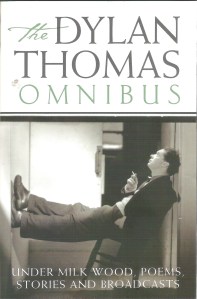 Dylan also is the sort of writer I’ve always wanted to be: A bohemian, pub crawling, boozing writer who fought with himself as he laboured to paint his word pictures. Whether that was really the case I don’t know but Dylan did like his pubs and he did enjoy a drink.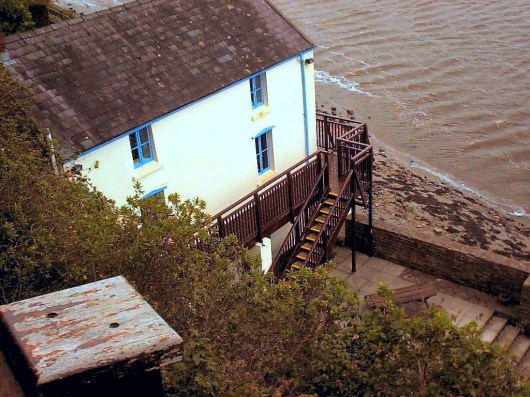
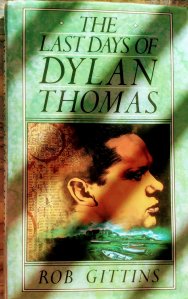 As you might have guessed from reading these posts, I really do love my books. One particular book pictured here, about the last days of poet Dylan Thomas is one I’ve had a long time but have not got around to reading until more recently. I do endlessly peruse our local secondhand shops for books but I have a feeling I bought this one from one of two online bookshops, either Abebooks or Awesome books, both of which I use especially when there is a particular book that I am after.
 I’ve been off work for quite a while with my sore arm and neck and even though I don’t feel quite right I’ve started to think that perhaps I won’t ever be fully ‘normal’ again. I said as much to my physio and he didn’t agree. Keep doing the exercises he reckons and one day I’ll be back to my usual fitness. OK, that’s pretty positive so I’ll just keep calm and carry on, what else can anyone do? Well, I can go back to work for a start, which is what I did this week. It was a little odd at first but by the second day, it felt as if I’d never been away.
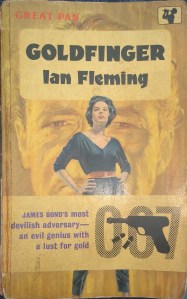 The James Bond Books by Ian Fleming.
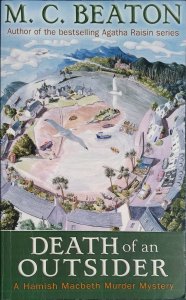 The Hamish Macbeth series by MC Beaton
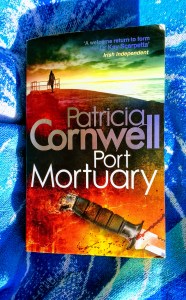 The Kay Scarpetta Series by Patricia Cornwell
 As usual on this blog I’ll be talking about books, films and TV and what started me off on this theme of prisons and prisoners was watching my box set of the 60’s TV series the Prisoner. Anyway, I’ll get to that shortly but first let me start with a book. It’s one I reviewed earlier in the year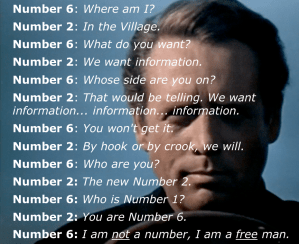
 Papillon by Henri Charrière
 The Wooden Horse by Eric Williams
 On her Majesty’s Secret Service by Ian Fleming
 Death of A Dreamer by MC Beaton
 I really do love books and reading. My idea of heaven is lying by a pool in somewhere like Lanzarote with the sun shining and a book in my hand. What is important for a good read is time. It’s alright to read a book on your lunch break or on the bus travelling home after work but to really get into a book, some uninterrupted time is important. So, what is really so good about reading? You, the reader must like reading otherwise you probably wouldn’t be reading this but for me reading is about connecting with worlds I will never see and connecting with my own world too; finding that I’m not as unique or as different as I had thought and that other people have had similar experiences to me.
 The Wooden Horse was written by one of the actual escapees, Eric Williams. He was an RAF pilot shot down over Germany and imprisoned in 1942 and in 1950 the book was made into a classic WWII film.
 Under normal circumstances I might go on to talk further about my favourite books but I have done that already. I think I did my top
 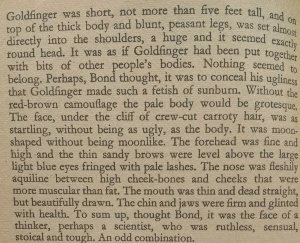 At school in English class our teacher had asked us to bring in a book with a vivid description of someone and my choice was Goldfinger. The book is about a man called Auric Goldfinger, a rich businessman who is suspected of smuggling gold. Bond is tasked to find out more and Fleming gives the reader a particularly compelling description of Goldfinger. Fleming describes him as having a body seemingly put together with parts of other people’s bodies. I always thought that was pretty good. Fleming used to write his first drafts of a book and then add in all sorts of details afterwards like the vodka martinis that James Bond liked so much and the Sea Island cotton shirts that Bond favours in the novels. It was actually Fleming who wore those particular shirts and who drank vodka martinis and also preferred scrambled eggs for breakfast. Many people have speculated who Bond was based on and my feeling has always been that in fact it was Ian Fleming himself.
 My current read is a book I mentioned last week, Charlie Chaplin and his Times by Kenneth S Lynn. Chaplin was a music hall entertainer working for the great impresario Fred Karno. Karno regularly sent teams of entertainers to the USA and while there Chaplin was invited to make a film for Mack Sennett, the famous producer of comedy films. Chaplin’s films proved to be enormously popular and so Chaplin moved on to different studios, all for better and better money until he established his own studio. I’ve always found the early days of Hollywood to be fascinating and this book is no exception.
 This week the lockdown has eased a little here in the UK. Groups of six can now meet together in public places and soon we will be able to go to the pub once again, as long as we stay outside. No doubt pubs who don’t already have beer gardens or some sort of outside area will be scrambling to get one set up. It will be nice to go down to the pub or restaurant again and take another step towards normality.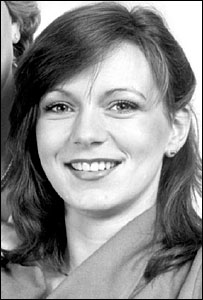
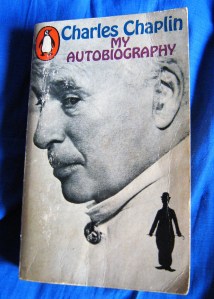 My Autobiography by Charles Chaplin.
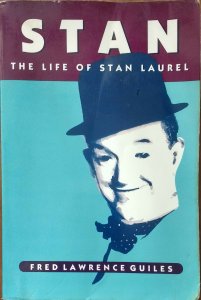 Stan, The Life of Stan Laurel by Fred Lawrence Guiles.
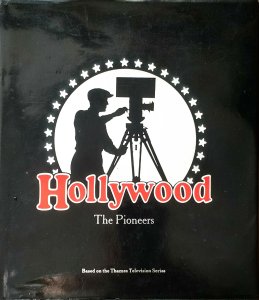 Hollywood.
 I do love books and like everyone I have my favourites. Last week I wrote about reading a blog post asking the reader for their top 5 books of all time. I decided to go one better and work out my top ten. I gave you the first five of my top ten books of all time and this week it’s time for the other five, all in no particular order.
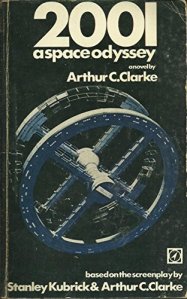 2001 A Space Odyssey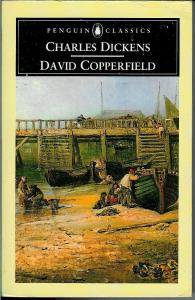
 The Da Vinci Code
