The Film of the Book or the Book of the Film

It’s always  a bitter-sweet experience when someone decides to make your favourite book into a film. It doesn’t always work out because maybe it was a big, thick, long book and they have cut out your favourite bit, or perhaps the cast wasn’t the one you imagined. It’s usually just the same in reverse. You see a great film and in the credits it says based on the book by so and so, then you rush out and get the book, and it turns out to be a little disappointing. Sometimes it’s even better than the film!
Anyway, here are a few of my film/book experiences.

The Horse Whisperer.
The book.
I picked up this book in a charity sale last year. This is what I said about it in Book Bag 4:

I’m not even sure why I picked up this book; it’s not anything I would normally be interested in. I bought it for a few pence at a church table top sale and I think I bought it one, because I wanted to give something, a few pence to the church fund and two, I faintly remembered the book had been made into a film with Robert Redford, although I had never seen it. The reviews on the back of the book said things like ‘a page turner’ and ‘the hottest book of the year’. Anyway, I bought it ages ago, and on a whim threw it into my book bag. I really hate having a book and not reading it.

From the beginning the book was a page turner giving a hint that something exciting and interesting was coming. I liked the idea of a horse whisperer; someone who could train a horse without hurt or pain, merely by whispering. I envisaged a native American Indian perhaps or some mystic horse guru. The fact is that the story of the horse is nothing but the background to a love story, involving a New York magazine editor and a Montana cowboy. Written in a sort of matter of fact magazine style, it turns out that writer Nicholas Evans is a screen writer and much of the novel reads rather like that, a screenplay, and each character comes with extensive background notes like the writer’s character notes on a screenplay. At the half way point this novel lost steam for me. I read it to the end but the ending was so contrived I was just glad to have finished it. Somewhat disappointing. Wonder what the movie is like?

The film.
The other day I noticed this film was showing on the Sony Movie Channel and set my hard drive up to record it. The result was an OK sort of film although a little on the slow-moving side. I’m tempted to say it was more of a woman’s film but Liz watched it alongside me and she wasn’t impressed either. I felt the casting was not right. Robert Redford just looked too smart and tidy to be a cattle rancher and cowboy. He actually looked as though he came from the Roy Rogers school of cowboying although he also directed the film. If I was casting I would perhaps have gone for someone like Kevin Costner perhaps, and the female lead, played by Kirstin Scott Thomas, needed a stronger, more assertive woman, perhaps a native New Yorker and not an English actress.

The ending was different in the film which was a good thing as the book’s ending was so poor as I mentioned above. Rotten Tomatoes report 74% positive reviews but sadly, I think I was part of the 26% negative ones.

2001: A Space Odyssey.
The film.
I first saw this movie back in 1968, which was quite a fascinating year for me. I wrote about the experience of seeing the film in a earlier post about film music and here is, in part, what I had to say:

I first saw the film in the summer of 1968. I was only 11 at the time and I remember my Mum being surprised I had spent hours at the cinema on a lovely hot day. I watched the film in the huge movie theatre in Northenden, now a Jehovah’s Witness assembly hall. There were only a few people in the picture house that day and it was wonderful having this huge place almost to myself and seeing this incredible film in 70mm on the big screen. I recall being somewhat confused by it all, especially the jump from Neanderthal times to the future, until I bought the novel by Arthur C Clarke which explained things in a way the movie did not.

2001 is a particularly visual film. Kubrick cut out a lot of dialogue because he wanted the film to stand as “basically a visual, nonverbal experience” that “hits the viewer at an inner level of consciousness, just as music does, or painting.”

2001

Picture courtesy Flickr.com

According to Wikipedia, despite the few people in the cinema with me that day in 1968, the movie went on to become the highest grossing North American movie of that year.

2001 set the pace for the sci-fi movie with its depiction of spacecraft drifting slowly and silently through space. The first Star Trek movie was heavily influenced by 2001 which made it look a little dated when the movie Star Wars was released and did the opposite thing, showing spacecraft whooshing across the screen at lightning speeds.

The book.
As I mentioned above, I was rather confused by the film and there were quite a few moments when I was wondering what was actually happening, for instance the jump from Neanderthal times to the future, the moment when the monolith sends its deep space signal and various other things too. I went out and bought the book by Arthur C Clarke and went straight into a wonderfully well written, plausible space adventure. All the technology that Clarke wrote about had its origins in science fact, both the space missions and the computer technology which make up the main parts of the story. If you have never seen the film or read the book (shame on you) 2001 is about a mysterious monolith which appears on earth in neolithic times and helps the ape men of the day to develop. Later, in the future, the mysterious monolith is found buried on the moon and when it is exposed to sunlight for the first time, it blasts off a signal to Saturn. (In the movie the destination is Jupiter, as director Stanley Kubrick thought that the special effects department would struggle to create Saturn’s rings.)

Anyway, the scientists of the day decide that the monolith is part of some extraterrestrial intelligence and set up a manned space mission to investigate. As the mission progresses, the onboard computer, HAL, decides to have something of a nervous breakdown which creates an unexpected hazard for the crew.

Verdict: The book is a wonderful read, one of the classics of science fiction and the movie has deservedly become one of the most influential films of all time.

The Great Gatsby.
The book.
I can’t really remember when I read this book for the first time. It was many years ago and ever since, this short novel has been in my personal all time top 10 reads. The story concerns Jay Gatsby who lost out in the love stakes because he was born on the wrong side of the tracks and not an appropriate suitor for the lovely debutante Daisy. Off he goes to the first World War, comes home to the USA a much more worldly-wise fellow than when he left and one way or another he becomes a millionaire.

Gatsby has a huge mansion in the Long Island suburb of West Egg. Renting a cottage in the grounds is the book’s narrator, Nick Carraway. Nick is fascinated by the lavish parties held at the mansion and soon meets Gatsby himself. It turns out that Gatsby’s parties are a device, a lure to attract the beautiful Daisy who Gatsby still loves and hopes will one day come to him like a moth to a flame.

It’s a simple story of love and desire but it becomes something much more in the hands of the author F. Scott Fitzgerald. I often think of it not as a short book, but as a long lyrical poem that has an intrinsic beauty fashioned by the most wonderful turns of phrase. In particular I love the last page and this final paragraph:

Gatsby believed in the green light, the orgastic future that year by year recedes before us. It eluded us then, but that’s no matter. Tomorrow we will run faster, stretch out our arms farther. . . . and one fine morning . . So we beat on, boats against the current, borne back ceaselessly into the past.

The Film.
I noticed on the Internet that there was a 1949 version with Alan Ladd which I have never seen but the latest film version was released in 2013 and starred Leonardo DiCaprio with Baz Luhrmann as director. That particular film had been lying dormant on my hard drive recorder for quite a while, just waiting for a quiet few hours for me to watch. As I was part way through this post this seemed to be the perfect opportunity to start it up. So, I settled down with a glass of French red and clicked the play button.

The first part of the movie didn’t really do it for me and the depiction of Gatsby’s famous parties seemed more like a music video than anything, especially with the strange substitution of modern techno music for the jazz music of the time.

Later on, the picture comes into its own. Leonardo DiCaprio is good, indeed very good as Gatsby. Overall, tone down the special effects and the music video feel and this could have been an outstanding film adaptation.

The film version I adore though is the one from 1974 starring Robert Redford as Gatsby and Mia Farrow as the fragile Daisy. I may have written above about Redford being miscast for the Horse Whisperer but he is perfect as Gatsby, so much so that now, whenever I re-read the book I always see Redford’s face in my mind.

The screenplay was by Francis Ford Coppola who directed The Godfather and there are some memorable moments in the film. One of the ones I like particularly is the one where one of Gatsby’s associates is introduced to Nick, thinking him one of Gatsby’s dubious business connections. Redford as Gatsby, firmly but politely indicates a mistake has been made and we get a hint at something questionable behind Gatsby’s facade. Is he a gangster or a bootlegger perhaps? Another is the moment when Gatsby and Nick meet at one of Gatsby’s parties. Nick doesn’t realise he is talking to Gatsby himself when he says he doesn’t even know who is Gatsby is!

Verdict: Brilliant book and a lovely film.

Lost Horizon.
The Book.
I picked up this wonderful gem of a book at charity shop years ago for the bargain price of twenty-five pence and if I could convert the pleasure this book has given me into pounds, shillings, and pence, it would be a figure that far eclipses that initial outlay. James Hilton has become one of my favourite writers and one of my personal writing heroes. (Check out my blog about him here!) This highly original novel reflects the fear and sadness that many must have felt in the days before World War 2. There must have been a feeling then that with new technology, the approaching conflict could be the end of civilisation.

In this wonderful book, a group of Lamas in a monastery, hidden from the world by a chance of geographical fate, decide to look ahead and make sure that the riches of the world, not gold or silver, but literature, art and music, should be preserved should a holocaust engulf the world. To ensure that their creed of respect and compassion endures they kidnap a British diplomat, Robert Conway, to carry on their work and set about bringing him to Shangri-La. Shangri La is a small community in Tibet insulated from the world by mountains on all sides and the people here enjoy unheard of longevity.

Despite his capture Conway is taken into the confidence of the High Lama and given his task of continuing the community and its traditions, but his fellow captives have differing ideas, especially Mallinson, his young vice-consul who is desperate to escape.
The story is told in an interesting way, one that enhances the mystery by a chance meeting between civil servants, one of whom is anxious to talk about Conway and his mysterious disappearance. The story is told about how Conway is found in Tibet with a loss of memory and how his memory suddenly returns and Conway tells of his abduction and escape from Shangri-la. I have to admit that this novel is one of my top ten books of all time, and one I return to time after time.

The Film.
Directed by Frank Capra and starring Ronald Colman, Lost Horizon was shot in 1936 and went seriously over budget. Issues that contributed were scenes shot in a cold storage area, used to replicate the cold of Tibet. The cold affected the film equipment and caused delays. There was also a great deal of location shooting and scenes where Capra used multiple cameras shooting lots of film. Wikipedia reports that the first cut of the film ran for six hours! Studio Boss Harry Cohn was apparently unhappy with the film and edited it himself, producing a version that ran for 132 minutes. Further cuts were made and as a result, Capra filed suit against Columbia pictures. The issue was later resolved in Capra’s favour. The film did not turn a profit until it was re-released in 1942. A frame by frame digital restoration of the film was made in 2013 and various missing elements of the film were returned, including an alternative ending. Sadly, some of the visual elements were so poor that they have been substituted with stills as only the soundtrack was useable.

Ronald Colman is superb as the hero of the film, the slightly world-weary diplomat and politician who finally comes to believe in the ideas of Father Perrault, the High Lama, who wants to keep safe the treasures of the world until the famine of war has passed by.
This movie adaptation is nothing short of wonderful, in fact it is one of my favourite films of all time.  If you see this movie on DVD make sure you take it home and settle down for a wonderful film experience.


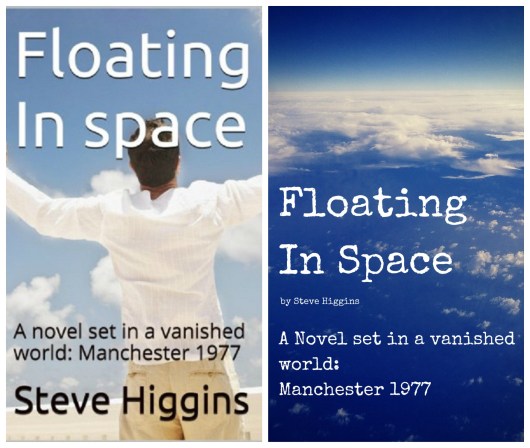
A book written by the author which sadly has yet to be made into a film is Floating in Space, set in Manchester, 1977. Click the links at the top of the page for more information.

Soaps, Comedians and a DVD: This year’s Christmas TV

Now we are well into 2018 I thought I’d take a quick look back to the recent Christmas and New Year TV. I don’t know about you but for me it just wasn’t really up to standard, at least not on terrestrial TV or ‘proper’ TV as I call it. Christmas on proper TV was all about soaps, Doctor Who and old shows from the TV of yesteryear.
Coronation Street.

Eastenders has never been my cup of tea but I do like Coronation Street. What has been a little disappointing this year is that this soap, set in my home town of Manchester, has drifted away from a lot of the things I used to like about it. It’s not as ‘northern’ as it used to be, or as funny as in the Jack Duckworth and Hilda Ogden days and the current storyline about Pat Phelan which involves kidnapping and murder is just not what I want. I just wish Pat would go away and we could return to storylines about affairs, illicit relationships, and domestic issues with a large dose of tongue-in-cheek humour thrown in. In a recent Coronation Street special about Jean Alexander, who played the warbling Hilda, the many funny and amusing sides of her character were shown, including a very sad and touching  moment when she returns home after the death of her husband and opens a bag of his effects, clothes and spectacles and so on. The sight of these few simple items reduced Hilda to tears -and many viewers along with her. Those were the days when simple observations like that, some sad, some funny, took the series to ever higher dramatic standards.

Doctor Who.

Another Christmas broadcast that was pretty enjoyable was this year’s Doctor Who special which reunited the current doctor with the original, recreated by actor David Bradley and linked together their regenerations. Just to explain, Doctor Who is the UK’s longest running sci-fi show and one aspect that has helped it continue is that when the lead actor leaves the show, the doctor ‘regenerates’ into a new personality, and of course, a new actor. In this case, Peter Capaldi is leaving and Jodie Whittaker is the new and controversial female doctor. Sound a bit weird? Well, sounds very odd to me. It’s rather like those things you hear on the Internet where people call for a black or even a female James Bond. Bond of course is a white, upper class male and that is the only way to play him. A female Doctor Who? How that will work out is anybody’s guess but this year’s Doctor Who was a good episode, if a tad wordy which is the main problem for me with the modern version of Doctor Who.

Sarah Millican.

Sarah Millican, just for those who have never heard of her, is a Geordie comedian and on Christmas day Liz and I watched three of her stage performances back to back on one of the Freeview channels. Sarah isn’t for me a laugh out loud kind of comedian but she is amusing. She is one of those observational comedians, the ones who take nondescript things and make them into funny monologues. Think Peter Kaye and Garlic bread or Michael McIntyre and bad breath. I tend to prefer my comedians to just tell jokes the old-fashioned way but no, that’s not the way comics work these days. One of the funniest moments in Sarah’s routine was one in which she overheard three older ladies talking about what they would do if they became men for a day. One of the women answered, ‘knowing my luck I’d get a Tuesday –and what can you do on a Tuesday?’

As I watched these three performances, all pretty amusing, I started thinking how I could make some of my blogs into a comic routine. (They call them ‘stand up’ comedians these days so I wonder how they would class Dave Allen, the comedian who used to sit on a stool with a glass of whisky nearby?) Anyway, take one of my posts like The day the Cat War Started perhaps. That might make a reasonable comedy monologue. Introducing the neighbours, then the cats, then the confusion of the cats I was supposed to be feeding while my neighbours were away. Possible career change? Well, perhaps not!

There’s Something about Mary.

A great deal of this Christmas and New Year TV I haven’t watched ‘live’ as it were, I just pressed the record button and kept them for a quieter day so I have yet to see 50 years of Star Trek and a couple of Star Wars documentaries from BBC4 but I did watch ‘There’s Something about Mary‘ on New Year’s Eve as we declined to venture out in the face of a major rainstorm. We could have gone out later I suppose but by then the fire had been lit, the wine had been poured and the cheese was warming. The TV guide mentioned something about this film being a ‘movie classic’. Now to me, a movie classic is something like ‘All About Eve’ with Bette Davies which was shown on TV over Christmas but, sadly, I neglected to record, or ‘Lawrence of Arabia’ which I mentioned in a recent post. ‘Mary’ was mildly amusing with the occasional funny scene but was not, I must insist, a film which could now or ever be mentioned in connection with the phrase ‘movie classic’.

Harry Potter films and TV soaps seemed to be the main factor in this years TV schedule. I looked in vain to find a major new movie but the only one I could see was Spectre, the most recent James Bond film which was shown on New Year’s day. Pity really because I happened to be working then. Oh well, 50 Years of a Star Trek is still there on my hard drive so I look forward to the end of one of my late shifts when I might just start it up and relax with a glass of port.

The Intruder.

One final film, and it’s not one that you will find in the TV guide. The Intruder was a DVD that appeared in my Christmas stocking and is one of those classic British films starring the wonderful Jack Hawkins and a whole host of familiar faces from British films of yesteryear. Set in the 1950’s, former army Colonel Merton played by Jack Hawkins returns home to find he is being burgled by one of his own former wartime platoon members, Ginger, played by Michael Medwin. Ginger runs off when he thinks Colonel Merton has called the Police so the colonel decides to track the man down. He visits his former army comrades and they each tell a story in flashback that builds up a picture of Ginger, his life and that of his comrades. It must have been strange to have lived through the intensity of war and then to return home to rationing and shortages and the near normality of post war Britain. The film, directed by Guy Hamilton who also directed some of the early James Bond films, captures all that perfectly.

Despite the host of cable and satellite TV channels available these days, it’s a shame that sometimes you have to crank up the DVD player to find something worthwhile to watch.


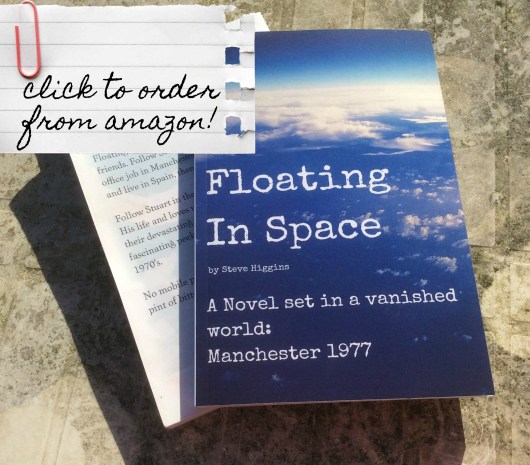
Steve Higgins is the author of Floating in Space, a novel set in Manchester, 1977. The book is available in Kindle or paperback formats. Click the icon below to go straight to Amazon.

Floating in Space

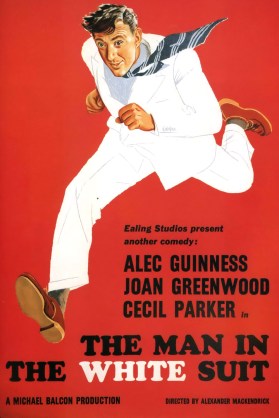
The Men in White Suits

Alec Guiness.

In case you haven’t seen it, and I can’t imagine for a moment that you haven’t, The Man in the White Suit was a British comedy film made by Ealing Studios in 1951. The film starred Alec Guinness as Sydney Stratton, a scientist and researcher specialising in man-made fabrics. His dream is to discover an everlasting fibre that never wears out. He is dismissed from numerous jobs because of his demands for ever more expensive facilities. Circumstances occur where he becomes an unpaid researcher at the hi-tech Stratton Mill where he finally discovers his new fibre. Sydney is over the moon as he wears his prototype indestructible suit for the first time. His new cloth is about to be revealed to the world but panic sets in; will this mean the end of the industry? After all, surely there will only be one lot of cloth to be made as it never wears out? Both union and senior executives in the textile industry unite to prevent the fabric coming out to the public domain but mill owner’s daughter Daphne Birnley, played by the husky voiced Joan Greenwood, strives to help Sydney to pursue his dream.

At the end of the film an angry mob who have pursued Sydney are united in laughter when the fabric becomes unstable and Sydney’s white suit falls apart.

One of the highlights of the film is the sound effect we hear whenever Sydney’s research apparatus is revealed. It is a rhythmic burbling sing-song sound that becomes a sort of musical motif for Sydney Stratton. At the end of the film he goes on his way and looking at his notebook has a thought, has he realised what was wrong? The burbling sound fades in as Sydney walks away.

Paul Sinha. (Picture courtesy Daily Express)

Paul Sinha.

I don’t know about you but weekday afternoons just wouldn’t be the same without the Chase. The Chase is a TV quiz show where four contestants try to build up a prize fund then play against the ‘Chaser‘, a seasoned quizzer, to take home that fund in the Final Chase. Sometimes the contestants win, sometimes not. Mark Labbett is the perhaps the most well-known chaser. He is known as the ‘Beast’ and is a former schoolmaster who had a success on the TV show ‘Who Wants to be a Millionaire’. Anyway, my personal favourite is the Sinnerman, Paul Sinha. Paul began a stand up comedy career in London while he was a junior doctor. He has appeared on his own radio show and as a quizzer competed in University Challenge, Mastermind, and Brain of Britain. Paul joined the Chase in 2011 as the fourth Chaser. His nicknames include the ‘Sinnerman‘ and ‘Sarcasm in a Suit’. He is a smiling, witty and erudite competitor and always wears his trademark white suit.

David Essex.

David Essex was a performer who made his name in the early seventies although in his youth he had ideas of becoming a footballer. He played the lead in the stage musical Godspell and then went on to star in the film ‘That’ll be the Day’. I remember seeing his album in a record shop and thinking what a cool dude he looked in his white suit. The album was ‘Rock On’ and the single of the same name went to number 3 in the UK charts in 1973.

The next year David released one of my all-time favourite tracks ‘Gonna make you a Star’ which went all the way up to number 1. He also appeared on the double album ‘Jeff Wayne’s War of the Worlds’ and went on to star in the musical ‘Evita’. In 2011, he joined the cast of TV soap ‘EastEnders’.


Steve Higgins.

When I saw David Essex singing ‘Rock On’ wearing a white suit on ‘Top of the Pops’ for the first time, I thought he was the epitome of seventies cool and it occurred to me that one way to transform my gangling self-conscious self into something better might be to get that very same white suit. I couldn’t afford a suit at the time so I settled for a jacket, a white jacket, and I well remember admiring myself in the mirror before my first Saturday night out wearing it, sometime back in 1973.

The first problem I encountered with the jacket came on the bus into town. I sat on the back seat and in those days, the back seats of our local buses were a little notorious for being dusty and grimy as they were over the engine and absorbed all the engine fumes. Also there were people who put their feet up on the seats leaving marks to which people like me (the twerp in the white suit) were highly susceptible. Another thing is that all my life I have been cursed with being clumsy and once I had met up with my friends I somehow managed to spill beer all down my sleeve. Anyway, the night went on, more or less successfully. I certainly remember having a good time although the white jacket failed in its primary function; that of attracting gorgeous girls. Later on we stopped at the kebab shop and somehow a sizeable portion of chilli sauce managed to attach itself to my jacket. Rather than feeling like David Essex, I felt a little like Alec Guinness in the aforementioned ‘Man In The White Suit‘, wanting to get away from everyone! I never wore the stained jacket again and it lingered sadly in the back of my wardrobe smelling of kebab, chilli sauce, beer and diesel fumes until my Mum, on a major clean up splurge, decided to throw it out.

Of course, it could have been worse: I could have gone out wearing jeans, a white t-shirt and a red jacket and tried to look like James Dean! (Actually, that was another night!)


What to do next: Here are a few options.

Share this post on your favourite social media!

Hit the Subscribe button. Never miss another post!

Listen to my podcast Click here.

Buy the book! Click here to purchase my new poetry anthology.

Click here to visit Amazon and download Floating in Space to your Kindle or order the paperback version.

Surveyors, Inspectors, and Lawrence of Arabia

I started thinking about regrets the other day. Bit of a waste of time, you might think. Regrets? What’s the point? Oh well, two big regrets in my life are both work orientated. Let’s take a closer look.

Surveyors.

The first one was way back in the late seventies when I was a lowly clerk in an assurance company in Manchester. I worked in the estates department and I had a lovely job there. It involved collecting the rental we were due for our properties in the city centre. Then I had to sort out the wages for our cleaning staff in Manchester and liaise with caretakers to order cleaning products such as bleach and so on. I remember when we converted from hard toilet paper to soft, our toilet paper bill shot right up. I was tasked with getting to the bottom of that issue (excuse the pun!) which turned out to be staff using the soft toilet paper as paper hankies! I so enjoyed writing that report.

Sometimes I went out with the surveyors to help them take measurements of properties and I jotted down notes for the surveyor and carried his gear, stuff like that. It got me out of the office for hours at a time and usually the surveyor and I would have to time to take on board a few beers as our junior surveyor was a fellow who enjoyed his ale.

One day my boss, the venerable Mr Ross, called me into his office and said the surveyors wanted me to join their department and train to become a surveyor. Wow, you might think. That’s not an offer that comes to a young eighteen year old clerk every day. The thing is, I turned it down. Yes, I declined that rather excellent offer on the grounds that I was young and the estates and surveyors offices were staffed by a lot of old (well, middle-aged) people. I asked for a transfer and was sent to IA/1, an internal accounts office, full of young people like myself but actually a deadly dull boring job. What a fool I was. Just think, today I could be a successful surveyor with perhaps, a property portfolio on the side. Yes, that was big mistake number 1.

Inspectors.

Regret number 2. This came years later when I was a bus driver. There was a time when I liked this job, running up and down the byways of Greater Manchester as a bus conductor or driver, chatting up the girls and generally having fun. Of course drivers and conductors meant that two wages were being paid out by the bus company; so much easier just to pay out one; that’s when the idea of one man buses caught on. Then I became a rather self-absorbed chap driving a bus up and down the road and taking fares. It was a lonely life and the worst thing was that when something relatively minor cropped up, say someone cut in front of you and you had to slam the brakes on, there was no conductor to talk to about it, no one to say ‘he was a pillock wasn’t he?’. The result was that you’d tend to think about it over and over until a minor thing became a big thing.

One day the company advertised for two Inspectors, one for the Ardwick depot, not far from where I lived and another for Rochdale depot, well over the other side of Manchester. I applied and had rather a good interview. I was asked to step outside the interview room for a while and when I came back the spokesman for the interview panel asked me which job I was interested in. ‘Well, the Ardwick one,’ I answered. ‘What if we offered you the Rochdale one?’ they asked. Well, what could I do? How could I even get to Rochdale? I had no car, no personal transport. Anyway I said no, I couldn’t take the job. Big mistake number 2!

I often think what could have happened if I had done the right thing and said yes. I could have bought a car with my new improved Inspector’s salary or even moved to Rochdale and started a new life there. After all, I was a single man, I might have made new friends, made a whole new life. Well, like Frank Sinatra, I can only say;

Regrets, I have a few . .

But then again, too few to mention . .

Lawrence of Arabia.

Anyway, that brings me to today’s classic movie, Lawrence of Arabia, that fabulous 70mm classic directed by David Lean.

In one part of the movie Lawrence – played by Peter O’Toole – and his arab army are plodding through the Nefu desert, a normally impassable stretch of land described by one of the characters as the sun’s anvil. Lawrence and his arab irregulars decide to cross the desert and attack the coastal town of Aqaba, coming from a direction the enemy Turks would not expect. One morning the travellers realise that one of their number, sweltering in the desert heat, has fallen asleep and slipped off his camel into the sands. Lawrence decides to turn and rescue the man despite assurances that he will not make it. ‘The man is surely dead,’ Lawrence is told. It is written. Despite this, Lawrence turns and rides back into the desert.

Later he returns to the group a hero having saved a man from the desert. He whispers hoarsely to Omar Sharif, ‘nothing is written’ before collapsing into his sleeping bag.

Later still, shots are fired in the desert encampment. A man has been robbed and killed and the various tribes, brought together by Lawrence, are ready to defend their honour. The culprit is found and must die but his death will only bring forward a feud.

Lawrence  argues that he is a man without a tribe, and so he will execute the criminal and honour will be kept. Lawrence takes out his revolver and the doomed man is revealed; only then do we see that the man is Gasim, the man Lawrence saved from the desert. Lawrence shoots him dead, the alliance is saved. Lawrence turns sadly away.

‘What is wrong with him?’ asks one of the arabs.

‘That man he killed, it was the same man he rescued from the desert.’

‘Ah,’ says the man, ‘then it was written . .’

So if that is the case, that everything is written or preordained, then perhaps even if I had accepted that Inspector’s job or become a surveyor, my life might still have turned out the same and here I would be, whatever my life’s choices were, writing blogs and Tweeting about Floating in Space!

What do you think?


Floating in Space is a novel set in Manchester, 1977. Click the links at the top of the page for more information or click the picture below to order now from amazon!

Floating in Space

No Hiding Place and the Mexican Grand Prix

No Hiding PlaceI should start this post by explaining something. My blog posts have a sort of gestation period, usually about three weeks. I think of an idea and type out a few notes or a first draft. Sometimes I put it on my workstation and add to it as the day goes on and quiet moments appear. At home I’ll go over it again adding bits here, changing the language there. Sometimes I write about something topical and of course, by the time the post is published, the incident or event or TV show I’m writing about happened some time ago, so for the reader, it’s hardly topical at all! What is worse is that sometimes I shove something in ahead of schedule, making the post that was due to be posted even more out of date. Bit of a nightmare for readers I know so cast your mind back a few weeks. In the UK it was sunny but cool. Remember the weekend of the Mexican Grand Prix? Right, so here we go . .

The Mexican Grand Prix was the eighteenth race of the year, just this weekend’s Brazilian Grand Prix and the Abu Dhabi race left to finish off the 2017 season. As I am far too tight to subscribe to Sky TV and their Formula 1 channel, I have to make do with the terrestrial broadcast over at Channel Four. I say make do but that’s a little unfair, the F1 coverage over at Channel Four is actually very good indeed. David Coulthard is an excellent commentator and pundit and his colleagues, Ben Edwards and Karun Chandhok are excellent. Also making occasional appearances are Mark Webber, Eddie Jordan and Suzie Wolff, and together they make a great team. Sadly, not all the races are live and such was the case of the Mexican event. It turned out that Mexico was a key race with the possibility of Hamilton clinching his fourth world crown. Both the qualifying session and the race were broadcast late -after ten at night- so I set myself the task of not seeing the results until I watched the broadcast. Luckily I wasn’t at work so colleagues telling me about the race or feeding me dud information wasn’t an issue.

On race day I wasn’t actually sure what time the event was actually taking place. Was Mexico behind the UK or ahead? I could check the internet but then that gave rise to the possibility of seeing something like an e-mail about the event. I subscribe to a number of F1 web sites and their e-mail newsletters always have the winner’s name in the subject so e-mails and Internet were a no-no. Liz wanted to go into Lytham for some event on the sea front but again, that threw up the possibility of seeing someone, friend or foe, who would blab the results. No, the only answer was to stay indoors, shun contact with anyone and everyone, lock the doors and watch recorded TV only.

I pulled up my favourite comfy chair and found I had an episode of ‘Who do you think you are?’ featuring J K Rowling to watch, and very fascinating viewing it was too. I didn’t really know much about J K Rowling other than she has penned one of the most well read book series in modern publishing history and the programme was very interesting, so much so it spurred me to find out more about her. Apparently, the idea for Harry Potter and the school of wizardry came to her fully formed on a delayed rail journey from Manchester to London. She moved to Edinburgh after the failure of her marriage and wrote her first novel while on benefits. Much of the writing was done in local cafes where she walked with her baby daughter. The pram journey in the fresh air sent the youngster to sleep and J K was free to write. The K was actually an addition to her name by the publishers. They thought J K Rowling sounded better than J or Joanne Rowling.  The programme traced her French great grandfather’s origins in France and learned he had won the Croix de Guerre in the First World War. It was wonderful to see various grand and important archives give up their dusty old secrets.

In 2016 The Sunday Times Rich List estimated Rowling’s fortune at £600 million, a tidy few quid more than I have made from Floating in Space. I have never read any of the Harry Potter books or even seen the films so perhaps I should put them on my reading list.

Anyway, that programme took us to just after lunchtime so I chanced a look on my Ipad. I thought Ebay would be a safe site, no F1 news there. I looked at a few things and with Liz’s help tracked down a new phone which, when it arrives, will enable me to join the smart phone brigade.

Time for some tea and an afternoon/early evening film. I had recorded A Good Year the previous day which was a romcom directed by Ridley Scott. I had not seen the film before and it was reasonably pleasant but it had a lot of irritating faults that could have easily been removed to make it into a really good film. The photography was lush and atmospheric but the editor seemed to have chopped and cut it together rather haphazardly. There were flashbacks to the youth of the Russell Crowe character which I wasn’t sure were flashbacks at first. The soundtrack was dreadful and Russell Crowe was just totally miscast. His english accent was odd and his haircut even odder. I can imagine maybe Hugh Grant or some genuine Englishman would have been more believable. An enjoyable film but it could have been so much better.

When I stopped the recording, our hard drive recorder switched to the BBC news and to my horror, I heard the announcer talk about Lewis Hamilton’s fourth world championship! No! I quickly flipped over to another channel. Okay, Hamilton may be world champion but did he win the race? Perhaps Bottas or Vettel had won. Raikkonen has looked good this year; was he in with a shout?

Finally, 10.30 pm came and I sat back to watch the race. Hamilton came 9th and Max Verstappen was the winner. Sebastian Vettel came fourth. He and Hamilton had a coming together on the first lap. Vettel recovered better than Hamilton but fourth place was not enough to deny Lewis the championship. Not a great race but I was pleased that I had come though the day and watched the race highlights without knowing the eventual winner until I finally watched the race.

The whole thing reminded me of a Likely Lads episode I remembered from way back, in an episode called No Hiding Place, James Bolam and Rodney Bewes try to avoid hearing the result of a football match until the highlights are shown that evening. I know how they felt!


If you enjoyed this post then why not try my book, Floating in Space? Click the links at the top of the page for more information or watch the video below . .

Charlie Chaplin: Autobiography versus Biography

Earlier this year again, Liz and I packed up the motor and headed off to France. One of the first things I did in preparation was to sort out my holiday book bag. I usually have a stack of unread books to take along but I always like to take along a banker, yes that’s a book I can bank on, rely on to be a good read, usually one I have read before.

I was sorely tempted to bring my favourite read of all time along, Dickens’ David Copperfield or another favourite holiday read ‘A year in Provence‘, that much maligned gentle read about an Englishman living in France, however, one book I chose was so interesting I re-read a great deal of it at home before I left so I didn’t bother to bring it. The book in question was My Autobiography by Charles Chaplin, Charlie, to you and me.

My Autobiography by Charles Chaplin.

Charlie was born in 1889 in Walworth, London and spent his early life in the London suburb of Kennington. His parents were both music hall performers but separated when Charlie was about two years old. His mother was poor and the small family, Charlie, his mother and older brother Sydney, were admitted to the workhouse on two separate occasions.

In 1903, Charlie’s mother was committed to Cane Hill mental asylum and Charlie lived on the streets alone until his brother Sydney, who had joined the navy, returned from sea.

With his father’s connections Charlie secured a place in a clog dancing troupe called the Eight Lancashire Lads and so began his career as a performer. After appearing in some minor roles in the theatre he developed a comic routine and, with help from Sydney, was signed by Fred Karno, the famous music hall impresario, for his comedy company in 1908.

Chaplin became one of Fred Karno’s top comedians and Karno sent him with a troupe of other comedians on a tour of vaudeville theatres in the USA. One of the others was Stan Laurel, later to find fame with the comedy duo Laurel and Hardy.

By  far the most interesting part of Charlie’s autobiography is where he talks about the beginning of his movie career. On a second tour of America in 1913, Chaplin was asked to join the Mack Sennett studios as a performer in silent films for the fee of $150 per week. He wasn’t initially keen but liked the idea of starting something new.

His first film for Sennett was called Making a Living, released in 1914. Chaplin himself wasn’t so keen on the film and for his second appearance selected a new costume. After searching through the costume department Chaplin chose a bowler hat, a jacket that was too small, baggy trousers, shoes that were too large and a cane. It almost seems as though the clothes made him become the character of the tramp which was to make him famous. The film was Mabel’s Strange Predicament although another tramp film made afterwards, Kid Auto races at Venice, was released to the public first.

Chaplin clashed frequently with his directors when his ideas or suggestions were dismissed but after exhibitors asked Sennett for more Chaplin films he was allowed to direct his own. When his contract expired in 1914 Chaplin asked for 1000 dollars per week. Mack Sennett complained that that figure was more than he was getting and refused. Another film company Essanay, offered him $1200 per week and a signing fee and Chaplin signed. He wasn’t initially happy with Essanay and didn’t like their studios in Chicago, preferring to work in California.

Chaplin was also unhappy after he finished his contract at Essaney because they continued to make lucrative Chaplin comedies by utilising his out-takes. Chaplin was however an astute businessman. In his new contracts the negative and film rights reverted to Chaplin after a certain amount of time. This was in the days when a movie had a life of months, if not weeks.

Chaplin seems strangely perturbed by his fame and fortune. He writes about an incident between contracts where he takes the train to meet his brother in, I think, New York but word has got out to the public he is travelling and everywhere the train stops, masses of people were waiting. Eventually it dawns on him that it is he they were waiting for. Many times the narrative describes meals and walks taken alone giving the impression of a solitary, lonely man.

The thing to remember about reading this book is that Chaplin tells the reader only what he wants them to know, nothing more. His various marriages are only skimmed over although when he is making the Kid, probably his most important picture, he explains how he thought the negative may have be taken by lawyers acting for his estranged wife so he takes the film and edits it while almost ‘on the run’ in various hideaways and hotel rooms.

Chaplin was known for being attracted to young girls and one of his conquests, a girl called Joan Barry was arrested twice for her obsessive behaviour after he ended their relationship. She became pregnant and claimed he was the father and began a paternity suit against him. J Edgar Hoover who believed Chaplin to be a communist, engineered negative publicity against him and public opinion began to turn against Charlie. He was ordered to pay child support to Barry’s baby despite blood test evidence which showed he could not be the father. The blood test evidence was ruled inadmissible.

The earlier part of the book is by far the most interesting but the later part, where Chaplin is famous the world over, it becomes an excuse for name dropping, despite there being a clear absence of any notable anecdotes involving the famous names. Even his best friend Douglas Fairbanks, makes few appearances within the pages.

A fascinating read none the less.

Charlie Chaplin by Peter Ackroyd.

Peter wrote an excellent book about one of my writing heroes, Charles Dickens and I felt that this book was going to be in the same sort of mould. Long, intense and full of detail. Actually it’s a pretty slim volume and not the intense scrutiny of Chaplin that I was expecting. However, on the credit side, it’s a thoughtful and detailed look at Chaplin, his movies and his personal life and a cracking read it is too.

One hundred years ago Chaplin was the most famous man in the world. I’m not sure who would qualify for that title today as despite global communications and the Internet age, the world is separated by many different languages and cultures. A hundred years ago there was no language barrier for Chaplin, and his silent films with their universal language of comedy, went all the way round the globe and he was as famous in countries such as Russia or Africa as he was in Europe or the USA.

Hollywood in the early part of the twentieth century must have been a fascinating place and this book is a great starting point to find out about Chaplin and his work and the beginning of the film industry. Definitely a book well worth reading.


Floating in Space can be ordered from amazon as a Kindle download or as a traditional paperback by clicking here. Click the links at the top of the page for more information.

Some Random Sun lounger Thoughts (part ?)

As I  have probably mentioned, Liz and I are on holiday for five lovely weeks in France and the other day it was with some trepidation that I heard the bat phone ring. Yes, the bat phone, that urgent direct line back to the UK and stevehigginslive.com tower, the hub of the stevehigginslive.com empire.

I answered and at the other end of the phone was one of my deputy managers advising me that an issue had occurred with last week’s Thoughts from a Sun Lounger post. As my usual readers will know, this is part of a regular series in which I expound on the often random thoughts that occur to me in that chilled, relaxed and generally other worldly state that I enter when lying on a sun lounger, fresh from a bout of gentle swimming in the pool.

‘What was the problem?’ I asked.

Turns out there was a mistake in last week’s Sun Lounger Thoughts part 4, despite extensive checks by the blog titling and numbering department. Perhaps they were getting a little lax up there in stevehigginslive.com tower while the boss was away but for whatever reason, Sun Lounger Thoughts part 4 had been inexplicably named Sun Lounger Thoughts part 4 when there was already a Sun Lounger Thoughts part 4 in existence!

Mon Dieu was all I could say, as after a few weeks in France, I was fully immersed in the French idiom, culture and customs as well as the gallic language. How many waiters could have guessed that Monsieur, the suave homme who deftly requested ‘une table pour deux‘ or ‘une bouteille de vin rouge au restaurant’ was in fact an English tourist? I know the baseball cap with ‘Team GB’ emblazoned on the top gave the game away a little but what the heck.

Anyway, I fired off a hot email to the blog titling department and began a full review and overhaul of the current blog titling and numbering procedures and now, after a full investigation, I can confirm that Sun Lounger Thoughts part 4 has been fully amended to Sun Lounger Thoughts part 5.

Woody Allen

This year I have not brought along my trusty Nikon DSLR to France but have concentrated on my video cameras. Filming, as you may know, is pretty easy in this digital day and age but the tricky stuff comes with video editing. The other day I finally finished off a short project that has consumed me for a while. It’s a short spoof on Woody Allen’s movie Manhattan, not the entire movie but the opening section where Woody is narrating the beginning of his novel.

I thought it would be a great idea to do something similar but about Manchester, my home town and also the location of the action in my book, Floating in Space.

I re-wrote Woody’s monologue with Manchester, rather than New York in mind and recorded it on my laptop. Next, using my Magix audio cleaning lab, I cut out all the bad bits, mumbles and murmurs, mixed in some royalty free music and added it to one of my old videos about Manchester. Next came a little juggling of some of the visuals, the addition of some more relevant stuff and after quite a few weeks of editing and re-editing I finally got something that was halfway towards what I wanted.

Just in case you have never seen Manhattan, here’s Woody’s original and much better opening.

Action Cam

Finally, I must tell you about my action cam. I shot a short film about cycling a while ago but I wanted to go a step further with the camera. I had it attached to the window all the way down here from the UK to the Cher region of central France. That edit however, must wait for another day, because as the camera has an underwater housing I thought it would be great to make an underwater film!

Now, I can see you, the reader, thinking: What is he going to do? Some underwater shots of the Loire? No. Some scuba diving perhaps off the coast of the Vendee? Nah! What I did was this, I took the camera into the swimming pool with me! Swimming pool? Yes, I know it’s not exactly coral reefs and exotic fish but photography can be a lot of fun especially if you are 60 going on  . . .15 . . .

Well, I enjoyed it anyway!

Floating in Space is available from Amazon as a Kindle download or a traditional paperback. Click the links at the top of the page for more information.

TV News, Mystery Diners and Steve McQueen’s Car!

The Election.

The other day I watched the debate with Theresa May and Jeremy Corbyn on channel 4 and one of the most shocking things was the outrageously rude interview technique of Jeremy Paxman. In fact, this wasn’t an interview but more of an interrogation. He harped on at Jeremy because of various things not in the labour manifesto yet are known to be things that he favours, like getting rid of the monarchy for instance. Mr Corbyn’s perfectly reasonable answer was that the manifesto was a document arrived at by democratic means and not he himself trying to dictate his ideas to the Labour Party but nevertheless, Mr Paxman continued to harp rudely on about it.

Mrs May also suffered because she was in the Leave camp prior to the EU Referendum and has ended up leading the country into Brexit. The Prime Minister went on to explain that Brexit was the result of the referendum so clearly she must follow the will of the people. Having said that, Brexiteer Boris Johnson would probably be the Prime Minister now had he not been stabbed in the back by the traitorous Michael Gove.

Mr Paxman’s attitude was nothing short of downright rude and reminded me of a conversation I had in a pub years ago when some drunken hooligan accosted me and demanded to know which team I supported? Jeremy Paxman, you have just gone right down in my estimation!

The Ford Cougar.

I mentioned last week that my lovely convertible had been damaged by a council van reversing into it. The council accepted blame and my car was promptly whisked away for repairs. In the meantime they offered me a hire car which I initially declined but then had to later accept because of the slow pace of my car repairs. I received a call from the hire company telling me the insurance company had asked them to provide me with a car and when did I want it dropping off?

Well, nice service I thought. We sorted out the details and then I asked what sort of a car would it be?

‘A Cougar,’ they replied.

‘A Cougar?’

‘Yes a Ford Cougar.’

Nice.

Now, I don’t know about you but I was under the mistaken impression that the car Steve McQueen drove in the movie Bullitt was a ford Cougar so for a few moments I had visions of myself bumping up and down the hilly streets of San Francisco, perhaps even cavorting with Jaqueline Bisset but no, things didn’t turn out that way. McQueen drove a Ford Mustang in Bullitt, a hunky looking car with a superb throaty roar. I do love those 60s/70s American motors!

Anyway, my car duly arrived and it was not a Cougar but a Kuga, one of the latest Ford models fitted with so many gadgets it made my rather lovely 2006 Renault look a little dated.

It was rather comfy and nice to drive and as I began the long journey to work I felt the faint idea for a blog post coming on. I worked it over in my mind a few times then thought it was time to jot it down somewhere. Not so easy when you’re driving but luckily I had my hand-held tape recorder. I reached over into the door shelf but couldn’t feel anything then I remembered. This was my hire car. The tape recorder was in my own car!

The News.

When you want to know what is going on in the world you probably do what I do: change to the news channel of your choice. I usually go to BBC news. I’ve always thought BBC news was pretty impartial and generally I think it is but when you did a little deeper I’m not so sure. Fracking for instance gets very little coverage. In Lancashire the County Council voted against having fracking in the county but then the Government overruled them, deciding it was OK. Numerous protests are going on in Lancashire against fracking which the evidence shows is not good for the environment but the BBC seems to have largely ignored that issue. Still, it’s the news media themselves that decide what is important and if you want to find out more about things outside of mainstream news, then we are lucky to have the internet as a secondary resource.

On a less serious note, I have a theory about news channels. Unless some really serious news breaks during the day the whole news programme for the day is decided pretty early on. For instance, if the news bosses decide that an upcoming speech by the Prime Minister is going to be pretty important, then early newscasts will make a point of mentioning the planned speech due at, for instance, eleven o’clock. At eleven o’clock the planned speech will be usually shown live and all subsequent news casts will highlight the speech.

One thing that I think happens is that at say eight AM, the news people will re-show the seven AM newscast, recorded earlier, while everyone heads off to the BBC canteen for breakfast. I can sort of imagine that in the canteen the top news readers and bosses will perhaps get waiter service at special tables while the others, the cameramen and sound guys will have to get a tray and queue up. After breakfast they will all have to be back at nine ready to take over from the video that we all think is live but really isn’t.

Mystery diners.

Maybe you’ve seen Mystery Diners on the Food Network channel on late night TV. I sometimes pop it on when I come in from a night shift and I get the impression that on American TV there are numerous advertising breaks. There must be unless Americans have a really low attention span because every few minutes the presenter will review the whole show. In case you haven’t seen it Charles Stiles, the owner of a company called Mystery Diners will, at your request, visit your restaurant to sort out your problems. He doesn’t do it like the foul-mouthed Gordon Ramsey, by shouting and swearing and insulting everyone (is he a relation of Jeremy Paxman at all?) but by installing hidden cameras in the restaurant and sending in undercover diners and fake new staff members to find out the root of the problem.

After five minutes he will give us the first review: Joe Smith has invited us into his Chicago diner to find out why takings have suddenly slumped . . OK, then we will be shown a few furtive shots of the suspect staff member, some secret camera shots from the kitchen and then Charles will click on to his radio and ask his undercover diner to go in and order the New York Deli Burger with the secret ingredient tomato sauce. Cue Charles to give us another review: Joe Smith has invited us into his Chicago diner to find out why takings have suddenly slumped  . . The mystery diner asks the waiter for the specials then mentions something that was seen on a hidden camera, a kebab that was not on the menu but was enhanced with the secret ingredient tomato sauce!

‘Could I have one of those?’ asks the diner. ‘Yes,’ says the waiter but the kebab is off menu and cash only.  The waiter furtively speaks with the chef and hey presto, the new kebab is served. Time for an update from Charles: Joe Smith has invited us into his Chicago diner to find out why takings have suddenly slumped !

Eventually the cash only kebab dealers are invited into the Mystery Diners’ control room and confronted with the video evidence. They are sacked and the restaurant is saved! The programme lasts less than 30 minutes on UK TV but I can imagine that in America it goes on for at least an hour. Chop out all the rehashing and you are probably left with about fifteen minutes!

Still, back in the UK I noticed a similar thing on shows like A Place in the Sun: Joe and Jennifer Smith are looking for a holiday home in sunny Spain. After a couple of possible homes the presenter reminds us that Joe and Jennifer Smith are looking for a holiday home in sunny Spain! Did she think we weren’t paying attention? Or was it that we were likely to forget this gripping scenario in the last 10 minutes? Who knows? Come to think of it, I did wonder what the Smiths were doing in Spain! Maybe they were looking for a holiday home!


If you enjoyed this post, why not try my book Floating in Space? Set in Manchester 1977 it is available from amazon as a kindle download or traditional paperback.

Burton, Taylor, and the Nature of Love.

I’m always recording films and TV shows to watch and the other day I scanned through my hard drive to find that some time ago I had recorded a movie called Burton and Taylor. It’s a made for TV movie, first shown on BBC Four. I found it on the drama channel and it’s about, as if you hadn’t already guessed, Richard Burton and Elizabeth Taylor.

Back in 1983 when this film is set, Burton and Taylor were probably the most famous celebrity couple in the world. The only other couple of a similar status that I can think of are Mary Pickford and Douglas Fairbanks, a couple from a completely different era. Let me see who else comes to mind; Brad Pitt and Angelina Jolie, Kurt Russell and Goldie Hawn, Tom Cruise and Nicole Kidman, Posh and Becks. Hardly in the same class are they?

Back in the 1920’s, nearly a hundred years ago, silent movies travelled the world, unhampered by the constraints of language. Stars like Mary Pickford and Douglas Fairbanks were as famous in Moscow and Tokyo as they were in London and New York.

Fairbanks and Pickford in a postcard from the 1920’s

Mary Pickford was known as America’s Sweetheart in part due to her work during the first World War selling Liberty Bonds. She had a Canadian background but she became a US citizen when she married Fairbanks. Douglas Fairbanks made a series of swashbuckling films like Robin Hood, The Three Musketeers and The Thief of Baghdad. The couple bought an estate on Summit Drive in Hollywood which the press dubbed ‘Pickfair’. The house became the focal point of social life in the movie capital and the Fairbanks’ invited many famous people there. As well as the film stars of the day, HG Wells visited as did F Scott Fitzgerald, Amelia Earhart, Lord Mountbatten, Noel Coward and many others.

Along with Charlie Chaplin and the silent movie director D W Griffith, the couple founded the film company United Artists, but as actors they did not fare well when talking pictures came along and they retired from the screen. In retirement, Fairbanks wanted to enjoy his love of foreign travel but Pickford hated travelling, so on many occasions Douglas travelled alone. On one trip he met an English socialite, Lady Ashley and began an affair that ultimately led to the end of his marriage . Douglas and Mary were eventually divorced in 1936.

Richard Burton and Elizabeth Taylor. Image courtesy Wikipedia Creative Commons.

Richard Burton and Elizabeth Taylor met on the set of the film Cleopatra in 1961, a movie that went down in history as one of the most expensive ever made. Taylor didn’t want to make the picture so decided to ask for a ridiculous amount of money, confident that 20th Century Fox would never pay it. However, pay it they did and the troubled movie went into production. The Burton/Taylor TV film however focusses on the later years of the pair when they decided to star in a stage revival of Noel Coward’s witty play, Private Lives.

In the film, Taylor is played by Helena Bonham-Carter and Burton by Dominic West. West doesn’t really look much like Burton but captures his voice and persona well. Bonham-Carter as Liz Taylor does look surprisingly like the original and together they make a good reproduction of the famous couple.

The writer seems to believe, and whether it is true or not I don’t claim to know, that Liz Taylor engineered the theatre production of Private Lives as a way of bringing her and Burton back together again. They had already been married and divorced twice and the movie reveals that Liz clearly still had feelings towards Burton. On the first day of rehearsals she is surprised that Burton will not be lunching with her but spending time with his new girlfriend, Sally. Burton in turn is shocked that on the first read through it is clear that Taylor has not previously read the play. Burton of course knows it off by heart. He is the consummate professional actor and Taylor the consummate professional movie star. During the run when Taylor calls in sick, the production is halted rather than carry on with an understudy, as it becomes clear from the public reaction that the audience are not interested in the play without superstar Liz.

Helena Bonham-Carter and Dominic West (image courtesy BBC)

Burton and Taylor were clearly in love but love must have been difficult in the face of their superstar status, just as it was for Fairbanks and Pickford. I can imagine Burton’s upbringing in a mining community and Taylor, having been a star since childhood, were not personalities that could bend much for the other.

The film is interesting, enjoyable and gives the viewer a fascinating peek into the private lives of these two superstars of the past.

In one sequence where the pair sit down and reminisce together, Burton considers the nature of love and ponders about love’s important ingredients: Is it passion? Is it sex? I’m not even sure of the answers myself. Both sex and passion are important but so are respect, humour and understanding.

William Shakespeare was a man who knew a thing or two about love and one of his most famous sonnets, Sonnet 116 provides a quintessential definition of love. Love, according to this sonnet, does not change or fade; it has no flaws and even outlasts death.

Let me not to the marriage of true minds
Admit impediments. Love is not love
Which alters when it alteration finds,
Or bends with the remover to remove:
O no! it is an ever-fixed mark
That looks on tempests and is never shaken;
It is the star to every wandering bark,
Whose worth’s unknown, although his height be taken
Love’s not Time’s fool, though rosy lips and cheeks
Within his bending sickle’s compass come:
Love alters not with his brief hours and weeks,
But bears it out even to the edge of doom.
If this be error and upon me proved,
I never writ, nor no man ever loved.

My favourite though, has to be this one;

Shall I compare thee to a summer’s day?
Thou art more lovely and more temperate:
Rough winds do shake the darling buds of May,
And summer’s lease hath all too short a date:
Sometime too hot the eye of heaven shines,
And often is his gold complexion dimmed,
And every fair from fair sometime declines,
By chance, or nature’s changing course untrimmed:
But thy eternal summer shall not fade,
Nor lose possession of that fair thou ow’st,
Nor shall death brag thou wander’st in his shade,
When in eternal lines to time thou grow’st,
So long as men can breathe, or eyes can see,
So long lives this, and this gives life to thee.

I particularly like the two last lines. They tell us how the subject lives again in every reading of the sonnet which is a very wonderful thing that applies not only to this but to all other literary evocations of the past. Was the subject of this sonnet a real person or was it just an ode to wonderful women in general? It was a real woman, I suspect, although I am no Shakespeare expert but whoever she was, she lives again in this work, just as the author wished.

When I began writing this post about love, I was inspired by a distant memory, a quote, a distant few lines that seemed just out of reach in the back of my mind. When I finally brought those words into focus and tracked them down, I realised I must have read them in the Bond novel Goldfinger.

Some love is fire, some love is rust. But the finest, cleanest love is lust.” Wikipedia claims that when Ian Fleming used that line he was quoting from ‘The Wild Party’, a book length poem by Joseph Moncare March. Fleming changed the quote slightly in Goldfinger but I liked it so much myself, it inspired my own poem, Some Love.


If you enjoyed this post then why not try my book, Floating in Space? It is written in a talkative, colloquial style just like my blog posts. Click the links at the top of the page for more information.

Adventures on eBay!

ebayOn eBay a while ago I came across a listing for a razor handle for a pound. I remember thinking at the time what plonker is going to even think about buying that? Well, more about that later. Still, there are a huge amount of crazy things on eBay, things like broken items for instance. Quite a few times I’ve come across something on eBay at a fraction of its usual value. That’s where you have to stop and take a closer look. Check the small print because many times you will find something like ‘not working’ or ‘for parts only.’ That’s right, your old mobile phone packs up -flog it on eBay because somewhere, there is someone either collecting broken mobiles or using the parts to fix other broken mobiles and re selling them to make money. Of course it could just be some weirdo who collects broken phones, who knows?

Not long ago, my partner Liz, asked me to bid on a dress or a top on eBay and ever since I have been getting e-mails from eBay advising me about even more ladies dresses and tops. I also bought an iPad on eBay so now I’m inundated with emails about iPads for sale. Pay attention eBay, – I’ve already bought an iPad. I don’t need another! And please stop sending me emails about ladies dresses!

I do love old movies and eBay is the perfect place to find them. Yes, enter a film title into the search page, click on movies and DVDs and within a few moments there will be the DVD you are after. You can search by price, by time left to the end of the auction or by distance to your home but if the movie is on DVD and is out there, you will find a copy. Here are a few of my e-bay buys, some successful, some not so . .

High Noon.

I picked up a very cheap copy of this on e-bay a while ago. No cover or box, just the disc in a plastic wallet and I parted with just £1.60 for my purchase. High Noon is the story of a small town sheriff who has just got married. He is about to hand over to a new sheriff due to arrive the next day when he hears that the murderer, Frank Miller – the man he sent to prison when he cleaned up the town – is on his way back and gunning for revenge.

The sheriff played by Gary Cooper has just married the lovely Grace Kelly, but how can he leave when the killer, along with his gang, plans to get him when he arrives on the noon train? If he leaves, the gang may hijack him out in the country, so the sheriff reasons his best bet is to stay in town and fight it out on his own turf. However, for one reason or another, the help he is hoping for from the town’s residents fails to appear and Cooper must face the men alone. The movie counts down relentlessly towards noon with the memorable sound in the background of ‘Do not forsake me oh my darling’ sung by Tex Ritter.

I mentioned this to my brother the other day and he related a story my Dad had told him. My Dad saw the film during his army days in Hong Kong. The film was shown in a corrugated Nissen hut and afterwards when everyone had left the hut all that my Dad could hear was his fellow soldiers humming and whistling the theme song.

The Ghost and Mrs Muir.

By Trailer screenshot (The Ghost and Mrs. Muir trailer) [Public domain], via Wikimedia Commons

By Trailer screenshot (The Ghost and Mrs. Muir trailer) [Public domain], via Wikimedia Commons

This is a movie that I could add to a previous blog, one about movies rarely seen on TV. I have seen it on TV though, some years ago. Mrs Muir is played by Hollywood star Gene Tierney and Rex Harrison is perfect as the formidable sea captain whose ghost scares off all occupants of the cottage his former living self once inhabited. Mrs Muir – a widow who longs to live by the sea – defies him and after a while the ghostly sea captain begins to fall for his mortal tenant. Money problems beset Mrs Muir but the captain decides to dictate his memoirs to her in the hope that when published, his tales of seafaring will make enough money for her to buy the house. This she does but also meets a suave writer played by that elegant actor, George Sanders. Mrs Muir falls for him much to the chagrin of the captain. Didn’t he – the captain – advise her to go out and meet other men and to enjoy herself, asks Mrs Muir when confronted with the captain’s jealousy? The captain retreats then, back into his ethereal world and leaves Mrs Muir with only the memory of old daydreams about sea faring captains. I won’t tell you about the end in case you want to see this lovely film but rest assured you will enjoy it. In some ways it’s a bit of a theatrical film with a lot of stage set scenes and there is an overriding sense of sadness in the film; a bittersweet feeling of lost love. Rex Harrison and Gene Tierney both give excellent portrayals.

The Signed Letter from Richard Nixon.

Yes, only £1.50, a signed letter from Richard Nixon. Couldn’t be real could it? Well, that’s what the eBay listing said, signed by Richard Nixon. I paid my money and guess what? It was a photocopy! When I complained the guy said did I really expect a signed letter from President Nixon for £1.50? Well no, but where did it say ‘Photocopy’? Somewhere in the small print obviously.

The Clothes that were Too Small.

Yes, it only goes to prove that one man’s XXL is another man’s XL. I keep saying I’ve learned my lesson but one day I will buy a leather jacket that actually fits me!

The Razor Handle.

I had one of those Wowcher emails a while ago offering me thirty razor blades ‘compatible’ with my Wilkinson’s razor at a very cheap price indeed. Blades are pretty pricey these days, so, OK, I clicked on the link, bought my voucher, then went to the razor blade site, and added my voucher code. OK so far but then I had to add a few quid for postage. Well, I wasn’t happy about that. That extra money was eating into my savings. Anyway, eventually the blades arrived at my door. Not sure what kind of service was used but it certainly wasn’t the next day courier service, more like the next month slowest possible but we get there in the end service. OK, I get the blades but then there’s another problem: They won’t fit on my razor! Now, things get confusing because there are so many razors available these days. There’s the Hydro, the Quattro, the Quattro Titanium, and a shed load of others I couldn’t even begin to name. The blades were for a Hydro which I didn’t have but guess what? Remember that razor handle I told you about earlier? The one selling on e-Bay for a pound with free postage? Remember I asked what plonker would even think of buying that?

Yes, that plonker would be me!


What to do next: Here are a few options.

Share this post on your favourite social media!

Hit the Subscribe button. Never miss another post!

Listen to my podcast Click here.

Buy the book! Click here to purchase my new poetry anthology.

Click here to visit Amazon and download Floating in Space to your Kindle or order the paperback version.