Famous faces who have appeared in the classic detective series.
If you happen to be a big fan of murder mysteries then Sunday is a great day for you. Over on 5 USA on UK Freeview TV you can watch the classic detective series Columbo to your heart’s content.
 Columbo first appeared in the early 1970s as part of the Mystery Movie TV series. Each week followed a different detective trying to track down a murder case, sometimes it was MacMillan and Wife and other weeks McCloud, Banacek or various others. The most popular one by far though was Columbo.
Columbo was a homicide detective for the LAPD and he was played by Peter Falk although the role was originally written for Bing Crosby. Crosby however thought a regular TV slot would interfere too much with his golf so he turned down the role, went back to the fairway and the part went to Peter Falk who made it his own.
If you ever see the original pilot, shot in 1968, you can see how Crosby might have fitted into the part as Falk plays Columbo in a very Crosby like laid back way. The very first guest murderer was Gene Barry who was familiar to TV audiences after playing Amos Burke in Burke’s Law for many years. He also starred in a 1953 film version of War of the Worlds.
The pilot episode also introduced audiences to a particular feature of Columbo in that we see who the murderer is and how he commits the crime first. Then we see lieutenant Columbo gradually solve the clues and get his man, or woman.
Columbo appears to be bumbling along chewing on his cigars and eating chilli but we soon realise that behind this façade and his famous raincoat, is a very shrewd detective.
Roddy McDowell and Ida Lupino
Short Fuse is one of my very favourite episodes and two famous stars make guest appearances. The guest murderer is Roddy MacDowell. Roddy became a child star in the 1940’s appearing in films like How Green Was My Valley and Lassie Come Home. He also played Cornelius in the Planet of The Apes films and in the subsequent TV series. Although he appeared in many films, he also appeared in a huge number of TV series and stage productions. He died in 1998 aged 70.
In the same episode, Ida Lupino plays murderer Roddy McDowell’s aunt, unable to believe that Roddy was the murderer of her husband. She appeared in another episode too, Swan Song, in which she gets bumped off by guest murderer Johnny Cash.
 Ida Lupino, like Roddy MacDowell, was born in England, in fact both lived in the Herne Hill area of London. She wanted to be a writer rather than an actress but went into acting as she was part of a theatrical family and it seems that becoming an actor was expected of her. She appeared in many British films before moving to the USA in 1933.
She wasn’t content to just act in films and was very critical of the parts she was offered, being suspended numerous times by Jack Warner, the head of Warner Brothers. She and her husband Collier Young formed a production company called The Filmmakers Inc in 1948. The company produced twelve films, six of which Lupino directed and five of which she wrote or co-wrote. The company closed its doors in 1955 and Lupino began directing for TV. She was one of the very first Hollywood TV and Film directors and was the only woman ever to direct an episode of The Twilight Zone. Ida Lupino died in 1995 aged 77.
Ray Milland
Milland was another British actor who found fame in Hollywood. Milland was born in Wales and served with the British Army. When his army career finished, Milland decided to become an actor. He appeared in several British films before moving to Hollywood in 1929. He worked as a stock actor for MGM then moved to Paramount in 1930. His first lead role was in The Jungle Princess in 1930 with Dorothy Lamour.
He appeared in numerous films but never thought of himself as a serious actor. A great success for him was The Lost Weekend in which he played an alcoholic. The film was directed by Billy Wilder and Milland did a great deal of research for the role and won the Oscar for that year’s best actor, which led to his contract with Paramount being rewritten and making him Paramount’s highest paid actor.
In 1954 he worked for Alfred Hitchcock on Dial M for Murder. Milland decided to retire from acting at one point but soon found he was bored and returned to Hollywood. In 1963 he made the sci-fi film The Man with X Ray Eyes. He appeared in many TV series including of course Columbo.
He was the guest murderer in The Greenhouse Jungle where he plays a man who stages a fake kidnapping of his nephew and then bumps him off to keep the ransom money. In another, Death Lends a Hand, his wife is killed by Robert Culp, one of my favourite Columbo murderers and a classic episode.
Milland died of lung cancer in 1986.
Janet Leigh and John Payne
In 1975 Janet Leigh and John Payne both starred in the episode Forgotten Lady. Both had been stars in a bygone era. Janet Leigh was born in 1927 and made her film debut in 1947. Two notable successes were The Naked Spur and Orson Welles’ Touch of Evil. She appeared with her husband Tony Curtis in Houdini in which Curtis played Harry Houdini.
Another great success for Janet and possibly the film she is most remembered for was the Hitchcock film Pyscho in 1960 however, according to Wikipedia, she was so traumatised after seeing her shower death scene that she avoided showers for the rest of her life.
Clips from one of her films Walking my Baby Back Home, were used in the Columbo episode. She appeared with her daughter, Jamie Lee Curtis in the supernatural horror film The Fog in 1980. Jamie Lee Curtis also had a small role as a waitress in the Columbo episode The Bye Bye Sky High IQ Murder Case.
Janet Leigh died aged 77 in 2004

John Payne appeared in many film noir crime films as well as many 20th Century Fox musicals, his most famous film being Miracle on 34th Street. His final role came in the Columbo episode Forgotten Lady. He died, also aged 77 in 1989.
Myrna Loy
Myrna Loy appeared in the 1972 episode Etude in Black starring guest murderer John Cassavettes. She was born in 1905 in Montana and was the daughter of a Montana rancher. Her father was also a real estate developer and her mother encouraged him to buy land in Hollywood. Some of the land he sold to Charlie Chaplin who built his studio on the plot. The Loy family made a considerable profit on the deal. Myrna’s father took his family back to Montana but when he passed away his widow returned the family to Hollywood.
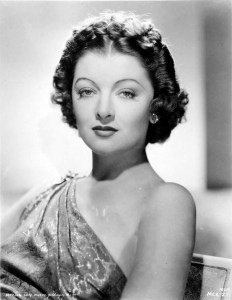 Myrna studied dance in Los Angeles. She had small parts in many silent pictures but some stills of her appeared in Motion Picture magazine and led to a contract with Warner Bros.
A big success came in 1934 when she appeared in the film The Thin Man with co-star William Powell. The two proved to be a popular screen couple and appeared in 14 films together.
In the late thirties she became one of Hollywood’s busiest and most highly paid actresses but in the 1940s she devoted all her energies to war work and the Red Cross. She was busy throughout the 1950s but in the late 60s began working more in television.
She died in 1993 aged 88.
Jane Greer
Jane Greer was apparently best known for her role as Kathie Moffat in the 1947 film noir Out of the Past. It’s not a film I’ve seen but it does sound like one to look out for. Jane was a beauty contest winner and model and was spotted by Howard Hughes in an edition of Life magazine when she was 18. Hughes became obsessed with the young girl and signed her to a seven year contract. Like many of the girls he had under contract, Hughes had them watched and followed and apart from drama classes, forbade them to go out with anyone except himself.
When Greer decided to ignore Hughes, he bought the studio where she was working, RKO, and continued to try and control her. She married Rudy Vallee and Hughes was still undeterred. She told Hughes she loved Rudy. Hughes replied that she didn’t and she wasn’t going to work until she came to her senses. Jane said OK, I’ll just carry on having babies then.
Hughes later relented and Jane began to work in films again.
She appeared in a number of films in the 1940s and 50s including the 1952 remake of The Prisoner of Zenda.
In television she joined the cast of Falcon Crest and Twin Peaks in her later life before retiring in 1996. In 1975 she appeared with Robert Vaughn in the Columbo episode Troubled Waters in which Columbo finally tracks down guest murderer Vaughn.
Jane Greer died of cancer in 2001 aged 76.
All the images above were reproduced via Wikipedia Creative Commons.
What to do next: Here are a few options.
Share this post on your favourite social media!
Hit the Subscribe button. Never miss another post!
Listen to my podcast Click here.
Click here to visit Amazon and download Floating in Space to your Kindle or order the paperback version.
Buy the book! Click here to purchase my new poetry anthology.
 I’ve always been fascinated by transformations either in fiction or in real life but what do I mean by transformations? Well, I have written about transformations before in a previous post. I talked then about Professor Higgins who helped Eliza Doolittle change from a street flower seller to a lady in George Bernard Shaw’s Pygmalion but with this new post I thought I’d start with the story of Dr Jekyll and Mr Hyde.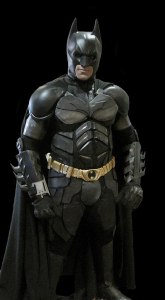


 I thought I’d start with Gone with the Wind and see where it takes me. Gone with the Wind was a major film adaptation of the book by Margaret Mitchell. The book was a huge hit and producer David O Selznick bought the film rights. Production was delayed for a long while as Selznick was determined to get Clark Gable for the part of the roguish Rhett Butler. Another delay was a distribution deal with MGM which couldn’t be finalised until Selznick’s then current deal with United Artists had expired. Selznick used the delay to begin a huge search for an actress to play the part of Scarlett O’Hara, the spoilt daughter of a plantation owner in the deep south of America. Scarlet has a crush on Ashley Wilkes played by British actor Leslie Howard in possibly his most famous role. The film was one of the major hits of 1939 and was the highest earning film up to that time.
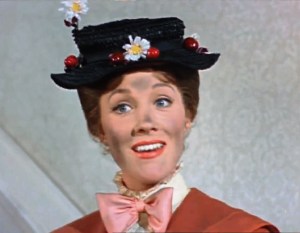 In 1938 Leslie Howard played the part of Professor Higgins in the film production of Pygmalion based on the play by George Bernard Shaw. A musical version was a big hit on the stage in the 1960s. Julie Andrews played the part of Eliza Doolittle to great acclaim on the stage but when the time came to make a film version in 1964, the producers wanted a major star and so the part went to Audrey Hepburn.
 James Bond has been in the news this week. The books by Ian Fleming are apparently being rewritten as they might be considered offensive to a modern generation of new readers and the producers are still looking for a new actor to play their famous secret agent. OK, time for another James Bond 007 post.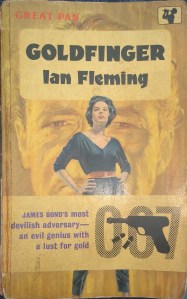


 David was born in 1908 and spent his early life in Croydon (actually 38 Blenheim Crescent, Croydon) until his parents divorced. His father moved out and left the family in 1923 which must have been an upsetting moment in Lean’s young life. Another perhaps more significant moment was when an uncle gave him a camera when David was aged 10 and then Lean began to develop and print his own photographs.
 The film did however win two Oscars for cinematographer Freddie Young and supporting actor John Mills. The poor reception of the film prompted David to meet with the New York critics at the city’s Algonquin Hotel. I’m not sure if David wanted to reason with them or just find out why they didn’t like the film but they spent two hours attacking his production. David came away devastated and would not make a film again until A Passage to India in 1984.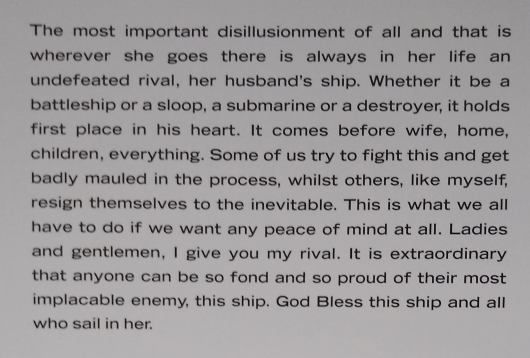
 Frank Sinatra and Die Hard.
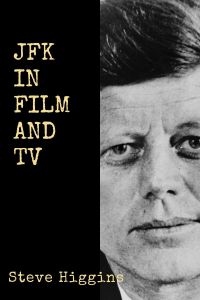 Strolling through St Annes not long ago I dropped Liz off at the hairdressers and wandered into a nearby shop that sells secondhand books, DVDs and CDs. It was there I spotted the DVD of a mini series from the 80’s called simply Kennedy with Martin Sheen playing the part of John F Kennedy. The DVD box set had been on my shelf for a while until one cold and wet evening when I thought it was time to pour a small port and settle down to watch it.
 Thanks for tuning in once again and if you’re not a regular reader, thanks for giving me a try. In case regular readers are getting fed up of blogs about motorhomes and travelling in France, swimming in lakes, eating fabulous food, drinking red wine and all that stuff, this week I thought I’d have a change of pace and write about something a little less serious so this week’s blog post is a homage to a similar post I saw out there in cyberspace. It had a similar title, 10 Things I Couldn’t Do Without but those 10 things were so uninteresting I just had to think of 10 of my own ideas. Anyway, let’s get cracking. I found that a lot of my 10 items I had written about before so I’ve added the relevant links to those posts. Feel free to click on them and I definitely won’t mention anything about motorhomes or holidaying in France.
 There is nothing that could be more perfect for breakfast than bacon. Throw in a poached egg, a sausage, maybe some black pudding or a hash brown and some tomatoes, a couple of rashers of bacon and there you have it, a wonderful breakfast. If you are perhaps not so hungry or maybe in a rush or on the move, you can still enjoy a bacon sandwich, throw a fried egg on top to make it extra tasty and get yourself a fresh cup of tea. Lovely! On holiday a while ago in France (did I say I wasn’t going to mention our 4 weeks in France? Sorry!) cooking can be a little difficult on our small three burner stove so Liz made us a bacon and egg omelette which was really nice served with French bread, lovely!


 Letters from an Unknown Author!