My book, Floating In Space is set in the Manchester of the late seventies. A pint of bitter was 25 pence. There were no smartphones, no Internet and no wireless networks. In fact ‘wireless’ was an old fashioned word for the radio. I’m tempted to say that things moved at a slower pace then but that’s not true. Things just moved at a different pace. In 2015 you hear a lot about pubs closing down but back in 1977, pubs were far from closing down; at the weekend they were the place to be! That was where my friends and I met up, drank beer, listened to music and chatted up the ladies. Saturdays were the focus of our week and here’s an excerpt from Floating In Space where Stuart, the narrator, talks about the upcoming Saturday night.
 Saturday night was in a lot of ways the culmination of the weekend. I always preferred it to Friday nights because things were more relaxed, there was no rushing home from work, no rushing to get your tea down your neck so you can get changed, then leg it out for the bus. Saturday, you could take your time and leisurely work up to things. Sometimes I would go out shopping and buy myself something new to wear for that evening, a shirt, or perhaps even a new pair of trousers. Then later I would have a long relaxed soak in the bath, and dress unhurriedly in my room to the tune of my favourite music. In 1977 my favourite album was Elton John’s ‘Goodbye Yellow Brick road’, and as I dressed I would mimic Nigel Olsson’s measured and rhythmic drumming to ‘The Ballad of Danny Bailey’, or ‘Candle in the Wind’.
There was something about Saturday nights in Manchester. Some quality of security, of expectancy, a feeling that the night and the future were going to be good. A feeling that you might just ‘get off’ with some gorgeous girl and that even if you didn’t it didn’t really matter because there was always the excitement of the people, the music, the drink, and everything else that made up the evening. And then there was always the expectancy of the next night, and the next, and on and on into the future. The past building up inside you like a great data bank, reminding you, reassuring you, like a light burning in some empty room in the corner of your mind.
The main venue that night, and on many other Saturday nights like it, was the ‘Playground’, a small disco bar on Oxford Rd in the town centre. Flickering multi-coloured spotlights rotated across the red carpeted room, which, on Fridays and Saturdays was generally packed. It had a small dance floor sunk low like a pit, where people up on the raised bar level could look down at the gyrating girls, and where also, on week day lunchtimes, a topless dancer appeared at the stroke of one o’clock to translate the soul and disco music of the time into pulsating physical motion, the eyes of jaded office workers glued to her as she did so.
My friend ‘Matty’ Edwards and I used to meet up in the Salisbury, by Oxford Rd station, have a few pints and a bit of a natter to any Regal cronies who we might find there, then make the short walk to the Playground. There was a paltry fifty pence charge to get in, the solitary bouncer was silent, but not unpleasant, and the DJ, who always began the night with ‘Loves Theme’ by the Love Unlimited Orchestra, played alternate sessions of rock, disco, and chart music. We were both mad about Jenny, the barmaid. She was lovely. She had a kind of round, open face, framed by thick blonde hair and her skin was a creamy white. She served us Worthington ‘E’ and we melted into the hubbub of people on their Saturday night out while the music of the seventies drifted through us.
Matty was tall; he had lazy, rather hayfevered eyes, and a biggish nose over thin lips. His brown hair was short and untidy and he dressed smartly, but had a sort of ‘middle of the road’ taste in clothes.
“Jenny’s looking gorgeous tonight,” he told me over his pint of Worthingtons.
We were propped up at the bar in a convenient spot where we could eye up any possible female talent, and cast a fond eye over Jenny’s appealing form.
“You’re not wrong mate.” I agreed. “I wouldn’t mind getting a grip of that myself.”
I caught Jenny’s eye and ordered two more pints of Worthington ‘E’. It wasn’t a great drink but we were tuned into it now for the rest of the evening, and anyway, I hadn’t as yet developed any clearly defined tastes in beer. The first pint I ever ordered myself was a pint of mild, and that was because I had nervously entered a Cheshire country pub after a long cycle ride and hesitatingly asked for a pint of ‘beer’.
“A beer?” asked the barmaid.
“Yes,” I replied, “A pint, please.”
“A pint of what?”
I realised, uncomfortably, that something more was required. I had thought that ‘a pint of beer’ would have been enough, but what the barmaid wanted to know was did I want bitter, or lager, or mild even? My first tentative forays into the world of the alcoholic drink were with my friend Mike Larini and it was always he who had done the ordering. What did he ask for, I thought? I couldn’t remember but down the bar the faint voice of an old man asking for half of mild drifted along to me, and so I went on to drink mild.
Later I changed to bitter, and even now I was currently considering another change as someone had given me the cheerful news that bitter ‘rots your guts’. Perhaps it had been that eternal pessimist Matty Edwards with his inside knowledge of beer. His father was a Didsbury publican, and Matty’s drink changed from pub to pub. Sometimes it was lager, sometimes bitter, but here, in the Playground, it was that now long departed brew, Worthington ‘E’.
You can read on and find out what happens to Matty and Stuart on that and other Saturday nights. Click the icon below to go to my Amazon page or click the links at the top of the page to find out more about Floating In Space.

 Sunset Boulevard is an outstanding film and due credit must go to the great Billy Wilder who not only directed but also wrote the screenplay, and he even got famous director Cecil B De Mille to play himself in the movie. Even if you’re not a classic movie buff like me, you’ve probably guessed that the quote in the title ‘I’m ready for my close up Mr De Mille’ comes from the movie. There are some even better lines from earlier in the picture when William Holden recognises Norma; ‘You’re Norma Desmond, you used to be in silent pictures. You used to be big’, to which Desmond replies, ‘I am big. It’s the pictures that got small!‘ They just don’t write dialogue like that any more. Anyway, over to the other part of this post, the bit about the vlog.
 OK, That was the intro copied from my earlier post
 MASH has always been one of my very favourite TV comedy programmes. You may have read in another post about how I used to
 Now, you might be wondering about that other part of this post’s title, the bit about the emotional indicator. Yes, I thought you might. It’s not so easy to explain but here goes. Most TV shows and movies have a sort of standard emotional indicator that stays pretty constant throughout the show. Take a look at the graph over to the left and let’s put some numbers up. Say a baseline of zero for a standard, calm emotional level. Now, when the show gets funny that level goes up to something like 15 for instance and I’d even say that in a movie like Police Academy that 15 or higher would be a constant throughout the film, well for me certainly. The original Police Academy movie is one of my favourites and I tend to start laughing round about the start of the film with the scene in the parking lot where Steve Guttenberg says the parking lot is full and then the guy comes in and says ‘park the car dirt bag!’ I usually stop laughing round about the end credits but on a normal film there’s a constant up and down: up when the film gets funny and down to nil when we get back to normal.
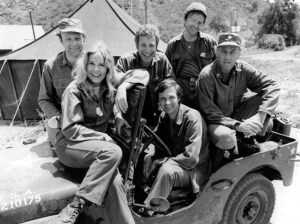 Mash ran for 11 seasons and an incredible 256 episodes. Trapper, played by Wayne Rogers, was my favourite character after Hawkeye and he left the series after season three to be replaced by Mike Farrell playing new doctor B J Hunnicut. Colonel Blake (McLean Stevenson) also left at the end of season three. His character was discharged but right at the very end of the episode news came through to the MASH that the Colonel’s aircraft had crashed with no survivors. This episode prompted an outpouring of grief and resentment from fans at the death of the character. I could understand perhaps Colonel Blake dying part way through the episode and the second part showing the sadness and grief of the rest of the characters but it seemed to me that Colonel Blake’s death was almost an afterthought, just tagged on to the end of the episode. As time went on many of the other series regulars left including Gary Burghof (Radar) and Larry Linville (Frank Burns) and for me personally, the series was never the same.
 Yes, it’s that reflective time of year again, the one where we look back at the last year, review what happened and work out what will be our resolutions for the next one. We’re not necessarily going to keep those resolutions but what the heck; it’s a worthwhile exercise anyway. I planned to write a follow up novel to Floating In Space in 2015 but I stalled after two chapters. Oh well, I’ve got an extended holiday in Lanzarote to look forward to in January 2016 so I’ll have to sit down and get stuck in. Come to think of it, I had an extended holiday in Lanzarote in January of 2015 but only managed to drink a great deal of wine, eat a great deal of tapas and swim a lot. C’est la vie as they say, at least I did a lot of ground work for the sequel and I did get those two chapters down on paper so the minimum I might expect this time is, chapters three and four!


 As you can guess if you’ve read any of my other blogs, I just love the digital age. It’s enabled me to do so many things; share my writing with everyone here on wordpress, share my pictures on T

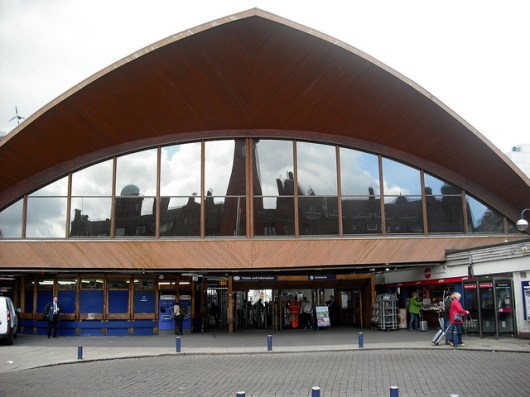
 Take a look at the picture just below. Not a particularly outstanding picture I know but that house is the one where I grew up. I took the picture a while ago after a sort of nostalgic drive around the old neighbourhood. Yes, the house with the white door, that’s my old home. It’s changed a bit since I lived there. The privet hedge has gone and the car space is new. One amazing thing I found out on that visit is that the walk to my old junior school, which seemed to be a heck of a walk as I remember it; surely at least a thirty minute walk, was actually more of a ten minute walk: Well, it was a long time since I walked to my junior school. I stopped in the road, took my picture, became lost in thought for a moment as a thousand memories crowded my mind, then drove off.
 Bored by the latest music chart? Remember when the music charts were fun? Well, maybe you don’t but back in the 1970’s, the decade covered in my book ‘Floating In Space’, the music charts were a whole different ball game. Every taste of music was covered from soul to rock and back again. TV theme tunes made it into the charts, as did comedy and novelty records. Here’s a quick selection of ten of the most memorable. Can you think of any others?

