The Soundtrack to my Life

The soundtrack to my life? What’s that all about? Well, quite simply it’s music. I don’t know about you but I’ve been a music fan all my life and I have always bought records of one sort or another. Vinyl singles and albums, cassette tapes, CDs and yes, even the occasional download.

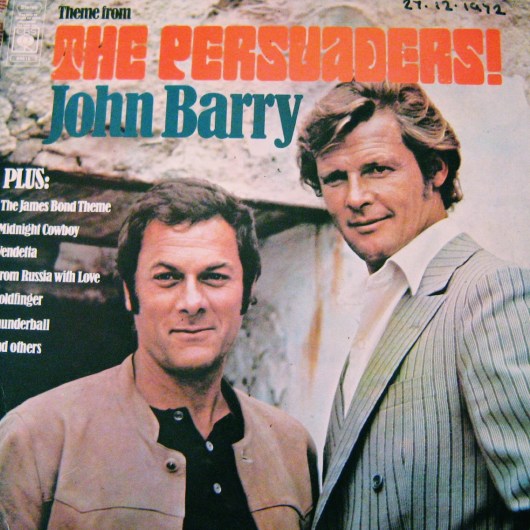
picmonkey-imageMy Christmas present in 1972, my shared present I might add, which I shared with my brother, was a record player. I don’t actually remember getting any records to play on it though but a few days afterwards I bought a collection of TV and film themes by John Barry in the post Christmas sales.. Barry scored the early Bond films and wrote the theme from the Persuaders, the 70’s TV show starring Roger Moore and Tony Curtis. So much is that record built into my memory that whenever I hear the tune from the Persuaders, it’s not Curtis and Moore that comes to mind but that small portable record player that spent much of its life in the bedroom that my brother and I shared many years ago.
31436280925_c1d7ff01eb_oThe first single I ever bought was by my childhood heart-throb Olivia Newton-John. I actually bought two singles together, The Banks of the Ohio and What is life. A single back in 1973 cost thirty-eight pence if I remember correctly and as both those singles had dropped out of the charts I was able to get the two singles for half price, nineteen pence each. Olivia Newton-John started out as a country/folk singer but found greater fame as John Travolta’s co-star in the hit movie Grease. Sorry Olivia but Grease just didn’t do it for me.

Olivia Newton-JohnI’ve never been one for albums, I’m much more of a singles man but in the 1970s I was very fond of Elton John’s music. When I first heard his records I just assumed he was an American so I was pretty surprised to find he was English and hailed from Pinner in Middlesex. His first hit single was ‘Your Song’ from his second album, Elton John but the first album I bought was ‘Goodbye Yellow Brick Road’. Elton worked closely with lyricist Bernie Taupin to produce some memorable songs. Taupin wrote the lyrics in the fashion of poems, passed them over to Elton who worked them into a song, which is the way they work together today some five decades later. I still have all my Elton John albums but after Elton made Rock Of The Westies I lost interest in his music a little. In the CD era I picked up some of my favourites of his music on CD and I have found some of his newer work that I really like, in particular Made In England which must count to me as one of his best ever albums.

img_0142Back in my single buying days a work colleague lent me his copy of Jeff Wayne’s War of the Worlds. I didn’t really fancy it but my friend was insistent that I would love it and he was right. The idea of a whole album telling a single story including snippets of dialogue and sound effects is brilliant. I copied the album onto cassette tape and today I have two CD versions, one for in the home and one for my car.
It seems to me sometimes that back in the 70’s buying music was so easy. Hear a record on the radio, go out to the record shop and buy it; job done. Nowadays when I sometimes watch music videos channels like the Box, I hear something I like but there are no music stores to visit to buy the recording. Not only that, when and if you find one, they’ve never heard of the track that you noted down! Actually its much easier to just go online and search for the music you want and then its just a few clicks to download. However, I’m not convinced a download is what  I really want. I want something physical, something I can pick up and look at, something with sleeve notes and inserts, that’s what I used to love about vinyl albums.

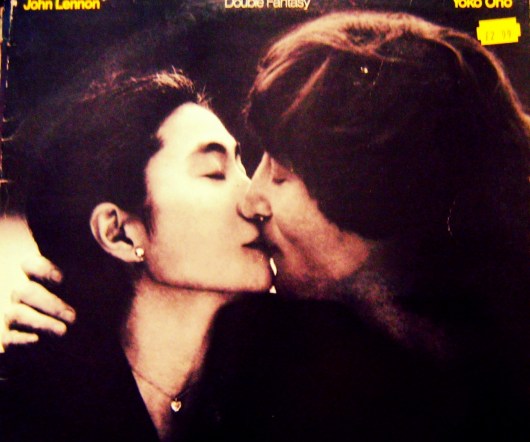
The last vinyl album I ever bouht, and the last one that John lennon made. Double Fantasy. £2.99, what a bargain.

The last vinyl album I ever bought, and the last one that John Lennon made. Double Fantasy. £2.99, what a bargain.

So, back to the present. The other week I was watching a programme on BBC 4 about Kate Bush. It was all pretty interesting and seemed to portray a Kate Bush that was a whole world apart from babooshka babooshka and Kath-ee,  let me in at your window, the slightly scary Kate Bush that I remember from the seventies and eighties.

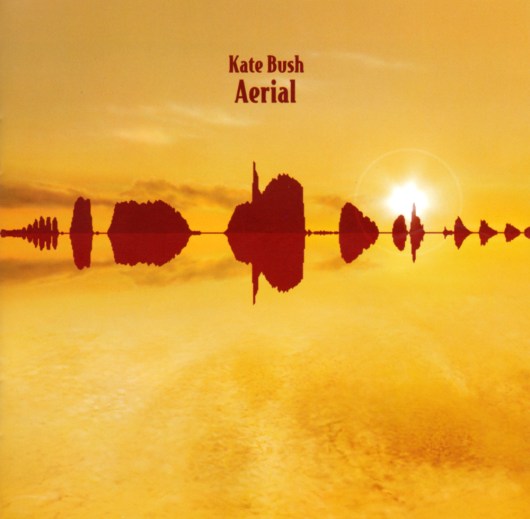
I did an online search and on e-Bay I found myself three fairly cheap CDs. 1: The Sensual World. (Sorry Kate, this didn’t do it for me at all.) 2: The Red Shoes. (Pretty good, nice album.)  3: Aerial. Now this was more like it. A cracking double CD. Actually more chill out than the Kate Bush of the seventies I’m used to hearing. It has not been off my in-car stereo since I bought it. It’s a fabulous album full of exciting rhythms and sounds.

aerialSo, what music do you have on the soundtrack to your life?


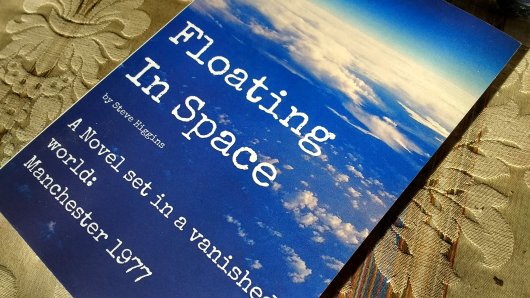
If you liked this post, why not try my book Floating In Space set in Manchester, 1977? Click the links at the top of the page for more information or have a peek at the video below:

(Almost) Unseen TV

tv documentaryIt’s interesting that on TV, the same movies come at us time after time. The Great Escape, wonderful film though it is, has been broadcast so many times I know the script off by heart. The Bond films are a staple of UK TV. They and the Die Hard films, the Carry on series and a hundred others–they are all constantly on British TV. Old TV shows are another staple of the new free view channels.
In fact, just lately a lot of my favourite shows from when I was a school boy are currently being shown on TV: The Saint, Land of the Giants, The Invaders and many more. (Wish they’d get around to showing the Time Tunnel though!) Some things that rarely, if ever, are repeated, are old TV documentaries and old made for TV movies. Here are three of my favourites, two documentaries and one made for TV movie, preserved for my viewing pleasure on trusty old VHS video tape.

The Peter Sellers Story: As He Filmed It.

The BBC Arena team made this film about Peter Sellers in 1995. It was created largely from cine film shot by Sellers himself, who was a lifelong camera enthusiast. The original documentary was made in 1995 and if I remember correctly, Sellers’ widow, Lynne Frederick had died and left behind a lot of Sellers’ effects, including his home movies which is how the film came to be made.

Normally, I’d say that you have to be interested in movie people and how movies are made to like this documentary but this film is so special I don’t think that rule applies.

The original film was in three parts and began with Sellers’ early days, and his early films. The first cine films we see are black and white movies and as Sellers’ career takes off, his cine equipment also improves and he upgrades to colour and then on to sound. His own images show his young self as a sort of ‘spiv’, a Flash Harry sort of character with his double-breasted and shoulder padded jackets. An uneasy relationship with his mother emerges, as does a rather spoilt and volatile personality. His first wife talks about their early days and their life together and friends like Spike Milligan talk happily about successes like the Goon show and their beginnings in show business. Milligan had a 8mm camera and Sellars a 16mm one. Of course ‘Peter was richer,’ comments Milligan. ‘Richer by 8 millimetres!’

Sellers’ cine film is blended with interviews from various people who played a part in Sellers’ life.

Sellers as Group Captain Mandrake in Dr Strangelove.

Sellers as Group Captain Mandrake in Dr Strangelove.

A fascinating section concerned Casino Royale, the spoof James Bond film. Various directors were involved but Joe McGrath shot one segment with Peter Sellers and Orson Welles. McGrath was a TV director relishing the move into feature films, that is until Sellers told him he didn’t want to be in the same shot as co-star  Welles. A heated debate ensued which became physical. Sellers said he was going off to calm down. He never returned and if you ever see the completed movie, you’ll understand why Sellers’ character abruptly disappears too!

Sellers claimed to have no personality of his own and ‘borrowed’ them from the characters he impersonated. It’s interesting to watch the TV interviews  included in the film where Sellers seems to mimic the Yorkshire tones of Michael Parkinson and again, in other snippets he is taking on the accents and style of his interviewers.

The film overall has a sort of melancholy feeling which I feel accurately represents Sellers’ persona. He was a sad character, disappointed in his life and loves. He was not happy with his last wife, Lynne Frederick and he even junked many of his cine films prior to his death as they didn’t seem to match his expectations. The mood of the film is further enhanced by a wonderful soundtrack full of sad saxophones and jazz tones.

There are some that put down documentaries that are full of so-called ‘talking heads’ but personally, if the talking head has something interesting to say, I like to hear them. However, in 2002 the BBC re edited the film by taking the soundtracks from the ‘talking heads’ and combined them with Sellers’ self filmed visuals. The result is now available as a BBC DVD. The original is much better though.

Barry Sheene. Photo courtesy Wikipedia

Barry Sheene. Photo courtesy Wikipedia

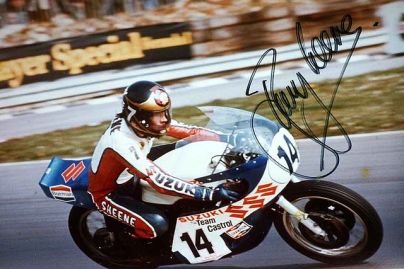
Barry Sheene. Daytona 1975.

This is a film about the late motorcycle racer Barry Sheene. He was a star of the 1970’s motorcycle racing scene. A long-haired, chain-smoking racer who had Donald Duck on his crash helmet and who famously gave the V sign to one of his opponents, I think it was Kenny Roberts, at a race at Silverstone in 1979. In this film Sheene goes to Daytona and is flat-out testing his bike when the engine locks up. He yanks in the clutch but is still sent hurtling along the track breaking several bones in the process. The film follows him to hospital where he joked with colleagues, even saying to his team manager, ‘the staff really hurt me. I’m glad I didn’t tell them about that pain I’ve got in my shoulder.’ His manager looks confused for a moment and says, ‘well, don’t you think you should tell them?’

Sheene is pinned back together with various metal rods and is later seen hobbling away from the hospital but even so, later in the film, we see him back on his motorbike once again.

The film was produced and directed by Canadian documentary maker Frank Cvitanovich and is a fascinating insight into the world of Barry Sheene. It is clear he lived and breathed motorcycles. In later life he retired and became a sports commentator in Australia. He died of cancer at the age of only 52

Across the Lake.

Across the Lake was a BBC film made in 1988. It starred Anthony Hopkins as speed king Donald Campbell in the final days of his life as he tried to raise the water speed record to over 300 miles per hour. Hopkins gives a lovely performance as Donald Campbell, a man who believed himself to be living in the shadow of his father, record breaker Sir Malcolm Campbell. He decided to take his old Bluebird boat, update her and try to break the 300 mph mark on Coniston water in the lake district. The jet boat flipped over and Campbell was killed. His body was not found until 2001.

The film shows the unglamorous side to record-breaking. Waiting in poor weather, the endless delays, the mechanical issues, the press waiting for something to happen. Something drove Campbell onwards in his pursuit of records. He was short of money and had sold all sorts of rights to his name, his films of record-breaking and so on. This was all before the days of big time sponsorship in the speed and motor racing industry and Hopkins shows us a Donald Campbell undefeated, perhaps even a little desperate but still with considerable style.

The record-breaking team disperse for Christmas and then return after the holidays. They begin their preparations again until a fine January morning appeared. Campbell powered up his speedboat and did a run of 297 mph but lost his life on his second run.

Having written this post about three old films I watch now and again on my old TV with the built-in VHS cassette player, it was interesting to find, during research, that all three can be seen online.

The original three-part version of The Peter Sellers Story: As he filmed it can be seen on vimeo. Click here to watch it.

Frank Cvitanovich’s Barry Sheene Daytona 1975 documentary is on you tube. Watch it here.

Across the Lake is also on youtube. Watch it here.

Perhaps those old films are not as unseen as I thought!


If you enjoyed this post, why not try my book, Floating In Space, a novel set in Manchester, 1977. Click the links at the top of the page for more information, or the picture below to go straight to my amazon page.

Floating in Space

Have Movies Influenced your Music Choices?

classical music + moviesClassical Music and Three of my Movie Favourites
I’m not a great lover of classical music but the classical music I do know and love has come to me through the medium of film. Yes, movies have inspired almost all of my favourite classical music choices.

The Blue Danube

The Blue Danube is a waltz written by the composer Johann Strauss II. He was an Austrian composer known as the ‘Waltz King’ and was largely responsible for the popularity of the waltz in Vienna in the 19th century. I first heard the music in the movie 2001: A Space Odyssey, the memorable sci-fi movie directed by Stanley Kubrick. Kubrick used numerous classical pieces in the movie and the Blue Danube is used during the space station docking and lunar landing sequences.

I first saw the film in the summer of 1968. I was only 11 at the time and I remember my Mum being surprised I had spent hours at the cinema on a lovely hot day. I watched the film in the huge movie theatre in Northenden, now a Jehovah’s Witness assembly hall. There were only a few people in the picture house that day and it was wonderful having this huge place almost to myself and seeing this incredible film in 70mm on the big screen. I recall being somewhat confused by it all, especially the jump from neanderthal times to the future, until I bought the novel by Arthur C Clarke which explained things in a way the movie did not.

2001 is a particularly visual film. Kubrick cut out a lot of dialogue because he wanted the film to stand as “basically a visual, nonverbal experience” that “hits the viewer at an inner level of consciousness, just as music does, or painting.”

2001

Picture courtesy Flickr.com

According to Wikipedia, despite the few people in the cinema with me that day in 1968, the movie went on to become the highest grossing North American movie of that year.

2001 set the pace for the sci-fi movie with its depiction of spacecraft drifting slowly and silently through space. The first Star Trek movie was heavily influenced by 2001 which made it look a little dated when the movie Star Wars was released and did the opposite thing, showing spacecraft whooshing across the screen at incredible speeds.

2001 is a wonderful movie and as well as continual enjoyment, it has also given me a love of Johann Strauss.

March of Pomp and Circumstance.

The March of Pomp and Circumstance was written by Sir Edward Elgar and there are actually six marches altogether. The most famous is the ‘Land of Hope and Glory’ march which traditionally ends the last night at the proms. I first heard this classical piece in the movie ‘Young Winston.’

The music for the movie was written by Alfred Ralston and includes his original work as well as arrangements of Elgar’s music. I used to have the soundtrack to Young Winston on vinyl and on the back cover there were extensive notes by the producer. He rather pompously announced that neither he nor Richard Attenborough, the director, had any interest in making a film about the British Empire, which is rather sad because the British Empire, in my view, was something we British should be rightly proud of. Anyway, Churchill himself was certainly proud of the Empire and his part in it, and in making this film the producers therefore did what they say they didn’t want to do. The movie is based on Winston’s early life, indeed his autobiography of his early days was entitled just that: ‘My Early Life.’ It is a wonderful read and has been made into a lovely film.

One interesting feature of ‘Young Winston’ is that at the end of the film there is a rather poignant scene where Winston, in his later years, falls asleep in his study and has a dream about his late father, his relationship with whom, as we see in the movie, was not good. In the sequence his father, Randolph Churchill, returns to him; he and Winston discuss life and finally part with a sort of understanding nod to each other. I have always thought that it finished the film off rather nicely but whenever I see Young Winston on TV, that scene has been cut. Years ago I bought the video version and the scene had been cut on the video too, so if I ever decide to buy the DVD version, I’ll be checking the running time before I buy!

Manhattan

Manhattan is Woody Allen’s ode to New York. I have always loved that opening sequence with the monologue by Woody. He narrates the opening of his book and is not satisfied with it so starts the book over again. The dialogue goes something like this;

‘Chapter one. He adored New York City. He idolised it out of all proportion.

No, make that he romanticised it out of all proportion.

To him, no matter what the season was, it was a town that existed in black and white and pulsated to the great tunes of George Gershwyn.

Oh no, let me start this over.

Chapter one . . .’

When he finally gets the book opening he wants, then the music of Gershwin’s ‘Rhapsody In Blue’ roars into focus. Manhattan is a movie shot in black and white and is one of Woody Allen’s most famous and successful films. Allen plays a 42-year-old writer who is involved with a 17-year-old girl played by Mariel Hemingway. The photography is wonderful as is the movie. There is a lovely part played by Meryl Streep who plays the part of Allen’s ex-wife who has written a book about their former life together.

How have the movies influenced your music choices?


What to do next: Here are a few options.

Share this post on your favourite social media!

Hit the Subscribe button. Never miss another post!

Listen to my podcast Click here.

Buy the book! Click here to purchase my new poetry anthology.

Click here to visit Amazon and download Floating in Space to your Kindle or order the paperback version.

Bicycles, Barry White, and a Man with a Chip on his Shoulder

Bicycles, Barry White and a Man with a Cjhip on his Shoulder!Digital memories are pretty easy to save these days. Take a picture with your camera or smartphone and press the save button. That’s your picture saved.
Later you can transfer the picture or video to a laptop or a hard drive for safekeeping. Years ago it wasn’t so easy but at least today you can scan those old photographs into your PC and save them as digital media. Even old videos and 8mm home movies can be digitised and saved if you have the right software.  Still, memories are not just pictures. There are all sorts of things that can trigger your thoughts and bring back some long forgotten moment or event, or just something you haven’t thought of for a while.

It could be a piece of music or passing some old haunt, some pub you used to go in when you were younger but haven’t visited for a long while.

Something that was a trigger for old memories for me was an old tape recording I made when I was in my teens.

I used to make lots of recordings when I was much younger. I saved up and bought a tape cassette recorder and apart from recording music –they call them mix tapes these days but I never heard that term years ago when I was making ‘mix’ tapes- I used to record little plays and sketches I had written. My brother was press ganged into helping with these enterprises and I used various techniques to get him involved:

  1. Bullying
  2. Threats and intimidation.
  3. Violence
  4. Bribery

Yes, they all worked to greater and lesser degrees. It’s funny to listen to the tapes now because I can tell pretty much by his attitude when he went along with me willingly or otherwise. One other inducement I used was swapping. He might want a particular record or something that I had so we would swap that and some weeks later usually swap back. Lots of times I used to swap a record for my bicycle and that’s where I felt I really had one over on Colin, my brother, because he couldn’t, and still can’t ride a bike! Yes, I was on to a winner there because I’d swap my bike for a record or book and I had full use of the item while he couldn’t use the bike because he couldn’t ride it!

One time he really got one over on me. I had swapped my bike for one of his records or something or other; I can’t really remember what. Anyway, one day I went to go out on my bike- OK, his bike- opened the shed and it was gone. What had happened? Had it been stolen, where was it?

‘The bike?’ he answered blithely; he had sold it to his friend because he wanted money to buy a new LP!

My Mother facilitated the removal of my hands from his throat with a firm whack to the back of my head and asked what was going on?

He sold my bike!’ I yelled.

‘Your bike?’ she replied. ‘Didn’t you swap it with him? Isn’t it his bike?’

Yes but, yes but,’ was all I could say.

The tapes were mostly comedy sketches on the lines of Spike Milligan who was then a hero of mine. One of them went like this;

CUE COWBOY MUSIC

ME: Hey Stewart, I’m gonna knock that chip right off your shoulder!

COLIN: That’s no chip –it’s a potato!

ME: King Edward’s?

COLIN: No, he can get his own, it’s one of mine!

(These are the jokes folks, as someone used to say!)

My brother wasn’t the only person I dragged into making tape recordings. My old school friend Steve was a music fan like me. Well, I say like me but his music knowledge was prodigious. Name any record and he would say with certainty- ‘that went to number 2 in July 1974’ or whenever.

There was a radio programme we both liked. It was My Top 12 on Radio 2 and it was something on the lines of ‘desert island discs’. Someone from the music world would be interviewed and would choose their top twelve records.

Anyway, Steve and I decided to make a version for each other. One weekend I interviewed him talking about his favourite music for which he provided full chart statistics, naturally. On another weekend we reversed roles and he interviewed me for which I provided limited chart stats, usually something like, ‘that one just nudged into the top twenty to which my friend would reply, ‘yes, actually number 23 was the highest chart placing in October 1975.’

We slagged off all the music we looked down on and praised all the music we loved. Poor old Barry White (the same Barry White whose Greatest Hits is sometimes played in my car) got something of a drubbing. Steve Harley and Cockney Rebel were praised as a musical discovery of the highest order. (Steve who? Was he the guy who did ‘Come up and See Me, make me smile?)

Through the magic of the digital age I recently processed that old tape and converted it into a CD which I played in my car on the way into work today and it was lovely to listen to my old friend again.

Steve was the inspiration for the character of Matty in my novel Floating In Space. He was a lovely guy although something of a music nerd. We had a parting of the ways years ago when his brother came to rent a room in my house. He proceeded to wind up my bills; gas, electric and telephone, to such an incredible volume I could no longer afford to have him living with me. Steve took his brother’s eviction personally and alas that was the end of our friendship.

I always assumed one day we would have a pint together and talk about music, sci-fi and cult TV once again, just like we used to back in the seventies and eighties. We did keep in touch through an intermediary, my brother Colin. We last had a long telephone chat in the early 1990’s and talked about a reunion. I never heard from him again and when I enquired about him to his sister, whom I located on social media, she revealed he had been taken ill with cancer and had passed away.

Steve, as well as being a great music fan was something of an aircraft anorak too. He stars in my second most watched video on you tube, a documentary we made in 1986 with Steve espousing his love of aircraft. I think he’d be thrilled to find that over 11,000 viewers have watched it. Here’s another re-edited version with somewhat less views. I took out the chart hits of the 80’s and replaced them with copyright free music thinking I’d start to earn some money off YouTube. (No chance, they decided I had to have 1000 followers before shelling out!)

One tip just to finish with. Hang on to the recordings you make with your iPad and iPhone and all the other modern day gadgets. Keep them safe; invest in a portable hard drive to store them.

Get ready to invest in new software which will convert the files to whatever new application we will be using in the future because in thirty years time you’ll want to look back at those memories and relive those earlier times.


If you liked this post, why not try my book, Floating In Space? Click the links at the top of the page for more information. Click the icon below to go straight to Amazon!

Terence Rattigan and my Movie Connections.

terence RattiganIt’s always a good feeling when you watch a movie you have really enjoyed. If you are like me then you will usually take a scan through the credits and look for familiar names. Sometimes you will see one that rings a bell; Hey, that director is the same guy who directed one of your real favourites or, that screen writer is the same writer who wrote another movie you enjoyed. That’s what I call a movie connection.

The Winslow Boy is one of my favourite old movies. It was written by Terence Rattigan and adapted from his own play. The original starred Robert Donat (who hailed from Withington in Manchester) playing the part of Sir Robert Morton and was directed by Antony Asquith. You may be more familiar with the recent version starring Jeremy Northam and Nigel Hawthorne which, all things considered, wasn’t a bad film. Anyway, the first time I saw the original movie I made a mental note of Terence Rattigan for future reference.

Here’s another movie: The VIPs, a film about various characters delayed at London Airport due to weather. It’s a lovely movie with great performances by Richard Burton, Elizabeth Taylor and Margaret Rutherford. It was a movie I really enjoyed so I checked the credits and what did I find? Screenplay by Terence Rattigan. Directed by Anthony Asquith. Yes, I thought, that rings a bell.

A great Sunday afternoon film is The Yellow Rolls Royce. I don’t know if you’ve ever seen it but it is three separate stories, all connected by the Yellow Rolls Royce. My favourite episode is one starring Shirley Maclaine. She is involved with gangster George C Scott and they are on holiday in Italy. When her gangster lover has to return to New York to sort out ‘some business,’ Shirley is left alone with young Italian Alain Delon. She falls in love with him but realises that when George returns, her new lover’s life expectancy will be very short. So, she tells him she doesn’t love him at all and returns to the USA with gangster George. Although he doesn’t realise it, Shirley has saved Alain’s life. As I watched the credits pass by, there were those names again, Anthony Asquith and Terence Rattigan.

rattiganAsquith was the son of the British Prime Minister Herbert Asquith. He was a great friend of Terence Rattigan and they collaborated on 10 films together but it’s Rattigan I want to write about here. Who who was he? Well, he was a playwright who wrote a number of west end hits, many of which were made into films. You may recognise some from this list; The Way to the Stars,  The Winslow Boy, The Browning Version, The Deep Blue Sea, The Price and the Showgirl, Separate Tables, The Sound Barrier and the Yellow Rolls Royce.
Wikipedia says Rattigan was a ‘troubled homosexual, who saw himself as an outsider, and that his plays ‘confronted issues of sexual frustration, failed relationships and adultery.’

He was born in 1911, had quite a privileged upbringing and was educated at Harrow. His first play was ‘French Without Tears’ about a crammer where English students go to learn French. Rattigan joined the Royal Air force at the outbreak of the Second World War and became an air gunner. He used his experiences to write a play called ‘Flare Path’ which eventually became the movie ‘The Way to the Stars’, also directed by Asquith, the DVD version of which resides happily on my DVD shelf.

Terrance RattiganRobert Donat relished the role of Sir Robert Morton in the Winslow Boy. Morton is an MP cum barrister who takes the British Admiralty to court over the sacking of Cadet Winslow. In my favourite scene, Sir Robert Morton questions Ronnie Winslow about the incident in question, that of the theft of a postal order. The questioning goes fairly gently until Sir Robert ups the ante when Ronnie, the Winslow Boy himself, mentions talking to another boy;

RONNIE I said, “Come down to the Post Office with me. I’m going to
cash a postal order.”

SIR ROBERT ‘Cash’ a postal order?

RONNIE I mean ‘get’.

SIR ROBERT You said ‘cash’. Why did you say ‘cash’ if you meant ‘get’?

RONNIE I don’t know.

SIR ROBERT I suggest ‘cash’ was the truth.

RONNIE No, no. It wasn’t, really. You’re muddling me.

SIR ROBERT You seem easily muddled. How many other lies have you told?

RONNIE None. Really, I haven’t.

SIR ROBERT I suggest your whole testimony is a lie.

RONNIE No, it’s the truth.

SIR ROBERT I suggest there is barely one single word of truth in anything you’ve said either to me or to the Judge Advocate or to the Commander. I suggest that you broke into Elliot’s locker, that you stole the postal order for five shillings belonging to Elliot, that you cashed it by means of forging his name.

RONNIE I didn’t. I didn’t.

SIR ROBERT
I suggest that by continuing to deny your guilt you’re causing great hardship to your own family and considerable annoyance to high and important persons in this country.

CATHERINE
That is a disgraceful thing to say.

SIR ROBERT
I suggest that the time has at last come for you to undo some of the misery you have caused by confessing to us all now that you are a forger, a liar, and a thief!

CATHERINE
How dare you!

RONNIE
I’m not. I’m not. I didn’t do it.

It looks like everything is all over then Sir Robert asks for all the available papers to be sent to him. ‘Is that necessary now?’ asks someone.

‘Of course’, replies Morton. ‘The boy is plainly innocent. I accept the brief.’

There is also a rather subtle flirtation between Catherine, Ronnie Winslow’s elder sister and Sir Robert. Catherine comments ‘how little you know about women’ to Sir Robert after an exchange between the two. He later replies to her when she doubts she will see him again, ‘How little you know about men, Miss Winslow!’

The Winslow Boy is a delightful film which captures perfectly that ‘upstairs, downstairs’ life in the early part of the twentieth century. Look out for excellent supporting performances from Jack Watling and Kathleen Harrison as well as those of the feature players, Robert Donat and Margaret Leighton. You may have to search ebay for the DVD version as the movie is not one of those we see often on terrestrial TV.

Remember, don’t forget to check the credits on a film. You may find a lot of familiar names on the movies you love!


What to do next: Here are a few options.

Share this post on your favourite social media!

Hit the Subscribe button. Never miss another post!

Listen to my podcast Click here.

Buy the book! Click here to purchase my new poetry anthology.

Click here to visit Amazon and download Floating in Space to your Kindle or order the paperback version.


A Tale of Four Horses.

The Grand National is one of those institutions of British sport, and coming in the early part of April like it does, it’s one of those events that herald the gradual warming of the days, the better weather and the move into the summer. It also heralds, at least where I work, someone going round with a card asking for money to enter the office sweepstake. Pay a pound, choose a horse at random and hope you are going to win some money. The National itself is pretty random. The nature of the event with its long course and numerous fences mean a huge amount of luck is involved. Maybe that’s why it’s so popular with the betting public. Anyway, it made me think about horses and their connection with my family which, when it comes down to it, is more considerable than I had originally thought.

Royal Horse artilleryMy Grandfather, George Higgins fought in the First World War with the Royal Horse Artillery and this is him in this splendid picture with his horse, Prince. My Dad had the picture with him in his wallet when he was in the forces and as time went on it got a little torn and tatty and somewhere, I suppose it must have been in Hong Kong where he was stationed for a while, he found a little photographic shop that specialised in rescuing old pictures. The background of the picture was originally a forest but the rescue work removed them in order to make the picture good.

Both sides of my family, my father’s people and my mother’s, came from the back to back terraced houses of Salford. They moved to Wythenshawe in the early 1940s. Wythenshawe was known as the ‘garden estate’ because instead of small terraced houses, here were bigger and better houses with front and back gardens. The estate was built on land purchased by Manchester City Council from the Tatton family. It was originally rustic countryside full of farms. My Dad worked on quite a few of them and my Mum tells me stories of getting milk from Potts Dairy farm which stood apparently just across from my old junior school. You’d never know because no trace of it remains today, just a row of council houses.

Wythenshawe

Image courtesy Wikipedia

One of my Dad’s early jobs was as a milkman but not for him the electric milk van. No, he had a horse drawn milk trolley and he told me with pride how, as he ran up and down through the gates of the various houses dropping off milk on doorsteps, he didn’t have to run back and move his trolley up. No, just a whistle was all it took and his horse would trot quietly forward to my Dad and he would replace the empties and take out fresh bottles for the next house. My Dad was pretty attached to that horse. It was stabled not far away in Northenden. Once his father, my grandfather, the WW1 Veteran came to see the horse. He checked the horse’s teeth, apparently a good indicator of equine health and pronounced himself satisfied.

On another occasion, my Dad rode the horse to a nearby fair in Northenden. It was a bank holiday weekend and my Dad rode his horse bareback. For a joke, some comedian decided to whack the horse and it rose up and galloped off at a great rate, my Dad hanging on for grim life. After a short sprint, the horse spied its own field, hit the brakes and ducked into the field for a quiet grass chewing session. My Dad hopped down, closed the gate and walked back to the fair. Numerous people congratulated him on his riding skills and horse control!

In the 1990’s I took some horse riding lessons myself. I went to a small riding school run by a young girl who looked to me to be nothing more than a schoolgirl but she told me with great pride how she had started the school from scratch and made it into a good business. She gave me a horse called Granite, a huge grey horse who was that tall it was not that easy to mount him. The first strange thing for a new rider on a horse is ‘what do I hold on to?’ On a motorbike or a bicycle, you have your handle bars but not of course on a horse. OK you have the reins but if you pull back on the reins you’re send a signal to the horse to stop. It took me a heck of a long time to get used to just sitting atop my horse. The other thing is that as you trot around, I always thought the rider would just be sitting there. Oh no. You have to learn to go up and down with the horse as you bob along. The thighs certainly get a good workout!

HorseI thought it was important to get along with Granite so I made a point of bringing him a juicy carrot every week. Granite loved that carrot and he would frisk me with his nose every time we met. One day, Vanessa, the young girl trainer spied me and told me in no uncertain terms not to feed her horse! Why not? I asked. Well, she didn’t want strange substances going inside her horses she said. What exactly she meant by that I really don’t know but she was in earnest and kept a close eye on Granite and myself for any signs of contraband carrot!
Granite of course was not happy. After our lesson, the last of the day, we trainee riders unsaddled our mounts, brushed them down and popped then into their stable. The first day without a carrot Granite showed in no uncertain terms he was not happy and tried to pin me against the stable wall to let me know.

Next lesson, I brought a carrot, cut into a number of bite sized pieces and slipped them to my horse surreptitiously. Once again, my horse was a happy horse.

Just to finish, here is another happy horse, well, for me at any rate. Rule the World was the winner of the 2016 National and it just so happened that he was the horse I pulled out in the draw. Happy days!


If you enjoyed this post, then why not try my novel, ‘Floating In Space’? Click the links at the top of the page for more information.

Confessions of an Armchair Formula One Fan

F1 fanI’m not a great sports fan but I do like my motor sport. I first started following Formula One back in 1970 when I was a school boy.

1970 was a pretty exciting year for formula one racing. Colin Chapman and his Lotus team had unveiled their new Lotus 72, a revolutionary ground-breaking car that set the standard for formula one cars for years to come. Jochen Rindt won the World Championship but sadly he was killed in practice for the Italian Grand Prix at Monza. His points score was never overtaken and so he took the crown posthumously. In fact three F1 drivers were killed that year, Rindt, Bruce Mclaren, the founder of the Mclaren F1 team, and Piers Courage who drove for Frank Williams, a black year indeed for motorsport.

Jack_BrabhamBack in the early 70s there wasn’t great TV coverage but I do remember watching the Monaco Grand Prix live on the BBC and I will always remember that moment when the potential winner, old hand Jack Brabham, slipped into the barrier on one of the last corners letting Jochen Rindt through to win.

A few years later the BBC was not happy about the explosion of advertising on Grand Prix cars and the crunch came when the cars of John Surtees displayed advertising for Durex. The BBC pulled the plug and F1 effectively vanished from British TV screens for a long while. Towards the end of the seventies the BBC began to broadcast the odd race now and again and then their show ‘Grand Prix’ with long time commentator Murray Walker began in 1978 although I don’t think they broadcast the entire season until 1979.

For most of the seventies I had to depend on BBC radio to find out what had happened at the Grand Prix. In 1978 I listened to a report from the Italian Grand Prix about a crash just after the start in which Ronnie Peterson was injured. Ronnie had broken both legs and been taken to hospital. I was glad to hear he was OK. Ronnie was one of those drivers who appeared to me to be destined for a world championship. If someone had told me in the early seventies that Niki Lauda would be a three times champion I would have laughed out loud. He didn’t look or sound like a champion, unlike Ronnie, his team mate at the STP March team in 1972. The next day I picked up a newspaper and was shocked to find Peterson had died during the night from a fat embolism resulting from his broken bones.

Senna, Mansell, and Prost were the great drivers of the eighties and Gerhard Berger sometimes looked like a future champion although he never made the cut. He survived a terrible crash at Imola in 1989 when he hit the wall at Tamburello and his Ferrari burst into flames. I was watching the race live and thinking how could anyone survive that but moments later a marshal’s van drove up and quickly put the fire out. Berger survived with only 1st degree burns to his hands.

Mansell won a great race at Silverstone in 1987, probably one of my favourite races. It was a gamble on Mansell’s part, turning up the boost on his Honda turbo engine to catch Piquet and on the last lap he should have ran out of fuel. According to his dashboard he had, but his Williams somehow kept running to the end finally grinding to a halt on the slowing down lap.

Alain Prost Mclaren 1988 German Grand Prix

Alain Prost Mclaren 1988 German Grand Prix

Alain Prost retired after a comeback season with Williams when he walked to his final world championship in 1993. In 1994 the Grand Prix circus came to Imola for the San Marino Grand Prix and I remember well watching the race live on TV when Senna crashed, again at Tamburello. Someone said to me ‘he’s dead’ but I disagreed, Berger’s crash was worse and he survived. Sadly, Senna did not.

Television has had a great influence on formula one racing. In the nineties Bernie Ecclestone seemed to be trying a lot of tweeks to get more viewers, especially after one rainy Saturday qualifying round when hardly any drivers went out on track. Naturally really because they could not hope to improve on the previous day’s dry running. That spelled the end of Friday qualifying and from then on, only times set on a Saturday counted towards the grid. That tweeking resulted in an interesting knockout qualifying format which is enjoyable and good for the sport but it hasn’t stopped the rulers of F1 trying to fiddle with it even more and that interference has cast a cloud over the first part of the 2016 season.

Bernie Ecclestone

Bernie Ecclestone (image courtesy Wikipedia)

Formula One team bosses are currently in something of a panic. Investors have poured millions of pounds into F1, not because they like the sport but because they find their investment can pay off big style in these days of multi million pound global TV and advertising deals. Reports of failing interest in the sport however has rung alarm bells and throughout the motorsporting media there have been calls to make F1 more interesting. Why are the cars not louder? Why are Mercedes winning all the time? Should we bring back refuelling? Is the high tech aspect ruining the driver input? There are even calls for Bernie Ecclestone, the aging F1 emperor to hand over to someone else. Only time will tell what will happen.

It sometimes makes me smile when I compare Formula 1 to other sports like cricket. Can you just imagine if Ecclestone and his investors had a stake in cricket and the TV viewing figures were down? What would happen then? Increase the number of overs? Maybe have an extra ball in each over, seven instead of six? Change the wooden ball to a rubber one? Add an extra stump?

Maybe they will resolve the issues, maybe not. F1 racing goes from terrestrial channels to Sky pay per view in 2019. Will I be subscribing? I’m not so sure . . .


If you liked this post why not try my book? Click the links at the top of the page for more information.

The Secrets of a Schoolboy Correspondent to the Stars!

A schoolboy correspondentNeil Armstrong, the commander of Apollo 11 stepped out onto the moon in July 1969. He and his crew, Buzz Aldrin and Mike Collins, came home to incredible global adulation and spent a lot of time touring the world and cementing global understanding that the USA had well and truly won the space race. I can’t imagine what it was like to receive that sort of world-wide adulation but for Armstrong his work with NASA was over. He resigned and became a university professor. People at the university of Cincinnati looked at him with wonder. He signed autograph after autograph then realised that many people were using these as a source of income. For every schoolboy who took his signature, venerated it and saved it in some secret safe place, there were others making a buck from every photo or scrap of paper he signed. So, one day, he stopped doing it.

That’s the thing about the famous; people want to connect with them. Today many people see their hero or heroine and they want to take a ‘selfie’ with them on their smart phone. Facebook and other social media are littered with these sorts of pictures, but in earlier times fans wanted autographs. In fact, they still do. Take a look at ebay and you’ll find many hits for the autographs of movie, TV and sports stars. Rare ones cost many thousands of pounds and if you are lucky enough to have an autograph signed by Neil Armstrong, well it’s worth about £8, 500. Autographs by Neil Armstrong are pretty rare and very collectable, partly because he stopped signing autographs!

You might be wondering where I got that figure from, well it’s from the PFC40 autograph index, a listing of autograph values to help collectors. Top of the list is James Dean’s autograph. Dean was famous for only a short while before his death in a car crash at the age of 24 and it’s the rarity of his signature that gives it such a strong price, showing in the index at £18,500! I wish I had the autograph of James Dean or Neil Armstrong in my collection but here are a few of the ones I do have.

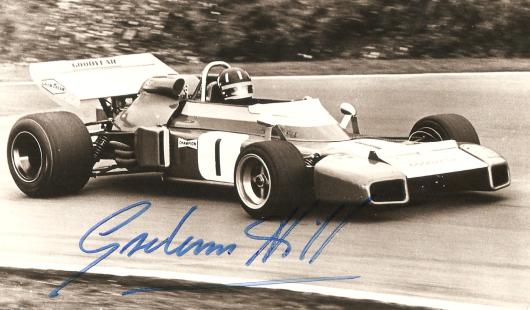
Graham HillGraham Hill can’t really lay claim to being the greatest driver ever, but without a doubt he is one of the greatest motor sporting personalities to ever grace the racetrack. I wrote to him in the seventies and he responded with a card and his signature and it’s one of the prize autographs in my collection. Jackie Stewart, my favourite ever F1 driver and quite frankly, in my opinion, the greatest ever driver, sent me a card with only a machine printed signature. (Little bit disappointed there Jackie!) I have a number of signatures of F1 drivers in the seventies, Bruce McLaren, (founder of the McLaren F1 team) Denny Hulme (world champion 1967) Jack Brabham (world champion 1959, 1960 and 1966) Jackie Oliver, (he drove for BRM in 1970) and John Surtees (world champion 1964.)
Jack_Brabham

Three time world champion Jack Brabham

One of my colleagues who has a daughter who lives in Australia showed me something a while ago. A programme from the 2013 Australian GP signed by all the drivers. Knowing I’m a big Formula One fan my friend thought he had a sure fire sale but sadly, the programme looks a little as if a schoolboy has scribbled all over the pages and the autographs are just undecipherable swirls of a felt tipped pen. It was hugely disappointing and a ‘no sale’ for my friend. Perhaps in the age of the computer, people, well at least Formula One drivers, have forgotten how to write and how much more satisfying are the signatures in my collection than the ones on that programme.

william_shatner

Captain Kirk from Star Trek

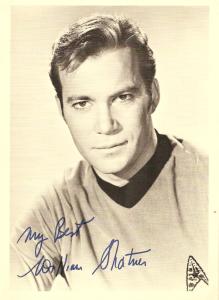
As a school kid I spent a lot of time writing to my schoolboy TV heroes and I have signed pictures from Patrick Macnee who played the debonair John Steed in the Avengers, and Linda Thorson who played Steed’s sidekick Tara King. I wrote to the producers of Star Trek in the USA and they sent me colour pictures of William Shatner who played Captain Kirk and Leonard Nimoy, who was Mr Spock.

Tara King

Linda Thorson as Tara King

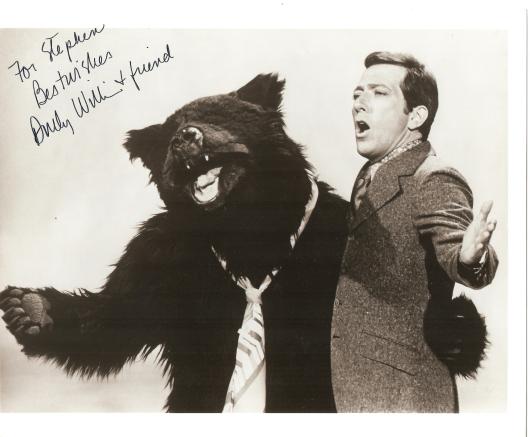
My very favourite autograph of all though is another one from the seventies. I wrote a fan letter to Andy Williams who had a hugely popular TV show which aired on the BBC. My favourite part of the show was a comedy sketch with Andy and a bear (OK, a guy dressed in a bear outfit) who always asked Andy for some cookies and then they went into a different comedy routine every week. I loved the bear sketches so much that I wrote to Andy Williams care of Desilu productions, who were mentioned on the credits of his show, in Hollywood California. Months later, a large envelope arrived and inside was a picture of Andy and the bear. ‘To Stephen from Andy and friend’ was the inscription.

I think it says a lot about Andy Williams, that he should make such a gesture for a far away English schoolboy. Thanks Andy, I loved that picture so much!
Andy_Williams

If you liked this post, why not try my book, Floating In Space? Click the links at the top of the page for more information.

The Remainder of the day: Three Movie books

Perhaps you won’t see straight away what I did there in that title. If I go on to say I’m going to talk about remainder books then you might start to get the picture. I’ve spoken before in this blog about my passion for books, especially second hand books. I also have quite a few books that should have been very expensive but were greatly reduced in price. Why? Because they were remainder books. So what exactly are remainder books?

Well, they are copies of a book left over after a print run which are then sold off quickly at a cheap price. Many stores like the Works specialise in these types of books. There is a Works store in the Arndale Centre in Manchester where you will find me flipping through numerous books when I have any free time, looking to nail myself a bargain. Here are three ‘remaindered’ books in my collection, all about movie directors.

Woody Allen.

Woody Allen
Now I’ve kept the price on this book so you can see what a big saving I’ve made: A hefty fifteen pounds and a penny and in return for my £9.99 I get a big full colour hard back book which itemises all Woody’s movies all the way from ‘What’s New Pussycat’ to his 2015 offering ‘Irrational Man’. Now, I have to say  that the aforementioned ‘What’s New Pussycat’ is one of my favourites of Woody’s movies although in the book it doesn’t get such a great review. Pity because it’s a great sixties classic. You can read more about Woody Allen in one of my previous posts.

David Lean
Photo0014
Illustrated with over 400 pictures this is a lovely book to have, detailing the life and work of director Sir David Lean and written by his widow Lady Sandra Lean. David Lean is probably best remembered for his big screen epics like Laurence of Arabia, Doctor Zhivago and Bridge on the River Kwai. He started out as a teaboy with Gaumont Studios in London, later became a film editor and then moved on to become a director. He co-directed ‘In Which We Serve’ with Noel Coward although he later said Coward soon became bored with directing and left the whole thing to Lean. He would never share the directing credit again although his next three movies were adaptations of work by Noel Coward. Surprisingly, he only directed seventeen movies; I always thought his list of credits would be a lot longer. He won two best director Oscars and as a filmaker he inspired many directors like Steven Spielberg and Martin Scorcese. He died in 1991 from throat cancer.

Billy Wilder
Photo0027

All three of the books here are big picture books with many behind the scenes photographs. If you are like me and love to hear about how movies are made then you will love all these books. Billy Wilder was an Austrian born filmmaker who fled from Berlin and the Nazis in the early 1930s, moving first to Paris and then later to Hollywood. Wilder made some classic films like ‘Sunset Boulevard’, ‘Double Indemnity’ and ‘Sabrina.’ The cover picture you can see above shows Tony Curtis and Marilyn Monroe in ‘Some Like it Hot’ made by Wilder in 1959. It’s a great movie but mostly famous for the multiple retakes required by Marilyn. It took 47 takes for Wilder to get a shot in the can where all Marilyn had to say, ‘It’s me, Sugar!’

Billy Wilder died in 2002 at the age of 95.

Just to finish off, here’s my favourite Billy Wilder story and it goes like this : In his later years he wanted, as usual, to make a movie. He approached a studio and was invited in to make his pitch, as they call it in the movie world. The executive who met with Billy was a young man. He said to Billy, “I’m not familiar with your work, could you tell me about some of your films?”

Wilder replied, “Of course; but you first!”


If you liked this book why not buy my book, ‘Floating In Space’? Click the links at the top of the page for more information or here to go straight to my Amazon page.

Cillit Bang, Doctor McCoy and the Launch of Thunderbird 3!

You might be thinking, and believe me I can understand it if you are, what have Cillit Bang, Doctor McCoy and the launch of Thunderbird 3 got in common? Well it is simply this; together they are three small mysteries that have annoyed me for a while and in the case of Thunderbird 3, a very long time. Please read on . . .

Cillit Bang
A cleaning company has just created a new household cleaner. It works in the kitchen: It works anywhere! It washes away dirt and grime so what should we call it?
INTERIOR. DAY. A PLUSH HI TECH MARKETING OFFICE. A MEETING IS IN PROGRESS. AT THE HEAD OF THE TABLE IS THE HEAD OF MARKETING. HE ADDRESSES THE GROUP OF EAGER YOUNG MARKETEERS.

HEAD OF MARKETING.
Ladies and gentlemen, you know all about the product. We are getting ready to sell to the public as soon as possible. We already have contracts to sell to the major stores and supermarkets, all we need is a name!

YOUNG STAFF MEMBER #1
What about Flash? It cleans your kitchen in a flash and-

HEAD OF MARKETING.
Good but that name has been used already!

YOUNG STAFF MEMBER#1
Sorry sir.

YOUNG STAFF MEMBER #2
What about Super Clean. It’s no ordinary cleaner: it’s a Super Cleaner!

HEAD OF MARKETING.
Not bad but I’m looking for something really special.

YOUNG STAFF MEMBER #3
I know I’m new here (COYLY) But what about Cillit-Bang!

FACES FALL ALL AROUND THE TABLE. SOME STAFF MEMBERS HOLD THEIR HEADS IN THEIR HANDS. OTHERS OPENLY MOUTH ‘OH MY GOD!’

HEAD OF MARKETING.
That’s brilliant. Just what we want.

THE WHOLE OFFICE APPLAUDS.

OK, that’s just a fantasy, just an idle musing that came to me a few weeks back under the hot Lanzarote sun while I pondered about whether to take another dip in the pool. The thing is though, why did they really call it Cillit-Bang?

Doctor McCoy in Star Trek

Dr McCoy Star Trek

Picture courtesy Wikipedia

I have always been a fan of Star Trek, well, the original one anyway. You know the one, Captain Kirk, Mr Spock and Doctor (Bones) McCoy. (Proper Star Trek, not those wishy washy Next Generation people!) Kirk was played by William Shatner, Spock by Leonard Nimoy and McCoy by DeForest Kelley. DeForest did you say? Yes, DeForest, that was his name. I’ve often wondered how he got a name like that, perhaps it was something like this;

INTERIOR. DAY.THE SCENE:THE SUBURBAN HOME OF THE NEWLY WED KELLEYS.

MRS KELLEY
You know, we ought to think about names, there’s not long to go now.

MR KELLEY
Yes, you’re not wrong. Remind me, when is the little one due?

MRS KELLEY
Well, my due date is January 20th.

MR KELLEY
Well, what about Woodrow, you know after the President?

MRS KELLEY (WITH HARDLY A HINT OF ENTHUSIASM.)
What! Woodrow?

MR KELLEY
Well, only a suggestion.

MRS KELLEY
Edward is a thought. I’ve always liked Edward.

MR KELLEY
Edward? Edward Kelley? Don’t know, Edward Kelley. Sounds a bit ordinary . . .

MRS KELLEY
We could name him after you, Ernest David.

MR KELLEY
Yes but then he’d be Ernest David Kelley Junior. I’ve always hated that junior stuff! I want something memorable, something that invokes, you know, the forest or something.

MRS KELLEY
The forest? What are you on about?

MR KELLEY
Well, remember that time in the forest when we were camping and we both, you know . .

MRS KELLEY
Oh my giddy aunt! I’ve never heard anything like it in my life!

MR KELLEY
Look, let’s be straight; we once did it in the forest. So what? Couples have to do it somewhere, it’s only natural. In fact, tell you what, what about Deforest?

MRS KELLEY
Deforest? Are you bonkers? Are you out of your tiny mind?

MR Kelley
It’d be a private joke, you know, me and you against the world and we’d always remember that special time. You know, when we did it in ‘de forest!’

MRS KELLEY
Are you on mind altering drugs or what? I was reading only the other day they reckon that by the 1960’s mind altering drugs could destroy western civilisation. Sure you’re not on them already?

MR KELLEY
OK, so what have you got?

MRS KELLEY
So Ernest David is out?

MR KELLEY
Absolutely.

MRS KELLEY
OK, DeForest it is but I want it with a capital F.

MR KELLEY
It’s a deal!

Thunderbird 3The Launch of Thunderbird 3.

Did you ever watch Thunderbirds, the 1960’s sci-fi show? I’m talking about the original, not the 21st century computer animated version, because something has been annoying me ever since I first saw the show as a schoolboy, and it’s this:
Alan, as you probably know, is the pilot of Thunderbird 3, the space ship, and Thunderbird 3 launches from underground, blasting off right through the circular opening of the Round House. Now to access the craft, Alan sits down on the settee in the Tracy Island main house. His Dad, Jeff Tracy, flicks a switch and Alan and the settee drop down into an underground complex. OK? With me so far? Well this is where the problem arises. As Alan and the settee drop down on a sort of hydraulic pole, just behind him we see another settee, being pushed up towards the lounge on another hydraulic pole,  where it pops into the vacant slot where Alan’s settee was moments earlier. However, as Alan’s settee is going down on the first hydraulic pole, and the alternate settee is on a second hydraulic pole to his rear, there is no way that second settee is going to pop into the vacant slot left by the first. Also, what if Alan was watching TV when the call came in and he goes off on the departing settee with the remote control? It could be halfway to trajectory insertion when Jeff wants to switch over to Sky Sport and he says, “Who’s got the remote?” Not only that, imagine if Alan was on his way to an emergency launch which came in while Grandma was in the kitchen making everyone a cup of tea and a slice of toast?

THE SCENE. INTERIOR. DAY. TRACY ISLAND LOUNGE.

JEFF TRACY
This is a job for Thunderbird 3.

ALAN TRACY
OK Dad. Ready for launch.

JEFF TRACY
Off you go Alan.

ALAN TRACY
Bye Dad, tell Grandma I’ll have a brew later.

JEFF TRACY
Look Alan, those tea bags don’t grow on trees you know. We have them imported from the UK.

ALAN TRACY
Gee whizz Dad, never thought of that. Only thing is, that rocket on collision course with the sun, don’t you think that has to take priority?

JEFF TRACY
Well . . . Sometimes I fancy an extra cuppa anyway so I guess I could always finish yours off. Hot diggedy dog Alan, you’re right. Off you go and I’ll sort your brew out.

ALAN TRACY
Thanks Dad.

JEFF PRESSES A SWITCH AND THE SETTEE DROPS AWAY ON ITS HYDRAULIC POLE INTO THE CAVERNOUS SECRET WORLD BENEATH THE TRACY HOME.

JEFF TRACY
Right, that’s that. Think I might have a gander at Sky Sports. Where the heck is the remote? Grandma! Grandma! Where has the old biddy got to? Bet she’s got the damned remote, she’s always watching daytime TV.

JEFF GOES OFF STAGE RIGHT TO LOOK FOR GRANDMA.

GRANDMA ENTERS STAGE LEFT WITH A TRAY OF TEA AND TOAST.

GRANDMA
Jeff! Alan! Now where have those two got to? Where have they moved the settee to? Sure it used to be just hereeeeeeeeeeeeeee!

Yes, when you look closely, that Thunderbird 3 launch procedure is a major health and safety issue!


If you enjoyed this post why not try my novel ‘Floating In Space’? It’s available from Amazon as a Kindle or traditional paperback. Just click here or go to the links at the top of the page to find out more!