It’s always a good feeling when you watch a movie you have really enjoyed. If you are like me then you will usually take a scan through the credits and look for familiar names. Sometimes you will see one that rings a bell; Hey, that director is the same guy who directed one of your real favourites or, that screen writer is the same writer who wrote another movie you enjoyed. That’s what I call a movie connection.
The Winslow Boy is one of my favourite old movies. It was written by Terence Rattigan and adapted from his own play. The original starred Robert Donat (who hailed from Withington in Manchester) playing the part of Sir Robert Morton and was directed by Antony Asquith. You may be more familiar with the recent version starring Jeremy Northam and Nigel Hawthorne which, all things considered, wasn’t a bad film. Anyway, the first time I saw the original movie I made a mental note of Terence Rattigan for future reference.
Here’s another movie: The VIPs, a film about various characters delayed at London Airport due to weather. It’s a lovely movie with great performances by Richard Burton, Elizabeth Taylor and Margaret Rutherford. It was a movie I really enjoyed so I checked the credits and what did I find? Screenplay by Terence Rattigan. Directed by Anthony Asquith. Yes, I thought, that rings a bell.
A great Sunday afternoon film is The Yellow Rolls Royce. I don’t know if you’ve ever seen it but it is three separate stories, all connected by the Yellow Rolls Royce. My favourite episode is one starring Shirley Maclaine. She is involved with gangster George C Scott and they are on holiday in Italy. When her gangster lover has to return to New York to sort out ‘some business,’ Shirley is left alone with young Italian Alain Delon. She falls in love with him but realises that when George returns, her new lover’s life expectancy will be very short. So, she tells him she doesn’t love him at all and returns to the USA with gangster George. Although he doesn’t realise it, Shirley has saved Alain’s life. As I watched the credits pass by, there were those names again, Anthony Asquith and Terence Rattigan.
 Asquith was the son of the British Prime Minister Herbert Asquith. He was a great friend of Terence Rattigan and they collaborated on 10 films together but it’s Rattigan I want to write about here. Who who was he? Well, he was a playwright who wrote a number of west end hits, many of which were made into films. You may recognise some from this list; The Way to the Stars, The Winslow Boy, The Browning Version, The Deep Blue Sea, The Price and the Showgirl, Separate Tables, The Sound Barrier and the Yellow Rolls Royce.
Wikipedia says Rattigan was a ‘troubled homosexual, who saw himself as an outsider, and that his plays ‘confronted issues of sexual frustration, failed relationships and adultery.’
He was born in 1911, had quite a privileged upbringing and was educated at Harrow. His first play was ‘French Without Tears’ about a crammer where English students go to learn French. Rattigan joined the Royal Air force at the outbreak of the Second World War and became an air gunner. He used his experiences to write a play called ‘Flare Path’ which eventually became the movie ‘The Way to the Stars’, also directed by Asquith, the DVD version of which resides happily on my DVD shelf.
 Robert Donat relished the role of Sir Robert Morton in the Winslow Boy. Morton is an MP cum barrister who takes the British Admiralty to court over the sacking of Cadet Winslow. In my favourite scene, Sir Robert Morton questions Ronnie Winslow about the incident in question, that of the theft of a postal order. The questioning goes fairly gently until Sir Robert ups the ante when Ronnie, the Winslow Boy himself, mentions talking to another boy;
RONNIE I said, “Come down to the Post Office with me. I’m going to
cash a postal order.”
SIR ROBERT ‘Cash’ a postal order?
RONNIE I mean ‘get’.
SIR ROBERT You said ‘cash’. Why did you say ‘cash’ if you meant ‘get’?
RONNIE I don’t know.
SIR ROBERT I suggest ‘cash’ was the truth.
RONNIE No, no. It wasn’t, really. You’re muddling me.
SIR ROBERT You seem easily muddled. How many other lies have you told?
RONNIE None. Really, I haven’t.
SIR ROBERT I suggest your whole testimony is a lie.
RONNIE No, it’s the truth.
SIR ROBERT I suggest there is barely one single word of truth in anything you’ve said either to me or to the Judge Advocate or to the Commander. I suggest that you broke into Elliot’s locker, that you stole the postal order for five shillings belonging to Elliot, that you cashed it by means of forging his name.
RONNIE I didn’t. I didn’t.
SIR ROBERT
I suggest that by continuing to deny your guilt you’re causing great hardship to your own family and considerable annoyance to high and important persons in this country.
CATHERINE
That is a disgraceful thing to say.
SIR ROBERT
I suggest that the time has at last come for you to undo some of the misery you have caused by confessing to us all now that you are a forger, a liar, and a thief!
CATHERINE
How dare you!
RONNIE
I’m not. I’m not. I didn’t do it.
It looks like everything is all over then Sir Robert asks for all the available papers to be sent to him. ‘Is that necessary now?’ asks someone.
‘Of course’, replies Morton. ‘The boy is plainly innocent. I accept the brief.’
There is also a rather subtle flirtation between Catherine, Ronnie Winslow’s elder sister and Sir Robert. Catherine comments ‘how little you know about women’ to Sir Robert after an exchange between the two. He later replies to her when she doubts she will see him again, ‘How little you know about men, Miss Winslow!’
The Winslow Boy is a delightful film which captures perfectly that ‘upstairs, downstairs’ life in the early part of the twentieth century. Look out for excellent supporting performances from Jack Watling and Kathleen Harrison as well as those of the feature players, Robert Donat and Margaret Leighton. You may have to search ebay for the DVD version as the movie is not one of those we see often on terrestrial TV.
Remember, don’t forget to check the credits on a film. You may find a lot of familiar names on the movies you love!
What to do next: Here are a few options.
Share this post on your favourite social media!
Hit the Subscribe button. Never miss another post!
Listen to my podcast Click here.
Buy the book! Click here to purchase my new poetry anthology.
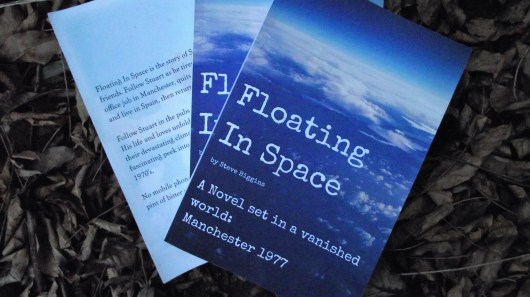
Click here to visit Amazon and download Floating in Space to your Kindle or order the paperback version.
 My Grandfather, George Higgins fought in the First World War with the Royal Horse Artillery and this is him in this splendid picture with his horse, Prince. My Dad had the picture with him in his wallet when he was in the forces and as time went on it got a little torn and tatty and somewhere, I suppose it must have been in Hong Kong where he was stationed for a while, he found a little photographic shop that specialised in rescuing old pictures. The background of the picture was originally a forest but the rescue work removed them in order to make the picture good.
 I thought it was important to get along with Granite so I made a point of bringing him a juicy carrot every week. Granite loved that carrot and he would frisk me with his nose every time we met. One day, Vanessa, the young girl trainer spied me and told me in no uncertain terms not to feed her horse! Why not? I asked. Well, she didn’t want strange substances going inside her horses she said. What exactly she meant by that I really don’t know but she was in earnest and kept a close eye on Granite and myself for any signs of contraband carrot!
 I’m not a great sports fan but I do like my motor sport. I first started following Formula One back in 1970 when I was a school boy.
 Back in the early 70s there wasn’t great TV coverage but I do remember watching the Monaco Grand Prix live on the BBC and I will always remember that moment when the potential winner, old hand Jack Brabham, slipped into the barrier on one of the last corners letting Jochen Rindt through to win.

 Neil Armstrong, the commander of
 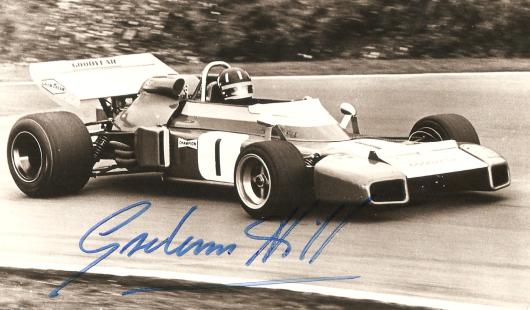 Graham Hill can’t really lay claim to being the greatest driver ever, but without a doubt he is one of the greatest motor sporting personalities to ever grace the racetrack. I wrote to him in the seventies and he responded with a card and his signature and it’s one of the prize autographs in my collection.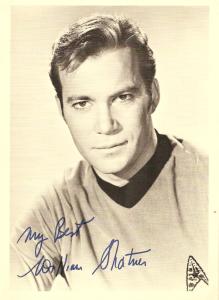

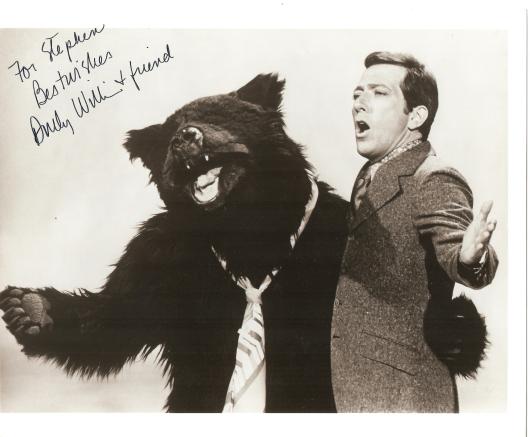

 You might be thinking, and believe me I can understand it if you are, what have Cillit Bang, Doctor McCoy and the launch of Thunderbird 3 got in common? Well it is simply this; together they are three small mysteries that have annoyed me for a while and in the case of Thunderbird 3, a very long time. Please read on . . .
 The Launch of Thunderbird 3.



 Don’t you hate it when you wake up with a tune in your head and can’t seem to get a handle on it? No matter what you do the half remembered tune is playing away in the back of your mind and you cannot concentrate on anything else because you desperately need to identify that tune. It happened to me recently and I was stuck with a tune tinkling away in the background of my head, annoying me no end when eventually a line of the lyric came to me and I was able to track the song down using google. It was a song called ‘The World is a Circle’ and it came from a musical version of Lost Horizon.
 As a teenager there was one, really important thing in my life. Music. And by music I am talking about singles. The BBC top twenty was all important to me and every Saturday night my mate Steve and I would drink beer and talk about women, sci fi and music. I bought numerous singles every Saturday. It’s very rare that I would buy something already in the charts for the full price. I’d usually wait until the record I wanted started to drop down the placings then I’d snap it up for half price. I spent a lot of time flicking through boxes of records in record stores with the end result that now, in 2016; I have a considerable amount of boxes of records. Ninety nine percent of them are singles. I was never one for albums because mostly albums let you down. You’d hear some great single by somebody new, buy their album and it rarely lived up to the single.
 Now that the X Files has returned to our TV screens I thought I might just take a quick look at TV spies and secret agents. I’ve always been interested in espionage, and the earliest TV spy show I can remember was the Man from Uncle. In case you don’t remember, the show starred David McCallum as Ilya Kuryakin and Robert Vaughn as Napoleon Solo. It was one of those slick and smooth TV shows from the USA and I even read somewhere that Ian Fleming, the creator of James Bond, had a hand in producing the series format.
 They recently remade the Man from Uncle into a big screen movie but looking at the trailer, a lot of the best elements were not there; the music, the suave Robert Vaughn, the boyish David McCallum. To be fair I should save my judgement until I’ve seen the film but can you really recreate something like the Man from Uncle on the screen, years later? I’m not so sure.