Here I am, raring to go. Laptop at the ready, focussed, ready to write this week’s blog. The thing is after 688 posts I’m not that sure what to write about. OK, so what about . . things that happened in October? Let’s dive in.
 One thing that happened in October was me! I was born on October the 3rd, quite a considerable time ago which is annoying on a number of levels. One, I’m getting a bit knackered. My back hurts, my knees ache. It’s hard to stand up straight but what is a real pain is when you get one of those things on the internet where you have to add your date of birth and I have to scroll back through the 90s, the 80s, the 70s, the 60s and finally to the 1950s.
Anthony Eden was the prime minister when I was born. He carried on until his resignation in 1957 due to ill health. At the top of the music charts or hit parade as they called it back then was Doris Day and Whatever Will be, Will be, Que Sera Sera.
My brother Colin was also an October child. He was born on the 10th of October but sadly wasn’t around to celebrate it this year. He would have been 65. My mother too was also born in October but more about her later.
John Lennon
Lennon was born on the 9th of October in 1940. His mother and father were Alfred ‘Freddie’ Lennon and his wife Julia. Alfred was a merchant seaman and was away at sea when John was born. He apparently went absent without leave but later turned up back in Liverpool. By then Julia was involved with another man, John Dykins and actually pregnant by him. Julia’s sister, Mimi decided to take John home and look after him in order to give Julia a chance of happiness with her new love John Dykins.

The last vinyl album I ever bought, and the last one that John lennon made. Double Fantasy. £2.99, what a bargain.
Mimi told Philip Norman, author of the book Shout, the True Story of the Beatles that ‘no man wants another man’s child’. Perhaps the fact that she had no children of her own played a part too. Julia continued to visit her son at Mimi’s house at 251 Menlove Avenue until 15th of July 1958.
John was staying with Julia and John Dykins for the weekend but Julia had called round to see her sister Mimi. When she left to catch her bus home she was hit by a car and killed. John Lennon’s world had been tragically changed.
Many moons ago when I worked for a cigarette vending company, I used to visit a small pub in Woolton in Liverpool and the owners of the pub were two retired ex shell tanker drivers. They were both friendly guys but one in particular was outgoing and talkative and if he was on duty at the bar we would always have a good chat while I sorted out the cigarette machine. One day we got onto the subject of the Beatles and I was surprised to hear that John Lennon’s house was just around the corner. Woolton is a very pleasant middle class suburb of Liverpool and I remember thinking what! This is where Lennon was brought up? Lennon’s image as a sort of working class hero led me to assume he had a background in a rough and tumble area of Liverpool, like the Dingle where Ringo lived. The truth was different. Perhaps Lennon fermented the working class hero thing, perhaps the fault was mine, I just assumed something without knowing the facts.
Driving round the corner I found Lennon’s old house, 251 Menlove Avenue. He was living here when he started his first band, the Quarrymen and also when he met Paul McCartney. Lennon’s life was one heck of a journey taking him around the world with the Beatles and finally to New York with Yoko Ono where he was shot and killed in 1980.
Marie Antoinette executed 1793
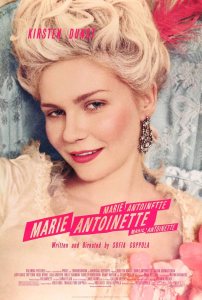
Kirsten Dunst as Marie Antoinette in the film version directed by Sofia Coppola
On October 16, 1793, Marie Antoinette, the deposed Queen of France, was executed by guillotine in Paris’ Place de la Révolution. After a swift and merciless trial before the Revolutionary Tribunal, she was found guilty of treason. Dressed in a simple white gown, her once-elaborate hair cut short, she was taken through the streets in an open cart, exposed to the jeers and insults of the crowd. Despite the humiliation she endured, she remained composed. When she accidentally stepped on her executioner’s foot while mounting the scaffold, she turned to him and said politely, “Pardon me, sir, I did not do it on purpose.” It was a final gesture of grace amid the chaos of the Revolution. Moments later, the blade fell, and with it ended the life of a woman who had once embodied the grandeur of Versailles and become the Revolution’s most reviled symbol. Her death marked both the destruction of the monarchy and the deepening ferocity of the revolutionary cause.
A famous phrase she is said to have spoken is ‘let them eat cake’ after being told that her subjects were starving and had no bread. Did she really say that? Probably not but in the original French, Marie referred to brioche, not cake. Brioche is a sort of sweet bread popular in France but either way, the phrase has been used as propaganda by the revolutionaries to show that the Queen had no time for the peasants.
Ghandi born October 2nd 1869
Mohandas Karamchand Gandhi was a leader of India’s struggle for independence and a global symbol of nonviolent resistance. Born in 1869 in Porbandar, India, he trained as a lawyer in London before developing his philosophy of satyagraha—the power of truth and peaceful protest—during his years in South Africa. Many people think his name is Mahatma but this was in fact a title bestowed upon him in 1915 and means ‘Great soul’. Gandhi became the moral and political heart of the freedom movement, leading campaigns of civil disobedience, boycotts and marches that challenged British colonial rule without resorting to violence. Gandhi’s assassination in 1948 shocked the world, but his ideals of peace, equality, and nonviolence continue to influence movements for justice and human rights across the globe. Quite a few years ago I picked up Ghandi’s autobiography and lost it before finishing it. I know I still have it somewhere and one day I will find it and finally finish it.
A biographical film about Ghandi directed by Sir Richard Attenborough was released in 1982. Attenborough had been trying to make the film since 1962 and the final production marked the realisation of a dream for the director. Ben Kingsley starred as Ghandi and the film won 8 Oscars at the Academy awards although there was some criticism of the film. I was surprised to find that the opening sequence where Ghandi is thrown off a train in South Africa was entirely fictional.
1990 East and West Germany Reunited
When the Berlin Wall fell on November 9, 1989, it marked not just the collapse of a barrier but the beginning of a profound transformation. For nearly three decades since the end of the Second World War, Germany had been divided, East and West separated by ideology, politics and a concrete wall that sprang up in 1963. The fall of the Wall was followed by a wave of hope and uncertainty as both sides faced the challenge of becoming one nation again. On October 3, 1990, reunification was officially declared, and the Federal Republic of Germany absorbed the former East German state.
The process was far from simple. Economically, the East lagged behind after years of communist rule and integrating two very different systems tested the country’s resilience. Yet, despite the struggles, rising unemployment, cultural adjustments and political growing pains, the spirit of unity prevailed and Berlin once again stood as the capital of a single, democratic Germany. Today, the reunification remains one of the most remarkable examples of peaceful transformation in modern history.
24th October 1929 Wall Street Crash
The Wall Street Crash of 1929 was a catastrophic collapse of the U.S. stock market that marked the beginning of the Great Depression. Throughout the 1920s, the American economy had boomed, and millions of people invested heavily in the stock market, even buying shares on credit. This speculation drove prices far above the real value of companies, creating a dangerous bubble. In late October 1929, confidence began to crumble. On October 24, known as Black Thursday, panic selling set in and by October 29, or Black Tuesday, the market had completely collapsed. Billions of dollars in wealth vanished overnight, leaving investors ruined and banks in crisis. The crash didn’t cause the Great Depression by itself but it exposed deep economic weaknesses and triggered a decade of mass unemployment, poverty and hardship across the United States and much of the world.
One of those who escaped disaster was Joe Kennedy, father of President John F Kennedy who apparently had invested in property, real estate as they call it in the USA, rather than stocks and shares.
Finally, bringing this blog back to a personal element, in 1929 my grandfather and grandmother had gone to Cheltenham to find work and on the 24th of October, the very day of the crash in the USA, my mother was born. She died in 2023 aged 93.
 My brother Colin died almost two months ago and even now I find it hard to believe. Going home a couple of weeks ago I picked up two pizza bases from the shops. I bought two without thinking because I’d usually make Colin and me a couple of small pizzas for when he came round for one of our regular bi-weekly chats.
 Hot, boiling, sweltering, humid: Any way you look at it the UK is hot! We can’t complain about a rainy summer this year but in the UK we are just not prepared for heat. In Spain for instance it’s perfect for a hot, sunny, holiday. They have their cool outdoor pools, their outdoor bars and restaurants, and if we want to cool down more then we can go inside where traditionally built Spanish properties with their tiled interiors and whitewashed exteriors positively hug any coolness that might be about.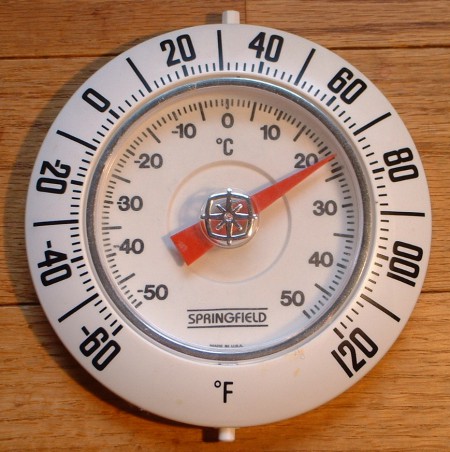

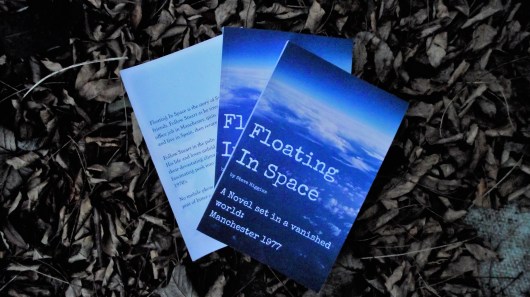
 A while ago I published a post called ‘
 Travel.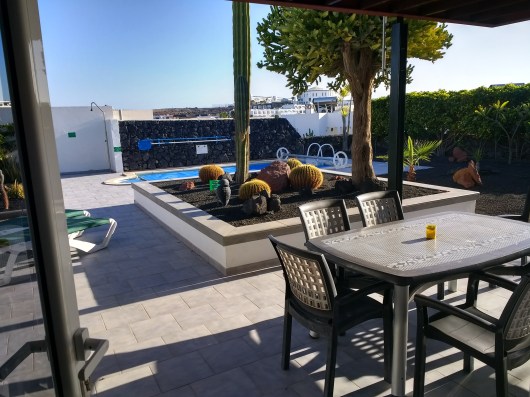
 I have to admit, this isn’t a totally new post. It’s one I’ve used before but this version has had a major update. OK, don’t start giving me stick. Week after week I produce new content, all of it reasonably interesting I think, well at least to me. So I think I’m entitled to a week off and an easy blog post. After all, I’m a busy guy, I’ve got stuff to do that involves things like drinking,
  Reading.
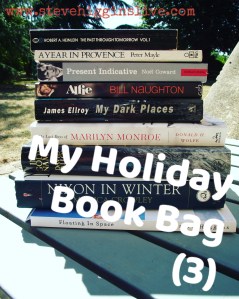 I’m just not into busy, rushed holidays. I prefer the quiet, relaxing type; the ones that involve sunny days, swimming pools and plenty of leisure time to read books. I read at home too but that is a different sort of reading; a few minutes here, a few minutes there. I’ll read on my lunch break at work in between eating my sandwiches and drinking tea but the best way to read, the way to really get into a book is a long uninterrupted read while you lie on your sun lounger with the pool handy nearby for when it gets a little too hot. A quick dip then you are back to the thoughts of your chosen author.
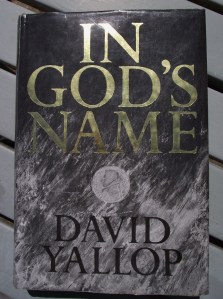 I bought this book originally on the 3rd March, 1987. I know that for a fact because back then I used to write the date on all my book and record purchases. I have read it a number of times and it is a fascinating read. It ticks all my personal boxes of history and modern mysteries. Why, you might ask would anyone want to murder the Pope? Good question and the answer, according to the author is the Vatican Bank. The Vatican, thanks to Mussolini, is a separate independent state and so the Vatican bank, registered in the Vatican state is not answerable to the banking laws and inspectors of Italy. This idea appealed to various unscrupulous individuals, notably Licio Gelli – the head of an illegal and secret masonic organisation known as P2, Roberto Calvi – a banker with ties to P2 and the Mafia, and Michele Sindona, another criminal. Together they engineered the movement of various shares and monies, using the Vatican bank. A man called Albino Luciano, the bishop of Venice, became aware gradually of various wrongdoings in the bank and was particularly dismayed by the action, or inaction of Bishop Paul Marchinkus, the head of the Vatican Bank. In 1978, after the death of Pope Paul VI, Luciano was elected Pope. He was a man dedicated to the ideas of Jesus, a simple carpenter from Nazareth and he wanted the church to follow his example. He did not want a church that had a multi million dollar profit in stocks and shares, he wanted a poor church, a church that properly reflected the feelings of its founder. When he was elected the new Pope, Luciano’s ideas and those of the aforementioned individuals were on a collision course. David Yallop’s investigation is intensive and revealing and I came away from the book feeling an intense sadness that a good and decent man, a man who would have been a great Pope and spiritual leader had been stolen from us by the greed of a few men.
 A Year in Provence by Peter Mayle.
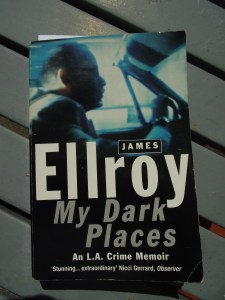 My Dark Places by James Elroy.
 The first one involved a pedestrian who crossed the M6 motorway running lanes and was hit by a car. Police officers believed he had spent the afternoon and evening at a nearby race course, attended some evening festivities and for whatever reason, decided to walk across six lanes of motorway traffic. Initial reports were for a drunken pedestrian so I can only guess that the man was intoxicated and in that inebriated state made a foolish decision and was killed.
 Letters from an Unknown Author!