 I’m not a great sports fan but I do like my motor sport. I first started following Formula One back in 1970 when I was a school boy.
1970 was a pretty exciting year for formula one racing. Colin Chapman and his Lotus team had unveiled their new Lotus 72, a revolutionary ground-breaking car that set the standard for formula one cars for years to come. Jochen Rindt won the World Championship but sadly he was killed in practice for the Italian Grand Prix at Monza. His points score was never overtaken and so he took the crown posthumously. In fact three F1 drivers were killed that year, Rindt, Bruce Mclaren, the founder of the Mclaren F1 team, and Piers Courage who drove for Frank Williams, a black year indeed for motorsport.
 Back in the early 70s there wasn’t great TV coverage but I do remember watching the Monaco Grand Prix live on the BBC and I will always remember that moment when the potential winner, old hand Jack Brabham, slipped into the barrier on one of the last corners letting Jochen Rindt through to win.
A few years later the BBC was not happy about the explosion of advertising on Grand Prix cars and the crunch came when the cars of John Surtees displayed advertising for Durex. The BBC pulled the plug and F1 effectively vanished from British TV screens for a long while. Towards the end of the seventies the BBC began to broadcast the odd race now and again and then their show ‘Grand Prix’ with long time commentator Murray Walker began in 1978 although I don’t think they broadcast the entire season until 1979.
For most of the seventies I had to depend on BBC radio to find out what had happened at the Grand Prix. In 1978 I listened to a report from the Italian Grand Prix about a crash just after the start in which Ronnie Peterson was injured. Ronnie had broken both legs and been taken to hospital. I was glad to hear he was OK. Ronnie was one of those drivers who appeared to me to be destined for a world championship. If someone had told me in the early seventies that Niki Lauda would be a three times champion I would have laughed out loud. He didn’t look or sound like a champion, unlike Ronnie, his team mate at the STP March team in 1972. The next day I picked up a newspaper and was shocked to find Peterson had died during the night from a fat embolism resulting from his broken bones.
Senna, Mansell, and Prost were the great drivers of the eighties and Gerhard Berger sometimes looked like a future champion although he never made the cut. He survived a terrible crash at Imola in 1989 when he hit the wall at Tamburello and his Ferrari burst into flames. I was watching the race live and thinking how could anyone survive that but moments later a marshal’s van drove up and quickly put the fire out. Berger survived with only 1st degree burns to his hands.
Mansell won a great race at Silverstone in 1987, probably one of my favourite races. It was a gamble on Mansell’s part, turning up the boost on his Honda turbo engine to catch Piquet and on the last lap he should have ran out of fuel. According to his dashboard he had, but his Williams somehow kept running to the end finally grinding to a halt on the slowing down lap.

Alain Prost Mclaren 1988 German Grand Prix
Alain Prost retired after a comeback season with Williams when he walked to his final world championship in 1993. In 1994 the Grand Prix circus came to Imola for the San Marino Grand Prix and I remember well watching the race live on TV when Senna crashed, again at Tamburello. Someone said to me ‘he’s dead’ but I disagreed, Berger’s crash was worse and he survived. Sadly, Senna did not.
Television has had a great influence on formula one racing. In the nineties Bernie Ecclestone seemed to be trying a lot of tweeks to get more viewers, especially after one rainy Saturday qualifying round when hardly any drivers went out on track. Naturally really because they could not hope to improve on the previous day’s dry running. That spelled the end of Friday qualifying and from then on, only times set on a Saturday counted towards the grid. That tweeking resulted in an interesting knockout qualifying format which is enjoyable and good for the sport but it hasn’t stopped the rulers of F1 trying to fiddle with it even more and that interference has cast a cloud over the first part of the 2016 season.

Bernie Ecclestone (image courtesy Wikipedia)
Formula One team bosses are currently in something of a panic. Investors have poured millions of pounds into F1, not because they like the sport but because they find their investment can pay off big style in these days of multi million pound global TV and advertising deals. Reports of failing interest in the sport however has rung alarm bells and throughout the motorsporting media there have been calls to make F1 more interesting. Why are the cars not louder? Why are Mercedes winning all the time? Should we bring back refuelling? Is the high tech aspect ruining the driver input? There are even calls for Bernie Ecclestone, the aging F1 emperor to hand over to someone else. Only time will tell what will happen.
It sometimes makes me smile when I compare Formula 1 to other sports like cricket. Can you just imagine if Ecclestone and his investors had a stake in cricket and the TV viewing figures were down? What would happen then? Increase the number of overs? Maybe have an extra ball in each over, seven instead of six? Change the wooden ball to a rubber one? Add an extra stump?
Maybe they will resolve the issues, maybe not. F1 racing goes from terrestrial channels to Sky pay per view in 2019. Will I be subscribing? I’m not so sure . . .



 MASH has always been one of my very favourite TV comedy programmes. You may have read in another post about how I used to
  Now, you might be wondering about that other part of this post’s title, the bit about the emotional indicator. Yes, I thought you might. It’s not so easy to explain but here goes. Most TV shows and movies have a sort of standard emotional indicator that stays pretty constant throughout the show. Take a look at the graph over to the left and let’s put some numbers up. Say a baseline of zero for a standard, calm emotional level. Now, when the show gets funny that level goes up to something like 15 for instance and I’d even say that in a movie like Police Academy that 15 or higher would be a constant throughout the film, well for me certainly. The original Police Academy movie is one of my favourites and I tend to start laughing round about the start of the film with the scene in the parking lot where Steve Guttenberg says the parking lot is full and then the guy comes in and says ‘park the car dirt bag!’ I usually stop laughing round about the end credits but on a normal film there’s a constant up and down: up when the film gets funny and down to nil when we get back to normal.
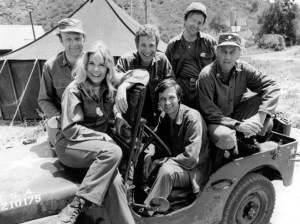 Mash ran for 11 seasons and an incredible 256 episodes. Trapper, played by Wayne Rogers, was my favourite character after Hawkeye and he left the series after season three to be replaced by Mike Farrell playing new doctor B J Hunnicut. Colonel Blake (McLean Stevenson) also left at the end of season three. His character was discharged but right at the very end of the episode news came through to the MASH that the Colonel’s aircraft had crashed with no survivors. This episode prompted an outpouring of grief and resentment from fans at the death of the character. I could understand perhaps Colonel Blake dying part way through the episode and the second part showing the sadness and grief of the rest of the characters but it seemed to me that Colonel Blake’s death was almost an afterthought, just tagged on to the end of the episode. As time went on many of the other series regulars left including Gary Burghof (Radar) and Larry Linville (Frank Burns) and for me personally, the series was never the same.
 Friends and Bloggers. I have recently been made the recipient of a Blogger Recognition Award. I feel very humble in accepting this and I have to thank my fellow blogger
  I really do love books, especially second hand books. I think that what is so wonderful about a second hand book is that the book has told its story before to someone else, and now if you have just bought it, its going to tell it’s story to you. I spend a lot of time browsing in book shops, both physically in actual shops or on-line in virtual book stores. The thing about on-line book stores is that you have to have a starting point, it’s no fun browsing through lists of books so I tend to browse on-line only when there is a particular book I want. In an actual book store I scan through the various sections and although I tend to linger on biographies and books about film, anything can catch my eye. A while ago I was reading a book by movie director Michael Powell called ‘A Life in Movies.’ It was a pretty thick book and took a fair old while to read and when I got the end there didn’t seem to be any indication there was another volume.
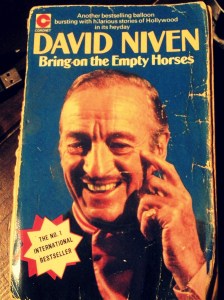 You might be thinking, looking at the picture here: Couldn’t the author have found a better picture? Looking at the picture again I suppose that particular copy is just a little tatty. That’s because it’s my travel copy. I’ve got another copy, a much nicer version that resides in my bookcase that I browse through now and again. The reason I’ve got two versions is because my travel copy goes all over the place with me. If I’m travelling somewhere on the bus or train, that slightly tatty copy goes easily into my pocket or my bag because I can read it time and time again. Not only is it the best ever book written about the golden age of Hollywood, it’s also by far the most accessible and readable book on the subject ever.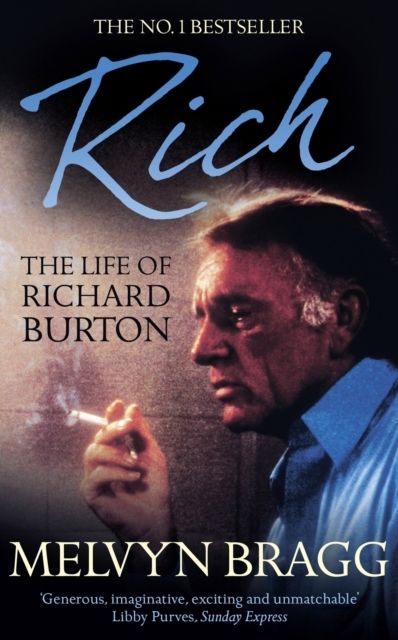

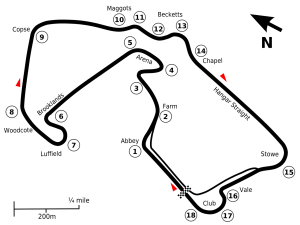 Today, it seems to me as though Silverstone is trying to turn itself into Brands Hatch because in the past decade they have added various twisty sections and an entire new pit and garage complex. Many other traditions have vanished too in F1 such as the annual post British Grand Prix cricket match; not possible today unfortunately as the latest drivers are prone to dash off home at the end of the race at the earliest possible opportunity. Even a DNF (did not finish) is not all bad if it fits in with an earlier flight.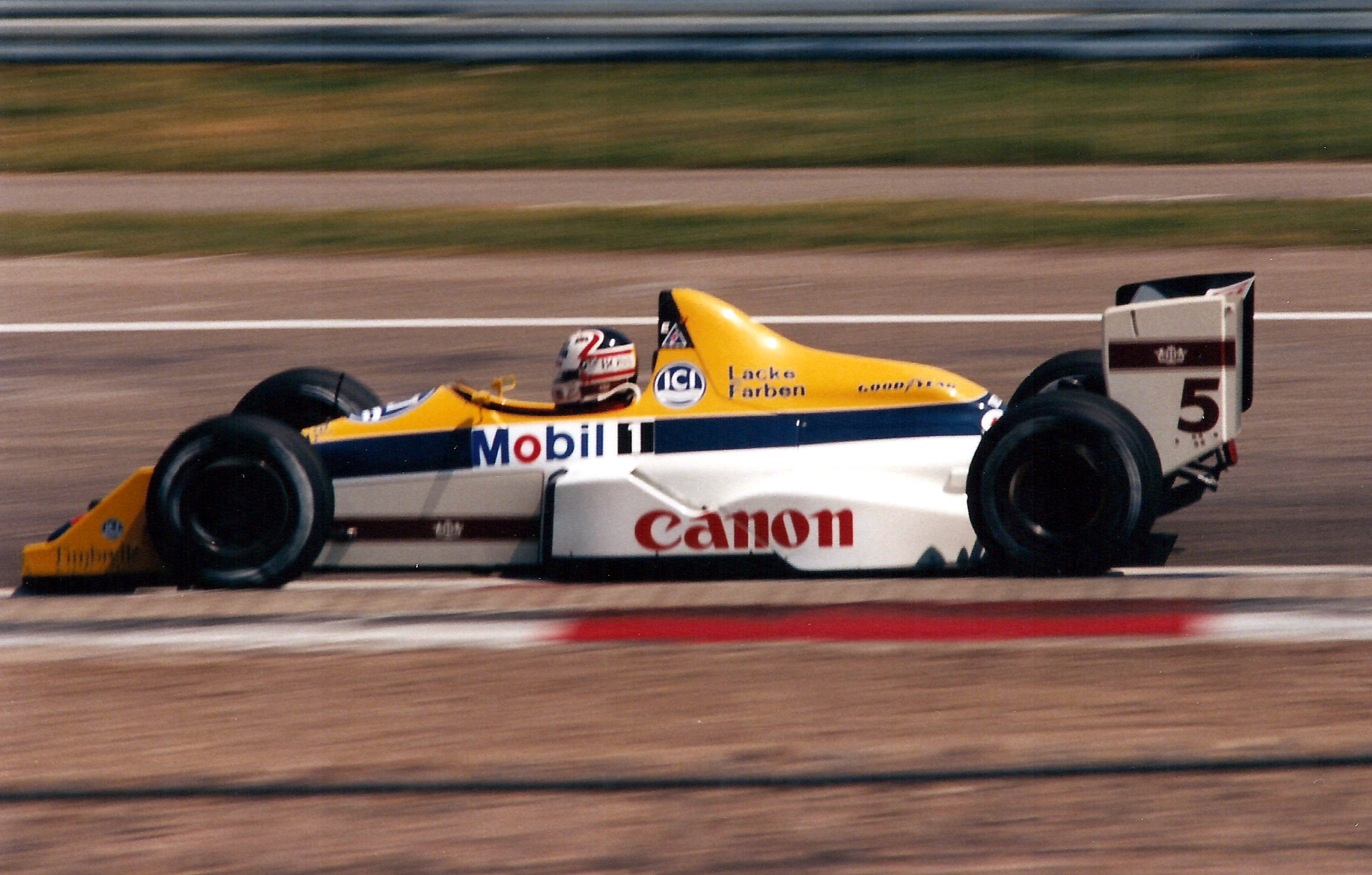
 Letters from an Unknown Author!