The Film of the Book or the Book of the Film (Part 2)

It’s always  a bitter-sweet experience when someone decides to make your favourite book into a film. It doesn’t always work out because maybe it was a big, thick, long book and they have cut out your favourite bit, or perhaps the cast wasn’t the one you imagined. It’s usually just the same in reverse. You see a great film and in the credits it says based on the book by so and so, then you rush out and get the book and it turns out to be a little disappointing. Sometimes it’s even better than the film!
You can read the Film of the Book part 1 by clicking here. Meanwhile, here are a few more of my film/book experiences.

Rebecca (the film)

Rebecca was directed by Alfred Hitchcock and released in 1940. Laurence Olivier plays Max De Winter and Joan Fontaine is particularly good as the shy, unworldly new wife of the rather grand Max De Winter.

Max and his new wife, who is never named in the novel as she is also the narrator, meet in the south of France, marry and return to Max’s grand country house Manderley, in Cornwall. There they settle into country life rather uneasily, as lurking always in the background is the spectre of Max’s late wife Rebecca who died in a boating accident.

Also lurking in the background is the housekeeper of Manderley, Mrs Danvers. She was devoted to Rebecca and her presence seems to cloak the house in a sinister gloom. George Sanders plays his usual suave smooth talking self; in this film he is the apparent lover to the late Rebecca. A number of incidents occur making the new wife believe her husband resents her and prefers Rebecca. Nothing could be further from the truth as we find out when Rebecca’s body is discovered in the cabin of her sunken boat just off the coast. Max reveals he had an argument with Rebecca, struck her and she fell, hitting her head on some heavy fishing tackle. He carried her dead body to her boat, took to sea and scuttled the small vessel, creating the lie of her death at sea. Now the body has come to light, George Sanders’ character comes forward with a letter from Rebecca, inviting him to visit on the day of her death and with this he decides to blackmail De Winter as this shows she could not have contemplated suicide.

There is a nice twist at the end which I won’t give away but Rebecca is a wonderful film, well worth looking out for on one of the many movie channels available these days.

One disappointing aspect of the film was the rather cheap model of Manderley used at the beginning and end of the film. If I was Hitchcock I would have been tempted to revisit the film in the 1960’s and add some better model effects.

Rebecca (the book) by Daphne Du Maurier

The book is written in the first person by the unnamed new wife of Max De Winter. It’s a very good read indeed and I enjoyed it very much, so much so I had to take it out of my work’s bag (I’d been reading at work during my dinner breaks) and take it into the garden on a lovely sunny day as I was so keen to get to the end. It is very similar to the film although in the book De Winter actually shoots his wife unlike the film where De Winter strikes her and she falls and hits her head. The ending is also rather abrupt but an excellent read, well worth picking up if you see a copy for sale.

Serpico (the film)

Al Pacino stars in the true story of Serpico, a New York City cop who tried to fight the culture of bribery and corruption in the NYPD in the 60’s and early 70’s. This 1973 film is directed by Sidney Lumet and is shot in a gritty natural style. It starts with Serpico being shot in the face and then on his way to hospital it flashes back to tell the story of rookie cop Frank Serpico and his graduation to detective and his refusal to take bribes. It is shot and acted in a very natural documentary style and the film portrays Serpico’s ongoing disappointment with his superiors and those he trusts to look into the situation very well indeed. A brilliant example of 70’s moviemaking at its best.

Serpico (the book) by Peter Maas

It’s a long while since I read the book and despite a lengthy search I couldn’t get my hands on it for a read through for this post. It was a fascinating read as I remember, reading more like a work of fiction than the true story it really was.

Serpico (the DVD)

Since I couldn’t say much about the book I just want to throw in a quick comment about the DVD. One thing I love about DVDs are those special versions with extended features, documentaries and so on. On the DVD of Serpico there is an interview with the producer Dino De Laurentiis where he tries to explain the character of Serpico this way; He and Serpico go to a screening of a film in New York. They are checking out possible directors or something, anyway, the theatre is empty and ignoring the no smoking sign, De Laurentiis decides to light up. ‘Wait a minute’ says Serpico, ‘you can’t smoke in here.’ De Laurentiis replies ‘what does it matter? There is no one here but us.’

Serpico points to the no smoking sign and replies ‘look, you just can’t smoke here’ and makes the producer put out his cigarette. That, says Dino on the DVD, was when he began to understand what Serpico was about. There were no grey areas with him, everything was black and white.

The Big Sleep (the book) by Raymond Chandler 

The Big Sleep, which refers to death in American gangster speak was the first of Raymond Chandler’s novels to feature his famous detective Philip Marlowe. Marlowe was described by one reviewer as ‘a 20th-century knight who treads the mean streets of Hollywood and Santa Monica, and who also visits the houses of the stinking rich, with their English butlers, corrosive secrets and sinister vices.’ I couldn’t have put it better myself. In the Big Sleep Marlowe is summoned to the house of General Sternwood whose daughter is being blackmailed by a seedy bookseller.

Sternwood, a crippled old man spends his time in a heated conservatory and seems to draw strength from the overwhelming heat. He engages Marlowe who sets off on a trail of blackmail and murder. I have to say the film rather confused me and it was only after reading the novel that I began to understand some of the intricacies of the plot.

The Big Sleep (the film)

Director Howard Hawks was also aware of the complexity of the novel. He once asked Raymond Chandler who had shot the chauffeur. Chandler replied that he had no idea.

The movie version from 1946 stars Humphrey Bogart and Lauren Bacall and I used to think that this was the film where Bogart and Bacall met although in fact it was actually another movie, ‘To Have and Have Not‘, also directed by Howard Hawks. By the time of ‘The Big Sleep’ their romance was in full swing. Later Bogart left his wife Mayo and he and Bacall were free to marry.

The opening of the film where Bogart meets the general is brilliant. The wayward daughter remarks he is not very tall. ‘I try to be’ Bogart replies. Later, the other daughter played by Bacall says she doesn’t like Bogart’s manners. He replies ‘I’m not crazy about yours. I didn’t ask to see you. I don’t mind if you don’t like my manners. I don’t like them myself. They’re pretty bad. I grieve over them on long winter evenings.’

My advice, get yourself the DVD, pour yourself a large glass of red, press play and relax and enjoy.

The Silence of the Lambs (the Film)

The film was released in 1991 and it’s one of those films that seemed to naturally self-publicise itself, one of those word of mouth films that everyone at the time was talking about. It’s a gruesome film in parts and not really my usual sort of film but what is appealing is the slow relentless process the FBI makes to track down the killer and the procedures and techniques they use. Jodie Foster plays FBI trainee Clarice Starling. She is sent by the head of the FBI’s Behavioural Science Unit to interview captured serial killer Hannibal Lector played by Anthony Hopkins, in the hope he might give some clue or insight into helping with the capture of a new serial killer known as Buffalo Bill.

Hopkins gives a chilling portrayal of the psychotic serial killer and Jodie Foster and the other principals were given much acclaim for their performances. The film was only the third to win Oscars in the top 5 categories: Best Picture, Best Actor, Best Actress, Best Director, and Best Adapted Screenplay. It is perhaps the only horror film ever to win the best picture award.

The Silence of the Lambs (the Book) by Thomas Harris

The book, like the film, focusses on the FBI and their attempts to trace the killer known as Buffalo Bill. Trainee agent Clarice Starling builds up a relationship with imprisoned murderer Doctor Hannibal Lector where Lector dribbles out bits of information in exchange for personal details about Clarice herself. Clarice, the vulnerable young FBI agent is a sort of counterpoint to the evil Murderer Dr Lector.

The book like the film is more of a horror story than a detective novel. I felt drawn to the passages that were chilling and gruesome in a strange way, almost like when a spider appears and I’m compelled to watch it even though I hate spiders. The relationship between Lector and Starling is intriguing and is really more of a focus than the capture of the Buffalo Bill and I did find myself wondering whether Lector might want to murder Clarice or perhaps his interest in her is something different.

I read the follow up book, Hannibal, expecting more of the same but it was even more gruesome and had a strange implausible ending. Since then I’ve steered clear of Mr Harris’ books but Silence is a great read.


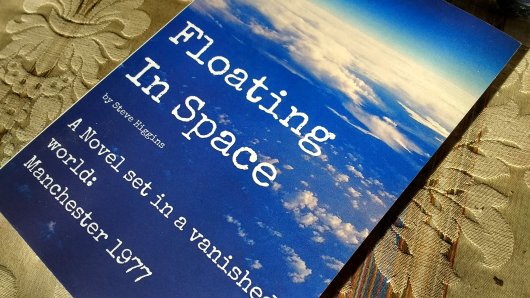
Floating in Space is a novel set in Manchester, 1977. Click the links at the top of the page to buy or for more information.

The Speech of Chief Seattle

quotescover-JPG-93The President in Washington sends word that he wishes to buy our land. But how can you buy or sell the sky? The land? The idea is strange to us. If we do not own the freshness of the air and the sparkle of the water, how can you buy them?

Every part of the earth is sacred to my people. Every shining pine needle, every sandy shore, every mist in the dark woods, every meadow, every humming insect. All are holy in the memory and experience of my people.

We know the sap which courses through the trees as we know the blood that courses through our veins. We are part of the earth and it is part of us. The perfumed flowers are our sisters. The bear, the deer, the great eagle, these are our brothers. The rocky crests, the dew in the meadow, the body heat of the pony, and man all belong to the same family.

The shining water that moves in the streams and rivers is not just water, but the blood of our ancestors. If we sell you our land, you must remember that it is sacred. Each glossy reflection in the clear waters of the lakes tells of events and memories in the life of my people. The water’s murmur is the voice of my father’s father.

The rivers are our brothers. They quench our thirst. They carry our canoes and feed our children. So you must give the rivers the kindness that you would give any brother.

If we sell you our land, remember that the air is precious to us, that the air shares its spirit with all the life that it supports. The wind that gave our grandfather his first breath also received his last sigh. The wind also gives our children the spirit of life. So if we sell our land, you must keep it apart and sacred, as a place where man can go to taste the wind that is sweetened by the meadow flowers.

Will you teach your children what we have taught our children? That the earth is our mother? What befalls the earth befalls all the sons of the earth.

This we know: the earth does not belong to man, man belongs to the earth. All things are connected like the blood that unites us all. Man did not weave the web of life, he is merely a strand in it. Whatever he does to the web, he does to himself.
One thing we know: our God is also your God. The earth is precious to him and to harm the earth is to heap contempt on its creator.

Your destiny is a mystery to us. What will happen when the buffalo are all slaughtered? The wild horses tamed? What will happen when the secret corners of the forest are heavy with the scent of many men and the view of the ripe hills is blotted with talking wires? Where will the thicket be? Gone! Where will the eagle be? Gone! And what is to say goodbye to the swift pony and then hunt? The end of living and the beginning of survival.

When the last red man has vanished with this wilderness, and his memory is only the shadow of a cloud moving across the prairie, will these shores and forests still be here? Will there be any of the spirit of my people left?

We love this earth as a newborn loves its mother’s heartbeat. So, if we sell you our land, love it as we have loved it. Care for it, as we have cared for it. Hold in your mind the memory of the land as it is when you receive it. Preserve the land for all children, and love it, as God loves us.

As we are part of the land, you too are part of the land. This earth is precious to us. It is also precious to you.
One thing we know – there is only one God. No man, be he Red man or White man, can be apart. We are all brothers after all.

* * * *

The speech of Chief Seattle above follows on from last week’s post where I reviewed Bury my Heart at Wounded Knee by Dee Brown.

The speech is controversial in many ways. It clearly was not recorded but jotted down at the time so, as many people have said, the speech can hardly be verbatim.  It has been added to and tidied up over the years. Whatever has happened to the text, the result is a highly eloquent plea from across the years for us to consider this planet on which we all live. Even if Chief Seattle’s speech was only half as good as the one above, it shows the Chief to have been a particularly wise and thoughtful man.


Steve Higgins is the author of Floating in Space set in Manchester, 1977. Click the links at the top of the page to buy or for more information.

Bury my Heart at Wounded Knee

I can’t really remember when I became interested in Red Indians, or to be more precise, Native American Indians. In a way it was an interest in philosophy and the meaning of life that led me to them. I liked the idea of the Great Spirit and the Mother Earth. Those intrinsic ideas of nature and faith greatly appealed to me and showed me a different Indian to the one I have seen on feature films, here was a thoughtful race, in tune with nature. A speech made in 1854 by Chief Seattle has always moved me and in part says this:

This we know: the earth does not belong to man, man belongs to the earth. All things are connected like the blood that unites us all. Man did not weave the web of life, he is merely a strand in it.

What more eloquent description of the world and man’s place in it could there be?

Bury my Heart at Wounded Knee is a book by Dee Brown published in 1970. It is a sad book telling a sad tale of murder, lies and ethnic cleansing. It tells the story of a proud race of people driven from their homes by invaders from Europe and forced to leave behind their homes, their memories and their traditions. Much of the book is in the actual words of the Indians whose words were taken down in treaty meetings and councils, by government stenographers.

Columbus arrived in the new world in 1492 and he described the natives at ‘tractable and peaceable’ yet in less than a decade Spaniards had looted and burned villages in their search for gold and treasure, kidnapped men, women and children for sale as slaves and destroyed entire tribes. Things were similar on the east coast of the country. Englishmen landed in 1620 and found the natives friendly and even helpful. They would probably have died during their first winter in America had the natives not showed the newcomers where and how to fish and how to cultivate and plant corn. For several years the Indians and the new white settlers lived in peace but then more and more settlers arrived and settlements in the place the newcomers called New England became more crowded.

in 1625 some of the colonists asked the Indians for more land. The Indians who knew that the land came from the Great Spirit and belonged to no one went through a ceremony to give the English more land. It was more to humour these strange men that the Indians did so but it was the first deed of Indian land to English colonists.

When Massasoit, the chief of the Wampanoags died in 1662, his people were being pushed back into the wilderness as so many more Englishmen arrived and their settlements became bigger. The New Englanders flattered the new Indian chief Metacom and crowned him ‘King’. Metacom though made new alliances with other Indian tribes and in 1675 began a war to save the tribes from extinction. The firepower of the colonists however overwhelmed the Indians and Metacom was killed and his head publicly displayed at Plymouth for the next twenty years. His wife and son were sold into slavery.

Over the next two hundred years these events were repeated time and time again as the colonists moved ever westwards. In 1829 Andrew Jackson took office as President of the United States.. He suggested setting an ample district of the country, west of the Mississippi, to be guaranteed to the Indian tribes. On May 28th 1830 Jackson’s recommendations became law. Two years later he appointed a Commissioner of Indian Affairs to see this was carried out and then on June 30th 1834 Congress passed An Act to Regulate Trade and Intercourse with the Indian Tribes and to Preserve Peace on the Frontiers. All the land west of the Mississippi and not part of Missouri, Louisiana or Arkansas would be Indian country. Also, no white persons would be able to trade in the Indian country without a licence and no white persons would be allowed to settle on Indian lands. However, a new wave of settlers surged west and formed the territories of Wisconsin and Iowa and so the Indian frontier was shifted even further west.

At the beginning of the 1860’s the American Civil War began. Perhaps the Indians hoped the white men would destroy each other but it was not to be. The colonists wanted more and more land and the Indians had to cede more and more to the newcomers until there was nothing left for them to give. One thing they would not give was the Black Hills.

The Black Hills were sacred to the Indians. Paha Sapa was the centre of the world, the place where warriors went to speak with the Great Spirit and await visions and where the spirits of their ancestors dwelt. In 1868 the Great Father, the President, considered the hills worthless and gave them to the Indians forever by treaty. Four years later the cry of ‘gold’ was raised and miners and pan handlers made a bee line for the hills. Many were killed or chased out by the Indians but by 1874 gold crazy prospectors were making such a hue and cry that the army decided to send soldiers to the area for a reconnaissance. A thousand pony soldiers of the 7th cavalry marched into the area  commanded by General George Armstrong Custer. Custer had years before slaughtered Black Kettle’s Southern Cheyennes. Red Cloud of the Oglala Sioux was not happy. He made complaints to the Great Father in Washington but their response was to send negotiators to buy the Black Hills. Councils were set up with the chiefs of all the tribes in the area but the word was firm. The Black Hills had an importance to the tribes that went beyond money. They would not sell.

The negotiators packed up and returned to Washington. Their recommendation? That congress ignore the wishes of the Indians, take the land and pay a ‘fair equivalent of the value of the hills.’ to the Indians.

On December 3rd the Commisioner of Indian Affairs ordered all Indians to report to their reservations by January 31st. This was impossible as all the tribes were at their winter lodges and many were searching for game to assist with their meagre rations. A mixed band of Oglala Sioux and Northern Cheyennes were hunting Buffalo in the Powder River area. On March the 17th they were asleep in their lodges when a company commanded by Captain James Egan charged through the sleeping camp. At the same time a second troop of cavalry came in from the left flank while a third swept away the Indians’ pony herd. Many were killed. The Indian Teepees were burned with everything inside and the survivors were left with nothing, no food or weapons and only the clothes they were wearing. Later that night while the soldiers camped, the survivors returned and stole back their horses, then without adequate food or clothing they made their way to the camp of Crazy Horse. The Oglala chief took in the survivors and gave them food and shelter.

As the weather warmed the Sioux and Cheyenne decamped in accordance with their treaty rights as hunters. Several thousand Indians of many tribes came together. After an engagement with the forces of General Crook the chiefs decided to move to the valley of the Greasy Grass, or as the Americans called it, the Little Big Horn.

Some minor battles with other US cavalry groups had occurred before the  Little Big Horn engagement, notably with Major Reno. It seems that when the Indians attacked Custer’s 7th Cavalry, Custer meant to break back south and meet up with major Reno’s forces not knowing that they had already been beaten back by Indian forces. Custer also apparently did not realise the true scale of the Indian forces. Five of the 7th Cavalry’s 12 companies were annihilated and Custer was killed, as were two of his brothers, a nephew and a brother-in-law. The total US casualty count included 268 dead and 55 severely wounded (six died later from their wounds).

After the battle the tribes hunted and feasted. Generals Crook and Terry would not attack again until reinforcements arrived. By then, many of the tribes had left for their own reservations and lands and the huge force that had existed before was gone. The Sioux were finally defeated by General Miles in 1877. Threatened with starvation the tribes were forced to finally sell the Black Hills.

One last sad story is one that gave its name to the title of Dee Brown’s book. In December of 1890 a band of Lakota Indians were escorted to the Wounded Knee creek where they camped. The next day Major Whiteside’s regiment was replaced by soldiers of the newly built up regiment once commanded by Custer and now led by Major James Forsyth. Forsyth decided to disarm the Indians and had his troops surround them. He had new Hotchkiss guns set up on a hill to cover the camp.  It is not certain what happened but the next morning one Indian was reluctant to give up his rifle. Soldiers tried to seize the rifle and a shot was heard. Perhaps it was the Indian, Black Coyote, perhaps not. Soldiers then opened fire, shooting indiscriminately. Fighting began but as only a few of the Indians had weapons they were forced to flee. Then the Hotchkiss guns on a hill overlooking the area opened fire, raking the teepees and killing women and children and anyone in their path. 153 were known to be dead but many died later from their wounds.

Bury My Heart at Wounded Knee tells of the Cheyenne, the Sioux, the Arapaho, the Brules, the Cherokees, the Shoshone and hundreds of others, their names now forgotten. It tells of chiefs like Sitting Bull, Crazy Horse, Standing Bear, Geronimo, Red Cloud, Cochise and many more. All are gone and few remembered but the Native Americans survive to this day. Many have adapted, many have changed. Most live in poverty on reservations described by observers as being like third world nations.

Today, the Sioux still ask for the return of their lands. In a 1980 ruling, the U.S. Supreme Court found that “a more ripe and rank case of dishonorable dealing will never, in all probability, be found in our history.” It authorized a settlement now worth nearly $200 million, but ruled that it had no power to return the land. The Sioux live in poverty, yet they refused the pay out.

The Hills, the Indians say, are sacred soil, Wamaka Og’naka I’cante, the heart of everything that is, and not for sale.

The fight for the return of their lands goes on.

Bury My Heart at Wounded Knee is still in print 48 years after its publication in 1970

For more information, read this article in the New York Times or this one on the PBSO news Hour page.


Enjoyed this post? Why not try my book Floating in Space set in Manchester, 1977? Watch the video below for a quick taster or click the options at the top of the page for info or to buy!


Another Slice of My Life

A while ago I published a post called ‘A Slice of my Life‘ which was in fact a homage to a similar post by one of my favourite bloggers, a fellow from the USA. You might be thinking OK, Steve’s run out of ideas, he’s got to pinch something from some other blogger. Well you’re free to think that if you want but I’m sticking to my version, that I was so impressed by that rival blog I produced a ‘homage’. In music terms we could say I ‘sampled’ his post which is when you get a great record that has pinched something from a much better original. (Did he say ‘pinched’ I hear you asking?)

Anyway, as I’m a little short of ideas, I though I’d revisit that theme again, this time, no pizza involved.

This week Liz and I visited a psychic event. It was some kind of charity function and consisted of three mediums who demonstrated their psychic powers to a small audience. Liz and I and another couple arrived early and grabbed front row seats although sadly the bar was closed for the duration of the event. Pity because I quite fancied a pint of lager, however it was thought that activity at the bar might disturb the vibrations from the ‘other side’. Oh well.

The event kicked off with the first medium. Unfortunately this particular lady looked very like a character from a short-lived sit com that Liz and I both loved. It was called Early Doors and revolves around a small public house in Manchester called the Grapes and the group of regulars who drink there. Two of the characters are Eddie and Joan who always sit in the corner and discuss issues like temporary traffic lights, Joan’s mother’s cats and ‘chippy’ teas. Joan was the absolute spitting image of our first medium and it was all I could do to keep a straight face. Anyway, this lady started off by picking up vibrations from a lady who had passed over to the other side. No one seemed to recognise this lady until our medium focussed on a lady in the audience who she was ‘drawn’ to. Eventually the lady in the audience recognised her father from the vague descriptions given and seemed pretty impressed with the information given from the other side.

The next lady started off with another vague description but no one wanted to be a part of it. No one had relations overseas or knew a stocky gentleman who had passed over with throat issues so that one really died the death, if you know what I mean. Everything then stopped for a tea break. Now, you might get the idea from these remarks that perhaps I’m not a believer in psychic or mediums or indeed the afterlife. No, not true. I do believe the human spirit survives death but when the psychic looks like a character from your favourite sit-com, her credibility goes right out of the window.

One of the great things about my current semi-retired status is that I only work three shifts and then can look forward to six lovely days off. This weekend my three days on centred over the bank holiday weekend, which in one way was a bit of a pain, in others not so. It’s great to have time off like other people but when the whole country gets the same day off and the roads are crammed with traffic and when you get to your destination and that is crammed with people I sometimes think, what the heck, I’d rather be working and have time off on some quieter day when everyone else is at work.

The bit that was the pain was the fact that it was the Monaco Grand Prix weekend which was live on terrestrial TV’s channel 4. The Monaco Grand Prix is a sort of leftover from the days of classic motor sport. It is really rather wonderful to see Hamilton, Vettel and Alonso race on what is  essentially the same track as Fangio, Moss and Clark drove on many years ago. F1 race tracks today are frankly rather boring and the tracks that are pretty exciting are few and far between. Years ago the British Grand Prix alternated between Silverstone and Brands Hatch. Brands is a twisty up and down track and Silverstone, being a former airfield, is flat and full of long straights. In recent years the owners have added a number of twists and turns so Silverstone is not really the track it used to be, perhaps they are trying to make it more like Brands Hatch! Here’s a radical idea: Why not alternate with Brands just like we used to do?

Monaco though is the same as it always was but rather difficult for modern grand prix cars. They are too fast for the tight circuit and their wings and fins that seem to stretch out to hug the downforce are so vulnerable to getting knocked and bumped in close quarter racing. I have to hand it to Max Verstappen though. He started from the back of the grid after a shunt in practice but fought his way through to 9th. Pretty impressive.

Anyway, off the track Monaco is full of glitz and glamour. It’s great to see the former F1 stars who lurk in the paddock coming back to the old venue not as drivers but as visitors, lapping up the champagne, the yachts, the Michelin starred restaurants and so on. One day I will shell out some of my hard-earned cash and go to Monaco for the race and have a very expensive drink in the Tip Top bar where Graham Hill and other stars of my youth used to drink. (Nowadays it’s a glass of organic tomato juice and off to bed early for Graham’s modern counterparts.)

Anyway, as I mentioned, I had to work over the weekend on the late shift so I had to avoid e-mails (numerous F1 website newsletters that might give away the race results) TV, (don’t want to see the results on the news) and friends (always ready to spill the results I don’t want to know) just so I could get home and watch the race on video without any advance knowledge spoiling the results for me.

I’ve spent some time this week as usual with my old mum. She is 89 this year and the days when she would cook my favourite tea, wash all my clothes, and make my bed with crisp fresh sheets are long gone. Now she has to put up with my cheat’s roast beef (boil in the bag beef and frozen roasties) and other meals I produce. Pity she doesn’t care for chilli because I used to make a pretty top-notch chilli.

Today my Mum and I have conversations like this:

ME: Mum, I’m off to work. I’ll see you later at about ten thirty.

MUM: What time are you back?

ME: Ten thirty.

MUM: Are you coming back here tonight?

ME: Yes, at ten thirty.

MUM: What time are you coming back?

ME: Ten thirty . .

Old age comes to us all eventually but I did find myself wondering this week if perhaps I could get one of those mediums to contact the living. My Mum for instance . .

After the bank holiday was over, Liz and I decided to head up north to Scotland for a short road trip in Liz’s motorhome. One of the great things about driving a motorhome is that other motorhome drivers always let on with a quick wave as you pass by. It’s like you’re part of a special group or fraternity, us motorhomers against the world.

The weather was gloriously hot and sunny and we motored serenely north and after a few sightseeing stops finally parked up in the car park of a welcoming pub called the Kings Arms in Ballantrae. Ballantrae is a small village and the only time I had ever heard of it before was in the Robert Louis Stevenson book, The Master of Ballantrae. I happened to mention this to my brother over the phone and being the classic movie buff he is he immediately brought up the movie version with Errol Flynn which was actually Flynn’s last film for Warner Brothers.

Motorhome life can be interesting. The next night we stopped out in the country by Loch Doon. We parked up with a rather lovely view of the Loch and set up our little barbecue and soon we were tucking into a veritable feast of steak, burger, sausage and salad. As the evening wore on and the sun began to sink behind the hills a number of midges, those tiny flies appeared. Time to pack up and settle down inside. Once inside we found midges trying to gain entry through any available area and we had to quickly lock down the vents, windows and pretty much everywhere. I don’t know if you have ever seen Hitchcock’s film The Birds where birds suddenly go on the attack but that pretty much summed up our situation and we fought off those midges with anything we could lay our hands on.

The next morning all was quiet on the loch but the midgies were gathered there on the outside of our motorhome resting before no doubt renewing their attack on us later. Time to make a quick getaway!


Enjoyed this post? Why not try my book Floating in Space set in Manchester, 1977? Watch the video below for a quick taster or click the options at the top of the page for info or to buy!

Reading about Watergate

I remember being in our usual pub quiz a few months back and one of the questions concerned Watergate. We were sitting with some friends, actually some much younger friends and one of them asked me, ‘Watergate? What’s that?’

I have to admit to being surprised as the Watergate scandal is something that every one knows about, don’t they? It’s the scandal that gave the world the ‘gate’ suffix which has been added to every scandal that has happened since. Hence Irangate, Camillagate and so on. What was Watergate about then you might ask? OK, it’s a subject that’s well worth reading about if you like American politics, which I do. I have a number of books about Watergate and President Nixon and I’ll go through them in a moment. Firstly though back to that question, what exactly was Watergate all about?

On June 17th 1972, five burglars were caught in the Democratic National Committee headquarters in the Watergate Building in Washington. Some of the five had links to the CIA or the FBI but all of them were linked to an organisation known as CREEP, the Committee to REElect the President. The President was Richard Milhous Nixon who had been defeated by John F Kennedy in 1960 but had made an extraordinary comeback to the political limelight. Just think back now to the presidential elections of recent years. Remember those defeated candidates, Dukakis, Mondale, Dole? Familiar names who had their fifteen minutes of fame and then vanished into the history books. Did any of them ever make a comeback? Well, the only one that I can think of is Richard Nixon.

Defeated in the presidential election of 1960 he then ran for governor of California only to lose that election too. He appeared before the media to concede defeat but in an emotional attack on the assembled press he finally called it a day for his political ambitions. ‘You won’t have Nixon to kick around anymore’ he said angrily. Then he was gone, off to start a new life in a legal practice. Eight years later he would once again be the Republican candidate for the presidency in the turbulent year of 1968 and this time he would win.

Nixon knew about the hard-line politics of the 1960s and 70s. He knew that others used bugging and other illegal means to get political intelligence and he wasn’t above using those tactics himself. During the Vietnam war Government employee Daniel Ellsberg leaked top-secret information that later became known as the Pentagon Papers to the press. Nixon was furious that the FBI and other security services did not seem to be up to the task of stopping those leaks. He created a security intelligence group within the White House to address the problem and they became known as the ‘plumbers’ led by former FBI agent G Gordon Liddy.

After their initial operations to investigate the leaks of secret information, they escalated their activity to include burglary and covert bugging operations. Wiretaps and listening devices were secreted in the Watergate building, presumably to harvest intelligence on the rival Democratic campaign. However, the Plumbers were required to break in again to service existing devices and set up new ones. On the 17th June 1972 they were caught by the Police.

Whether Nixon ordered that actual break in is unclear, but he did block attempts by the FBI to investigate the matter and he also warned the CIA director that a vigorous investigation of the break‐in might ‘blow the whole Bay of Pigs thing, which we think would be very unfortunate—both for C.I.A. and for the country, at this time, and for American foreign policy.’ What, I wonder, was he referring to, what knowledge did Nixon have about the Bay of Pigs that would threaten Richard Helms, the head of the CIA?

John Dean, counsel to the President was concerned about the increasing demands of the Watergate burglars for more and more money. He mentioned to Nixon that these could ultimately cost -and here Dean plucked a figure from thin air- a million dollars. Dean was shocked by the response.

President Nixon: We could get that.

Dean: Mm-hmm.

President Nixon: If you—on the money, if you need the money, I mean, you could get the money fairly easily.

President Nixon: What I meant is, you could get a million dollars. And you could get it in cash. I know where it could be gotten.

By this time, news of Watergate and wider implications of misuse of election funds had permeated into the media. The Washington Post had led the way with its reporting by two journalists, Bob Woodward and Carl Bernstein. They had produced numerous scoops because of information given to them by a high level source in the FBI, a source known only as ‘Deep Throat’ but who was later revealed to have been Mark Felt, a deputy director at the FBI.

In early 1973 the senate began its investigation with televised hearings and one of the first revelations was that Nixon routinely taped conversations in the White House. Archibald Cox who had been appointed Special Prosecutor subpoened the tapes. Nixon refused to hand them over and ordered the Attorney General to fire Cox. He resigned in protest as did the Deputy Attorney General. The Solicitor General was called upon to fire Cox which he did. The incident became known as the Saturday Night Massacre.

The revelations on Nixon’s tapes damaged his reputation severely. In an effort to stave off the release of the actual tapes, he first released transcripts. The public reaction, initially favourable, soon faded after people came face to face with the numerous ‘expletive deleted’ comments which were substituted for their President’s foul language. The Providence Journal wrote,  ‘while the transcripts may not have revealed an indictable offense, they showed Nixon contemptuous of the United States, its institutions, and its people.’

Some time later Nixon was forced to release the first batch of tapes. On 27th July 1974 the House Judiciary committee voted to recommend the first article of impeachment against the president. On August 8th, Nixon broadcast his resignation speech. The next day he resigned from office.

Bob Woodward and Carl Bernstein wrote the excellent book All the President’s Men, later made into a major motion picture. It is well worth reading, an excellent book of investigative journalism.

John Dean wrote his version of events in the book Blind Ambition. Dean was given a jail sentence of one to four years for obstruction of justice. He pleaded guilty and after cooperating with prosecutors his sentence was reduced to time served, a mere four months.

G. Gordon Liddy was a former FBI agent and the chief operative of the White House ‘Plumbers’ unit. Liddy was sentenced to 20 years imprisonment for his involvement in Watergate but this was later reduced by President Carter and Liddy was paroled after four and a half years. Liddy later became a popular radio broadcaster in the USA.

One last book about Nixon himself rather than Watergate.

President Richard Nixon retired in disgrace to his home in San Clemente, California. He never admitted any wrongdoing during his time as President, in fact he stated ‘if the President does it, that means it’s not illegal!’ Nixon in Winter is by Nixon’s research assistant Monica Crowley who worked for the former President until his death in 1994.


Steve Higgins has written a novel ‘Floating in Space’ set in Manchester, 1977. Click the links at the top of the page to buy a copy or for more information.

Brando, Alfie and the Art of Texting.

I’ve written about my mother and father in my blog posts so perhaps it’s about time I wrote about the one remaining family member, my brother. My brother Colin lives in Manchester and we see each other every couple of weeks or so when we meet up in the city centre for a pint or two.

My brother Colin is a very subtle character. He won’t ask me outright if I fancy a pint with him, he’ll tend to text me and his text will usually go something like this:

Meatballs!

Now that is subtle you’re probably thinking, is it a code? No, but the correct answer is this:

Definitely!

Still completely in the dark? Well, I suppose you might not be classic movie fans like Colin and I because a lot of the time we text in movie dialogue.

My brother sent me a text a few days ago; it read simply ‘You don’t remember me do you?

Probably a little confusing to the man on the street but I knew exactly what he meant. I responded with; ‘I remembered you the moment I saw you!

My brother came back straight away; ‘by the nose huh?’

Yes, texting in movie dialogue is what we do. Picked up on the movie yet? That particular movie is one of the movie greats of all time. It starred Marlon Brando in an Oscar-winning performance, much better, much more exciting and above all, much more human than his other Oscar-winning role in the Godfather.

Here are some more texts

ME: Do you remember parochial school out on Puluski Street? Seven, eight years ago?

MY BROTHER: You had wires on your teeth and glasses. Everything.

ME: You was really a mess.

The movie was ‘On the Waterfront’ and it’s probably famous for the double act of Marlon Brando and Rod Steiger playing brothers but there are plenty of other wonderful performances and scenes. My personal favourite is when Brando and Eva Marie Saint walk together in the park and Eva drops a glove which Brando picks up but keeps hold of and eventually pulls onto his own hand and we know that Eva wants it back. The dialogue above comes about here where Brando, playing the part of Terry Malloy, realises he knew Edie, played by Eva Marie Saint at school. He is trying to communicate with her in his oafish way and Edie begins to realise she actually likes him but, well watch the movie, believe me it’s a great scene. It finishes like this:

MY BROTHER: I can get home all right now, thanks.

ME: Don’t get sore. I was just kidding you a little bit.

I read somewhere that Elvis knew all the dialogue from Rebel Without a Cause, the James Dean movie. If so my brother Colin and I are in good company because we know the dialogue from that film too, as well as Giant and the aforementioned On the Waterfront. One day I thought I’d try a quote on Colin that he would never get.

Me: I took everything out of that car except the rocker panels!

I sent the text off feeling pretty pleased with myself. He’ll never get that in a million years I thought. My phone bleeped a moment later and I looked down to see:

MY BROTHER:  C’mon Herb, what the hell’s that!

Top marks indeed if you remember that dialogue from The French Connection.

My brother and I do text each other a lot but we also chat on the phone too. The thing is though; we talk on the phone with East European accents. We starting doing it one day then began a sort of unspoken contract to carry it on. Sometimes I’ll get a call and he might say, in his best Hungarian accent ‘ Gut Evenink my friend’

‘Gut evenink to you also my friend’ I tend to reply.

East European is the norm but sometimes we use German accents. Handy when we bounce quotes from The Great Escape off each other!

Me: I hear your German is good, and also your French . .

My Brother: Your hands UP!

The Great Escape is a firm TV movie favourite but let me finish with a 60’s classic we also frequently text about:

Me: She’s in beautiful condition!

My Brother: Blimey girl, you’re not as ugly as I thought!

Me: I saw that geezer Humphrey going off. You’re not having it off with him are you?

My Brother: I tumbled at once. Never be cheerful when you’re working a fiddle!

Me: I ain’t got my peace of mind. And if you ain’t got that, you ain’t got nothing.

My brother: It seems to me that if they ain’t got you one way, they’ve got you another.

Got the picture yet? The film is Alfie. It was directed by Lewis Gilbert who also directed some of the earlier Bond films. The script was written by Bill Naughton and adapted from his own book and play. Alfie is a fascinating film on many levels. It’s a peek back at the swinging sixties; it explores the elements of comedy versus drama, something I’ve always loved and which I looked at a while ago in a post about the TV show MASH. The film features great performances from all the principal and supporting actors. One fabulous feature is how Alfie talks directly to the camera and sometimes even says things that directly contradict something he is doing or saying to another character. In the opening sequence Michael Caine as Alfie addresses the audience and tells them not to expect any titles. There are none, except for the film title itself and the closing credits feature photos of the cast and crew.

Many actors turned down the chance to play Alfie on film, including Caine’s then flat mate Terence Stamp who played the part on Broadway. Laurence Harvey, James Booth and Richard Harris all turned down the role and Alfie became a breakthrough movie for Michael Caine.

Anyway, time for one last text to my brother:

Me: So what’s the answer? That’s what I keep asking myself. What’s it all about?


Floating in Space is a novel by Steve Higgins set in Manchester, 1977. Click the links at the top of the page to buy or to find out more.

Manchester, 41 Years On

A lot has changed in Manchester city centre, at least on the surface, but to a great extent it’s still the same city as it always was. My book, Floating in Space is, as you probably know if you have ever visited this web page before, set in Manchester in 1977 and I thought it might be interesting to take a look at the city, some 41 years later.

In 1977 there was no internet, no mobile phones and wireless was an old fashioned word that our parents used for the radio. Manchester was a busy and bustling city even back in 1977. People came into the city to shop, visit the cinema, eat at restaurants, drink beer and socialise in pubs and bars, pretty much just as they do today.

I loved my Saturday nights in Manchester. There was a quality of security, of expectancy, a feeling that the night and the future were going to be good. A feeling that you might just meet some gorgeous girl and that even if you didn’t, it didn’t really matter because there was always the excitement of the people and the music, and everything else that made up the evening. Then there was always the expectancy of the next night, and the next, and on and on into the future. The past building up inside you like a great data bank, reminding you, reassuring you, like a light burning in some empty room in the corner of your mind.

The main venue for me and my friends on a Saturday night in 1977 was the ‘Playground’, a small disco bar on Oxford Rd in the town centre. Flickering multi-coloured spotlights rotated across the red carpeted room which, on Fridays and Saturdays, was generally packed.

It had a small dance floor down at street level and when people stepped up to the bar, which was up on a slightly raised level, they could look down at the dancing, gyrating and mostly female dancers. Interestingly, on the same dance floor on week day lunchtimes, a topless dancer appeared at the stroke of one o’clock to translate the soul and disco music of the time into pulsating physical motion, the eyes of jaded office workers glued to her as she did so.

My friends and I used to meet up in the Salisbury, by Oxford Rd station, have a few pints and then make the short walk to the Playground. There was a paltry fifty pence charge to gain entry, the solitary bouncer was silent, but not unpleasant, and the DJ, who always began the night with ‘Love’s Theme’ by the Love Unlimited Orchestra, (Barry White’s backing band) played alternate sessions of rock, disco and chart music.

We were mad about Jenny, the barmaid. She was lovely. She had a kind of round, open face, framed by thick blonde hair and her skin was a creamy white. She served us Worthington ‘E’ and we melted into the hubbub of people on their Saturday night out whilst the music of the seventies drifted through us.

Those then, are my memories of Saturday nights in Manchester. Beer, music, girls and a kebab or curry before getting the late bus home.

I’m sure there are still Saturday nights like that, in Manchester’s 21st century world. Most of the pubs I used to frequent are still there, repainted, refurbished and in some cases re-named. They may look different but peel away those new outer layers and you’ll find things pretty much the same. Different decor, different music but still very similar people enjoying an evening of drinks, music and chat.

The Salisbury is still there. Today it looks just like it always did. Inside the pub has been refurbished but in a good way and it looks pretty similar to how it used to look. The room where my friends used to sit has gone. It’s now an office or a private room. Still, the same flagged stone floor is there and whenever I step inside the memories come flooding back.

The Playground is still there too, well not the Playground exactly but the building is there. It’s now the Palace Theatre bar and what it looks like inside I do not know. The last time I passed by it was closed but I imagine that the DJ’s booth and the dance floor have gone. Perhaps Jenny passes by and remembers the old times just like me. Perhaps not, perhaps it was just another bar job to her.

Once upon a time in 1977 I was a young office clerk who ate his sandwiches in St Peter’s Square on sunny weekday lunchtimes. All is different there now. Today Manchester looks cleaner and sleeker. Modern buildings of steel and glass sit side by side with traditional architecture and through it all glides the modern tram, toot tooting its way through the city.

Even at the old end of town, things are cleaner, smoother. Warehouses and old buildings have been reformed into trendy bars and restaurants and dance music venues. A short walk from Deansgate Station takes you to the Dukes 92, a lovely and trendy canalside bar but take plenty of money with you, it’s not cheap!

Walking up Peter St from Deansgate, the Café  Royale is gone. There is a bar called Henry’s Schloss, a huge Beer Keller sort of place where 2 pints of lager cost nearly ten pounds and large groups of men quaff beer and enjoy themselves. It’s not really my sort of place.

Just round the corner though, is a place that is my sort of place, the Abercromby, actually the Sir Ralph Abercromby, is one of those pubs that is a little like stepping into a time capsule. The decor is authentic seventies with lots of stained dark wood and leather seats and they serve a decent pint. I read on the internet that it was the model for the pub in the TV show Life on Mars. The former footballer turned property developer Gary Neville apparently wanted to knock down not only the pub but an entire block in the area to build two skyscrapers and a hotel. The fact that the pub dates back to the early 19th Century and is the only structure remaining from St Peter’s Field, site of the 1819 Peterloo Massacre clearly meant nothing to him. Happily the council planners would not let him have his way.

As you read this on a Saturday morning the cleaners are busy in those Manchester bars. The chillers will be stocked, the carpets cleaned and the tables polished. New barrels of beer and lager will be made ready.

Everything is ready for another Saturday night.


What to do next: Here are a few options;

Listen to this post as a Podcast –Click Here!

Share this post on your favourite social media!

Hit the Subscribe button. Never miss another post!

Buy the book! Click here to purchase my new poetry anthology.

Click here to visit Amazon and download Floating in Space to your Kindle or order the paperback version.

10 Famous and Not So Famous Cars!

The Batmobile.

No, I’m not thinking of the one that locks up in a sort of caterpillar way, although I’d love to have a car that does that. Nor am I thinking of the one that resembles a tank. Just in case I’ve lost you here I’m talking about the comic strip hero Batman and his motor car, the Batmobile. Batman has progressed from comic strip to TV to the big screen but my favourite Batmobile is the one from the 1960’s TV series starring Adam West as the Caped Crusader and Burt Ward as Robin, the Boy Wonder. The dynamic duo regularly leapt over the doors into the car ready for a quick getaway in their pursuit of the dastardly villains of the 1960’s such as the Penguin, the Joker and so on. I used to have a Corgi model version if I remember correctly.

John Steed’s car

Patrick MacNee played the debonair John Steed in TV’s the Avengers and his car throughout much of the series life was a vintage Bentley. Steed, just like the dynamic duo, had a habit of leaping over his car doors. Must have scuffed those leather seats with his shoes though, I wouldn’t be happy about that. If you have ever read the original James Bond novels, you’ll know that Bond’s personal car was a Bentley, although it can’t have looked too good after Hugo Drax forced him to crash in Ian Fleming’s novel Moonraker. If you are thinking well, I saw the film and I don’t remember that bit, I think it’s fair to say that the books are usually pretty different to the films!

The Saint’s Volvo.

Simon Templar alias the Saint, played by Roger Moore, drove a white Volvo P1800 with the registration plate, ST1, which by my reckoning, if that was a real plate, would be worth quite a few bob today. In fact, if I had that few bob I might be tempted to buy it for myself. ST1, yes, that’d look pretty good on my old Renault Megane!

James Bond’s Aston Martin.

One of the memes I use frequently on Twitter is one of Sean Connery, exclaiming ‘ejector seat? You’re joking!’ to his technical colleague Q in the James Bond film Goldfinger. Bond’s Aston Martin DB11 had a variety of gadgets ranging from the aforementioned ejector seat to rotating number plates, forward facing machine guns (just the job to deal with road rage issues) and oil and smokescreen ejectors to fend off any following bad guys. In a later Bond film, Die Another Day, Bond, this time played by Pierce Brosnan, had an invisible car. Pity Brosnan didn’t reprise the ‘you’re joking’ line in that film which was Brosnan’s last outing as 007.

Steve McQueen’s Car.

The movie Bullitt was a classic cop film. OK, the plot was a little complicated but the car chase was the classic movie car chase of all time. McQueen drove a Ford Mustang 390 GT. Its 6.4 litre engine making a throaty roar as McQueen gunned his car in pursuit of the bad guys. I used to think his car was a Ford Cougar which is why I got all excited when I once used a hire car and was told over the phone it was a Ford Cougar. It turned out to be a different car altogether, a Ford Kuga!

‘Back to the Future’ 1981 DeLorean DMC-12

In the Back to the Future time travel trilogy, Marty McFly ends up back in the 1950’s courtesy of the time machine installed in the car by wacky inventor Dr Emmett Brown. The car warps into the past, or future, whenever the car’s time circuits are activated and the car hit 88mph. That of course happens to Marty McFly early on in the movie and he ends up back in 1955. There he meets a younger version of Doc Brown and he agrees to help Marty return Back to the Future. A great film and a pretty nice looking motor for the mid 1980’s. I particularly liked the gull wing doors.

‘Smokey and the Bandit’ 1977 Pontiac Trans Am

Still on the subject of films, ‘Smokey and the Bandit’ was the second highest grossing movie of 1977, second only to Star Wars. It’s about a trucker known as ‘the Bandit’ who is paid a large amount of dollars to get 400 cases of Coors beer across the state boundary from Texas into Georgia. I don’t exactly know much about US State boundaries or whether it was illegal or not but anyway, Burt Reynolds plays the ‘Bandit’, who recruits fellow trucker ‘the Snowman’, to drive the beer truck while the Bandit himself drives a Pontiac Trans-Am to lure any ‘smokies’ or police, away from the beer laden truck. Along the way the Bandit picks up the lovely Sally Field and finds himself being pursued by Texas Sheriff Buford T. Justice. Sounds pretty simple doesn’t it? A Guy, a fast car, a lovely girl and a whole load of fun filled action packed car chases. It’s a great film and that Pontiac is a great looking motor car.

Number Six’s Lotus 7

Remember The Prisoner from the late 60’s? Well if you don’t, it was a sci-fi fantasy-espionage TV show starring Patrick McGoohan. McGoohan stars as ‘Number 6’, a British agent who resigns and is kidnapped from his home, waking up in in the mysterious ‘village’ where the man in charge, Number 2, wants information. The opening sequence shows McGoohan driving around London in the rather lovely Lotus 7 and then back to his London flat where his mysterious abductors pounce. I’ve always rather fancied a Lotus 7, although I do like my creature comforts such as my CD player and my air con. Doesn’t look like there is much room in the Lotus for all my CD’s either!

Starsky and Hutch  Ford Gran Torino

Cast your mind back to the year 1975. Remember the TV cop show Starsky and Hutch? Well if you don’t then maybe you caught the movie version released in 2004. I say movie ‘version’ because the film is a sort of tongue in cheek comedy version of the TV show. Actually, neither the film nor the TV show were that great in my opinion but I did like their car which was a Ford Gran Torino in a rather lovely shade of red with white flashes down the side. Not sure if the car was much use during covert shadowing operations but hey, it looked fantastic!

My Car

If you are a big fan of film noir, you’ll have probably noticed that a lot of Los Angeles based detectives and their New York counterparts too, have a habit of parking up and leaving their cars with windows open and without any attempt at putting the roof down or locking up. If I left my car like that when I visit the council estate where I used to live I’d be lucky if my car was still there when I returned. Or if it was still there, then I’d be lucky to see the wheels still attached. TV detectives like Simon Templar for instance, also rarely lock their cars or even carry any keys for that matter. Anyway, as I’ve mentioned my car I might as well tell you more. My car is a Renault Megane convertible. I’ve always wanted a convertible and so in a way, this car is a lifelong dream. I probably would have preferred a Porsche or a Chevrolet but what the heck, I love my Renault. It’s nice to drive, supremely comfortable, well, for me anyway. Liz hates it as because of her back problems she needs a more sit up straight seat; for me, the slightly reclining position is perfect. One negative comment about the Megane: I always feel slightly embarrassed when a bulb blows because I have to take it to the garage to have another fitted. Why is fitting a light bulb so difficult in cars these days?

Just recently the weather in late April in the UK has warmed up and the other day it was time to take a drive with the ‘hood down’ as they say in American films. I do love the process of dropping the roof, hearing the smooth whine of the electric motor as the windows drop and the roof folds away into the boot. Whenever I do that I always hear the theme tune to Thunderbirds in my head and feel just a little like Scott Tracy as he slides his way from the lounge on Tracy Island over to Thunderbird 1. One interesting observation came to me today on the way to work. It was a lovely sunny afternoon and I motored along serenely with my hair ruffling ever so slightly in the breeze, the sun was warm on my head and shadows flickered lightly across my tinted lenses. I noticed a number of convertibles out on the road, some slightly more glamorous vehicles than mine, others not quite up to scratch. One thing they all seemed to have in common was that in all cases the driver was a middle aged follically challenged man wearing tinted lenses or sunglasses. Some would say that is a description that rather resembles me; surely not! Then again, perhaps certain people of a certain age and certain disposition lean towards a certain motorcar of the more open to the elements type. Oh well. . .

Now, I’m a little stuck for a video here but I did find this one, a sort of test video with my then new camera!


What to do next: Here are a few options.

Share this post on your favourite social media!

Hit the Subscribe button. Never miss another post!

Listen to my podcast Click here.

Buy the book! Click here to purchase my new poetry collection.

Click here to visit Amazon and download Floating in Space to your Kindle or order the paperback version.

Click here to visit amazon and purchase Timeline, my new anthology.

Writing, Promotion and the Self published Author

Writing.

There is only one reason to be a writer and that is because you love writing.  OK, there are those whose novels regularly hit the best seller lists and get made into films and earn the writer untold millions and that is perhaps an incentive to write. Few writers however, get into the millionaire bracket so it is perhaps best to accept that writing is its own reward, just one of personal pleasure at creating something amusing, insightful, or whatever you, the writer, intended.

One of the problems of writing, for me at least is that I have two what I might call ‘situations’. One is the idea situation when I get an idea for something and long to get it down on paper, on my laptop or whatever. The second one is actual writing, that situation when I am alone, Liz has gone to work or out somewhere. She has probably left a list of things to be doing like ‘cut the grass’ or something but let’s ignore that for now. I am sitting at my laptop all ready to create a new chapter for my book, a new screenplay or whatever.

Here then, is the problem. These two states or situations rarely, if ever, meet, so a lot of the time when I am sitting quietly with my laptop nothing comes to mind. The other situation, the one where I am full of ideas, well that usually happens when I am at work and things are very busy or I am driving my car and unable to get this stuff down. Now I do have something of a solution. There is a hand-held dictation recorder in my car into which I blab various ideas, poems and stories as I speed along the M6 motorway on my way to work.

Another is an in idea I pinched from a fellow called Jack Black who wrote a motivational book called Mindstore. I used to use Mindstore quite a lot when I was trying to up my confidence for job interviews and so on. What Jack suggests is building a house entirely within your mind and designating various rooms inside for various confidence building activities.

For instance, there is a shower room where, after going through a relaxation and meditational procedure, one uses the imaginary shower room which not only cleanses but it relaxes and washes away all negative emotions and feelings. There are various meditational procedures used to build this house and its rooms in your mind and the individual is encouraged to design something outstanding. One room I added was a boxroom, in which I store all my unworked on ideas, unused blog posts and book chapters. The only problem is this, when I come to enter that room, I’m usually in situation #1, you know, the one where I’ve got time on my hands and can’t think of anything.

Promotion.

You may have spent weeks, months, even years writing and re writing and now your book is finally finished. Great, you think, pour out a glass of port, or your alcoholic beverage of choice and celebrate. It’s over, the mammoth task you set yourself ages ago is finally complete. Wait a minute, what do you do now?

Yes, exactly what do you do? Well, the first thing is to start searching for publishers which is not an easy task. If that fails you could always self publish your work, just like myself and thousands of others have done through Amazon. Floating in Space is available there as a paperback or as a Kindle download but what then? The book comes out and is perhaps one of 5,000 new titles newly available that or any day. 5,000! That is a pretty huge figure. How then do you not only get people to look at your book but actually buy it?

There is only one answer that I know, and that is to spend a great deal of your free time on social media plugging your work. That is how this whole WordPress site came about. Yes, these weekly posts are just a pawn in the game of marketing to seduce readers into buying my book. Sadly, Floating still isn’t a number one bestseller, I haven’t been able to give up my day job and the few pennies I make from book sales just about pay for my subscription to Animoto, the site where I edit most of my videos. Why video you might ask? Well, here are a few stats.

1 .In 2017 video content represented 74% of all internet traffic.

2. 37% of marketers said visual marketing was the most important form of content for their business, second only to blogging (38%)

3. 4X as many consumers would prefer to watch a video about a product than to read about it.

4. Facebook users watch 8 billion videos per day.

5. Viewers retain 95% of a message when they watch it in a video compared to 10% when reading it in text.

Well, that’s five facts gleaned from various sources on the Internet. My top Tweet on Twitter is one that links directly to my landing page here at stevehigginslive.com and that’s pretty much why I’ve got so many videos lurking about the Internet ready to extol the virtues of my writing and to convince the lucky viewer that they must buy my book! Here’s my very latest video which comes with some very exciting James Bond style music:

Videos aren’t that difficult to make but you do need a great deal of patience when it comes to the editing stage. In a number of my videos I speak directly to the camera and try to impart to the viewer why he or she should buy my book. That isn’t such an easy thing to do but it can be made easier just by a little preparation. What are you going to say? Well, work that out in advance and rehearse, take a few test shots. I tend to keep my chatter down to a few sharp and straight to the point phrases these days because in a lot of my earlier videos I tended to ramble on a bit too much. Anyway, here’s a video which shows just how I used to get it all so very wrong.

One of the great things about video, at least for me, is that I love messing about with videos, editing and adding music and sound effects. My preferred video editor is Windows Movie Maker. It’s simple, it doesn’t seem to overtax my computer memory unlike some other programs I have and it’s very easy to use. One of the problems though with computers and particularly with Microsoft is this. I’m pretty sure they know exactly what programs I use because as soon as I get pretty happy and settled with a particular one, in the next Windows upgrade, they will promptly drop it.

Windows Sound Recorder.

Windows Sound Recorder for instance. A simple program, pop in a DVD and copy some of the music and dialogue from your favourite film, mix it on my trusty magic sound mixer, burn it onto a CD and the next day I am happily hurtling down the M6 listening to wonderful old classic movies as I drive to work. Upgrade to Windows 10 and where is the sound recorder? Gone. replaced by Windows voice recorder which is a total waste of time.

Windows Movie Maker.

A few weeks back I decided it was time for a new laptop. I saw a good deal on Ebay, sent off my cash and soon my lovely HP laptop arrived. A short time later I was online only to find a message saying my laptop did not have the latest version of Windows 10. Now, and this may have been my first mistake, I clicked the ‘update’ button and began a long process of updating Windows 10. When the dust had settled and updates were installed, where was Windows Movie Maker? Gone. Consigned to the trash bin of software history! That scuppered my plans for making a few quid out of my old laptop because I still need it for my video editing.

Oh well, just call me Two Laptop Steve!


Floating in Space is a novel set in Manchester, 1977. To find out more click the links at the top of the page.

Those Pesky Ruskies

I was watching television today, one of my usual pastimes and I settled down to watch the old 60’s TV show the Saint starring Roger Moore as adventurer Simon Templar. In this week’s episode Templar is sent by British Intelligence to intercept Colonel Smolenko, a top ranking KGB officer who is in danger of being murdered. The murder will be blamed on the British so Templar has to stop it happening and find out who is behind it all.

The colonel it turns out is a beautiful cool blonde of the female variety. She takes some convincing that Simon Templar is out to save her but finally goes along with everything despite Simon being a bourgeois capitalist adventurer. As the action takes place in Paris, Simon decides to show the Soviet era colonel some pretty bourgeois restaurants, bars and western style night life. All of this has an effect on the colonel because at the end of the episode, despite a liquidation order coming her way for Simon, she declines to obey and Simon lives on to fight another day.  Ahh, that old rogue Roger Moore, he did have some charm!

One reason why I’ve mentioned the Saint is because that tongue in cheek 60’s TV version of Russian spies contrasts sharply with recent TV news about the Russian father and daughter involved in the nerve agent attack in Salisbury. The March 4th attack on Sergei Skripal, once an informant for the UK’s foreign intelligence service, and his daughter, Yulia, exposed local people to risk around public places in Salisbury. Traces of the poison have been found at a pub and a pizza parlour visited by the Skripals. Prime Minister Theresa May said in the House of Commons that “It is now clear that Mr. Skripal and his daughter were poisoned with a military-grade nerve agent of a type developed by Russia.” The Russians, naturally deny any such attack. How the whole episode will end is anybody’s guess but as I write this, claims and counter claims are still going back and forth across the media. It seems clear to me though that the Russians, despite giving Communism the boot, are still not fully converted to the ways of the western democracies. Indeed, Mr Putin’s suppression of opposition in the Russian Federation must surely have brought forth complimentary murmurs from Stalin and Brezhnev in the Soviet afterlife.

Mikhail Gorbachev was the man who brought Russia kicking and screaming into the democratic world. He did not end the Soviet era though, in fact what he wanted, I think, was a democratic communist union. That idea though was ruined by Boris Yeltsin who must have smiled inwardly when events brought him to power. Here was the man exiled from the Communist party by Gorbachev who then managed to return to power because of democratic initiatives instituted by the same man. Mikhail Gorbachev made himself President then found the Soviet Union disappearing underneath him. Yeltsin took over the fledgling Russian Federation and Putin, the Russian leader today became Acting President when Yeltsin later resigned. Putin appears to be happy to duck and dive in his attempts to stay in power just like his predecessors of a hundred years ago.

Lenin by the painter Brodskiy

Vladimir Ilyich Ulyanov, better known by his revolutionary alias of Lenin was another man determined to grab power out of the ashes of the Russian Revolution. Winston Churchill described his return to Russia from exile, facilitated by Germany in a sealed railway train, as “like a plague bacillus from Switzerland to Russia.” Lenin presided over the October Revolution and took power from the Provisional Government of Alexander Kerensky. After doing a deal with Germany, Lenin extracted Russia from the First World War and later consolidated his Bolshevik empire by emerging victorious from the Russian civil war. In his later years poor health prevented him from removing his would be successor, a man Lenin felt unsuitable as Soviet leader, and so Joseph Dzhugashvili came to power beginning a reign more terrible than any of the deposed Romanov Czars.  Dzhugashvili of course preferred the alias of Stalin.

Stalin ruled over the Soviet empire until his death in 1953. Even as he lay crippled by a stroke his aides were too scared to move him in case they incurred his displeasure. It was Khrushchev who finally emerged as Stalin’s successor, consigning potential successor security chief Beria to imprisonment and death. Khrushchev initiated a number of reforms in the Soviet Union, opening up the gulags and freeing prisoners but he became increasingly unpopular with his colleagues in the Politburo until he was finally removed in favour of Brezhnev in 1964.

The coup was a quiet and bloodless one, Khrushchev later commenting “I’m old and tired. Let them cope by themselves. I’ve done the main thing. Could anyone have dreamed of telling Stalin that he didn’t suit us anymore and suggesting he retire? Not even a wet spot would have remained where we had been standing. Now everything is different. The fear is gone, and we can talk as equals. That’s my contribution. I won’t put up a fight.”

Ian Smith, the Prime Minister of that long vanished country Rhodesia once said this about democracy: “Democracy is a very delicate thing, perfected by the British, but that does not mean you can transplant it elsewhere.” In some ways, especially when you look at the Middle East, perhaps Smith was right, after all the fundamental thing about democracy means that those who are defeated at election time are obliged to hand over power to the newly elected winner. Some people, President Mugabe for example, were not inclined to do so or to even allow anyone to challenge them. Still, everyone votes for a dictator, or so they say.

As it happens, I have met a few Russian people. Back in my coach driving days, I drove a coachload of Russian shop stewards to various meetings with UK union representatives of British gas. I’m not sure what they were discussing but they all seemed pretty nice. In fact later on, they complained to their hosts that I was sitting on my coach, reading a book and eating sandwiches, when they were being wined and dined in a swanky hotel. This inequality so disappointed them that they insisted I come inside and be served the same lovely meal that they were served. Very nice it was too!

Surely then, wasn’t Ian Smith being just a little snooty? Don’t those same Russians deserve the same democratic rights that we tend to take so much for granted in the west?

What is the situation in the Kremlin today I wonder? Will anyone dare to tell Mr Putin that he doesn’t suit them anymore?


Steve Higgins is the author of Floating in Space set in Manchester, 1977. Click the links at the top of the page for more information!