Getting older is a strange sensation. Once you reach a big birthday like sixty you start to re examine yourself and start to silently ask lots of questions. Inside, I’m the same person I always was: The same in fact, that I have been since I was a child, at least to me, at any rate. It’s only the outer layer that has changed. The outer layer has got fatter, heavier, and somewhat grayer. But inside, the essence that is me, the real me, is essentially unchanged. What is my essence though? What am I? How did I come to be, what purpose, if any, have I served?
Those questions are ones which people have been asked over and over for millennia and of course, will continue to be asked over and over again. As for the answers, well that is something different. I could quite easily be an accident of fate, just like the rest of the population, like the insect and animal world, like plant life, like the earth itself. It could be that the Creator of All Things, God, Allah, or whatever you like to call Him created us all, and that every step we take has been pre-ordained in some way. It could be that when we die we vanish, or it could be that our spirits live on, that you and I have lived before and will live again. Who knows?
It’s interesting to think that in some eastern religions, they believe that we are all born with a finite set of breaths. Breath then, in such a religion, is life itself, and when our allotment of breaths has gone, we are no more. Yoga, the understanding and practice of breathing was understandably very important to ancient people, perhaps for that very reason itself, for by controlling breath, one can live longer. It’s an interesting thought.
Another interesting concept is Samsara. In the Buddhist faith there are three primary states, birth, death and rebirth. Samsara is the wheel of life and only those Buddhist scholars who can escape from the cycle of life by meditation are those who achieve enlightenment, which in its highest form is nirvana, freedom from rebirth.
Normally, I think I would have probably taken my new birthday and my age in its stride but the big six zero does have an effect. Recently I have been on the look out for new jobs. Something more challenging, something different to what I do at present. I’ve started looking at roles outside of what I do in my day job, jobs involving social media, blogging and so on. Of course things aren’t like the old days, in the 21st century you cannot get a job without a qualification and the fact that I’ve been writing this blog for two years now, and single-handedly producing the graphics and the videos and promoting it all on Facebook and Twitter doesn’t really mean anything, not to an employer anyway. A degree in social media is what employers want. Anyway, two letters I received lately stopped me in my job hunting tracks. One was from an old employer saying they were ready to pay my pension and how and when did I want it: A lump sum? Monthly payments or a combination? Interesting, I thought. Then I got one from my current employer telling me I could retire if I wanted to or go part-time; semi retired. Well, wasn’t expecting that.
Yes, the thought of working part-time is starting to appeal to me. I’ll have more time to write, to make my videos and to create my graphics. Time to finish that second novel. Perhaps even time to take up a social media course! I’m not sure what to do but, if I continue to think about life, the universe and everything, taking up a philosophy course and really looking into the meaning of life might be an option!
It may be that the only meaning to this life is the one that you yourself give to it. I’ve always taken inspiration from that fine poem the Desiderata that says in part, ‘no doubt the universe is unfolding as it should.’
We can only suppose it is.
If you enjoyed this post, why not try my books? Both are available from Amazon as a Kindle download or as a traditional paperback. Floating in Space is a novel set in 1977. A Warrior of Words is a poetry anthology. Click the links at the top of the page to buy or for more information.
October 3rd was the birthday of Manchester author and blogger Steve Higgins.
At a press conference this past Monday morning at Wetherspoons in Southport Mr Higgins, reputedly now 60 years of age, was asked numerous questions about his advancing years. He was heard to ask “Pint of lager, please mate,” numerous times but did not seem willing to discuss his birthday further.
Although Mr Higgins seemed somewhat reluctant to engage with people, he responded to a question about television in the early years of the second half of the twentieth century.
He confirmed there were, in the 1960’s when he was a child, only two TV channels. There were further gasps from people when he mentioned, almost nonchalantly that he and his family were at one time forced to watch programmes in black and white!
As Mr Higgins moved onto his next pint he enlarged upon his theme. “Yes, in those days there was no colour TV, no Internet and no mobile phones.”
“How did people send messages?” One journalist asked.
“Well,” said Mr Higgins. “The only way was to get some paper and a pen or pencil and laboriously write out a message. Afterwards it had to be sealed in an envelope and posted after of course, adding a stamp.”
“What, you mean it wasn’t free?”
“Of course not!” snapped Mr Higgins, rather testily. “Not only that, you had to take it round to the post box and mail it yourself.”
“How long would the process take?” asked another.
“Well, it could be anything from a couple of days to almost a week”
A young lady reporter fainted and was revived by splashing cold water on her face. As she came round, she looked up at Mr Higgins and asked, “How did you carry on, how did you survive?”
“Well,” answered Mr Higgins. “I suppose we were a tough generation. It was hard then. You lot have things so easy!” Returning to the bar, Mr Higgins waved over to the bar staff and commented. “This lager is a bit naff. Have you got any dark beers? What about a pint of mild?”
Picture courtesy perfectpint.co.uk
“Mild?” replied the barmaid, a young Romanian girl of about nineteen. “What iz zat?”
Mr Higgins looked a little frustrated until the bar manager came over and revealed that Theakstons mild was one of the guest beers that day. Mr Higgins immediately perked up and called for a pint.
“Lovely jubbly” he commented, “cracking pint. Now, what else do you lot need to know? I’ve got some serious drinking to do.”
“What about films?” someone asked. Surely it was just like today; surely you could download a movie onto your tablet and watch at your convenience?
Mr Higgins, now onto his fourth pint seemed to jump on the word tablet and exclaim “Tablet? In my day that was something you took for a headache! If you wanted to see a film, you had to go down to the picture house, pay your money and go in and get your seat and watch the film.”
Someone asked if the term ‘picture house’ could be explained.
“The picture house! Cinema! A big place with a huge screen where they projected the picture!”
“Do you mean you had to sit with other people?”
“Of course you pillock!” replied Mr Higgins. He turned back to the bar just as his all day breakfast arrived. “Right, that’s it now. If you want to learn about the old days, like the seventies, just get yourselves a copy of my book, ‘Floating in Space!’”
It was a bright sunny day in Southport as we left Mr Higgins. He appeared contented and happy with a pint in one hand and his all day breakfast in the other. I did notice him quietly slip an iPad onto the table and he glanced back at me and commented; “technology, you’ve got to embrace it haven’t you? Otherwise you’ll just get left behind.”
This exclusive report was by Johhny Lizt
Find out more about Floating In Space. Click the links at the top of the page for information, video, and background.
It’s probably only natural that when, after a lovely holiday in France, thoughts often linger on those now gone idyllic days sipping wine and relaxing with a crusty french loaf and some fromage.
Tea.
I do love my tea. It is one of the great British contributions to world culture. What sort of a world would it be without a tea break? Dear me, I shudder to think. Naturally, Liz had us well stocked with PG Tips for our french trip. The French are a nation of coffee drinkers but they do also drink tea. In fact, you can find bottles of tea in the chilled area of every french supermarket. Chilled tea? Yes, chilled bottles of tea! Still, what can you expect from the nation that gave us frogs legs . .?
As I settle back into work, those long lazy days out in the french countryside seem as if they happened years ago. Five o’clock was a nice part of the day. A final swim in the pool then Liz would start preparing the salad while I cranked up the barbecue and topped up the decanter with some nice french red.
Wine, salad, bread, just waiting for the barbeque!
Wine.
I do love the cheap french red from supermarkets like Intermarché. A nice quaffable smooth red like a merlot is perfect for an evening. In the supermarkets here, as you can probably imagine, there is an excellent selection and it comes in all shapes and sizes. There are wine boxes, bottles, cartons and even plastic bottles of the cheap rough table wine. I like an after dinner glass of port and there is a good choice of ports in the shops too. In France this year I picked up quite a few bottles for transportation back to the UK and I also discovered a nice white port. One interesting thing I have noticed whilst scouring the shelves of French supermarkets, there is a huge whisky collection in every french supermarket I have visited. All imported from the UK of course but brandy, a product of France, seems to be very scarce indeed and, when finally found, rather expensive.
After the kebabs and burgers, or whatever meat we have grilled over the coals, a short intermission is in order before the arrival of the cheese.
Cheese.
I do like my french cheese and the usual fromage course after a meal here is always a delight. Cheese is a different experience in France. In the warm evening the cheese softens and is spread easily on a slice of crusty french bread. The french themselves prefer to tear their bread but we English of course are more civilised and slice it before buttering.
Here are three of my favourite French cheeses;
Rondelé
Not something I’ve ever seen in the UK, Rondelé is a sort of light cheese which comes in various varieties but the one I favour is Rondelé Bleu. A light almost whipped cheese with a not too powerful blue cheese flavour. Lovely on some crusty french bread or on a cracker.
Cœur De Lion Coulommiers. Not sure if I’ve seen this in the UK. This is a lovely, creamy soft cheese, perfect when it has melted slightly in the warmth of a summer evening. Not as strong as camembert but not as mild as a brie. Lovely.
Chaume.
A very tasty cheese, rather like Saint Paulin which I have seen in supermarkets in the UK. It has a firm, pliable texture but is much creamier than the aforementioned Saint Paulin.
I’m not a great fruit eater but in France I do like a small pear or something after a meal. Then it’s time to just sit back and enjoy the evening as the sun begins to go down. At about six thirty to seven o’clock the local microlight drones past overhead. I can sort of imagine him looking down and thinking ‘there’s that English couple again, still supping wine!’
Bonsoir monsieur, until next year! À l’année prochaine!
If you liked this post, why not try my book, Floating In Space? Click the links at the top of the page for more information.
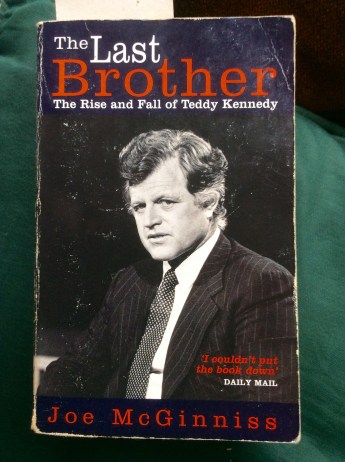
The Last Brother as you can see, is subtitled, the Rise and fall of Teddy Kennedy. In a lot of ways Teddy is only incidental to the story told here because it is really the story of his father, Joe Kennedy, and his rise to success. Joe’s success lay not only in the business of banking but during the prohibition years he made a fortune in bootlegging and naturally rubbed shoulders with a number of gangsters. When he became successful, Joe wanted something more; he wanted political power. It was then that he attached himself to Franklin D Roosevelt. He helped Roosevelt’s campaign in many ways and when Roosevelt became president, he, like all presidents, had to reward those who had helped him. Joe became ambassador to the UK and it was there that his fall from grace began.
The ambassador and his family quickly became celebrities in England. In fact, Teddy Kennedy made his first public appearance as a young boy, the ‘baby’ of the Kennedy family and the son of the Ambassador, when he was invited to open pets’ corner at London Zoo.
However, In Joe’s eyes the coming war with Nazi Germany spelled the end of all he had worked for. He could not see how the UK could resist the might of the Nazis and was not slow in saying so. Kennedy advised Roosevelt that the British were finished. However, when Winston Churchill became prime minister in 1940, Churchill opened up direct communications with Roosevelt himself making Ambassador Kennedy almost superfluous. Later, the family returned to America with Joe not perhaps in disgrace but acutely out of step, and the relationship between Churchill and Roosevelt flourished.
The Kennedy Family at Hyannis Port, 1931. L-R: Robert Kennedy, John F. Kennedy, Eunice Kennedy, Jean Kennedy (on lap of) Joseph P. Kennedy Sr., Rose Fitzgerald Kennedy (behind) Patricia Kennedy, Kathleen Kennedy, Joseph P. Kennedy Jr. (behind) Rosemary Kennedy. Dog in foreground is “Buddy”. Photograph by Richard Sears in the John F. Kennedy Presidential Library and Museum, Boston.
Kennedy left the Roosevelt administration but he wanted political power for himself and made sure he would find it through his financial wealth, and through his sons.
Joe Kennedy junior was the son that Joe meant to make into America’s first catholic president. His brother, John Kennedy, known as Jack by the family, was a poorly lad afflicted by Addisons disease and constant back pain. In World War 2 Jack joined the navy but began an affair with a Dutch journalist, Inga Arvad. Inga was thought to be a Nazi spy so Joe immediately arranged for Jack to be posted well away from Inga to South Carolina. Bored with his desk job in South Carolina, Kennedy volunteered for the Motor Torpedo Boat Squadrons and later took charge of his own boat, PT 109. He was awarded the Purple Heart for his bravery in rescuing his men when his torpedo boat was sliced in two by a Japanese destroyer.
Joe Kennedy Jr was not at all happy when he heard about the award. Competitiveness was drilled into the Kennedy clan from an early age and Joe did not want his younger brother to top him. Perhaps that is why he volunteered for a dangerous mission. The mission involved a radio controlled plane, full of explosives that were to be remotely steered to a target in Germany. Joe’s job was to take the aircraft into the air then bale out when the radio control was activated. Sadly the aircraft’s explosives were detonated prematurely and Joe was killed.
Jack knew then that it was he who would have to fulfil his father’s desire for the presidency.
Joe used his influence, and his money, to get Jack first a seat in congress and then a seat in the senate. In 1960 it was time for him to fulfil his father’s dream and go for the presidency. Lyndon Johnson wanted the democratic ticket that year and he began by attacking the the Kennedy candidacy. He described him as ‘a little scrawny fellow with rickets’ but soon the influence of father Joe came to bear and Johnson ceased his attacks. Johnson knew that that Joe Kennedy would pull out all the stops for his son to win but he hoped that if the vote wasn’t decisive on the first ballot he would have a chance on the second one. As it happened, John F Kennedy won the nomination on the first ballot. According to McGinnis it was Joe who wanted Johnson as JFK’s running mate; perhaps that was payback for Johnson laying off his attacks on Kennedy’s health issues.
The election was close, very close indeed and Joe decided he needed help from a rather unsavoury corner; he turned to his former prohibition gangster contacts, notably Sam Giancana to help him secure victory for his son. That help would come at a price. Giancana wanted back the casinos in Cuba that used to make millions for the mob until Castro overthrew the Batista regime, closed down the casinos and threw the gangsters out of Cuba. Giancana wanted them back.
Kennedy won the election by a narrow margin but things went wrong almost straight away. CIA backed revolutionaries were training in secret Florida locations for an assault on Cuba but the plans were in disarray and the president rejected many of them, When the attack came it was a disaster. Kennedy accused the CIA of trying to force him into a full scale US assault on Cuba and he would have none of it. Giancana would not get his casinos back. Worse, the president had engaged his brother, Robert Kennedy as attorney general and he began an assault on organised crime in the USA. One of the mafia bosses was heard to mutter in Sicilian, “who will get the stone out of my shoe?” It was more of a threat than a question.
Joe Kennedy was struck down by a stroke at the age of 88 and rendered unable to speak. The chief fixer, paymaster and head of the Kennedys was unable to carry on talks with the mafia and the time had come to remove the stone from Giancana’s shoe.
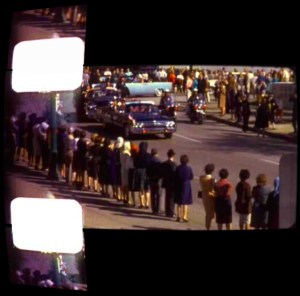
Dallas 1963
President Kennedy was assassinated in Dallas in 1963 and his presumed assassin Lee Oswald murdered days later inside the Dallas Police headquarters. At the Kennedy home in Hyannis Port nobody wanted to tell Joe. He must have known something was wrong but he could only point numbly at the TV in his room that remained firmly switched off. Ted Kennedy, who was sent to tell his father the news, struggled to get the words out until his sister Eunice blurted out the truth.
Robert Kennedy was shot in 1968 as he prepared for a late campaign for the Democratic ticket. After winning the California primary he said a few words to his supporters and was shot moments later.
Ted Kennedy now had a surplus of Kennedy advisors and aides, all willing him on to go forward and run for the presidency. He declined even though a ‘draft Ted Kennedy’ movement had started to gain momentum. Instead people looked forward to 1972 when Teddy, the last remaining Kennedy brother would restore the lost kingdom, the lost Kennedy leadership but it was not to be.
In 1969 Kennedy attended a boating regatta at a small island called Chappaquiddick. Numerous parties were planned for the weekend; one was a gathering of the so-called ‘boiler room girls’ – a group of women who had been part of Robert Kennedy’s campaign team in 1968.
Kennedy apparently left the party late in the evening, supposedly to go to the island ferry with one of the girls, Mary Jo Kopechne but instead turned across a small bridge that led to the beach. Kennedy lost control of the car and the vehicle plunged upside down into a small lake. Kennedy somehow escaped leaving Mary to die in the car. Police divers found her body the next day, her head in a small air pocket in the foot well of the upside down car. Kennedy did not report the incident until nine hours later. What happened in those nine hours is open to question but the Police seemed to gloss over the numerous inconsistencies in Kennedy’s story and eventually he received a suspended sentence for leaving the scene of an accident.
On the cover of the book is a remark from the Daily Mail reviewer that he couldn’t put the book down. I was just the same and was engrossed from beginning to end. The writer seems convinced of his central thesis, that Joe Kennedy’s pact with the mafia was a poisoned chalice that became the downfall of his sons and his family. Maybe that is true, maybe not but McGinniss puts forward an interesting theory and a fabulous read.
Joe Kennedy died in 1969, his dream of securing the presidency for his sons lay in ruins, leaving nothing but heartache and sadness. Fate had delivered many cruel blows to him but lying mute and unable to communicate while his family suffered must have been the worst.
Ted Kennedy continued in the senate until his death in 2009 from brain cancer.
What to do next:
Share this post on your favourite social media!
Hit the Subscribe button. Never miss another post!
Buy the book! Click here to purchase my new poetry anthology.
Click here to visit Amazon and download Floating in Space to your Kindle or order the paperback version.
Somebody once said that the only things in life that are certain are death and taxes. The other thing that comes to mind are holidays. Yes they too must come to an end sooner or later. The time will come when you have to say goodbye to your holiday home or hotel room and hand it over to some other lucky holidaymaker. As you, the reader reads this, I will be well into my first day back at work, yes, Saturday – what a day to go back to work!
All holidays end with a certain amount of sadness, saying goodbye to new friends and acquaintances. Leaving behind memories of lovely places, beaches, or resorts. I’ve spent almost a month in France; three weeks in the Cher region and a final five days in the Loire valley in a place called Doué la Fontaine.
I began my holiday with a few set tasks to complete; in fact, here’s a quick scan through my itinerary, both the planned version and the actual:
08:00 AM Planned. Into the lounge with my laptop for some creative writing. Starting off with any blog post ideas then straight into my follow-up novel. Hoping to get a good few pages cranked off.
08:00 AM Actual. Sleeping.
10:00 AM Planned. Cup of tea and slice of toast.
10:00 AM actual. Still sleeping.
11:00 AM Planned. Cup of tea.
11:00 AM actual. Cup of tea.
11:30 to 12:00. Planned: More writing.
11:30 to 12:00. Actual: Sip tea while checking e-mails, surfing facebook and pinning various pictures to Pinterest.
12:00 to 01:00 Planned: Lunch.
12:00 01:00 Actual: Breakfast.
01:00 to 02:00 Planned: Swimming.
01:00 to 01:30 Actual: Swimming. 1:30 to 02:00 reading.
02:00 to 16:00 Planned: writing.
02:00 to 16:00 Actual: Dozing, reading and swimming.
16:00 to 17:00 Planned: Swimming
16:00 to 17:00 Actual: Swimming/ reading/ sleeping.
17:00 to 21:00 Planned: Barbecue preparation, lighting, cooking and dining.
17:00 to 21:00 Actual: Pouring of wine, barbecue preparation, lighting of barbecue, pouring of more wine. Drinking wine. Cooking and dining. Drinking wine.
21:00 to 22:00. Planned: Editing and review of days work.
21:00 to 22:00. Actual: Wine, chatting and Facebook surfing.
Looks like the follow up novel may have to wait until next year. C’est la vie as the french say. . .
If you liked this post, why not try my book, Floating In Space? Click the links at the top of the page for more information.
Time changes everything. Even in this remote (well, remote-ish) part of the world (the Cher region of France, as I write this) there are changes. The great thing about this gîte is the rather lovely pool which last year was open to the elements with a large patio but has now been covered by an enclosure, an abri as they call it here. It keeps the water warmer and means that the pool is useable in the cooler parts of the year. It also means that the pool complies with all the bureaucracy that goes with having a pool in France. Every pool must be protected against the accidental falling in of children so a small fence has to encircle the pool to keep wandering and unescorted children out of the water. We used to rent a place in the Loire which had a sort of concertina cover, which was in sections, one fitting into the other which could be all pushed completely back, opening up the pool in hot weather. Sacré Bleu! Said the French bureaucrats, This cannot be possible! That pool soon had the mandatory fence erected covering the exits. The owner was a little surprised when we pointed out that when the concertina covering was pushed back the fence could be bypassed. Mon Dieu! The next day we found that parts of the concertina had been screwed down, meaning it could only be opened within the fenced area. C’est la vie!
This is how the pool looked last year
Health and safety has reared its ugly head here too. There is a metal hand rail that leads one down into the pool but of course when it is hot -this year in the 90’s and hotter- the metal handrail gets . . hot! One of the previous tenants complained so the owners added a sort of padding, wrapped around the rail to protect one’s hands and fingers in the hot weather. (Note to self: exposed metal gets hot in 90 degrees plus!)
It’s funny now to think back to the first ever pool I swam in. Well, swam isn’t exactly the right word as I couldn’t swim then. I’m talking about when I was a schoolboy at Sharston school in Wythenshawe, Manchester many years ago. Every Monday, I think it was, we walked down to the baths at Sharston and our teacher sent our small group of non swimmers down to the shallow end, issued us with a polystyrene float and that was the last we saw of him till the end of the lesson. He spent all his time with the ‘advanced’ swimmers down at the deep end and at the end of the year he expressed himself very dissatisfied with our group as we hadn’t progressed to the ‘advanced’ stage. I wonder sometimes, if he had ever thought why we hadn’t progressed? Did it ever enter into his tiny mind for one minute that my schoolmates and I had no idea how to progress, how to become swimmers when apart from being handed a float, we actually had no swimming tuition at all? Strange that.
Sharston Baths
One year, at the end of the term, our teacher was so disappointed with our group that he took us up to the deep end where our more advanced schoolmates were doing their swimming proficiency medals. They had to jump into the deep end wearing pyjamas, undress, and then pick up a weight from the deep end. It was so very, very, easy that even we, the non swimmers could do it, he said. That was how I was compelled to jump in at the deep end wearing pyjamas, hanging onto a very long wooden pole with our swimming teacher holding the other end. I grappled about underwater for the weight and couldn’t find it. Not surprising really with my eyes shut. I couldn’t get the pyjamas off. Not surprising either as I hung onto the pole with both hands as if my life depended on it -which it did actually- and when finally dragged spluttering and choking to the surface, I was beached on the side of the pool like a stranded whale. My non swimming pals escorted me back to the shallow end like a hero. I must have been a sort of hero, to them, although inside I was a gibbering wreck, although I do remember thinking that if, by some strange chance I had come into contact with the weight at the bottom of the pool, I would have seriously considered whacking our teacher over the head with it!
I’m not a great swimmer but I finally learned to swim, after a fashion, in the warm waters off the South of France many years ago and as for my swimming teacher, Mr George, thanks for not completely drowning me!
Sharston.
Some years later the local planners decided to run the M56 Sharston bypass right through the centre of Sharston. A deep trench was cut, completely obliterating Sharston High street and its shops and businesses. (Interesting idea that: Bypassing a place by completely obliterating it!) Some years afterwards Sharston Pool was knocked down too, as was Sharston Highways depot where my Dad used to work, and my old school, Sharston High, as was the school of our arch enemies, St John Vianney’s Catholic school round the corner. Yes, times indeed change.
Towards the top of Sharston, where Princess Parkway begins, is an area known as Royal Thorn. A pub bearing that same name used to stand there and an even older pub stood on the site in earlier days. Apparently the name dates back to the 16th century. The Royal Thorn was demolished a number of years ago though I still remember Sunday afternoon walks round the area which culminated in a drink in the large gardens to the rear of the pub. I, as a child, used to get a lemonade and a packet of crisps and would occasionally run to see the steam trains passing by.
The Sharston Hotel, once a local landmark is also gone. In its place stands an empty, unused, rather unattractive building.
The Salisbury.
Recently I was rather shocked to find, via Facebook, that an old haunt of mine, the Salisbury, a pub right by Oxford Road Station in Manchester, is in danger of demolition! Times move on, clearly, and the life of the city centre must change but why do we have to destroy those wonderful places of years gone by if it is not really, really, necessary? Shouldn’t the face of a great town like Manchester adequately reflect the past as well as the future?
The Salisbury is a lovely old pub and one that I remember from my youth. In the mid seventies I left school and started work at the Refuge Assurance company on Oxford Rd and spent many a lunchtime and early evening at the Salisbury. I visited the pub last year and clearly a refurb has been done but happily it was a sympathetic refurb and the pub looks very, very similar to how it looked in the seventies. The stone flagged floor is still there. The food serving area has moved, in fact the bar has moved a little and the end of the pub, where my old office workmates and I used to congregate is now either an office or a private area but substantially, the pub looks pretty similar to how it used to look. On the outside, the pub is exactly the same as it always looked, and every time I see it, it is almost like the past, welcoming me back again.
Manchester city council, please, please don’t knock this pub down!
I’m just not into busy, rushed holidays. I prefer the quiet, relaxing type; the ones that involve sunny days, swimming pools and plenty of leisure time to read books. I read at home too but that is a different sort of reading; a few minutes here, a few minutes there. I’ll read on my lunch break at work in between eating my sandwiches and drinking tea but the best way to read, the way to really get into a book is a long uninterrupted read while you lie on your sun lounger with the pool handy nearby for when it gets a little too hot. A quick dip then you are back to the thoughts of your chosen author.
Here’s my holiday book bag for this year. Paperbacks are usually my preferred choice for holidays but as we’re travelling to France by car, there’s a little extra room for a few hardbacks.
In God’s Name by David Yallop.
I bought this book originally on the 3rd March, 1987. I know that for a fact because back then I used to write the date on all my book and record purchases. I have read it a number of times and it is a fascinating read. It ticks all my personal boxes of history and modern mysteries. Why, you might ask would anyone want to murder the Pope? Good question and the answer, according to the author is the Vatican Bank. The Vatican, thanks to Mussolini, is a separate independent state and so the Vatican bank, registered in the Vatican state is not answerable to the banking laws and inspectors of Italy. This idea appealed to various unscrupulous individuals, notably Licio Gelli – the head of an illegal and secret masonic organisation known as P2, Roberto Calvi – a banker with ties to P2 and the Mafia, and Michele Sindona, another criminal. Together they engineered the movement of various shares and monies, using the Vatican bank. A man called Albino Luciano, the bishop of Venice, became aware gradually of various wrongdoings in the bank and was particularly dismayed by the action, or inaction of Bishop Paul Marchinkus, the head of the Vatican Bank. In 1978, after the death of Pope Paul VI, Luciano was elected Pope. He was a man dedicated to the ideas of Jesus, a simple carpenter from Nazareth and he wanted the church to follow his example. He did not want a church that had a multi million dollar profit in stocks and shares, he wanted a poor church, a church that properly reflected the feelings of its founder. When he was elected the new Pope, Luciano’s ideas and those of the aforementioned individuals were on a collision course. David Yallop’s investigation is intensive and revealing and I came away from the book feeling an intense sadness that a good and decent man, a man who would have been a great Pope and spiritual leader had been stolen from us by the greed of a few men.
Alfie by Bill Naughton.
I do like to buy books with a film tie in cover. I have all the Bond books, some in paperback, some in hardback and I am always on the look out for the film cover versions. This book has the movie cover that links not to the classic Michael Caine version, but the poor, the very, very poor, Jude Law version. I suppose in some ways you can sympathise with the movie moguls. Alfie was a great hit in the 60’s. Hey, they must have thought, we can transfer the location from Swinging 60’s London to cosmopolitan New York in the 21st century, the result will be dynamite! Wrong! The result was dreadful. Anyway, the novel is brilliant. Written in the first person the writer, just like Alfie in the movie, talks directly to you, the reader and tells you about his life, in his own words, his own accent, and with his own logic. Just about the best free thinking, verbatim (so it seems) book I have ever read. The great thing is when the dialogue tells you one thing, and his inner voice tells you another! Brilliant.
A Year in Provence by Peter Mayle.
They made this book into a TV series years ago. It starred the late John Thaw and the reviewers panned it mercilessly. TV seems to do working class pretty well, what with its soaps and dramas and made for TV films but middle class, that is for some reason a different story. Middle class is a big no no for TV. Strange but true. The producers might have been better making a movie out of this book. I can see a movie version in the tradition of say, Four Weddings and a Funeral or Notting Hill looking good. Anyway, enough about the TV version because the book itself is just a minor classic. I’ve read it before and it is just a joy to read. No deaths or murders or violence. No bad language just a middle class couple who decide to pack everything in and go and live in Provence, that lovely department in the South of France. It’s about wine and food. About gardens and kitchen refurbs. Truffle hunting and vine planting. Swimming pools and life in the country; the French country. If you see a copy in your local book shop, snap it up! It’s well worth a read: A gentle, relaxing, summer read.
Nixon In Winter by Monica Crowley.
Richard Nixon is not perhaps the most enigmatic of presidents but he and his presidency are very, very interesting. He could have very easily become president in 1960 but he was narrowly beaten by John F Kennedy. I can’t think of anyone else, beaten in an election who managed to come back again as his party’s presidential candidate. Probably the closest is Hilary Clinton, beaten by Obama in the Democratic primarys eight years ago and has now risen again to finally become the new 2016 Democratic candidate. Nixon won the election in 1968 with a promise to end the Vietnam war with honour and to bring people together. He did just that, he ended the war and brought people together, all though not in the way he wanted. He brought them together in a determination to remove him from office and as the Watergate scandal escalated, he finally resigned. Strange how Nixon is suddenly much in the forefront of popular media. Oliver Stone made a film about him – Nixon, starring Anthony Hopkins. There was a recent film about the Nixon/Frost interviews starring Frank Langella and Michael Sheen, which was a fabulous movie and I hear there is a new film being released this year about the meeting between Nixon and Elvis, when Elvis, a collector of law enforcement badges, wanted to be sworn in as a Bureau of Narcotics agent. This book is written by Monica Crowley who became his research assistant in his later years and is based on her daily diary of conversations with the former president. Nixon died in 1994.
My Dark Places by James Elroy.
This was my first read on this holiday and I wondered at the time if any of my other books could live up to this one. Elroy as you may know is a writer of crime novels. If you haven’t read his books you may have seen the movie adaptations like LA Confidential. Elroy is a modern crime noir writer, following in the footsteps of Chandler and Dashiel Hammet. This book is a diversion for him. Part autobiography, part investigation into his mother’s murder in 1958. In the book Elroy bares his soul to the reader and explores all his inner most feelings; his early life, his thoughts; in effect, all his dark places. An incredible read. A fast moving, inward looking memoir and a man looking for answers to his life. I’ve already been searching abebooks for copies of his other works.
Present Indicative by Noel Coward.
Recently I picked up a few of Coward’s plays in paperback form and was totally taken aback by the witty repartee, the humour and the freshness of Coward’s work. You might think as a devotee of ‘Kitchen Sink Drama’ Coward’s work might be anathema to me. Nothing could be further from the truth. In art as in literature, there is room for all genres and all tastes. On my last holiday in Lanzarote I read The Life of Noel Coward by his partner, Cole Lesley and it just made me want to read more of Coward’s own work. I look forward to reading about Noel’s early life in his own words.
The Last Days of Marilyn Monroe by Donald Wolfe.
I’ve been reading this book for the last few days and like the really good read that it is, the author has sucked me in to Los Angeles and its environs in the post war years and those people who made a beeline for Hollywood, thinking that they could be discovered and take a short cut to fame and fortune. Norma Jeane Mortensen was a dreamer, a girl who dreamed of being a star and for her it came true when she became Marilyn Monroe. From a factory girl to model, and model to movie stardom and then to an untimely end. This is her story. I’ve read one of Wolfe’s other books on Marilyn, The Assassination of Marilyn Monroe, and so far this is just as good if not better. Monroe, Hollywood, the Kennedys and murder is a very heady mix indeed. If you want a very brief rundown of Marilyn’s last hours, take a look at this post from last year.
The Past Through Tomorrow by Robert Heinlein.
When I was younger I used to read a lot of sci-fi although these days I prefer the genre in TV or movie format. Heinlein is a classic writer and I picked up this volume in a second-hand book shop. I made a pretty late snap decision to throw this into my book bag and I’m not sure how things will turn out, if I’ll enjoy it or not. But, if the book is not my cup of tea I’ve always got the pool open nearby ready for some serious swimming.
Floating In Space by Steve Higgins.
Of course, this is my very own book: A kitchen sink drama set in the late seventies. My top proofreader Liz Morrison scanned through this a while ago and pointed out numerous grammar issues. On this holiday I’m hoping to rectify them. Also, I’ve never been really satisfied with the cover. I always envisaged a young man seen from behind, floating before the earth and I did my best with the createspace templates that were at hand. When I finally sort out those grammatical errors I’ve got a new cover in mind. In the meantime if you fancy reading Floating In Space, click here for my Amazon page or click the links at the top of this page for more information.
I don’t think there is any nicer feeling than to take a dip in a swimming pool and then after a few lengths, return to your sun lounger and lie there peacefully while the hot sun dries your body. You can feel little rivulets of water dripping away and in time the sun will gradually dry you. It’s almost like a sort of rebirth or a least a refreshing of the soul. The only sounds in this remote hamlet where we are staying are the gentle breeze swaying through the branches of a nearby tree, the quiet humming of insects, some bird song and the occasional drone of a far away car or tractor.
You might be thinking hang on, why is this guy waxing lyrical about lying on a sun bed? Yes it’s that time of year again, holiday time. Once again Liz and I have travelled to France to spend time in a beautiful gîte in the Cher region of France.
Travelling down here was a little bit of a trial though. Coming down the M6 in the north-west we had to travel through the roadworks for the new Smart motorway scheme. I don’t know that Smart is really the right name for this concept but the idea is that the traffic runs along the hard shoulder in the busy periods thus shifting more traffic. So the experts say, anyway. Whether that will happen I really don’t know but at the moment the whole area is bit of a nightmare and when we finally got through that we came across more delays round about junction 13. Throw in some torrential rain and spray, creating really poor driving conditions and you begin to get the picture. Anyway, we made it to the terminal in Folkestone with about ten minutes to spare; many thanks to Liz for her fabulous driving.
One thing I noticed during the journey down here was the enormous amount of tyre carcasses in the central reservation. It really seems to me that Highways England need to pull their finger out and clean up the motorway otherwise I may just start up a scrap rubber company and pick up all those discarded tyres, and believe me I’ve counted a hell of a lot of tyres on the way south. I reckon I can make an absolute fortune flogging all those tyres to Goodyear or Pirelli or even some rubber recycling company. Come on Highways, get your act together!
After the hell of UK motorway travel, the roads of France are just a delight. OK, it might be busy round Paris and other large towns but out in the countryside driving is once again an enjoyable experience. Stopping at the services is much nicer too. Not for us the packed UK services charging ridiculous amounts for a cup of tea. The French aires are quiet and picturesque. Nice rural stopping places with picnic tables and nice clean toilets. Lovely.
In the UK I have had a great deal of trouble with my back. The doctor offered me pain killers which I declined, well, I must admit I did take some, the pain was that bad. Anyway I asked to be referred to a physiotherapist. Get the problem sorted out at the source I thought. This gets complicated here so bear with me: I started off with a telephone appointment, one in which you are supposed to make an ‘actual’ appointment. It did not go well because although I rang at the specified time, I was given several messages to listen to and options to choose so when I eventually got through, the lady at the other end thought I was late for an ‘actual’ appointment, not a telephone appointment and could not arrange it for me as I was two minutes late. Anyway, to cut a long story short I spoke to her boss and made an appointment (an ‘actual’ appointment) and arrived on the day only to find that my ‘actual’ appointment had been cancelled due to a bereavement at the hospital. Pity they didn’t tell me in advance. (They said that they had left a message on my mobile – which I never received, although on the same day my garage had managed to leave me a message about my car and my brother had also left a message. Strange that two others had no problem leaving messages.)
Anyway, with me so far? Another appointment was duly made and then two days before that appointment I received a letter saying that had been cancelled too. I called to complain only to be told I had cancelled the appointment! I most certainly did not, I said in my best aggrieved customer voice. I eventually spoke to a manager and she managed to arrange another date which fitted into my calendar just nicely between work and leaving for France.
When I finally found myself face to face with a physiotherapist, or at least someone who claimed to be a physiotherapist, he spent a lot of time asking me questions about my pain, which, when it first occurred three months previously had been very severe but now it wasn’t so bad, in fact the actual spot in the middle of my back seemed OK but the pain was now in my neck and lower back. Sadly, those areas were not the ones that I had been referred for via my GP. Now those two areas, the neck and lower back, happen to be a matter of inches from the source of the original pain so let me throw out a crazy mad concept here: could they be related? Well, we’ll never know because as my physio pointed out yet again; my GP had not referred me for those areas! After a lengthy consultation of which perhaps five minutes was actual hands on my back stuff, my physio declared my back was ‘mechanically’ sound. How did he explain the pain I asked? Well, that was a muscular issue due to my ‘sedentary’ life style. As we were on the way out he mentioned it was perhaps ‘not worth seeing me again.’
Interesting. Perhaps the problem solving concept was not something this guy covered at university, perhaps they don’t even teach that kind of stuff any more. I know that if I was a physio and someone came to me with back pain my job would be trying to find the source of that pain and cure it or ease it or suggest further treatment for my patient. It’s rather like having a problem with your car and telling the customer, well, we can’t fix that, perhaps it’s time to get a new motor. In this case, no new motor is available! I’m tempted to apply my usual rule here, that names have been changed to protect the innocent but Clifton Hospital in St Annes, Lancashire, you have gone way down in my estimation!
Anyway, the temperature here in our little village is currently in the 90s. (Fahrenheit of course. If you want that in Celsius, I don’t do metric, work it out yourself!) Time for a read, perhaps a short doze, then another swim in the pool. After all, exercise is good for your back!
Make sure your click back here next Saturday for at look at my Holiday Book Bag!
If you liked this post, why not try my book, Floating In Space. Click the links at the top of the page for more information!
A week or so ago, August the 8th was the anniversary of the resignation of President Richard Nixon. He resigned the US presidency in 1974 after realising his battle to remain in office was finally lost. His battle for his tapes, which he believed were his personal property went on and on and was continued by his estate even after his death.
I have always understood that John F Kennedy was the first President to install a taping system in the white house though Wikipedia seems to think the practice began with Roosevelt. Many of the recordings made during Kennedy’s presidency have been released including those of cabinet meetings during the missile crisis of 1962.
Johnson carried on the tradition of taping and recording phone calls and numerous calls have been declassified and released by the authorities. Some with a special poignancy were even recorded on Air Force One on the 22nd November, 1963, the day Kennedy was shot and Johnson elevated to the presidency.
Anyway, despite his two predecessors, the President most famous for taping in the white house was Richard Nixon and it was the ‘Watergate tapes’ that were at the heart of the Watergate scandal and after reading many books on the subject I feel the Watergate scandal as it came to be known really had its roots in the turbulent year of 1968.
1968 was a landmark year for Nixon and for the USA itself. The public feeling for Vietnam had turned more and more sour as more GIs returned home in body bags. Demonstrations began; university campuses were alight with protests.
In the first primaries of the year incumbent president Johnson, who previously had a high approval rating with the public was surprised by a good showing from rival Senator Eugene McCarthy, running on a anti-war stance. His success urged Robert Kennedy to throw his hat into the ring and on the 3rd June, 1968 Johnson announced in a televised broadcast that he would not accept the nomination for president. Vietnam had overshadowed his presidency and all his other efforts, his so called ‘great society’ and his civil rights programme; all were overshadowed by the conflict in Vietnam.
Martin Luther King was shot dead in 1968 as was Senator Kennedy. Kennedy’s body was taken to Washington from California by rail and as millions waited by the tracks to watch his funeral train pass by, it must have seemed for many Americans like the end of the world.
For one man though, sitting alone in a Nevada hotel suite, sealed off from the world by his Mormon minders, the death of Bobby Kennedy was an opportunity. The elderly Hughes, lying naked on a bed watching TV, his hair, long and unkempt and his finger and toenails uncut, was a far cry from the young film maker, aviator, and entrepreneur he had once been. Immediately he wrote a memo to his chief executive and public alter ego, Robert Maheu. He said basically that now Kennedy was lying dead or dying on the pantry floor of a California hotel this was a once in a lifetime opportunity to put on the payroll the entire Kennedy election team, in particular electoral strategist Larry O’Brien. O’Brien had served under Presidents Kennedy and Johnson and would later become chairman of the Democratic National Convention. Not a thought for the dying Kennedy, just the opportunity to get hold of a ready-made election team and put his own man in the white house. At the time Hughes had the idea of promoting Governor Laxalt of Nevada for the job. Fantastic as it may seem the genesis of what would become Watergate lay in Hughes actions on that night.
Hughes was worried about the nuclear testing in Nevada and he had sent Maheau on a mission to get Johnson to move the tests elsewhere. Johnson met with Maheau, listened, tried to get the promise of a donation towards his presidential library, but would not move the nuclear tests. Hughes felt he would need to speak with whoever won the election. Becoming increasingly more paranoid, and more and more worried about the nuclear testing, he tasked Maheau with offering a million dollar bribe to the man who would move the tests elsewhere:The man who would emerge victorious in the presidential election was Richard Nixon.
It was a pretty close run battle for the presidency in 1968 but Hubert Humphrey, the democratic candidate had little election funding although Hughes cannily hedged his bets. He made donations to both opposing candidates. Humphrey was elected as the democratic candidate in a shambolic convention marred by tear gas and protests and Eugene McCarthy, running on an anti-war ticket was ignored despite his earlier success in the primarys. Humphrey won the nomination even though he had not won or even contested any of the primarys. Richard Nixon however, won the eventual presidential election with his campaign pledges of ‘bring us together’ and ‘peace with honour’, which did not mean retreating from Vietnam as perhaps some people may have thought.
Picture courtesy Wikipedia
Nixon though, despite his victory, was worried. The defeat by John F Kennedy in 1960 still rankled. Many thought that the Kennedy victory had been a given a helping hand by voting fraud, especially in the Chicago area controlled by Democrat Governor Daley. Nixon though, felt his defeat was due to leaks about loans to his campaign and to his brother Donald from Howard Hughes. Larry O’Brien, despite his retainer from Hughes was running the democratic campaign and Nixon felt that O’Brien must know about Nixon’s own Hughes connection. What information did he have? What was in his safe in the Democratic Campaign headquarters in the Watergate building in Washington?
The FBI and CIA had already spurned Nixon’s requests for covert surveillance and they were dragging their feet over the leaks of highly classified information from government offices. The answer, it seemed to Nixon, was the creation of a white house covert intelligence unit that became known as the ‘Plumbers’ made up of of ex CIA and FBI members. Their job was to stop the leaks, and get Nixon the information he wanted.
Nixon wanted to know what was in Larry O’Brien’s safe in the Watergate building, what information did O’Brien have about a Nixon-Hughes connection? The plumbers would have to find out. On May 11th, 1972 the plumbers secretly entered the Democratic National Convention offices and left behind a number of bugs and listening devices. Problems arose soon afterwards when it was found the wiretapping devices were malfunctioning. There was no choice but to enter the building again. The five man team did so on the night of June 16th/17th 1972. Sometime after midnight on the 17th a security guard noticed that various doors into the building had been taped, preventing them from locking. He called the Police and the five men were arrested.
James W. McCord – a security co-ordinator for the Republican National Committee and the Committee for the Re-election of the President. McCord was also a former FBI and CIA agent.
Virgilio R. Gonzales – a locksmith from Miami, Florida. Gonzalez was a refugee from Cuba, following Castro’s takeover.
Frank A. Sturgis – another associate of Barker from Miami, he also had CIA connections and involvement in anti-Castro activities.
Eugenio R. Martinez – worked for Barker’s Miami real estate firm. He had CIA connections and was an anti-Castro Cuban exile.
Bernard L. Barker – a realtor from Miami, Florida. Former Central Intelligence Agency operative. Barker was said to have been involved in the Bay of Pigs incident in 1962.
The five men were charged with attempted burglary and attempted interception of telephone and other communications. The burglary was reported in the media and it seemed at first that the incident was an unremarkable ‘third class burglary’ just as the white house press secretary Ron Zeigler described it. Zeigler announced that white house aide John Dean had made a full investigation into the matter when in fact Dean had done no such thing. Two others, E. Howard Hunt and G. Gordon Liddy who were involved in planning and arranging the break in, were also later arrested. They were the link from the burglars to the white house.
Gradually, various revelations appeared in the press, particularly those by Washington Post reporters Bob Woodward and Carl Bernstein, and this escalation of the issue, especially when reports of other abuses of power by the Nixon White House were revealed, forced the announcement of a Senate Investigation.
On February 7th 1973 the Senate voted to establish a select committee to investigate Watergate and during the hearings a surprising revelation emerged. On the 16th July 1973, testimony revealed that President Nixon had a recording system in the White House. Archibald Cox, the special counsel for investigating Watergate immediately issued a subpoena for the tapes. Nixon refused to hand them over citing executive privilege.
As you know, Nixon had to eventually hand over the tapes including one that had a mysterious eighteen minute gap. An impeachment process began and when Nixon was advised that the recommendation was likely to pass through the senate, he resigned. On August 8th, 1974, Nixon broadcast his resignation speech from the White House and stepped down at noon on the next day in favour of Gerald Ford.
One of the most interesting conversations on the Watergate tapes was, I have always thought, a conversation that took place on March 21st, 1973. John Dean felt that Watergate was fast becoming ‘a cancer within-close to the presidency, that’s growing. It’s growing daily’
John Dean: Where are the soft spots on this? Well, first of all, there’s the problem of the continued blackmail—
President Nixon: Right.
Dean: –which will not only go on now, it’ll go on when these people are in prison, and it will compound the obstruction-of-justice situation. It’ll cost money. It’s dangerous. Nobody, nothing–people around here are not pros at this sort of thing. This is the sort of thing Mafia people can do: washing money, getting clean money, and things like that. We just don’t know about those things, because we’re not used to, you know, we’re not criminals. We’re not used to dealing in that business. It’s a–
President Nixon: That’s right.
Dean: It’s a tough thing to know how to do.
President Nixon: Maybe we can’t even do that.
Dean: That’s right. It’s a real problem as to whether we could even do it. Plus, there’s a real problem in raising money. [John] Mitchell has been working on raising some money, feeling he’s got, you know, he’s got—he’s one of the ones with the most to lose. But there’s no denying the fact that the White House and [John] Ehrlichman, [Bob] Haldeman, and Dean are involved in some of the early money decisions.
President Nixon: How much money do you need?
Dean: I would say these people are going to cost a million dollars over the next two years.
Short pause.
President Nixon: We could get that.
Dean: Mm-hmm.
President Nixon: If you—on the money, if you need the money, I mean, you could get the money fairly easily.
Dean: Well, I think that we’re–
President Nixon: What I meant is, you could get a million dollars. And you could get it in cash. I know where it could be gotten.
Dean: Mm-hmm.
President Nixon: I mean, it’s not easy, but it could be done.
Could it really have been that the million dollars that Nixon was talking about was the same million dollars Hughes was offering to get the nuclear testing moved elsewhere? A paranoid old billionaire living in squalor, obsessed by germs who everything handed to him had to be wrapped in tissue paper. Could it be that Howard Hughes’ obsessions had eventually brought down the Nixon white house?
Further reading.
The Ends of Power. H.R. Haldeman
All The President’s Men. Carl Bernstein and Bob Woodward
Blind Ambition. John W. Dean
Will. G. Gordon Liddy
Citizen Hughes. Michael Drosnin
Steve Higgins is the author of Floating In Space available from Amazon.
In this technological age, one item in particular has come to the aid of the dedicated couch potato and that is the hard drive recorder. It’s a wonderful invention which enables the recording and playback of programmes at the touch of a button.
Last Sunday was my first day off and I had planned, unbeknown to my lovely lady Liz, a day of rest, self indulgence, and laziness, including Internet surfing and of course, TV watching.
She on the other hand had other ideas, in particular, a trip to the combination music and kite festival down on the beach. Anyway, all that went ok, the kites were flying well and the music was good. We went back home for some dinner and then it was time to get down to some TV viewing.
Now the Sunday lunch over ran a little making me late for my appointment with the German Grand Prix on Channel 4. Here, however, is where the hard drive recorder comes into its own because of one very simple fact: You can start watching the recorded programme even before it has finished! Technology; incredible isn’t it?
Anyway, The German Grand Prix from Hockenheim wasn’t a classic race but for an F1 fan like me it was well worth watching: Lewis Hamilton won and Nico Rosberg had a penalty but the real joy of watching the race just slightly behind the broadcast time is you can catch up by fast forwarding through the boring stuff from the drivers; “the team did a great job today in qually” and “I’d like to thank the guys back at the factory,” and so on. There is also the questions to the drivers which are well worth fast forwarding through: “You’re in second position on the grid, what can you do today?”
Not much of a record for a TV couch potato but I had big plans for day 2!
Day 2
Now day 2 promised much more TV watching than day 1. Liz was off to work round about twelve, leaving me time to check my e-mails, sort out a few social media updates plugging blog posts like this one, and then a whole afternoon of serious TV watching.
For starters I had Aliens, the sci-fi movie to watch, recorded from ITV 2 some weeks earlier. I have seen it before but some movies just get better over time. I do love the opening of Aliens: The music gradually fades in as we come across a lifeboat drifting through space. Yes, the lifeboat holds astronaut Ripley, sleeping soundly in suspended animation after her adventures in the previous movie, Alien. Ripley has been abandoned in space for 57 years and it turned out that this version was a director’s cut with a restored back story about Ripley’s daughter who we find has died recently as an old lady. The story gives an added poignancy to the film later on and we understand why Ripley is so passionate about rescuing the young girl ‘newt’ who we meet later in the film.
Time for a cuppa when we get to the adverts and then we follow Ripley through the committee meeting where it is revealed that the spacecraft Nostromo, which Ripley self-destructed, caused a loss of over 64 million adjusted dollars. Another committee member advises that LV426, the planet where the Nostromo landed was ‘a rock’ with no indigenous life forms. I can feel Ripley’s frustration when she says, “Did IQ levels just drop while I was away?” She tries to tell the group about a derelict alien vessel containing alien eggs but the meeting ends and Ripley’s story is not believed.
Now before Liz went to work she had left me a couple of jobs and the thought of them threatens my TV watching marathon so I decide to get them out of the way. One of them involved mowing the lawn so I put Aliens on pause and sorted out the mower and strimmer. I was actually immersed in my mowing when Liz popped back in and caught me doing a bit of grafting! This was great because she could see with her own eyes I’m not just sprawled on the couch watching TV! Result!
Anyway, job done and it’s time for some more TV. I fancy a change from Aliens so I finish off an episode of The Saint I watched part way through last week. A TV Diva is kidnapped but Simon Templar saves the day and rescues the lady. Nice to see these old TV shows from my school years still looking good and getting another airing on TV.
Time for a brew and a cheese sarnie, the Saint episode is deleted (that space on the hard drive is in constant demand!) and I’m ready for something more serious. I crank up a BBC 4 documentary about Frank Sinatra. I was planning to listen to it and simultaneously surf the net on my iPad but it’s so engrossing I have to put the pad down.
Six o’Clock and Liz is home and asking why am I not ready yet? Ready? Of course, we have a family meal planned for tonight. “Just about to get changed, love” I say quickly! (Phew!)
DAY 3
Day three and Liz is off to work at the usual time, twelve-ish. The breakfast pots are duly washed and the only cloud on the horizon is that I need to get some eggs and some milk in. Should I leave it until later or sort it now? Tell you what, time for a quick Saint episode (series record, I love that button on the recorder!) and a cuppa. The episode is one about the Saint receiving threats on his life and it’s a bit of a naff one with the back lot at Elstree or Pinewood trying desperately to look like swinging sixties London and wait a minute, isn’t that lady reporter played by the same lady who played the film actress diva in the last episode? The Saint, the more you watch it increasingly becomes like a little TV repertory company, with increasingly familiar faces, even in the bit parts. Anyway, I fast forward through most of it and then it’s off to the shops for the milk and eggs.
Sigourney Weaver as Ripley
Back home and it’s time for some more Aliens. I don’t know about you but I tend to watch a lot of recorded films in two or more parts. I settle down with Aliens and the Slimy Carter Burke has enticed Ripley on a trip to LV426 with the tough hombres of the Space Marine Chore. They drop into orbit over the planet, now inhabited by terraformers with their atmosphere processors and Ripley, Burke and the marines awake from hibernation. I think for a moment that if LV426 is that far away enough for the crew to hibernate while travelling there, it isn’t that much of an emergency rescue mission but hey, what do I know? Later they arrive on the planet in a pretty exciting drop from the mother craft. The marines secure the area but then find that the Aliens have taken the humans into the atmosphere processor to use their bodies to hatch more of their creatures. Aliens is a sort of hybrid film; a sci-fi horror action movie, combining two or even three genres. The rest of the series was a little poor if you ask me but the first two in the series: Alien and Aliens, are classic cinema. Sigourney Weaver creates a memorable movie character in Ripley, tough and uncompromising, she is a sort of female John McClane. (Remember the Bruce Willis character from Die Hard?)
Anyway, time for the usual afternoon cheese sarnie and a brew and I settle down to watch the end of the Frank Sinatra documentary. I found it highly interesting as the film explored Sinatra’s relationships and associations and shows how the Kennedys dumped him, not wanting to be associated with him when his friendships with mafia figures became public. Later, in the eighties, Sinatra, a lifelong Democrat allied himself with republican Ronald Reagan.
A quick check of my e-mails and some more posts sorted on Twitter and Google+ and time for another cuppa. (Choccy biscuit? Don’t mind if I do!) Time to crank up Aliens again and this time the action heats up as Carter Burke decides Ripley knows too much and he locks her in the med lab with one of the alien parasites. It’s a pretty scary sequence. Ripley gets away but the Aliens are trying to break through into the complex. Why are the radar tracker signs showing the Aliens inside? Look at the roof, people!
Enough scary stuff for today. Liz comes in and asks “Is my dinner ready?” in a tone that suggests she doesn’t think it is. I need to think fast and quickly come up with: “Thought we might go to the Turkish Restaurant darlin’.” “Well,” she says, “sounds nice, better get ready then.” As I leave to follow her I glance at myself in the mirror and hear myself saying: ‘Top TV couch potato? Steve, you are the man!’
What to do next:
Share this post on your favourite social media!
Hit the Subscribe button. Never miss another post!
Buy the book! Click here to purchase my new poetry anthology.
Click here to visit Amazon and download Floating in Space to your Kindle or order the paperback version.
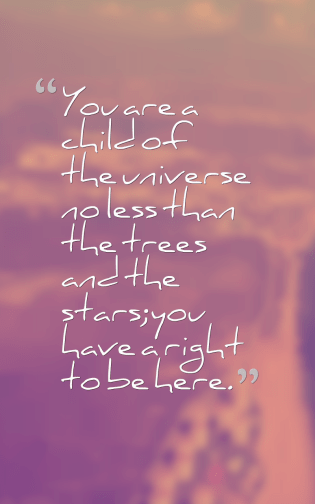 Getting older is a strange sensation. Once you reach a big birthday like sixty you start to re examine yourself and start to silently ask lots of questions. Inside, I’m the same person I always was: The same in fact, that I have been since I was a child, at least to me, at any rate. It’s only the outer layer that has changed. The outer layer has got fatter, heavier, and somewhat grayer. But inside, the essence that is me, the real me, is essentially unchanged. What is my essence though? What am I? How did I come to be, what purpose, if any, have I served?
 October 3rd was the birthday of Manchester author and blogger Steve Higgins.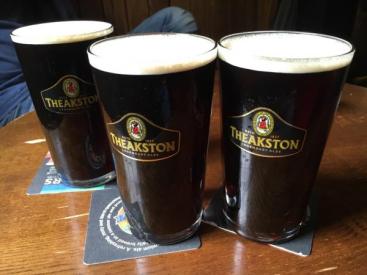

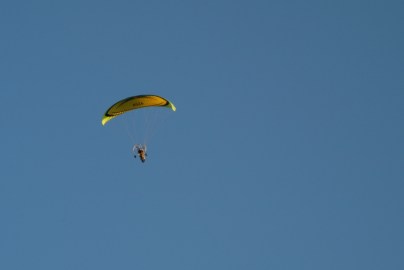 I’m not a great fruit eater but in France I do like a small pear or something after a meal. Then it’s time to just sit back and enjoy the evening as the sun begins to go down. At about six thirty to seven o’clock the local microlight drones past overhead. I can sort of imagine him looking down and thinking ‘there’s that English couple again, still supping wine!’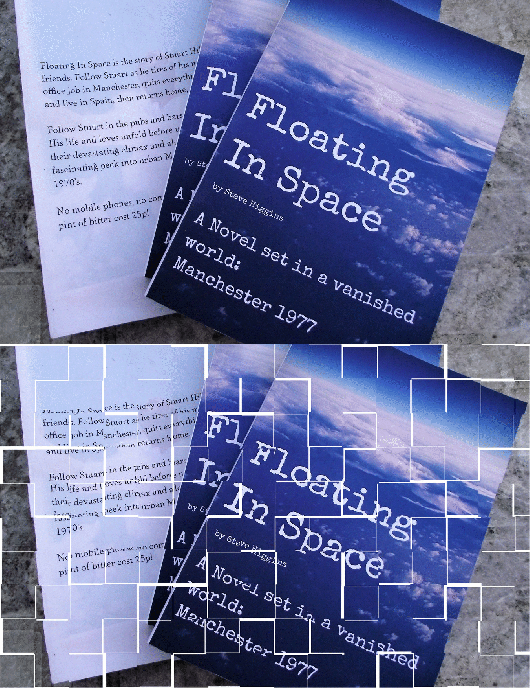
 The Last Brother by Joe McGinniss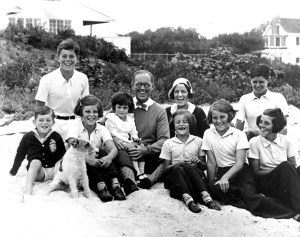
 I began my holiday with a few set tasks to complete; in fact, here’s a quick scan through my itinerary, both the planned version and the actual:
 The Swimming Pool.

 The Sharston Hotel, once a local landmark is also gone. In its place stands an empty, unused, rather unattractive building.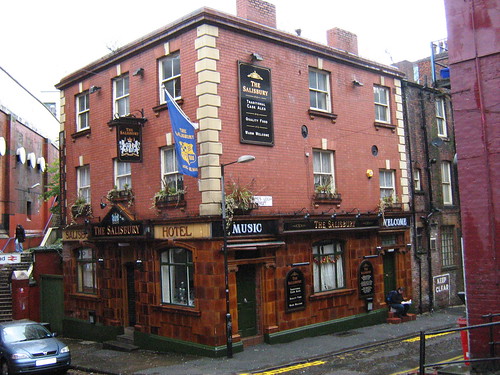
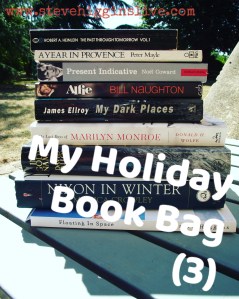 I’m just not into busy, rushed holidays. I prefer the quiet, relaxing type; the ones that involve sunny days, swimming pools and plenty of leisure time to read books. I read at home too but that is a different sort of reading; a few minutes here, a few minutes there. I’ll read on my lunch break at work in between eating my sandwiches and drinking tea but the best way to read, the way to really get into a book is a long uninterrupted read while you lie on your sun lounger with the pool handy nearby for when it gets a little too hot. A quick dip then you are back to the thoughts of your chosen author.
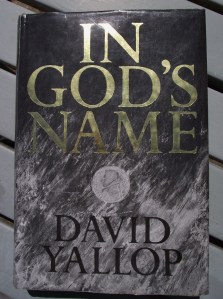 I bought this book originally on the 3rd March, 1987. I know that for a fact because back then I used to write the date on all my book and record purchases. I have read it a number of times and it is a fascinating read. It ticks all my personal boxes of history and modern mysteries. Why, you might ask would anyone want to murder the Pope? Good question and the answer, according to the author is the Vatican Bank. The Vatican, thanks to Mussolini, is a separate independent state and so the Vatican bank, registered in the Vatican state is not answerable to the banking laws and inspectors of Italy. This idea appealed to various unscrupulous individuals, notably Licio Gelli – the head of an illegal and secret masonic organisation known as P2, Roberto Calvi – a banker with ties to P2 and the Mafia, and Michele Sindona, another criminal. Together they engineered the movement of various shares and monies, using the Vatican bank. A man called Albino Luciano, the bishop of Venice, became aware gradually of various wrongdoings in the bank and was particularly dismayed by the action, or inaction of Bishop Paul Marchinkus, the head of the Vatican Bank. In 1978, after the death of Pope Paul VI, Luciano was elected Pope. He was a man dedicated to the ideas of Jesus, a simple carpenter from Nazareth and he wanted the church to follow his example. He did not want a church that had a multi million dollar profit in stocks and shares, he wanted a poor church, a church that properly reflected the feelings of its founder. When he was elected the new Pope, Luciano’s ideas and those of the aforementioned individuals were on a collision course. David Yallop’s investigation is intensive and revealing and I came away from the book feeling an intense sadness that a good and decent man, a man who would have been a great Pope and spiritual leader had been stolen from us by the greed of a few men.
 A Year in Provence by Peter Mayle.
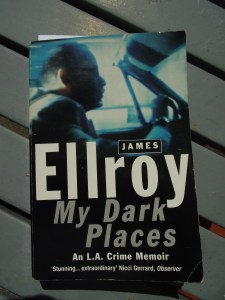 My Dark Places by James Elroy.
 I don’t think there is any nicer feeling than to take a dip in a swimming pool and then after a few lengths, return to your sun lounger and lie there peacefully while the hot sun dries your body. You can feel little rivulets of water dripping away and in time the sun will gradually dry you. It’s almost like a sort of rebirth or a least a refreshing of the soul. The only sounds in this remote hamlet where we are staying are the gentle breeze swaying through the branches of a nearby tree, the quiet humming of insects, some bird song and the occasional drone of a far away car or tractor.
 After the hell of UK motorway travel, the roads of France are just a delight. OK, it might be busy round Paris and other large towns but out in the countryside driving is once again an enjoyable experience. Stopping at the services is much nicer too. Not for us the packed UK services charging ridiculous amounts for a cup of tea. The French aires are quiet and picturesque. Nice rural stopping places with picnic tables and nice clean toilets. Lovely.
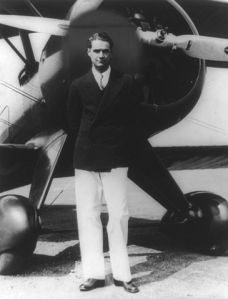 For one man though, sitting alone in a Nevada hotel suite, sealed off from the world by his Mormon minders, the death of Bobby Kennedy was an opportunity. The elderly Hughes, lying naked on a bed watching TV, his hair, long and unkempt and his finger and toenails uncut, was a far cry from the young film maker, aviator, and entrepreneur he had once been. Immediately he wrote a memo to his chief executive and public alter ego, Robert Maheu. He said basically that now Kennedy was lying dead or dying on the pantry floor of a California hotel this was a once in a lifetime opportunity to put on the payroll the entire Kennedy election team, in particular electoral strategist Larry O’Brien. O’Brien had served under Presidents Kennedy and Johnson and would later become chairman of the Democratic National Convention. Not a thought for the dying Kennedy, just the opportunity to get hold of a ready-made election team and put his own man in the white house. At the time Hughes had the idea of promoting Governor Laxalt of Nevada for the job. Fantastic as it may seem the genesis of what would become Watergate lay in Hughes actions on that night.
 In this technological age, one item in particular has come to the aid of the dedicated couch potato and that is the hard drive recorder. It’s a wonderful invention which enables the recording and playback of programmes at the touch of a button.

 Letters from an Unknown Author!