Three Champions of Formula One

I’m not a great sports fan. I’ve no interest in football and cricket does nothing for me but formula one racing is something I’ve followed since my school days. What I’ve always loved about racing are the true champions of the sport, those drivers that have gone down in the annals of motor sporting history as the greats. My own personal favourite driver and the driver who to me is the greatest driver ever, is Sir Jackie Stewart.

Jackie Stewart Image courtesy wikipedia

Jackie Stewart Image courtesy wikipedia

You’ve heard of course of the great natural talents of Ayrton Senna and also of the man known as the professor, Alain Prost and his intelligent and calculating approach to racing. Imagine then those two disciplines put together in one man, well if that were possible the result would be Jackie Stewart. Jackie has all the qualities of a great driver: Fast in qualifying, fast in racing. Fast in the dry, fast in the wet. He also has those other great qualities, car control and understanding of the car as well as a great race craft. You’ve heard of Michael Schumacher and his reputation as the rainmeister I’m sure but well before Schumacher was even a glint in his father’s eye Jackie was winning the foggy and washed out 1968 German Grand Prix by four minutes from his nearest rival. Four minutes! Can you believe that?

Believe it my friend because that was one of the great wet weather drives of all time.

My personal favourite of Jackie’s wins was the 1969 Italian Grand Prix at Monza. Monza at that time had still not been hampered by the chicanes that were to be added a few years later. It was a fast high speed track and the event was a slip streaming formula one sprint. Cars hurtled along sucking the following cars along in their wake and the following driver would use this slipstream to hurtle past. The trick to win the Italian Grand prix was to exit the last corner in second place, slipstream the leader and take the win.

In 1969 however wily Scotsman Jackie Stewart reasoned that if he added an extra-long fourth gear to his car the difference between hanging on to fourth for a while longer when his fellow racers were changing up a gear could enable him to win. In the race when the cars arrived at that all important last corner Jackie dived in front and exited in the lead. Jochen Rindt who was second, latched onto Stewart’s lead and was sucked up in his slip stream then ducked out to take the lead. His momentum eased momentarily as he flicked into fifth but Jackie hung on in his extra-large fourth gear and when Rindt slipstreamed past it was too late; they were past the chequered flag and Jackie had just won the race.
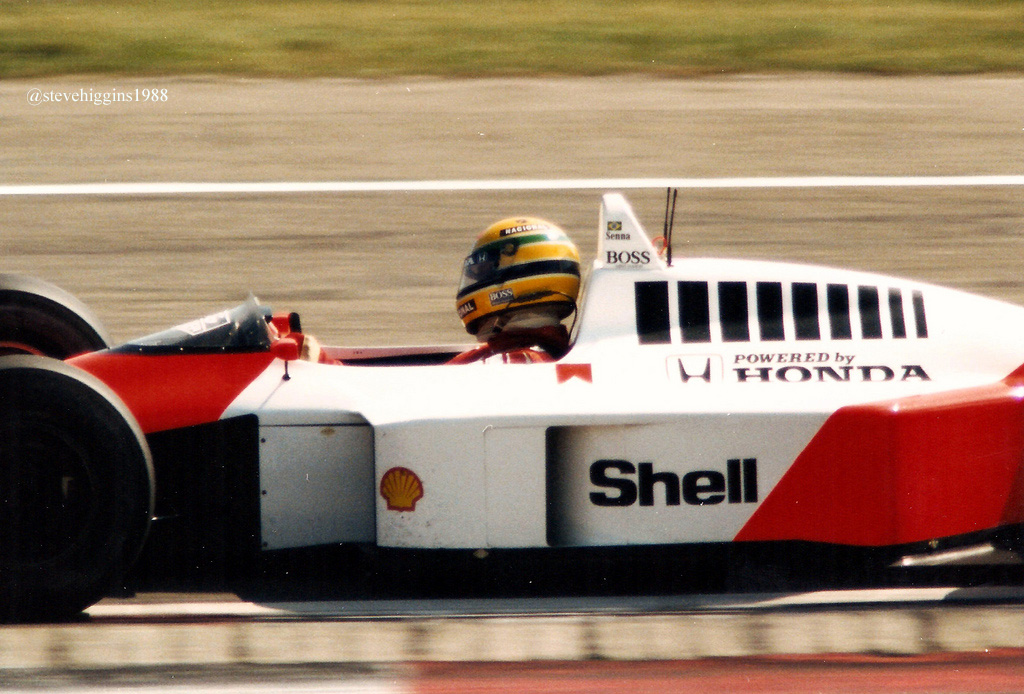
Senna by the author 1988

Ayrton Senna McLaren 1988 German GP

In 1988 two great drivers became teammates at McLaren-Honda, Ayrton Senna and Alain Prost. 1988 was a classic season for the Mclaren squad winning 15 out of the season’s 16 races but it could have been so different. The Williams team and their driver Nigel Mansell could have been in prime position to take the championship. The previous year, 1987, Mansell and team mate Nelson Piquet battled against each other and ultimately Piquet took the title but he had left for Lotus and Honda, who had been Williams’ engine partners for the previous few years had switched their allegiance to McLaren. The move had come a year earlier than had been planned and Williams were left in the lurch. Their relationship with Honda had soured when they declined to replace Nigel Mansell with Honda’s man Saturu Nakajima and they were forced to turn to a private engine manufacturer, John Judd. 1988 would not be their year. The McLarens were dominant. The only possible challenge could come from Lotus, the only other team with the unbeatable Honda engine. That challenge never appeared.

nelson Piquet Lotus 1988 German Grand Prix

Nelson Piquet Lotus 1988 German Grand Prix

Towards the end of the year, Lotus arranged for Jackie Stewart to test their car as part of a TV spot. Stewart, who had been retired for over a decade, took the wheel of the Lotus and almost straight away spotted the very issue that had dogged Lotus for the season. I well remember Peter Warr, the Lotus Team manager saying to TV cameras very diplomatically that Jackie had ‘correctly identified an issue the team were already working on.’ If only Jackie had tested the car earlier in the season, perhaps then they could have challenged the McLarens.

Jackie Stewart at Oulton Park in 1988 with son Paul

Jackie Stewart at Oulton Park in 1988 with son Paul

Three factors then cement Jackie’s position as one of the best drivers ever: his natural ability and car control, his affinity with the motor car and ability to translate that intuition back to the engineers and designers and his canny wisdom, intelligence and pure race craft. After he retired from the sport Jackie Stewart spent years as a PR man for companies like Ford. Later he built up his Stewart formula one team which later sold to Ford for it to become the Jaguar F1 team. Later still, Ford began to reduce its investment in motor sport and the team was sold again this time for it to morph into Red Bull Racing which won four world championships with driver Sebastian Vettel.

In later years Jackie Stewart and Ayrton Senna came together in a television interview where Stewart famously challenged Senna about his driving style and his collisions with other drivers. Senna brushed it off but later admitted that Stewart was right and that he had deliberately pushed Alain Prost off the track in Japan 1990. According to an interview with Stewart in the Daily Mail, Senna apologised to Jackie before admitting to the press what he had done.
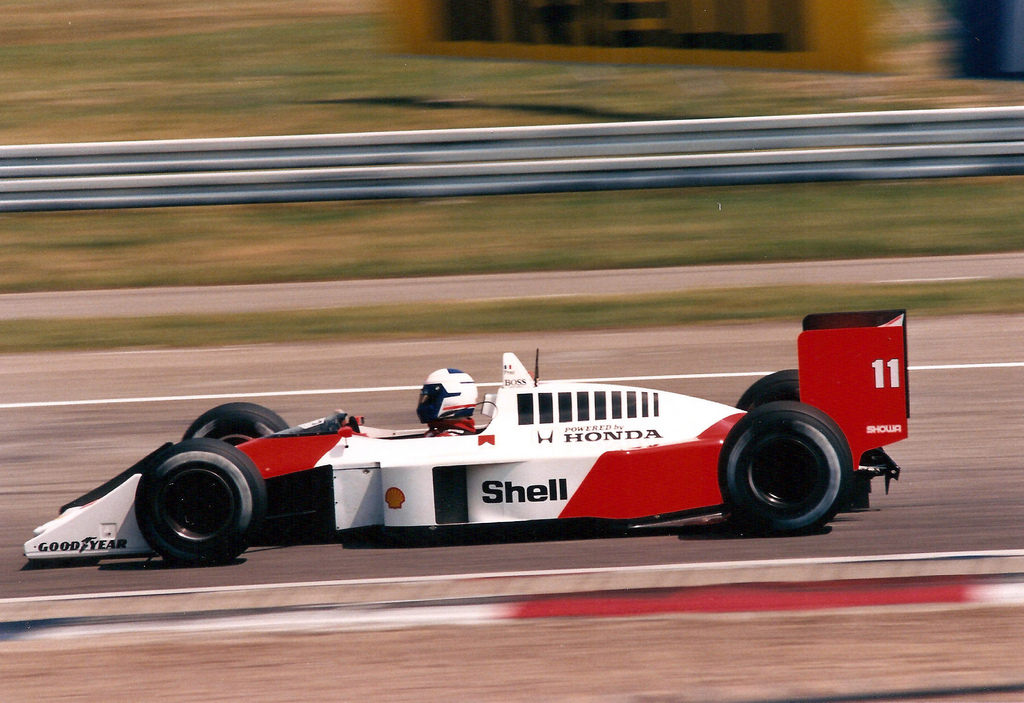
Alain Prost Mclaren 1988 German Grand Prix

Alain Prost Mclaren 1988 German Grand Prix

Alain Prost, like Jackie became a team owner in the late 1990s with Ligier, renaming it Prost Grand Prix. Sadly the team went bankrupt in 2002.

Senna and Prost as is well known, had numerous battles together on and off the race track. Prost left McLaren believing that team boss Ron Dennis supported Senna rather than him and left to drive for Ferrari. He joined Williams in 1993 but declined to partner Senna in 1994 and retired from driving.

Ayrton Senna was killed in the 1994 San Marino Grand Prix. In formula one the event is known as ‘Black Sunday.’ Happily, Prost and Senna were reconciled in the days before the tragedy. Senna had done an in car lap of the race track for French TV  and Prost was working there as a TV pundit. Senna passed a message to Prost saying ‘we miss you Alain.’

The death of Senna and Ratzenberger at Imola were the first formula one tragedies for over twelve years and that was due in no small way to the campaigns began in the 1970’s by Jackie Stewart for better safety in formula one.

What to do next:

Share this post on your favourite social media!

Hit the Subscribe button. Never miss another post!

Buy the book! Click here to visit Amazon and download Floating in Space to your Kindle or order the paperback version.

The Joys of a Second Hand Bookshop (Part 2)

You can’t beat a second hand book shop and an afternoon is never wasted when spent rummaging through the stock of a really good one. What’s so good about a second hand book is that its story, its message has been sent already to someone else and now that same message, that same story is coming to you; If you buy the book. I love it when I pick up a book and there is an inscription on the front page: ‘Best wishes and happy birthday John, love Anne.’ I spend a lot of time wondering who Anne was and where she is now. Who was John and why has he decided to part with this book? Anyway, here are two selections from my book collection.

Miscellany One by Dylan Thomas.
IMG_20150729_113409I love lots of writers but probably my all-time favourite is Dylan Thomas. I love the outstanding power of his writing, his incredible imagery, and the wonderful pictures he creates with his words.

‘Miscellany One’ is a collection of poems, stories and broadcasts by Dylan and I picked it up one windy afternoon at a bookshop in Morecambe.

Dylan is the sort of writer I’ve always wanted to be: A bohemian, pub crawling, boozing writer who fought with himself as he laboured to paint his word pictures. Whether that was really the case I don’t know but Dylan did like his pubs and he did enjoy a drink.

The fact of the matter is that I’m nothing like Dylan, except we both share a love of words, particularly the sound of words, which is the key to the richness of Dylan’s work, especially his poetry.

If you think about it, there must be a connection between the sound of a word and its meaning, a deep organic connection. After all, how did words begin? Imagine some ancient caveman, just wanting to get some concept over to his mate. What are the deepest and strongest feelings for a human being? Well, for a caveman food must be one, and love too. Surely love was present in those primordial days when every caveman went out on Saturday with his club looking for his mate. There must have been a moment when ancient man strived to say something to his mate, tried to express his feeling and a sound that was the precursor to the word love slipped uneasily from his lips.

If you have read any of Dylan’s poems and are yet to understand his magic, let me give you a tiny bit of advice: Listen to Dylan’s voice. Yes, Dylan, like many poets wrote for his own voice and if you click on to any Dylan Thomas page or search anywhere on the internet you are bound to come across some old recording of his voice. Don’t make do with lesser voices, even when we are talking about great actors like Richard Burton or Anthony Hopkins. Search out Dylan himself and you will be won over, like me, by the power of his voice.

It’s not just his poems that are rich with the power of words. Dylan wrote and performed a good many radio plays and broadcasts and my very favourite is ‘Return Journey’ which can be found within this slim volume. It’s about Dylan himself returning to Swansea in search of his former self ‘Young Thomas.’ He visits young Thomas’ old haunts and meets with people who knew him fleetingly; like the barmaid who used to serve him, journalists who worked with him and even the park keeper where Dylan and his young friends would play in the park. It’s a lovely piece where drama merges with prose and we slip in and out of the two as the story progresses.

Many years ago I visited Dylan’s former home in Laugharne, now a museum dedicated to Dylan. I can only say I loved the place and didn’t want to leave. I wandered through its rooms and looked at the black and white photos on the walls and tried to imagine Dylan living here and banging out his poems and stories in his writing shed then later ambling down to the pub for a pint. I had to leave early the day I visited, so I went back the next day and the staff recognised me and let me in without paying, so in return I bought some books about Dylan and a copy of his collected stories. Keep a look out for Miscellany One and its companion volumes, you’ll love them.

A Kind Of Loving by Stan Barstow.
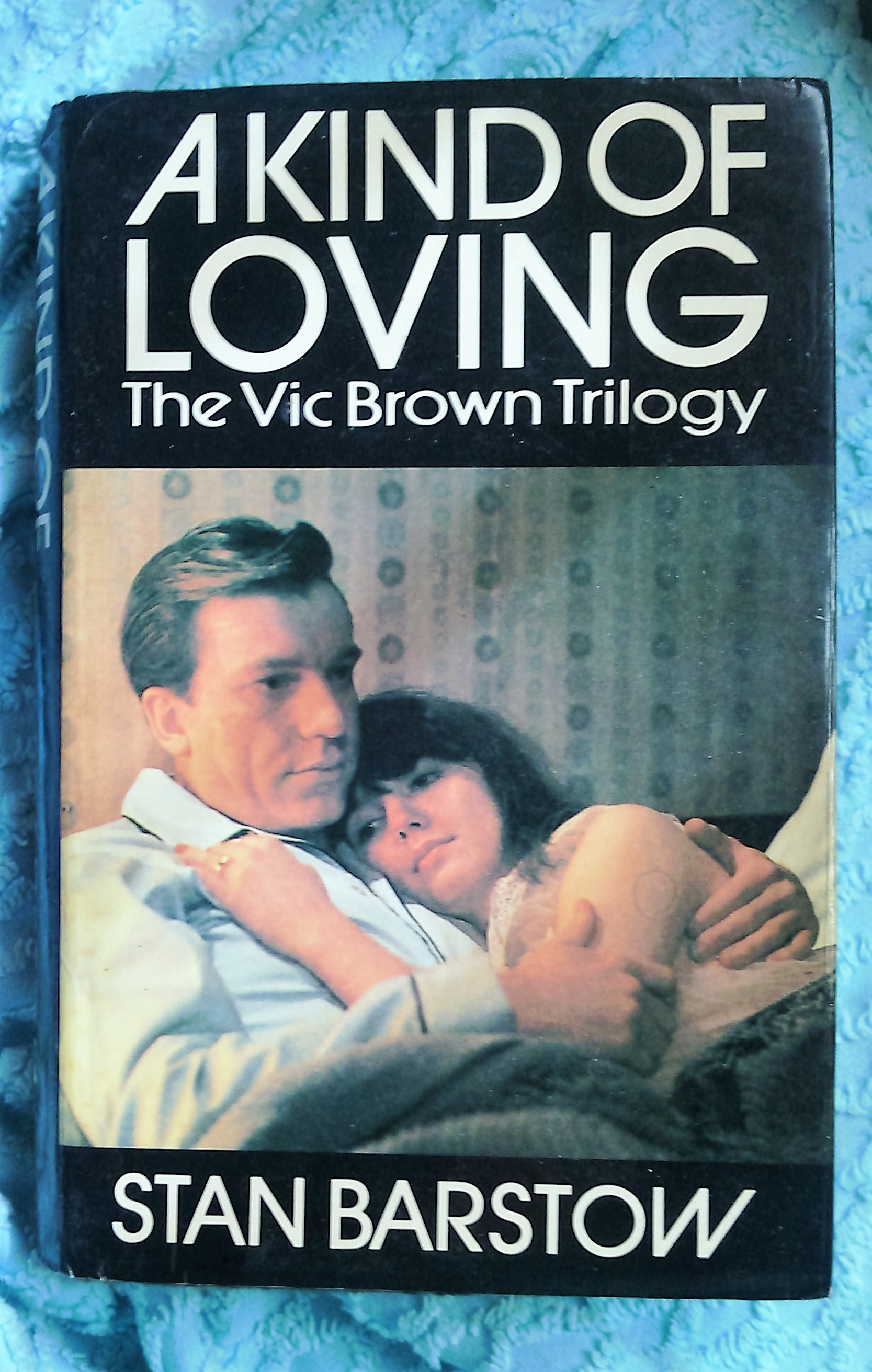
IMG_20150729_113646 (2)In the late fifties and the early sixties the UK film industry underwent a minor revolution. A new type of gritty realism began to emerge in a series of films like ‘A Taste of Honey’, ‘Saturday Night and Sunday Morning’, ‘Alfie’, ‘Georgy Girl’ and of course, ‘A Kind Of Loving’.

The movie is a wonderful slice of early sixties northern life and for a northern lad myself a great chance to see the north represented in the cinema. The movie was based on the book by Stan Barstow and it was another find in a second hand book shop.

The book shown here is actually a trilogy, three books in a series about the main character Vic Brown: ‘A Kind of Loving’, ‘Watchers On the Shore’ and ‘The Right True End’ and the cover pictures are not from the film but the TV version that was made in the eighties.

The story is a simple one, boy meets girl, she gets pregnant, the boy doesn’t really love her but gets married to her anyway. Reading this book brought back my own early childhood and all the stories about office working and family weddings all ring true for me, so much so that sometimes I felt as though I was reading about myself.

I do love that in a book when the writer finds something inside me, the reader, and turns it round to make a personal connection between reader and writer. Stan Barstow was born in the west Riding of Yorkshire. He was the son of a coal miner and worked in a drawing office like his character Vic brown. He died in 2011 aged 83.

To read part one of my second hand books post, click here.


If you liked this post, why not buy my book? Click here to go to amazon or click the links at the top of the page to find out more.


100 Great Movies you Must See!

I really do love movies. Well, my movies, my own personal favourite movies and I don’t always care for other people’s movies. I tend to like classic movies rather than modern ones, not that I’m denigrating modern film. Anyway, I started off trying to work out my top 10 and ended up with, well, a hundred!
Yes, I can also tell you that because of the list maniac that I am, I decided to make the list into a spreadsheet which is great because I can sort the data and throw certain things back at myself, or in this case, at you, the reader. Here are a few examples; A Number of directors had multiple entries, people like Oliver Stone, Michael Curtiz, Martin Scorcese, John Ford, and David Lean (all with three entries.) My top two directors came out as Woody Allen and Stanley Kubrick each with five entries. Woody Allen, Robert Redford and Humphrey Bogart were my favourite leading men and Liz Taylor and Mia Farrow my favourite leading ladies. My favourite years for movies appears to be 1946 with four favourite films and 1956 with five. Anyway, the complete list is below, in no particular order:

A Kind of Loving
A Taste of Honey
Alfie
Blithe Spirit
Broadway Danny Rose
Casablanca
Charlie Bubbles
Dead of Night
It’s a Wonderful Life
Lost Horizon
On the Waterfront
Radio days
Rebecca
Saturday night and Sunday Morning
Serpico
Seven days in May
Spartacus
Sunset Boulevarde
Sweet Smell of Success
The Bad and the Beautiful
The French Connection
The Last Picture Show
The Long Arm
The Maltese falcon
The Man in the White Suit
The Quiet man
The Searchers
The spy who came in from the cold
The Treasure of the Sierra Madre
The VIP’s
2001 A Space Odyessy
A Hard Days Night
A Man for all Seasons
A Matter of Life and Death
Alien
All the President’s men
Angels One Five
Angels with dirty faces
Annie Hall
Around the world in eighty days
Awakenings
Back to the Future
Billy Liar
Bullitt
Citizen Kane
Crimes and Misdemeanors
Dances with Wolves
Desperately Seeking Susan
Dog Day Afternoon
Fail Safe
Fatal Attraction
Four Weddings and a Funeral
Get Carter
Get Shorty
Giant
Gladiator
Goodfellas
Great Expectations
Green for Danger
Gregorys Girl
Hannah and Her Sisters
JFK
Kes
Lawrence of Arabia
Little Man Tate
Lost in Translation
night Of The Demon
North by Northwest
On Her Majestys Secret Service
One Flew over the Cuckoos nest
Paths Of Glory
Platoon
Pulp Fiction
Rocky
Shane
Smokey and the Bandit
Snow White and the Seven dwarfs
Some Like it Hot
Taxi Driver
The Adventures of Robin Hood
The Big Sleep
The Candidate
The Cincinatti Kid
The Cruel Sea
The Dambusters
The day the Earth stood still
The Godfather
The Graduate
The Great gatsby
The Ipcress File
The King of Comedy
The man who shot Liberty Valance
The Misfits
The Shining
The Silence of the Lambs
The Thief of Bagdad
The Third Man
The Wizard of Oz
Three days of the Condor
To Catch a Thief
Viva Zapata
Wall Street
Whats new Pussycat?
Whats up Doc?
When Harry met sally

Hope you enjoyed the list. What are your personal favourites?

If you liked this post, why not try my book? More details on the ‘Floating In Space’ link above.

8 Things You Didn’t Know about James Bond, 007

bondblogI’ve been a big James Bond fan since I was a schoolboy and you may have noticed a couple of other Bond posts that I’ve written previously. The first Bond book I ever read was The Man with the Golden Gun which is a rather poor entry into the Bond world. Author Ian Fleming wrote the first draft but died before revising the book. His method was to write a first draft and then on the second, add in all the little bits of detail, such as Bond’s meals, drinks, clothing and so on that made the books so fascinating. I persevered, found the correct sequence of the novels, and have been a Bond fan ever since. Anyway, I’m getting away from my theme, eight things you may not know about 007.

1: The Longest Serving Bond.
Roger Moore made the most Bond films starting with Live and Let Die in 1973 and finishing with A View to A Kill in 1985. As much as I love Roger Moore, I really do feel he was the worst James Bond ever, totally unsuited for the role and a prime factor in me stopping watching the films during the 80’s. Adam West, TV’s Batman, Clint Eastwood and Burt Reynolds were all once in the running to play 007 but all declined, believing Bond should be played by a British actor. Cary Grant was also approached but turned down the role believing he was too old.

2: The Shortest Serving Bond.
George Lazenby was recruited to carry on as 007 when original Bond actor Sean Connery left. Lazenby was an Australian actor and the star of The Fry’s Chocolate Cream TV adverts. Lazenby was my personal favourite Bond actor and the one I’ve always felt that most resembled Ian Fleming’s description of Bond. He had the authentic black comma of hair that Fleming described in the books and his one Bond movie, ‘On Her Majesty’s Secret Service’ was one of the very best. Such a pity that Lazenby didn’t go on to make more Bond films. He was given poor advice about the movie business; in particular he was advised that the Bond movies were on the way out. Away from the Bond set Lazenby dressed like a seventies hippy with long hair and a beard, none of which went down well with his movie bosses and PR men so Lazenby was out and Sean Connery asked back for one last 007 movie.

image courtesy flickr.com

image courtesy flickr.com

3: Who wrote the Bond books and where were they written?
Ian Fleming wrote the Bond books. After the war finished Fleming began work as foreign manager for the Kemsley newspaper group and as his contract with them gave provision for three months holiday during the
winter months, Fleming spent the time in Jamaica where he bought a house. He named the house after a wartime operation known as operation Goldeneye. He returned there every summer where he would work on the next Bond book. When all the books had been made into films, Eon productions, the makers of the Bond movies had to create new stories and new plots. The seventeenth Bond film Goldeneye was named after Ian Fleming’s Jamaica home.
Goldeneye the movie marked the debut of Pierce Brosnan as 007 when the movie franchise returned to the cinema screens after a brief hiatus. Apart from a rather silly tank chase, Goldeneye was one of the very best Bond movies.

4: Was there a real James Bond?
Indeed there was a real James Bond. When Fleming was planning his original novel he was looking around for the blandest and most anonymous name he could think of, and that’s when he came across a book called ‘Birds Of The West Indies’ by ornithologist James Bond. In 1964 Fleming gave Bond a first edition copy of ‘You Only Live twice’ inscribed by Fleming ‘to the real James Bond from the thief of his identity.’ When the book was auctioned in 2008 it fetched £56,000.
Many magazines and newspaper articles have put forward theories as to who the real Bond was but the fact is that while many of Fleming’s colleagues in the wartime SOE (Special Operations Executive) may have inspired him, the character of Bond was inspired by Fleming himself. Fleming was a commander in naval intelligence during the war, just like 007, and it was Fleming who drank the vodka martinis that James Bond liked so much. It was Fleming who wore the Sea Island cotton shirts that appear in the novels and it was Fleming who favoured scrambled eggs for breakfast, just like his creation, James Bond.

5: Which was the highest grossing Bond movie?

image courtesy flickr.com

image courtesy flickr.com

It was actually ‘Skyfall’, the 2012 Bond movie starring Daniel Craig as 007. The movie is easily the best of the Daniel Craig Bond films and there are some interesting aspects to the film in particular a visual homage to past Bond movies using a vintage Aston Martin. Until recently the top grossing movie was ‘Thunderball’ with Sean Connery.

6: How did two independent Bond movies come to be made?
Ian Fleming sold the movie rights to Casino Royale separately from the rest of the books and this enabled producer Charles K Feldman to produce a movie independently from Eon productions who own the rights to the other books. Feeling that he could not compete with the mainstream movies, he decided to make Casino Royale into a comedy version. David Niven starred as Sir James Bond and interestingly, Fleming had mooted Niven as a possible Bond when casting Dr No, the first movie in the series.
The other independent movie, ‘Never say Never Again’, came about due to a legal squabble. Fleming began work with producer Kevin McCLory and writer Jack Whittingham on a script which never came to fruition. Like many writers, Fleming was reluctant to waste this material and used it in his book Thunderball but did not credit McClory or Whittingham. McClory sued Fleming and won certain rights to the story. This enabled him to make what was essentially a remake of Thunderball in 1983 with Sean Connery returning for a last bow as 007.

7: Did the author ever kill off 007?
Not exactly but at the end of ‘You Only Live Twice’ in the novel, Bond is presumed dead or missing and M, the head of the secret service and 007’s boss, writes Bond’s obituary for the Times. It is quite interesting to read and M mentions that Bond was born of a Scottish father and French mother. The Bond family motto as we learn from ‘On Her Majesty’s Secret Service’ is ‘the world is not enough,’ a phrase that later became the title for the 19th Bond movie.

8: Bond girls and voice overs.
A quick internet search tells me there have been 75 Bond girls but I’m not sure whether that includes minor flirtations or ladies like the formidable Miss Moneypenny herself. Two Bond girls were veterans of the British TV espionage series the Avengers: Diana Rigg played Tracy in ‘On her Majesty’s Secret Service’ and Honor Blackman was Pussy Galore in ‘Goldfinger.’ Terri Hatcher, formerly Lois Lane in the TV series of Superman played Bond’s love interest in Tomorrow Never Dies and Eva Green played Vesper Lynd in the new version of Casino Royale. The most famous is probably Ursula Andress who played the first ever Bond girl Honeychile Ryder in Doctor No. Interestingly, Ursula Andress’ voice was dubbed in the film by Nikki van der Zyl who did voice overs for many Bond girls. Apparently Ursula Andress was felt by the producers to have had too strong a German accent. Shirley Eaton played Jill Masterton in Goldfinger and it was she who was famously covered in gold paint. Jill’s voice was dubbed by Nikki in order to give her a softer voice. French actress Claudine Auger who played Domino in Thunderball was also dubbed by Nikki.
Miss Moneypenny, M’s secretary is not necessarily considered to be a Bond girl; however, in the films Moneypenny and Bond always have a certain amount of banter. Lois Maxwell played Moneypenny in the first fourteen Bond films. My personal favourite was Samantha Bond who played the role four times in the Pierce Brosnan era. The current Miss Moneypenny has been given a sort of backstory in Skyfall, that of a former field agent assigned to a desk role.

The 24th and latest Bond movie ‘Spectre,’ premiers later this year. Watch the trailer below!


If you liked my blog, why not try my book! Click the icon below to go straight to my Amazon page or click the links at the top of the page for more information.

A Few Unconventional Thoughts about Time

quotescover-jpg-88bTime, there’s a thing. I have a theory about time and it’s this, it’s that time flows differently in different places. OK; sounds a bit mad doesn’t it? Let me explain further. Take somewhere like France. Dotted about France are innumerable war grave cemeteries. The conflicts of the first and second world wars left their mark on the landscape in various ways and even today farmers in the Somme and other places continue to dig up artillery shells and other reminders of the past.
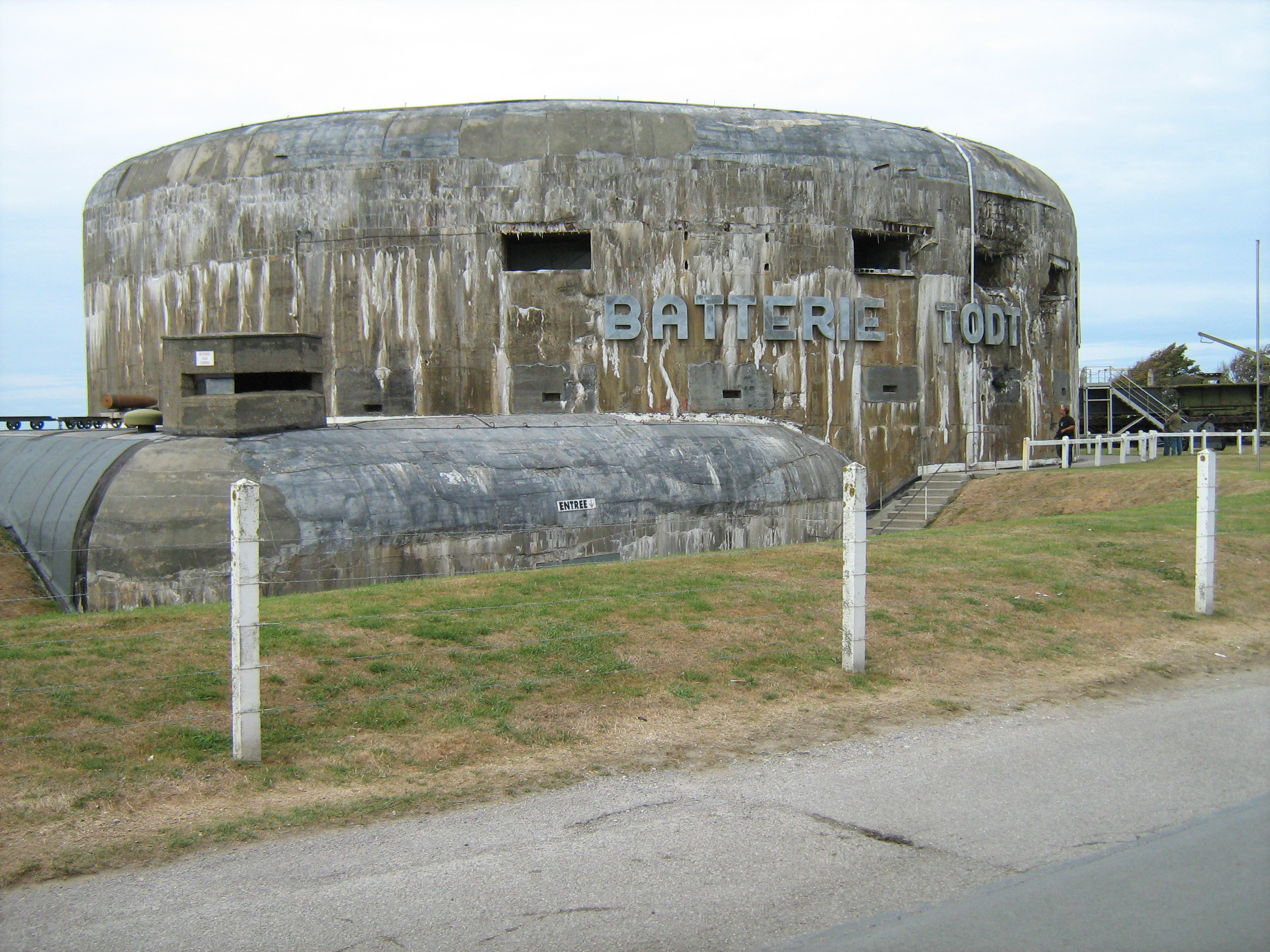
Batterie Todt, Pas De Calais

Batterie Todt, Pas De Calais

On many occasions when trundling through rural France I’ve come across many bunkers, fortresses and other sites. In northern France Liz and I stopped at a war grave cemetery that was picture perfect in its own way. The lawns were incredibly neat, and the hedgerows immaculately trimmed. Sadness pervaded the site like a scent coming over from the adjacent fields. Throughout there is a feeling of peace, of slowness and a feeling that time has stopped here or perhaps just slowed. That’s not strange when you think that time must have speeded up during the action of the first and second world wars, so it seems only fair that nature must compensate, that time must slow later to make up for the fast and frantic earlier time.

You can imagine the pace of things even a hundred years ago: The early morning bombardment, the whistles blowing as officers called their troops to go over the top. The advance parties who made ahead to cut the barbed wire, the troops walking apprehensively forward until they walked into the deadly machine gun fire that cut most of them down. Many found their final resting places in these cemeteries, places that are now quiet and peaceful with a silent beauty, timeless and moving with the beat of nature as a backdrop, the humming of the insects, distant cows mooing, and the birds flying past.

Many soldiers’ bodies slipped deeper into the mud of places like the Somme and remain there still. Others have no resting places, their bodies blown to pieces by artillery shells, their names marked on marble walls forever missing in action.

War memorial, France, 1940

War memorial, France, 1940

At one place, travelling from St Quentin to Soissons we stopped by the road to find a huge sword standing in the rock. Like a giant Excalibur, it stood there waiting to be pulled by some giant hand, bearing silent witness to a long ago battle from the Second World War.

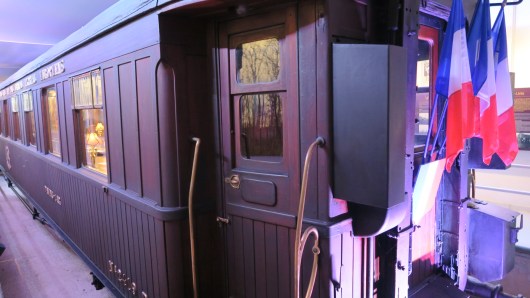
We once visited Compiegne, the place where the armistice was signed at the end of the First World War. The famous railway coach there is not the authentic one. No, that one was where Hitler forced the French to surrender in the early days of World War 2. The coach was then taken away to Berlin where the Nazis destroyed it in the closing stages of the war to stop its return to France. The coach that stands here now in Compiegne is a similar one and it’s easy to imagine the scenes all those years ago, the French accepting the German surrender in 1918, then years later Hitler and his gang pressing their terms on the French.

Compiegne, France

I’ve never been to Auschwitz, the Nazi concentration camp in Poland but whenever I look at one of those TV documentary programmes where TV cameras return to the site, it doesn’t look like a place of mass destruction. It looks calm, serene and another silent witness to the death and destruction of the past. Time ran faster here when the Nazi death machine was in full swing. Now time flows peacefully past over those who come to learn about what has gone on before. This must indeed be a sombre place to visit but Auschwitz is not only a memorial to those who had their lives snuffed out in such a terrible fashion but a reminder to all of the dangers of prejudice and hatred. Time hangs heavy over this place but the evil that built and maintained this death camp has long gone.

All the places mentioned here have had their moments in the spotlight of world history. They all lived through times of accelerated pace when time flowed swiftly. Perhaps it’s their time now for a quieter pace while time flows slowly . .


If you enjoyed this post, why not try my book. Click the links at the top of the page for more information.

dscf1792_31219045553_o

Marilyn Monroe: Suicide, the Kennedys, and a Red Notebook

mmpicmonkey-imageIn my book collection, which is pretty big, I’ve probably got more books about Marilyn Monroe than any other single subject although I only have two of her movies on DVD. Some like it Hot directed by the Great Billy Wilder and her very last completed movie, The Misfits. I suppose I’m just more interested in her, the woman herself rather than her films. The woman born Norma Jeane Mortensen, according to her birth certificate, who went on to become the movie star Marilyn Monroe.

Funnily enough, June the 1st, only a few days ago as I write this post, would have been Marilyn’s 89th birthday. It’s hard to imagine Marilyn, this icon of movie star allure as an old woman. Marilyn will never age and our image of her is fixed not only by her movies but by the many clips and photographs of her that fill cyberspace. She was a woman loved by the camera but she had a hard battle to become the person she wanted to be, a serious actress in charge of her own fate as a movie star and in control of her career and her roles.

It seems to me after reading many books about Marilyn, she lived her life in compartments and in each separate compartment were different and separate people. You may have read a book about her by Robert F Slatzer, ‘The Life and Curious Death of Marilyn Monroe,’ who claimed to have married Marilyn only to have had the marriage annulled at the request of her movie bosses. Slatzer was kept in a separate compartment from Bill Purcell, who features in my most recent Marilyn book purchase; IMGA0351‘Marilyn Monroe: Private and Undisclosed’ in which the author refers to a long time relationship between him and Marilyn. Slatzer and Purcell, and indeed her three husbands, Jim Dougherty, Arthur Miller and Joe DiMaggio, were all kept by Marilyn in separate compartments which only occasionally connected.

Marilyn claimed she only wanted to settle down and have children but stardom was something she could never give up. She had worked so hard for it and when her struggles to have a child failed, or when her relationships themselves failed, her movie career was always there to fall back on.

She died in 1962 aged 36. The coroner said she died as a result of a probable overdose. Indeed, she had a history of overdosing and Arthur Miller, her third husband, saved her from death more than once. Many writers have attributed her sacking from her final film ‘Something’s Got To Give’ as a contributing factor in her suicide but in fact Marilyn had been reinstated to the film at an increased salary. On top of that she had many film projects planned, including a movie biopic about Jean Harlow, so did she commit suicide? Was it an accidental overdose, or was she murdered? Who would want to murder Marilyn Monroe and why?

The fact of the matter is that Marilyn had become rather dangerous to quite a few people and she was in possession of some pretty interesting information because of her involvement with President John Kennedy. Kennedy, who was a serial womaniser, was not amused at her overtly sexual performance at his birthday party and decided to end his association with her. FBI boss J Edgar Hoover had made Kennedy painfully aware he knew of his trysts with another woman named Judith Campbell, who was also intimate with mafia boss Sam Giancana. Anxious perhaps not to give Hoover further ammunition against him, the President tasked his brother, Attorney General Bobby Kennedy to do the dirty work and smooth over things with Marilyn.

Some books and articles claim that was exactly Bobby Kennedy’s mission with Marilyn; damage limitation and keeping her quiet. Others say things had gone further and Marilyn had another affair, this time with Bobby Kennedy himself. Marilyn was someone who had spent a lifetime trying to better herself in the arts and literature. She was a great reader and she began taking notes of her conversations with the Attorney General in order to research their topics and appear confident and knowledgeable. Those conversations included, incredibly, highly secret things within the US government including attempts to topple the communist government of Fidel Castro in Cuba. She wrote these notes down in a red notebook which she showed to Robert Slatzer. He advised her it was an extremely dangerous notebook to have but as her affair with Bobby Kennedy cooled, if indeed it was an affair, Marilyn grew more and more angry. She claimed to friends she was fed up of being tossed around ‘like a piece of meat’ and threatened to blow the lid on her dealings with the Kennedys in a press conference. Bobby Kennedy wanted that notebook destroyed and Marilyn kept quiet. The mafia wanted derogatory information on the Kennedys and had even had Marilyn’s home bugged. The press conference was arranged for Monday August 6th, 1962. Sadly, Marilyn was found dead in the early hours of the 5th.

mm5409683410_8350501c78_oOn the last day of her life, August 4th, 1962, Marilyn was not depressed but making plans for the future. The day before, the 3rd, she spoke on the telephone with handyman Ray Tolman and arranged for him to visit the next week to sort out some repairs on her house, 12305 5th Helena Drive in Brentwood. She also ordered various plants and shrubs for her garden. She spoke with her publicist Pat Newcomb and invited Pat to stay the night. The two women dined locally and turned in to bed early.

The next day, 4th August, Marilyn was awake when the housekeeper arrived at 8am. She spoke with numerous people on the telephone and arranged for Masseur Ralph Roberts to come over for a barbeque the next night.
Pat Newcomb arose around 12 noon and felt that Marilyn was not in a good mood. Pat had slept well while Marilyn, who had a long history of sleeping problems, had slept badly. This seemed to cause some friction between the two women. Shortly after 1 pm Ralph Greenson, Marilyn’s psychiatrist arrived. Marilyn and Greenson had a therapy session together while Pat spent the afternoon sunbathing by the pool as previously arranged.

At around 3pm Pat Newcomb says Greenson asked her to leave as he wanted to work alone with Marilyn.
Later, Eunice Murray, Marilyn’s housekeeper dropped Marilyn off at Peter Lawford’s beach house while she did some shopping. At about 4pm she returned home and Doctor Greenson also returned for presumably, more therapy.

At 5pm Peter Lawford called and asked Marilyn to a supper later that evening but she declined. Marilyn received numerous telephone calls during the day some of which Eunice Murray had fielded by telling callers Marilyn was busy or not at home. Many times this was simply not true. A call from Ralph Roberts was answered by Dr Greenson who said sharply “Not here,” and put down the phone.

At 7 pm Greenson says he left, leaving Marilyn alone with housekeeper Eunice Murray. At around this time Marilyn took a call from Joe DiMaggio Jr. Joe had broken off his engagement to his fiancée and found Marilyn to be in good spirits. At about 7.30 Peter Lawford called again to ask Marilyn to dinner. His description of Marilyn contrasts with Joe Jr as Lawford states Marilyn’s speech was slurred and that she appeared disorientated. Towards the end of the call Lawford stated famously that Marilyn said, “say goodbye to the President and say goodbye to yourself because you’re a nice guy.” Mexican actor Jose Balleros also claimed to have spoken on the telephone with Marilyn that night, he claims Marilyn was lucid and awake in contrast to Peter Lawford’s statements. The fact is Lawford and Eunice Murray both gave varying reports of what happened on Marilyn’s last evening and neither’s statements can be completely trusted.

According to Murray she noticed a light on under Marilyn’s door but the door was locked. She went outside and saw Marilyn either asleep or unconscious on the bed. This was 10 pm in the first version Eunice told. Later on it was moved forward to 3 am. She called Ralph Greenson who advised her to break a window with a poker. Greenson himself then arrived at the house, broke another window and gained entry through the window and found Marilyn dead.

When Police Sgt Clemmons arrived at 4.25 am he saw Marilyn lying face down in what he called the ‘soldier’s position.’ He said “her hands were by her side and her legs perfectly straight. It was the most obviously staged death scene I have ever seen.” Not only that, all the sheets on the bed were clean and Mrs Murray was busy doing the laundry. Clemmons also noted the unusually long time that had elapsed before calling the police and asked why wait until gone 4 in the morning? Greenson and Murray said the film studios had to be informed first. Later, Murray changed her story saying she saw the light on in Marilyn’s room at midnight, went back to bed then awoke later and saw it was still on at 3am then she called Greenson. Greenson then called Doctor Hyman Engleberg and both doctors arrived shortly after. It was Hyman Engleberg who pronounced Marilyn dead.

Eunice Murray admitted in a BBC interview in 1985 for the documentary say Goodbye to the President that Bobby Kennedy was at Marilyn’s house on the day of her death. Eunice’s son in law and Marilyn’s handyman, Norman Jefferies told author Donald Wolfe that Bobby Kennedy arrived late on the Saturday evening with two unknown men and asked Jefferies and Murray to leave while he spoke with Marilyn alone. When they returned Marilyn was comatose in one of the guest cottages attached to her house. Jefferies and Murray called an ambulance but Marilyn died from an overdose. Was it a suicide or an accident? Was it murder? It seems to me that at this late stage we can never know but the autopsy showed that Marilyn’s blood level contained a lethal level of Chloral hydrate and Nembutal but there was no residue from the pills in her stomach, in fact, Marilyn would have had to swallow 38 to 66 capsules of Nembutal plus the chloral hydrate, and would have lost consciousness long before swallowing all of the pills. Was an injection given? The autopsy showed no trace of any needle marks and the final result was noted as a ‘probable suicide.’ Other versions of this story state that an ambulance was called and Marilyn expired on the way to hospital. Presumably it was the ambulance crew that pumped her stomach removing the pill residue. Recently an ambulance driver named James Hall claimed he attended Marilyn’s home that night and Marilyn was responding to treatment when a doctor whom he identified as Ralph Greenson injected Marilyn in the chest with a hypodermic syringe with a long needle. It was he said an inept amateur injection that broke one of her ribs however, these claims were not substantiated by the autopsy. The body was then returned to her home in order to give Robert Kennedy time to leave Los Angeles. I cannot for a moment imagine Bobby Kennedy as a murderer but he certainly would not want to be associated in any way with a movie star suicide. To this day John Bates, a friend of Kennedy’s claims that Bobby and his family spent the weekend with him at his ranch in Gilroy, south of San Francisco.

The final tragedy of this drama is that former husband Joe DiMaggio was set to remarry Marilyn. The date of the wedding should have been August 8th. Instead Joe attended Marilyn’s funeral on that day.

DiMaggio sent half a dozen red roses to her crypt three times a week for the next twenty years. He died in 1999 aged 84 and never remarried. He never spoke about Marilyn publically ever again. When Robert Kennedy visited the Yankee stadium in 1965, DiMaggio took a discreet step back when it was time to shake Kennedy’s hand.

"Marilyn Monroe crypt2" by User:Oleg Alexandrov. Original uploader was Oleg Alexandrov at en.wikipedia - Transferred from en.wikipedia(Original text : Made by Kodak Easy Share camera by User:Oleg Alexandrov). Licensed under Public Domain via Wikimedia Commons - https://commons.wikimedia.org/wiki/File:Marilyn_Monroe_crypt2.jpg#/media/File:Marilyn_Monroe_crypt2.jpg

“Marilyn Monroe crypt2” by User:Oleg Alexandrov. Original uploader was Oleg Alexandrov at en.wikipedia – Transferred from en.wikipedia(Original text : Made by Kodak Easy Share camera by User:Oleg Alexandrov). Licensed under Public Domain via Wikimedia Commons – https://commons.wikimedia.org/wiki/File:Marilyn_Monroe_crypt2.jpg#/media/File:Marilyn_Monroe_crypt2.jpg

Sources: The Assassination of Marilyn Monroe by Donald Wolfe

Marilyn Monroe: Private and Undisclosed by Michelle Morgan

Goddess by Anthony Summers

Say Goodbye to the President: 1985 BBC documentary

Websites: http://www.lovingmarilyn.com

http://www.cursumperficio.net

For a recent daily Mail article, click here.


The British Grand Prix

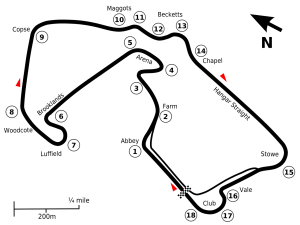
This is the premier weekend of British motorsport, yes, the British Grand Prix. Time once again for Hamilton and Rosberg to do battle, along with the Ferraris of Vettel and Raikkanon and the Williams cars of Bottas and Massa, and all the lesser teams who gather at Silverstone to fight it out on the tarmac for the spoils of victory.

Years ago, when I was a schoolboy and followed Formula One with a religious fervour, the British Grand Prix alternated between Silverstone, the flat former airfield circuit in Northamptonshire and Brands Hatch, the picturesque track in Kent full of twists, turns and dips.

Today, it seems to me as though Silverstone is trying to turn itself into Brands Hatch because in the past decade they have added various twisty sections and an entire new pit and garage complex. Many other traditions have vanished too in F1 such as the annual post British Grand Prix cricket match; not possible today unfortunately as the latest drivers are prone to dash off home at the end of the race at the earliest possible opportunity. Even a DNF (did not finish) is not all bad if it fits in with an earlier flight.

Now that the F1 teams are flying off to ever more distant lands for their racing; places like Singapore, Soshi in Russia and Bahrain to name but three, it’s good to see the drivers return to a track where the greats of the past also raced. Fangio and Moss competed at Silverstone, as did Stewart and Clark, and Prost and Senna. What they think of the current Silverstone is anybody’s guess but perhaps I’m being mean, looking back when I should be looking forward. Silverstone today is the UK’s premier track and to a great extent, the UK is the centre of the Formula One world. Most of the current F1 teams are based within a stone’s throw of Silverstone and even Mercedes, the current number one team are based in the UK despite their German background. Within 80 minutes of Silverstone is an area nicknamed motorsports alley and the teams that are based here include Mercedes, McLaren, Lotus, Red Bull, Force India, Williams, and F1 minnows Manor Marussia. In many ways, the British Grand Prix is the home race, even for the Mercedes!

I’ve not visited Silverstone since 1992 when it was £60 just to walk in through the gates. What it costs nowadays to gain entrance I shudder to think. Even so, Lewis Hamilton and Nico Rosberg should hopefully deliver a performance that will make the entrance fee well worth paying.

My favourite Grand Prix was the 1987 event. I visited Silverstone that year to watch the qualifying and then returned home to watch the race on Sunday on television. Nigel Mansell won a terrific race after changing tyres and then chasing and finally overhauling team mate and race leader Nelson Piquet for a memorable victory.

Nigel Mansell German GP 1988 photo by author

Nigel Mansell German GP 1988 photo by author

Formula One team bosses are currently in something of a panic. Investors have poured millions of pounds into F1, not because they like the sport but because they find their investment can pay off big style in these days of multi million pound global TV and advertising deals. Reports of failing interest in the sport however has rung alarm bells and throughout the motorsporting media there have been calls to make F1 more interesting. Why are the cars not louder? Why are Mercedes winning all the time? Should we bring back refuelling? Is the high tech aspect ruining the driver input? There are even calls for Bernie Ecclestone, the aging F1 emperor to hand over to someone else. Only time will tell what will happen. It sometimes makes me smile when I compare Formula 1 to other sports like cricket. Can you if imagine if Ecclestone and his investors had a stake in cricket and the TV viewing figures were down? What would happen then? Increase the number of overs? Maybe have an extra ball in each over,  seven instead of six?  Change the wooden ball to a rubber one? Add an extra stump? Or even helmet cams on the batsman! Now there’s an idea!


What to do next:

Share this post on your favourite social media!

Hit the Subscribe button. Never miss another post!

Buy the book! Click here to visit Amazon and download Floating in Space to your Kindle or order the paperback version.

My Love Affair With Back To The Future

The world of the cinema is filled with great movies; Stanley Kubrick’s 2001: A Space Odyssey, Orson Welles’ Citizen Kane, John Ford’s The Searchers and Michael Curtiz’ Casablanca, to name but a few.
One movie, that I saw described on one web page as a ‘phenomenon of popular culture’ is a movie as good, certainly as entertaining and probably more accessible than any in the list above. Yes, I’m talking about Back To The Future.
The movie was directed by Robert Zemeckis. Zemeckis and Bob Gale wrote the screenplay and Steven Speilberg produced and the stars of the picture were Michael J Fox and Christopher Lloyd.

5274270428_c4dff8b634_bIt was released in 1985 and was the biggest grossing movie of that year. It was also in the headlines again this year because 2015 was featured in Back To The Future 2 and the reality in 2015 was a little different to what the producers imagined! No hover boards, no self tying shoelaces!
Even so, Back To The Future is one of those movies that I loved straight from the opening titles and one that gets a regular airing on my DVD player.

Just in case you didn’t know, the movie is about a scientist called Doctor Emmet Brown who invents a time machine and installs it in his DeLorean. Michael J Fox plays Marty McFly who is helping him in his experiments but things go awry and it’s Marty who ends up in 1955 and he turns to the Doc’s younger self for help. The younger Doc Brown agrees to assist but warns Marty not to interact with anyone from 1955 in case the future is affected. Too late because Marty’s Mum – the 1955 version that is – already has a crush on him and Marty needs to get her focussed on his future Dad George, otherwise he’ll cease to exist!

Now what I really love about the movie is that all the little things that you see come together to make the plot work. The lady in the town square who is collecting for the clock tower restoration fund and the flyer she gives away that proves to be the key to getting 20,000 gigawatts of power into the time machine. (That’s the time machine that’s built in the Docs car, a DeLorean DNC-12.) The guy who works in the coffee shop who we know will become Mayor in 1985. The ‘enchantment under the sea’ ball where we know Marty’s Mum and Dad will fall for each other. I could go on, so there’s so much I love in this movie!

Huey Lewis and the News play the wonderful title track ‘The Power of Love’ and Huey himself makes an appearance in the movie as a judge at a talent competition who rejects Marty and his band for being too loud.

To finish here’s a couple of things you didn’t know about Back To The Future:

Michael J Fox was the first choice to play Marty McFly but the producers of his TV show Family Ties refused to release him from the show. The producers then engaged Eric Stoltz to play the role, however during filming, Zemeckis felt that Stoltz’ portrayal was a little dramatic. They were after someone more like, well more like Michael J Fox, so they went back to the TV show producers, came to an agreement and Michael was given the OK to star in the movie, but only after his day’s shooting was finished on the TV show. That meant a full day on the TV set for Michael, and then he started shooting on Back To The Future in the afternoons and evenings. Most of the daytime shots were done on the weekends as of course on a weekday he was still doing the TV show. Must have been one heck of a work schedule for Michael!

Ever wonder why Marty’s Dad doesn’t appear much in the sequels? Crispin Glover played the part of George McFly, Marty’s dad and both he and Lea Thompson who played Marty’s mum had to age from teenagers to middle age in the movie. Glover fell into a dispute with the producers because he asked for too much money to appear in part 2, so they dropped him. That’s the reason!

US President Ronald Reagan quoted the film in his 1986 State of the Union Address. Apparently when he first saw the joke about him being President, he asked the projectionist to stop the film, rewind and play the sequence again.

This year, 2015, the thirtieth anniversary of the film’s original release should see the first performance of a Back To the Future musical based on the original movie.


What to do next: Here are a few options.

Share this post on your favourite social media!

Hit the Subscribe button. Never miss another post!

Listen to my podcast Click here.

Buy the book! Click here to purchase my new poetry collection.

Click here to visit Amazon and download Floating in Space to your Kindle or order the paperback version.

Click here to visit amazon and purchase Timeline, my new anthology.

James Dean and A Manchester Record Store

James DeanMany years ago in my mid-teens I was in Manchester doing pretty much what I have always done, then and now, whenever I have free time on a Saturday, either looking at records in a music store or looking at books in a book shop.
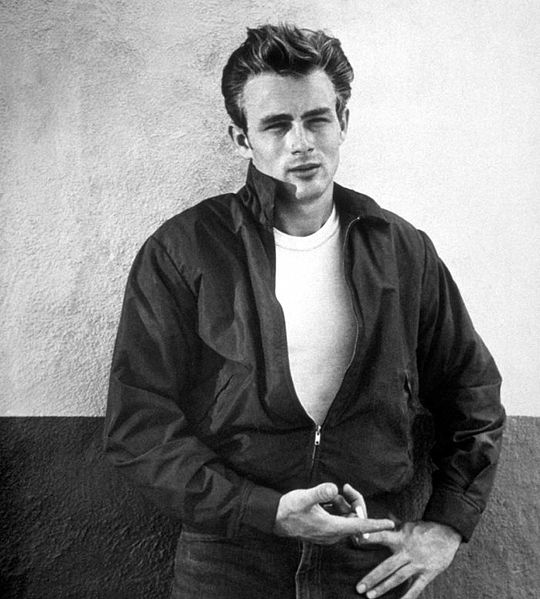
In 2015 there are not many record stores left; the whole culture of buying records is a different ball game these days, downloading instead of taking home a hard physical copy. Anyway, that’s a whole different blog. To get back to this one, back in that record shop I’d thumbed through the discs, checked out all the cheap records and then began flipping through the posters. This must have been mid-seventies so the posters were people like David Bowie, Marc Bolan, Elton John, Rod Stewart but there was one poster of a man in his mid-twenties wearing a white t-shirt and jeans. He was pulling a moody sort of look but there was something about him that was interesting. Anyway, he turned out to be an actor that I’d never heard of and the shop assistant pointed out a book about him in the store, a paperback, so I picked it up and read about the actor’s life. He was called James Dean.

James Dean courtesy wikipedia.

James Dean courtesy wikipedia.

Dean was born in Indiana and his mother died of cancer when Dean was only nine years old. There is a haunting passage in that paperback I bought that tells of how Dean’s father, Winton, sent little Jimmy Dean back to his Aunt and Uncle’s home in Indiana on the train carrying his mother’s coffin. Jimmy was brought up in Marion, Indiana by his Aunt Ortense and Uncle Marcus and later went to college to study acting.

His first movie was East of Eden directed by Elia Kazan who had introduced method acting to the American stage and had worked with Marlon Brando in ‘A Streetcar named Desire’. ‘Rebel Without a Cause’ was Dean’s second cinematic outing. Directed by Nick Ray it is probably Dean’s most iconic film. This is the movie in which he wears his famous outfit of red jacket, white t-shirt, and jeans.

His third and final movie was ‘Giant’ in which he stars with Elizabeth Taylor and Rock Hudson and plays Texan bad boy Jett Rink. Dean was killed in a car crash only days after finishing shooting. He was a keen amateur racer and had bought a new Porsche speedster only days earlier. The car, nicknamed ‘little bastard’ had collided with another vehicle, a station wagon at the junction of route 41 and 466. Dean suffered a broken neck and was declared dead on arrival at a hospital in Paso Robles.

I was looking through my old VHS videos the other day and I came across a documentary called ‘James Dean’s last day’. It’s an interesting film and a sad one too as it counts down Dean’s last hours, his leaving Hollywood and his departure for a racing event at Salinas. There are so many ‘if onlys’ that unfold before me as I watch the film: I keep thinking if only Dean had left the Porsche on the trailer instead of driving it to the race track. If only the speeding ticket he was given a few hours earlier had made him slow down. If only a man called Donald Turnupseed had seen Dean and not turned across him. Such a shame, such a tragedy. Dean, I’m sure, would have gone on to make so many more great films and perhaps would even have directed some too.

I’m not sure why a council house boy from Northern England should connect so closely with James Dean, an American actor but back in the seventies Dean became one of my personal heroes. I remember going to a cinema in Oxford road to see back to back showings of East of Eden and Rebel Without a Cause on a very hot summers day. I bought a soundtrack album of those movies too, in the days before video and DVD. Dean was a counterpoint to actors like Richard Burton; he mumbled and mispronounced things. I think that was what I liked about him, he was natural and imperfect. He had an image more rock star than 50’s actor. There was a great documentary about him made in the 70s and the music of the times, Bowie and Elton John featured heavily. Anyone remember that eagles track ‘James Dean?’

Today, years later, thousands of fans make pilgrimages every year to see Dean’s home in Fairmount, Indiana, and to the intersection on highway 466 where he died. At his graveside in Fairmount fans chisel away bits of his gravestone for mementos and a bust of Dean by the sculptor Kenneth Kendall was ripped from its plinth. In 1977 a Japanese businessman named Seita Ohnishi had a chromium sculpture erected at the crash site on highway 466 in memory of Dean.

So why do people still hanker after James Dean all these years later? Well, I simply don’t know. As a young man I thought Dean was the epitome of cool and like many others I made him into my hero. Whilst doing some research about Jimmy Dean I came across this line on another site: “Some people are living lodestones. They get under the skin of people. You can’t explain why.” I can’t disagree.

Still, heroes come and heroes fade away. My heroes today are not the ones I used to love and worship thirty years ago. The thing is though, after writing this essay about Jimmy Dean I felt that I must find the time to look at some of his films again. Did I happen to mention what I bought in the HMV sale not long ago? The James Dean Box Set. Perhaps old heroes never completely fade away.


What to do next: Here are a few options.

Share this post on your favourite social media!

Hit the Subscribe button. Never miss another post!

Listen to my podcast Click here.

Buy the book! Click here to purchase my new poetry anthology.

Click here to visit Amazon and download Floating in Space to your Kindle or order the paperback version.


The Joy of a Second Hand Bookshop (and two particular gems)

There is nothing more pleasurable, certainly to me, than messing about, not in boats but in a second hand book shop. I do love flicking through the old and worn books on the shelves and if you persevere and have patience you will always find at least one book worthy of your attention. Here are two of my finds, one new and one old.

Michael Powell: a life in the movies.
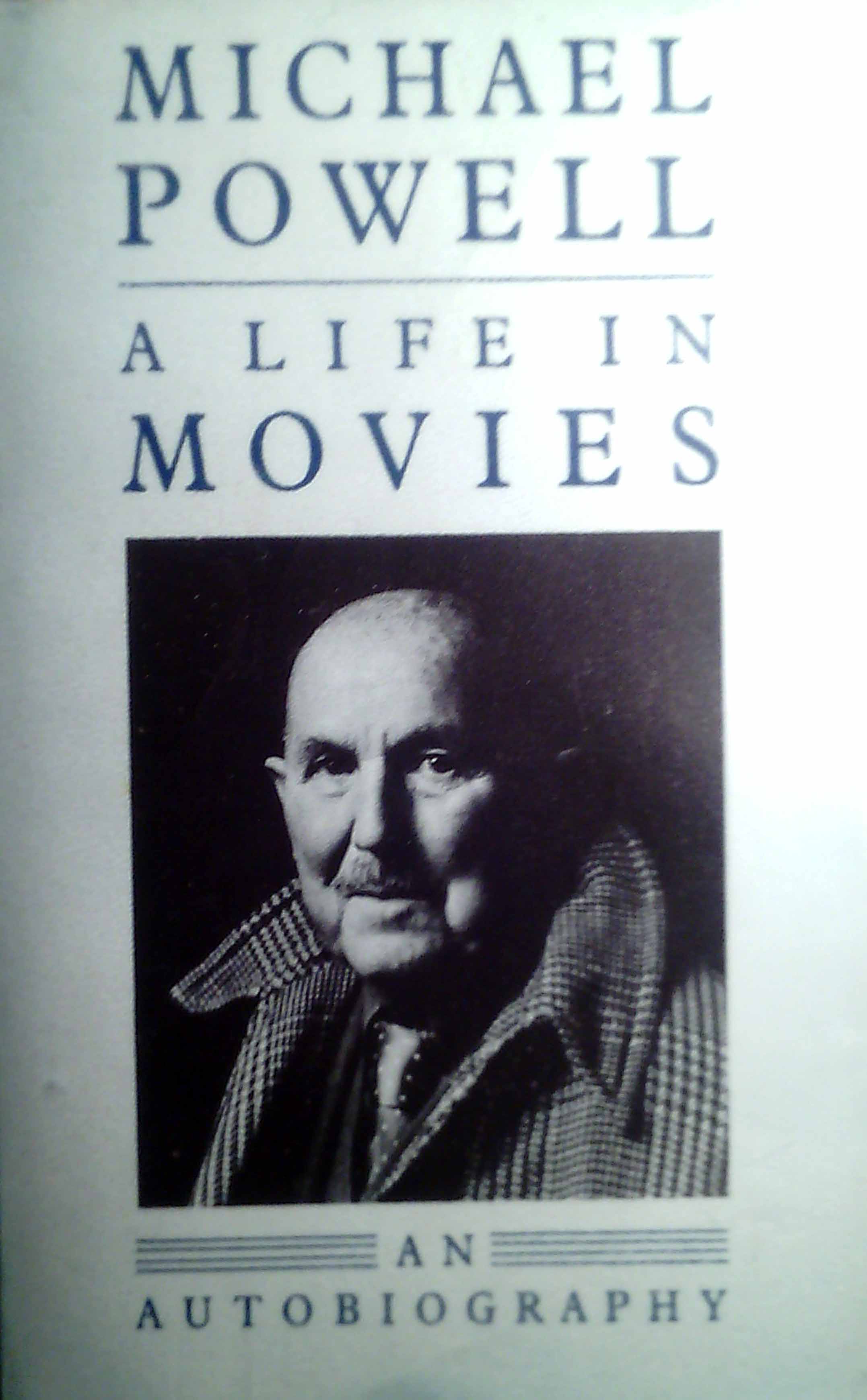
IMG_20150608_221725edMichael Powell is perhaps not a name that leaps out at you but he was a movie director who made movies in partnership with screenwriter Emeric Pressburger. His most famous film is probably ‘A Matter of Life and Death’, a movie starring David Niven and Kim Hunter. Niven plays a pilot who miraculously survives certain death in plane crash returning from a bombing mission in World War 2 Germany. He is then visited by a conductor from the next world, advising that his survival is a mistake and he should be dead and he now must be prepared to enter the next world. Niven decides this is not on at all as now he has fallen in love with Kim Hunter and he decides to appeal. This fantasy is interwoven with another explanation of his issue, that of a serious brain trauma that needs the help of a neurosurgeon. I loved that movie and you can see it for yourself as it’s regularly shown on British TV.
Powell and Pressburger made numerous movies together but hit a downturn in their fortunes when they made the controversial film ‘Peeping Tom’. The film was about a murderer who films the death of his victims and was not well received at the time.
Years later, directors like Martin Scorsese revived the film and praised it as a lost classic but at the time Powell and Pressburger’s career stalled fatally.
Powell’s autobiography is a wonderful read. His career as a film maker spanned some exciting times in the industry and the book is divided into three sections: Silent, Sound, and Colour. Not many directors can boast of covering a filmmaking span like that. The book is a wandering, meandering look at Powell’s life and career. It’s a rather disjointed read -Powell tends to go off at a tangent about various things- but somehow that seems to add to the enjoyment of the book rather than detract from it.

Little bit disappointed though to get to the end of this pretty hefty book to find that it’s only volume one! Better get back to the shop and see if they have volume two!

James Hilton: Lost Horizon.
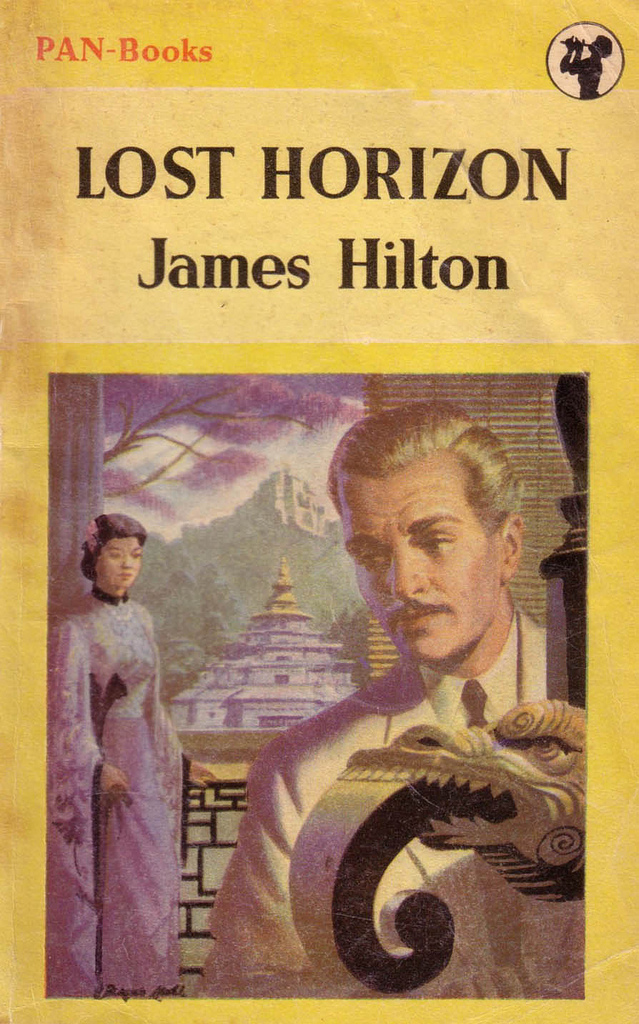
8391034163_f7c1b5accb_bI picked up this wonderful gem of a book at charity shop years ago for the bargain price of twenty five pence and if I could convert the pleasure this book has given me into pounds, shillings, and pence, it would be a figure that far eclipses that initial outlay. James Hilton has become one of my favourite writers and one of my personal writing heroes. (Check out my blog about him here!) This highly original novel reflects the fear and sadness that many must have felt in the days prior to World War 2. There must have been a feeling then that with new technology the approaching conflict could be the end of civilisation.
In this wonderful book, a group of lamas in a monastery hidden from the world by a chance of geographical fate decide to look ahead and ensure that the riches of the world, not gold or silver, but literature, art and music, should be preserved should a holocaust engulf the world. To ensure that their creed of respect and compassion endures they select a British diplomat, Conway, to carry on their work and set about bringing him to Shangri-La. Shangri La is a small community in Tibet insulated from the world by mountains on all sides and the people here enjoy unheard of longevity.
Despite his capture Conway is taken into the confidence of the High Lama and given his task of continuing the community and its traditions but his fellow captives have differing ideas, especially Mallinson, his young vice-consul who is desperate to escape.
I won’t spoil things for you just in case you come across the book, or the outstanding 1937 movie directed by Frank Capra but I will say that this novel is one of my top ten books of all time, and one I return to time after time.


What to do next:

Share this post on your favourite social media!

Hit the Subscribe button. Never miss another post!

Buy the book! Click here to purchase my new poetry anthology.

Click here to visit Amazon and download Floating in Space to your Kindle or order the paperback version.