The Last Brother as you can see, is subtitled, the Rise and fall of Teddy Kennedy. In a lot of ways Teddy is only incidental to the story told here because it is really the story of his father, Joe Kennedy, and his rise to success. Joe’s success lay not only in the business of banking but during the prohibition years he made a fortune in bootlegging and naturally rubbed shoulders with a number of gangsters. When he became successful, Joe wanted something more; he wanted political power. It was then that he attached himself to Franklin D Roosevelt. He helped Roosevelt’s campaign in many ways and when Roosevelt became president, he, like all presidents, had to reward those who had helped him. Joe became ambassador to the UK and it was there that his fall from grace began.
The ambassador and his family quickly became celebrities in England. In fact, Teddy Kennedy made his first public appearance as a young boy, the ‘baby’ of the Kennedy family and the son of the Ambassador, when he was invited to open pets’ corner at London Zoo.
However, In Joe’s eyes the coming war with Nazi Germany spelled the end of all he had worked for. He could not see how the UK could resist the might of the Nazis and was not slow in saying so. Kennedy advised Roosevelt that the British were finished. However, when Winston Churchill became prime minister in 1940, Churchill opened up direct communications with Roosevelt himself making Ambassador Kennedy almost superfluous. Later, the family returned to America with Joe not perhaps in disgrace but acutely out of step, and the relationship between Churchill and Roosevelt flourished.
The Kennedy Family at Hyannis Port, 1931. L-R: Robert Kennedy, John F. Kennedy, Eunice Kennedy, Jean Kennedy (on lap of) Joseph P. Kennedy Sr., Rose Fitzgerald Kennedy (behind) Patricia Kennedy, Kathleen Kennedy, Joseph P. Kennedy Jr. (behind) Rosemary Kennedy. Dog in foreground is “Buddy”. Photograph by Richard Sears in the John F. Kennedy Presidential Library and Museum, Boston.
Kennedy left the Roosevelt administration but he wanted political power for himself and made sure he would find it through his financial wealth, and through his sons.
Joe Kennedy junior was the son that Joe meant to make into America’s first catholic president. His brother, John Kennedy, known as Jack by the family, was a poorly lad afflicted by Addisons disease and constant back pain. In World War 2 Jack joined the navy but began an affair with a Dutch journalist, Inga Arvad. Inga was thought to be a Nazi spy so Joe immediately arranged for Jack to be posted well away from Inga to South Carolina. Bored with his desk job in South Carolina, Kennedy volunteered for the Motor Torpedo Boat Squadrons and later took charge of his own boat, PT 109. He was awarded the Purple Heart for his bravery in rescuing his men when his torpedo boat was sliced in two by a Japanese destroyer.
Joe Kennedy Jr was not at all happy when he heard about the award. Competitiveness was drilled into the Kennedy clan from an early age and Joe did not want his younger brother to top him. Perhaps that is why he volunteered for a dangerous mission. The mission involved a radio controlled plane, full of explosives that were to be remotely steered to a target in Germany. Joe’s job was to take the aircraft into the air then bale out when the radio control was activated. Sadly the aircraft’s explosives were detonated prematurely and Joe was killed.
Jack knew then that it was he who would have to fulfil his father’s desire for the presidency.
Joe used his influence, and his money, to get Jack first a seat in congress and then a seat in the senate. In 1960 it was time for him to fulfil his father’s dream and go for the presidency. Lyndon Johnson wanted the democratic ticket that year and he began by attacking the the Kennedy candidacy. He described him as ‘a little scrawny fellow with rickets’ but soon the influence of father Joe came to bear and Johnson ceased his attacks. Johnson knew that that Joe Kennedy would pull out all the stops for his son to win but he hoped that if the vote wasn’t decisive on the first ballot he would have a chance on the second one. As it happened, John F Kennedy won the nomination on the first ballot. According to McGinnis it was Joe who wanted Johnson as JFK’s running mate; perhaps that was payback for Johnson laying off his attacks on Kennedy’s health issues.
The election was close, very close indeed and Joe decided he needed help from a rather unsavoury corner; he turned to his former prohibition gangster contacts, notably Sam Giancana to help him secure victory for his son. That help would come at a price. Giancana wanted back the casinos in Cuba that used to make millions for the mob until Castro overthrew the Batista regime, closed down the casinos and threw the gangsters out of Cuba. Giancana wanted them back.
Kennedy won the election by a narrow margin but things went wrong almost straight away. CIA backed revolutionaries were training in secret Florida locations for an assault on Cuba but the plans were in disarray and the president rejected many of them, When the attack came it was a disaster. Kennedy accused the CIA of trying to force him into a full scale US assault on Cuba and he would have none of it. Giancana would not get his casinos back. Worse, the president had engaged his brother, Robert Kennedy as attorney general and he began an assault on organised crime in the USA. One of the mafia bosses was heard to mutter in Sicilian, “who will get the stone out of my shoe?” It was more of a threat than a question.
Joe Kennedy was struck down by a stroke at the age of 88 and rendered unable to speak. The chief fixer, paymaster and head of the Kennedys was unable to carry on talks with the mafia and the time had come to remove the stone from Giancana’s shoe.
Dallas 1963
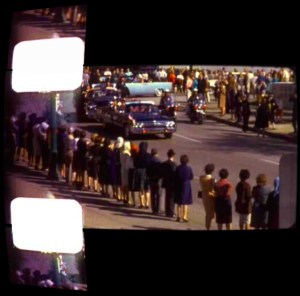
President Kennedy was assassinated in Dallas in 1963 and his presumed assassin Lee Oswald murdered days later inside the Dallas Police headquarters. At the Kennedy home in Hyannis Port nobody wanted to tell Joe. He must have known something was wrong but he could only point numbly at the TV in his room that remained firmly switched off. Ted Kennedy, who was sent to tell his father the news, struggled to get the words out until his sister Eunice blurted out the truth.
Robert Kennedy was shot in 1968 as he prepared for a late campaign for the Democratic ticket. After winning the California primary he said a few words to his supporters and was shot moments later.
Ted Kennedy now had a surplus of Kennedy advisors and aides, all willing him on to go forward and run for the presidency. He declined even though a ‘draft Ted Kennedy’ movement had started to gain momentum. Instead people looked forward to 1972 when Teddy, the last remaining Kennedy brother would restore the lost kingdom, the lost Kennedy leadership but it was not to be.
In 1969 Kennedy attended a boating regatta at a small island called Chappaquiddick. Numerous parties were planned for the weekend; one was a gathering of the so-called ‘boiler room girls’ – a group of women who had been part of Robert Kennedy’s campaign team in 1968.
Kennedy apparently left the party late in the evening, supposedly to go to the island ferry with one of the girls, Mary Jo Kopechne but instead turned across a small bridge that led to the beach. Kennedy lost control of the car and the vehicle plunged upside down into a small lake. Kennedy somehow escaped leaving Mary to die in the car. Police divers found her body the next day, her head in a small air pocket in the foot well of the upside down car. Kennedy did not report the incident until nine hours later. What happened in those nine hours is open to question but the Police seemed to gloss over the numerous inconsistencies in Kennedy’s story and eventually he received a suspended sentence for leaving the scene of an accident.
On the cover of the book is a remark from the Daily Mail reviewer that he couldn’t put the book down. I was just the same and was engrossed from beginning to end. The writer seems convinced of his central thesis, that Joe Kennedy’s pact with the mafia was a poisoned chalice that became the downfall of his sons and his family. Maybe that is true, maybe not but McGinniss puts forward an interesting theory and a fabulous read.
Joe Kennedy died in 1969, his dream of securing the presidency for his sons lay in ruins, leaving nothing but heartache and sadness. Fate had delivered many cruel blows to him but lying mute and unable to communicate while his family suffered must have been the worst.
Ted Kennedy continued in the senate until his death in 2009 from brain cancer.
What to do next:
Share this post on your favourite social media!
Hit the Subscribe button. Never miss another post!
Buy the book! Click here to purchase my new poetry anthology.
Click here to visit Amazon and download Floating in Space to your Kindle or order the paperback version.
I’m just not into busy, rushed holidays. I prefer the quiet, relaxing type; the ones that involve sunny days, swimming pools and plenty of leisure time to read books. I read at home too but that is a different sort of reading; a few minutes here, a few minutes there. I’ll read on my lunch break at work in between eating my sandwiches and drinking tea but the best way to read, the way to really get into a book is a long uninterrupted read while you lie on your sun lounger with the pool handy nearby for when it gets a little too hot. A quick dip then you are back to the thoughts of your chosen author.
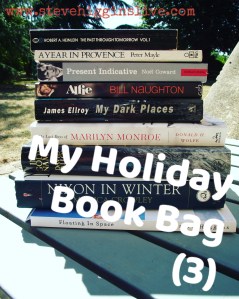
Here’s my holiday book bag for this year. Paperbacks are usually my preferred choice for holidays but as we’re travelling to France by car, there’s a little extra room for a few hardbacks.
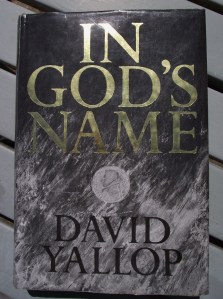
In God’s Name by David Yallop.
I bought this book originally on the 3rd March, 1987. I know that for a fact because back then I used to write the date on all my book and record purchases. I have read it a number of times and it is a fascinating read. It ticks all my personal boxes of history and modern mysteries. Why, you might ask would anyone want to murder the Pope? Good question and the answer, according to the author is the Vatican Bank. The Vatican, thanks to Mussolini, is a separate independent state and so the Vatican bank, registered in the Vatican state is not answerable to the banking laws and inspectors of Italy. This idea appealed to various unscrupulous individuals, notably Licio Gelli – the head of an illegal and secret masonic organisation known as P2, Roberto Calvi – a banker with ties to P2 and the Mafia, and Michele Sindona, another criminal. Together they engineered the movement of various shares and monies, using the Vatican bank. A man called Albino Luciano, the bishop of Venice, became aware gradually of various wrongdoings in the bank and was particularly dismayed by the action, or inaction of Bishop Paul Marchinkus, the head of the Vatican Bank. In 1978, after the death of Pope Paul VI, Luciano was elected Pope. He was a man dedicated to the ideas of Jesus, a simple carpenter from Nazareth and he wanted the church to follow his example. He did not want a church that had a multi million dollar profit in stocks and shares, he wanted a poor church, a church that properly reflected the feelings of its founder. When he was elected the new Pope, Luciano’s ideas and those of the aforementioned individuals were on a collision course. David Yallop’s investigation is intensive and revealing and I came away from the book feeling an intense sadness that a good and decent man, a man who would have been a great Pope and spiritual leader had been stolen from us by the greed of a few men.
Alfie by Bill Naughton.
I do like to buy books with a film tie in cover. I have all the Bond books, some in paperback, some in hardback and I am always on the look out for the film cover versions. This book has the movie cover that links not to the classic Michael Caine version, but the poor, the very, very poor, Jude Law version. I suppose in some ways you can sympathise with the movie moguls. Alfie was a great hit in the 60’s. Hey, they must have thought, we can transfer the location from Swinging 60’s London to cosmopolitan New York in the 21st century, the result will be dynamite! Wrong! The result was dreadful. Anyway, the novel is brilliant. Written in the first person the writer, just like Alfie in the movie, talks directly to you, the reader and tells you about his life, in his own words, his own accent, and with his own logic. Just about the best free thinking, verbatim (so it seems) book I have ever read. The great thing is when the dialogue tells you one thing, and his inner voice tells you another! Brilliant.
A Year in Provence by Peter Mayle.
They made this book into a TV series years ago. It starred the late John Thaw and the reviewers panned it mercilessly. TV seems to do working class pretty well, what with its soaps and dramas and made for TV films but middle class, that is for some reason a different story. Middle class is a big no no for TV. Strange but true. The producers might have been better making a movie out of this book. I can see a movie version in the tradition of say, Four Weddings and a Funeral or Notting Hill looking good. Anyway, enough about the TV version because the book itself is just a minor classic. I’ve read it before and it is just a joy to read. No deaths or murders or violence. No bad language just a middle class couple who decide to pack everything in and go and live in Provence, that lovely department in the South of France. It’s about wine and food. About gardens and kitchen refurbs. Truffle hunting and vine planting. Swimming pools and life in the country; the French country. If you see a copy in your local book shop, snap it up! It’s well worth a read: A gentle, relaxing, summer read.
Nixon In Winter by Monica Crowley.
Richard Nixon is not perhaps the most enigmatic of presidents but he and his presidency are very, very interesting. He could have very easily become president in 1960 but he was narrowly beaten by John F Kennedy. I can’t think of anyone else, beaten in an election who managed to come back again as his party’s presidential candidate. Probably the closest is Hilary Clinton, beaten by Obama in the Democratic primarys eight years ago and has now risen again to finally become the new 2016 Democratic candidate. Nixon won the election in 1968 with a promise to end the Vietnam war with honour and to bring people together. He did just that, he ended the war and brought people together, all though not in the way he wanted. He brought them together in a determination to remove him from office and as the Watergate scandal escalated, he finally resigned. Strange how Nixon is suddenly much in the forefront of popular media. Oliver Stone made a film about him – Nixon, starring Anthony Hopkins. There was a recent film about the Nixon/Frost interviews starring Frank Langella and Michael Sheen, which was a fabulous movie and I hear there is a new film being released this year about the meeting between Nixon and Elvis, when Elvis, a collector of law enforcement badges, wanted to be sworn in as a Bureau of Narcotics agent. This book is written by Monica Crowley who became his research assistant in his later years and is based on her daily diary of conversations with the former president. Nixon died in 1994.
My Dark Places by James Elroy.
This was my first read on this holiday and I wondered at the time if any of my other books could live up to this one. Elroy as you may know is a writer of crime novels. If you haven’t read his books you may have seen the movie adaptations like LA Confidential. Elroy is a modern crime noir writer, following in the footsteps of Chandler and Dashiel Hammet. This book is a diversion for him. Part autobiography, part investigation into his mother’s murder in 1958. In the book Elroy bares his soul to the reader and explores all his inner most feelings; his early life, his thoughts; in effect, all his dark places. An incredible read. A fast moving, inward looking memoir and a man looking for answers to his life. I’ve already been searching abebooks for copies of his other works.
Present Indicative by Noel Coward.
Recently I picked up a few of Coward’s plays in paperback form and was totally taken aback by the witty repartee, the humour and the freshness of Coward’s work. You might think as a devotee of ‘Kitchen Sink Drama’ Coward’s work might be anathema to me. Nothing could be further from the truth. In art as in literature, there is room for all genres and all tastes. On my last holiday in Lanzarote I read The Life of Noel Coward by his partner, Cole Lesley and it just made me want to read more of Coward’s own work. I look forward to reading about Noel’s early life in his own words.
The Last Days of Marilyn Monroe by Donald Wolfe.
I’ve been reading this book for the last few days and like the really good read that it is, the author has sucked me in to Los Angeles and its environs in the post war years and those people who made a beeline for Hollywood, thinking that they could be discovered and take a short cut to fame and fortune. Norma Jeane Mortensen was a dreamer, a girl who dreamed of being a star and for her it came true when she became Marilyn Monroe. From a factory girl to model, and model to movie stardom and then to an untimely end. This is her story. I’ve read one of Wolfe’s other books on Marilyn, The Assassination of Marilyn Monroe, and so far this is just as good if not better. Monroe, Hollywood, the Kennedys and murder is a very heady mix indeed. If you want a very brief rundown of Marilyn’s last hours, take a look at this post from last year.
The Past Through Tomorrow by Robert Heinlein.
When I was younger I used to read a lot of sci-fi although these days I prefer the genre in TV or movie format. Heinlein is a classic writer and I picked up this volume in a second-hand book shop. I made a pretty late snap decision to throw this into my book bag and I’m not sure how things will turn out, if I’ll enjoy it or not. But, if the book is not my cup of tea I’ve always got the pool open nearby ready for some serious swimming.
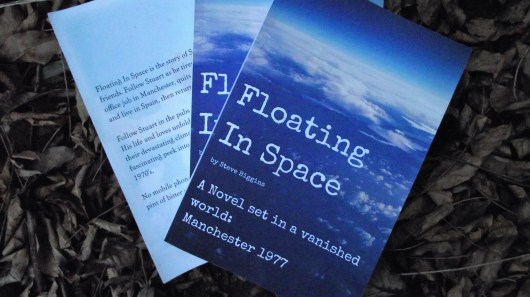
Floating In Space by Steve Higgins.
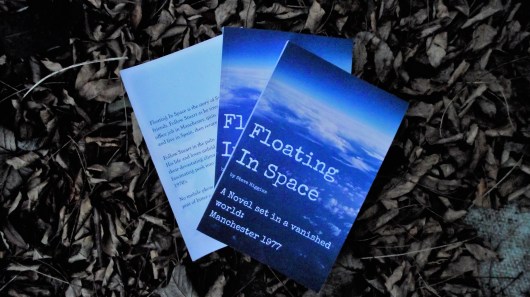
Of course, this is my very own book: A kitchen sink drama set in the late seventies. My top proofreader Liz Morrison scanned through this a while ago and pointed out numerous grammar issues. On this holiday I’m hoping to rectify them. Also, I’ve never been really satisfied with the cover. I always envisaged a young man seen from behind, floating before the earth and I did my best with the createspace templates that were at hand. When I finally sort out those grammatical errors I’ve got a new cover in mind. In the meantime if you fancy reading Floating In Space, click here for my Amazon page or click the links at the top of this page for more information.
The very first book I picked up about Marilyn Monroe was the biography by Fred Laurence Guiles. ‘Norma Jean, the life of Marilyn Monroe’. It’s a particularly well researched book and for a great many people, fans and writers alike, it has become the definitive biography of Marilyn, the place you go to find out all those facts and figures about her life, especially her early life. Her death is not really discussed in the same fashion as in later books, some of which are wholly devoted to the mystery of her passing. In my edition which I bought in the seventies, Bobby Kennedy is referred to only as ‘the easterner’ and it was only in later years that Bobby Kennedy and his brother, President John Kennedy became publically identified with Marilyn.
Norman Mailer apparently used Guiles book as a guide when writing his own book about Marilyn. Simply called ‘Marilyn, a biography’ the book is a large format book for which Mailer, the celebrated American writer supplied the text, and numerous photographers supplied the impressive array of photographs. The New York Times review online says the book is the ‘Glossiest of glossy books’ and further goes on to remark about the cover picture; ‘Marilyn Monroe has that blurry, slugged look of her later years: fleshy but pasty.’ I’m not sure what the writer was thinking about but personally, I rather like that cover picture of Marilyn.
A slim volume appeared in 1964 called ‘The Strange Death of ‘Marilyn Monroe’. It was this book that kick started rumours of strange goings on in the hours leading up to Marilyn’s death but the first book I read about the mystery (and I do love modern mysteries) was the book by Anthony Summers; Goddess: The Secret Lives of Marilyn Monroe. Summers is a veteran journalistic investigator and has written books about J Edgar Hoover, Richard Nixon and the JFK assassination. Was Marilyn murdered or did she commit suicide?
Another author who thinks she was murdered was Robert F Slatzer who wrote a book called The Life and Curious Death of Marilyn Monroe. I couldn’t find my copy when I came to photograph my Marilyn books but I do have it somewhere. Slatzer made a number of claims, one of which was that he actually married Marilyn but her studio bosses forced her to annul the union immediately and remove all the evidence that it ever took place.
Marilyn Monroe: Private and Undisclosed is a book I picked up quite recently. It is written by a British author, Michelle Morgan, and is similar to Fred Guiles book of Marilyn, very well researched but focusses on various people associated with Marilyn who have not been interviewed before. After reading this and other books, I get the impression that Marilyn compartmented her life, and those that were in one compartment, were not necessarily aware of people who were in the other ones.
Talking about J Edgar Hoover, here’s another book I picked up about Marilyn. This was a remainder book and concerns the information about Marilyn in Hoover’s FBI files. Marilyn: The FBI Files by Tim Coates. It’s an interesting addition to the many books about Marilyn with pages of FBI files concerning Marilyn, many of them redacted with various names and details blanked out.
The Assassination of Marilyn Monroe by Donald Wolfe. Wolfe is a journalist who has done a great deal of digging and research and one of his interviewees was the brother in law of Marilyn’s housekeeper, Eunice Murray. He reveals first hand that Bobby Kennedy was at Marilyn’s home on the day she died.
Donald Wolfe wrote another book; ‘The Last Days of Marilyn Monroe’. I’ve not read this one yet, it’s one I’m saving for my holidays.
Finally, Fragments, edited by Stanley Buchthal and Bernard Comment. When Marilyn died in 1962 she left all her possessions to her acting mentor and head of the Actors Studio in New York, Lee Strasberg. When he passed away Marilyn’s effects went to his daughter and now it seems many will be auctioned off. This book is a look at the letters and notes she made, fragments of poems and thoughts scribbled in notebooks, on hotel stationary and envelopes. Marilyn’s thoughts and written meanderings show her to be a thoughtful woman who cared about what she saw and heard. Marilyn was a great reader and left behind a large book collection, part of which is listed in this book. Click here to read about all the 430 books she left behind.
Hope you enjoyed this post. If you did you might want to try my book, Floating In Space. Click the links at the top of the page for more information.
Perhaps you won’t see straight away what I did there in that title. If I go on to say I’m going to talk about remainder books then you might start to get the picture. I’ve spoken before in this blog about my passion for books, especially second hand books. I also have quite a few books that should have been very expensive but were greatly reduced in price. Why? Because they were remainder books. So what exactly are remainder books?
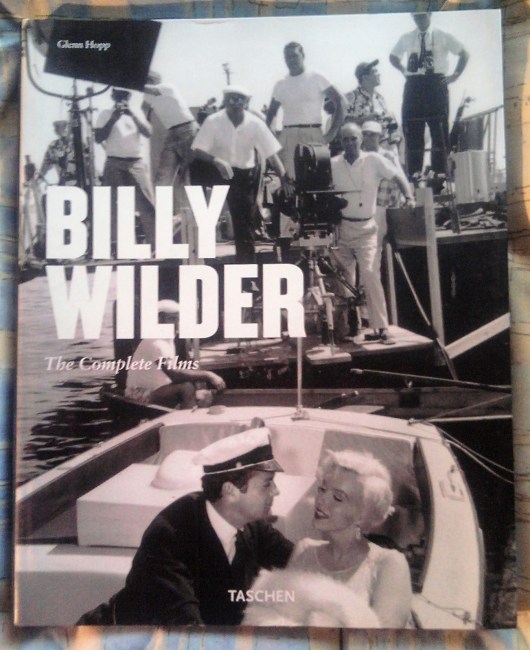
Well, they are copies of a book left over after a print run which are then sold off quickly at a cheap price. Many stores like the Works specialise in these types of books. There is a Works store in the Arndale Centre in Manchester where you will find me flipping through numerous books when I have any free time, looking to nail myself a bargain. Here are three ‘remaindered’ books in my collection, all about movie directors.
Woody Allen.
Now I’ve kept the price on this book so you can see what a big saving I’ve made: A hefty fifteen pounds and a penny and in return for my £9.99 I get a big full colour hard back book which itemises all Woody’s movies all the way from ‘What’s New Pussycat’ to his 2015 offering ‘Irrational Man’. Now, I have to say that the aforementioned ‘What’s New Pussycat’ is one of my favourites of Woody’s movies although in the book it doesn’t get such a great review. Pity because it’s a great sixties classic. You can read more about Woody Allen in one of my previous posts.
David Lean
Illustrated with over 400 pictures this is a lovely book to have, detailing the life and work of director Sir David Lean and written by his widow Lady Sandra Lean. David Lean is probably best remembered for his big screen epics like Laurence of Arabia, Doctor Zhivago and Bridge on the River Kwai. He started out as a teaboy with Gaumont Studios in London, later became a film editor and then moved on to become a director. He co-directed ‘In Which We Serve’ with Noel Coward although he later said Coward soon became bored with directing and left the whole thing to Lean. He would never share the directing credit again although his next three movies were adaptations of work by Noel Coward. Surprisingly, he only directed seventeen movies; I always thought his list of credits would be a lot longer. He won two best director Oscars and as a filmaker he inspired many directors like Steven Spielberg and Martin Scorcese. He died in 1991 from throat cancer.
Billy Wilder
All three of the books here are big picture books with many behind the scenes photographs. If you are like me and love to hear about how movies are made then you will love all these books. Billy Wilder was an Austrian born filmmaker who fled from Berlin and the Nazis in the early 1930s, moving first to Paris and then later to Hollywood. Wilder made some classic films like ‘Sunset Boulevard’, ‘Double Indemnity’ and ‘Sabrina.’ The cover picture you can see above shows Tony Curtis and Marilyn Monroe in ‘Some Like it Hot’ made by Wilder in 1959. It’s a great movie but mostly famous for the multiple retakes required by Marilyn. It took 47 takes for Wilder to get a shot in the can where all Marilyn had to say, ‘It’s me, Sugar!’
Billy Wilder died in 2002 at the age of 95.
Just to finish off, here’s my favourite Billy Wilder story and it goes like this : In his later years he wanted, as usual, to make a movie. He approached a studio and was invited in to make his pitch, as they call it in the movie world. The executive who met with Billy was a young man. He said to Billy, “I’m not familiar with your work, could you tell me about some of your films?”
Wilder replied, “Of course; but you first!”
If you liked this book why not buy my book, ‘Floating In Space’? Click the links at the top of the page for more information or here to go straight to my Amazon page.
My book, Floating In Space is set in the Manchester of the late seventies. A pint of bitter was 25 pence. There were no smartphones, no Internet and no wireless networks. In fact ‘wireless’ was an old fashioned word for the radio. I’m tempted to say that things moved at a slower pace then but that’s not true. Things just moved at a different pace. In 2015 you hear a lot about pubs closing down but back in 1977, pubs were far from closing down; at the weekend they were the place to be! That was where my friends and I met up, drank beer, listened to music and chatted up the ladies. Saturdays were the focus of our week and here’s an excerpt from Floating In Space where Stuart, the narrator, talks about the upcoming Saturday night.
Saturday night was in a lot of ways the culmination of the weekend. I always preferred it to Friday nights because things were more relaxed, there was no rushing home from work, no rushing to get your tea down your neck so you can get changed, then leg it out for the bus. Saturday, you could take your time and leisurely work up to things. Sometimes I would go out shopping and buy myself something new to wear for that evening, a shirt, or perhaps even a new pair of trousers. Then later I would have a long relaxed soak in the bath, and dress unhurriedly in my room to the tune of my favourite music. In 1977 my favourite album was Elton John’s ‘Goodbye Yellow Brick road’, and as I dressed I would mimic Nigel Olsson’s measured and rhythmic drumming to ‘The Ballad of Danny Bailey’, or ‘Candle in the Wind’.
There was something about Saturday nights in Manchester. Some quality of security, of expectancy, a feeling that the night and the future were going to be good. A feeling that you might just ‘get off’ with some gorgeous girl and that even if you didn’t it didn’t really matter because there was always the excitement of the people, the music, the drink, and everything else that made up the evening. And then there was always the expectancy of the next night, and the next, and on and on into the future. The past building up inside you like a great data bank, reminding you, reassuring you, like a light burning in some empty room in the corner of your mind.
The main venue that night, and on many other Saturday nights like it, was the ‘Playground’, a small disco bar on Oxford Rd in the town centre. Flickering multi-coloured spotlights rotated across the red carpeted room, which, on Fridays and Saturdays was generally packed. It had a small dance floor sunk low like a pit, where people up on the raised bar level could look down at the gyrating girls, and where also, on week day lunchtimes, a topless dancer appeared at the stroke of one o’clock to translate the soul and disco music of the time into pulsating physical motion, the eyes of jaded office workers glued to her as she did so.
My friend ‘Matty’ Edwards and I used to meet up in the Salisbury, by Oxford Rd station, have a few pints and a bit of a natter to any Regal cronies who we might find there, then make the short walk to the Playground. There was a paltry fifty pence charge to get in, the solitary bouncer was silent, but not unpleasant, and the DJ, who always began the night with ‘Loves Theme’ by the Love Unlimited Orchestra, played alternate sessions of rock, disco, and chart music. We were both mad about Jenny, the barmaid. She was lovely. She had a kind of round, open face, framed by thick blonde hair and her skin was a creamy white. She served us Worthington ‘E’ and we melted into the hubbub of people on their Saturday night out while the music of the seventies drifted through us.
Matty was tall; he had lazy, rather hayfevered eyes, and a biggish nose over thin lips. His brown hair was short and untidy and he dressed smartly, but had a sort of ‘middle of the road’ taste in clothes.
“Jenny’s looking gorgeous tonight,” he told me over his pint of Worthingtons.
We were propped up at the bar in a convenient spot where we could eye up any possible female talent, and cast a fond eye over Jenny’s appealing form.
“You’re not wrong mate.” I agreed. “I wouldn’t mind getting a grip of that myself.”
I caught Jenny’s eye and ordered two more pints of Worthington ‘E’. It wasn’t a great drink but we were tuned into it now for the rest of the evening, and anyway, I hadn’t as yet developed any clearly defined tastes in beer. The first pint I ever ordered myself was a pint of mild, and that was because I had nervously entered a Cheshire country pub after a long cycle ride and hesitatingly asked for a pint of ‘beer’.
“A beer?” asked the barmaid.
“Yes,” I replied, “A pint, please.”
“A pint of what?”
I realised, uncomfortably, that something more was required. I had thought that ‘a pint of beer’ would have been enough, but what the barmaid wanted to know was did I want bitter, or lager, or mild even? My first tentative forays into the world of the alcoholic drink were with my friend Mike Larini and it was always he who had done the ordering. What did he ask for, I thought? I couldn’t remember but down the bar the faint voice of an old man asking for half of mild drifted along to me, and so I went on to drink mild.
Later I changed to bitter, and even now I was currently considering another change as someone had given me the cheerful news that bitter ‘rots your guts’. Perhaps it had been that eternal pessimist Matty Edwards with his inside knowledge of beer. His father was a Didsbury publican, and Matty’s drink changed from pub to pub. Sometimes it was lager, sometimes bitter, but here, in the Playground, it was that now long departed brew, Worthington ‘E’.
You can read on and find out what happens to Matty and Stuart on that and other Saturday nights. Click the icon below to go to my Amazon page or click the links at the top of the page to find out more about Floating In Space.
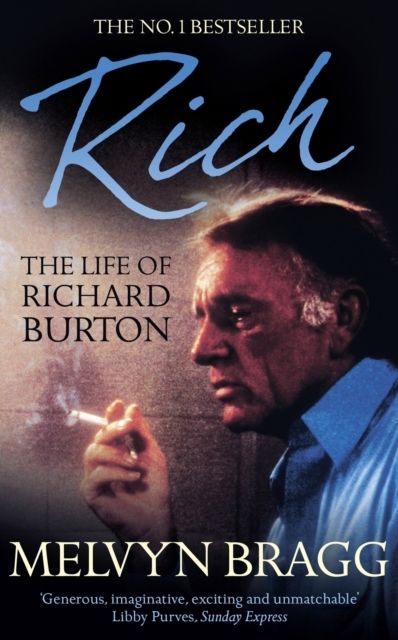
A long time ago I was reading a biography about Richard Burton, in fact it I think it was ‘Rich,’ the biography by Melvyn Bragg. Bragg used Burton’s own diaries in his work and wrote, amongst other things, about Burton’s love of books and when Burton went on holiday he looked forward with delight to the contents of his ‘book bag.’ I know it’s a pretty tenuous link but one thing I have in common with Richard Burton is a love of books and when I go on holiday, one of the delights of lying under a warm sun on my sun bed is a good undisturbed read. OK, I read a lot at home and on my lunch breaks at work but it’s a few minutes here and a few minutes there and whenever I get interrupted it kind of breaks the flow. Some books, as we all know, are just made for a really long, uninterrupted read.
OK, That was the intro copied from my earlier post Holiday Book Bag part 1. You might be thinking what is this about? A Holiday book bag in January? Yes, well here’s the thing, I’ve saved up my holidays for a winter escape from the UK and believe me, there is nothing more satisfying that calling up friends in the UK from sunny Lanzarote, where we are staying for six (yes six) weeks and asking ‘What’s the weather like back in the UK?’ Especially when they answer, as you knew they would, ‘It’s freezing cold and lashing it down!’
Anyway, I’m sure it’ll still be cold in February when we return so let’s move quickly on to the book bag. There is nothing more exciting for an avid reader like me, and the aforementioned Richard Burton, to plan what to pop into a book bag. Going to Lanzarote there are some restraints of course. One, we are flying so we only have limited luggage space so straight away I eliminated my hard back books which is something of a pity as I have some cracking hardbacks ready to be read. Anyway, I’ve stuck with paperbacks, some I have purchased recently and some have come my way as Christmas presents. Here is my final list.
Charlie Chaplin by Peter Ackroyd.
Peter wrote an excellent book about one of my writing heroes, Charles Dickens and I felt that this book was going to be in the same sort of mould. Long, intense and full of detail. Actually it’s a pretty slim volume and not the intense scrutiny of Chaplin that I was expecting. However, on the credit side, it’s a thoughtful and detailed look at Chaplin, his movies and his personal life and a cracking read it is too. One hundred years ago Chaplin was the most famous man in the world. I’m not sure who would qualify for that title today as despite global communications and the Internet age, the world is separated by many different languages and cultures. A hundred years ago there was no language barrier for Chaplin, and his silent films with their universal language of comedy, went all the way round the globe and he was as famous in countries such as Russia or Africa as he was in Europe or the USA.
Albert Speer: His Battle With Truth by Gitta Sereny.
This is a classic of World War 2 literature and concerns Albert Speer who was Hitler’s architect and then rose quickly in the ranks of the Nazi hierarchy to become Armaments Minister. He was spared the fate of hanging at the Nuremberg trials after admitting that the Nazi leadership, himself included, should take responsibility for the crimes of the Third Reich. What is interesting about the Nazi years is the way Hitler himself seemed to entrance people by the power of his personality. Much has been written about his speeches to the Nazi faithful and the many Nazi rallies of the 20’s and 30’s and yet, looking back at archive film, he looks to be almost something of a madman. However, those who attended the rallies speak of his almost magnetic power as an orator. Speer himself was surprised at first seeing Hitler speak because the speech he heard that day was about unifying Germany, bringing back employment and pride to the German worker, not about death to the Jews. It struck a chord with Speer and he began to follow him. It was the same with many people and as is pointed out in this book, had Hitler died in 1937, he would perhaps have gone down in history as a great German, not the mass murderer he turned out to be. There is an embarrassment among Germans of Speers’ generation; a feeling of how could Hitler have lied to them, how could he have done those terrible things? Something repeated many times is the feeling ‘if only the Führer knew! The fact is, Hitler did know but did Speer know too? An answer, of sorts, is the conclusion to the book.
One of the great aspects of this book is that the author’s journey into Speer’s life is a personal journey and one she shares with the reader. In the final pages we hear about how the author returns home after a weekend away and sees her telephone answering machine winking with various messages. The first one is a message from Speer himself, saying he was in London for a BBC interview and wondered if Gitta and her husband wanted to meet up. The next message is one from a television news company asking her to comment on the death of Speer!
Bleak House by Charles Dickens.
David Copperfield is my favourite Dickens book and one of my favourite books ever but I’ve had difficulty getting into Dickens’ other books. I gave up on the Pickwick Papers, although I liked Oliver Twist and Great Expectations but that’s about it. Hope this will be a good read especially as it’s the only novel I have brought.
The Life of Noel Coward by Cole Lesley.
I do love biographies and this memoir of Noel Coward’s life looks good. One of the reviewers quoted on the back cover says reading this is like ‘a holiday in a rented Rolls!’ One aspect of the earlier part of the book -I’m only partway through as I write this- is Coward’s visits to Manchester where he stayed at the Midland hotel when he was in his late teens. Even then he was a self assured young man about town and on the verge of fame. He charmed many of the rich and famous of the time and was always in demand as a country manor guest for weekends at home or abroad. Noel was a man who liked to travel, especially after a long spell of hard work, and he liked, at times, to travel alone. Indeed, the author quotes from a poem by Noel which reads in part; ‘ When the dream is ended and passion has flown, I travel alone.’ Noel always took with him on holiday a portable typewriter, lined foolscap writing pads, and his ‘bursting’ book bag. This apparently contained the latest good novels, two or three classics and always Roget’s Thesaurus and Clement Wood’s Rhyming Dictionary. Not a bad choice! I look forward to reading more about the witty Noel Coward and his life.
The Collected Dorothy Parker by Dorothy Parker.
Dorothy Parker was a jazz age writer and she chronicled the decadent twenties and thirties in her witty stories and reviews. Born in 1893 Parker sold her first poem to Vanity Fair magazine in 1914 and was then engaged by the magazine to write captions for fashion photographs and drawings. She later became drama critic for Vanity Fair and the central figure of the famous Algonquin Hotel Round Table, a group of celebrated authors and writers. I’ve already had a glance through the first few short stories and they look very well observed and entertaining so far.
Those are my January holiday books. Check out the video version of this post below!
If you are already planning for your holidays don’t neglect your reading matter. Why not take a copy of ‘Floating In Space’ along? Click the links at the top of the page or click on the icon below . .
I really do love books, especially second hand books. I think that what is so wonderful about a second hand book is that the book has told its story before to someone else, and now if you have just bought it, its going to tell it’s story to you. I spend a lot of time browsing in book shops, both physically in actual shops or on-line in virtual book stores. The thing about on-line book stores is that you have to have a starting point, it’s no fun browsing through lists of books so I tend to browse on-line only when there is a particular book I want. In an actual book store I scan through the various sections and although I tend to linger on biographies and books about film, anything can catch my eye. A while ago I was reading a book by movie director Michael Powell called ‘A Life in Movies.’ It was a pretty thick book and took a fair old while to read and when I got the end there didn’t seem to be any indication there was another volume.
Of course, Powell was quite old when he wrote his autobiography, perhaps he thought that there wouldn’t be time for another book. Well, I’m happy to say he did write another volume and this is it, Million Dollar Movie. Powell continues the story of his life in his usual random fashion, jumping to things out of context and out of sequence. Just because he happens to visiting Hollywood for instance, he will go on to talk about Hollywood and movie people he knows there and so on. Powell made some great movies alongside collaborator Emeric Pressburger but his career stalled when he made a shocking film called Peeping Tom about a disturbed cameraman who murders his subjects and films them as he does so. Audiences were shocked and Powell’s directing career ended, although in later years fellow directors like Martin Scorcese praised the film as a classic. Liz bought me this book as a gift and the copy she tracked down comes from Austin Public library in Texas in the United States. Provenance is a word they use in the antiques business; It’s to do with the background of an item, and that is what makes this copy so wonderful; How it has come so far, from the USA to England, just so I can sit back and enjoy it.
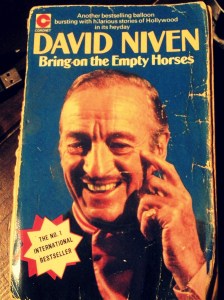
Bring on the Empty Horses by David Niven.
You might be thinking, looking at the picture here: Couldn’t the author have found a better picture? Looking at the picture again I suppose that particular copy is just a little tatty. That’s because it’s my travel copy. I’ve got another copy, a much nicer version that resides in my bookcase that I browse through now and again. The reason I’ve got two versions is because my travel copy goes all over the place with me. If I’m travelling somewhere on the bus or train, that slightly tatty copy goes easily into my pocket or my bag because I can read it time and time again. Not only is it the best ever book written about the golden age of Hollywood, it’s also by far the most accessible and readable book on the subject ever.
Niven’s first book was his autobiography; ‘The Moon’s a Balloon’. In it Niven told how he came over to Hollywood from the UK and made the incredible leap from movie extra to movie star. The title of this book comes from Hungarian director Michael Curtiz. When filming ‘The Charge of the Light Brigade’ Curtiz wanted a hundred riderless horses to come into shot so he boomed on his megaphone ‘Bring on the Empty Horses!’ Niven and fellow actor Errol Flynn collapsed into laughter and Niven filed away the phrase for later use. The book covers the Hollywood years from 1935 to 1960 and Niven paints vivid portraits of Hollywood itself and long vanished watering holes like the Brown Derby and Romanoffs. He looks at some of the stars he has known like Errol Flynn, Clark Gable, Ronald Colman, and Constance Bennett. Other chapters profile producers like Sam Goldwyn and many other famous Hollywood personalities of the time. All his stories are told with great affection and I particularly liked the portrait of Mike Romanoff, the restaurateur who tried to pass himself off, in a slightly tongue in cheek way, as a member of the Russian Romanov family. If ever I’m travelling and need something to read on the journey I’ll always have this copy on hand. It’s like an old wine that improves with age!
What to do next:
Share this post on your favourite social media!
Hit the Subscribe button. Never miss another post!
Buy the book! Click here to purchase my new poetry anthology.
Click here to visit Amazon and download Floating in Space to your Kindle or order the paperback version.
The 22nd November is the anniversary of the assassination of John F Kennedy; one of the most shocking events of the twentieth century. It’s something I’ve been interested in ever since I was a boy and I’ve collected many books about the subject.
I’m still fascinated by the mystery: Did Lee Oswald shoot the President? Did he act alone? Why did Jack Ruby shoot Oswald? Was the CIA involved? Very few of those questions will ever be answered but it’s clear that the findings of the Warren Commission, the investigative body set up by President Lyndon Johnson are not definitive. Indeed the senate investigation in the 1970’s concluded that the President was assassinated ‘probably’ by a conspiracy. Even so, no attempts to investigate further or take action have been made. If you want to find out more, what should you read? Well, there are numerous books on the subject you might try but here below are three key and classic books you need to read:
Rush To Judgement by Mark Lane
This was one of the first books to take a critical look at the Warren Commission report and say, ‘hang on, some things don’t add up here!’ Lane deals with a lot of the minutiae of the assassination and Lee Harvey Oswald’s activities.
One interesting element to me was the murder weapon; the Mannlicher-Carcano rifle bought through mail order and sent to a post office box that Oswald rented. The gun was oily. The scope on the gun was not aligned properly, in fact the FBI found that it could not be aligned at all and had to add metal shims in order to align the scope, meaning that it was test fired by the FBI in a condition that was not available to Oswald!
The first officer to find the rifle even signed an affidavit that the rifle was a Mauser and not a Mannlicher-Carcano! Quite a mistake for an American police officer who would surely be familiar with firearms.
Six seconds in Dallas by Josiah Thompson
Thompson argued in favour of a conspiracy by analysing the Zapruder film of the assassination. In the film shot by local businessman Abraham Zapruder the last two shots come close together, meaning that one of them could not have come from Oswald’s rifle because it took 1.7 seconds to eject the used cartridge and make ready to fire again. This clearly occurred to the people in the Warren Commission as one of its members (Arlen Specter, a lawyer not a forensic expert) put forward the so called ‘single bullet theory’ which argued that a single bullet hit President Kennedy in the back, exited his throat and then struck Governor Connelly who was sitting ahead of Kennedy in the Presidential limousine.
This bullet was found on a stretcher in almost pristine condition which many commentators have asserted means it could not have passed through two bodies and inflicted so much damage.
In 1979 the Select Committee on Assassinations heard evidence of tests that showed the firing could have taken place in only 1.66 seconds per shot. Oswald’s original rifle however, was in too poor a condition to be used for the tests and another was substituted. Even so, none of the test shooters were able to replicate Oswald’s marksmanship despite Oswald being at best only a reasonable shot. An interesting, readable and thoughtful book but rather rare.
Best Evidence by David Lifton.
best evidence
This is an excellent book in many ways. It’s not just about the assassination itself, the author spends a lot of time describing his personal fascination in the Kennedy case and how his interest has evolved and developed. He has followed the growth of theories and new revelations over the years and made efforts to meet and interview many of the witnesses involved.
Lifton puts forward an argument that is a little unbelievable, certainly to me, that Kennedy’s body was spirited away and the injuries changed to fit in with the theory that Oswald shot Kennedy from the rear. The doctors at Parkland Hospital all clearly state that Kennedy had a massive exit wound in the back of his head indicating a shot from the front but the autopsy report concluded Kennedy was shot from the rear.
I can understand where Lifton was coming from, the autopsy result and recollections of medical staff at Parkland clearly don’t match, but altering the President’s body? I don’t think so. The President’s body would have had to have been pried from the Secret Service who were with it from Dealey Plaza, to Parkland, and Air Force One to Bethesda Naval Hospital.
Some of those whom Lifton interviewed claimed a helicopter landed and the President’s body arrived, implying it came by helicopter when in fact it came by motorcade in an ambulance with the First Lady aboard. One interviewee stated that at Parkland Hospital the body was wrapped in sheets and placed in a coffin. Another spoke of taking the President’s body out of a body bag at Bethesda so clearly these accounts do not match up.
This book also did a lot to help me reconcile the workings of the Warren Commission. It is often dismissed by many people as a cover up but in fact the Warren Commission reacted to the evidence presented to it by the FBI as any other court or legal body would do: It processed the assassination according to the evidence.
Did anyone see someone shooting from the grassy knoll? No. Did anyone see a shooter in the Texas schoolbook depository? Yes. Was a rifle found in the sniper’s nest at the Texas School Book Depository? Yes. Was it delivered to a PO box belonging to Lee Oswald? Yes.
As you can imagine, the Warren Commission found Lee Oswald guilty of the assassination. What else could they do? However, many people not heard or dismissed by the commission heard gunfire and shots from the grassy knoll.
One Police Officer dropped his motorcycle and ran up there only to encounter a scruffy man looking like an auto mechanic. The man had Secret Service credentials and the officer let him go. There were no Secret Service there that day. They were all in the motorcade or waiting at the Trade Mart where the President’s next stop should have been, so who was the man? What was he doing there on the grassy knoll?
As you read more and more about the assassination, more stories like that come to light and the accumulated weight of these revelations is what fuels the enduring mystery. I do love a mystery and my interest in the JFK assassination, like Lifton’s has endured for a long time.
I’m not sure just how to describe to you just how fascinated I am in this story but if you’ve seen that part in the Woody Allen film Annie Hall, where Woody is trying to seduce someone but finds himself consumed by thoughts about the assassination then you’ve got the idea.
A long time ago I was reading a biography about Richard Burton, in fact it must have been ‘Rich,’ the biography by Melvyn Bragg. Bragg used Burton’s own diaries in his work and wrote, among other things, about Burton’s love of books and when Burton went on holiday he looked forward with delight to the contents of his ‘book bag.’ I know it’s a pretty tenuous link but one thing I have in common with Richard Burton is a love of books and when I go on holiday, one of the delights of lying under a warm sun on my sun bed is a good undisturbed read. OK, I read a lot at home and on my lunch breaks at work but it’s a few minutes here and a few minutes there and whenever I get interrupted it kind of breaks the flow. Some books, as we all know, are just made for a really long, uninterrupted read.
I’m currently on holiday in France and I thought I might share the contents of my ‘book bag’ with you. I’m a really big second hand book buyer and I buy my books from many sources. Second hand book shops, car boot sales, charity shops and of course, the internet. Even the occasional book comes my way as a gift. Anyway, without further ado, here are my holiday books:
Holiday Books
Muhammad Ali: His Life and Times by Thomas Hauser
This is an interesting biography and Muhammad Ali, once known as Cassius Clay has led an eventful life. The text is based on numerous interviews made by the author with Ali, his friends, and others involved in his life. The early part of the book dealing with Ali’s career in boxing is good but the book falters a little with the subject’s later life. In fact, I’m not sure what Ali does in his later life apart from travel and talk about the Koran. The author also tries to put Ali’s sporting achievements in context by comparing him with other greats of American sport but apart from Joe DiMaggio, I’d never heard of them. Perhaps that’s a telling point, indicating that Ali’s fame is not just boxing related. George Foreman and Joe Frazier may not be that famous outside of boxing but Ali certainly is. Having said that I’m not sure I’d be interested in Ali at all if not for my Dad. My Dad was a great boxing fan and I was brought up with tales of all the great boxers like Joe Louis, Sonny Liston and so on. His favourite boxer was Rocky Marciano and he disliked Ali with a passion and always, always referred to him as Cassius Clay. From reading this book, that was a feeling many boxing fans had in common and a lot of that dislike for Ali came from his refusal to join the army and fight in Vietnam which resulted in the loss of his world heavyweight crown and his boxing licence. Years later, when an anti-Vietnam focus had taken precedence in the US, people began to view Ali in a more favourable light and so began his rise to popularity. Ali regained his boxing crown as heavyweight champion of the world and has become the most famous boxer, and perhaps even the most famous sportsman of the 20th century.
Seven Pillars of Wisdom by T E Laurence.
I read this book many years ago but when I saw it again, lying there all forlorn on the shelf of a charity shop, well, I bought it for a few pennies and here it is in my holiday book bag. If you have ever seen the film ‘Laurence of Arabia’ then you will know what this book is about; the exploits of T E Laurence in Arabia during the First World War. Laurence set out to write a classic of literature and not necessarily a history book and to a great extent he succeeded but not without a lot of controversy along the way. After the war an American journalist called Lowell Thomas created a lecture and slide show featuring the exploits in the desert of Laurence and his irregular Arab army. The public were fascinated and the show made Laurence into a household name. Despite going on to become a Colonel, Laurence later resigned from the army and joined the RAF as an aircraftsman under a pseudonym. He seemed to be a man who wanted to court the spotlight and at the same time avoid it. He was killed in 1935 in a motorcycle accident as he swerved to avoid two boys on bicycles. The movie Laurence of Arabia opens with this same incident.
An Autobiography by M K Ghandi.
I’m looking forward to reading this, the thoughts of Ghandi, a man who changed an entire nation whilst embracing the values of non-violence.
No Bed of Roses by Joan Fontaine.
I bought this book from the internet and probably paid more in postage than the actual price of the book. That can be a problem when buying books over the net, especially heavy hard backed ones but to be fair I only paid three or four pounds in total. This autobiography by Hollywood actress Joan Fontaine was a fairly interesting read which took me through my first week of sunbathing in the Central region of France but I have to say, as much as I like Joan the Hollywood actress, I didn’t much care for her style of writing or for most of the content. In many ways the book reads like a run through of her old itineraries or diaries and despite working on movies like Rebecca and Suspicion, both directed by Hitchcock, we hear little about the making of those movies. Some things were very surprising like her random adoption of a Peruvian girl who she later fell out with and stopped speaking to and of course, her famous ‘feud’ with sister Olivia De Havilland. All in all not a bad read but I was surprised to find a little dig in the text at David Niven’s two books of Hollywood memoires. David’s books ‘The Moon’s a balloon’ and ‘Bring on the Empty Horses’ are two of the best books of movie reminiscences I have ever read!
The New York Trilogy by Paul Auster.
I’ve not started this book either but you can click on this link for a review. One thing I’ve always found a little funny about books is that the more you want a book and the more you think about it, that book will eventually come to you! I’d read about Paul Auster’s New York trilogy in an internet list of great books. I’d never heard of the book or the writer before but not long afterwards, I spotted a copy at a car boot sale in St Annes! Looking forward to reading this soon, especially as it’s the only novel I have brought on holiday!
Which books are you taking to read on holiday?
If you enjoyed this post, why not try my book, Floating In Space? Click the links at the top of the page for more information.
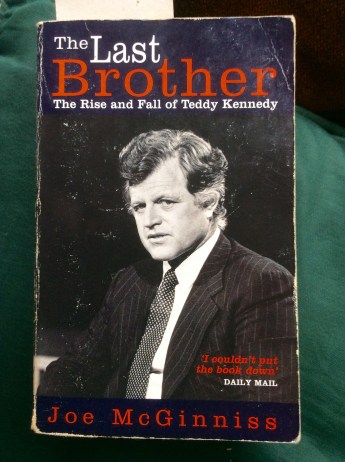 The Last Brother by Joe McGinniss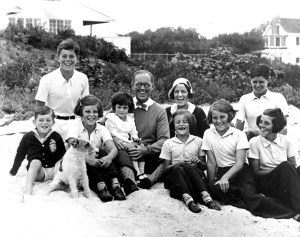
 I’m just not into busy, rushed holidays. I prefer the quiet, relaxing type; the ones that involve sunny days, swimming pools and plenty of leisure time to read books. I read at home too but that is a different sort of reading; a few minutes here, a few minutes there. I’ll read on my lunch break at work in between eating my sandwiches and drinking tea but the best way to read, the way to really get into a book is a long uninterrupted read while you lie on your sun lounger with the pool handy nearby for when it gets a little too hot. A quick dip then you are back to the thoughts of your chosen author.
 I bought this book originally on the 3rd March, 1987. I know that for a fact because back then I used to write the date on all my book and record purchases. I have read it a number of times and it is a fascinating read. It ticks all my personal boxes of history and modern mysteries. Why, you might ask would anyone want to murder the Pope? Good question and the answer, according to the author is the Vatican Bank. The Vatican, thanks to Mussolini, is a separate independent state and so the Vatican bank, registered in the Vatican state is not answerable to the banking laws and inspectors of Italy. This idea appealed to various unscrupulous individuals, notably Licio Gelli – the head of an illegal and secret masonic organisation known as P2, Roberto Calvi – a banker with ties to P2 and the Mafia, and Michele Sindona, another criminal. Together they engineered the movement of various shares and monies, using the Vatican bank. A man called Albino Luciano, the bishop of Venice, became aware gradually of various wrongdoings in the bank and was particularly dismayed by the action, or inaction of Bishop Paul Marchinkus, the head of the Vatican Bank. In 1978, after the death of Pope Paul VI, Luciano was elected Pope. He was a man dedicated to the ideas of Jesus, a simple carpenter from Nazareth and he wanted the church to follow his example. He did not want a church that had a multi million dollar profit in stocks and shares, he wanted a poor church, a church that properly reflected the feelings of its founder. When he was elected the new Pope, Luciano’s ideas and those of the aforementioned individuals were on a collision course. David Yallop’s investigation is intensive and revealing and I came away from the book feeling an intense sadness that a good and decent man, a man who would have been a great Pope and spiritual leader had been stolen from us by the greed of a few men.
 A Year in Provence by Peter Mayle.
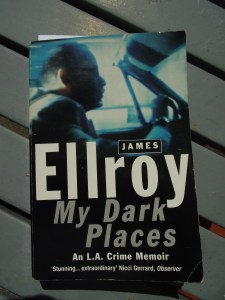 My Dark Places by James Elroy.
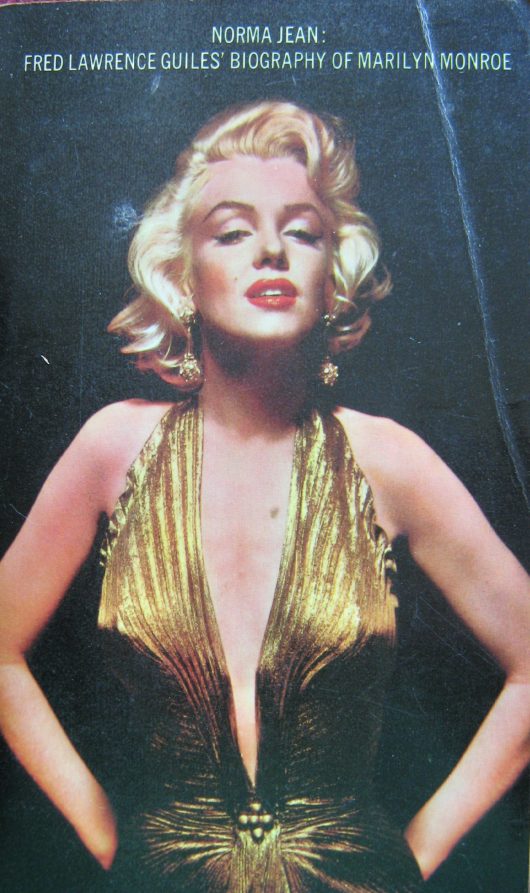 The very first book I picked up about Marilyn Monroe was the biography by Fred Laurence Guiles. ‘Norma Jean, the life of Marilyn Monroe’. It’s a particularly well researched book and for a great many people, fans and writers alike, it has become the definitive biography of Marilyn, the place you go to find out all those facts and figures about her life, especially her early life. Her death is not really discussed in the same fashion as in later books, some of which are wholly devoted to the mystery of her passing. In my edition which I bought in the seventies, Bobby Kennedy is referred to only as ‘the easterner’ and it was only in later years that Bobby Kennedy and his brother, President John Kennedy became publically identified with Marilyn.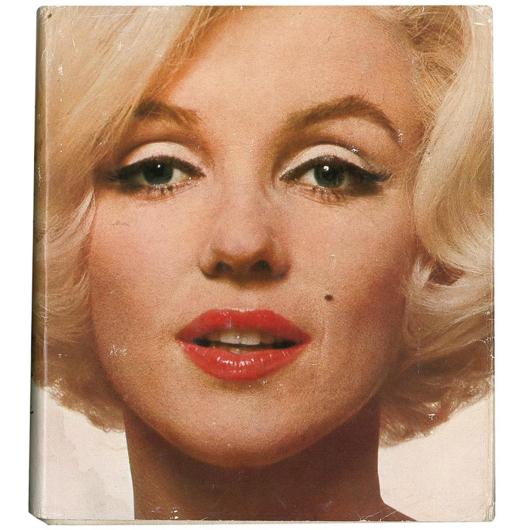
 A slim volume appeared in 1964 called ‘The Strange Death of ‘Marilyn Monroe’. It was this book that kick started rumours of strange goings on in the hours leading up to
 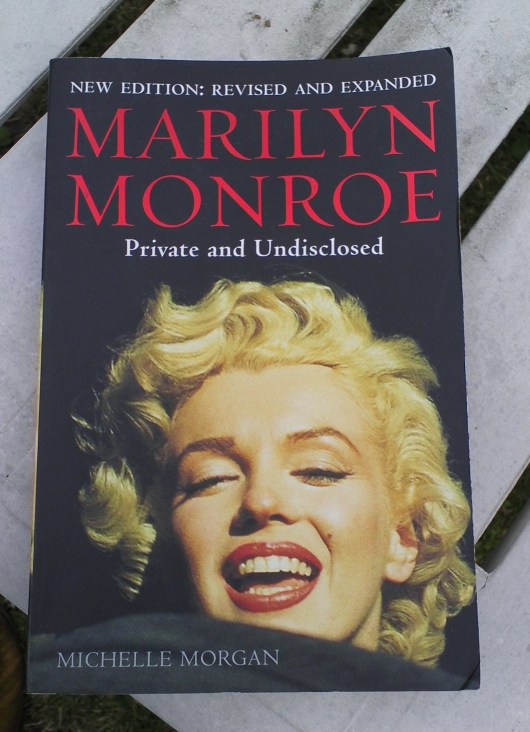 Marilyn Monroe: Private and Undisclosed is a book I picked up quite recently. It is written by a British author, Michelle Morgan, and is similar to Fred Guiles book of Marilyn, very well researched but focusses on various people associated with Marilyn who have not been interviewed before. After reading this and other books, I get the impression that Marilyn compartmented her life, and those that were in one compartment, were not necessarily aware of people who were in the other ones.
 Talking about J Edgar Hoover, here’s another book I picked up about Marilyn. This was a remainder book and concerns the information about Marilyn in Hoover’s FBI files. Marilyn: The FBI Files by Tim Coates. It’s an interesting addition to the many books about Marilyn with pages of FBI files concerning Marilyn, many of them redacted with various names and details blanked out.
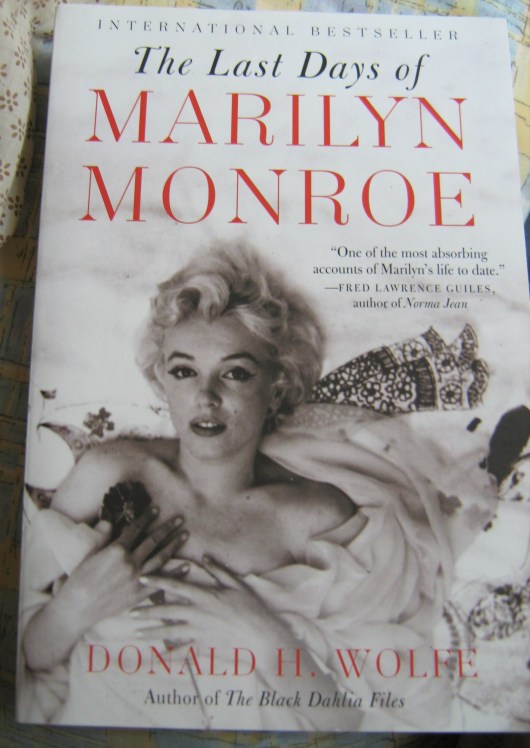 Donald Wolfe wrote another book; ‘The Last Days of Marilyn Monroe’. I’ve not read this one yet, it’s one I’m saving for my holidays.
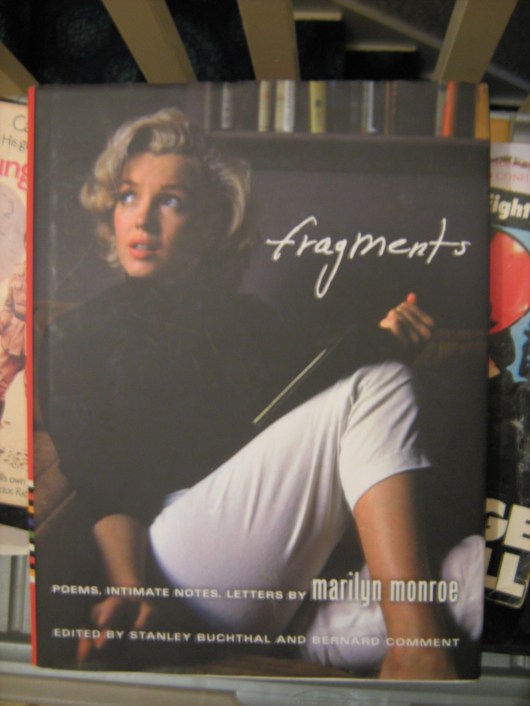 Finally, Fragments, edited by Stanley Buchthal and Bernard Comment. When Marilyn died in 1962 she left all her possessions to her acting mentor and head of the Actors Studio in New York, Lee Strasberg. When he passed away Marilyn’s effects went to his daughter and now it seems many will be auctioned off. This book is a look at the letters and notes she made, fragments of poems and thoughts scribbled in notebooks, on hotel stationary and envelopes. Marilyn’s thoughts and written meanderings show her to be a thoughtful woman who cared about what she saw and heard. Marilyn was a great reader and left behind a large book collection, part of which is listed in this book. Click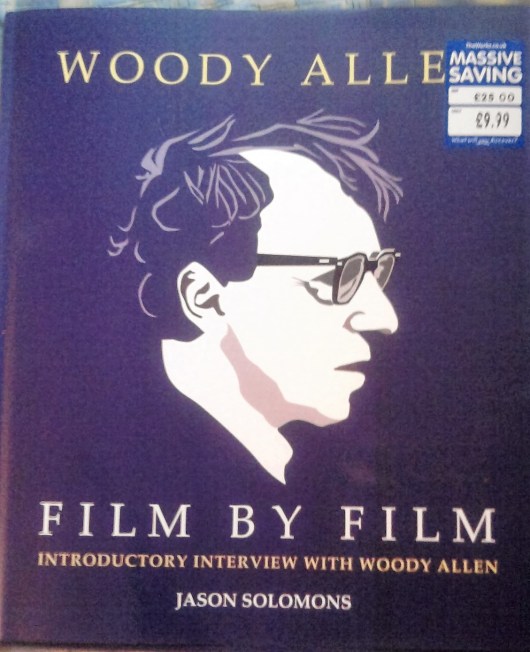

 Saturday night was in a lot of ways the culmination of the weekend. I always preferred it to Friday nights because things were more relaxed, there was no rushing home from work, no rushing to get your tea down your neck so you can get changed, then leg it out for the bus. Saturday, you could take your time and leisurely work up to things. Sometimes I would go out shopping and buy myself something new to wear for that evening, a shirt, or perhaps even a new pair of trousers. Then later I would have a long relaxed soak in the bath, and dress unhurriedly in my room to the tune of my favourite music. In 1977 my favourite album was Elton John’s ‘Goodbye Yellow Brick road’, and as I dressed I would mimic Nigel Olsson’s measured and rhythmic drumming to ‘The Ballad of Danny Bailey’, or ‘Candle in the Wind’.
 OK, That was the intro copied from my earlier post
 I really do love books, especially second hand books. I think that what is so wonderful about a second hand book is that the book has told its story before to someone else, and now if you have just bought it, its going to tell it’s story to you. I spend a lot of time browsing in book shops, both physically in actual shops or on-line in virtual book stores. The thing about on-line book stores is that you have to have a starting point, it’s no fun browsing through lists of books so I tend to browse on-line only when there is a particular book I want. In an actual book store I scan through the various sections and although I tend to linger on biographies and books about film, anything can catch my eye. A while ago I was reading a book by movie director Michael Powell called ‘A Life in Movies.’ It was a pretty thick book and took a fair old while to read and when I got the end there didn’t seem to be any indication there was another volume.
 You might be thinking, looking at the picture here: Couldn’t the author have found a better picture? Looking at the picture again I suppose that particular copy is just a little tatty. That’s because it’s my travel copy. I’ve got another copy, a much nicer version that resides in my bookcase that I browse through now and again. The reason I’ve got two versions is because my travel copy goes all over the place with me. If I’m travelling somewhere on the bus or train, that slightly tatty copy goes easily into my pocket or my bag because I can read it time and time again. Not only is it the best ever book written about the golden age of Hollywood, it’s also by far the most accessible and readable book on the subject ever.
 The 22nd November is the anniversary of the assassination of John F Kennedy; one of the most shocking events of the twentieth century. It’s something I’ve been interested in ever since I was a boy and I’ve collected many books about the subject.
 Rush To Judgement by Mark Lane
 Six seconds in Dallas by Josiah Thompson