 Two of my absolute favourite films are Citizen Kane and On The Waterfront. Kane is a masterpiece of visual brilliance whilst Waterfront is a masterpiece of acting brilliance. Waterfront has at its centre a heart of fire whilst Kane‘s centre is a little cooler. I thought a quick comparison of the two films might be interesting so here we go:
Citizen Kane
Back at home in my default position, in my favourite chair watching TV, I picked up the tail end of an interview with actor Gary Oldman about his new film Mank. Mank sounds like an interesting film in many ways. Firstly, it only had a limited cinema release before being streamed on Netflix. Whether this was a reaction to the global lockdown or an indication of how cinema will work in the future I’m not sure, but if cinemas are unable to open then producers must find other ways to show their films.
Gary Oldman is an English actor with an interesting array of roles behind him. He won the academy award for his role as Winston Churchill in the film Darkest Hour and played assassin Lee Harvey Oswald in Oliver Stone’s JFK. Mank is about Herman Mankiewicz and his writing of the screenplay for Citizen Kane. Kane is one of my favourite films although I haven’t seen it for a long time.
Mankiewicz was asked by Orson Welles to write the script but without a credit, presumably so that Welles himself could use the resulting script as a basis for his own work. Later Mankiewicz changed his mind and decided he wanted a screen credit as he had come to think that the script was his best work. Welles then gave screen credit to both himself and Mankiewicz although it was Mankiewicz himself who accepted the Oscar at the award ceremony in Hollywood.
Just flipping through my extensive back catalogue of VHS documentaries I found one from the BBC about the making of Citizen Kane which I have recently copied to DVD. The documentary covered various areas including the filming, the actors and of course the script. The origin of the script was a contentious subject, especially after film critic Pauline Kael wrote an article in the New Yorker on the subject. She seemed to favour Mankiewicz as writing the lion’s share of the project. Peter Bogdanovich wrote a rebuttal in the Esquire magazine, defending Welles as the screenwriter.
The truth is that Welles, as he said himself, put together a screenplay based on both his version and the one by Mankiewicz. Elements of the story were based on personal experiences of both men, for instance Mankiewicz was friendly with William Hearst who inspired the character of Kane but Welles maintained that tycoons Samuel Insull and Harold Fowler McCormick also inspired parts of Kane’s story.
The cinematographer was Gregg Toland, one of the film industry’s top photographers. Toland asked to work on the film and Welles replied ‘Why? I don’t know anything about making films.’ Toland countered that was exactly why he wanted to work on the film because a film by a newcomer, Kane was actually Welles’ first film, would produce something new and original.
There are some fascinating elements to Citizen Kane, especially in the special effects department. A famous one is where the camera flies through a rooftop sign and then drops down through a skylight into a restaurant. That was done with a sign that came apart as the camera approached and then a fade from a model shot into the restaurant set disguised in a flash of lightning. I could go on and mention plenty of elements like that but if you haven’t seen Citizen Kane let me just explain what it’s all about. The film opens with the death of Kane, a millionaire newspaper magnate. His last words were ‘Rosebud’. The makers of a cinema newsreel decide to find out what or who Rosebud was.
To do so they research Kane’s life; his inheritance of a huge fortune, his takeover of a newspaper, his great wealth, his power and influence, his marriage and divorce and ultimately his death. The reporters never find the answers to their questions but we, the cinema audience, have the secret revealed to us right at the end of the picture. The end is what makes the film really and Welles admitted that Rosebud, and the idea behind it, was the idea of Herman Mankiewicz.
Citizen Kane is a wonderful piece of cinema with an outstanding visual style and the only criticism I can put forward is that for all its visual fireworks it is a film with a cold centre, a cold heart. Does the viewer feel sympathy for Kane? I’m not sure he does.
On the Waterfront
On the Waterfront stars Marlon Brando as dock worker Terry Malloy, brother of Charlie ‘the gent’ who is the right hand man of union boss John Friendly played by Lee J Cobb. Terry unwittingly leads fellow dockworker Joey Doyle into an ambush, thinking Doyle will be threatened to withdraw his statements to the Crime Commission. However, Doyle is murdered leaving Terry shocked and confused. Later he becomes friendly with Joey’s sister played by Eva Marie Saint in her film debut. Charlie, played by Rod Steiger, tries to get Terry back into line in the famous scene with the two in the back of a taxi but fails. After John Friendly has Terry’s brother murdered, the local priest played by Karl Malden convinces Terry to tell everything he knows to the Waterfront Crime Commission. Terry does so but is ostracised by his fellow dockers until Terry forces Friendly into a brutal fight. The dockers then stand with Terry when bruised and battered, he returns to work.
Director Elia Kazan had originally employed Arthur Miller to write the screenplay for On the Waterfront but the two fell out over various things especially the fact that Kazan had identified eight former communists to the House Unamerican Activities Committee. This was the time of the McCarthy witch hunts and careers and livelihoods were on the line when Senator Joe McCarthy asked the question ‘are you now or ever have been a member of the communist party?’
Kazan then asked Budd Schulberg to write the script. There was still some difficulty in getting the film to the screen and eventually Kazan approached Sam Spiegel to act as producer. He was able to set up a deal with Columbia Studios.
The film was thought to be Kazan’s response to criticism of his stand at the HUAC hearings. Arthur Miller in his play A View from the Bridge has his character become an informer but Miller puts a different spin on things, portraying the informing as a betrayal rather than a way of fighting back at crime as Terry Malloy does On the Waterfront.
Either way, On the Waterfront is one of my very favourite films and Brando’s performance as Terry Malloy won him one of the film’s eight Oscars. Forget about Don Corleone, this was Marlon Brando’s finest hour.
It is the performances that are at the heart of this great film. Brando is outstanding but so too are Karl Malden, Rod Steiger, Lee J Cobb and Eva Marie Saint. Kazan was a director who worked well with actors bringing out the best in their performances and respecting the way they worked. He had worked with Brando before in A Streetcar Named Desire and would go on to work with fellow method actor James Dean in East of Eden.
The cameraman, Boris Kaufman had previously worked on documentaries so perhaps that was why Kazan engaged him to film Waterfront as, in a documentary like style, the camera follows Brando as Terry Malloy and watches him become slowly disappointed in the thuggish world he has become part of.
The scene in a taxi with Rod Steiger is clearly a studio set but we don’t care because Steiger and Brando keep the viewer riveted to the screen ignoring the poor lighting and the bad set because the actors take all our attention.
In another scene Brando chats with Eva Marie Saint who plays Edie, the sister of the dockworker who Brando as Terry Malloy had set up for the kill. The two talk as they walk and Edie drops her glove but Terry picks it up and instead of giving it back puts it on his own hand. The glove becomes a focal point holding the two together as they talk. For me it is one of the great scenes in cinema. This is a film with a beating heart at its centre, a heart of fire and emotion and it is Brando with this wonderful performance who is right at the film’s centre.
Next time you see either of these films in your TV schedule, put your phone on silent, settle down and enjoy some great cinema.

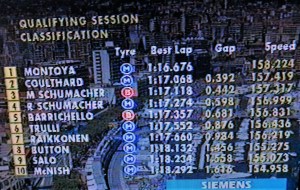 The other day I was idly watching an episode of Everybody Loves Raymond. It was the one where Ray and Debra his wife are watching their wedding video and suddenly the screen dissolves and on comes a football match. Debra is furious because Ray has taped over the wedding. Yep, those sort of things happened back then and on my video tape something similar occurred. The race video vanished into a hail of snow only to be replaced by a James Bond documentary. I was furious for a moment but then I got interested in the documentary. It focussed on Miriam D’Abo who starred in the 007 film The Living Daylights and she interviewed various ladies who had the dubious honour of being a ‘Bond Girl.’ There were plenty of clips from the Bond films, interviews and bits and pieces of behind the scenes stuff, in fact it was all pretty interesting for a Bond fan like me.
 Can music really make a good film? Can a really great theme lift a good or even mediocre film up into the lofty heights of the great films? I’m not sure but that’s today’s blog theme and here are a few examples.
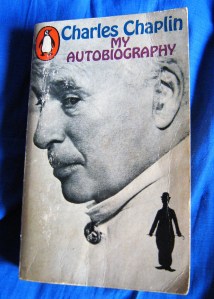 My Autobiography by Charles Chaplin.
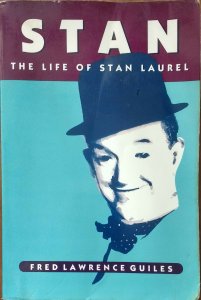 Stan, The Life of Stan Laurel by Fred Lawrence Guiles.
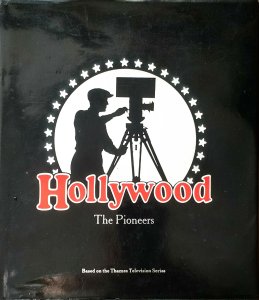 Hollywood.
 A while back I did a post about the
  Lockdown may have finished on December 2nd in the UK but if you live in a tier 3 region, like me, it’s still going on. OK, I understand the need for the lockdown, I know we have to prevent the virus from spreading but that doesn’t stop the whole thing being a pain in the neck. No quiz nights at the pub, no restaurant meals out and so on. Not only that but why does the virus have 2 separate names? Is it Covid 19 or is it Coronavirus? And where does the 19 come from? Was there a Covid 18? Does this mean there have been 18 previous versions of this insidious plague? If so, why have we never heard of them? We, the public, need to know.
 Another old show repeated currently on the CBS justice channel is The Fugitive starring David Janssen as Dr Richard Kimble, falsely accused of the murder of his wife. The show ran for four seasons but as viewer ratings began to fall, the series was cancelled. It was then that the producers hit on what at the time was an unusual idea. Instead of the show just ending, they decided to make an actual finale. Yes, they would wrap up the story of Kimble’s wife’s murder. Kimble had been searching for the supposed one-armed man he had seen leaving the murder scene for the past four seasons, now he would finally find him!
 My brother and I usually go out into Manchester every few weeks. We get something to eat and have a few beers and a good natter. It’s always nice to visit our old haunts in Manchester and to find new ones. There always seems to be a new venue popping up and the only flip side to new venues in Manchester seems to be the extraordinary prices they like to charge for food and drink. Maybe, being the fully paid up tightwad that I am, I should stick to the old, less trendy and cheaper places that I know.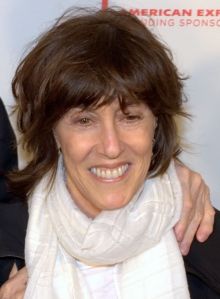
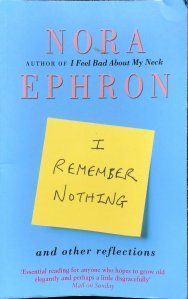 After watching the documentary film I felt even more determined to find out more about Nora so I went to abebooks on the internet and after some research ordered a copy of I Remember Nothing, a book by Nora that seemed to be a memoir. The book starts out as a sort of memoir, telling humorous stories about this and that, and her life without really giving much away. Nora wanted to be a journalist and after working for the Kennedy White House for a short while she joined the staff of the magazine Newsweek. In her book she tells the story of how Newsweek did not hire female writers and offered her a job as a mail girl. She doesn’t appear to have been upset by this despite it being blatantly sexist. She just got on with her job, still determined to be a journalist. In her book Nora makes the whole episode sound quite amusing, especially when she later writes a parody column during a newspaper strike and as a result gets invited to write for the New York Post. Over on Wikipedia, there is a slightly different story in which Ephron gets involved with a class action lawsuit filed against Newsweek for sexual discrimination.
 When I sat down on my break and flipped open the book, a small cutting fell out. It was a newspaper cutting dated November 14th 1995 from the Daily Express. An Actor Bombs went the headline and went on to tell the story of an actor:
 Today the tree has grown again, this time straight up and I can look forward to one day making apple pies again.
 The first thing to remember about films is this, they are not a public service, they are made to make money. They start life as a business proposition. Producers start by asking would the public want to see this? Would they pay to see this? Suppose we got famous film star Mr X to star opposite film actress Miss X? One sure fire way of making the public want to see something is by making the film again. How can they make it again? By making the sequel! Sequels can be good, they can be bad but sometimes they can be downright ugly . .
 Letters from an Unknown Author!