The F1 season starts later this month in Bahrain, in fact the race teams are already gathering there for the pre season testing, getting ready to shake down the new cars and sort out any teething issues before the actual racing. Of course, I’m assuming that despite Covid 19 we will have something of a normal F1 season once again. One of my favourite events, the Monaco Grand Prix traditionally takes place in May and even though the hi tech F1 cars outgrew this road circuit many years ago, they still come here and race fans can hobnob with the rich and famous and look enviously at the harbour when it will be choc-a-block with millionaires’ yachts.
The other day I was once again going through my old VHS tapes, selecting ones to keep, ones to copy to DVD and ones to throw out. One tape was marked Monaco 2002 qually and I was tempted to dispose of it straight away but I put it to one side and then later when the TV schedules declined to offer up anything interesting I thought why not give it a watch?
I have to say I couldn’t quite remember off the top of my head who was winning and who was losing in 2002 or even who was driving for who.
The video started off talking about what was portrayed as a controversial event in the previous race in Austria. Michael Schümacher and Rubens Barrichello were both driving for Ferrari at the Austrian Grand Prix. Rubens, the popular Brazilian was fastest in qually, fastest in the warm up and led the race. At the very last corner he came out ahead of Michael but then lifted off for a moment and it was Schümacher who took the chequered flag. Schümacher and Rubens came to the podium and Michael was not popular, facing a barrage of booing from the crowd. Michael, clearly embarrassed, pushed Rubens on to the top spot but that would not change the result; Rubens had handed the race win to Michael.
I started to fast forward through the TV ads but then saw one that always used to make me laugh. Here it is:
Back to Monaco and the TV coverage back then had passed to ITV and Jim Rosenthal was the TV anchor. He quizzed pundit Tony Jardine and guest and FIA chief Max Mosley about the Austrian Grand Prix. They weren’t happy at all that Rubens had handed the win to Schümacher. Are they bringing the sport into disrepute asked Jim. Max and Tony seemed to think so. The ITV web site was apparently flooded with complaints. Some drivers were interviewed and one I thought was interesting was the comment by Jacques Villeneuve. He said that we all knew that Ruben’s contract said he was number 2 and had to give way to the number 1 driver who was Schümacher. We all knew also that in Schümacher’s contract it said that the number 2 driver had to give way to him so why should we be surprised at what had happened in the race? Schümacher said Villeneuve should act like a man, accept what has happened, stand up on the number 1 spot and accept the boos.
Funny thing is that nowadays, Villeneuve is always in the F1 websites saying something controversial so perhaps I’d forgotten he was a straight talker even back then. Yes, that whole episode was a big scandal back in 2002 although I really don’t know why. Motor racing is a team sport and Ferrari has always been known to give team orders so why was everyone getting upset? Even Stirling Moss, who drove in an era when team orders were pretty much de rigueur felt compelled to say he had lost respect for Michael Schümacher. The thing is, as the two had led the race and Michael of course knew that Rubens would move over, then the two were hardly racing were they, as Ferrari Team Boss Ross Brawn pointed out. If there had been no team orders then Rubens would have had Michael up his exhaust pipes pushing him until he found a way past. To me the whole thing was a fuss over nothing but as I remember, the whole thing rumbled on and on for quite a while.
Anyway, I soon fast forwarded to the action, the actual qualifying which was I have to say, pretty exciting. There was a time when, as an ardent F1 fanatic, I knew race results and team personnel off by heart. Who won at Monaco in 1970? Jochen Rindt of course. 1971? Jackie Stewart. 72? Jean Pierre Beltoise in the rain. What about 1977? Was it Lauda? No, Jody Scheckter. 86? Prost? Yes, Alain Prost. 2002? 2002, there’s a question.
Time to fast forward again but then another advert caught my eye. I haven’t seen it for years but I’ve always found it rather funny. It starred the northern comedian, Peter Kaye.
Getting back to the qually; as I said before, it was all pretty exciting, especially as I couldn’t remember who was driving for whom, never mind who came out on top. Schümacher soon set the top time then David Coulthard driving for McLaren went fastest. Hakkinen his team mate, who was as you may remember, a double world champion, wasn’t doing so well but then Juan Pablo Montoya, one of my favourite drivers claimed the top spot. The cars began to get faster as the track ‘rubbered in’ and got faster. Coulthard went fastest again, in fact there were ten changes of pole sitter until Juan Pablo the Columbian driver finally claimed the top spot. I’ve always liked Juan Pablo. He was a man who told it like it was, he didn’t go in for PR led team speak and I was looking forward to seeing his post qually interview but then something happened, something that always used to happen back in the VHS age.
The other day I was idly watching an episode of Everybody Loves Raymond. It was the one where Ray and Debra his wife are watching their wedding video and suddenly the screen dissolves and on comes a football match. Debra is furious because Ray has taped over the wedding. Yep, those sort of things happened back then and on my video tape something similar occurred. The race video vanished into a hail of snow only to be replaced by a James Bond documentary. I was furious for a moment but then I got interested in the documentary. It focussed on Miriam D’Abo who starred in the 007 film The Living Daylights and she interviewed various ladies who had the dubious honour of being a ‘Bond Girl.’ There were plenty of clips from the Bond films, interviews and bits and pieces of behind the scenes stuff, in fact it was all pretty interesting for a Bond fan like me.
Pity about the Grand Prix but what the heck, pause to get a bottle of lager and a few nibbles and who cares? Wonder who did win the 2002 Monaco Grand Prix though?
(If you’re interested David Coulthard won with Schümacher coming home second!)
What to do next:
Share this post on your favourite social media!
Hit the Subscribe button. Never miss another post!
Buy the book! Click here to purchase my new poetry anthology.
Click here to visit Amazon and download Floating in Space to your Kindle or order the paperback version.
Can music really make a good film? Can a really great theme lift a good or even mediocre film up into the lofty heights of the great films? I’m not sure but that’s today’s blog theme and here are a few examples.
Rocky.
Rocky is a pretty good film. It actually won the best picture Oscar in 1976. It’s good, actually pretty good but was it really worthy of a best picture Oscar? I’m not sure. Anyway, it’s about boxer Rocky Balboa played by Sylvester Stallone in his first starring role. Rocky is at the bottom end of the boxing ladder taking cheap weekend bouts as a boxer while he works as a strongarm man for the local loan shark. An incredible piece of luck comes his way though; Apollo Creed, the world champion finds that a multi million dollar bout has fallen through. Wanting to recoup something from the fiasco, Creed decides to fight an unknown boxer in an exhibition match in the hope of saving the event from cancellation. He randomly chooses Rocky. Rocky though, starts to wonder if he can win and backed by his old trainer he starts training and is soon on the path to fitness. Creed wins but Rocky goes the distance with Creed, the first opponent of Creed’s to do so. The second film in the series involves their re-match and is pretty similar to the first as are most of the following films. Rocky doesn’t seem to have much of a technique he just seems to get battered and when his opponent runs out of steam, Rocky usually lands the knockout blow.
The whole series of films in the Rocky saga are pretty much the same. I’ve watched 1 and 2 and gave most of the others a miss until Rocky Balboa. I’d heard it was a good one and picked up a copy of the DVD in a charity shop and to be fair it is an excellent film. Rocky has retired from the ring, his wife has died of cancer and Rocky gets by managing an Italian restaurant where fans come not only for the food but to chat with Rocky himself. Rocky then gets involved in a computer fight with the current champion, an idea based I think, on the computer fight between Rocky Marciano and Mohammed Ali. It’s a bitter sweet film but well put together. All the films use variations of the famous Rocky theme but my favourite is probably in the first Rocky where Stallone takes his fitness routine through the streets of Philadelphia, through the Italian market, finally alighting at the Museum of Art where apparently there is now a statue of Rocky himself. Did the Rocky theme tune really lift this film right up? To be fair it is a good film anyway but that theme tune gave the film, and the series, just that extra boost.
It’s not really relevant but I must add my favourite Rocky story here. Stallone wrote the script in three and a half days after apparently watching a boxing match between Muhammed Ali and Chuck Wepner in 1975. Wepner was expected to be easily beaten but made it through to the 15th round. United Artists liked the script but wanted an established star to play the role, even offering Stallone a million dollars to let James Caan play Rocky. Stallone turned them down, played the part himself and the rest is history.
Verdict: Great film, great theme.
The Magnificent Seven.
The Magnificent Seven was a 1960 remake of Kurosawa’s classic TheSeven Samurai. Director John Sturges directed this version, set in the American Wild West. Yul Brynner produced and starred in the film and the cast also included Steve McQueen, Eli Wallach, Charles Bronson and Robert Vaughn. The story concerns a small Mexican village who hire a group of gunfighters to protect themselves from bandits. Only three of the seven survive the eventual gun fight.
As much as I love a good western, I’ve never really cared for this film. It was, according to Wikipedia, a box office disappointment in the USA although a smash hit in Europe. The score was an Oscar contender but lost out to Ernest Gold’s score for Exodus.
Verdict, love the music but essentially, the film was nothing outstanding and I know it’s a bit mean but if not for Elmer Bernstein’s theme I think The Magnificent Seven would be a forgotten film today.
Mission Impossible.
Mission Impossible was a movie adaptation of the 1960’s TV show about a small team called the IMF (Impossible Missions Force) that take on, you’ve guessed it, impossible missions. This film became the first in a series of films produced by and starring Tom Cruise. Cruise plays Ethan Hunt who is sent to stop the theft of a list of agents kept inside the American Embassy in Prague. The mission fails and Jim Phelps, the agent in charge is wounded and all of his team are killed except for Ethan Hunt. There is clearly a double agent or mole at work and various things happen until we find out the mole was Jim Phelps which was just a little bit sneaky because all of us who watched the 1960’s TV series knew that Jim Phelps was a character in that show and therefore could not possibly be the mole. The fact that he was made me feel a little cheated by this film because they used my nerdy TV knowledge against me. In the TV show Jim Phelps always gets a taped message with instructions for his mission that then self destructs. Tapes are a little old fashioned now in the high tech world of the 21st century but there are a few little nods to the old series along the way.
The last instalment I saw was the fast moving Mission Impossible: Ghost protocol. It was pretty exciting and one particular part was interesting. Ethan Hunt and his people visit the Burj Khalifa in Dubai, the tallest building in the world. In one sequence Hunt has to climb outside to get to another room in the building. The sequence looked pretty impressive even though I assumed, it was shot with a green screen in a studio. It was with some surprise then to find that the scenes were shot actually on location with Tom Cruise doing his own stunts, actually climbing outside this impressive structure. He was held safely by cables which were digitally erased in post production. I take my hat off to you Tom but seriously, next time, do it in the studio!
The Mission Impossible theme is an iconic one written by Lalo Schifrin. There are many versions of the theme but personally I like the one from the TV show. Has it enhanced the films? Yes, I think so and of course it makes the connection between the TV version and the films.
Titanic.
Titanic is a 1997 film written and co produced by James Cameron. The production had a budget of 200 million dollars, a staggering amount and included a full scale replica of the ship at Baja in California. The replica was not an ocean going vessel but one built into the dockside and incorporated with a 17 million gallon water tank which provided a sea view and a ramp which could tilt the whole structure for the sinking sequence. Only parts of the ship were fully made, most of the ship itself was just a steel outer structure.
Director Cameron wanted the singer Enya to create the music for the film but she declined. Instead he turned to composer James Horner. The two had fallen out during the making of Cameron’s film Aliens but managed to put that behind them and collaborate on Titanic. Cameron did not want music with singing in the film so Horner composed My Heart Will Go On in secret and played him the demo when he thought Cameron might be responsive. According to Wikipedia, another factor was that a hit song would be a positive factor surrounding the film.
Verdict: I love the music and feel it enhances the film in many ways, so much so I bought the soundtrack CD. Titanic is an epic production with some outstanding production elements that cement Cameron as a director of the first echelon.
So, what is your favourite movie theme?
What to do next:
Share this post on your favourite social media!
Hit the Subscribe button. Never miss another post!
Buy the book! Click here to visit Amazon and download Floating in Space to your Kindle or order the paperback version. Click here to purchase my new poetry anthology showcased below.
Charlie was born in 1889 in Walworth, London and spent his early life in the London suburb of Kennington. His parents were both music hall performers but separated when Charlie was about two years old. His mother was poor and the small family, Charlie, his mother and older brother Sydney, were admitted to the workhouse on two separate occasions.
In 1903, Charlie’s mother was committed to Cane Hill mental asylum and Charlie lived on the streets alone until his brother Sydney, who had joined the navy, returned from sea.
With his father’s connections Charlie secured a place in a clog dancing troupe called the Eight Lancashire Lads and so began his career as a performer. After appearing in some minor roles in the theatre he developed a comic routine and, with help from Sydney, was signed by Fred Karno, the famous music hall impresario, for his comedy company in 1908.
Chaplin became one of Fred Karno’s top comedians and Karno sent him with a troupe of other comedians on a tour of vaudeville theatres in the USA. One of the others was Stan Laurel, later to find fame with the comedy duo Laurel and Hardy.
By far the most interesting part of Charlie’s autobiography is where he talks about the beginning of his movie career. On a second tour of America in 1913, Chaplin was asked to join the Mack Sennett studios as a performer in silent films for the fee of $150 per week. He wasn’t initially keen but liked the idea of starting something new.
His first film for Sennett was called Making a Living, released in 1914. Chaplin himself wasn’t so keen on the film and for his second appearance selected a new costume. After searching through the costume department Chaplin chose a bowler hat, a jacket that was too small, baggy trousers, shoes that were too large and a cane. It almost seems as though the clothes made him become the character of the tramp which was to make him famous. The film was Mabel’s Strange Predicament although another tramp film made afterwards, Kid Auto races at Venice, was released to the public first.
Chaplin clashed frequently with his directors when his ideas or suggestions were dismissed but after exhibitors asked Sennett for more Chaplin films he was allowed to direct his own. When his contract expired in 1914 Chaplin asked for 1000 dollars per week. Mack Sennett complained that that figure was more than he was getting and refused. Another film company Essanay, offered him $1200 per week and a signing fee and Chaplin signed. He wasn’t initially happy with Essanay and didn’t like their studios in Chicago, preferring to work in California.
Chaplin was also unhappy after he finished his contract at Essaney because they continued to make lucrative Chaplin comedies by utilising his out-takes. Chaplin was however an astute businessman. In his new contracts the negative and film rights reverted to Chaplin after a certain amount of time. This was in the days when a movie had a life of months, if not weeks.
Chaplin seems strangely perturbed by his fame and fortune. He writes about an incident between contracts where he takes the train to meet his brother in, I think, New York but word has got out to the public he is travelling and everywhere the train stops, masses of people were waiting. Eventually it dawns on him that it is he they were waiting for. Many times the narrative describes meals and walks taken alone giving the impression of a solitary, lonely man.
The thing to remember about reading this book is that Chaplin tells the reader only what he wants them to know, nothing more. His various marriages are only skimmed over although when he is making the Kid, probably his most important picture, he explains how he thought the negative may have be taken by lawyers acting for his estranged wife so he takes the film and edits it whilst almost ‘on the run’ in various hideaways and hotel rooms.
Chaplin was known for being attracted to young girls and one of his conquests, a girl called Joan Barry, was arrested twice for her obsessive behaviour after he ended their relationship. She became pregnant and claimed he was the father and began a paternity suit against him. J Edgar Hoover who believed Chaplin to be a communist, engineered negative publicity against him and public opinion began to turn against Charlie. He was ordered to pay child support to Barry’s baby despite blood test evidence which showed he could not be the father. The blood test evidence was ruled inadmissible.
The earlier part of the book is by far the most interesting but the later part, where Chaplin is famous the world over, becomes an excuse for name dropping, despite there being a clear absence of any notable anecdotes involving the famous names. Even his best friend Douglas Fairbanks makes few appearances within the pages.
A fascinating read none the less.
Stan, The Life of Stan Laurel by Fred Lawrence Guiles.
I have a lot of time for Fred Laurence Guiles. He wrote one of the definitive biographies of Marilyn Monroe, the one Norman Mailer used as the basis for his classic book about the star.
Stan was born in Ulverston in Cumbria, as a matter of fact, I once visited his old home in the town. It was a small house as I remember and a little bit tatty. I remember being rather disappointed to view this old house with photocopied pictures of Stan on the walls. Either way it was still fascinating to think that Stan, one half of that great duo, Laurel and Hardy, had started life here as Arthur Jefferson. Guiles follows Stan -as he began to call himself- from northern music halls to being part of Fred Karno’s comedy circus and to the USA and Hollywood. Fred Karno was the great music hall impresario of the time and he sent teams of entertainers all over, even to the USA. In his early days touring the USA for Karno, Stan shared rooms with Chaplin although not once is Stan mentioned in Chaplin’s autobiography. Chaplin just seemed to ignore or black out anyone from his memory he either didn’t like or thought was a threat.
Stan Laurel appeared in a number of silent comedy films. He eventually signed with producer Hal Roach but decided he was going to move into scriptwriting rather than performing. One day Oliver Hardy was too ill to perform so Stan stepped in and played his part. Later the two appeared together in various films and director Leo McCarey noticed the positive reaction from the public. Together with McCarey the two worked at their comedy and after McCarey suggested they both wear bowler hats, their partnership took off and their Laurel and Hardy series began in 1927. In 1929 they moved from silent pictures to sound with Unaccustomed As We Are. Unlike many other stars of the period, the two made a seamless transition into talking pictures and are today recognised as giants of comedy.
In 1933 director Frank Capra made the first of what was an entirely different kind of comedy film and, according to author Guiles, this actually spelt the beginning of the end for the slapstick comedy type of film humour that Laurel and Hardy, and others such as Chaplin, Harold Lloyd and Buster Keaton, were so good at. It Happened One Night starred Clark Gable and Claudette Colbert and after a slow start, the film became an enormous hit, winning eleven Academy Awards. Some writers thought that film comedy had finally ‘grown up’ and sadly, just over 10 years later Laurel and Hardy would be making their final Hollywood film.
After Hardy died in 1957, Stan declined to work without his comedy partner and he retired to a modest flat in Santa Monica, California. He was listed in the telephone directory and was happy to answer calls from his fans. He spent his retirement answering his fan mail and meeting with other comedians who revered him; people like Jerry Lewis, Peter Sellers and Dick Van Dyke. He died in 1965 aged 74.
Hollywood.
I think I wrote about the 1920’s in a previous post saying that if I could go back to any time and place I’d go back to Hollywood in the 1920’s. You didn’t need a degree in filmmaking to be a director then as the whole industry was new. Hollywood was just a mass of orange groves when someone decided that with its wonderful climate, Hollywood would be the perfect place to make films. In 1910 DW Griffiths came to Hollywood to film In Old California and other film makers followed him as not only was there perfect weather and excellent light but it was a great place to avoid Thomas Edison who owned patents on the movie making process and wanted paying. In the 1980’s there was a wonderful TV documentary series called simply Hollywood and this is the book that was published alongside the series. The TV version was narrated by James Mason and was filled with interviews with former writers, directors and stars of that bygone age. It’s a pity it hasn’t made its way onto DVD but apparently because of all the stars involved, all of whom will have passed away by now, getting the releases signed for DVD has been problematic. It just so happens that I have the first episode on VHS video and of course, the book that accompanied the series.
The book I have is subtitled ‘The Pioneers’ and concentrates on the first great Hollywood stars both in front of and behind the camera, people like director DW Griffiths and actors like Valentino, Chaplin, and Garbo who became the first ‘movie stars’. Then there were others like John Gilbert and Buster Keaton who did not make the transition to sound successfully and Laurel and Hardy, who did.
One particularly interesting thing about the TV series and the book is that many of the veterans of silent pictures were telling their stories for the first time. Kevin Brownlow who wrote the book and directed parts of the TV series says that some of the interviewees were very old but even so, they were very lively and interesting in their old age with many stories to tell about filming, editing and the beginnings of Hollywood. Back then Hollywood shunned those who worked in films. They called them ‘movies’ and many hotels and boarding houses had signs up saying ‘no movies’.
Sadly many silent films have not survived to the present day because the nitrate film of those days was highly volatile. Many of the films that have survived are made from poor quality ‘dupes’ or copies so it is not easy to appreciate how good those films originally were. This book though with its superb quality production stills does go some way to invoking the sense of what those films were like. I live in hope that one day this wonderful series will find its way into digital media.
After writing this I wondered what were the chances of an episode or two finding its way to YouTube? A quick check and I was happy to find the entire series there. That’s me sorted for the next few days then . .
What to do next:
Share this post on your favourite social media!
Hit the Subscribe button. Never miss another post!
Buy the book! Click here to visit Amazon and download Floating in Space to your Kindle or order the paperback version. Click here to purchase my new poetry anthology showcased below.
A while back I did a post about the kitchen sink dramas that emerged in the 1960’s but I thought I’d look now at some later films that have continued that tradition of focusing on working class life. I’m not really sure that today in the 21st century the working class still exist. Modern UK is, to a great extent a classless society. Then again, perhaps it’s just a society of the haves and the have nots. That concept relates particularly well to the 1980’s. The decade of Thatcherism and Yuppies and inner city riots. Kitchen sink dramas were almost exclusively northern, set in places like Manchester, Liverpool and Lancashire with strong no nonsense northern characters. Here are four films from the 1980’s that fit that category.
Educating Rita (1983)
This was a breakthrough film for Julie Walters and I remember Michael Caine who also stars in the film saying that this film would do for Julie what Alfie did for him. Maybe it did, maybe it didn’t. The film is about a Liverpool hairdresser played by Julie who wants to better herself. She decides to take an Open University course in English Literature. Her tutor played by Caine is initially confused as he has the name of Susan White on his documents and Susan explains that she has now changed her name to Rita after reading Rubyfruit Jungle by Rita Mae Brown. Frank Bryant (Caine) is not keen on taking Rita on as a student but she convinces him otherwise. Rita finds Frank has ignited her passion for literature but has to contend with her husband who wants her to be a traditional wife and produce babies. Husband and wife finally split leaving Rita to pursue her studies. She moves in with a fellow student and gradually, as she mixes with more students and studies more, she becomes less and less like her former self. Frank becomes more and more fond of her, possibly even in love with her but his position as a university lecturer is compromised by his heavy drinking.
In a lot of ways this is such a good film. Julie Walters is outstanding as Rita and Michael Caine is excellent too. The big problem for me is that while Julie plays Rita as a typical scouser with a superb Liverpool accent, the setting clearly isn’t Liverpool. Not only that but the other accents in the film all grate with Julie’s as they are a mix of various northern accents. Caine of course as the lecturer, doesn’t have to have to be a Liverpudlian but the hotchpotch of brogues, some from Manchester, some from Liverpool just seemed to jar to my ear. The film was apparently filmed in Ireland so why not make Rita and her family Irish? That would have made more sense although filming in Liverpool with a local cast would have been the better option. Perhaps production finances made that impossible.
Shirley Valentine (1989)
Like Educating Rita, this was a film based on a play written by Willy Russell. In this one Liverpudlian Shirley is getting a little bored with her life. Unlike Rita in the film above it’s not learning that Shirley wants, it’s a good holiday. She is getting a bit fed up of waiting hand and foot on her husband and when the chance comes to go to Greece with her friend she wonders if she could really do it, really leave her husband behind and swan off to the sun? A couple of things make her decide that it is really time to put herself first. The first one is when her husband gets really annoyed when she serves chips and egg instead of steak for their Thursday evening meal. Surely she knew Thursday was steak night? The other is when her daughter comes home and like her dad, expects to be waited on so off Shirley goes to Greece. Things don’t go quite to plan when her mate finds herself a man on the flight over and leaves Shirley to her own devices. After a few days Shirley finds her confidence and begins to enjoy things alone. She meets Costas, a bar owner and spends time with him on his small boat and when the time comes to leave, Shirley decides she is going to stay.
Like Michael Caine in Alfie, Shirley talks straight to the camera and reveals she is in love. Not with Costas but with herself. At the end of the film her husband arrives in Greece and the two sip wine together by the sea. Will Shirley return with him? The film leaves the question open.
Shirley Valentine is a much better film than Educating Rita. Shirley and her husband played by Pauline Collins and Bernard Hill come across as authentic Liverpudlians and the whole film, especially Shirley talking to the camera, works very well. Both films were directed by Lewis Gilbert who directed amongst other things, the Michael Caine classic Alfie. With some better casting in the smaller roles, Educating Rita would have been just as good.
Rita, Sue and Bob Too (1987)
Like the two films above, this too was based on a play, in fact it was two plays that were adapted and merged together into a screenplay by the play’s author Andrea Dunbar. Andrea was raised on the Buttershaw council estate in Bradford, West Yorkshire and became pregnant at 15. This event inspired her first play The Arbor. It was written originally as a classroom assignment and encouraged by her teacher, Andrea developed the work into a full blown play. The film was filmed on the Buttershaw estate where Andrea continued to live, despite several residents threatening her because of the negative portrayal of the area in the film.
In the film, two babysitters Rita and Sue, begin an affair with Bob for whom they have been babysitting. Bob’s marriage later breaks down when his wife finds out. Sue later gets involved with an Asian taxi driver called Aslam who becomes violent. He attacks Sue but Rita arrives and the two both turn on the taxi driver, disabling him long enough for the two to escape. They flee to Bob’s house where Aslam turns up and pleads for Sue to forgive him. Bob arrives and then the Police, who have been called by the neighbours. The Police leave in pursuit of Aslam and Bob decides to have a bath. When he goes into the bedroom, the two girls are in bed waiting for him.
This is really an incredible film on many levels. It is funny but also shows northern council estates for what they are, a mix of rough and ready characters, some of whom take pride in their homes and the way they conduct themselves and some who do not. The tone of the film shifts quickly from humour to drama and back again and the documentary style of filming gives the film a gritty realism.
Gregory’s Girl (1981)
Gregory’s Girl was a low-budget movie made in 1981 and was written and directed by Bill Forsyth. The film is a gentle comedy about a young lad who fancies a girl who has just joined his school football team. The film was one of those special films where so many things come together to make a truly great and memorable film, in fact it is ranked number 30 in the British Film Institute’s list of the top 100 British films.
It reminds me so much of my own schooldays in so many ways even though it was filmed in Lanarkshire in Scotland. The hairstyles in the film were similar to those of myself and my friends back in 1973, the year I left school (armed with only four O levels to take on the world). The school ties and jackets were similar to mine, as were the classrooms and lead actor John Gordon Sinclair’s clumsy and shy manner both on and off the football field was just like mine.
Gregory lives on a new estate just like the one my family moved into in the mid 1970’s. He develops a crush on a new girl who has just joined the school football team and eventually he plucks up the courage to ask her for a date. He borrows his friend’s jacket and off he goes to meet her although things don’t turn out quite how he planned. Gregory’s Girl isn’t as gritty as the films I’ve mentioned above but for me it’s like a nostalgic trip back to my schooldays. Look out for the film on TV or you can even find the complete film on YouTube.
What to do next:
Share this post on your favourite social media!
Hit the Subscribe button. Never miss another post!
Buy the book! Click here to visit Amazon and download Floating in Space to your Kindle or order the paperback version.
Lockdown may have finished on December 2nd in the UK but if you live in a tier 3 region, like me, it’s still going on. OK, I understand the need for the lockdown, I know we have to prevent the virus from spreading but that doesn’t stop the whole thing being a pain in the neck. No quiz nights at the pub, no restaurant meals out and so on. Not only that but why does the virus have 2 separate names? Is it Covid 19 or is it Coronavirus? And where does the 19 come from? Was there a Covid 18? Does this mean there have been 18 previous versions of this insidious plague? If so, why have we never heard of them? We, the public, need to know.
This being December it certainly isn’t the time of the year for relaxing in the back garden but at least we have our TV set to keep us entertained. What TV gems have I found this week?
Showing on an obscure TV channel, Forces TV, I found the old Gerry Anderson TV series UFO. The show still looks pretty good after many years on the shelf. Ed Straker, the boss of SHADO is still trying to defend the world from alien attack and he and his colleagues look pretty good in their natty suits. In fact the whole thing looks pretty futuristic despite its obvious 1980’s origins, more so than Star Trek which, as much as I love it, does look very 1960’s.
It just so happens that I can remember that SHADO stood for Supreme Headquarters Alien Defence Organisation. What is interesting about that is this: The other day I went into the bedroom to get something and forgot what it was I’d gone in there for and yet I still knew what SHADO stood for. A contributory factor might be that as a youngster I fell off a playground roundabout right onto my head. In fact, I can remember it like it was yesterday, falling off head first and heading towards the ground, actually a concrete slab and taking a hell of a whack on my bonce. Yes, that hurt, it really did but I’m still wondering what I wanted in the bedroom.
Anyway, when I mentioned Star Trek above. I’m talking about the originalStar Trek, not the slightly lacking Star Trek:The Next Generation. Captain Picard and the cocktail lounge atmosphere of his space craft was not my cup of sci-fi at all and while Picard was running all the command decisions past everyone from the ship’s counsellor up, Kirk was already hitting the aliens with phasers on stun and getting up close and personal with some gorgeous interplanetary beauty.
The original Star Trek, like UFO was shot on film and today looks pretty sharp compared to the Next Generation which was shot straight to video. The original series was given a digital makeover a few years back with digital effects and new CGI spacecraft and is looking pretty good these days. The franchise has spawned quite a few follow up series and films. After the Next Generation came Deep Space 9 which was just as bad as the Next Generation if you ask me and then Star Trek Voyager. I actually like Voyager but it didn’t start off well for me and as much as I liked Captain Janeway, her oddball hairstyles just annoyed the hell out of me until in the later series they decided to employ someone who actually knew how to style hair and Janeway ended up looking pretty normal.
As Janeway became normal, the writers decided to shake things up with the pretty sexy Seven of Nine character. She was rescued from the Borg, an alien race whose catchphrase is you will be assimilated. Seven was given a very appealing tight fitting catsuit to wear instead of the Space Federation regulation uniform. Catsuits are OK and maybe they are pretty popular in the 24th century but they never seem to have any pockets. What Seven does with her handkerchiefs, lip gloss, mobile phone and purse I really don’t know. In the future people must prefer looking sexy rather than worrying about their stuff, at least they do in the eyes of the Star Trek writers.
While on the subject of cat suits, I feel I must mention, even just for a fleeting moment, the original cat suit girl who, at least in my mind, was Mrs Emma Peel played by Diana Rigg in the TV show The Avengers. The Avengers started off as a crime drama starring Ian Hendry as a police doctor, assisted in solving crimes by the dapper John Steed. Hendry left the show leaving Steed, played by Patrick MacNee needing a new assistant. His assistant was Kathy Gale played by Honor Blackman. She left the series to star in the film Goldfinger and Emma Peel was recruited as Steed’s new assistant. Kathy Gale was also a catsuit wearer although she seemed to prefer a leather version. When Emma Peel joined the series, the show moved from video to film and the production values increased enormously. The show also began to move in a sort of sci-fi fantasy espionage direction. Off the top of my head, I remember episodes about a mad scientist who shrinks other scientists and Steed, down to a small size, killer robots, time travel and cats that become wild animals.
Another problem with tight fitting cat suits must surely come whenever the wearer needs a bathroom break. Imagine having to strip right down just so you can have a wee. On board the Enterprise I can imagine that, like in any spaceship, space must be at a premium so the toilets must be pretty small. Now this is the perfect opportunity to introduce my own personal experience of using a ladies toilet. Years ago, when I had a cigarette vending machine round (writer, blogger, vending machine repairman -I’ve done it all) I remember visiting a pub in Prescot in Merseyside. I can’t remember the name of the place but it was the reverse of a normal pub in that most old pubs usually have a big room; the lounge and a small one, the vault, where men play cards, pool and darts. In this pub, the big room was the vault and the lounge was the small room. Anyway, after servicing the cigarette machine I wanted to use the toilet so I asked the cleaners, who were pretty fierce in that place, could I go in the gents. No she said, the floor was still wet but I could go in the ladies.
The ladies I soon found was actually two rooms, one with three toilet stalls and an outer room where you could wash your hands. The outer room had two huge mirrors for making sure your hair and makeup were OK and two comfy couches where the women could sit and presumably have a good natter before going back to join the men. Yes, that ladies toilet was a real eye-opener for me used to, like all men, smelly urinals.
Diana Rigg left The Avengers to become a Bond girl, just like Honor Blackman before her. Diana starred in On Her Majesty’s Secret Service as the woman who finally got 007 to the altar only to be shot later by Bond’s enemy Blofeld.
Anyway, getting back to Star Trek, the latest series in the franchise are Discovery, which is rather like watching a very fast music video, I gave it a good 15 minutes and then had to switch off, and Star Trek Picard, which sees the return of Captain Picard and various other characters including Seven of Nine from Trek’s back catalogue. I actually quite fancy watching that but alas, not having Amazon Prime I’ve yet to do so. Pity because it actually looks pretty good from the clips I’ve seen on YouTube. Eventually it will filter down to the Freeview channels and one day I’m sure I’ll see it late at night on BBC2 perhaps.
William Shatner who starred as Captain Kirk in the original series is a firm favourite of mine and it would be rather nice to see his character pop up again. Star Trek: Kirk sounds like a pretty good idea for a new series to me. Shatner is now 89 years old and still going strong. His character was actually killed off in the Star Trek film Generations which started off pretty well, combining the usual sci-fi elements of Star Trek with an intriguing mystery; who is the mysterious Soran and what is he up to? As it happened what he was up to wasn’t really that interesting but the film marked the cinema handover from the original Star Trek cast to the new one. Pity really because as I mentioned above, I never really took to the Next Generation.
Star Trek is ultimately about three people, Kirk, Spock and McCoy and the producers probably realised that, which is why, in the latest Trek films a new generation of actors have been asked to recreate the old roles meaning that Captain Kirk lives on again for a new generation of sci-fi fans.
Another old show repeated currently on the CBS justice channel is The Fugitive starring David Janssen as Dr Richard Kimble, falsely accused of the murder of his wife. The show ran for four seasons but as viewer ratings began to fall, the series was cancelled. It was then that the producers hit on what at the time was an unusual idea. Instead of the show just ending, they decided to make an actual finale. Yes, they would wrap up the story of Kimble’s wife’s murder. Kimble had been searching for the supposed one-armed man he had seen leaving the murder scene for the past four seasons, now he would finally find him!
Back in the 1960’s, TV was not very highly thought of even by the TV networks themselves. So what if Kimble never finds the murderer. So what? It’s only a TV show. Of course, the viewers would disagree. They had kept faith with the series for four long years, they deserved a proper ending.
The final episode aired on August 29th 1967 and in the USA the viewing figures were a sensation: 72% of US TV viewers were watching that final episode and the show held the most watched record until November 1980 when someone shot JR in Dallas.
When I watched TheFugitive yesterday, I think we were up to episode 20 in season 4. Hope I remember to watch that final episode, then again, I still can’t remember what I wanted from the bedroom!
What to do next:
Share this post on your favourite social media!
Hit the Subscribe button. Never miss another post!
Buy the book! Click here to visit Amazon and download Floating in Space to your Kindle or order the paperback version
My brother and I usually go out into Manchester every few weeks. We get something to eat and have a few beers and a good natter. It’s always nice to visit our old haunts in Manchester and to find new ones. There always seems to be a new venue popping up and the only flip side to new venues in Manchester seems to be the extraordinary prices they like to charge for food and drink. Maybe, being the fully paid up tightwad that I am, I should stick to the old, less trendy and cheaper places that I know.
Of course, just lately with Manchester and the whole world dealing with a major pandemic I can’t see any new venues popping up, in fact, it looks like things might go the other way, with places closing down. Pubs, bars and restaurants have been the hardest hit during the pandemic and with the new restrictions, like the 10pm closing times, many more venues will sadly close.
These days, rather than go out into Manchester, my brother will come round to visit and we watch something on TV together while we chat.
Years ago, when I was a schoolboy, I was never that good at mathematics. In particular I was always frustrated by the particular rules that we had to remember. You know the ones I mean, the sum of the sides of a triangle equals the hypotenuse and stuff like that.
Here’s one rule that I have discovered myself. The sum of all the new TV channels does not necessarily equal anything worthwhile watching. Back in the old days when things were black and white and there were only 2 channels, there was actually something usually worth watching. Still, perhaps I’m looking back with rose tinted spectacles. I’m sure there was rubbish on the TV back then; maybe we just don’t remember it.
Anyway, with a chilli on the go in my slow cooker and a few bottles of Becks chilling in the fridge and nothing looking interesting to watch on TV, I dug out an old VHS copy of the Errol Flynn film Gentleman Jim.
I’m not sure how true to life this film was but it supposedly told the story of Gentleman Jim Corbett and his fight with John L Sullivan ‘himself’. John L was, according to Wikipedia, the first world champion of gloved boxing, reigning until Gentleman Jim defeated him in a bout fought under the new Marquess of Queensbury rules in 1892.
Looking at John L Sullivan’s picture on the internet it’s surprising just how authentic Ward Bond, who played him in the film, actually looked. My brother and I both remarked that our dad, who died in 2000, twenty years ago this November, loved this film. He liked both Errol Flynn and was a great boxing fan. His favourite boxer was Rocky Marciano, the undefeated champion who was sadly killed in a plane crash not long after ‘fighting’ Mohammed Ali in a TV computer bout. I remember my dad being outraged at the result which gave the win to Ali. Funnily enough, the version shown in the USA gave the result to Marciano which would have pleased dad enormously.
In my favourite Hollywood book Bring on the Empty Horses, David Niven paints an excellent portrait of Flynn. You always knew where you were with Errol, wrote Niven -he always let you down.
Flynn hailed from Tasmania, an island state of Australia. In Australia he became involved in a film production called In theWake of the Bounty, a documentary film about the mutiny on the Bounty that featured reconstructions with Flynn as Fletcher Christian. After this he made his way to the UK where he became an actor and spent many years in repertory in Northampton. He was fired from Northampton rep but was spotted by producer Irving Asher and given a part in a film made at Teddington Studios in 1934. The film was Murder in Monte Carlo which has since been lost but apparently Asher, who worked for Warner Brothers, sent word to Hollywood recommending Flynn for a contract. After a successful screen test Flynn was given the starring role in the swashbuckling adventure, Captain Blood after Robert Donat turned down the role. The film was a great success and made stars of Flynn and co-star Olivia de Havilland.
David Niven recounts many tales about Flynn. The two shared a house together in Hollywood after Flynn separated from wife Lilli Damita, ‘Tiger Lil’ as Flynn used to call her.
During the making of ‘The Charge of the Light Brigade‘ which Warner brothers decided to set in India rather than the Crimea, Flynn, the new star started to get a little big headed. One big brute of an extra decided to waggle a lance under the behind of Flynn’s horse to teach Flynn a lesson. The horse consequently threw Flynn off. He got up, dusted himself down and proceeded to teach the big guy a lesson of his own by beating him into a pulp.
Flynn had a yacht named the Zaca and weekends on the boat included sailing trips full of wine, women and song. Many young girls appeared on the boat, none of whom produced any ID which was unfortunate for Flynn as he was later charged with statutory rape. The accusing girls appeared in the courtroom wearing school uniforms and in pigtails but happily for Flynn the court saw through that and he was acquitted, although the image that the press painted of him was not one that he was happy with.
In later life Flynn was bankrupt and became a floating shadow of his former self, sailing the seas in the Zaca. Later he made a great Hollywood comeback playing his great friend John Barrymore in ‘Too much Too Soon.’
In Bring on the Empty Horses, Niven describes a poignant moment after writing his chapter on Flynn. Niven, living then in the South of France, took a walk along the coast and came across something sadly familiar. It was the abandoned remains of the Zaca lurking quietly in a boat yard.
Gentleman Jim was made in 1942 and was one of Flynn’s favourite films. He took extensive boxing training taking lessons from Mushy Callaghan, a former welterweight champion who worked as a stuntman and boxing advisor after retiring from the ring. During the film Flynn collapsed from a mild heart attack. He had just failed the medical to join the army having suffered from malaria in his younger days as well as having a heart murmur. The production was closed down for a week while Flynn recovered. After the war Flynn was often criticised for not joining the forces but Warner Brothers would not admit that their star, visually a picture of health and vitality, suffered from health issues.
The film is a lot of fun and it was interesting to watch the scenes of John L Sullivan in training. Training in those days apparently consisted of chopping down trees and swigging bottles of beer. Jim Corbett, in a crazy way anticipating the style of Ali many years later, beats Sullivan by his speed and footwork. Alan Hale plays the Irish American head of the Corbett family whose antics in trying to control his brawling clan are always amusing and Alexis Smith plays Flynn’s love interest. Over on Wikipedia Smith is quoted as telling Flynn to takes things easy ‘don’t you want to live a long life?’ Flynn replied that he was not interested in the future, just the present.
By the end of the 1950’s Errol Flynn no longer had a contract with Warner Brothers and his attempt to co-produce a film about William Tell had ended in financial disaster. He was involved with a young girl, 17-year-old Beverly Aadland and in a severe financial state. His health had suffered after decades of alcohol and possibly drug abuse. Beverly was with him when he died in 1959 aged only 50 after a meeting to arrange the leasing out of the Zaca.
I’d not seen Gentleman Jim for many years and I enjoyed it immensely. The chilli was another story though. I’d made an outstanding chilli about a month ago and this latest one was a little tame, not quite right. Pity but at least Errol Flynn still has the power to entertain and that scene where John L Sullivan hands over his world championship belt always brings a tear to my eye.
What to do next:
Share this post on your favourite social media!
Hit the Subscribe button. Never miss another post!
Buy the book! Click here to visit Amazon and download Floating in Space to your Kindle or order the paperback version.
A while back I wrote a post about my movie connections. Every time I see a great film it registers up there in the old grey matter and at some point I’ll take a closer look at the credits of those films and see if there was a connection. In the case of that particular post the connection was Terence Rattigan. Rattigan was a playwright who wrote many film scripts and adapted many of his own plays for the screen and in the course of my often extensive TV viewing I’ve come across a number of great films all written by him.
In another similar mental exercise, I examined another group of films and the common denominator turned out to be Nora Ephron. Now some of you out there may never have heard of Nora. Who was she anyway? Well Nora was a journalist, a screenwriter and a director. She’s probably most famous for penning the brilliant comedy When Harry met Sally.
Photo by David Shankbone -, courtesy Wikipedia
When Harry met Sally is one of my all time favourite films and one that I wasn’t keen on at first. It didn’t impress me that first time at the cinema, the second time I saw it on TV I thought, hey, this isn’t so bad and I made a particular effort to seek it out a third time. After that third viewing, I loved it so much I bought the DVD version.
I was sad to hear of Nora’s passing in 2012 and made a mental note to find out more about her. Naturally, being me, a lazy semi-retired English blogger and occasional maker of YouTube videos, I never did.
A few weeks ago and eight years after making that mental note I was scanning idly through the TV listings and noticed a documentary film about Nora called Everything is Copy. The writer and director, Jacob Bernstein turned out be Nora’s son so he was clearly qualified to make a documentary about his mother. It wasn’t the greatest documentary film I’ve ever seen but it was certainly interesting. The film told the story of Nora’s life through various interviews. One surprising one was with Carl Bernstein, the famous Washington Post reporter whose articles on Watergate with Bob Woodward revealed the Watergate scandal to the world and eventually forced President Nixon to resign.
Nora was married to Bernstein and after becoming pregnant for a second time with their other son Max, Nora discovered he was having an affair with Margaret Jay, a British journalist and friend. Nora used the experience to write a book called Heartburn which was later made into a film starring Jack Nicholson and Meryl Streep. I have to say I’ve not seen the film or read the book but once again I’ve made a mental post it note and stuck it firmly up there in my brain for further attention.
After watching the documentary film I felt even more determined to find out more about Nora so I went to abebooks on the internet and after some research ordered a copy of I Remember Nothing, a book by Nora that seemed to be a memoir. The book starts out as a sort of memoir, telling humorous stories about this and that, and her life without really giving much away. Nora wanted to be a journalist and after working for the Kennedy White House for a short while she joined the staff of the magazine Newsweek. In her book she tells the story of how Newsweek did not hire female writers and offered her a job as a mail girl. She doesn’t appear to have been upset by this despite it being blatantly sexist. She just got on with her job, still determined to be a journalist. In her book Nora makes the whole episode sound quite amusing, especially when she later writes a parody column during a newspaper strike and as a result gets invited to write for the New York Post. Over on Wikipedia, there is a slightly different story in which Ephron gets involved with a class action lawsuit filed against Newsweek for sexual discrimination.
I Remember Nothing is an amusing book although it’s a little short on copy for someone for whom everything is copy. I enjoyed it enormously although had I been reading it on holiday, I could have got through it in an afternoon by the pool. Even so, the book has some great stories, in particular I liked the one about when Nora was nearly an heiress and thought she was about to inherit a formidable sum of money. There is another one about Christmas dinner and the one about when a meal was named after her in a posh restaurant. All of the stories are nice blog post sized stories which if I were devious enough, I could easily steal for the days when I have no idea what to write about.
When Nora was married to Bernstein, she put together a screen version of All the President’s Men which was ultimately rejected (William Goldman eventually wrote the script) but her version was seen by someone else who offered her the chance to write the script for a television movie and that was how her screen career started.
Nora wrote the screenplay for When Harry met Sally in 1986 and apparently imagined herself in the role of Sally, and Rob Reiner, who directed the film, as Harry. Nora wrote the screenplay after interviewing Reiner and producer Andy Scheinman and various others about their lives.
There is one scene from When Harry met Sally that has become a classic. It’s the one where Harry and Sally are eating in what looks like a diner or cafe and Sally shows Harry how easy it is to fake an orgasm by demonstrating it there and then in the cafe. According to Wikipedia, the cafe was actually Katz’s Delicatessen at 205 East Houston street in Manhattan. Also, just while I’m in the mood for dishing out useless information, the lady in the film who says to the waiter, ‘I’ll have what she’s having‘ when Meg Ryan, who played Sally, had finishing orgasming was actually director Rob Reiner’s mother and the line was suggested by Billy Crystal who played Harry.
Personally, I’d be hard pushed to tell you my favourite scene in the film although the one where Harry tells his best friend about his divorce is a major contender. Harry says he only knew about the split when the moving men came to his house to shift his wife’s stuff. One of the movers wore a t-shirt with the legend ‘don’t f’**k with Mr Zero’ on his chest and Harry’s friend asks ‘are you saying Mr Zero knew you were getting divorced before you did?’
I thought the pairing of Meg Ryan and Billy Crystal was wonderful and I could never understand why the producers of films like You’ve Got Mail and Sleepless in Seattle paired Meg with Tom Hanks. Then again, Nora actually directed both those films so maybe she just preferred Tom Hanks.
Here’s one of the crazy things I love about movie connections. Ages ago, I caught a film on TV about a woman who wrote a cookery blog. Can you imagine that, a film, an actual motion picture about blogging? Who could do that, who could make a picture like that? I missed a few minutes at the beginning of the picture and made a mental note (yes, another one) to make sure to record it next time it was shown. No, I didn’t record it the next showing but to answer my last question, who would make a picture about blogging, the answer was, surprise surprise, Nora Ephron.
In 2009 she released Julie and Julia, a film based on an actual blog by Julie Powell, an American who decides to cook her way through the cookbook of Julia Child, a 1950’s American cook played by Meryl Streep. As Julie blogs about her cooking the film flashes back to the life of Julia. It’s a great film and the only film I can think of which focusses on blogging.
Nora died in 2012 from pneumonia, a complication of the leukaemia she was suffering from. She had not shared her illness with friends or family, thinking it might impede her career. However, in I Remember Nothing, she left a list of things she would miss when she had departed:
They include Spring, a walk in the park, reading in bed, the view out of the window, Paris, butter and taking a bath.
She was 71 years old.
What to do next:
Share this post on your favourite social media!
Hit the Subscribe button. Never miss another post!
Buy the book! Click here to visit Amazon and download Floating in Space to your Kindle or order the paperback version.
I was going into work the other day and remembered that I didn’t have anything to read. I do like to have a read on my break so I looked around and picked up The Big Sleep. If you haven’t read the book by Raymond Chandler you must surely have seen the film with Humphrey Bogart and Lauren Bacall. I love the opening scene where Bogart meets with General Sternwood and has separate encounters with his two daughters. Sternwood, an old former general lives in a sort of greenhouse where the heat that keeps his tropical plants alive makes Bogart wilt. That was a great opening and sets the scene for the rest of the film.
When I sat down on my break and flipped open the book, a small cutting fell out. It was a newspaper cutting dated November 14th 1995 from the Daily Express. An Actor Bombs went the headline and went on to tell the story of an actor:
An out of work actor was amazed when his agent rang and offered a part in a Shakespearean play. All he had to say was ‘My Lord, I hear a cannon.’
For weeks the actor rehearsed his line, giving it a variety of interpretations. Walking down the street (My Lord, I hear a cannon.) In the bath (My Lord, I HEAR a cannon.) In the shaving mirror (My LOOOORD, I hear a cannon)
The day came and the actor strode on to the stage and turned to the audience
The cannon went off with a terrifying bang and he shouted ‘What the *** was that?’
That newspaper clip really made me laugh and sometimes we all need a good giggle. That’s one of the things I love about second hand books; who put the clipping in the book? Did they find it as amusing as I did? I hope so.
Anyway getting back to The Big Sleep. The book was written by Raymond Chandler and he had this really fabulous talkative way of writing. You can almost imagine hearing Humphrey Bogart’s voice as you read the book. Here’s a quote from the text, an example of Chandler’s descriptive style:
I sat down on the edge of a deep soft chair and looked at Mrs Regan. She was worth a stare. She was trouble. She was stretched out on a modernistic chaise-longue with her slippers off so I stared at her legs in the sheerest silk stocking. They seemed to be arranged to stare at. They were visible to the knee and one of them well beyond. The knees were dimpled, not bony or sharp. The calves were beautiful, the ankles long and slim with enough melodic line for a tone poem. She was tall and rangy and strong looking. Her head was against an ivory satin cushion. Her hair was black and wiry and parted in the middle and she had the hot black eyes of the portrait in the hall. She had a good mouth and a good chin. There was a sulky droop to her lips and the lower lip was full.
Not bad eh? Dilys Powell called his writing ‘a peculiar mixture of harshness, sensuality, high polish and backstreet poetry’ and it’s easy to see why. Mrs Regan was played by Lauren Bacall in the film and up till now I had always thought this was the film where they had met. Wrong! A quick check on Wikipedia and I see the couple met on the set of To Have and Have Not in 1944. Bacall was 19 and Bogart was 45 and married to his third wife Mayo Methot at the time. Sparks apparently flew between the couple and Bogart divorced Mayo and married Bacall the next year, 1945. Despite the great on screen chemistry together the couple only made four films together.
The film version of The Big Sleep was a brilliant adaptation of the book and some of the differences are interesting. For instance, early in the book detective Philip Marlowe played by Bogart meets General Sternwood’s daughter Carmen. She looks at Marlowe and remarks how tall he is. In the film, Bogart of course wasn’t that tall so the dialogue is reversed ‘You’re not very tall are you?’ comments Carmen.
Carmen was played in the film by Martha Vickers and Chandler felt that she seemed to overshadow the performance of female lead Lauren Bacall. For that reason many of Vickers’ scenes were cut. Release of the film was delayed by Warner Brothers and in fact another of Bacall’s films shot after The Big Sleep, Confidential Agent, was released first. Reaction to Confidential Agent was so good Jack Warner, the studio head, decided to beef up Bacall’s part in The Big Sleep so new scenes were shot and added to the film including a new ending.
The plot of the book and film are pretty complicated, although having just read the book I think that the book is easier to follow. During the filming the director and his stars wondered who killed the character of Owen Taylor, the Sternwood’s chauffeur? They sent a cable to Raymond Chandler asking him. Chandler told a friend later ‘Dammit, I don’t know either!’
One strange element in the film, certainly for me, is a scene where Philip Marlowe (Bogart) is watching blackmailer Geiger. Geiger has a shop that sells rare books in Hollywood and Marlowe asks for information in another bookshop opposite. There he chats to a bookseller played by Dorothy Malone who, if you are old enough, will remember her from the Peyton Place TV series. Malone and Bogart seem to hit it off well in the film but he never returns to the bookshop and Dorothy is never seen again in the film.
Every time I watch the film I always expect Malone to reappear but that’s one of the many dead ends the film leads us down. I think it was Hitchcock who said that every scene in a film should lead the audience somewhere and Quentin Tarantino of course said the reverse. Perhaps director Howard Hawks favoured Tarantino’s view. Over on YouTube I found a clip from that scene. It was titled, The Big Sleep, best scene ever. I wouldn’t go that far myself but see what you think.
As I write this I have spent the day at my Mother’s house in Manchester. She is suffering from dementia and is being looked after nearby but sadly, because of Covid 19, I am unable to visit. Lately, every time I have visited her house with intentions to sort out the garden it has done nothing but rain. Today dawned nice and sunny, at least it was when I awoke at the ridiculous time of 6:30 am. After looking through my e-mails and planning my daily social media broadside into Twitter cyberspace I arose, had a wash, made a quick breakfast and got cracking. I mowed the lawn, trimmed the hedges and cleared the sharp and unruly brambles that have appeared at the end of the garden. I strimmed the path and finally, everything seems to look neat and tidy.
The apple tree in the corner, a birthday present from me to my dad who died 20 years ago this year is looking well but unlike last year I couldn’t see any apples. My mum used to make apple pies from the apples from this tree but after my dad died I came home to visit one day and was shocked to see the council had chopped down the tree. I was absolutely fuming and while I silently planned what I would do to the nameless official who had perpetrated this tragedy, my mum mentioned casually that it was she who arranged to have the tree chopped down. What on earth for I asked? She had been worried that the tree, which grew at an odd angle might trip her up.
Today the tree has grown again, this time straight up and I can look forward to one day making apple pies again.
While I am on the subject of trees I might as well mention my lemon trees. I do love taking a stone or a pip from a fruit and growing something. I’ve grown quite a few lemon trees and I have two now, both grown from pips and both growing strong. They look good, I keep them well watered and fed but, no lemons. Liz bought me another lemon tree a while back. It was small but it came with about three small lemons. After a short while each of those lemons dropped off but no more have grown. It seems as though when it comes to lemons, I’ve got the kiss of death but if I could just grow a lemon, just one, it would really make my day.
My brother is planning to join me later. I’ve got a couple of lagers in the fridge and a chilli on the go in the slow cooker (gardening, blog writing and cooking: it’s been a busy day!) Tuesday, not much on TV tonight. Think I might just dig out my DVD of The Big Sleep!
What to do next:
Share this post on your favourite social media!
Hit the Subscribe button. Never miss another post!
Buy the book! Click here to visit Amazon and download Floating in Space to your Kindle or order the paperback version.
The first thing to remember about films is this, they are not a public service, they are made to make money. They start life as a business proposition. Producers start by asking would the public want to see this? Would they pay to see this? Suppose we got famous film star Mr X to star opposite film actress Miss X? One sure fire way of making the public want to see something is by making the film again. How can they make it again? By making the sequel! Sequels can be good, they can be bad but sometimes they can be downright ugly . .
Let’s start with the good.
The Godfather
The daddy of all mafia movies, this film by Francis Ford Coppola is one of the great films of all time. Based on the book by Mario Puzo and with a script by Coppola and Puzo himself it excels in just about every area of film making. The acting (Al Pacino, Marlon Brando, James Caan, Robert Duvall and many others) is excellent as is the photgraphy, the editing and the soundtrack. Coppola fought to have Brando play the title role and even had to make a screen test before Paramount executives would accept Marlon as Don Vito Corleone.
The original book was too big to be filmed so only part of the story is used. Don Corleone meets with fellow mafioso Sollozzo who asks for the Don’s help in a drug smuggling enterprise, hoping to enlist Corleone because of his political connections. The Don declines to get involved as this would risk alienating those same political connections. Sollozzo’s answer is to assassinate Corleone, however his attempt fails.
Michael Corleone then murders Sollozzo but Is forced into hiding in Sicily. The murder causes an all out mafia war. In an attempt to make peace Don Corleone meets with the other mafia Dons. The peace is made but Corleone realises that it is Don Barzini who is the true enemy.
After Don Corleone passes away Michael wins a final victory by murdering all his opponents.
The film was the highest grossing movie of 1972 and won Oscars for Best Picture, Best Actor (Brando) and Best Adapted Screenplay.
Godfather Part II
As I said earlier, the original novel was too long to fit into one film so Part II features a leftover narrative from the book, told in flashback and the continuing story of Michael as the new Godfather.
Robert De Niro plays a young Vito Corleone who emigrates to America to escape the vendetta that has left him an orphan and that story runs parallel with Michael Corleone’s plan to move his family from New York to Las Vegas. Michael suspects financier Hyman Roth to be behind a failed assassination attempt but decides to travel to Havana and meet with Roth to discuss a deal involving Cuban casinos. The revolution happens while they are there and Michael escapes from the island but discovers that his own brother, Fredo, is the one who has betrayed him.
The young Vito Corleone’s story continues in flashback. Having set up a successful business in New York, Vito finds that Fanucci, a local gangster wants a pay off. Vito’s colleagues are fearful and decide to pay off Fanucci but Vito persuades them to let him settle the matter. He will make Fanucci an offer he cannot refuse he says. Later, he secretly murders Fanucci and afterwards finds himself both feared and respected as the Godfather.
Michael is subjected to a Senate investigation into his activities but avoids prosecution by bringing the brother of the star witness into court. The suggestion is clear; the witness must decline to give evidence or his brother will die.
As Vito becomes more successful, he returns to Sicily to seek vengeance for his family and murders the Sicilian Don responsible for their deaths.
Michael has Hyman Roth murdered as well as his own brother Fredo, who betrayed the family.
Once again the performances are superb and one of particular note is that of veteran acting coach Lee Strasberg. He is excellent in this one off film performance as Hyman Roth. Strasberg’s workshop, the Actor’s Studio, once taught Brando, Clift and Monroe the ‘method’, the technique of acting devised by the Russian actor Stanislavski. Strasberg brought the method to the persona of Hyman Roth and created an outstanding if slimy character.
Godfather Part II won 6 Oscars and became the first sequel to ever win the Best Picture statuette.
Here’s the bad . .
Bridget Jones’s Baby
A film I’ve seen on TV during the lockdown was Bridget Jones’s Baby. The film is the third film in the Bridget Jones series following on from Bridget Jones Diary and Bridget Jones: The Edge of Reason. The film, like all the others in the series, was based on the book by Helen Fielding. The original film was pretty amusing, not completely my cup of tea but I enjoyed it.
The second, The Edge of Reason, was again, pretty amusing. Both films concern the adventures of young Bridget Jones. In the first film she works in London for a publishing company, has an affair with her boss and then leaves for a career in TV. Her parents set her up for a date with a guy called Mark which doesn’t work out but towards the end of the film Mark comes back for a second try and Bridget has to work out who she really wants to be with. The Edge of Reason was pretty much more of the same.
When I came to watch Bridget Jones’s Baby earlier this year I was surprised to hear the TV announcer warning me of some ‘highly offensive language’ used in the film. Bridget Jones? Offensive? Really? Yes really! Even a scene with a child swearing. OK I do swear myself now and again but some of the language in this film was actually just as the announcer suggested and was highly offensive. The other thing was that most of the actors looked really old, really haggard. Now this may have been that we were watching on our new smart TV and the picture quality is just so good these days that it can appear daunting. Sometimes, when Liz and I are at our local pub quiz, Liz will ask why am I watching the TV when it’s tuned to Sky Sports news when I don’t even like sport? Well, a lot of the time I am just amazed that I can see some football pundit’s pores or some hair that has escaped his razor. Still, the original film in the Bridget Jones series was made in 2001 while Baby was from 2016 some fifteen years later.
Film tends to freeze an actor in time and when you see them on TV talk shows plugging their new film it can be surprising to see just how old an actor has become. A while back I was watching Tom Hanks on the Graham Norton show and he had grey hair! Tom Hanks? Of course, not long prior to that, I had watched Apollo 13 which was made in 1995, 25 years ago!
Bridget Jones’ Baby finally settled down but I wasn’t totally impressed. In fact, I’d have to put it into the bad category.
Wall Street.
Wall Street was a 1987 film by one of my favourite directors, Oliver Stone. It was a big hit for Stone, in fact an iconic film really. Michael Douglas was brilliant in the role of Wall Street tycoon Gordon Gekko, a man who is happy to manipulate the stock market for his own ends. Charlie Sheen is pretty good too. Sheen plays Bud Fox, a young stockbroker who is anxious to, in his words, bag the elephant, set up a deal with his hero, Gordon Gekko.
Fox’s father played by Sheen’s real life father, Martin Sheen, lets on to son Bud that Blue Star Airlines where he works as a union rep is about to receive a favourable ruling in a ongoing legal case. The ruling will free up Blue Star to expand into new routes. Bud manages to wangle a meeting with Gekko in which he lets slip about Blue Star.
Gekko calls Bud and buys stock in Blue Star and Bud’s star as a stockbroker begins to rise. Later Gekko wants more information and Bud decides to invest in an office cleaning company so he can spy and find more insider information. Bud makes more and more money and moves into an expensive apartment. Later, the relationship between Bud and Gekko sours when Bud finds out that Gekko is planning to dissolve Blue Star and sell off the assets. Bud strikes a deal with rival investor Sir Lawrence Wildman to steal the company away from Gekko.
The film shows the world of stocks, shares and investments in minute detail, the camera moves relentlessly among the young wheeler dealers watching the stock options and moving in for the kill. The character of Gordon Gekko, indeed the entire film has become an icon for yuppies and the eighties ethos of making a quick buck. A phrase of Gekko’s ‘greed, for lack of a better word, is good’ has become synonomous with eighties success and was inspired by a real speech from an investor to the 1986 graduating class of the U.C. Berkeley School of Business Administration.
Michael Douglas won the Oscar for Best Actor for his portrayal of Gordon Gekko.
Wall Street: Money Never Sleeps
Money Never Sleeps was a 2010 sequel directed once again by Oliver Stone with Michael Douglas returning to his role as Gordon Gekko. Gekko is released from prison following his conviction for insider trading and securities fraud. Gekko’s estranged daughter Winnie is involved with Jacob Moore, a trader at KZI Investments. The company suffers in a recession predicted by Gekko and the managing director commits suicide. Jacob meets with Gordon Gekko and promises to help him rekindle his relationship with Winnie and in return Gekko will search for information about Bretton James who blocked help for KZI Investments.
It all gets a little complicated here but Gekko has hidden 100 million dollars in a trust fund account for Winnie. The money is freed up for Gekko to invest on her behalf but then Gekko does the double cross and exits with the 100 million in his pocket. After using it to set up his own successful company he hands the 100 million back but the whole thing is so complicated I found it hard to follow. I had thought that perhaps the Charlie Sheen character would play a big part in the film but Sheen only has a small cameo as Bud Fox. Shia LaBeouf plays the part of Jacob Moore but somehow never looks convincing, he never seems to fit in. The character of Jacob was supposed to be similar to that of Bud Fox in the original but the actor just doesn’t really look comfortable in the part. Douglas is good as Gekko once again but the whole film suffers from a lack of pace which is not helped by the complicated nature of the plot. Carey Mulligan plays Gekko’s daughter Winnie who once upon a time featured in one of my favourite episodes of the BBC sci-fi series Doctor Who.
Ultimately, an interesting film, not good, not ugly but I have to put it in the bad category.
Get Shorty
Get Shorty is a 1995 film based on the book by Elmore Leonard. The book is a fast paced read about a shylock, a loan shark called Chilli Palmer. In the film he’s played wonderfully well by John Travolta. Chilli has a couple of run ins with fellow mobster Ray Bones in which both times Bones comes off the worse. Chilli’s mob boss dies and Ray’s mob boss takes over the business and suddenly, Chilli finds himself working for Ray Bones.
Ray sends Chilli off to find out if a recently deceased client has left any money behind to pay off his loans. Chilli finds out that in fact the client is still alive after failing to board an aircraft that later crashed and killed all on board. Finding himself suddenly ‘dead’ the client takes off to Vegas with a suitcase of money to live the high life. Chilli goes off to find him but is asked by a casino owner to pay a call on producer Harry Zimm who also owes a great deal of money. Finding Zimm in Hollywood, Chilli, who is a big movie fan, pitches an idea to Zimm, a thinly veiled story of his life coupled with that of the client who missed the fatal aircraft flight.
Gene Hackman plays the producer Harry Zimm who also owes money to a drug dealer and Chilli offers to sort out the drug dealer in return for being part of a new project called Mr Lovejoy. Suddenly, Chilli is in the movie business.
Travolta is just brilliant as Chilli Palmer easily switching from friendly movie fan to hard faced loan shark. Look at me is the catchphrase Chilli uses to impress himself on a client. I love the way Chilli pops a cigarette into his mouth with accustomed ease and takes a smoke confidently enjoying the nicotine. There’s also a great scene where Chilli shows actor Martin Weir (Danny De Vito) how to act ‘tough’.
Get Shorty is funny and dramatic with tons of witty dialogue lifted directly from Elmore Leonard’s book. It’s a joy to watch and Travolta and Hackman are excellent as are Rene Russo as Zimm’s actress girlfriend and Delroy Lido as the gangster who has invested in another of Zimm’s films.
Get Shorty was a great success so fast forward 10 years to 2005 and cue Be Cool.
OK, time to reveal the ugly . .
Be Cool
Be Cool once again stars Travolta as Chilli Palmer only this time Chilli has become bored with the movie business and decides to move into the music industry. The film starts off well with the shooting of his friend Tommy Athens. Chilli offers to help Tommy’s widow (Uma Thurman) who now owes money to hip hop producer Sin Lasalle.
I enjoyed the action packed start but then just got bored watching some of the other stuff. Linda Moon is a singer and Chilli decides to take over as her manager. Why, I don’t know because her singing isn’t that great. Her old manager might be Nick Carr played by Harvey Keitel. A guy called Raji could also be Linda’s manager or have a stake in her contract (I lost the plot somewhere about here) and he hires a hit man to take out Chilli. The hitman kills another hitman instead of Chilli and later a bunch of gangsta rappers appear wearing those crazy jeans that hang off their backsides. How they all managed to stuff handguns back there I don’t know.
The result is a dreadful dull film. I bought it on DVD ages ago on the strength of Get Shorty. I couldn’t really remember it, I’d clearly blocked it out of my memory so I watched it again for the purpose of this blog post otherwise I might have been tempted to press the eject button a lot earlier than I did. Even John Travolta, so good in the original cannot save this movie.
Take a look at the video below for a hint at how good the original was.
What to do next:
Share this post on your favourite social media!
Hit the Subscribe button. Never miss another post!
Buy the book! Click here to visit Amazon and download Floating in Space to your Kindle or order the paperback version.
Every now and then, the film industry will make a film about itself, yes, a movie about the movie industry. There a quite a few I could include in a post like this but here are three of my favourites.
A Star is Born
I’m not sure how many times this film has been remade, the simple answer is plenty. There was the original 1937 version with Janet Gaynor and Fredrick March, the 1976 version with Kris Kristofferson and Barbara Streisand and there was even a 2018 version with Lady Gaga and Bradley Cooper. My favourite is the version from 1954 with Judy Garland and James Mason. What a cracking film! In case you don’t know the story, it’s pretty simple, famous film star on the way out helps unknown star who is on the way up.
Judy Garland plays Esther Blodget, an unknown singer who meets drunken film star Norman Maine played by James Mason. Esther comes to Norman’s aid when he drunkenly wanders onto a stage where she is performing and pretends that Maine’s drunken behaviour is all part of the act. Maine later watches her perform at an after hours club and urges her to pack the band in and come to Hollywood.
The film shows Hollywood in the 1950s and the studio machine in action as it tries to remodel Esther into a movie star, with make up and costume teams, writers, publicists and of course a name change: Esther becomes Vicki Lester, only finding out about her name change when she goes to pick up her pay check.
Norman gets the studio boss Oliver Niles to listen to her singing and as a result Vicki is cast in a top Hollywood musical and becomes a star. She marries Norman but his drunken antics get worse. I won’t tell you the end in case you haven’t seen it but be prepared for great performances from both Mason and Garland. Judy was in fact nominated for an Oscar losing out to Grace Kelly.
The Bad and the Beautiful
This is one of my absolute favourite films and tells the story of a producer who wants to make it big in Hollywood. Kirk Douglas plays the part of Jonathan Shields, the son of a producer dumped by the industry who was so unpopular that Jonathan had to hire extras to come to his funeral. As the film opens, Shields has made it big but cannot get financing for a new project without the help of three former friends, actress Lana Turner, screen writer Dick Powell and director Barry Sullivan. None of them want to be involved but producer Walter Pidgeon asks them to listen to a call from Shields. As they await the call, their stories and former involvement with Shields are told in flashback.
Barry Sullivan plays director Fred Amiel who works closely with producer Shields. They make a great producer/director team but when a big break comes for the partnership, Shields betrays Amiel and gives the directing chair to a big name director. Amiel refuses to work with Shields again.
Shields works with alcoholic actress Georgia Lorrison and builds her confidence to take on a big role in one of his films. Georgia falls in love with Shields but even though he is not interested in her romantically, he strings Georgia along so she can complete her performance in the film. She is distraught when she finds out the truth but he releases her from her contract and she has great success at another studio. There’s quite an interesting moment when Shields wants to be alone after the completion of the film. The ending of a production always brings on a deep depression for him. I have to say I always feel that way after putting the finishing touches to one of my YouTube videos!
There is a third sequence involving writer Dick Powell’s character and the film ends on an interesting note; will the three collaborate with Shields for one final film? The film really brings home the background work done on a film, the writing, the production and all the other elements that make a picture. The film was directed by Vincente Minelli who went on to marry Judy Garland and became the father of Lisa Minelli.
Sunset Boulevard
Directed by Billy Wilder and starring William Holden and Gloria Swanson this is one of my all time favourite films. Holden stars as down and out screen writer Joe Gillis. He narrates the film from the opening sequence, where we see Joe’s dead body floating in a pool, right to the dramatic end.
Gillis finds his car about to be repossessed so needing money fast He heads to the Paramount lot where he tries to sell an old script. He Has no luck there but the repo men are hot on his tail. He tries to evade them by hiding in an abandoned Hollywood mansion. The mansion it turns out is not abandoned; former silent star Norma Desmond (Swanson) lives there and hires Gillis as a script doctor to work on a screenplay she has written for her comeback.
Gillis isn’t sure who she is at first but then recognises her: Cue the famous lines:
GILLIS: You’re Norma Desmond. You used to be big!
DESMOND: I am big, it’s the pictures that got small!
The dialogue is brilliant as is the whole film and it’s interesting too to see the old locations such as the Paramount Studios entrance, Schwabs drugstore (8024 Sunset Boulevard) that was once frequented by Hollywood actors and extras and many other places. Wilder also cast former silent director Erich Von Stronheim to play Norma Desmond’s former husband and director, now relegated to manservant and chauffeur. Stronheim himself actually directed Swanson in some of her silent fims.
Cecil B De Mille even makes a fascinating guest appearance as himself as does columnist Hedda Hopper. Look out for Buster Keaton in a small part too.
OK, that’s my three films. All of them show the glamour of film making in the 1950’s. The big cameras, the behind the scenes action, the PR men and the Hollywood studio system. It’s sad to see most of that has gone. These days you could probably make a motion picture with just a small digital camera, maybe even the Canon G7X that I use for YouTube videos. Maybe I should be dusting off my scripts and looking for my cast!
What are your favourite films about film making?
What to do next:
Share this post on your favourite social media!
Hit the Subscribe button. Never miss another post!
Buy the book! Click here to visit Amazon and download Floating in Space to your Kindle or order the paperback version.
 The other day I was idly watching an episode of Everybody Loves Raymond. It was the one where Ray and Debra his wife are watching their wedding video and suddenly the screen dissolves and on comes a football match. Debra is furious because Ray has taped over the wedding. Yep, those sort of things happened back then and on my video tape something similar occurred. The race video vanished into a hail of snow only to be replaced by a James Bond documentary. I was furious for a moment but then I got interested in the documentary. It focussed on Miriam D’Abo who starred in the 007 film The Living Daylights and she interviewed various ladies who had the dubious honour of being a ‘Bond Girl.’ There were plenty of clips from the Bond films, interviews and bits and pieces of behind the scenes stuff, in fact it was all pretty interesting for a Bond fan like me.
 Can music really make a good film? Can a really great theme lift a good or even mediocre film up into the lofty heights of the great films? I’m not sure but that’s today’s blog theme and here are a few examples.
 My Autobiography by Charles Chaplin.
 Stan, The Life of Stan Laurel by Fred Lawrence Guiles.
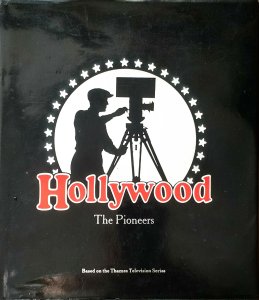 Hollywood.
 A while back I did a post about the
  Lockdown may have finished on December 2nd in the UK but if you live in a tier 3 region, like me, it’s still going on. OK, I understand the need for the lockdown, I know we have to prevent the virus from spreading but that doesn’t stop the whole thing being a pain in the neck. No quiz nights at the pub, no restaurant meals out and so on. Not only that but why does the virus have 2 separate names? Is it Covid 19 or is it Coronavirus? And where does the 19 come from? Was there a Covid 18? Does this mean there have been 18 previous versions of this insidious plague? If so, why have we never heard of them? We, the public, need to know.
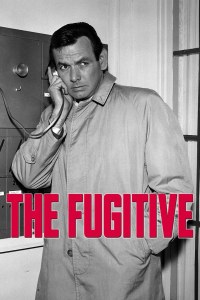 Another old show repeated currently on the CBS justice channel is The Fugitive starring David Janssen as Dr Richard Kimble, falsely accused of the murder of his wife. The show ran for four seasons but as viewer ratings began to fall, the series was cancelled. It was then that the producers hit on what at the time was an unusual idea. Instead of the show just ending, they decided to make an actual finale. Yes, they would wrap up the story of Kimble’s wife’s murder. Kimble had been searching for the supposed one-armed man he had seen leaving the murder scene for the past four seasons, now he would finally find him!
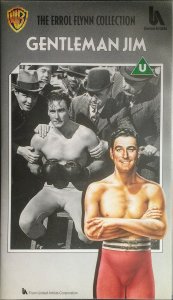 My brother and I usually go out into Manchester every few weeks. We get something to eat and have a few beers and a good natter. It’s always nice to visit our old haunts in Manchester and to find new ones. There always seems to be a new venue popping up and the only flip side to new venues in Manchester seems to be the extraordinary prices they like to charge for food and drink. Maybe, being the fully paid up tightwad that I am, I should stick to the old, less trendy and cheaper places that I know.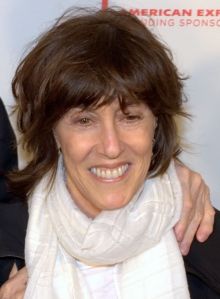
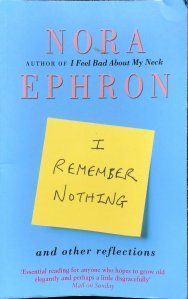 After watching the documentary film I felt even more determined to find out more about Nora so I went to abebooks on the internet and after some research ordered a copy of I Remember Nothing, a book by Nora that seemed to be a memoir. The book starts out as a sort of memoir, telling humorous stories about this and that, and her life without really giving much away. Nora wanted to be a journalist and after working for the Kennedy White House for a short while she joined the staff of the magazine Newsweek. In her book she tells the story of how Newsweek did not hire female writers and offered her a job as a mail girl. She doesn’t appear to have been upset by this despite it being blatantly sexist. She just got on with her job, still determined to be a journalist. In her book Nora makes the whole episode sound quite amusing, especially when she later writes a parody column during a newspaper strike and as a result gets invited to write for the New York Post. Over on Wikipedia, there is a slightly different story in which Ephron gets involved with a class action lawsuit filed against Newsweek for sexual discrimination.
 When I sat down on my break and flipped open the book, a small cutting fell out. It was a newspaper cutting dated November 14th 1995 from the Daily Express. An Actor Bombs went the headline and went on to tell the story of an actor:
 Today the tree has grown again, this time straight up and I can look forward to one day making apple pies again.
 The first thing to remember about films is this, they are not a public service, they are made to make money. They start life as a business proposition. Producers start by asking would the public want to see this? Would they pay to see this? Suppose we got famous film star Mr X to star opposite film actress Miss X? One sure fire way of making the public want to see something is by making the film again. How can they make it again? By making the sequel! Sequels can be good, they can be bad but sometimes they can be downright ugly . .
 original 1937 version with Janet Gaynor and Fredrick March, the 1976 version with Kris Kristofferson and Barbara Streisand and there was even a 2018 version with Lady Gaga and Bradley Cooper. My favourite is the version from 1954 with Judy Garland and James Mason. What a cracking film! In case you don’t know the story, it’s pretty simple, famous film star on the way out helps unknown star who is on the way up.
