How to deal with Laptop Failure and the Rules of Writing

quotescover-JPG-23Take a look at the picture just below. Not a particularly outstanding picture I know but that house is the one where I grew up. I took the picture a while ago after a sort of nostalgic drive around the old neighbourhood. Yes, the house with the white door, that’s my old home. It’s changed a bit since I lived there. The privet hedge has gone and the car space is new. One amazing thing I found out on that visit is that the walk to my old junior school, which seemed to be a heck of a walk as I remember it; surely at least a thirty minute walk, was actually more of a ten minute walk: Well, it was a long time since I walked to my junior school. I stopped in the road, took my picture, became lost in thought for a moment as a thousand memories crowded my mind, then drove off.

14nuffieldThose memories and other ones always come back every time I look at that picture. I happened to be looking at it because my new laptop finally arrived and all my files had been moved over by the guys in the computer shop and I was just checking through them. It’s been over a week since my trusty old laptop overheated and expired and I’ve missed it. I’ve not been separated from my e-mails because I have a tablet, actually a Blackberry Playbook which is good but there’s a lot I just can’t do on a pad. Writing is difficult; in fact, it’s not unlike writing a text on a mobile phone and there’s no way I could write a blog post using it.

It was quite a shock, my laptop failing as most of my digital life is stored there. Luckily I have a portable drive on which I store my files although I mostly save completed works; fully edited videos, fully written blogs, that sort of thing. The half-finished ones, and believe me I have plenty; half-finished scripts, fragments of poems, ideas for blog posts; they were all there on the hard drive of that old laptop.

I felt a little like Carrie in Sex and the City. Remember that episode when Carrie’s laptop –an apple mac actually- conks out? Her boyfriend Aiden vainly hits the control alt and delete keys and makes things worse and Carrie, a writer with a column in a New York newspaper had lost all her work. Now I know how she felt.

Just looking at the clip above brought it all back. I was just as wound up as Carrie. My laptop couldn’t be repaired but not long ago I’d picked up a laptop that had a broken screen at a car boot sale. It was a sort of impulse buy but at least the computer guys could fix it and transfer my data over. I’d had the other laptop four years and it lasted longer than my previous two laptops. Wonder how long laptop number four will last?

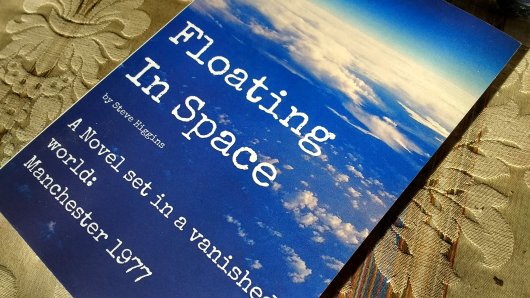
One more connection with that picture and it’s to do with writing. Creative writing. I subscribe to a lot of blogs and groups and on Facebook there’s this writer’s group I’m a member of and members are always, naturally, posting stuff about writing. One post I read recently was ‘never start a novel off with the beginning of a day.’ Why the heck not I thought? It seems to me a pretty normal way to start a novel: The hero wakes up and the writer describes the surroundings and introduces the characters naturally as we meet them and so on. In fact, my novel, Floating In Space, starts off in exactly that way with my main character, Stuart Hill, waking up and getting ready for work.

Another thing you see on this writers’ page are graphics. You’ve probably seen the sort of thing I mean all over the internet. This particular one was about rules of writing. Rules? What rules? Well it said that if you’re describing something, some incident, your description shouldn’t last longer than the actual event! Now that just sounds bonkers to me on a whole lot of levels. Where did the writer get that information? Who decided on that ‘rule’? The only rules that I stick to as a writer are the rules of grammar, and believe me, a lot of the time, either accidentally or on purpose, I bend those rules too! One more thing; did Dickens and F Scott Fitzgerald and Hemingway and all the other great authors adhere to these ‘rules’? Did they even know about them? I doubt it!

Anyway, I decided to comment on this graphic. I said that it didn’t matter whether the real event was long or short-lived, it’s the importance of the event to the narrative that matters, and that all depends on the author. The person who posted the item replied by adding a comment that included a link to a police report that showed that when shocking events happen, people don’t always take much in. Anyway, what that meant I don’t know so I added another comment about how the writer should take control of the reader and make events either important or unimportant depending entirely on his vision of the novel.

Straight away another comment came back at me saying it was the reader in charge, not the writer. Well, of course the reader is in charge as to whether he reads your book or not, but as soon as he does decide to read, it’s the author who is in control, it’s the author who shows the reader what he wants to show him, hides what he wants to hide, and reveals in whatever way he wants, whatever he wants to reveal. Anyway this annoyed the other guy no end and a sort of internet argument began. The sort of thing you’ve seen before probably. After a while I stepped back before things got nasty. I do hate those internet arguments you see in the comments section of posts and anyway, I’m convinced I am right and the other guy was a complete plonker. Tempted as I was to say that on the post, I’m happy to say I resisted!

That of course brings me back to the picture of my old home. The photo only took a moment to take but it’s nice to think about that house and all the happy times I had there. Not only that, my Grandma and Grandad lived there before us. They moved to Prestatyn in Wales and my Mum and Dad took over the house when they were first married. I could go on and on about that house: about how I learned to ride a two-wheeler bike just in front of it: About the soap box cart I made with my friends with some wood and parts of an old pram and how we careered through the streets with it. One time my friend Gary Chapman was given a set of walkie talkies by his dad for Christmas and he and I used to chat to each other at night as our houses were pretty close together. I could tell you much more but the thing is, if I did go on and on I’d go over my allotted time.

Dear me, can’t go breaking the writing rules can we?


If you liked this book, why not try my novel, Floating In Space, set in Manchester in 1977? Click the links at the top of the page for more information or click the image below to go straight to amazon.

 

TV Movies and a Serious Case of Deja Vu!

children-403582_1920I don’t know about you but there are certain things I hang on to in life. One of those things are my diaries. The other day, looking through my schoolboy diary from 1973 I noticed that one entry mentions that I watched a film called The Inspector with Stephen Boyd. It was a movie made in 1962 and it’s about a jewish girl trying to get into Palestine. It’s not a classic movie but I’ve always liked Stephen Boyd and he was rather good in movies like Fantastic Voyage where a mini submarine and her crew were shrunk to minute size and then injected into a man’s body. Have you ever seen The Inspector? I doubt very much if you have, in fact I can’t remember ever seeing that movie again on TV. There are plenty of movies I have seen, some of them over and over though, here are a few of them;

The Great Escape. Ok I love it, I really do but I know the script off by heart I’ve seen it that many times!

Great Expectations. David Lean’s cinematic version of Dicken’s novel. Great movie but I’m fed up of seeing it on Film 4!

The Man In The Iron Mask! Seen this so many times with Richard Chamberlain and Patrick McGoohan and of course it was re made in 1998 with Leonardo Di Caprio but what about showing the 1952 version with Louis Hayward? Now that is a movie I’d love to see again.

Goldfinger, or any of the Bond films. As much as I love James Bond 007, most of the films, especially the older ones, I have seen again and again so I need a break from them. Strangely, I have a few of my favourite Bonds on DVD. I don’t think I ever watch them but I’m so familiar with the Bonds that if I come home from work and one is on TV and I’ve missed the first thirty minutes – well, it doesn’t matter!

So who is it at the BBC or Channel 4 or Sky who decides what films we can see and why is it that some are shown over and over and some only get aired rarely? What happens in the world of the TV scheduler? I really hope those guys are reading this blog because there are movies out there I want to see and a whole bunch of ones, like those above that I am fed up of seeing! Anway, here are a few recommendations for any TV schedulers reading!

CBubblesCharlie Bubbles. This is a great film penned by northern writer Shelagh Delaney and it’s about a (surprise) northern writer played by Albert Finney who journeys back up north from London to see his son. It’s a well observed and fascinating film and for a northerner like me it’s great to see the Manchester of the 1960’s up there on the movie screen. Writer Shelagh Delaney shot to fame in the sixties when she wrote her play ‘A Taste Of Honey’ and had it accepted and performed by Joan Littlewood’s theatre workshop. There’s a rather telling line in the movie when a waiter played by Joe Gladwin, (an actor familiar to UK TV audiences of the 70’s), asks Charlie, played by Finney, “are you still working or do you just do the writing?” Somehow I can imagine that line came from Delaney’s personal experience! Interestingly, this movie marked Albert Finney’s debut as a director. Have you seen the movie? I don’t think you have unless maybe you’ve sourced the DVD version.

In my large but slightly redundant VHS video box I’ve a copy of a wonderful film starring Alec Guinness called ‘Last Holiday’. Guinness plays a pleasant mild mannered salesman called George Bird who has no friends or family and finds out he only has a few weeks to live.

He decides to spend the time he has left by going to a rather posh residential hotel where the residents find him a sort of enigma. His star rises here as he becomes involved with the residents and staff and people start to wonder about him. Who is he? Is he rich? Lucrative job offers come his way as well as love but only one person knows his secret, a member of staff that he confides in.

In the end Mr Bird finds out he was wrongly diagnosed but the film ends on a sad note when he is killed in a car crash. Penned by author J.B.Priestley, it’s another wonderful British picture full of excellent performances with a whiff of sadness and poignancy about it. Have you seen it on TV? Well, not recently because the last time I have noticed it broadcast was in the 1980’s when I taped it with my trusty VHS video recorder. What happens to classic movies like this and why are they rarely seen on British TV? I wish I knew but I’d love to see this movie again.

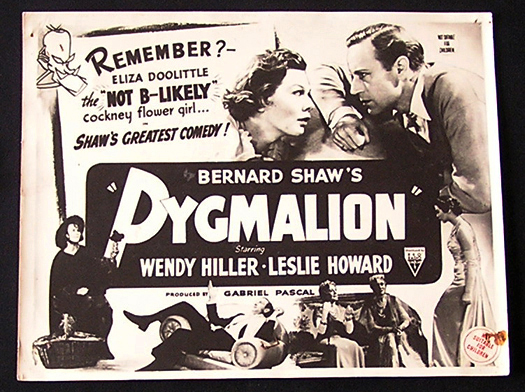
Pygmalion Movie Poster

Pygmalion. You’ve probably seen the movie ‘My Fair Lady’ with Rex Harrison as Professor Higgins and Audrey Hepburn as Eliza Doolittle but I’d be surprised if you’ve seen this, the original, non-musical version, on TV. Leslie Howard plays Higgins and Wendy Hiller plays Eliza. Hiller is much more believable as Eliza, no disrespect to Audrey Hepburn and Howard is a bright, eccentric Higgins. I’ve never seen this version on TV at all, in fact I picked up the movie on one those free newspaper DVDs. What is interesting from researching the film on the internet is that a controversial (at the time) line was included in the film: Eliza saying ‘Not Bloody Likely!’ This made Wendy Hiller the first person ever to swear in a British film. Dear me, how times change!

Robinson Crusoe on Mars. Sounds a bit mad doesn’t it, a sort of 1950’s B picture. In fact this was shot in colour in 1964 and starred an actor called Paul Mantee who appears in many US TV series of the 1970’s and 1980’s. It pretty much follows the original story of Robinson Crusoe only it’s about an astronaut who crash lands on Mars. He thinks he’s had it but finds that certain rocks contain oxygen which is released when they are heated so he is able to replenish his oxygen supplies. He even finds an alien ‘Friday’ on Mars who has escaped from an alien slave camp. Sounds a little far-fetched I know but it was actually a pretty good movie. I remember watching it on TV on a cold weekday afternoon in the early eighties and it certainly warmed me up. Since then I have never seen it on British TV but it’s well worth a search on e-bay for the DVD version. The day they show it again on TV I’ll be parked up on my favourite armchair ready to enjoy! Come on TV schedulers, get your act together!

Which movies would you like to see on the small screen?


If you liked this post, then why not try my book, ‘Floating In Space’? Click the links at the top of the page for more information.

Why I love Casablanca (and why you should too!)

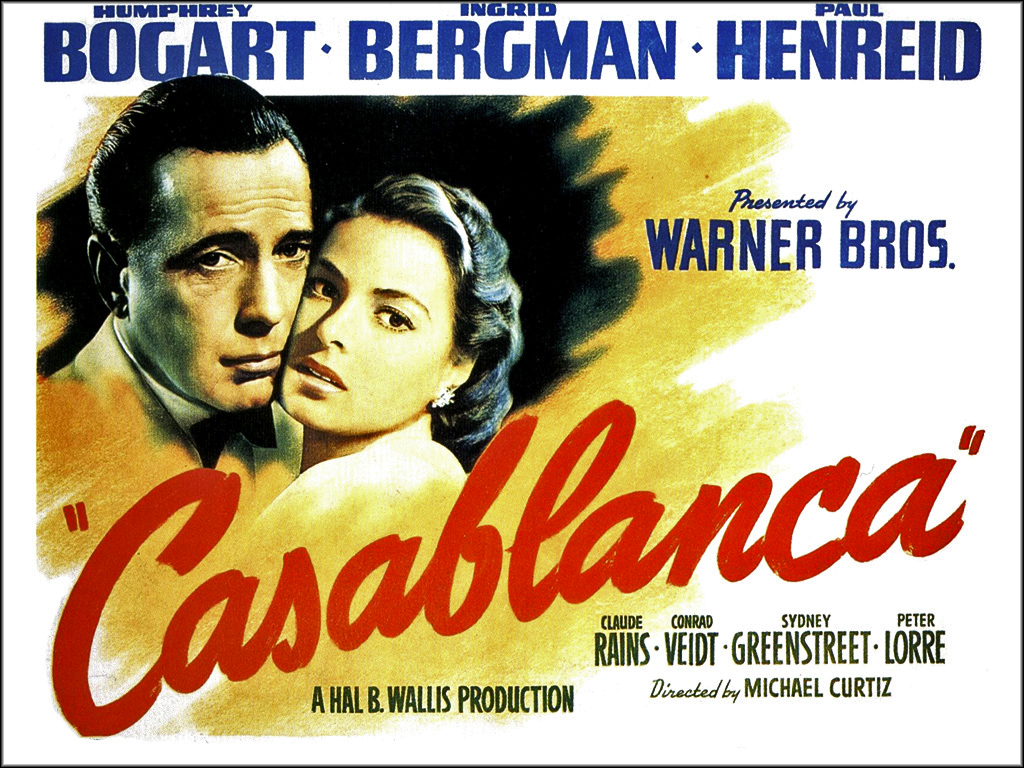
casablancalead1After a hard shift at work, it’s nice to go home, pour yourself a drink and settle down by the TV to watch something while you unwind. Now despite these days of multiple TV channels it’s not always easy to find something worth watching. I remember the days when there were only three channels but strangely, even though we have have undergone the digital revolution and have cable and satellite channels, sometimes we find ourselves clicking the remote vainly in search of something that is even remotely interesting. Happily, over there in the DVD cupboard, I have plenty of things I enjoy watching. One of those is my much watched DVD of Casablanca, the classic Hollywood movie. I can watch it time after time and there is so much to enjoy in the movie; the wonderful Humphrey Bogart, The suave Paul Henreid, the rotund Sydney Greenstreet, the villainous Conrad Veidt, the slimy Peter Lorre and my favourite character in the film, Claude Rains, not to mention the lovely Ingrid Bergman.

Casablanca was only Bergman’s fifth Hollywood movie. She had been brought over from Sweden by producer David O Selznik to star in the English language version of Intermezzo, a successful Swedish film. She spoke no English but learned quickly. Ingrid expected to make the movie and then return to her career in Sweden, so much so that her husband did not even come to Hollywood with her. However, Ingrid made more movies in Hollywood, then came Casablanca; a movie that was a product of the Hollywood studio system. It was filmed at the Warner Brothers studios in Burbank with one location shoot, a short sequence at Van Nuys airport. Shot in 1942, Casablanca made Ingrid a star and remains probably her best known role. Released in the USA at the end of 1942 and internationally in 1943, the film won three Oscars. Its reputation has grown over time, eventually becoming known as one of the all-time classic motion pictures. Berman herself once commented that the film had a life of its own. The great performances, the memorable lines and the film’s music all contributed to the public affection for the movie. There’s a great sequence in When Harry Met Sally, where Meg Ryan and Billy Crystal discuss the ending and Sally, the Meg Ryan character, asserts that Ingrid Bergman would rather leave with Henreid and be the first lady of Czechoslovakia than stay with a man who runs a bar in Casablanca.

I’ve always liked Claude Rains and I like the way it becomes apparent that his character is not a Nazi or even a Nazi sympathiser, but someone who is something of a rascal, who uses his position for his own ends but also someone who chooses his own friends and his own path, as he does at the end of the movie. My favourite sequence is where he closes down Rick’s bar at the request of Conrad Veidt’s Nazi officer. Humphrey Bogart complains, “How can you close me up? On what grounds?” Rains replies, “Rick, I’m shocked to learn there is gambling on the premises!”

Just then the croupier arrives with some money, “Sir, your winnings!”

Ingrid Bergman became a great Hollywood star and perhaps was associated too much in the eyes of the public with her role of Joan of Arc, because when she fell from Grace, she fell big style.

Bergman was fascinated with the work of Italian director Roberto Rossellini and in 1949 she wrote to him expressing a wish to work in one of his pictures. He cast her in his film ‘Stromboli’ and during the production Bergman fell in love with him, had an affair and became pregnant with his son. This led to a huge scandal in the USA and a divorce and custody battle with her Swedish husband Petter Lindstrom. She eventually married Rossellini and had more children including future actress Isabella Rossellini. She was never reconciled with her former husband but Hollywood welcomed her back in 1956 when she starred in the movie Anastasia for which she won an Oscar.

Humphrey Bogart went on to make many classic movies. He died from cancer in 1957 aged 57. He had been a heavy smoker and drinker.

Claude Rains died in 1967. His last film appearances were in ‘Laurence of Arabia‘ and the ‘The Greatest Story Ever Told.’

Conrad Veidt fled the terrors of Nazi Germany in 1933. He was a fervent anti-Nazi donating his personal fortune to the British government to help in the war against Nazi Germany. He died in 1943 of a heart attack aged only 43.

Sydney Greenstreet died in 1954. He was 62 when his movie career began. He made his debut on the stage in 1902.

Hungarian born Peter Lorre was another refugee from Hitler’s Germany. He appeared in the German movie ‘M’ directed by Fritz Lang but fled Germany in 1933. He died in 1964 aged 59.

Paul Henreid came from an aristocratic background and was born in Trieste, then part of the Austrian-Hungarian empire in 1908. He has many credits to his name as an actor and director. He died in 1992.

The movie was directed by Fritz Lang, another refugee from Europe. Lang had a lifetime of problems with the English language, so much so that David Niven named his book of Hollywood reminiscences after one of his sayings. When he wanted a posse of riderless horses to come into the scene he shouted ‘bring on the empty horses!’


What to do next: Here are a few options.

Share this post on your favourite social media!

Hit the Subscribe button. Never miss another post!

Listen to my podcast Click here.

Buy the book! Click here to purchase my new poetry anthology.

Click here to visit Amazon and download Floating in Space to your Kindle or order the paperback version.

my novel


A Sci-Fi DVD and an Incredible Moment of Self Discovery

Something incredible happened to me this week: I found out I wasn’t the oddball nerd I thought I was in my youth, or at least I was but I found out there were others like me, I wasn’t alone and the nerdy things I used to do were done by many others!

So what nerdy things did I do? Well, here’s one example. In the seventies, before the age of the video recorder I had a small audio cassette recorder and did all sorts of things with it as a teenager. I wrote a number of comedy plays which my poor brother was roped into and we performed these little comedy sketches to the microphone. I did enjoy making the sound effects. One that comes to mind was my brother being sick which involved him making a retching sound then pouring a bucket of water down the toilet! I also used to record some of my favourite radio and TV programmes. I bought a second hand radio cassette recorder which enabled me to record the top twenty every week (dud records edited out of course) but TV presented another challenge. I would record a show using the microphone placed near to the TV speaker. Trial and error found the correct spot; not too close, not too far away and my family were sworn to silence during the recordings, not that that would stop my brother, or even my dad making some small comment towards the end of the show!

Photo0033So, how did this realisation that I was not alone in my nerdiness – or even a nerd at all- come about?
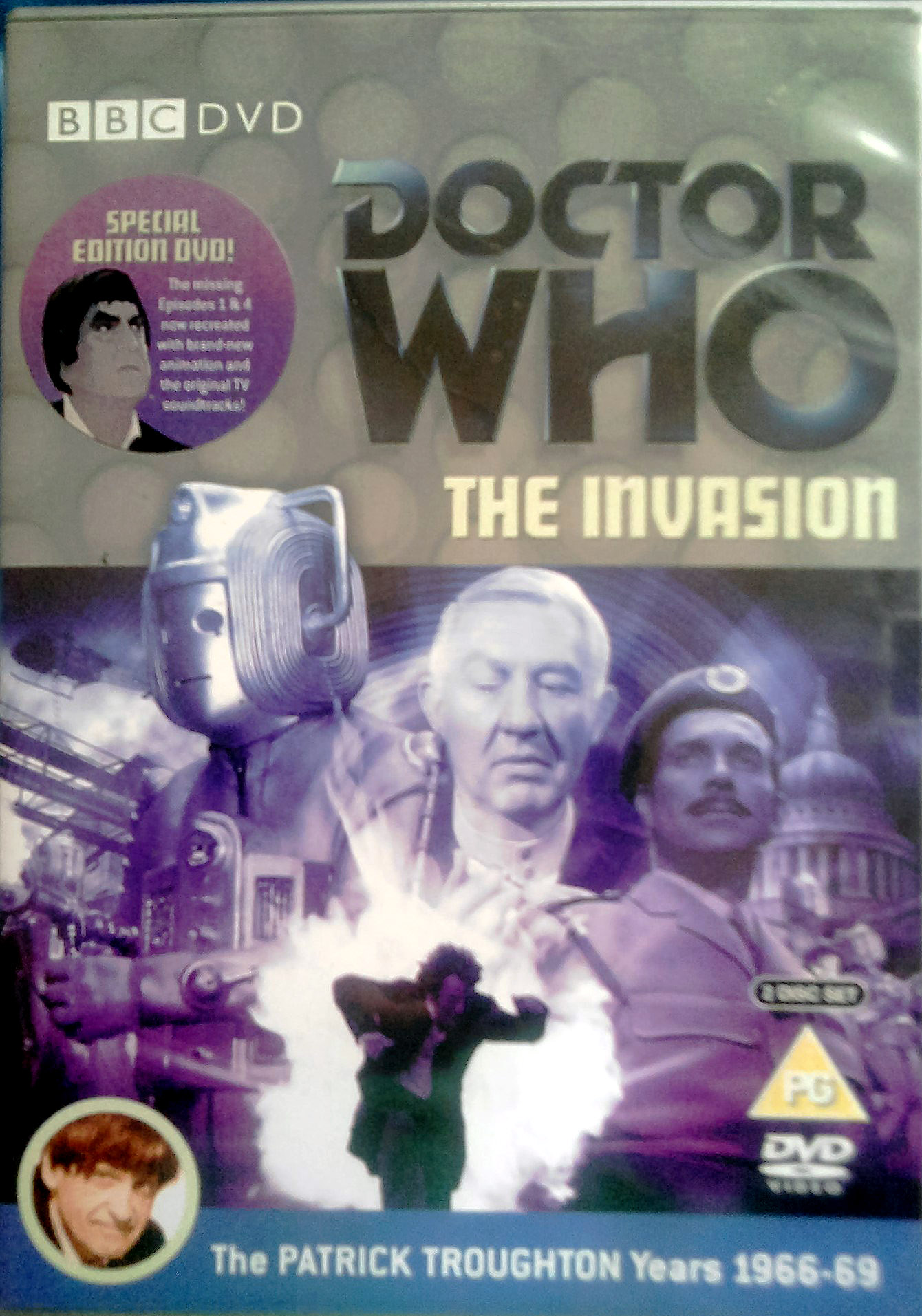
This realisation came about because of a gift. My brother, I might add, who is not a man known for his giving of gifts, had been given some DVDs that were of no interest to him so he passed them to me. They were BBC DVDs of the long running TV series, Doctor Who. Now I have been a Doctor Who fan for many years. I faintly remember the original Doctor Who, the grumpy bad tempered chap played by William Hartnell. The very first episode of Doctor Who, ‘An Unearthly Child’, is one of the highlights of my DVD collection and interestingly it was broadcast on the 22nd November 1963, the day of the John F Kennedy assassination. Because of the tragedy the BBC re ran the episode the following week which is perhaps why the original has survived. The thing is, back in the 60s when digital recordings and home video were just a gleam in some inventor’s eye, the archives at the BBC were getting a little crammed so what did they decide to do about it? Two things, One; they would wipe the tapes and reuse them for other shows and two, they would simply get rid of them!

Crazy, but of course, the value of these old TV shows was not understood then and many hours of classic TV was lost in this way. Not just Doctor Who but Not Only But Also, the Peter Cook and Dudley Moore shows, Doomwatch, Hancock and many others, all lost.

Anyway, one of the DVDs my brother gave me was ‘the Invasion’ from 1968 with the second Doctor Who, Patrick Troughton. The Invasion was made up of eight half hour shows and two of the eight had been lost or junked. Now many TV shows of the time, recorded on video were copied onto film by a telecine machine so the tape could be reused and the show broadcast again or sent to other parts of the world for broadcasting on foreign networks such as South Africa, Canada and so on. Many of these telecine recordings survive. Some have even known to have been rescued from tips or skips by BBC employees and even members of the public. Recently a lost episode of Doctor Who was found in Nigeria!

Anyway, here’s the punch line to this whole blog: When the BBC guys decided to reconstruct the missing episodes guess where they got the audio from? From audio recordings made by members of the public! Yes, Doctor Who fans who as youngsters recorded their favourite shows on audio cassettes, just as I did by placing  a microphone by the TV. So there we have it, conclusive proof that I wasn’t a nerd after all, or at least the nerdy activities of my youth were the same nerdy activities that other youngsters were involved in too!


If you enjoyed this post, why not try my book? Click the links at the top of the page to buy or for more information!


5 Incredible Trigger Points to my Personal Timeline!

quotescover-JPG-44Time moves on as we go about our daily lives but there are always connections back to the past. The things we see, the things we hear, in fact anything we come across, even something as vague as a scent can be a trigger point that takes us back to a time and place we loved, or sadly, perhaps even hated. Memories are intrinsic to our personal selves, they are what makes us who we are.

I don’t know if you remember that TV series from a long time back with James Burke. It was called Connections and it showed how unrelated events from the past were connected to things in the present. Anyway, here’s my take on some personal connections to the past.

1.
Some time ago, and I’m going back a few years because this incident took place in Woolworths in St Annes and Woolworths, that shop that was always there in my youth went bankrupt and disappeared a few years ago. Anyway, I have always been one for skimming through records and CDs, especially when the word ‘sale’ can be seen. In Woolworths I picked up a compilation CD. It had some really nice tracks and a few I’d never heard of but I chose it particularly because of one track, ‘Horse with no name’ by America. I’ve always loved that song and I don’t have a copy of it so I bought the CD. Later when I had got home and played the album I was surprised to find another track that I hadn’t spotted earlier, it was Desiderata, a poem by Max Ehrman made into a pop song, of sorts, by an American guy called Les Crane.
Now not only is that poem one of my favourites but so is the musical version. It was played a lot at school by our headmaster in the morning services and as soon as I heard it again it brought memories of those long ago schooldays flooding back to me: The registrations, the morning assembly, the prayers. Back in the late sixties a lot of those morning assemblies were about Vietnam and how our headmaster, Mr Trickett wove his morning address from Vietnam to the Desiderata, I do not know but that musical version was something I loved and finding it again on a CD was like getting part of my youth back.

2.
I’ve related this story in another blog but this is a great connection so I’ll tell it quickly again. In 1992 I decided to have a last stab at my ambition to break into the TV and film world. I enrolled on a video production course in Manchester. It was only a short course and it was aimed at unemployed people which at the time, I was. Anyway, I had to make a presentation about TV and film and why I wanted to work in video and happily I was accepted. On the course we were split into small groups of three and were tasked to make a short film. After some discussion with my new colleagues we chose as our subject taxi drivers in Manchester. We made a quick outline of what to do, what to film and so on and after familiarisation with our fairly bulky camera and various training modules we went off to make our film. It’s not easy to make a film with two other people: All three of us all had our own ideas about the direction of the film, how to edit it together and so on but we discussed everything, tried to work each other’s viewpoints into the video and eventually came up with a pretty good rough cut. At this point we had to present the cut to the assembled video school and take questions and comments from the audience which was something of an ordeal but we survived and went on to fine tune our cut.
When the video was finished I tried to get TV companies interested in making a full length version for TV but without success, in fact you can read how I fared with Channel 4 here but I still have the video and what is so wonderful about the digital world is that now I’ve uploaded it to youtube, everyone can take a look at our film about taxi drivers in Manchester in the early nineties. In the time before the internet, my tape would be languishing in a cupboard with only ever having been seen by a few friends. Now the video is on the internet it’s my very own connection back to the nineties!

3.
While we were on holiday last week in the Cher region of France we came across a marker by the road. There are many such markers by French villages telling us about battles and incidents of the first and second world wars. We had actually stopped to consult our map as we wandered down a quiet country lane when we saw the plaque. It was showing us that the dividing line between occupied and unoccupied France in the Second World War was here. Sadly, I didn’t have my camera on hand to snap a picture and I can’t even really tell you where we were, except we were close to the village of Germigny L’Exempt. Marshall Petain was the leader of unoccupied France during World War 2 and General de Gaulle the leader of the free French forces. When Nazi Germany was defeated France was reunited under the provisional government of De Gaulle. Petain was tried as a traitor and sentenced to life imprisonment. He died in 1951 and is buried at the Cimetière communal de Port-Joinville on the Île d’Yeu, a small island off the French Atlantic coast where he served his sentence. I wonder what Petain himself thought of the situation, did he think of himself as a traitor or was he doing what he thought was right under the circumstances? Anyway, there it was, a quick stop on a country lane to check the map and a small connection with the 1940’s.
4.
Visiting historic places and sites is a great way of connecting to the past. As I have said, there are many sites in France relating to the two world wars. One that we visited in northern France some years ago was a great concrete structure where the invading Nazis were planning to fire V1 and V2 rockets at the UK. Happily, daring raids by the RAF made this impossible but the structure is still there today. As you stand and stare as a tourist today, you can only imagine the heroism of all those who fought for a free world in the past.

Eperleques, France

Eperleque, France

5.
To finish with, another more personal connection. When I lived in Didsbury, back in the mid-eighties, I had a much shorter commute to work than I do now. I worked in Stockport and it took me about fifteen minutes or less to get to work, unlike the forty five minutes of motorway driving it takes me now. Back then I was still a great record collector spending a lot of my free time flipping through vinyl singles in record shops and making up my own cassette tapes to play in my car. I had a favourite tape back then and it was a compilation of TV themes, dialogue from movies, and bits and bobs I had recorded from the radio world. Not so long ago I bought myself some software that lets you record analogue sound from records and tapes and convert them to a digital format and one of the first things I converted was that favourite tape from the eighties. I burned the compilation to a CD and now, here in 2015, I’m travelling into work listening to the same favourites I used to play in my car all those years ago!


Hope you enjoyed this post! If you did why not try my book? Available in paperback or Kindle versions from Amazon! Click the links at the top of the page for more information!


Reflections on a French Holiday.

refelctionsAs I come towards the end of my French holiday it’s perhaps a good time to sit and reflect about France and the French people. I do love the quiet of the French countryside. It seems to me that in the hustle and bustle of the small islands that make up the United Kingdom it is harder than ever to find a little peace and quiet. Perhaps up there in the Scottish Highlands peace can be found, or even in the Lake District but in places like urban Manchester, silence is hard to find.

The French departments, similar I suppose to English counties, date from Napoleonic times and there are ninety six departments in France today which are further subdivided into cantons. Here in the Cher region, to the south of Paris are some lovely rural communities. Still and quiet villages, almost haunting in their silence can be found everywhere.

What I’ve always liked in France is the simple tabac. As the name suggests it’s a place where you can get your tobacco and in some places it is also combined with a presse so you can also pick up a newspaper. One thing you will always find in the tabac though is a bar, similar to the vault of an old English pub where French men chat and drink coffee, sip wine or a pastis. In the village where Liz and I are staying, Germigny l’Exempt, there is a small sell-everything shop, a combination epicerie, depot de pain (the lady owner explained carefully that they are not a boulangerie, but a pain depot) and of course, a bar! An interesting combination. You can imagine the situation if a similar establishment was available in England: The wife happens to mention to the husband, sitting in the lounge watching sport that they are a little short on veggies for the coming Sunday dinner. The husband jumps up; “need some vegetables love? Well, I’ll just nip down to the local shop and get you some!” And have a few beers while he’s there no doubt! Frenchmen, at least those of the rural Cher countryside, are clearly made differently here because I’ve yet to see anyone in that bar!

Last Friday night, Liz and I went down to a nearby town, La Guerche sur l’Aubois, and had a meal out. The only place open appeared to be a rather nice looking pizza place so we went in. There were only two other diners and at the small bar –this was Friday evening remember- were two or three French guys chatting. We had our pizza, had a beer at the bar and by nine pm they were ushering us out! What do the French do ‘au weekend’? I don’t know but it’s certainly not a beer and a pizza! One really nice thing about that bar though, every time a new customer came in, he said hello to all at the bar and shook hands with everyone in turn, including Liz and I, two English strangers. As for eating out though, that is something the rural French do of a lunchtime, not an evening. Shops close in France twelve till two while hungry Frenchmen go to the nearest bistro or restaurant for lunch.

Plat du jour

Plat du jour

At every restaurant or bar serving food you will always see a sign for the ‘plat du jour’ or the dish of the day and one thing I love about French restaurants is their menu deals. You might see something like, for instance, a starter, the plat du jour, and then fromage (cheese) to finish. I do so much prefer small courses to one big meal!

The great thing about France is the wine and my personal rule about French wine is this –buy the cheapest, it’s always the best but then, I like my wine cheap and cheerful. In Intermarche, the Asda of France, you can buy a ten litre box of merlot for about 17 euros, that’s about £13 in UK money, an absolute bargain. Forget expensive French wines, a nice quaffable French red does it for me every time!

Another thing about the French, especially regarding drink. You’d think that France, the country that created brandy would be a haven of cheap brandy, after all, this is where the drink is made! Sadly that isn’t the case, in fact, brandy in France always looks to me to be pretty expensive. However when you come to whisky, a product of Great Britain, there seems to be an incredibly vast choice, far bigger than you would find in the UK. Perhaps the French are a nation of secret whisky drinkers!

Whisky in a french supermarket -and this was only one section!

Whisky in a french supermarket -and this was only one section!

One final observation about the French. We’ve spent many a weekend on this holiday visiting brocantes and vide greniers, flea markets and car boot sales to you and we see so many stalls selling beer bottle tops. Here is a quick flash for any frenchman selling bottle tops; No one is going to buy them! Well, not me at least!

Anyway, as you the reader reads this blog we’ll have left the Cher region and will be motoring serenely across to the Loire for a few days before making our way back to the UK and home. One final reflection about holidays. Why is it that I’ve packed so many things for this trip and used so few? All my clothes were worked out in advance, polo shirts for the fetes and brocontes, smart shorts for being seen in public and scruffy shorts for private use. I also brought along both jeans and trousers, which I have worn exactly once each. Despite all this planning and thought, the fact of the matter is that I have spent most of this holiday in the same scruffy old vest and the same scruffy old pair of shorts. If I’d really thought about it, I could have significantly reduced the amount of clothing and saved some space for . . . more cheap wine!


If you enjoyed this post, why not try my book? Click the links at the top of the page for more information or Click here to buy!

My Holiday Book Bag

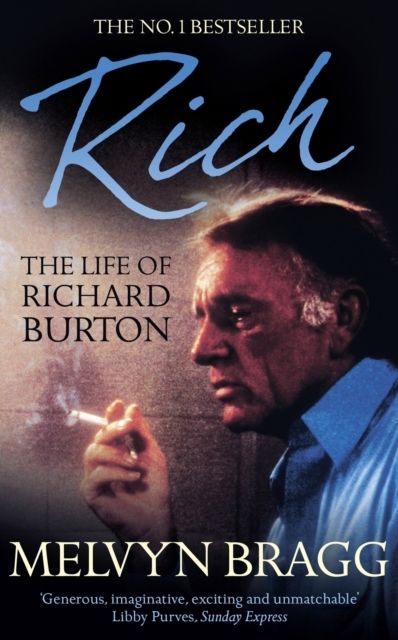
richA long time ago I was reading a biography about Richard Burton, in fact it must have been ‘Rich,’ the biography by Melvyn Bragg. Bragg used Burton’s own diaries in his work and wrote, among other things, about Burton’s love of books and when Burton went on holiday he looked forward with delight to the contents of his ‘book bag.’ I know it’s a pretty tenuous link but one thing I have in common with Richard Burton is a love of books and when I go on holiday, one of the delights of lying under a warm sun on my sun bed is a good undisturbed read. OK, I read a lot at home and on my lunch breaks at work but it’s a few minutes here and a few minutes there and whenever I get interrupted it kind of breaks the flow. Some books, as we all know, are just made for a really long, uninterrupted read.

I’m currently on holiday in France and I thought I might share the contents of my ‘book bag’ with you. I’m a really big second hand book buyer and I buy my books from many sources. Second hand book shops, car boot sales, charity shops and of course, the internet. Even the occasional book comes my way as a gift. Anyway, without further ado, here are my holiday books:

Holiday Books

Holiday Books

Muhammad Ali:  His Life and Times by Thomas Hauser

This is an interesting biography and Muhammad Ali, once known as Cassius Clay has led an eventful life. The text is based on numerous interviews made by the author with Ali, his friends, and others involved in his life. The early part of the book dealing with Ali’s career in boxing is good but the book falters a little with the subject’s later life. In fact, I’m not sure what Ali does in his later life apart from travel and talk about the Koran. The author also tries to put Ali’s sporting achievements in context by comparing him with other greats of American sport but apart from Joe DiMaggio, I’d never heard of them. Perhaps that’s a telling point, indicating that Ali’s fame is not just boxing related. George Foreman and Joe Frazier may not be that famous outside of boxing but Ali certainly is. Having said that I’m not sure I’d be interested in Ali at all if not for my Dad. My Dad was a great boxing fan and I was brought up with tales of all the great boxers like Joe Louis, Sonny Liston and so on. His favourite boxer was Rocky Marciano and he disliked Ali with a passion and always, always referred to him as Cassius Clay. From reading this book, that was a feeling many boxing fans had in common and a lot of that dislike for Ali came from his refusal to join the army and fight in Vietnam which resulted in the loss of his world heavyweight crown and his boxing licence. Years later, when an anti-Vietnam focus had taken precedence in the US, people began to view Ali in a more favourable light and so began his rise to popularity. Ali regained his boxing crown as heavyweight champion of the world and has become the most famous boxer, and perhaps even the most famous sportsman of the 20th century.

Seven Pillars of Wisdom by T E Laurence.

I read this book many years ago but when I saw it again, lying there all forlorn on the shelf of a charity shop, well, I bought it for a few pennies and here it is in my holiday book bag. If you have ever seen the film ‘Laurence of Arabia’ then you will know what this book is about; the exploits of T E Laurence in Arabia during the First World War. Laurence set out to write a classic of literature and not necessarily a history book and to a great extent he succeeded but not without a lot of controversy along the way. After the war an American journalist called Lowell Thomas created a lecture and slide show featuring the exploits in the desert of Laurence and his irregular Arab army. The public were fascinated and the show made Laurence into a household name. Despite going on to become a Colonel, Laurence later resigned from the army and joined the RAF as an aircraftsman under a pseudonym. He seemed to be a man who wanted to court the spotlight and at the same time avoid it. He was killed in 1935 in a motorcycle accident as he swerved to avoid two boys on bicycles. The movie Laurence of Arabia opens with this same incident.

An Autobiography by M K Ghandi.

I’m looking forward to reading this, the thoughts of Ghandi, a man who changed an entire nation whilst embracing the values of non-violence.

No Bed of Roses by Joan Fontaine.

I bought this book from the internet and probably paid more in postage than the actual price of the book. That can be a problem when buying books over the net, especially heavy hard backed ones but to be fair I only paid three or four pounds in total. This autobiography by Hollywood actress Joan Fontaine was a fairly interesting read which took me through my first week of sunbathing in the Central region of France but I have to say, as much as I like Joan the Hollywood actress, I didn’t much care for her style of writing or for most of the content. In many ways the book reads like a run through of her old itineraries or diaries and despite working on movies like Rebecca and Suspicion, both directed by Hitchcock, we hear little about the making of those movies. Some things were very surprising like her random adoption of a Peruvian girl who she later fell out with and stopped speaking to and of course, her famous ‘feud’ with sister Olivia De Havilland. All in all not a bad read but I was surprised to find a little dig in the text at David Niven’s two books of Hollywood memoires. David’s books ‘The Moon’s a balloon’ and ‘Bring on the Empty Horses’ are two of the best books of movie reminiscences I have ever read!

The New York Trilogy by Paul Auster.

I’ve not started this book either but you can click on this link for a review. One thing I’ve always found a little funny about books is that the more you want a book and the more you think about it, that book will eventually come to you! I’d read about Paul Auster’s New York trilogy in an internet list of great books. I’d never heard of the book or the writer before but not long afterwards, I spotted a copy at a car boot sale in St Annes! Looking forward to reading this soon, especially as it’s the only novel I have brought on holiday!

Which books are you taking to read on holiday?


If you enjoyed this post, why not try my book, Floating In Space? Click the links at the top of the page for more information.

More Random thoughts from a (French) Sun Lounger

sunloungerlogoI really do love France. I love travelling here, driving down the picturesque country lanes. I love the quiet sleepy villages. Driving is a joy here, even on the major roads. OK, I’m sure that in Paris or any of the other major towns driving is just the usual nightmare that it is in London or Manchester but here in the countryside, driving is just a joy.

What is a little annoying is the French system of signing. I’m talking about traffic signs, directional signs. You follow the signs, for instance on the way here we followed signs for the town of Nevers for a while, then we were looking for a right turn and none appeared. OK one did appear but it was unsigned. After a while we realised we must have missed something, so we turned back and guess what, coming from the other direction the road is signed for Nevers but not from the original direction. Maybe there is someone in the French road sign office thinking ‘Ha! Got those English idiots again!’

On holiday in France Liz and I spend a lot of time at the weekend at vide greniers (car boot sales to you) and brocantes, a sort of antiques/ flea market. It always surprises me how well attended these events are in the French countryside and bad weather does not seem to put people off at all. In the UK the first sign of rain or even dark clouds and it’s ‘get the stuff in the van -we’re off!’ The French are made of sturdier stuff and if it rains, OK, get the covers over the goods and it’s off to the wine tent for some vin rouge and some frites while it clears up. I often wonder though, if there isn’t a fete or vide grenier on, what do French people do? They certainly know how to keep quiet! Read this previous post for a few ideas on what they get up to!

The French have a strong connection with food and in particular bread or ‘le pain’ as they call it here. On arriving at our gite in the french village of Germigny L’Exempt we began to unload the car and numerous neighbours came out to talk and advise us. One French chap came over, said bonjour and proceeded to babble away at a ferocious pace in his native tongue. It took me a full ten minutes before I could stop him and say I didn’t speak french that well. ‘Je ne parle pas bien francais!’ Did that stop him? Well, for a moment, then he began again only at a slightly reduced speed. Did we have bread? If not he had some to spare for this evening but in the morning we had to be at the bakers by twelve otherwise, well various dire consequences were explained, none of which I understood, but of course a Frenchman must have bread.

Here in France it reminds me of the UK twenty years ago. Shops closed on Sundays and bank holidays. Unthinkable isn’t it? Over in Calais they tempt British day trippers over to huge hypermarkets and wine stores selling so called ‘duty free’ merchandise at inflated prices. Stores may be open on Sunday there but here in the countryside that is not the case. Of course the bakeries do open on Sunday morning. After all next to liberty and fraternity it is bread that really matters to the French.

Photo by the author.

Photo by the author.

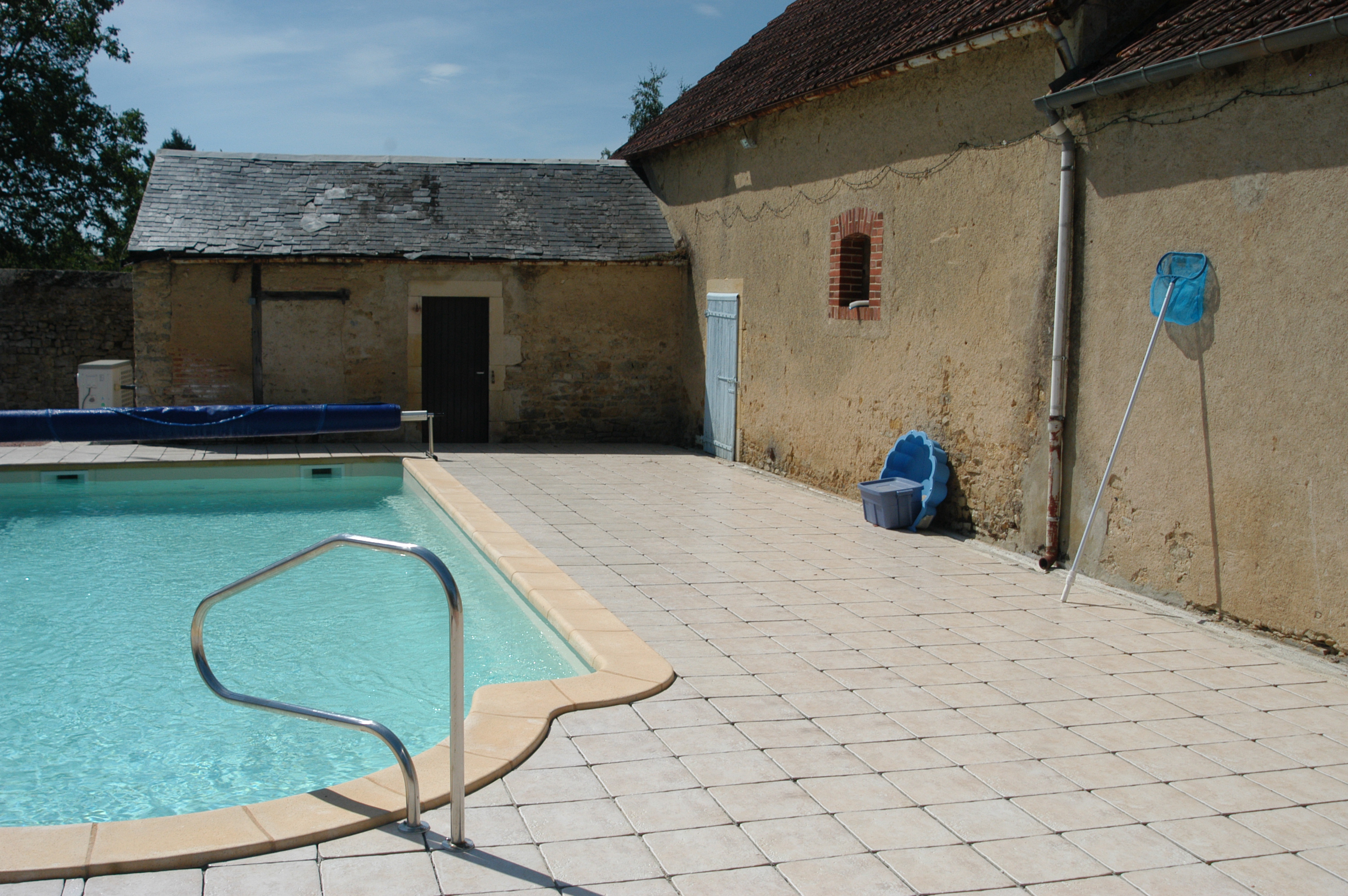
Anyway, one last thought about France. Why is it that whenever I arise from the swimming pool (it’s quite a nice pool, check out the picture) wet and dripping after a welcome cooling dip and looking for my towel, some irritating French fly seems to want to buzz round my head? Just by our gite, there is a road that brings traffic in to our small village. As you approach our holiday home there is a rise and one can see a car rise up and then dip down again as it comes towards us. As I am about to get out of the pool I can just imagine a Frenchman and his son, heading back home with the thought of lunch on their mind. As they crest the small rise the boy looks out at a man rising from a swimming pool and then turns to his father and asks, “Why was that man waving his hands about and doing a dance when he gets out of the pool?”

The father thinks for a moment and then replies, “Il est Anglais!” (He is English!)


If you liked this post then why not try my novel, Floating In Space? Click the links at the top of the page for more information.

10 Annoying Elements of 21st Century Life

9175200216_51b9c5e51a_o

    1. Watching TV. Now this is more of a man thing than anything because women cannot multi task when it comes to TV watching. The art and science of TV watching is and always will be a purely man thing. Picture this: A man arrives home from a busy late shift, pours himself either (A) a beer (B) a glass of wine or (C) a glass of whisky, brandy or any other spirit.  He then combines this with either (D) a call to the local fast food delivery place or (E) whacks a slice of bread into the toaster. After settling down he might come across a James Bond film which he has seen approximately 35 times but settles down to watch it thinking, ‘this will keep me going until the adverts then I’ll flick through the channels to see if anything better is on’. Now here’s where the problem comes, you turn over in the adverts and unless you’ve turned to BBC 1 or 2, there are also adverts on the other channels! Why can’t the other channels schedule their ads so there is always something to watch? Is that so hard?
    2. david-essex-rock-on-cbsListening to the radio. Now I do like music and in years gone by I was a big singles man. I spent a lot of time in record stores flipping through racks of singles and I still have my record collection intact stored in big boxes. Not so long ago I got myself one of those turntables that you can connect to your pc so you can digitise your records. Technology: it’s just amazing. Of course I still hear records on the radio that I really like, just like the good old days but why is it that 21st century DJ’s don’t seem to bother telling us WHAT THAT RECORD ACTUALLY IS? As it is we will probably never hear that track again, so how can we actually buy or download it! Where do they get these DJ’s nowadays!
    3. Why is it that after an episode of your favourite soap on TV they then show you a clip of what’s going to happen next week! Don’t do that! We don’t want to know until next week when we are actually watching the show!
    4. This is yet another TV gripe: Why do they show part 1 of something then neglect to advise the viewing public when we can see part 2? Once upon a time if something was on a Thursday night at nine o clock then it would be pretty much a certainty that part 2 would be on the following week at nine o’clock on a Thursday night. Is this the case in the 21st century? NO!
    5. Reality TV. What the heck is reality TV, who thought it up and how can I contact the mafia to put out a contract on them?
    6. Now I’m not really a grammar nut, at least not to the extent that I’ve joined the grammar police but there are people who put things on Facebook like ‘Wish I could of done that!’ It’s could HAVE done that you numpty!
    7. Telephone menus. Not so long ago I wanted to ask my mobile phone people a relatively simple question, so I dialed the number and I got a menu: Press 1 for accounts, 2 for phone problems, 3 for network problems. Well it wasn’t any of those so I pressed 1 then got another menu. A two minute phone call escalated into half an hour of my life! If in doubt on any menu press the hash button, you usually get to speak with a real person. You can also try http://www.pleasepress1.com a website started by frustrated phone user Nigel Clarke with hints and tips for bypassing menus. Thinking of telephone menus, it reminded me of this joke: The psychiatrist’s answering machine that plays this message to callers: “We are very busy at the moment. If you are obsessive-compulsive, press 1 repeatedly. If you are co-dependent, please ask someone to press 2 for you. If you have multiple personalities, press 3, 4, 5 and 6. If you are paranoid, we know who you are and what you want. Stay on the line so we can trace your call!” The oldies really are the best!
    8. Don’t you just hate those ‘what’s on next’ banners that come on your TV screen in the last few minutes of your programme? I don’t need banners! I’ve got a TV guide! There’s an on screen TV guide too!
    9. Why is it whenever it’s raining and I’m driving home from work on the motorway there is always one plonker hurtling down the outside lane with only one headlight working or worse still, one very bright headlight and another dim one! Get your lights sorted and don’t hog the outside lane you Plonker!
    10. MobileJunk phone calls. It’s bad enough getting junk mail but phone calls from people trying to sell you something just get on my wick, especially if you are forced to answer the call. For instance if you’re waiting for a call back from your bank or insurance company or something or even the guy who’s coming to fix your boiler. You see that unknown number on your phone screen, decide to take it, and surprise –it’s someone calling you about PPI refunds! Take a look at this blog on the subject.

Anyway, if you liked this post, why not try my book:

FIScoverbuynow

A Few Unconventional Thoughts about Time

quotescover-jpg-88bTime, there’s a thing. I have a theory about time and it’s this, it’s that time flows differently in different places. OK; sounds a bit mad doesn’t it? Let me explain further. Take somewhere like France. Dotted about France are innumerable war grave cemeteries. The conflicts of the first and second world wars left their mark on the landscape in various ways and even today farmers in the Somme and other places continue to dig up artillery shells and other reminders of the past.
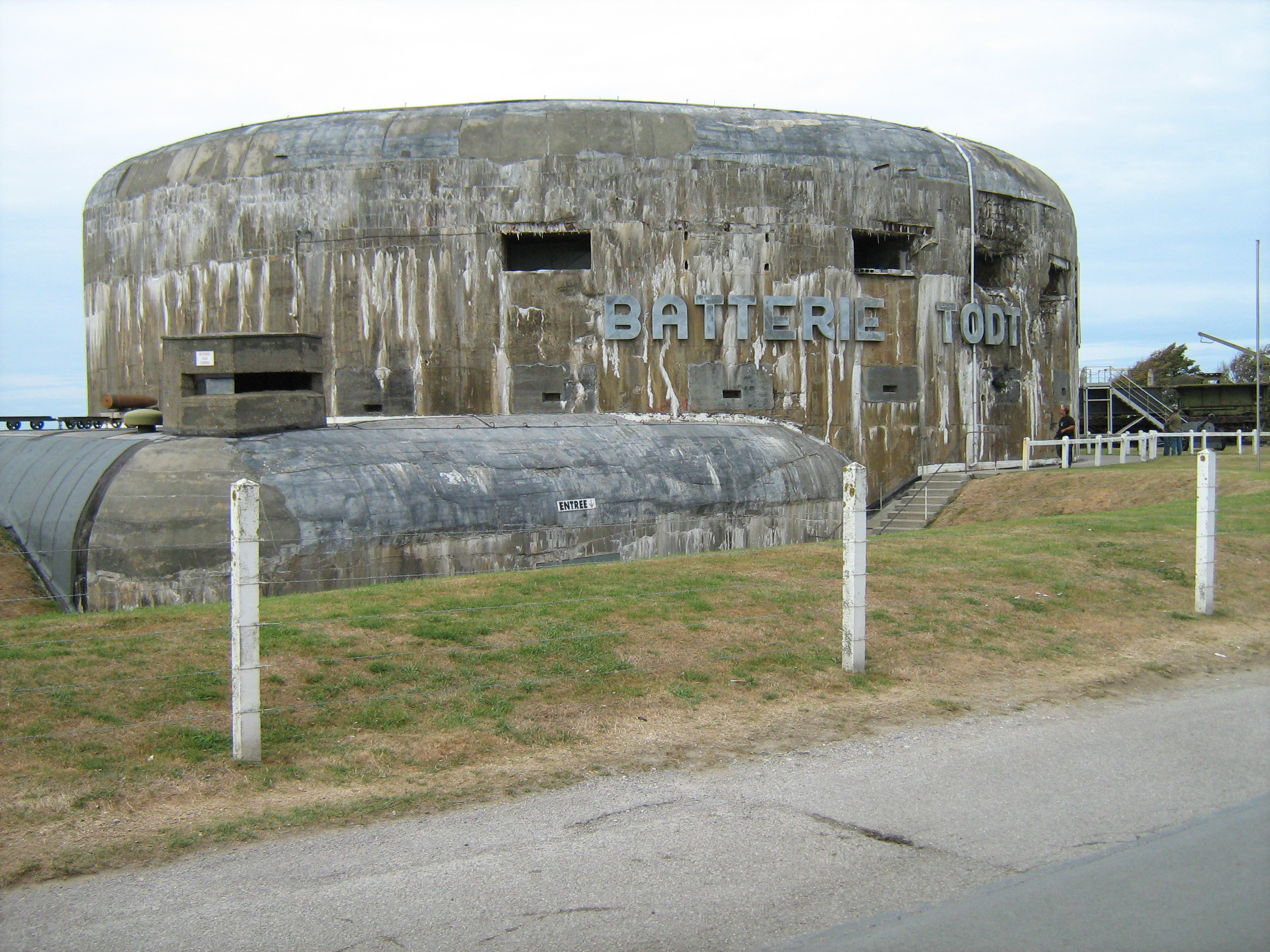
Batterie Todt, Pas De Calais

Batterie Todt, Pas De Calais

On many occasions when trundling through rural France I’ve come across many bunkers, fortresses and other sites. In northern France Liz and I stopped at a war grave cemetery that was picture perfect in its own way. The lawns were incredibly neat, and the hedgerows immaculately trimmed. Sadness pervaded the site like a scent coming over from the adjacent fields. Throughout there is a feeling of peace, of slowness and a feeling that time has stopped here or perhaps just slowed. That’s not strange when you think that time must have speeded up during the action of the first and second world wars, so it seems only fair that nature must compensate, that time must slow later to make up for the fast and frantic earlier time.

You can imagine the pace of things even a hundred years ago: The early morning bombardment, the whistles blowing as officers called their troops to go over the top. The advance parties who made ahead to cut the barbed wire, the troops walking apprehensively forward until they walked into the deadly machine gun fire that cut most of them down. Many found their final resting places in these cemeteries, places that are now quiet and peaceful with a silent beauty, timeless and moving with the beat of nature as a backdrop, the humming of the insects, distant cows mooing, and the birds flying past.

Many soldiers’ bodies slipped deeper into the mud of places like the Somme and remain there still. Others have no resting places, their bodies blown to pieces by artillery shells, their names marked on marble walls forever missing in action.

War memorial, France, 1940

War memorial, France, 1940

At one place, travelling from St Quentin to Soissons we stopped by the road to find a huge sword standing in the rock. Like a giant Excalibur, it stood there waiting to be pulled by some giant hand, bearing silent witness to a long ago battle from the Second World War.

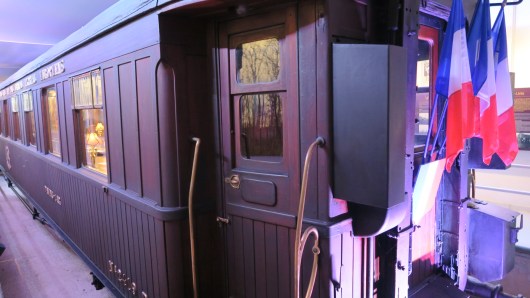
We once visited Compiegne, the place where the armistice was signed at the end of the First World War. The famous railway coach there is not the authentic one. No, that one was where Hitler forced the French to surrender in the early days of World War 2. The coach was then taken away to Berlin where the Nazis destroyed it in the closing stages of the war to stop its return to France. The coach that stands here now in Compiegne is a similar one and it’s easy to imagine the scenes all those years ago, the French accepting the German surrender in 1918, then years later Hitler and his gang pressing their terms on the French.

Compiegne, France

I’ve never been to Auschwitz, the Nazi concentration camp in Poland but whenever I look at one of those TV documentary programmes where TV cameras return to the site, it doesn’t look like a place of mass destruction. It looks calm, serene and another silent witness to the death and destruction of the past. Time ran faster here when the Nazi death machine was in full swing. Now time flows peacefully past over those who come to learn about what has gone on before. This must indeed be a sombre place to visit but Auschwitz is not only a memorial to those who had their lives snuffed out in such a terrible fashion but a reminder to all of the dangers of prejudice and hatred. Time hangs heavy over this place but the evil that built and maintained this death camp has long gone.

All the places mentioned here have had their moments in the spotlight of world history. They all lived through times of accelerated pace when time flowed swiftly. Perhaps it’s their time now for a quieter pace while time flows slowly . .


If you enjoyed this post, why not try my book. Click the links at the top of the page for more information.

dscf1792_31219045553_o