 So why do you want to write a novel? For fame, fortune or financial gain? Do you just like writing? Anyway, here are few tips.
Plan your novel. Yes, don’t think you can sit down and just start typing away. Do some planning and research, then start writing.
Start at the beginning! Well, not necessarily. Sometimes the beginning is hard. It’s a sort of slow part of the novel, introducing people and places. Sometimes it’s easier to start right at the heart of the book and then add the beginning on later.
Got stuck already? Again, start writing a different part of the novel. When you have got the old creative juices flowing, then you can come back to the section that was difficult to write.
Editing. Now this is pretty important, especially if you write the way I do, in a pretty disjointed way, moving back and forth within the novel as I’ve outlined above. I’ve always felt that it’s important to keep banging away on my laptop or notebook or whatever and if I’m not banging away (writing) then I need to do something to make me write so that’s when I open my diary and write about last night’s night out, the shift I’ve just had at work and so on. Perhaps that’s why so much of me spills over into my blogs and books. (OK: Book, the one book, the only one book I’ve ever written!)
Where do you get your ideas from? Well, let’s face it, if you haven’t got an idea why do you even want to write a book? (Fame, fortune and financial gain?)
Can you see it through? It’s hard work. Floating was started in the 1980’s although not as a book but as a series of essays. Years later I decided to make it into a novel so I put the essays together which formed the second half of the book then I had to write the first half. I was still writing it when the PC revolution began and I typed it all out onto Microsoft word. I was ready to give up after two computer crashes. I lost the third quarter of the book when my PC crashed so I had to rewrite it and then found the lost quarter on a back up disk! Confusion then reigned until I sat down, deleted lots of multiple versions, re edited the book and added a new ending. That was hard work, believe me.
Enjoy what you are doing. Writing should be enjoyable and satisfying. If it is neither, then you should be questioning why you are doing what you are doing. If you think it’s an easy way to make money, think again!
Find somewhere to write. Find your own space, relax and be comfortable while writing.
Always have something to write with. Even when you are not writing, ideas can still come to you so make sure you have a notebook handy to jot ideas down, no matter where you are. You can even record yourself. I have a dictation machine in my car because ideas always come to me when I’m driving. Whether it’s on a nice pleasant drive or a trip to the supermarket, you never know when a good idea may appear.
How do you write a bestseller? Well, wish I knew. I enjoyed writing my book and I love the fact that numerous people have read it and enjoyed it but it’s far from being a best seller. Every now and then a few pounds are pinged into my bank account courtesy of amazon but I won’t be giving up the day job yet.
What do famous Writers advise? I saw an interesting article by PD James which started off by saying this:
You can’t teach someone to know how to use words effectively and beautifully. You can help people who can write to write more effectively and you can probably teach people a lot of little tips for writing a novel, but I don’t think somebody who cannot write and does not care for words can ever be made into a writer. It just is not possible.
Nobody could make me into a musician. Somebody might be able to teach me how to play the piano reasonably well after a lot of effort, but they can’t make a musician out of me and you cannot make a writer, I do feel that very profoundly.
Interesting. Read the full article here.
Ernest Hemingway thought the key was to write one true sentence. Click here to read this fascinating article on Hemingway.
Charles Dickens was the author of my favourite book, David Copperfield. Click here to read 10 writing tips from Dickens himself.
Finally, here are 20 writing tips by author Stephen King. I’ll quote my favourite one to end this post. “Writing isn’t about making money, getting famous, getting dates, getting laid or making friends. Writing is magic, as much as the water of life as any other creative art. The water is free. So drink.”
So settle down, open your laptop or notebook, and write.
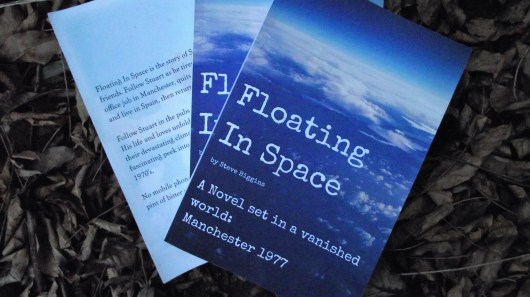
If you liked this post, why not try my book, Floating in Space? Click the links at the top of the page for more information.
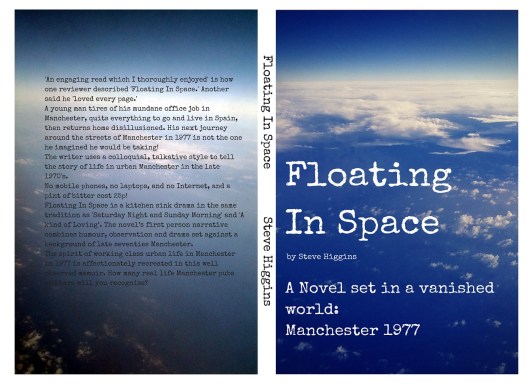

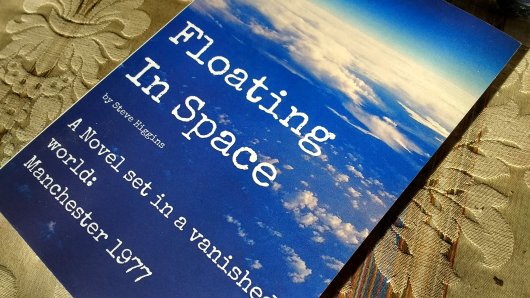
 I was at a pub quiz the other week and one of the questions was ‘name an author who has written 723 novels.’ Seven hundred and twenty-three novels. Can you believe that? The answer, in case you didn’t know is Barbara Cartland. She has a place in the Guinness book of records and is known as one of the world’s most prolific authors. At the other end of the scale there is me, Steve Higgins, with my one book, Floating in Space.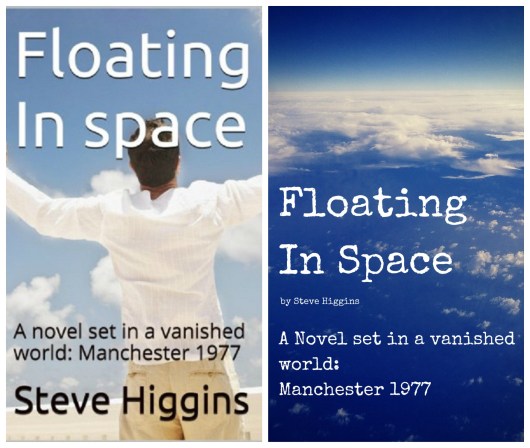
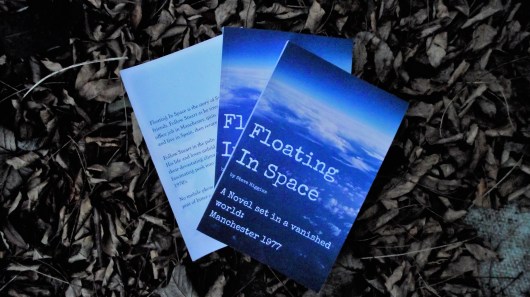
 The secret of my success. What’s that about, you might wonder? Well, I thought it was time to write something about Floating In Space again and update you with how it’s going. Success of course is pretty relative. Floating In Space isn’t a blockbuster hit, in fact it’s currently rated at 677,726 on Amazon so there’s a bit of a way to go before we start challenging the current number one paperback. Still, from my point of view, that of an amateur self published writer, I’m reasonably pleased with myself. I wrote Floating for me, for my own personal pleasure and the fact that so many people have read it is great.
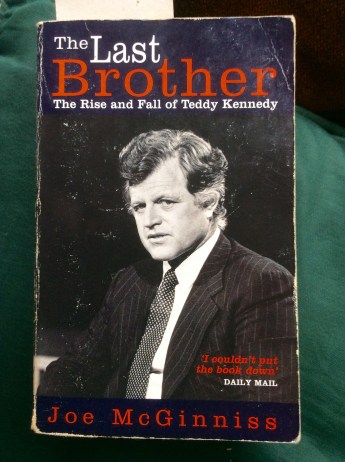 The Last Brother by Joe McGinniss
 I don’t think there is any nicer feeling than to take a dip in a swimming pool and then after a few lengths, return to your sun lounger and lie there peacefully while the hot sun dries your body. You can feel little rivulets of water dripping away and in time the sun will gradually dry you. It’s almost like a sort of rebirth or a least a refreshing of the soul. The only sounds in this remote hamlet where we are staying are the gentle breeze swaying through the branches of a nearby tree, the quiet humming of insects, some bird song and the occasional drone of a far away car or tractor.
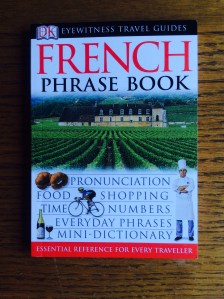 After the hell of UK motorway travel, the roads of France are just a delight. OK, it might be busy round Paris and other large towns but out in the countryside driving is once again an enjoyable experience. Stopping at the services is much nicer too. Not for us the packed UK services charging ridiculous amounts for a cup of tea. The French aires are quiet and picturesque. Nice rural stopping places with picnic tables and nice clean toilets. Lovely.
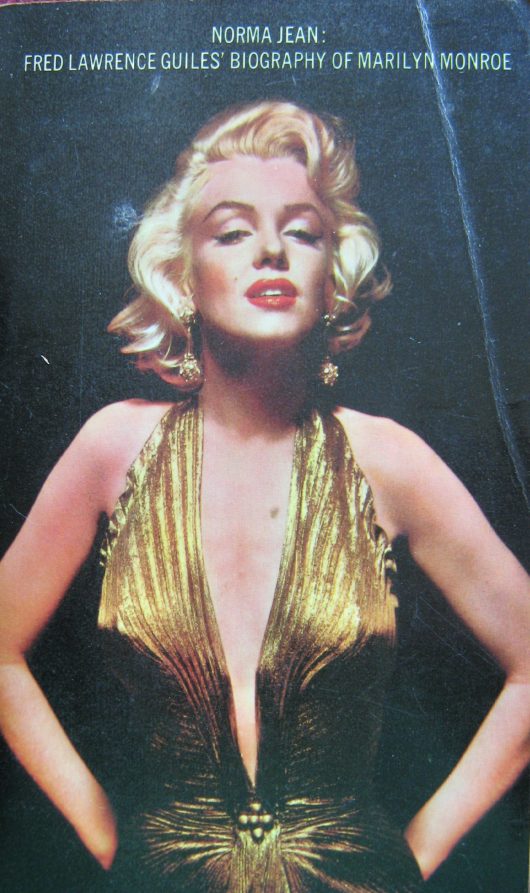 The very first book I picked up about Marilyn Monroe was the biography by Fred Laurence Guiles. ‘Norma Jean, the life of Marilyn Monroe’. It’s a particularly well researched book and for a great many people, fans and writers alike, it has become the definitive biography of Marilyn, the place you go to find out all those facts and figures about her life, especially her early life. Her death is not really discussed in the same fashion as in later books, some of which are wholly devoted to the mystery of her passing. In my edition which I bought in the seventies, Bobby Kennedy is referred to only as ‘the easterner’ and it was only in later years that Bobby Kennedy and his brother, President John Kennedy became publically identified with Marilyn.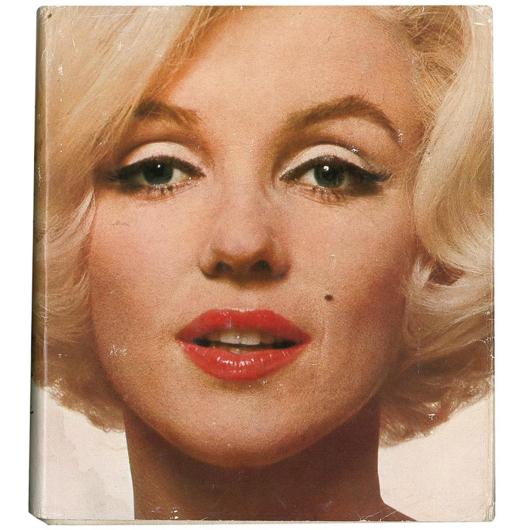
 A slim volume appeared in 1964 called ‘The Strange Death of ‘Marilyn Monroe’. It was this book that kick started rumours of strange goings on in the hours leading up to
 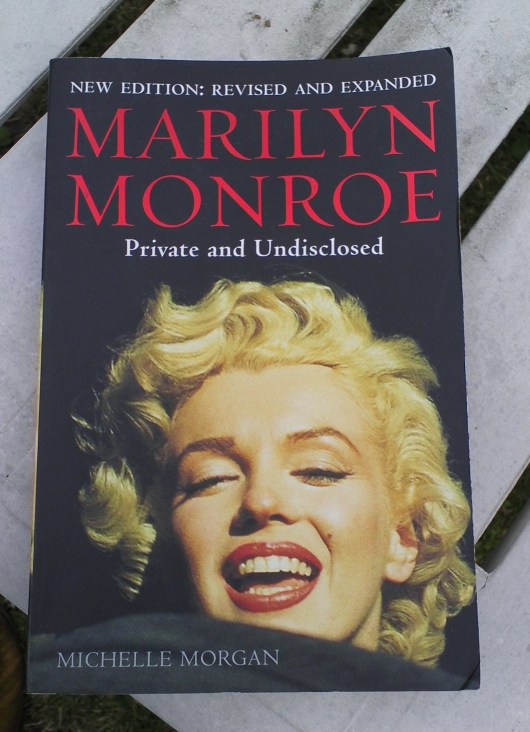 Marilyn Monroe: Private and Undisclosed is a book I picked up quite recently. It is written by a British author, Michelle Morgan, and is similar to Fred Guiles book of Marilyn, very well researched but focusses on various people associated with Marilyn who have not been interviewed before. After reading this and other books, I get the impression that Marilyn compartmented her life, and those that were in one compartment, were not necessarily aware of people who were in the other ones.
 Talking about J Edgar Hoover, here’s another book I picked up about Marilyn. This was a remainder book and concerns the information about Marilyn in Hoover’s FBI files. Marilyn: The FBI Files by Tim Coates. It’s an interesting addition to the many books about Marilyn with pages of FBI files concerning Marilyn, many of them redacted with various names and details blanked out.
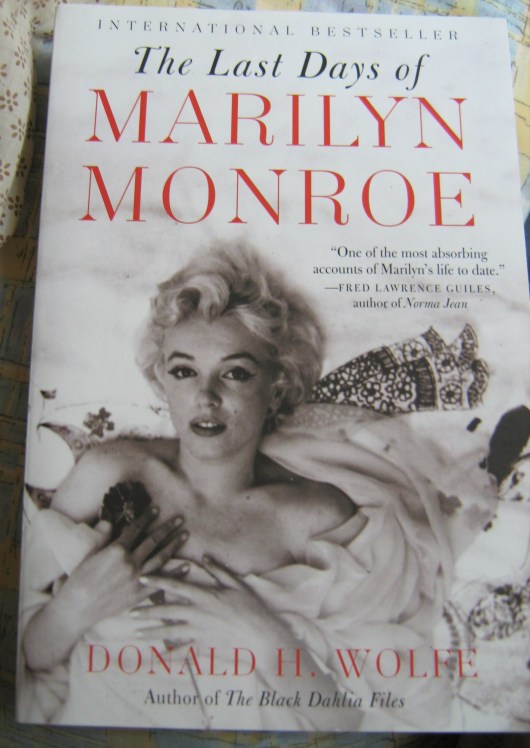 Donald Wolfe wrote another book; ‘The Last Days of Marilyn Monroe’. I’ve not read this one yet, it’s one I’m saving for my holidays.
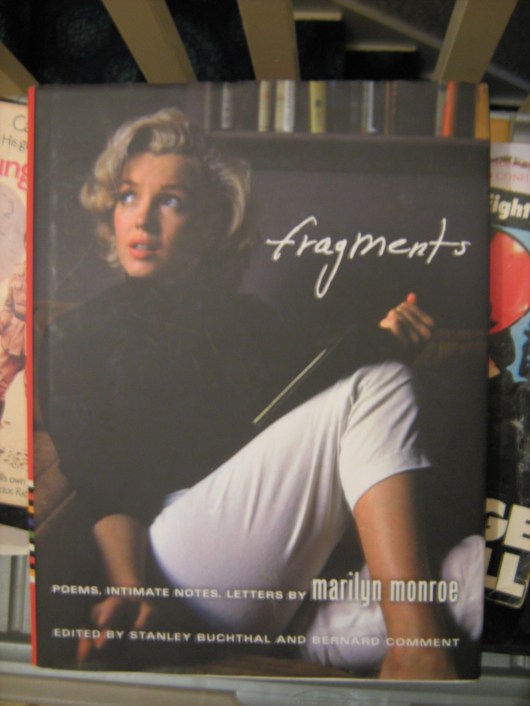 Finally, Fragments, edited by Stanley Buchthal and Bernard Comment. When Marilyn died in 1962 she left all her possessions to her acting mentor and head of the Actors Studio in New York, Lee Strasberg. When he passed away Marilyn’s effects went to his daughter and now it seems many will be auctioned off. This book is a look at the letters and notes she made, fragments of poems and thoughts scribbled in notebooks, on hotel stationary and envelopes. Marilyn’s thoughts and written meanderings show her to be a thoughtful woman who cared about what she saw and heard. Marilyn was a great reader and left behind a large book collection, part of which is listed in this book. Click
 “Yes,” he said exclusively to stevehigginslive.com today, “I’ve had to do the dirty deed. I wasn’t happy as my Hillman Imp is getting a little knackered but even top authors have to tighten up their wallets in the current financial climate.”
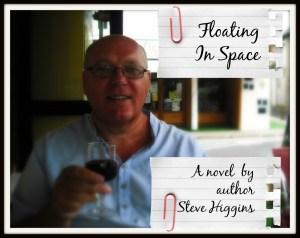 When asked about the future of his self published novel ‘Floating In Space‘ Mr Higgins went on to say he had plans for another update of the work including a new cover. “Yes, I think something more dramatic is required to pull the readers in and I am aware of a few minor grammatical errors that need attention. There is a sequel in the pipeline but it’s quite a long way down the pipeline at present!”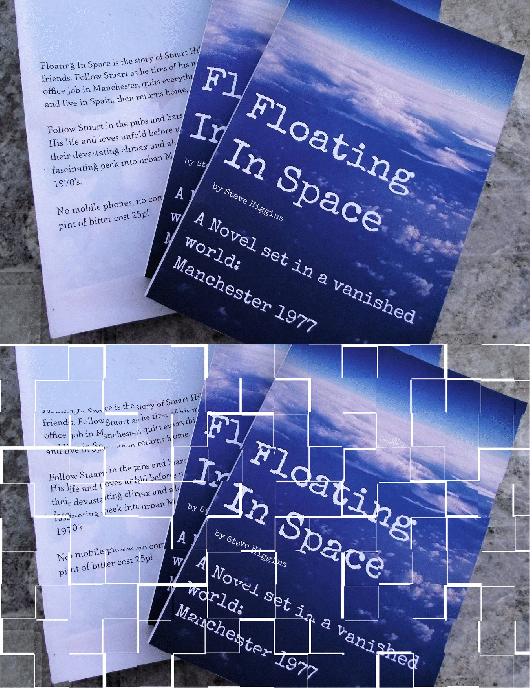

 Letters from an Unknown Author!