More Transformations

I’ve always been fascinated by transformations either in fiction or in real life but what do I mean by transformations? Well, I have written about transformations before in a previous post. I talked then about Professor Higgins who helped Eliza Doolittle change from a street flower seller to a lady in George Bernard Shaw’s Pygmalion but with this new post I thought I’d start with the story of Dr Jekyll and Mr Hyde.

The Strange Case of Dr Jekyll and Hyde

Robert Louis Stevenson published his novel The Strange Case of Dr Jekyll and Hyde in 1886. It concerns Dr Jekyll who creates a potion which transforms himself into Mr Hyde, another personality in which he is free to enjoy his vices without fear of detection. In the book Mr Hyde must take more of his serum in order to change back to his original self. Eventually Hyde finds it is not possible to revert back and commits suicide.

The Jekyll and Hyde story was filmed many times but the most famous version was in 1920 starring John Barrymore. In one scene Barrymore as Jekyll changes into Hyde entirely without special effects. It is an extraordinary scene all achieved by facial contortions which may seem a bit laughable today but back in 1920 audiences were amazed. A 1941 version starred Spencer Tracy in the title role and there have been many other film versions.

One of my favourites was the comedy Carry on Screaming in which police officer Sergeant Bung played by Harry H Corbett is investigating some strange goings on. His investigations lead him to an eerie rest home run by Kenneth Williams as Orlando Watt and his sister Valeria played seductively by Fenella Fielding. In one scene Valeria gives Harry a potion which turns him into Mr Hyde with hilarious results.

Bruce Wayne and Batman

A pretty obvious transformation is one I could pick up from any superhero comic, that of an ordinary member of the public transformed by some accident or circumstance into a crime fighting hero. I’ve chosen two you might already be familiar with from pretty much opposite sides of the super hero spectrum.

Bruce Wayne was a young child when his parents were murdered by a criminal. The story first appeared in issue #33 of Detective comics in 1939. Dr Thomas Wayne and his wife Martha were wealthy socialites living in Gotham City. Their son Bruce enjoyed a privileged existence at the family home, Wayne Manor, until he was eight years old when the family encountered small time mugger Joe Chill on the way home from the cinema. Joe shot Bruce’s parents dead and the young lad swore to avenge his parents’ death by fighting crime.
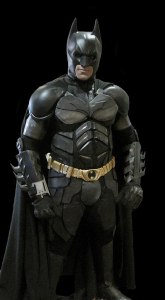
Batman. Picture courtesy Wikipedia commons.

When he is ruminating on this decision and thinking that he must be able to strike fear into the hearts of the criminal fraternity a bat flies in through the window and Bruce wonders if the image of the bat might be something he can use.

The Batman origin story has changed over the years; in a later comic we find that the murder of the Waynes was organised by a mob boss as revenge for when Thomas Wayne gave testimony which sent the mob boss behind bars.

In the Tim Burton film Batman, we find that the killer was actually Jack Napier who later becomes the Joker, one of Batman’s arch enemies.

In the later Dark Knight Batman films things change again with Bruce travelling to Asia to learn martial arts from the League of Shadows. He later splits from the group and as Batman, he has to battle against them.

Peter Parker and Spiderman

Spiderman was a different kind of superhero made to measure for the teenagers of the 1960’s. Peter Parker was a quiet nerdy kind of teenager. He was a high school student who lived with his aunt and uncle as his parents had died in a plane crash. He was attracted to Mary Jane Watson, a gorgeous redhead but he knew he had no chance whatsoever with the muscle-bound Flash Thompson on the scene. Anyway, one day he and his fellow pupils are visiting the Midtown school of Science and Technology and he comes across a radioactive spider. Yes, not something you run into every day.

Anyway, Peter gets bitten by the spider and as a result develops superhuman powers; super strength and agility and also a sort of sixth sense he calls his spider sense. In the comics Peter makes a special gadget that shoots out a strong web on which he swings through the heights of the city. Peter uses his new found powers and becomes a wrestler, but after his uncle Ben is killed by a mugger, he decides to fight crime as Spiderman.

Back in the 1960’s there was a cartoon TV Spiderman show and I can even remember most of the theme tune.

Spiderman, Spiderman, Your friendly neighbourhood spiderman

Spins a web any size

Catches thieves just like flies

Is he strong, listen bud

he’s got radioactive blood.

They just don’t write them like that anymore.

Tobey Maguire starred as Peter Parker in a film trilogy that was quickly rebooted with Tom Holland as the web swinging hero.

Personally, I still prefer the old cartoon version.

Elton John and Reginald Dwight

Reginald Dwight was born on the 25th March 1947. He lived in Pinner in Middlesex with his mother and father, Stanley and Sheila.   Stanley Dwight joined the Royal Air Force in 1942 and elected to stay on after World War II ended. Elton John seemed to think in his autobiography that that was a good thing as together, his mother and father spent a lot of time arguing. While Stanley was away in the air force Reg lived with his mother and his maternal grandmother at 55 Pinner Hill Road, his grandmother’s council house. Elton seems to have been reasonably happy there but understandably distressed at the numerous arguments between his mother and father whenever Stanley came home.

Stanley left the air force and his mother and father divorced when Reg was 14.

One thing that had a very positive effect on the young Reginald was his parents’ love of music and records. He began tapping out tunes on his grandmother’s piano and the age of 11 won a scholarship to the Royal Academy of Music.

At the age of 15 Reg got himself a job playing the piano at the local pub and in 1962 he and some friends formed a small band called Bluesology and they soon picked up a regular gig supporting singer Long John Baldry.

In 1967 Reg answered an advertisement in the New Musical Express. It had been placed by Liberty Records and they were looking for new talent. Reg went to audition for the A & R manager, Ray Williams but he appeared to be unimpressed when Reg sang an old Jim Reeves hit and by way of ending the interview Ray handed Reg a sheaf of unopened lyrics written by someone who had answered the same ad.

That someone was Bernie Taupin. He and Reg hit it off instantly and Reg began writing music to Bernie’s lyrics. Six months later Reg changed his name. He took the name Elton from saxophonist Elton Dean and John from Long John Baldry and put them together to become Elton John.

In 1969 Elton’s album Empty Sky became a minor hit and was followed by the eponymous Elton John in 1970. ‘Your Song’, a single from the album went to number 7 in the UK singles chart and Elton John had arrived.

Norma Jeane and Marilyn Monroe

I should mention that one of Elton’s big hits was Candle in the Wind which leads me nicely into this next section as the song was about Marilyn Monroe. Marilyn was born Norma Jeane Mortensen on June 1st 1926. Her mother was a Hollywood film cutter and her father was a married man named C Francis Gifford who Gladys, her mother, had an affair with.

Gladys divorced her husband who had deserted her some years earlier and she reverted to her previous name, Baker, that of her first husband.

Marilyn: Norman Mailer

Marilyn on the cover of the celebrated book by Norman Mailer

Norma Jeane had a troubled upbringing. Her mother was mentally unstable and was in and out of various institutions, leaving young Norma to be taken into care. On one occasion in her late teens Norma Jeane was living with a friend of her mother, but this friend was moving away and rather than send Norma back into a home, an idea came about which seems a little mad in retrospect. The idea was for Norma to get married to a local boy, Jim Dougherty. The marriage went ahead only eighteen days after Norma’s sixteenth birthday.

The war finally came to came to the USA when the Japanese attacked Pearl Harbour. Jim joined the navy and Norma was working in a war factory when an army photographer called David Conover came round looking for a photo article for a magazine. He asked Norma to pose for him and found that she had a natural affinity with the camera. More photo shoots came her way and soon Norma was convinced by Emmeline Snively, head of the Blue Book Modelling Agency that she was wasting her talents in a defence factory. Within weeks of quitting her job in the factory Norma Jeane became one of the Blue Book’s busiest models.

In 1946 she divorced Jim Dougherty and only a matter of weeks later she went for a screen test at Twentieth Century Fox and Ben Lyon, head of new talent at Fox, offered her a seven-year optional contract. The next issue was her name as Lyon felt that Norma Jeane was not film star material. Lyon suggested the name Marilyn and Norma Jeane provided her mother’s maiden name, Monroe. Norma Jeane had made the transformation into Marilyn Monroe and had begun the long road to film stardom.

What to do next: Here are a few options.

Share this post on your favourite social media!

Hit the Subscribe button. Never miss another post!

Listen to my podcast Click here.

Click here to visit Amazon and download Floating in Space to your Kindle or order the paperback version.

Buy the book! Click here to purchase my new poetry anthology.

Graham and Damon: An F1 Story

I haven’t done an F1 post for a while so I reckon it’s time for a new one. F1 in 2023 seems to promise much but so far has failed to deliver. Red Bull seem to be winning everything which is great for them but makes things a bit boring for the average F1 fan. It’s in times like these that I tend to look back to the past for a little F1 drama.
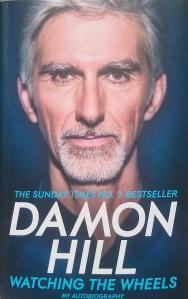
Damon Hill is not exactly my favourite racing driver. He pops up these days as a pundit on Sky TV’s F1 coverage and I’m sorry to say that I tend to fast forward past him until I find someone a little more interesting to listen to. Back in the day when he beat Michael Schumacher to the F1 world title in 1996 I cheered for him but even then, that was mostly a reaction to the tactics of the highly ruthless Michael Schumacher. Anyway, when Liz handed me a copy of Damon’s autobiography, I thought it might be worth scanning through.

Hill starts his story not with himself but with his celebrated father Graham Hill. Hill was a great driver, a double world champion but also one of the great, if not the greatest, characters in the sport. What F1 fan would not instantly recognise the prominently chinned and moustached Graham Hill with his swept back hair and his witty and straight to the point remarks?

Graham didn’t even pass his driving test until he was 24 yet went on to win two world championships. He began by seeing an advertisement offering some laps of Brands Hatch in a racing car for five shillings. He went along, paid his money and subsequently was hooked on motor sport. He got himself a job working as a mechanic for Colin Chapman’s Lotus team and soon talked his way into actually driving one of Colin’s cars.

In the 1960’s, Colin’s star driver was Jim Clark, one of motorsport’s absolute greats. Jim was universally respected as being the star driver of the day and won the world championship for Lotus in 1963. In that year Jim won seven of the year’s races (there were only 10) a record that stood until 1984 when Alain Prost won seven races for McLaren.

Graham Hill had left Lotus for the BRM team and won his first world championship in 1962. In 1967 Hill returned to partner Clark in Colin Chapman’s new Lotus 49 powered by the new Ford Cosworth DFV engine.

In 1968 Clark was entered in a Formula 2 race for Lotus at Hockenheim in Germany. In those days, F1 drivers regularly competed in other events apart from F1 including sports car racing, saloon cars and of course, Formula 2. During the race, Clark’s Lotus veered off the track into trees and Jim suffered a broken neck and was killed. A deflating rear tyre was thought to be the cause of the crash but the racing community was devastated. Clark was a quiet unassuming Scotsman, born into a farming family but is still remembered today as one of the greats of all time.

The Lotus team looked then to Graham Hill to lead them forward into the next round of F1 races and despite initial difficulties with the car and engine, Graham was able to win his second championship title. In 1969 he suffered a terrible crash in the USA when, after getting out to push his car after a spin, he jumped back into the cockpit but was unable to fasten his safety belts. He crashed and was thrown from the car breaking both legs. He later drove for Brabham and finally started his own F1 team with sponsorship from Embassy cigarettes. He was killed in a plane crash in 1975 along with key personnel from his team.

In Damon’s book, he gives an interesting insight into the events above, telling them from a son’s point of view. He knew many of the great drivers and team bosses of the time, meeting them as a child and he tells of Graham’s life from a family perspective; Dad being away from home a lot and always being so busy. He was the first to hear of his father’s death, seeing TV reports of a light aircraft crash just when the family was expecting him home. Graham was an accomplished pilot and owned his own Piper Aztec light aircraft. He had flown back from testing his new car in France but when he arrived back at Elstree, the weather was cold and foggy and he crashed on his final approach killing all on board. Not only was Damon distressed about the loss of his father but he resented the press who reported on not only the plane crash but also the subsequent funeral.

Graham HillAfter Graham’s death it was found that his pilot’s license had expired and this and some other things invalidated his insurance which meant that the other families who had lost loved ones in the crash were forced to sue Graham’s estate for compensation. This meant the Hills had to sell their home and move to a smaller house. These things seem to have weighed on young Damon’s mind for a long time, even into his own days as a racing driver.
Damon initially took up motorcycle racing and worked in a variety of jobs to fund this, including being a motorcycle courier. Later his mother arranged for him to take a course at a car racing school thinking cars would be safer than motorbikes and so Damon began his career in car racing. In his book he describes the difficulties of getting drives and wrestling with the issues of bringing money to the table through sponsorship.

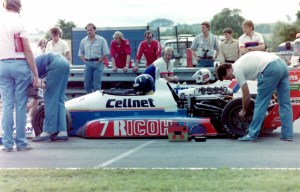
He managed to get drives in Formula 3 and then Formula 3000 and I personally saw Damon quite a few times at Oulton Park in the late 1980’s. I remember meeting his mum in the paddock at Oulton Park when I was photographing her son’s car. She went off to bring Damon back for a picture but alas, she wasn’t able to find him.

Damon at Oulton Park. Photo by the author

Damon struggled with the issues of sponsorship as many race teams were looking for drivers who could bring personal sponsors into a team but Damon was able to get himself a F3000 drive which also led to an F1 drive with the faltering Brabham team. At the same time, he had also replaced Mark Blundell as the test driver for Williams. After a difficult year with Brabham, Williams were having a tough time with their driver line up. Mansell had won the world championship in 1992 but he wasn’t happy about having Alain Prost as a team mate in 1993. Williams were still expecting Nigel to drive for them, after all he had just won the title, but Mansell decided to up sticks and go to the USA to drive in Indycars. Williams signed Prost and Hill got the promotion from test driver to full time driver for the 1993 season.

1993 was an interesting season. The Williams was without a doubt the best car of the field but Prost had just come back from a season out of the sport and was on a learning curve with the new car while Hill, who had been testing was actually pretty familiar with it.

Prost won the championship and Damon scored his first win but for 1994 Frank Williams had signed Ayrton Senna and Prost decided he wasn’t going to work with Senna again and promptly retired. That left Damon to partner Senna. In 1994 active suspension, a system where the suspension and ride height of the car was controlled by an onboard computer, was banned and the car had become rather difficult to drive. When the team came to Imola that year, Senna had scored no points at all and was desperate for a win. Damon says he had not settled into the team well and he was clearly still trying to get used to the way the Williams team operated. In the race Senna had a major accident.

Damon passed the scene of the crash, not knowing it was serious and felt for Senna thinking it would be three races in a row without points for the Brazilian driver. When the race was stopped he sat in his car on the grid waiting for information but little was forthcoming. Later, the team’s press officer advised him that things were serious but it was only after the restarted race had finished that news came through that Senna was indeed dead.

It was almost a familiar scenario to that which Graham Hill had experienced in 1968. The team leader had been killed and Graham had to step up and lead the team. Now Damon had to do the same.

Damon Hill won the world championship in 1996 but his team boss Frank Williams had for whatever reason decided Damon was not the driver he wanted for 1997 and his contract was not renewed. Damon ended up driving for Arrows in 1997 which he thought was a middle of the grid team trying to move up to the front. It turned out to be a back of the grid team, trying to move up to the middle. Damon won once more for the Jordan team and then retired. In some ways it almost seems that Damon had his F1 career in reverse, he started at the top and then drove for lesser teams until he decided to call it a day.

Damon’s book is not one I really fancied but in fact it was really a pretty good read. His younger years as the son of the great Graham Hill are fascinating, especially his behind-the-scenes motorsport memories. His recollections of his early racing days and the complexities of sponsorship and his experiences of F1 also make great reading. The book falters a little when Damon tries to interest the reader in his problems with depression, brought on possibly as a result of losing his father in such a tragic way, however, I do feel I have a little more respect and time for Damon and perhaps in future, when he comes on my TV screen as an F1 pundit, I might not be so quick to fast forward past him.


What to do next: Here are a few options.

Share this post on your favourite social media!

Hit the Subscribe button. Never miss another post!

Listen to my podcast Click here.

Click here to visit Amazon and download Floating in Space to your Kindle or order the paperback version.

Buy the book! Click here to purchase my new poetry anthology.

Holiday Book Bag: Spring 2023

A long time ago I was reading a biography about Richard Burton called ‘Rich’ by Melvyn Bragg. The book used Burton’s own diaries and mentioned, amongst other things, Burton’s love of books. When Burton went on holiday he looked forward with delight to the contents of his ‘book bag’. I know it’s a pretty tenuous link but one thing I have in common with Richard Burton is a love of books and when I go on holiday, one of the delights of lying under a warm sun on my sunbed is a good, undisturbed read. I read a lot at home and before I retired, on my lunch breaks at work but it’s a few minutes here and a few minutes there and whenever I get interrupted it kind of breaks the flow. Some books, as we all know, are just made for a really long, uninterrupted read so here are the books I took on holiday with me recently, all sourced from either the internet or secondhand bookshops.

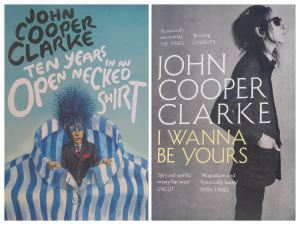
I Wanna Be Yours by John Cooper Clarke

I’ll start off this book bag with this autobiography by John Cooper Clarke. I wrote about it a few weeks ago so I’ll keep it brief here. This was a wonderful read. It wasn’t the I did this and then I did that conventional autobiography, it was a very observational book and Cooper Clarke paints an interesting picture of Manchester and Salford from the 1950s to his heyday as a punk poet in the 1980’s. The last quarter of the book resembles a more conventional biography and it made me want to read some of his poetry.

Verdict: A fabulous, entertaining read.

10 Years in an Open Necked Shirt by John Cooper Clarke

This was a poetry book by John and to be fair I found it a little disappointing. The thing is, Clarke is a performance poet and his grammar free poetry doesn’t work as well on the printed page as it does when Clarke performs it on stage. Some poetry I suppose is meant to be read, other poetry needs to be performed and Clarke’s comes into the latter category.

Verdict: Interesting but not my cup of tea.

The Unlikely Pilgrimage of Harold Fry by Rachel Joyce

I first heard about this from seeing a trailer to the new film version and it looked pretty interesting. I do love something that is new and original and so Liz and I went to the cinema to see it which was my first cinema visit for a long time. It’s a good film but not a cinema classic and I wondered if the book would be better. The story is about Harold Fry who is retired and lives with his wife on a suburban housing estate. He gets a letter advising him that a friend and former workmate named Queenie, is dying of cancer and he pens a short note of sympathy in reply. He goes out to post the letter but decides to walk further wrapped up in thoughts about Queenie. At a petrol station where he buys a sandwich the young girl assistant tells him a story about her aunt who suffered with cancer and she -the shop assistant- feels that real faith and positive thoughts can help beat even something like cancer. Harold decides there and then to walk all the way to Berwick-upon-Tweed and see Queenie in person.

Along the way Harold meets various people and when news of his march reaches the media, many others come to join him. Along the way he thinks a lot about the events of his life, in particular his relationships with his wife and son and eventually both he and his wife, who he speaks constantly to on the telephone, seem to reach a sort of understanding about what has happened to them as well as an unspoken desire to reunite and move forward. The book was a great success world wide and many reviews printed on the back cover tell the reader what an uplifting read it was. It wasn’t a bad read at all but I actually found it not only sad but rather miserable and, to be honest, not uplifting at all.

Verdict: Original and interesting but a bit too melancholic for me.

Then Again by Diane Keaton

This is another autobiography and like the one by John Cooper Clarke it was a rather unconventional one. Diane Keaton is a film actress you might remember from the Godfather movies or from Annie Hall. Diane’s mother had died and looking through her effects she had found numerous notebooks and diaries in which her mother had written about her life. In this autobiography, Diane has tried to link her story with that of her mother and has put her own experiences and memories side by side with those of her mother. The result is for the most part a really very interesting book, told in a very open and talkative way by both Diane Keaton and her mother. Diane doesn’t get too personal but does talk quite a lot about her work and her life in particular with Woody Allen and Warren Beatty, both of whom she was involved with for a time. She also had a long relationship with Al Pacino who she played opposite in the Godfather series of films and it seems to me she was expecting to marry Al but for whatever reason he decided to call the relationship a day.

The last part of the book is really about her decision, late in life, to adopt two children and the result for the autobiography is rather like when one of your friends has a child and all they ever seem to do is go on and on about their new little boy or girl. Her mother sadly develops dementia and Diane’s experience of trying to look after her was all too familiar to mine.

Verdict: The book goes off on a bit of a tangent towards the end but generally I really enjoyed it, especially the bits about working with Woody Allen.

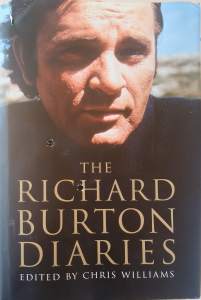
The Richard Burton Diaries edited by Chris Williams

I mentioned at the start of this post about reading Melvyn Bragg’s biography of Richard Burton and how Burton used to always take a ‘book bag’ with him whenever he went away. Bragg’s book was based partly on these diaries which have now been published and are available to everyone.

There is a lot I like about this book and a lot that I don’t like. I tend to prefer paperbacks but I bought this one from the internet and it’s a big heavy hardback and as I’ve dragged it across France it’s generally getting a little tattier every day.

Moving on to the text and I see a lot of the big events in Burton’s life are missing as sometimes he stops writing for days and even months at a time. We don’t hear about the making of Cleopatra and his meeting and affair with Elizabeth Taylor but he does mention some of those events in retrospect.

The book starts with his schoolboy diaries which are rather like mine, brief and to the point. Later, the main diary starts in 1965 and as I write this, I’m up to about 1970. Burton tells us of his immense love for Taylor and how he has given up womanising to be faithful to her but sometimes I get the feeling he isn’t being totally honest, after all Liz has free access to his diary and she frequently jots down her own comments too. Burton was rumoured to have had an affair with Genevieve Bujold during the filming of Anne of a Thousand Days but of course, gives no mention of that in his journal. He does talk a lot about food and having lunch in places like Paris and Rome. He enjoys having money and delights in spending it on jewels for Liz, a new private jet plane and a yacht which he thinks might actually save him money as he can stay on the yacht rather than use hotels. Even so, he continues to use hotels anyway. At one point he considers buying a barge, modernising it and touring the canals of France.

He doesn’t seem to enjoy his acting and in fact rather looks down on it as a profession, although unlike an actor like Brando who had similar thoughts, he did take pride in what he did, learning his part and his lines whereas Brando couldn’t even be bothered to learn the script for the film of Superman despite his million dollar fee.

Surprisingly there is also quite a lot of professional jealousy in the text, for instance, he gives Robert Shaw a bit of a slagging off for his performance as Henry VIII in A Man for all Seasons which I thought was rather good, better or at least the equal of Burton’s Henry VIII in Anne of a Thousand Days.

Burton drinks a lot and frequently argues with Liz, sometimes he is banished to the spare bedroom and usually he regrets his drunken words and wonders why he did what he did or said what he said.

He was though a man who loved books, reading anything from the classics to detective novels. He enjoyed books immensely and even had ambitions of being a writer himself. His entries are peppered with quotations from authors and poets and of course Shakespeare.

I was really looking forward to reading this book but after the first few pages I thought it a little uninteresting. As the narrative moved from 1968 into 1970, Burton seemed to be putting more effort into his journalling and consequently it became more enjoyable to read. Later large gaps appear in the diaries and he doesn’t appear to have written anything about his breakup with Liz Taylor. The entries become less frequent and to be honest, I ended up skipping quite a few pages.

Verdict: A book that promised a lot but failed to deliver.

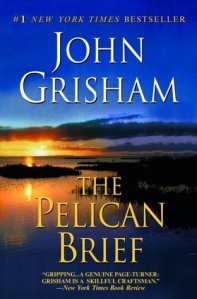
The Pelican Brief by John Grisham

I’ve read a few books by this author before and always enjoyed them, this one being no exception, in fact it might be the best book by Grisham I have read so far. The book opens with the murder of two US Supreme Court judges and this in some ways plays into the hands of the President as he can now nominate new judges who share his political views. At the same time law student Darby Shaw is having an affair with her law professor. She decides to look closely at the murders and develops a thesis, an idea about who may have done the murders and why. The thesis becomes known as the Pelican Brief and she passes it to the professor who in turn sends it to his friend, an FBI lawyer. It then gets passed up the chain to the head of the FBI and on to the White House where the President asks the FBI not to investigate further.

Not long afterwards the professor is blown up in a car bomb which Darby narrowly avoids and from then on, she is on the run trying to evade death herself.

This for me was one of those unputdownable novels which was exciting and kept me interested all the way to the end.

Verdict: A brilliant read.


What to do next: Here are a few options.

Share this post on your favourite social media!

Hit the Subscribe button. Never miss another post!

Listen to my podcast Click here.

Buy the book! Click here to purchase my new poetry anthology.

Click here to visit Amazon and download Floating in Space to your Kindle or order the paperback version.

John Cooper Clarke and Some Other Thoughts from a Sun Lounger

It’s that time again for Liz and me to troll through France in our motorhome, on the look out for swimming lakes, cheese, wine and restaurants. The weather has so far been good but not great so sometimes I’ve been relaxing on my sun lounger, other times I’ve been inside wondering, where the hell is that sun?

As I write this we are about a week into our holiday and the sun has made an appearance. We’ve had three or four really hot days and a few of those spring days where it’s really warm in the sun but move into the shade and yes, it’s freezing. You might be thinking what do we get up to in France? Visit museums? Explore fascinating French towns? Well, we have done all that stuff in the past but these days we tend to relax in the sun, read a lot, sup copious amounts of red wine and visit a lot of restaurants.

In the past we’ve visited the blockhaus in Eperleque, a huge concrete structure where the Nazi V weapons were launched against the UK in WWII. The building was rendered useless by the efforts of the RAF Bomber Command and the heroism of those pilots has guaranteed the freedoms we enjoy in western Europe today. I’ve always been moved by the museums and memorials to those who lost their lives in the war. In one place and I can’t remember where it was, we went to a museum dedicated to the French resistance and an old French chap, noticing that we were English told us how much the freedom fighters were aided by the RAF dropping supplies and ammunitions.

Another thing I look forward to on a long trip is reading. Yeah, I know you might think that’s a bit boring but I do love a really good book and one book that has really inspired me this week is an autobiography by the Bard of Salford, John Cooper Clarke. I should really save all this for a forthcoming book bag blog post but out on the road, drinking fine wines and eating good food, I really need to knock out a blog post whenever I can.

I love the way Clarke tells his story, maybe because he writes a little like me. I’ve always tried to make my posts chatty and colloquial, using the kind of language I might use when talking and John Cooper Clarke does pretty much the same thing in his book. It’s a very observational book and he talks about life in Salford in the 1950s and later in the 60s and 70s and very gradually slips himself into the narrative. It’s not a me, me, me type of autobiography. It’s not I did this and then I did that and then I did something else. It’s a fabulous book and though I’m not that interested in the punk music scene which John was very much a part of, I still love it.

Salford is the twin town to my home town of Manchester and a lot of the places and people in the book resonate with my own memories, even though Clarke is a north Manchester guy and I’m from the south. Many years ago though, I used to frequent a place just on the Salford/Manchester border. If you turn off Deansgate and go up Bridge Street and cross the bridge over the River Irwell, you are going into Salford. The bar there, the Mark Addy, was actually the last place my small family (myself, my brother and my mum and dad) had an afternoon out together. It might have been my dad’s birthday, I’m not sure. The four of us had an afternoon lunch at the pub where they served these really tasty cheese and pâté platters. They came with chunky bread and salad and were really lovely.

Mum had her one bottle of stout and then she wanted something lighter. I ordered her a tea and she was pleased to see it was served in a very elegant way with a little teapot, a small jug of milk and a bowl of sugar.

Some years ago the bar, of which the lower floor was down on the banks of the river, was flooded when the river level rose during a storm. They couldn’t get insurance and the place closed and remains empty till the present day.

Just across the road is a small square where Manchester’s first sports superstar George Best had his fashion boutique. Back in the 1960’s my friends and I travelled into Manchester by bus to hang about Best’s Boutique. We never saw the man in person although what we would have done if we had? Ask for an autograph perhaps? I don’t know but at that time George Best had a kind of local fame that was on a par with a film star. The newspapers even dubbed him the fifth Beatle in the sixties because of his Beatle like haircut and his undeniable charisma.

Best was born in Northern Ireland and came to Manchester to begin his career as a footballer aged only 15. In the 1970s he seemed to fold under the pressure of his own stardom. He began drinking heavily and was eventually sacked by his team, Manchester United. Best died in November 2005 aged 59.

Anyway, getting back to John Cooper Clarke. He decided early on that like Dylan Thomas he was going to be a career poet and to his credit he eventually achieved just that. He was and is very much a performance poet and became famous performing with punk bands in the 70s and 80s. His big problem from reading his book seems to be that he was a habitual drug user, even becoming a heroin addict. In the later pages of this book, it does seem that he is very laissez faire about his addiction and wherever he goes to perform, he always makes arrangements to score his drugs just like you and I might try to source a bottle of milk or a packet of tea bags. On one occasion he finds himself in New York, desperate for heroin. The only dealer available to him is based in some dead-end part of the city and a friend lends him a gun which he is advised to keep in view while he goes up to the seventh floor of a dilapidated building to score. Happily, all went well for him but this kind of thing appears to have been the norm for him, having to do what he has to do to get his drugs. In later life he realises he must break the habit which he eventually does, helped by the love of a good woman who he eventually settles down with.

Much of the text is written in his own rapid fire colloquial idiom and is for me, at any rate, a joy to read. Like me he is a man who loves his pies although Clarke prefers the meat and potato version to the steak variety which I rather like. Like he says though, a steak pie is full of gravy which makes it a little harder to eat on the move.

A memorable moment in the book is when he arrives in Scandinavia for a gig. He is starving but is advised that after the performance there will be a huge buffet laid on. There was, but this being Scandinavia it consisted of a great deal of pickled fish and not the hoped for pies.

Clearly he is a great rock and roll fan and lists various members of the rock and pop fraternity who he has either worked with or bumped into over the years and if you happen to be a fan of punk, Clarke points you in the right direction for either further reading or music listening.

I thought Clarke would have had a back catalogue of poetry volumes but that doesn’t seem to be the case although I did buy one of his few poetry books, Ten Years in an Open Necked Shirt. That might be my next read.

OK, that’s enough reading and writing for tonight. Time for a glass of some vin rouge and perhaps a nibble on some cheese. Yes, don’t mind if I do . . .


What to do next: Here are a few options.

Share this post on your favourite social media!

Hit the Subscribe button. Never miss another post!

Listen to my podcast Click here.

Click here to visit Amazon and download Floating in Space to your Kindle or order the paperback version.

Buy the book! Click here to purchase my new poetry anthology.

Another James Bond 007 Post

James Bond has been in the news this week. The books by Ian Fleming are apparently being rewritten as they might be considered offensive to a modern generation of new readers and the producers are still looking for a new actor to play their famous secret agent. OK, time for another James Bond 007 post.
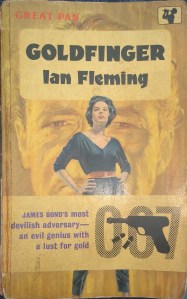
The publishers of the Bond books have decided that it’s time for a reissue of the best selling series with a disclaimer telling readers that the novels use language that may be considered offensive by modern readers. Of course the books were written in the late fifties and early sixties and reflect attitudes of the time. I have the entire collection of Bond books and most of them have a reference on the back saying they are outrageously entertaining, which they are, but take away the outrageous part and they are no longer outrageously entertaining but perhaps just somewhat entertaining. Of course if we begin to tamper with books written in the past where do we stop? Roald Dahl’s books are also in the news as they have been updated by ‘sensitivity readers’ although I’m not sure how these well-read children’s books can upset anyone. James Bond of course is a different matter and any sensitivity readers might have a problem with a book like Live and Let Die which is partly set in Harlem and Ian Fleming uses most of the unpleasant racial epithets which were in use at the time.

I started reading the Bond books when I was a schoolboy and unfortunately the very first one I read was the only one they had in our local library – ‘The Man With The Golden Gun’, one of writer Ian Fleming’s worst Bond books. Fleming used to write his initial drafts of the novels and then write a second one, adding in all the details which make the Bond books so interesting. Things like details of Bond’s clothes, (the Sea Island cotton shirts) his food, (Bond always had scrambled eggs for breakfast) his cars, his cigarettes (the special handmade ones with the triple gold band) and all that sort of stuff. ‘The Man with the Golden Gun’ was published after Fleming had died and sadly, he had not revised his original draft. I persevered though, did some research, found the proper order of the books and began to read ‘Casino Royale’, the first in the series. April this year marks the 70th anniversary of Casino Royale and it is this anniversary which has prompted the Bond books to be reissued, complete with disclaimer.

That first book is a pretty original story. ‘Le Chiffre’, a gambler and also a member of SMERSH, a murderous department of the KGB, is engaged on a desperate effort to win a great deal of money at the casinos of Royale Les Eaux in France. Le Chiffre is desperate because he has used SMERSH funds for his personal use and his spymaster bosses will not be pleased if they find out. Britain’s secret service happens to find out about this and sends Bond to France to make sure Le Chiffre doesn’t recoup those funds as of course, as we all know, James Bond 007 is a bit of an expert with the cards.

The book is interesting in another way too. Ian Fleming sold the movie rights to Casino Royale separately from the rest of the books and this enabled producer Charles K Feldman to produce a movie independently from Eon productions who own the rights to the other books. Feeling that he could not compete with the mainstream movies, Feldman decided to make Casino Royale into a comedy version. David Niven starred as Sir James Bond and ironically, Ian Fleming had mooted Niven as a possible Bond when casting began for Dr No, the first movie in the series.

Eon Productions finally acquired the rights to Casino Royale ready for the debut of new Bond actor Daniel Craig. I’ve got to say I didn’t like Craig at first. He didn’t look like Bond and I honestly thought he would have been better cast as one of the Bond villain’s henchmen but I did warm to him eventually and although I didn’t much care for it at first, I really do think Casino Royale is one of the better Bond films. It was released in 2006 and follows the book pretty faithfully which many of the previous films rarely do. Craig’s last Bond film was No Time To Die which I really thought was the poorest of Craig’s five outings as 007 and Bond has been in the news frequently as writers, journalists, bloggers and everyone and his dog have speculated about who the next James Bond 007 will be.

Will it be the usual upper class white guy or will Bond be black? Will there even be a female Bond? What does a 21st century secret agent look like or act like?

James Bond, the character created by Ian Fleming, was a commander in naval intelligence in World War II. He learned to ski in Kitzbühel in the 1930s and fought in the Second World War. He was an officer and a gentleman. He frequented expensive restaurants and gentlemen’s clubs as well as casinos and card tables. He drove a Bentley, lived alone in a Kings Road, Chelsea flat where he was looked after by an elderly Scottish housekeeper named May. He drank a martini made with three parts gin, one of vodka, a half measure of Kina Lillet, shaken with until ice cold then served with a slice of lemon peel. Bond is a character entrenched in mid twentieth century England so making him into a character from the 21st century will not be easy. What can the film makers do? Well, they could set the Bond films back in the 1960s. That’s one option although I doubt if that will happen. They could go radical and make Bond an ethnic character; I’m forever seeing posts about Idris Elba as the next Bond in my social media feeds but then, the character wouldn’t be Bond, would he?

The first change of Bond actor was from Sean Connery to George Lazenby. I liked Lazenby and his one 007 film, On Her Majesty’s Secret Service, was one of my favourites. Connery returned for Diamonds are Forever and then Roger Moore took over Bond’s licence to kill. His films ranged from bad to supremely dreadful and as much as I’ve always loved Roger, I hated his Bond films.

Timothy Dalton stepped into Bond’s shoes when Moore stood down and made two pretty good films. Legal issues kept Bond off the screen for a long time but when the franchise finally returned it was with Pierce Brosnan as 007. Goldeneye was one of my favourite Bonds but his other films weren’t so good and even looked for a while as if they were going to go down the same road as Roger Moore’s Bonds into slightly ridiculous territory. With Casino Royale though things got pretty serious. The film makers played down the gadgetry which always was a staple of the early Bond films, things like cars with ejector seats, watches fitted with special magnets and belt buckles firing climbing pitons. None of that played any part in the Daniel Craig era but here’s the thing; in the previous films each new Bond has just carried on as before with hardly a nod to the previous actor, although George Lazenby did famously say ‘this never happened to the other fella!’

When Daniel Craig took over the series was to a certain extent rebooted. Bond was new to the 00 section and Casino Royale his first mission. His mission in No Time To Die was also his last, his very last because, and I don’t think I’m giving anything away here, because Bond actually dies. How could the producers start over then with the next Bond? Well, many fictional characters have come back from the dead, most notably Sherlock Holmes who author Arthur Conan Doyle killed off when he got bored with the character.  Holmes perished by falling off a cliff but a few years later Conan Doyle bowed to public pressure and Sherlock Holmes returned. It turned out, he hadn’t really died after all.

image courtesy flickr.com

Ian Fleming didn’t kill off Bond but in You Only Live Twice, Bond is seriously hurt and is rescued by Kissy Suzuki who was posing as his wife while Bond was on a mission for Tiger Tanaka, the head of the Japanese secret service. Bond had lost his memory and Kissy hides Bond away from the authorities. One day though, Bond sees something about Vladivostok in either a newspaper or a book, I can’t remember which, and still suffering with amnesia decides he must go there. You Only Live Twice ends there but in the next book, The Man With The Golden Gun, Bond returns having been brainwashed by the Soviets into assassinating his own boss, the head of the British secret service, known only as M.

The producers never used that storyline in the film adaptations of those two books so if I was the writer of the new Bond movie, that’s exactly how I would start the new era of Bond films off.


What to do next: Here are a few options.

Share this post on your favourite social media!

Hit the Subscribe button. Never miss another post!

Listen to my podcast Click here.

Buy the book! Click here to purchase my new poetry anthology.

Click here to visit Amazon and download Floating in Space to your Kindle or order the paperback version.


My Holiday Book Bag: Winter 2023

A long time ago I was reading a biography about Richard Burton called ‘Rich’ by Melvyn Bragg. The book used Burton’s own diaries and mentioned, amongst other things, Burton’s love of books. When Burton went on holiday he looked forward with delight to the contents of his ‘book bag’. I know it’s a pretty tenuous link but one thing I have in common with Richard Burton is a love of books and when I go on holiday, one of the delights of lying under a warm sun on my sun bed is a good, undisturbed read. I read a lot at home and on my lunch breaks at work but it’s a few minutes here and a few minutes there and whenever I get interrupted it kind of breaks the flow. Some books, as we all know, are just made for a really long, uninterrupted read so here are the books I took on holiday with me recently, all sourced from either the internet or secondhand bookshops.

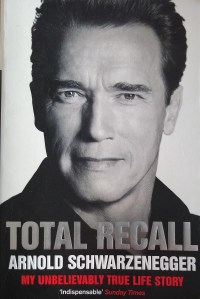
Total Recall by Arnold Schwarzenegger

This book was a Christmas gift from Liz. She knows I’m a big film fan and I do love reading about the background to films and how they are made. Arnold is from Austria and he tells us a little of his life there but mainly focuses on his desire to be a great bodybuilder and to eventually go to America. There is a lot of talk about the process of competitive bodybuilding and the different muscles, muscle definition, reps and squats and all that stuff. Arnold eventually wins various competitions and is wondering how he can compete in the USA when he gets an invitation to do just that. The bodybuilding industry is a close knit one and there seem to be various people welcoming him to California, helping him to find a place to stay and so on. He wins more competitions and makes a little money. He starts a mail order business selling magazines and pamphlets about himself and his body building techniques. He brings one of his Austrian friends over and the two begin a bricklaying and home improvement business. His big break is getting a film part as Hercules and even though the production eventually goes bust it seems to give him a taste of the film business and he wants more. He plays Conan the Barbarian in the film version of a comic book hero and pretty soon he plays the Terminator and goes on to success after success, even becoming governor of California.

I’m not sure I actually came away liking Arnold. I know this is an autobiography but it’s a very me, me, me book and Arnold is constantly bigging himself up. The final chapters about his political career are perhaps the most interesting. He had thought about running for governor but senior republicans seemed to have been more interested in another candidate. However, when Gray Davis was elected in 2000, there seems to have been something of a backlash and there is a curious precedent in Californian politics. The public can demand a recall, a new election in which the public either go for the elected governor or someone new. Arnold entered into the recall and won. He seems to have been in an odd position politically. He was a Republican but had married into the Kennedy family who are Democrats but his success as a politician seems to have come from holding the centre ground in California and bringing Republicans and Democrats and getting them to work together.

At the end of the book Arnold gives us his personal philosophy and his rules for success.

Verdict: I’m not sure whether Arnold wrote this book just to give us his story or to further promote himself but if I had to choose, I’d probably say the latter. Having said that, Mr Schwarzenegger is a man who gets things done and has a positive attitude. Perhaps I should take another look at his rules for success.

Great Expectations by Charles Dickens

This is not a book I brought on holiday but one I found on the shelves of our rented villa in Lanzarote. I started reading it when I got a little bored with Arnold Schwarzenegger and liked it so much I just carried on to the end. It is a real pleasure to read something by a master wordsmith and I enjoyed every minute even though I had read this novel years ago. Young Pip, apprenticed to be a blacksmith, is invited to the home of an eccentric rich woman, Miss Havisham, purely for her amusement. Later in his young life he finds he has ‘great expectations’ and is to inherit a remarkable property. He is taken to London to be brought up as a gentleman and although he is told that his benefactor has asked to remain a secret, he naturally assumes it is Miss Havisham. At the beginning of the book, Pip encounters Magwitch, an escaped convict on the marshes near his home. He compels Pip to bring him some food and a file. He is captured and transported to Australia and later we find, much to Mr Pip’s shock and amazement that Magwitch is the mysterious benefactor.

The book is rightfully one of Dickens’ best loved stories and is a wonderful read. I’ve always thought it had a rather ambiguous ending and in fact in my edition back home, it is one of those with various notes and background information, I am advised that Dickens felt that it was important to assure the reader that Pip had a future with Estella, the spoilt adopted daughter of Miss Havisham and so changed the ending slightly. Pip of course did want a future with Estella but I still feel the book leaves a happy ending slightly uncertain.

Verdict: An absolute classic from a master storyteller.

A Mad world, My Masters by John Simpson

This is a collection of globe trotting stories from John Simpson who has travelled the world as a journalist for the BBC. These though are travel stories with a difference, for instance in the first chapter he talks about airports, not the airports that I generally use, tourist destinations like Spain and Greece. The ones Mr Simpson mentions are airports in war torn Angola and Bosnia, and places like Kabul in Afghanistan and other places where he has had his passport and papers routinely torn up or thrown into a river by laughing revolutionaries and mercenaries. He tells us about headlong dashes to catch flights, including one somewhere in eastern Europe where he was in such a mess after weeks living rough the stewardess was reluctant to let him on board, especially as he had a first class seat. His fellow passenger in the next seat asked to be moved. Luckily John wasn’t flying on a budget airline like the ones I travel with.
On one occasion in Afghanistan with the Mujahadeen, a bearded man appears dressed in white robes. He tries to get the Mujahadeen to murder Simpson for $500. It later turned out that the man was Bin Laden. Simpson talks nonchalantly about many other encounters with revolutionaries such as Arkan, the Bosnian warlord. There are other chapters on dictators that he has met and other sometimes ordinary people who have impressed him, like the simple village priest trying to make life safer for his fellow villagers in Colombia, one of the great drug producing countries of the world.

Most of his stories are hugely fascinating although the more interesting ones are about people, either the ones he has interviewed or the ones who work with him, his fellow journalists and sound-men, cameramen and so on. Most of this book is about the days when a BBC crew consisted of a cameraman, a sound-man, a producer and sometimes even others. Today, Simpson’s crew would consist of him and one other doing the filming and editing. There are some TV journalists today that even have to film and edit themselves.

The last part of the book where the author talks about his love for middle eastern rugs and antiques and the process of bartering that goes with buying those things was perhaps not my cup of tea. Verdict: A patchy read with some very fascinating chapters as well as some not so interesting ones. Generally, though, this was indeed an excellent read.

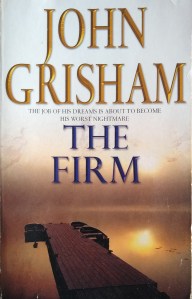
The Firm by John Grisham

There is a process by which I choose books to take with me on holiday. I like to think it’s a thoughtful process combining different genres of books, some novels, maybe the odd classic, and some biographies and autobiographies. What actually happens is that the day before our trip I’ll just grab something near to hand that I know I haven’t read yet and shove it in my suitcase. Anyway, that’s how I ended up with the books you see above. Last year I read The Rainmaker by John Grisham and I thought it was a pretty good read. I must have mentioned that to Liz so she filed that away and got me a stack of Grisham novels for my last birthday. The Firm isn’t a bad read and in my case it was a nice change of pace after reading Dickens and John Simpson’s globetrotting memories. It’s a good story but like a lot of Grisham’s works, its more plot driven than character driven. The characters are sort of bland templates that I’ve recognised in a lot of his novels and so far I’ve only read three. Anyway, characters aside, this is a really original story about a young guy who graduates from law school and gets head hunted into a firm he has never heard of but which offers tremendous financial benefits, a brand new BMW, and an ultra cheap mortgage as well as other financial bonuses. The downside as he comes to learn later is that the firm is just a cover operation to launder money for a big mafia crime family and the FBI wants our hero James McDeere, to help them.
Verdict: Highly enjoyable and a great holiday read but nothing more, although that didn’t stop the book from becoming a best seller as well as a hit film in the 1990’s.

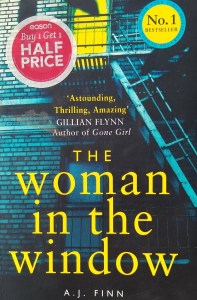
The Woman in The Window by AJ Finn

I’m not sure I would normally have picked up this book if I hadn’t run out of books to read. I saw this on the shelf in our rented villa and Liz had read it and mentioned about numerous references to old black and white films which were right down my alley, apparently.

Anyway, I thought I’d give it a go and I’m very happy that I did. It’s about a woman called Anna Fox suffering from agoraphobia who cannot venture outside her house. She is in effect almost imprisoned there but spends her time playing online chess, seeing two therapists, one physical and one psychological as well as taking medication and drinking a whole lot of Merlot. She also spends a lot of time watching old films on TV and DVD as well as watching her neighbours.

She hears a terrible scream one night although no one else seems to hear it. She questions her tenant who lives in her basement but at the time in question he was doing some work while wearing earphones.

She meets Jane Russell from across the road, not the Jane Russell from the films but a pleasant lady whom she invites in and has a glass of wine with. Later through the windows of Jane’s house, she sees her get stabbed.  Anna calls the police and tries to go across to the house but she cannot get over the road due to her agoraphobia and she ends up in the park where she is found by paramedics.

When she surfaces, we find that no one believes her story and also that Jane Russell is still alive, except, she’s a different Jane Russell to the one Anna saw murdered.

The tension builds nicely in this thriller and a number of shocks are dropped in front of the reader along the way as we find out what has caused the agoraphobia and what really happened over the road.

This was also made into a film starring Amy Adams as Anna Fox although I’ve yet to see it.

Verdict: Great read, so much so that when we left the villa, I had to take it with me to finish on the plane home. To be fair I did leave behind The Firm to replace it.


What to do next: Here are a few options.

Share this post on your favourite social media!

Hit the Subscribe button. Never miss another post!

Listen to my podcast Click here.

Buy the book! Click here to purchase my new poetry anthology.

Click here to visit Amazon and download Floating in Space to your Kindle or order the paperback version.

10 Things I Can’t Live Without

Thanks for tuning in once again and if you’re not a regular reader, thanks for giving me a try. In case regular readers are getting fed up of blogs about motorhomes and travelling in France, swimming in lakes, eating fabulous food, drinking red wine and all that stuff, this week I thought I’d have a change of pace and write about something a little less serious so this week’s blog post is a homage to a similar post I saw out there in cyberspace. It had a similar title, 10 Things I Couldn’t Do Without but those 10 things were so uninteresting I just had to think of 10 of my own ideas. Anyway, let’s get cracking. I found that a lot of my 10 items I had written about before so I’ve added the relevant links to those posts. Feel free to click on them and I definitely won’t mention anything about motorhomes or holidaying in France.

Bacon.
There is nothing that could be more perfect for breakfast than bacon. Throw in a poached egg, a sausage, maybe some black pudding or a hash brown and some tomatoes, a couple of rashers of bacon and there you have it, a wonderful breakfast. If you are perhaps not so hungry or maybe in a rush or on the move, you can still enjoy a bacon sandwich, throw a fried egg on top to make it extra tasty and get yourself a fresh cup of tea. Lovely! On holiday a while ago in France (did I say I wasn’t going to mention our 4 weeks in France? Sorry!) cooking can be a little difficult on our small three burner stove so Liz made us a bacon and egg omelette which was really nice served with French bread, lovely!

TV

I’ve got TV on the list and believe me I love my TV. Just cast your eye over the many TV posts on this blog and you will realise I am a big fan of the old gogglebox so much so that my Dad, may he rest in peace, used to call me square eyes. For younger readers, TV sets tended to be square back in the old black and white days. Having said that on our holidays -like the 4 weeks we’ve just had in France– I didn’t miss TV at all and in fact, only watched it once and that was for the Italian Grand Prix.

F1

Ayrton Senna

That brings me nicely to my next subject, F1 racing. I’ve followed F1 since 1970 and back then I used to read Motor Sport and Autosport and Motoring News. I had a chart on my wall which I used to fill in with the points scored by the drivers and look forward to each new race. These days some 52 years later, I’m perhaps not as keen. I don’t subscribe to the Sky F1 channel though I still look forward to the Channel 4 highlights show on terrestrial TV. I don’t buy F1 magazines anymore but I do subscribe to various F1 fan pages on the internet, all of which I have to mute on a Sunday so I don’t see the race results before I watch the highlights. Hamilton, Verstappen, LeClerc and Alonso don’t quite measure up to the Stewarts and the Mansells and the Sennas of the past but anytime I say to myself that’s it, I’m not watching Formula One anymore, I always find myself reneging on that particular promise.

Books


My well thumbed copy of David Copperfield

I really couldn’t ever give up reading. A consistent pleasure for me that I’ve enjoyed since childhood is relaxing with a good book. I read all sorts from the classics of literature like David Copperfield and the Great Gatsby (two of my all time favourite reads) to modern fiction. On holiday I found John Grisham’s The Rainmaker highly enjoyable and the great thing about a holiday read is that you have time, the time to savour a really good long read.

Classic Films

I am a bit of a film buff, well, a classic film buff anyway. Anything with stars like Errol Flynn, Clark Gable, James Stewart, Ronald Colman or John Wayne will do it for me. Of course I like modern films too. I love the Bond films as well as the Rocky series and directors like Oliver Stone, Martin Scorsese and Woody Allen.

My iPad

One indispensable item of modern technology has to be the iPad. On our trip to France (did I mention we just had 4 weeks in France?) one big disaster was just before leaving home I took out my iPad to check something and then put it down on the chair rather than back in the bag. The bag went into the motorhome, the iPad didn’t. Quelle horreur! OK I could check my emails with my phone as well as my social media and stuff but my iPad has all the various apps I use, in particular one that I use with my foreign currency card. Luckily Liz took her spare iPad with her and very kindly lent it to me for the duration of the holiday, so I was able to use that for the sites that I could remember the passwords for. Most of my blog posts I start off on my laptop but tend to fine tune them on the iPad but anyway, I managed to write and publish three blog posts while I was away. I did miss that iPad though.,

My laptop.

That leads me nicely to my laptop. My entire life as a writer is on my laptop. All my original blog posts are there as well as my draft posts, stories, unfinished screenplays and two part finished novels. All my videos are made on my laptop and the great thing about my video editing programs is that when I want to update a video, I can just go back in to the edit file and add new video clips and take out old ones and even add new voiceovers or different music. I do back up my files but even so, if the house was on fire, my laptop would be the one thing I would have to save before jumping out of the window.

My trusty laptop, shown here in audio editing mode.

My Hair Trimmers

There are some things in life which are essential but don’t rate too highly in terms of enjoyment. One of those, for me anyway, is getting my hair cut. I’ve always hated going to the barber and coming out afterwards feeling itchy with bits of hair down my neck knowing that the same scissors the guy has used on me have been used on the heads of all sorts of other people before me. When I do actually go to the barber (perhaps I should say hair stylist) I always look inside to see if anyone is waiting because I never ever sit and queue to get my hair done. The thing is, it takes about five to ten minutes to trim my hair. I don’t have a lot of it but even so it needs tidying up and it is so annoying to see the guy in front having his hair cut soooo slooowwly and this little bit done and then this bit and then that bit and then the hair dryer comes out. I finally get in the barber’s chair and it’s a quick number 2, square up the neck, trim the sideburns and we’re off, ten minutes max and usually the barber hasn’t even had time to say stuff like ‘have you been anywhere nice for your holidays?’ (Actually I’ve had 4 weeks in France but I’m not going into that right now). Now that entire sorry experience has been almost wiped from my existence. Is there a queue in the barbers? Oh well, off back home, plug in my electric hair trimmers, trim the sideburns, clip on the comb, a quick all over the head, change comb and take all the fuzz off the top and before you can say ‘Nicky Clarke’, the job has been done. Hair trimmers, I love ‘em!

Mobile Phone

What can I say about mobile phones? They are just the perfect companion in this high tech 21st century world. You can call who you want and in fact, you don’t even need to remember phone numbers, your phone will do it for you. If you want to call your favourite restaurant to book a table and don’t know the number, your phone will look it up. You can message your friends, check social media and ‘check in’ on Facebook when you go somewhere special, even if it’s not that special at all. You can book a hotel or a flight. You can even play a game or listen to music if you’re stuck in a queue at the doctor’s surgery or at the hairdresser’s.

Bread

OK, here’s one final item I can’t do without. I started with food so I’ll finish with food too: Bread. What is so special about bread you might ask. Well bread is on this list because I just love bread. Every meal in France comes with a basket of bread (I should know because we’ve just spent 4 weeks there) It’s perfect to mop up that lovely oil or gravy. It’s great for a snack (ham, cheese and coleslaw on granary bread; my favourite sandwich) and it’s really quite satisfying to make; mixing the dough, kneading it, letting it prove and then slipping it into the oven and waiting while that lovely aroma fills the house. It’s also great toasted, just a slice with some butter or margarine is great. Add some marmalade and it’s even better. If you’re having an Italian meal chop some tomatoes and onions, add some olive oil. Brush a slice of granary bread with oil and either pop it in the toaster or on your George Foreman grill then slap it on a plate and top with the tomato and onion mixture. Wonderful.

So what ten things can you not do without?


What to do next: Here are a few options.

Share this post on your favourite social media!

Hit the Subscribe button. Never miss another post!

Listen to my podcast Click here.

Buy the book! Click here to purchase my new poetry anthology.

Click here to visit Amazon and download Floating in Space to your Kindle or order the paperback version.

Autographs, Murray Walker and Formula One

It’s a while since I’ve produced an F1 blog post so perhaps it’s about time for one. Over in France while we are on holiday we very rarely watch TV. We spend most of our evenings sitting in the porch watching the sun go down, watching the sky and chit chatting.

Last week I broke the no TV rule and watched the Italian Grand Prix. To be fair, Formula One has been pretty exciting this year with some great races and terrific battles. Max Verstappen who won the championship last year in controversial circumstances looks set to make it championship number 2 this year but if he wins, and it’s still not decided yet, he will have won it fairly and squarely and pretty convincingly too. His big challenger has been Charles LeClerc in the Ferrari and although Charles has been fast, his own team, Scuderia Ferrari, have not performed well in the area of strategy. They have cocked up Charles’ pit stops, stayed out when they should have pitted, pitted when they should have stayed out and gone for the wrong tyres at the wrong time.

At the historic race track of Monza, Charles was ready to chase Max for the win but a safety car came out when Daniel Riccardo conked out in a dangerous section of the circuit. The race marshals had problems shifting Daniel’s McLaren and the race ended under the safety car which stopped Charles’ pursuit of Max in its tracks and of course, ruined the race for the fans.

The big surprise this year is that so far, Lewis Hamilton has done pretty badly. Lewis is an all time record holder with more race wins and more pole positions than any other driver ever and is currently tied with Michael Schumacher for the most world championships ever (seven). However, Lewis’s team Mercedes have dropped the ball badly and after years of winning time after time they have produced a car which is not the class of the field.

Why have Mercedes failed in 2022? My personal feeling is that they should never have dubbed this year’s car the W13. Yes, there it is, I’ve said it. I know that’s going to be controversial but no one is ever going to win any kind of championship with a car numbered 13. Just go back some years to the Apollo space programme. All went pretty smoothly, Apollo 8 circled the moon, Apollo 9 tested the lunar module, Apollo 10 was a dress rehearsal for the landing and Apollo 11 landed on the moon. Apollo 12 made another successful moon landing but Apollo 13, well that was where everything went wrong and the crew were lucky to get back to earth alive. NASA should never have named that space craft Apollo 13 and gone straight to Apollo 14.

The same thing happened this year with Mercedes, those guys should also have gone straight to W14 and missed out W13 entirely or perhaps even numbered the car W12B. If they had, I think Lewis might well have won a few races this year.

During the summer break there has been quite a bit of controversy to keep us armchair F1 fans happy. Sebastian Vettel decided to jack everything in and announced his retirement. That caused Fernando Alonso to announce he would be quitting Alpine for Vettel’s vacant seat at Aston Martin for next year. Alpine then announced Oscar Piastri as their new driver. Oscar the current F2 champion announced that wouldn’t be the case. What? A rookie declining an F1 drive? It turned out that Daniel Riccardo was getting the bullet from McLaren and they had engaged Piastri only Daniel hadn’t been informed. The result, after a meeting of the F1 contracts recognition board is that Oscar is in at McLaren but Daniel is on his way out. OK, that’s how the cookie crumbles in modern F1.

Back in the 1970’s Jackie Stewart drove for Ken Tyrell with a handshake agreement. How times change.

Things have changed in F1 in many ways. A few years ago one of my friends came to me saying he had something he knew I would want. What is it? I asked. It turned out that his daughter who has emigrated to Australia had gone to the Australian Grand Prix. She had a paddock pass (very expensive) and had got all the current drivers to sign her programme. What was I offering for it?

Of course I love F1 and I am a bit of a collector. Over the years I’ve picked up various programmes, F1 models, memorabilia and autographs. We threw a few figures back and forth and then I asked to see the merchandise. My friend obliged and produced the programme. What a disappointment! The programme was covered in what looked like a series of scribbles and squiggles, all of which were completely illegible but which were apparently the signatures of the current crop of F1 drivers. Sorry, no sale I said to my disappointed friend who was forced to flog the goods on eBay.

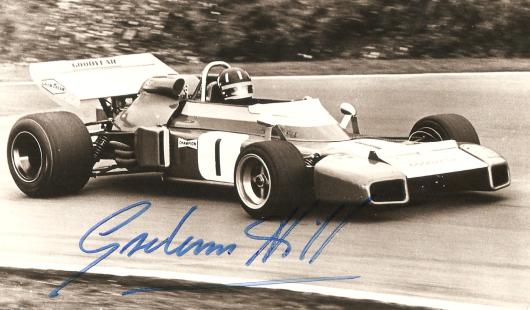
Here’s one of the autographs in my collection. Not the greatest driver of all time but Graham Hill is probably the most outstanding personality of Formula One racing, ever. Not only that, nice signature too Graham.

Graham Hill

On holiday I always grab a few books to take away with me. Reading is one of the great pleasures in life, at least I have always thought so. One book I picked up was the autobiography of Murray Walker. Murray was for many years the voice of F1. Clive James once described him as talking in his quieter moments like someone who has his trousers on fire. Murray always added his supreme enthusiasm and excitement into his broadcasts. He made mistakes, he mixed up drivers and cars but he always, always kept his viewers entertained. He belongs to that golden era of British TV Sporting commentators like Harry Carpenter (boxing) Brian Moore (football) David Coleman (football) Peter O’Sullivan (horse racing) and many others who are just a faded memory now.

Murray’s book ‘Unless I’m Very Much Mistaken’ was, according to the blurb on the back cover, the number 1 best seller. I was looking forward to reading it but sadly it was all a little boring. Many celebrity autobiographies start off well and are very interesting but when the author reaches the point of fame and fortune, they all seem to go down the same path and become lists and lists of films or shows or appearances or meeting other famous people and just become rather boring. Murray doesn’t waste much time, his book starts out with some boring bits and then goes straight into more boring bits.

To be fair, some of the book was interesting, for instance when he talked about working for the BBC when they commenced their regular Grand Prix highlights programme in 1979 and working with James Hunt, his co commentator for many years. Otherwise though, it was a book I found myself mostly skimming through.

Murray was someone who accepted he made many mistakes but even so, did a fabulous job over the years. I remember once watching the start of the Le Mans 24 hour race on BBC TV’s sports show Grandstand. Murray commented for the first hour or so and then the coverage went back to the studio. It was obvious to me that Murray was in France as he was so well informed, he knew what was going on and so on. Back in the studio in the UK the announcer explained how the BBC were clearly not going to be with the race for the full 24 hours and then turned to Murray who was sitting next to him. His commentary had not been from France but from the TV studio in the UK!

Murray did an amazing job but sorry, his book wasn’t the great read it should have been.

This weekend we will have left our rented French house behind with all its creature comforts and will be slowly meandering our way home in our motorhome, visiting family and friends en route. Happily, YouTube will be showing short highlights of this weekend’s race. Hope we’ll be in a spot where the Wi-Fi signal is good!


What to do next: Here are a few options.

Share this post on your favourite social media!

Hit the Subscribe button. Never miss another post!

Listen to my podcast Click here.

Buy the book! Click here to purchase my new poetry anthology.

Click here to visit Amazon and download Floating in Space to your Kindle or order the paperback version.

A Bit of a Blog or a Blog of Bits (Part 3)

Sometimes, as a writer of blogs, I end up with a few bit and bobs of a blog that I know aren’t going to make it into a full blown blog post. So, what can I do except maybe pull them all in together and give them a title like A Bit of a Blog. See where I’m going here? Of course you do. Let’s crack on then. .

As I write this, I’m in France once again as Liz and I have decided to nip over to the continent. We came over earlier this year and have wanted to return for a while but various appointments and arrangements have been in place, keeping us at home but what the heck we thought, time for another trip in our motorhome.
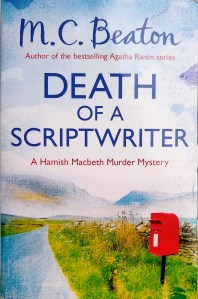
September isn’t perhaps the best time to visit France. Yes things are quieter, holidays are over and the kids have gone back to school but the summer is largely over too. We had planned a week touring in our motorhome followed by a week in a French gîte which we have rented before followed by another week touring. As it happened, when we booked the gîte, the owner very kindly advised that the property was empty the week prior to us arriving and so if we wished, we could arrive whenever we liked.

As a member of the Order of Northern Tightwads, this of course was music to my ears. Free rental at a French villa with a swimming pool! Ok, no touring for us. We literally raced down to the villa arriving in a matter of 48 hours.

Our first day was wonderful. The sun poured down warmly, we swam in the pool and between dips, relaxed on our sun loungers. Day 2 at the villa was a washout, it rained all day, but happily day three was an improvement. So far, despite the mixed weather, I’ve managed to swim every day which has always been one of my goals on holiday; to relax but also to do a little exercise.

Another important exercise in France is to get out and about and mix with the locals a bit. I’m not much of a lunch person, I kind of like my usual late breakfast but a few times on this holiday we’ve skipped breakfast and headed down to a fairly nearby restaurant, the Restaurant à La Gare, or the Station restaurant to you. It’s about a ten minute drive away from Parçay Les Pins where we are staying and it does a four course lunch (yes, four courses) for a measly 12.50 euros, including wine. Ok, the wine is vin ordinaire, the cheap French wine found in most places in France but to be honest, it’s the kind of wine I like, not strong, fairly tasty and hugely quaffable. I’ll have a glass with my starter which involves a trip to the buffet table for all kinds of salad, cold meats, pâtés and so on. Our basket of bread is routinely filled by the waitress who then brings the next course which is jambon (ham) served with either frites, rice or petis pois. Time for more vin ordinaire and by the way I went for the frites. Top up the wine for the cheese course and then there is the dessert. I fancied a little ice cream but instead I had meringue with cold custard (île flottante). I prefer my custard the English way, warm but what the heck, at 12.50 Euros each I wasn’t likely to complain.

The Queen

Last week on the 8th September the Queen passed away. I’m not a particular royalist and there is a lot I don’t like about the Royal Family but the Queen is someone I’ve always admired. She had a dignity and elegance never to be found elsewhere in the British political scene. Whenever controversy emerged she rose above it and stayed discreetly silent, whatever criticism arose in the news media.

She has been, I’ve always thought, the glue that holds together the United Kingdom of England, Scotland, Wales and Northern Ireland. As long as I’ve lived, she has been the Queen. I wonder now, how the country will change?

Books

So, what else have I done on this trip? Well I’ve read books, after all reading has always been one of my greatest pleasures. I took it upon myself some time ago to read the entire library of Hamish Macbeth novels. They are not great works of literature but the world of books has everything for everyone and sometimes, I just like an old fashioned, easy going mystery read. Here in France, I’ve just finished Death of a Scriptwriter, the 14th entry into the series which wasn’t actually one of the best. The previous two were very good though, Death of a Macho Man and Death of a Dentist. If you are not familiar with Hamish Macbeth, he is a constable in a Scottish highland village. He likes to apply the rule of law in his own way, taking away the car keys from drink drivers before they leave the pub, giving various minor bootleggers a warning before removing their illegal stills and he’s not averse to poaching the odd salmon. The books are wonderful, quirky murder mysteries which Hamish always solves but tries to give credit to others in case his bosses think of promoting him and moving him away from his beloved village of Lochdubh.
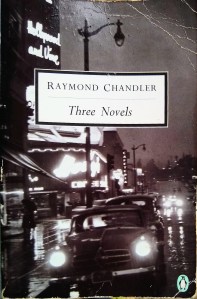
A somewhat different kettle of crimefighting fish is private detective Philip Marlowe and a while back I picked up a Raymond Chandler anthology containing three of his Marlowe books, The Big Sleep, Farewell my Lovely and The Long Goodbye.

I wrote about the first novel, The Big Sleep a while back. It is a brilliant novel, one of my favourite ever reads and I particularly like the opening where he is engaged by General Sternwood to look into an issue of blackmailing.

Book 2, Farewell My Lovely, starts off well. It’s about Moose Malloy, an oversized fellow looking for Velma, an old flame. Marlowe gets in on the hunt as well as looking into another case and later finds both are related. I read the first part of the novel pretty much all in one go and enjoyed it very much. The next quarter was a little confusing. (During the filming of The Big Sleep the director and his stars wondered who killed the character of Owen Taylor, the Sternwood’s chauffeur. They sent a cable to Raymond Chandler asking him. Chandler told a friend later ‘Dammit, I don’t know either!)’ Happily, in Farewell My Lovely, everything finally came together towards the end.
Dilys Powell called Chandler’s writing ‘a peculiar mixture of harshness, sensuality, high polish and backstreet poetry’ and it’s easy to see why. The Long Goodbye has been unputdownable. The mix of fabulous descriptive text and authentic dialogue has got me hooked and I love hearing about the Hollywood Hills, Mulholland Drive where so many film stars lived as well as Romanoff’s, the famous Hollywood restaurant.

Not quite sure how to finish off this blog post so let’s go with the trailer for The Big Sleep, the 1944 version starring Humphrey Bogart.


What to do next: Here are a few options.

Share this post on your favourite social media!

Hit the Subscribe button. Never miss another post!

Listen to my podcast Click here.

Click here to visit Amazon and download Floating in Space to your Kindle or order the paperback version.

Buy the book! Click here to purchase my new poetry anthology.

Birds, Barbecues and Big Steve

I had a few ideas for the title of this post. I had A Piece of My Life on the brain for a long time and then substituted A Pizza My Life (A piece of my life, geddit?) I even had a graphic sorted showing a slice of pizza. The thing with that I thought is that even though it ranges from funny to faintly humorous, I reckoned I would be giving people the wrong idea and that readers might have been expecting a post about, well pizza. Just lately I’m trying to optimise my titles for SEO (search engine optimisation) and at the same time also trying to give the impression that I know something about it. Some time ago I did a few posts titled A Slice of My Life so perhaps I should be adding part 3 or part 4 and just going with that? Nah, time for something new.  Anyway, cue new title and blog post graphic and here we go . . .
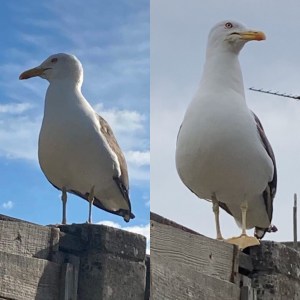
I wrote a few weeks ago about the UK heatwave. Temperatures hit record highs although the hot weather here in the northwest only lasted for two days. The day after the hottest day, it was dull and wet once again. The summer has generally been like that, a few hot and sunny days followed by more dull and wet ones. Liz and I like our barbecues so when the skies clear we tend to defrost some meat from the freezer and crank up the barbecue. A regular visitor to our barbecues is a large seabird which we have christened CBS. Nothing to do with the American TV channel but that bird is one heck of a Cheeky Bastard Seagull.

He usually arrives on our garden wall and struts around in the manner of an avian Mussolini. If he gets no response from us, he will tend to have a bit of a stretch before going into a major squawking session. Now he has made his presence felt we can expect some more strutting about until we put some bits of sausage or fat from our steak on the wall. He’ll gobble that up with the occasional foray into the sky to fend off any other birds who might be after a nibble before beginning his ritual again. When the gas goes off and he knows no more food will be forthcoming, CBS will usually have a final strut, give us a last squawk and be off into the sky.

These last few weeks however, CBS has not appeared. We’ve saved him some bits and pieces but our familiar feathered friend has not made an appearance. I’ve often wondered what has happened to him. Has he emigrated somewhere? No, surely it’s not the time of the year for birds to migrate? Has he passed away? It’s hard to tell if he was a young or an old bird. Has he been hit by a car trying to peck at some stray leftover sandwich accidentally dropped in the road?

At our last barbecue a large seabird appeared on our wall. At first, we thought it was CBS but there was no strutting or squawking and the bird did seem a little timid. He wouldn’t come close to collect his titbits on the wall. Was he a doppelganger trying to muscle in on CBS’s patch knowing the real CBS has passed away? We’ll never know.

I do love my books and when the weather is warm and sunny it’s a delight to lie outside on my sun lounger and have a good read. I’ve got quite a few books needing my attention and the first one was another book from a second-hand shop, Bette and Joan by Shaun Considine. It’s about a feud between classic film stars Bette Davis and Joan Crawford. After reading it I’m not even sure there was a feud between the two stars but either way, it’s a nice excuse to talk about these two screen gems and compare their personal lives as well as their screen stardom.

The book takes us back to the days of classic cinema and the big-league movie studios when stars were stars and the studio manufactured every level of their image; magazine interviews, acting lessons, publicity shots and in some cases even their personal relationships. Rock Hudson was a big star but also a closet homosexual and the studios manufactured a marriage for him to make sure he had a clean-cut Hollywood image. Not that that ever stopped Joan Crawford from bedding Rock, which according to the book, she did. Crawford had numerous affairs and also had a penchant for cleanliness. She lived the film star life to the full with big houses, cars and servants with her career starting in silent films in 1925.

Bette Davis always claimed to be an actress rather than a film star. Her career began later than Crawford’s and her first film role was in 1931. On the film Dangerous, she fell in love with co-star Franchot Tone but Crawford stole him from under her, seducing and later marrying him. That might well have been the beginning of their feud. The two only worked together once which was on the film What Ever Happened to Baby Jane. The two despised each other, didn’t get on at all and their mutual hatred was evident on the screen.

I do love my showbiz biographies and autobiographies and one I picked up a while back was an autobiography by Dora Bryan, According to Dora. I love Dora from her many appearances in British films but my favourite film is probably A Taste of Honey. The screenplay was by Shelagh Delaney and director Tony Richardson, adapted from Delaney’s own play which she famously wrote when she was only 18.

Dora Bryan gives an outstanding performance at times comic but always supremely natural. She grew up on an Oldham housing estate. Dora was a great performer as a child and so her mother took her to dancing school and further encouraged by her mother joined Oldham Repertory before moving to London to develop her stage career. She had a great career on the stage as well as on film and TV and appeared in many successful West End productions. The first part of the book is very interesting but then, like a lot of autobiographies, the latter part of the book seems to wander off into lists of productions and theatre and TV personalities. Even so, it was a lovely read.

We went to a birthday celebration this week and after a meal in a restaurant we went over to the Trawl Boat pub. Inside the talk turned to a fellow called Malcolm. He was an old chap and presided over the main table in the pub. He knew everyone and everything and his table was always referred to as the ‘Captain’s table’. Even the staff looked up to Malcolm. If you ordered a round, they would ask ‘is that for the Captain’s table?’ Yes. ‘OK we’ll bring it over’. We’ve never had service like that before or since. Malcolm was a character but he passed away a few years ago.

Another of the guys we used to chat to in there was a fella we called Big Steve. I’m six-foot and Big Steve towered above me, he must have been six-foot six, easy. He was a pretty fit guy having been a former drayman, one of those people who lug big beer barrels about for a living and he was a really easy fellow to get on with. We always used to sit with Steve and have a drink and a natter and when he was due to leave he would pull his jacket on, say his goodbyes and then always say to us; “Nice to see you both again, as always.” And then he would be off.

A few years ago, we saw Big Steve sometime in December and as usual at the end of the evening we said our goodbyes, wished each other a happy Christmas in case we didn’t see each other before the holidays and Steve said his usual “Nice to see you both, as always” and left.

We didn’t see Big Steve over Christmas, nor through the New Year period and one day we both said together in the Trawl Boat, ‘wonder where Steve is?’ Anyway, we thought nothing of it and assumed we’d catch up with him soon.

Later, Liz was chatting to some of the regulars and one mentioned to her that he had been to a funeral the previous day. Liz asked idly who the deceased was and the man answered that it was someone they didn’t think Liz or I knew. It was a guy called Big Steve who used to be a drayman! Well, the words leapt up and hit Liz and I like a slap. Big Steve was gone and we’d hadn’t even had a chance to pay our respects at his funeral. I can’t tell you how sad we both felt.

Liz, being the amateur Sherlock Holmes she is, tracked down the widow and we went to see her to pass on our condolences. It turned out that Steve had died quietly in his sleep and his wife went into his room one morning to find him dead. Not very nice for her but a peaceful passing at least for Steve.

I’ve not thought about Big Steve for a long time. Funny how that cheeky bird should bring back the memory of him.  Wherever Cheeky Bastard Seagull is, and I prefer to believe he has emigrated rather than been hit by a car, I hope the locals are looking after him.


What to do next: Here are a few options.

Share this post on your favourite social media!

Hit the Subscribe button. Never miss another post!

Listen to my podcast Click here.

Click here to visit Amazon and download Floating in Space to your Kindle or order the paperback version.

Buy the book! Click here to purchase my new poetry anthology.