No Hiding Place and the Mexican Grand Prix

No Hiding PlaceI should start this post by explaining something. My blog posts have a sort of gestation period, usually about three weeks. I think of an idea and type out a few notes or a first draft. Sometimes I put it on my workstation and add to it as the day goes on and quiet moments appear. At home I’ll go over it again adding bits here, changing the language there. Sometimes I write about something topical and of course, by the time the post is published, the incident or event or TV show I’m writing about happened some time ago, so for the reader, it’s hardly topical at all! What is worse is that sometimes I shove something in ahead of schedule, making the post that was due to be posted even more out of date. Bit of a nightmare for readers I know so cast your mind back a few weeks. In the UK it was sunny but cool. Remember the weekend of the Mexican Grand Prix? Right, so here we go . .

The Mexican Grand Prix was the eighteenth race of the year, just this weekend’s Brazilian Grand Prix and the Abu Dhabi race left to finish off the 2017 season. As I am far too tight to subscribe to Sky TV and their Formula 1 channel, I have to make do with the terrestrial broadcast over at Channel Four. I say make do but that’s a little unfair, the F1 coverage over at Channel Four is actually very good indeed. David Coulthard is an excellent commentator and pundit and his colleagues, Ben Edwards and Karun Chandhok are excellent. Also making occasional appearances are Mark Webber, Eddie Jordan and Suzie Wolff, and together they make a great team. Sadly, not all the races are live and such was the case of the Mexican event. It turned out that Mexico was a key race with the possibility of Hamilton clinching his fourth world crown. Both the qualifying session and the race were broadcast late -after ten at night- so I set myself the task of not seeing the results until I watched the broadcast. Luckily I wasn’t at work so colleagues telling me about the race or feeding me dud information wasn’t an issue.

On race day I wasn’t actually sure what time the event was actually taking place. Was Mexico behind the UK or ahead? I could check the internet but then that gave rise to the possibility of seeing something like an e-mail about the event. I subscribe to a number of F1 web sites and their e-mail newsletters always have the winner’s name in the subject so e-mails and Internet were a no-no. Liz wanted to go into Lytham for some event on the sea front but again, that threw up the possibility of seeing someone, friend or foe, who would blab the results. No, the only answer was to stay indoors, shun contact with anyone and everyone, lock the doors and watch recorded TV only.

I pulled up my favourite comfy chair and found I had an episode of ‘Who do you think you are?’ featuring J K Rowling to watch, and very fascinating viewing it was too. I didn’t really know much about J K Rowling other than she has penned one of the most well read book series in modern publishing history and the programme was very interesting, so much so it spurred me to find out more about her. Apparently, the idea for Harry Potter and the school of wizardry came to her fully formed on a delayed rail journey from Manchester to London. She moved to Edinburgh after the failure of her marriage and wrote her first novel while on benefits. Much of the writing was done in local cafes where she walked with her baby daughter. The pram journey in the fresh air sent the youngster to sleep and J K was free to write. The K was actually an addition to her name by the publishers. They thought J K Rowling sounded better than J or Joanne Rowling.  The programme traced her French great grandfather’s origins in France and learned he had won the Croix de Guerre in the First World War. It was wonderful to see various grand and important archives give up their dusty old secrets.

In 2016 The Sunday Times Rich List estimated Rowling’s fortune at £600 million, a tidy few quid more than I have made from Floating in Space. I have never read any of the Harry Potter books or even seen the films so perhaps I should put them on my reading list.

Anyway, that programme took us to just after lunchtime so I chanced a look on my Ipad. I thought Ebay would be a safe site, no F1 news there. I looked at a few things and with Liz’s help tracked down a new phone which, when it arrives, will enable me to join the smart phone brigade.

Time for some tea and an afternoon/early evening film. I had recorded A Good Year the previous day which was a romcom directed by Ridley Scott. I had not seen the film before and it was reasonably pleasant but it had a lot of irritating faults that could have easily been removed to make it into a really good film. The photography was lush and atmospheric but the editor seemed to have chopped and cut it together rather haphazardly. There were flashbacks to the youth of the Russell Crowe character which I wasn’t sure were flashbacks at first. The soundtrack was dreadful and Russell Crowe was just totally miscast. His english accent was odd and his haircut even odder. I can imagine maybe Hugh Grant or some genuine Englishman would have been more believable. An enjoyable film but it could have been so much better.

When I stopped the recording, our hard drive recorder switched to the BBC news and to my horror, I heard the announcer talk about Lewis Hamilton’s fourth world championship! No! I quickly flipped over to another channel. Okay, Hamilton may be world champion but did he win the race? Perhaps Bottas or Vettel had won. Raikkonen has looked good this year; was he in with a shout?

Finally, 10.30 pm came and I sat back to watch the race. Hamilton came 9th and Max Verstappen was the winner. Sebastian Vettel came fourth. He and Hamilton had a coming together on the first lap. Vettel recovered better than Hamilton but fourth place was not enough to deny Lewis the championship. Not a great race but I was pleased that I had come though the day and watched the race highlights without knowing the eventual winner until I finally watched the race.

The whole thing reminded me of a Likely Lads episode I remembered from way back, in an episode called No Hiding Place, James Bolam and Rodney Bewes try to avoid hearing the result of a football match until the highlights are shown that evening. I know how they felt!


If you enjoyed this post then why not try my book, Floating in Space? Click the links at the top of the page for more information or watch the video below . .

Charlie Chaplin: Autobiography versus Biography

Earlier this year again, Liz and I packed up the motor and headed off to France. One of the first things I did in preparation was to sort out my holiday book bag. I usually have a stack of unread books to take along but I always like to take along a banker, yes that’s a book I can bank on, rely on to be a good read, usually one I have read before.

I was sorely tempted to bring my favourite read of all time along, Dickens’ David Copperfield or another favourite holiday read ‘A year in Provence‘, that much maligned gentle read about an Englishman living in France, however, one book I chose was so interesting I re-read a great deal of it at home before I left so I didn’t bother to bring it. The book in question was My Autobiography by Charles Chaplin, Charlie, to you and me.

My Autobiography by Charles Chaplin.

Charlie was born in 1889 in Walworth, London and spent his early life in the London suburb of Kennington. His parents were both music hall performers but separated when Charlie was about two years old. His mother was poor and the small family, Charlie, his mother and older brother Sydney, were admitted to the workhouse on two separate occasions.

In 1903, Charlie’s mother was committed to Cane Hill mental asylum and Charlie lived on the streets alone until his brother Sydney, who had joined the navy, returned from sea.

With his father’s connections Charlie secured a place in a clog dancing troupe called the Eight Lancashire Lads and so began his career as a performer. After appearing in some minor roles in the theatre he developed a comic routine and, with help from Sydney, was signed by Fred Karno, the famous music hall impresario, for his comedy company in 1908.

Chaplin became one of Fred Karno’s top comedians and Karno sent him with a troupe of other comedians on a tour of vaudeville theatres in the USA. One of the others was Stan Laurel, later to find fame with the comedy duo Laurel and Hardy.

By  far the most interesting part of Charlie’s autobiography is where he talks about the beginning of his movie career. On a second tour of America in 1913, Chaplin was asked to join the Mack Sennett studios as a performer in silent films for the fee of $150 per week. He wasn’t initially keen but liked the idea of starting something new.

His first film for Sennett was called Making a Living, released in 1914. Chaplin himself wasn’t so keen on the film and for his second appearance selected a new costume. After searching through the costume department Chaplin chose a bowler hat, a jacket that was too small, baggy trousers, shoes that were too large and a cane. It almost seems as though the clothes made him become the character of the tramp which was to make him famous. The film was Mabel’s Strange Predicament although another tramp film made afterwards, Kid Auto races at Venice, was released to the public first.

Chaplin clashed frequently with his directors when his ideas or suggestions were dismissed but after exhibitors asked Sennett for more Chaplin films he was allowed to direct his own. When his contract expired in 1914 Chaplin asked for 1000 dollars per week. Mack Sennett complained that that figure was more than he was getting and refused. Another film company Essanay, offered him $1200 per week and a signing fee and Chaplin signed. He wasn’t initially happy with Essanay and didn’t like their studios in Chicago, preferring to work in California.

Chaplin was also unhappy after he finished his contract at Essaney because they continued to make lucrative Chaplin comedies by utilising his out-takes. Chaplin was however an astute businessman. In his new contracts the negative and film rights reverted to Chaplin after a certain amount of time. This was in the days when a movie had a life of months, if not weeks.

Chaplin seems strangely perturbed by his fame and fortune. He writes about an incident between contracts where he takes the train to meet his brother in, I think, New York but word has got out to the public he is travelling and everywhere the train stops, masses of people were waiting. Eventually it dawns on him that it is he they were waiting for. Many times the narrative describes meals and walks taken alone giving the impression of a solitary, lonely man.

The thing to remember about reading this book is that Chaplin tells the reader only what he wants them to know, nothing more. His various marriages are only skimmed over although when he is making the Kid, probably his most important picture, he explains how he thought the negative may have be taken by lawyers acting for his estranged wife so he takes the film and edits it while almost ‘on the run’ in various hideaways and hotel rooms.

Chaplin was known for being attracted to young girls and one of his conquests, a girl called Joan Barry was arrested twice for her obsessive behaviour after he ended their relationship. She became pregnant and claimed he was the father and began a paternity suit against him. J Edgar Hoover who believed Chaplin to be a communist, engineered negative publicity against him and public opinion began to turn against Charlie. He was ordered to pay child support to Barry’s baby despite blood test evidence which showed he could not be the father. The blood test evidence was ruled inadmissible.

The earlier part of the book is by far the most interesting but the later part, where Chaplin is famous the world over, it becomes an excuse for name dropping, despite there being a clear absence of any notable anecdotes involving the famous names. Even his best friend Douglas Fairbanks, makes few appearances within the pages.

A fascinating read none the less.

Charlie Chaplin by Peter Ackroyd.

Peter wrote an excellent book about one of my writing heroes, Charles Dickens and I felt that this book was going to be in the same sort of mould. Long, intense and full of detail. Actually it’s a pretty slim volume and not the intense scrutiny of Chaplin that I was expecting. However, on the credit side, it’s a thoughtful and detailed look at Chaplin, his movies and his personal life and a cracking read it is too.

One hundred years ago Chaplin was the most famous man in the world. I’m not sure who would qualify for that title today as despite global communications and the Internet age, the world is separated by many different languages and cultures. A hundred years ago there was no language barrier for Chaplin, and his silent films with their universal language of comedy, went all the way round the globe and he was as famous in countries such as Russia or Africa as he was in Europe or the USA.

Hollywood in the early part of the twentieth century must have been a fascinating place and this book is a great starting point to find out about Chaplin and his work and the beginning of the film industry. Definitely a book well worth reading.


Floating in Space can be ordered from amazon as a Kindle download or as a traditional paperback by clicking here. Click the links at the top of the page for more information.

Some Random Sun lounger Thoughts (part ?)

As I  have probably mentioned, Liz and I are on holiday for five lovely weeks in France and the other day it was with some trepidation that I heard the bat phone ring. Yes, the bat phone, that urgent direct line back to the UK and stevehigginslive.com tower, the hub of the stevehigginslive.com empire.
I answered and at the other end of the phone was one of my deputy managers advising me that an issue had occurred with last week’s Thoughts from a Sun Lounger post. As my usual readers will know, this is part of a regular series in which I expound on the often random thoughts that occur to me in that chilled, relaxed and generally other worldly state that I enter when lying on a sun lounger, fresh from a bout of gentle swimming in the pool.

‘What was the problem?’ I asked.

Turns out there was a mistake in last week’s Sun Lounger Thoughts part 4, despite extensive checks by the blog titling and numbering department. Perhaps they were getting a little lax up there in stevehigginslive.com tower while the boss was away but for whatever reason, Sun Lounger Thoughts part 4 had been inexplicably named Sun Lounger Thoughts part 4 when there was already a Sun Lounger Thoughts part 4 in existence!

Mon Dieu was all I could say, as after a few weeks in France, I was fully immersed in the French idiom, culture and customs as well as the gallic language. How many waiters could have guessed that Monsieur, the suave homme who deftly requested ‘une table pour deux‘ or ‘une bouteille de vin rouge au restaurant’ was in fact an English tourist? I know the baseball cap with ‘Team GB’ emblazoned on the top gave the game away a little but what the heck.

Anyway, I fired off a hot email to the blog titling department and began a full review and overhaul of the current blog titling and numbering procedures and now, after a full investigation, I can confirm that Sun Lounger Thoughts part 4 has been fully amended to Sun Lounger Thoughts part 5.

Woody Allen

This year I have not brought along my trusty Nikon DSLR to France but have concentrated on my video cameras. Filming, as you may know, is pretty easy in this digital day and age but the tricky stuff comes with video editing. The other day I finally finished off a short project that has consumed me for a while. It’s a short spoof on Woody Allen’s movie Manhattan, not the entire movie but the opening section where Woody is narrating the beginning of his novel.

I thought it would be a great idea to do something similar but about Manchester, my home town and also the location of the action in my book, Floating in Space.

I re-wrote Woody’s monologue with Manchester, rather than New York in mind and recorded it on my laptop. Next, using my Magix audio cleaning lab, I cut out all the bad bits, mumbles and murmurs, mixed in some royalty free music and added it to one of my old videos about Manchester. Next came a little juggling of some of the visuals, the addition of some more relevant stuff and after quite a few weeks of editing and re-editing I finally got something that was halfway towards what I wanted.

Just in case you have never seen Manhattan, here’s Woody’s original and much better opening.

Action Cam

Finally, I must tell you about my action cam. I shot a short film about cycling a while ago but I wanted to go a step further with the camera. I had it attached to the window all the way down here from the UK to the Cher region of central France. That edit however, must wait for another day, because as the camera has an underwater housing I thought it would be great to make an underwater film!

Now, I can see you, the reader, thinking: What is he going to do? Some underwater shots of the Loire? No. Some scuba diving perhaps off the coast of the Vendee? Nah! What I did was this, I took the camera into the swimming pool with me! Swimming pool? Yes, I know it’s not exactly coral reefs and exotic fish but photography can be a lot of fun especially if you are 60 going on  . . .15 . . .

Well, I enjoyed it anyway!

Floating in Space is available from Amazon as a Kindle download or a traditional paperback. Click the links at the top of the page for more information.

TV News, Mystery Diners and Steve McQueen’s Car!

The Election.

The other day I watched the debate with Theresa May and Jeremy Corbyn on channel 4 and one of the most shocking things was the outrageously rude interview technique of Jeremy Paxman. In fact, this wasn’t an interview but more of an interrogation. He harped on at Jeremy because of various things not in the labour manifesto yet are known to be things that he favours, like getting rid of the monarchy for instance. Mr Corbyn’s perfectly reasonable answer was that the manifesto was a document arrived at by democratic means and not he himself trying to dictate his ideas to the Labour Party but nevertheless, Mr Paxman continued to harp rudely on about it.

Mrs May also suffered because she was in the Leave camp prior to the EU Referendum and has ended up leading the country into Brexit. The Prime Minister went on to explain that Brexit was the result of the referendum so clearly she must follow the will of the people. Having said that, Brexiteer Boris Johnson would probably be the Prime Minister now had he not been stabbed in the back by the traitorous Michael Gove.

Mr Paxman’s attitude was nothing short of downright rude and reminded me of a conversation I had in a pub years ago when some drunken hooligan accosted me and demanded to know which team I supported? Jeremy Paxman, you have just gone right down in my estimation!

The Ford Cougar.

I mentioned last week that my lovely convertible had been damaged by a council van reversing into it. The council accepted blame and my car was promptly whisked away for repairs. In the meantime they offered me a hire car which I initially declined but then had to later accept because of the slow pace of my car repairs. I received a call from the hire company telling me the insurance company had asked them to provide me with a car and when did I want it dropping off?

Well, nice service I thought. We sorted out the details and then I asked what sort of a car would it be?

‘A Cougar,’ they replied.

‘A Cougar?’

‘Yes a Ford Cougar.’

Nice.

Now, I don’t know about you but I was under the mistaken impression that the car Steve McQueen drove in the movie Bullitt was a ford Cougar so for a few moments I had visions of myself bumping up and down the hilly streets of San Francisco, perhaps even cavorting with Jaqueline Bisset but no, things didn’t turn out that way. McQueen drove a Ford Mustang in Bullitt, a hunky looking car with a superb throaty roar. I do love those 60s/70s American motors!

Anyway, my car duly arrived and it was not a Cougar but a Kuga, one of the latest Ford models fitted with so many gadgets it made my rather lovely 2006 Renault look a little dated.

It was rather comfy and nice to drive and as I began the long journey to work I felt the faint idea for a blog post coming on. I worked it over in my mind a few times then thought it was time to jot it down somewhere. Not so easy when you’re driving but luckily I had my hand-held tape recorder. I reached over into the door shelf but couldn’t feel anything then I remembered. This was my hire car. The tape recorder was in my own car!

The News.

When you want to know what is going on in the world you probably do what I do: change to the news channel of your choice. I usually go to BBC news. I’ve always thought BBC news was pretty impartial and generally I think it is but when you did a little deeper I’m not so sure. Fracking for instance gets very little coverage. In Lancashire the County Council voted against having fracking in the county but then the Government overruled them, deciding it was OK. Numerous protests are going on in Lancashire against fracking which the evidence shows is not good for the environment but the BBC seems to have largely ignored that issue. Still, it’s the news media themselves that decide what is important and if you want to find out more about things outside of mainstream news, then we are lucky to have the internet as a secondary resource.

On a less serious note, I have a theory about news channels. Unless some really serious news breaks during the day the whole news programme for the day is decided pretty early on. For instance, if the news bosses decide that an upcoming speech by the Prime Minister is going to be pretty important, then early newscasts will make a point of mentioning the planned speech due at, for instance, eleven o’clock. At eleven o’clock the planned speech will be usually shown live and all subsequent news casts will highlight the speech.

One thing that I think happens is that at say eight AM, the news people will re-show the seven AM newscast, recorded earlier, while everyone heads off to the BBC canteen for breakfast. I can sort of imagine that in the canteen the top news readers and bosses will perhaps get waiter service at special tables while the others, the cameramen and sound guys will have to get a tray and queue up. After breakfast they will all have to be back at nine ready to take over from the video that we all think is live but really isn’t.

Mystery diners.

Maybe you’ve seen Mystery Diners on the Food Network channel on late night TV. I sometimes pop it on when I come in from a night shift and I get the impression that on American TV there are numerous advertising breaks. There must be unless Americans have a really low attention span because every few minutes the presenter will review the whole show. In case you haven’t seen it Charles Stiles, the owner of a company called Mystery Diners will, at your request, visit your restaurant to sort out your problems. He doesn’t do it like the foul-mouthed Gordon Ramsey, by shouting and swearing and insulting everyone (is he a relation of Jeremy Paxman at all?) but by installing hidden cameras in the restaurant and sending in undercover diners and fake new staff members to find out the root of the problem.

After five minutes he will give us the first review: Joe Smith has invited us into his Chicago diner to find out why takings have suddenly slumped . . OK, then we will be shown a few furtive shots of the suspect staff member, some secret camera shots from the kitchen and then Charles will click on to his radio and ask his undercover diner to go in and order the New York Deli Burger with the secret ingredient tomato sauce. Cue Charles to give us another review: Joe Smith has invited us into his Chicago diner to find out why takings have suddenly slumped  . . The mystery diner asks the waiter for the specials then mentions something that was seen on a hidden camera, a kebab that was not on the menu but was enhanced with the secret ingredient tomato sauce!

‘Could I have one of those?’ asks the diner. ‘Yes,’ says the waiter but the kebab is off menu and cash only.  The waiter furtively speaks with the chef and hey presto, the new kebab is served. Time for an update from Charles: Joe Smith has invited us into his Chicago diner to find out why takings have suddenly slumped !

Eventually the cash only kebab dealers are invited into the Mystery Diners’ control room and confronted with the video evidence. They are sacked and the restaurant is saved! The programme lasts less than 30 minutes on UK TV but I can imagine that in America it goes on for at least an hour. Chop out all the rehashing and you are probably left with about fifteen minutes!

Still, back in the UK I noticed a similar thing on shows like A Place in the Sun: Joe and Jennifer Smith are looking for a holiday home in sunny Spain. After a couple of possible homes the presenter reminds us that Joe and Jennifer Smith are looking for a holiday home in sunny Spain! Did she think we weren’t paying attention? Or was it that we were likely to forget this gripping scenario in the last 10 minutes? Who knows? Come to think of it, I did wonder what the Smiths were doing in Spain! Maybe they were looking for a holiday home!


If you enjoyed this post, why not try my book Floating in Space? Set in Manchester 1977 it is available from amazon as a kindle download or traditional paperback.

Burton, Taylor, and the Nature of Love.

I’m always recording films and TV shows to watch and the other day I scanned through my hard drive to find that some time ago I had recorded a movie called Burton and Taylor. It’s a made for TV movie, first shown on BBC Four. I found it on the drama channel and it’s about, as if you hadn’t already guessed, Richard Burton and Elizabeth Taylor.

Back in 1983 when this film is set, Burton and Taylor were probably the most famous celebrity couple in the world. The only other couple of a similar status that I can think of are Mary Pickford and Douglas Fairbanks, a couple from a completely different era. Let me see who else comes to mind; Brad Pitt and Angelina Jolie, Kurt Russell and Goldie Hawn, Tom Cruise and Nicole Kidman, Posh and Becks. Hardly in the same class are they?

Back in the 1920’s, nearly a hundred years ago, silent movies travelled the world, unhampered by the constraints of language. Stars like Mary Pickford and Douglas Fairbanks were as famous in Moscow and Tokyo as they were in London and New York.

Fairbanks and Pickford in a postcard from the 1920’s

Mary Pickford was known as America’s Sweetheart in part due to her work during the first World War selling Liberty Bonds. She had a Canadian background but she became a US citizen when she married Fairbanks. Douglas Fairbanks made a series of swashbuckling films like Robin Hood, The Three Musketeers and The Thief of Baghdad. The couple bought an estate on Summit Drive in Hollywood which the press dubbed ‘Pickfair’. The house became the focal point of social life in the movie capital and the Fairbanks’ invited many famous people there. As well as the film stars of the day, HG Wells visited as did F Scott Fitzgerald, Amelia Earhart, Lord Mountbatten, Noel Coward and many others.

Along with Charlie Chaplin and the silent movie director D W Griffith, the couple founded the film company United Artists, but as actors they did not fare well when talking pictures came along and they retired from the screen. In retirement, Fairbanks wanted to enjoy his love of foreign travel but Pickford hated travelling, so on many occasions Douglas travelled alone. On one trip he met an English socialite, Lady Ashley and began an affair that ultimately led to the end of his marriage . Douglas and Mary were eventually divorced in 1936.

Richard Burton and Elizabeth Taylor. Image courtesy Wikipedia Creative Commons.

Richard Burton and Elizabeth Taylor met on the set of the film Cleopatra in 1961, a movie that went down in history as one of the most expensive ever made. Taylor didn’t want to make the picture so decided to ask for a ridiculous amount of money, confident that 20th Century Fox would never pay it. However, pay it they did and the troubled movie went into production. The Burton/Taylor TV film however focusses on the later years of the pair when they decided to star in a stage revival of Noel Coward’s witty play, Private Lives.

In the film, Taylor is played by Helena Bonham-Carter and Burton by Dominic West. West doesn’t really look much like Burton but captures his voice and persona well. Bonham-Carter as Liz Taylor does look surprisingly like the original and together they make a good reproduction of the famous couple.

The writer seems to believe, and whether it is true or not I don’t claim to know, that Liz Taylor engineered the theatre production of Private Lives as a way of bringing her and Burton back together again. They had already been married and divorced twice and the movie reveals that Liz clearly still had feelings towards Burton. On the first day of rehearsals she is surprised that Burton will not be lunching with her but spending time with his new girlfriend, Sally. Burton in turn is shocked that on the first read through it is clear that Taylor has not previously read the play. Burton of course knows it off by heart. He is the consummate professional actor and Taylor the consummate professional movie star. During the run when Taylor calls in sick, the production is halted rather than carry on with an understudy, as it becomes clear from the public reaction that the audience are not interested in the play without superstar Liz.

Helena Bonham-Carter and Dominic West (image courtesy BBC)

Burton and Taylor were clearly in love but love must have been difficult in the face of their superstar status, just as it was for Fairbanks and Pickford. I can imagine Burton’s upbringing in a mining community and Taylor, having been a star since childhood, were not personalities that could bend much for the other.

The film is interesting, enjoyable and gives the viewer a fascinating peek into the private lives of these two superstars of the past.

In one sequence where the pair sit down and reminisce together, Burton considers the nature of love and ponders about love’s important ingredients: Is it passion? Is it sex? I’m not even sure of the answers myself. Both sex and passion are important but so are respect, humour and understanding.

William Shakespeare was a man who knew a thing or two about love and one of his most famous sonnets, Sonnet 116 provides a quintessential definition of love. Love, according to this sonnet, does not change or fade; it has no flaws and even outlasts death.

Let me not to the marriage of true minds
Admit impediments. Love is not love
Which alters when it alteration finds,
Or bends with the remover to remove:
O no! it is an ever-fixed mark
That looks on tempests and is never shaken;
It is the star to every wandering bark,
Whose worth’s unknown, although his height be taken
Love’s not Time’s fool, though rosy lips and cheeks
Within his bending sickle’s compass come:
Love alters not with his brief hours and weeks,
But bears it out even to the edge of doom.
If this be error and upon me proved,
I never writ, nor no man ever loved.

My favourite though, has to be this one;

Shall I compare thee to a summer’s day?
Thou art more lovely and more temperate:
Rough winds do shake the darling buds of May,
And summer’s lease hath all too short a date:
Sometime too hot the eye of heaven shines,
And often is his gold complexion dimmed,
And every fair from fair sometime declines,
By chance, or nature’s changing course untrimmed:
But thy eternal summer shall not fade,
Nor lose possession of that fair thou ow’st,
Nor shall death brag thou wander’st in his shade,
When in eternal lines to time thou grow’st,
So long as men can breathe, or eyes can see,
So long lives this, and this gives life to thee.

I particularly like the two last lines. They tell us how the subject lives again in every reading of the sonnet which is a very wonderful thing that applies not only to this but to all other literary evocations of the past. Was the subject of this sonnet a real person or was it just an ode to wonderful women in general? It was a real woman, I suspect, although I am no Shakespeare expert but whoever she was, she lives again in this work, just as the author wished.

When I began writing this post about love, I was inspired by a distant memory, a quote, a distant few lines that seemed just out of reach in the back of my mind. When I finally brought those words into focus and tracked them down, I realised I must have read them in the Bond novel Goldfinger.

Some love is fire, some love is rust. But the finest, cleanest love is lust.” Wikipedia claims that when Ian Fleming used that line he was quoting from ‘The Wild Party’, a book length poem by Joseph Moncare March. Fleming changed the quote slightly in Goldfinger but I liked it so much myself, it inspired my own poem, Some Love.


If you enjoyed this post then why not try my book, Floating in Space? It is written in a talkative, colloquial style just like my blog posts. Click the links at the top of the page for more information.

Adventures on eBay!

ebayOn eBay a while ago I came across a listing for a razor handle for a pound. I remember thinking at the time what plonker is going to even think about buying that? Well, more about that later. Still, there are a huge amount of crazy things on eBay, things like broken items for instance. Quite a few times I’ve come across something on eBay at a fraction of its usual value. That’s where you have to stop and take a closer look. Check the small print because many times you will find something like ‘not working’ or ‘for parts only.’ That’s right, your old mobile phone packs up -flog it on eBay because somewhere, there is someone either collecting broken mobiles or using the parts to fix other broken mobiles and re selling them to make money. Of course it could just be some weirdo who collects broken phones, who knows?

Not long ago, my partner Liz, asked me to bid on a dress or a top on eBay and ever since I have been getting e-mails from eBay advising me about even more ladies dresses and tops. I also bought an iPad on eBay so now I’m inundated with emails about iPads for sale. Pay attention eBay, – I’ve already bought an iPad. I don’t need another! And please stop sending me emails about ladies dresses!

I do love old movies and eBay is the perfect place to find them. Yes, enter a film title into the search page, click on movies and DVDs and within a few moments there will be the DVD you are after. You can search by price, by time left to the end of the auction or by distance to your home but if the movie is on DVD and is out there, you will find a copy. Here are a few of my e-bay buys, some successful, some not so . .

High Noon.

I picked up a very cheap copy of this on e-bay a while ago. No cover or box, just the disc in a plastic wallet and I parted with just £1.60 for my purchase. High Noon is the story of a small town sheriff who has just got married. He is about to hand over to a new sheriff due to arrive the next day when he hears that the murderer, Frank Miller – the man he sent to prison when he cleaned up the town – is on his way back and gunning for revenge.

The sheriff played by Gary Cooper has just married the lovely Grace Kelly, but how can he leave when the killer, along with his gang, plans to get him when he arrives on the noon train? If he leaves, the gang may hijack him out in the country, so the sheriff reasons his best bet is to stay in town and fight it out on his own turf. However, for one reason or another, the help he is hoping for from the town’s residents fails to appear and Cooper must face the men alone. The movie counts down relentlessly towards noon with the memorable sound in the background of ‘Do not forsake me oh my darling’ sung by Tex Ritter.

I mentioned this to my brother the other day and he related a story my Dad had told him. My Dad saw the film during his army days in Hong Kong. The film was shown in a corrugated Nissen hut and afterwards when everyone had left the hut all that my Dad could hear was his fellow soldiers humming and whistling the theme song.

The Ghost and Mrs Muir.

By Trailer screenshot (The Ghost and Mrs. Muir trailer) [Public domain], via Wikimedia Commons

By Trailer screenshot (The Ghost and Mrs. Muir trailer) [Public domain], via Wikimedia Commons

This is a movie that I could add to a previous blog, one about movies rarely seen on TV. I have seen it on TV though, some years ago. Mrs Muir is played by Hollywood star Gene Tierney and Rex Harrison is perfect as the formidable sea captain whose ghost scares off all occupants of the cottage his former living self once inhabited. Mrs Muir – a widow who longs to live by the sea – defies him and after a while the ghostly sea captain begins to fall for his mortal tenant. Money problems beset Mrs Muir but the captain decides to dictate his memoirs to her in the hope that when published, his tales of seafaring will make enough money for her to buy the house. This she does but also meets a suave writer played by that elegant actor, George Sanders. Mrs Muir falls for him much to the chagrin of the captain. Didn’t he – the captain – advise her to go out and meet other men and to enjoy herself, asks Mrs Muir when confronted with the captain’s jealousy? The captain retreats then, back into his ethereal world and leaves Mrs Muir with only the memory of old daydreams about sea faring captains. I won’t tell you about the end in case you want to see this lovely film but rest assured you will enjoy it. In some ways it’s a bit of a theatrical film with a lot of stage set scenes and there is an overriding sense of sadness in the film; a bittersweet feeling of lost love. Rex Harrison and Gene Tierney both give excellent portrayals.

The Signed Letter from Richard Nixon.

Yes, only £1.50, a signed letter from Richard Nixon. Couldn’t be real could it? Well, that’s what the eBay listing said, signed by Richard Nixon. I paid my money and guess what? It was a photocopy! When I complained the guy said did I really expect a signed letter from President Nixon for £1.50? Well no, but where did it say ‘Photocopy’? Somewhere in the small print obviously.

The Clothes that were Too Small.

Yes, it only goes to prove that one man’s XXL is another man’s XL. I keep saying I’ve learned my lesson but one day I will buy a leather jacket that actually fits me!

The Razor Handle.

I had one of those Wowcher emails a while ago offering me thirty razor blades ‘compatible’ with my Wilkinson’s razor at a very cheap price indeed. Blades are pretty pricey these days, so, OK, I clicked on the link, bought my voucher, then went to the razor blade site, and added my voucher code. OK so far but then I had to add a few quid for postage. Well, I wasn’t happy about that. That extra money was eating into my savings. Anyway, eventually the blades arrived at my door. Not sure what kind of service was used but it certainly wasn’t the next day courier service, more like the next month slowest possible but we get there in the end service. OK, I get the blades but then there’s another problem: They won’t fit on my razor! Now, things get confusing because there are so many razors available these days. There’s the Hydro, the Quattro, the Quattro Titanium, and a shed load of others I couldn’t even begin to name. The blades were for a Hydro which I didn’t have but guess what? Remember that razor handle I told you about earlier? The one selling on e-Bay for a pound with free postage? Remember I asked what plonker would even think of buying that?

Yes, that plonker would be me!


What to do next: Here are a few options.

Share this post on your favourite social media!

Hit the Subscribe button. Never miss another post!

Listen to my podcast Click here.

Buy the book! Click here to purchase my new poetry anthology.

Click here to visit Amazon and download Floating in Space to your Kindle or order the paperback version.

Three Restored Movie Classics

edclapperboard-311792_1280So what actually is a ‘restored’ movie? Well, it is simply this; an old movie restored to its original condition, with deleted scenes added, lost scenes and dialogue inserted and basically restored to its former glory. In some cases, movies are restored to more than their former glory as on many occasions, producers, sensitive to preview audiences and running times, have unscrupulously cut movies and left many a director fuming. A lot of older films, unless preserved in the studio vault have been lost and restorers have hunted down copies of those lost films and those excised scenes that have been lost over the years. Here are three classic restored films.
Lost Horizon
Directed by Frank Capra and starring Ronald Colman, Lost Horizon was shot in 1936 and seriously went over budget. Issues that contributed were scenes shot in a cold storage area, used to replicate the cold of Tibet: The cold affected the film equipment and caused delays. There was also a great deal of location shooting and scenes where Capra used multiple cameras shooting lots of film. Wikipedia reports that the first cut of the film ran for six hours! Studio Boss Harry Cohn was apparently unhappy with the film and edited it himself, producing a version that ran for 132 minutes. Further cuts were later made and as a result, Capra filed suit against Columbia pictures. The issue was later resolved in Capra’s favour. The film did not turn a profit until it was re-released in 1942. A frame by frame digital restoration of the film was made in 2013 and various missing elements of the film were returned, including an alternative ending.
Lost Horizon is one of my favourite books ever and this movie adaptation is nothing short of wonderful, in fact it is one of my favourite films of all time. The casting of the urbane Ronald Colman as diploment Robert Conway is perfect. If you see this movie on DVD make sure you take it home and settle down for a wonderful film experience.

Spartacus.
You probably thought film restoration was only about really old films from the early years of cinema but it’s about any classic film that needs work. Spartacus was made in 1960 meaning it is 56 years old this year and was restored in 1991. The movie was produced by and starred Kirk Douglas and was directed by Stanley Kubrick, whom Douglas brought in to direct after becoming disenchanted with the original director, Anthony Mann. The film is the story of a revolution, or at least a near revolution in ancient Rome. Spartacus, played by Kirk Douglas is a slave who starts off a rebellion in a gladiator camp; the rebellion gets bigger and bigger until it threatens the entire fabric of ancient Rome. Laurence Olivier played the part of the Roman general and politician Marcus Licinius Crassus who uses the rebellion to further his own dreams of dictatorship. Peter Ustinov plays the gladiator school owner and Charles Laughton plays Roman senator Gracchus. Ustinov, Olivier, and Laughton are a wonderful trio, their performances superb, so much so that other actors who share the screen with them seem to pale in comparison.
Tony Curtis plays another slave who calls out famously; ‘I am Spartacus’ towards the end of the film, heralding a chorus of similar calls.
In the restoration, 37 mins of cuts were restored to the film including a scene where Anthony Hopkins had to dub the sound for a sequence involving Laurence Olivier who had died two years previously.

Lawrence of Arabia.

Directed by David Lean from a screenplay by Robert Bolt, Lawrence of Arabia is a visually stunning film, shot in 70mm. The movie is based on the book ‘Seven Pillars of Wisdom’ by the enigmatic T.E. Lawrence himself, and won seven academy awards including Best Director and best Picture.
Peter O’Toole stars as Lawrence although he was not the first choice for the part. Lean actually wanted Albert Finney but Finney had reservations about the film and wasn’t keen on being locked into a long term contract so he declined, despite shooting an expensive test at MGM studios in Borhamwood. It was then that Lean cast O’Toole after being impressed by his performance in ‘The Day they robbed the Bank of England’.
Director Lean wasn’t too pleased with the original script so Robert Bolt was brought in to essentially rewrite the film. A further complication was added when Bolt was arrested for his part in an anti-nuclear protest in London and so the production started without Bolt’s completed re write.
The film is famous for a number of classic shots. One is the cut from Lawrence blowing out a match to a shot of the rising sun in the desert and another is the famous long shot of Sherif Ali, played by Omar Sharif, who trots from the horizon astride his camel towards the well where Lawrence has stopped for water.

Steven Speilberg has been quoted as saying that this was the film that made him want to be a director and perhaps that is why so many of his productions have a sort of ‘David Lean’ feel about them.

The film was restored in 1989 with various cuts returned to the film. One sequence involved the late actor Jack Hawkins and Charles Gray had to dub dialogue for Hawkins’ character.


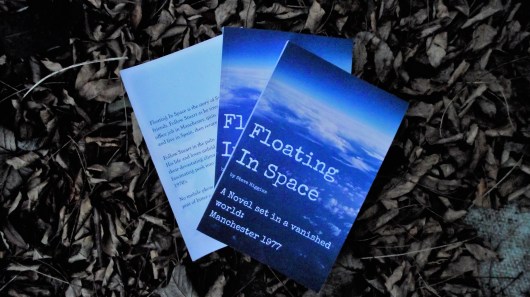
If you enjoyed this post, why not try my book, Floating In Space, a novel set in Manchester, 1977. Click the links at the top of the page for more information, or the icon below to go straight to Amazon.

Favourite Movie Directors Part 2 Oliver Stone

oliver stoneFavourite movie director part 1, which you can read by clicking here, is about Woody Allen. Allen has a directoral style that lets the viewer’s eye roam roam the scene. Oliver Stone on the other hand has a much more forceful style, a highly visual style which takes a firmer hand with the viewer.

To start with, here’s some biographical stuff about Stone:

Oliver Stone was born on September 15th, 1945. The only son of Louis Stone, a successful stockbroker and Jacqueline Goddet. His mother was a French student who his father, then in the Army, eloped with as a war bride in Paris in 1945. He grew up in New York and attended Trinity School on the west side of Manhattan and later attended The Hill, a boarding school in Pottstown, Pennsylvania.

Stone attended Yale University in 1964-65 but dropped out after one year. In 1967 he enlisted in the US Army and served in Vietnam with the 25th Infantry and later the 1st Cavalry.
Back in the USA he enrolled at university in New York and studied filmmaking. Martin Scorsese was one of his teachers. Vietnam was among the first subjects of his student films.

Oliver Stone

Image courtesy Wikipedia

Stone graduated in 1971 and took on various jobs while he wrote screenplays. His breakthrough success was in 1978 with the screenplay for the film Midnight Express for which he won the Academy Award for best adapted screenplay.

The first Oliver Stone movie I ever saw was the 1986 movie ‘Platoon.’ Stone wrote and directed the movie set during the Vietnam War and based on some of his own experiences. It focuses on a new recruit, played by Charlie Sheen and follows through pretty much what happened to Stone himself when he arrived in Vietnam. It shows Sheen getting used to the situation in Vietnam, the weather, the jungle patrols and so on. It also shows the disregard that the other soldiers have for Sheen and any other soldier new to the front line. A newcomer’s life was less valuable than the others who had served their time and put years into the war. It’s a reversal of what you might expect in warfare but the Vietnam conflict was a different war. The combatants were wondering what were they doing there, thousands of miles away from home and for what, and who, were they fighting ? That sort of thinking bred a selfish soldier. Platoon tells the story of those soldiers, all of whom are brutalised in some way by the conflict.

Oliver Stone followed up the movie with another Vietnam film, ‘Born on the 4th of July’ about Vietnam veteran Ron Kovic. Kovic was a Vietnam vet shot and paralysed from the waist down in the jungle and it is a truly shocking film, perhaps even more so than Platoon. After he has been wounded, Kovic returns to a veteran’s hospital in the USA that is grim and disgusting and as I watched it, it contrasted sharply with another war film from a different era, Reach for the Sky. Kenneth More stars as Douglas Bader who, after a terrible crash, is taken to a hospital full of crisp white sheets and antiseptic cleanliness. The contrast between the two hospitals is shocking. A third film completed Oliver Stone’s Vietnam trilogy, Heaven and Earth released in 1993.

Wall Street was a hit movie for Oliver Stone in the eighties and the character of Gordon Gekko played by Michael Douglas became an eighties screen icon. Gekko is a ruthless Wall Street player, a stockbroker and financier who looks at a hundred deals a day. Martin Sheen plays Bud Fox, a young salesman determined that one of those deals will be with him. Fox is ultimately corrupted by Gekko as he becomes involved in many shady schemes but in the end he betrays Gekko to the authorities. In Wall Street Stone first develops a mesmerising visual style almost akin to a music video and it is a style that many film-makers seem to have picked up.

In JFK, Stone takes this visual style to another level and combines various film formats to produce a stylish visual montage. The subject is a controversial one, the shooting of President John Kennedy in Dallas in 1963. Stone decides to use the investigation by New Orleans District Attorney Jim Garrison as a vehicle to explore the various theories about the shooting although ultimately an amorphous military industrial complex is blamed for the conspiracy. Criticism rained down on Oliver Stone from anti conspiracy theorists but I personally felt that the movie was a fair one and everything that was conjecture was shown as conjecture. The great treat for me was the combining of the different visuals and the inter weaving of documentary film with new footage. The movie also led to calls to release more information and led to the Assassinations Records Review Board recommending that all assassination materials be released by 2017. The John F Kennedy Assassinations Records Collection Act 1992 has since become known as the JFK act. Stone went on to make two more films about American presidents, Nixon and W, the latter film about George W Bush.

In recent years Stone made a TV series called ‘Oliver Stone’s Untold History of the USA.‘ I thought, or was led to believe by the hype, that this TV series would be a complete retelling of history. Secrets hidden from the public would perhaps emerge to show how history and events have been manipulated. To be fair, there is some of that. The dropping of Henry Wallace from Franklin D Roosevelt’s Presidential ticket was shown as a blatant manipulation of the democratic process. I might have felt more sympathy for Henry Wallace had the show not preceded this by a disparaging of Churchill in a prior segment. Stone seemed to think that Roosevelt was a man who had the measure of Stalin, especially at their last meeting but it is clear to me that in fact it was Churchill who understood Stalin and Roosevelt who only thought he did.

I have a number of Oliver Stone DVD’s in my collection. Platoon, Born on the 4th of July, JFK, Wall Street, The Doors, not to mention the TV series mentioned above which I have only just started to watch. I still think of Oliver Stone as one of the great movie directors. He is passionate about cinema and has highly political views and yet is still able to laugh at himself. In 1993 he played a small part in the movie ‘Dave’ playing himself as a conspiracy theorist who believes the President has been replaced by a double. Actually, if you have seen the movie, he has!

Oliver Stone’s latest movie is Snowden, the incredible untold personal story of Edward Snowden, the polarizing figure who exposed shocking illegal surveillance activities by the NSA and became one of the most wanted men in the world. He is considered a hero by some, and a traitor by others.


If you liked this post, why not try my novel, Floating In Space. Click the links at the top of the page or the icon below to go to Amazon!

Aliens, Frank Sinatra, and Three Days in the Life of a Couch Potato

Day 1

In this technological age, one item in particular has come to the aid of the dedicated couch potato and that is the hard drive recorder. It’s a wonderful invention which enables the recording and playback of programmes at the touch of a button.

Last Sunday was my first day off and I had planned, unbeknown to my lovely lady Liz, a day of rest, self indulgence, and laziness, including Internet surfing and of course, TV watching.

She on the other hand had other ideas, in particular, a trip to the combination music and kite festival down on the beach. Anyway, all that went ok, the kites were flying well and the music was good. We went back home for some dinner and then it was time to get down to some TV viewing.

Now the Sunday lunch over ran a little making me late for my appointment with the German Grand Prix on Channel 4. Here, however, is where the hard drive recorder comes into its own because of one very simple fact: You can start watching the recorded programme even before it has finished! Technology; incredible isn’t it?

Anyway, The German Grand Prix from Hockenheim wasn’t a classic race but for an F1 fan like me it was well worth watching: Lewis Hamilton won and Nico Rosberg had a penalty but the real joy of watching the race just slightly behind the broadcast time is you can catch up by fast forwarding through the boring stuff from the drivers; “the team did a great job today in qually” and “I’d like to thank the guys back at the factory,” and so on. There is also the questions to the drivers which are well worth fast forwarding through: “You’re in second position on the grid, what can you do today?”
Not much of a record for a TV couch potato but I had big plans for day 2!

Day 2

Now day 2 promised much more TV watching than day 1. Liz was off to work round about twelve, leaving me time to check my e-mails, sort out a few social media updates plugging blog posts like this one, and then a whole afternoon of serious TV watching.

For starters I had Aliens, the sci-fi movie to watch, recorded from ITV 2 some weeks earlier. I have seen it before but some movies just get better over time. I do love the opening of Aliens: The music gradually fades in as we come across a lifeboat drifting through space. Yes, the lifeboat holds astronaut Ripley, sleeping soundly in suspended animation after her adventures in the previous movie, Alien. Ripley has been abandoned in space for 57 years and it turned out that this version was a director’s cut with a restored back story about Ripley’s daughter who we find has died recently as an old lady. The story gives an added poignancy to the film later on and we understand why Ripley is so passionate about rescuing the young girl ‘newt’ who we meet later in the film.

Time for a cuppa when we get to the adverts and then we follow Ripley through the committee meeting where it is revealed that the spacecraft Nostromo, which Ripley self-destructed, caused a loss of over 64 million adjusted dollars. Another committee member advises that LV426, the planet where the Nostromo landed was ‘a rock’ with no indigenous life forms. I can feel Ripley’s frustration when she says, “Did IQ levels just drop while I was away?” She tries to tell the group about a derelict alien vessel containing alien eggs but the meeting ends and Ripley’s story is not believed.

Now before Liz went to work she had left me a couple of jobs and the thought of them threatens my TV watching marathon so I decide to get them out of the way. One of them involved mowing the lawn so I put Aliens on pause and sorted out the mower and strimmer. I was actually immersed in my mowing when Liz popped back in and caught me doing a bit of grafting! This was great because she could see with her own eyes I’m not just sprawled on the couch watching TV! Result!

Anyway, job done and it’s time for some more TV. I fancy a change from Aliens so I finish off an episode of The Saint I watched part way through last week. A TV Diva is kidnapped but Simon Templar saves the day and rescues the lady. Nice to see these old TV shows from my school years still looking good and getting another airing on TV.

Time for a brew and a cheese sarnie, the Saint episode is deleted (that space on the hard drive is in constant demand!) and I’m ready for something more serious. I crank up a BBC 4 documentary about Frank Sinatra. I was planning to listen to it and simultaneously surf the net on my iPad but it’s so engrossing I have to put the pad down.

Six o’Clock and Liz is home and asking why am I not ready yet? Ready? Of course, we have a family meal planned for tonight. “Just about to get changed, love” I say quickly! (Phew!)

DAY 3

Day three and Liz is off to work at the usual time, twelve-ish. The breakfast pots are duly washed and the only cloud on the horizon is that I need to get some eggs and some milk in. Should I leave it until later or sort it now? Tell you what, time for a quick Saint episode (series record, I love that button on the recorder!) and a cuppa. The episode is one about the Saint receiving threats on his life and it’s a bit of a naff one with the back lot at Elstree or Pinewood trying desperately to look like swinging sixties London and wait a minute, isn’t that lady reporter played by the same lady who played the film actress diva in the last episode? The Saint, the more you watch it increasingly becomes like a little TV repertory company, with increasingly familiar faces, even in the bit parts. Anyway, I fast forward through most of it and then it’s off to the shops for the milk and eggs.

Sigourney Weaver as Ripley

Sigourney Weaver as Ripley

Back home and it’s time for some more Aliens. I don’t know about you but I tend to watch a lot of recorded films in two or more parts. I settle down with Aliens and the Slimy Carter Burke has enticed Ripley on a trip to LV426 with the tough hombres of the Space Marine Chore. They drop into orbit over the planet, now inhabited by terraformers with their atmosphere processors and Ripley, Burke and the marines awake from hibernation. I think for a moment that if LV426 is that far away enough for the crew to hibernate while travelling there, it isn’t that much of an emergency rescue mission but hey, what do I know? Later they arrive on the planet in a pretty exciting drop from the mother craft. The marines secure the area but then find that the Aliens have taken the humans into the atmosphere processor to use their bodies to hatch more of their creatures. Aliens is a sort of hybrid film; a sci-fi horror action movie, combining two or even three genres. The rest of the series was a little poor if you ask me but the first two in the series: Alien and Aliens, are classic cinema. Sigourney Weaver creates a memorable movie character in Ripley, tough and uncompromising, she is a sort of female John McClane. (Remember the Bruce Willis character from Die Hard?)

Anyway, time for the usual afternoon cheese sarnie and a brew and I settle down to watch the end of the Frank Sinatra documentary. I found it highly interesting as the film explored Sinatra’s relationships and associations and shows how the Kennedys dumped him, not wanting to be associated with him when his friendships with mafia figures became public. Later, in the eighties, Sinatra, a lifelong Democrat allied himself with republican Ronald Reagan.

A quick check of my e-mails and some more posts sorted on Twitter and Google+ and time for another cuppa. (Choccy biscuit? Don’t mind if I do!) Time to crank up Aliens again and this time the action heats up as Carter Burke decides Ripley knows too much and he locks her in the med lab with one of the alien parasites. It’s a pretty scary sequence. Ripley gets away but the Aliens are trying to break through into the complex. Why are the radar tracker signs showing the Aliens inside? Look at the roof, people!

Enough scary stuff for today. Liz comes in and asks “Is my dinner ready?” in a tone that suggests she doesn’t think it is. I need to think fast and quickly come up with: “Thought we might go to the Turkish Restaurant darlin’.”  “Well,” she says, “sounds nice, better get ready then.” As I leave to follow her I glance at myself in the mirror and hear myself saying: ‘Top TV couch potato? Steve, you are the man!’

What to do next:

Share this post on your favourite social media!

Hit the Subscribe button. Never miss another post!

Buy the book! Click here to purchase my new poetry anthology.

Click here to visit Amazon and download Floating in Space to your Kindle or order the paperback version.


10 Books you should read about Marilyn Monroe

Marilyn MonroeThe very first book I picked up about Marilyn Monroe was the biography by Fred Laurence Guiles. ‘Norma Jean, the life of Marilyn Monroe’. It’s a particularly well researched book and for a great many people, fans and writers alike, it has become the definitive biography of Marilyn, the place you go to find out all those facts and figures about her life, especially her early life. Her death is not really discussed in the same fashion as in later books, some of which are wholly devoted to the mystery of her passing. In my edition which I bought in the seventies, Bobby Kennedy is referred to only as ‘the easterner’ and it was only in later years that Bobby Kennedy and his brother, President John Kennedy became publically identified with Marilyn.


Marilyn: Norman Mailer

Norman Mailer apparently used Guiles book as a guide when writing his own book about Marilyn. Simply called ‘Marilyn, a biography’ the book is a large format book for which Mailer, the celebrated American writer supplied the text, and numerous photographers supplied the impressive array of photographs. The New York Times review online says the book is the ‘Glossiest of glossy books’ and further goes on to remark about the cover picture; ‘Marilyn Monroe has that blurry, slugged look of her later years: fleshy but pasty.’ I’m not sure what the writer was thinking about but personally, I rather like that cover picture of Marilyn.


GoddessA slim volume appeared in 1964 called ‘The Strange Death of ‘Marilyn Monroe’. It was this book that kick started rumours of strange goings on in the hours leading up to Marilyn’s death but the first book I read about the mystery (and I do love modern mysteries) was the book by Anthony Summers; Goddess: The Secret Lives of Marilyn Monroe. Summers is a veteran journalistic investigator and has written books about J Edgar Hoover, Richard Nixon and the JFK assassination. Was Marilyn murdered or did she commit suicide?

Another author who thinks she was murdered was Robert F Slatzer who wrote a book called The Life and Curious Death of Marilyn Monroe. I couldn’t find my copy when I came to photograph my Marilyn books but I do have it somewhere. Slatzer made a number of claims, one of which was that he actually married Marilyn but her studio bosses forced her to annul the union immediately and remove all the evidence that it ever took place.


IMGA0353Marilyn Monroe: Private and Undisclosed is a book I picked up quite recently. It is written by a British author, Michelle Morgan, and is similar to Fred Guiles book of Marilyn, very well researched but focusses on various people associated with Marilyn who have not been interviewed before. After reading this and other books, I get the impression that Marilyn compartmented her life, and those that were in one compartment, were not necessarily aware of people who were in the other ones.


img_0044_27623392904_oTalking about J Edgar Hoover, here’s another book I picked up about Marilyn. This was a remainder book and concerns the information about Marilyn in Hoover’s FBI files. Marilyn: The FBI Files by Tim Coates. It’s an interesting addition to the many books about Marilyn with pages of FBI files concerning Marilyn, many of them redacted with various names and details blanked out.


Monroe


The Assassination of Marilyn Monroe by Donald Wolfe. Wolfe is a journalist who has done a great deal of digging and research and one of his interviewees was the brother in law of Marilyn’s housekeeper, Eunice Murray. He reveals first hand that Bobby Kennedy was at Marilyn’s home on the day she died.


img_0015_28134392832_oDonald Wolfe wrote another book; ‘The Last Days of Marilyn Monroe’. I’ve not read this one yet, it’s one I’m saving for my holidays.


img_0053_28161186631_oFinally, Fragments, edited by Stanley Buchthal and Bernard Comment. When Marilyn died in 1962 she left all her possessions to her acting mentor and head of the Actors Studio in New York, Lee Strasberg. When he passed away Marilyn’s effects went to his daughter and now it seems many will be auctioned off. This book is a look at the letters and notes she made, fragments of poems and thoughts scribbled in notebooks, on hotel stationary and envelopes. Marilyn’s thoughts and written meanderings show her to be a thoughtful woman who cared about what she saw and heard. Marilyn was a great reader and left behind a large book collection, part of which is listed in this book. Click here to read about all the 430 books she left behind.


Hope you enjoyed this post. If you did you might want to try my book, Floating In Space. Click the links at the top of the page for more information.