Writing and Blog #1 of 2025

Ok, here we go. It’s 2025 and it’s time to kick off with my first proper blog post of the New Year: I settle down in front of the fire, crank up my trusty old laptop. The blank page glares at me as usual; what to write about today?

I first started posting in 2014 and that year I managed to get 2341 views which I was pretty pleased about. If I had also managed to sell 2341 copies of any of my books, I would have been even more pleased but hey, that’s another story.

Last year in 2024 I managed to accumulate a total of 14,182 visits which is pretty fantastic although I’m sure there are plenty of blogs out there that have an even larger readership. My most read post has been Manipulating the Image, a look at various aspects of photo manipulation. I’ve tried a couple of follow up posts on the same subject but that post, actually from 2022, continues to boost my readership. Why is it so popular? I really don’t know despite looking at things like subject matter, keywords, search engine optimisation and so on, I still don’t understand its popularity.

A lot of blogs on the internet seem to focus on a particular subject. Things like cycling, classic films or canal boating for instance. Those blogs always know where the next post is coming from; another cycling trip, another classic film review or canal journey. As there is no actual focus on this blog it’s sometimes hard to hone in on a new subject although generally, I stick to books, films and my little old life. Plus the occasional plug for my three books.

I have tried to occasionally write one of those ‘how to’ blog posts and impart some of my blogging knowledge to my readers and fellow bloggers but I reckon those sort of posts might be of interest only to my fellow writers. One of my previous posts was about three ways to write a poem (click here for the video version) and when it comes down to it, I think those three ways could also be used to write a blog post.

The first way was the easy way, a flash of inspiration; a great idea comes to you out of the blue and hits you square in the face and you are off and running. That is probably the best way to write a post or a poem. The second way is when something happens to inspire you. In my poetry example I wrote about a time when I returned home and went into the kitchen to make a cup of tea. While I was waiting for the kettle to boil I looked out of the window and watched the cat that belonged to the house opposite make its way across their lawn, take a good look around and then settle down under a small young tree and go to sleep in the afternoon sun.

Later subdued screams and cries were heard over the way and it turned out that the lady of the house had returned home to find her cat was sadly dead and it seemed to me that I had seen the cat resign itself to its fate, even taking a last look around before slipping away to start the next of its nine lives. Inspired by these events, shocked even, I went away and began a poem.

The third and final way of writing a poem or indeed any kind of creative work is an obvious way known to all professional writers everywhere and that is simply hard work. Unlike mere amateurs like me, the professional has no choice but to sit down and get on with things, firm in the knowledge that at a certain time their editor or publisher or Hollywood producer will be asking for that article, blog, book or screenplay.

I too have my deadline, that of 10:00am on a Saturday morning and sometimes even that is hard to work to. Sometimes I have finished a post on Friday afternoon and have passed it over to my proofreader for a quick final check, confident that all will be well for Saturday and then later find that I have forgotten to hit the schedule button or even worse, scheduled the post for the wrong day.

Coming up with a new blog post week after week just seems to get even harder and here I am on my 649th post. Six hundred and forty-nine posts! I suppose to those of you who have been writing for years, 649 may not be such a big milestone but for an amateur writer like me, it’s pretty special. The crazy thing is this, looking through my diary from a few years ago I see I was commenting on one of those online forums, praising WordPress and blogging and someone commented that if I hadn’t been blogging I might have finished my second book!

Looking back I now wonder whether that guy was actually right. 649 blog posts, times my average word count per post: That comes to over 700,000 words. I could have written another book and to be fair, that was part of the idea behind Timeline, to utilise all those old forgotten posts in a new collection of stories and blog posts. Perhaps I could have written another novel. But then again, it’s not just the words, it’s the idea behind the words, the creative thrust of a book that’s important. Get that and the book should just follow. Still, that fellow had a point. Should I give up my blog posts in favour of my book? Well, if that would guarantee me producing a book then yes, great! The thing is, it’s not a lack of words that have kept my sequel to Floating in Space in a constant state of abandonment. It’s really my own laziness.

Laziness, fear of the blank page, procrastination, they are all enemies of the writer. The only way to overcome them is just to keep on writing. If you are writing a blog post and it won’t come, switch to something else; that other post you had on the back burner or that script you had started a few years back. A great deal of my work is done like that, in small bursts of activity. A while back I had an idea for a film screenplay and worked away creating the first quarter of the work. Later I decided to turn it into a book and as I worked with the text, adding in all sorts of detail that wasn’t in the original script, the story came alive to me in a different way and I started to bring something new to the book version. Don’t hold your breath though, it’s still far from completion.

Oh well. Here’s another script story. Ages ago when I first met Liz and we began socialising in St Annes, we started frequenting Wetherspoons there. It’s a pretty friendly pub and we made friends with quite a few people. There was Big Steve who I wrote about in another post but we also met two guys, Craig and Danny (as usual, names have been changed to protect the innocent!) They were brothers in law who were married to twin sisters and they both owned and ran small hotels in St Annes. The hotels were on the same street opposite each other and the sisters were identical twins so their whole scenario seemed to scream ‘sitcom’ to me.

I used to ask them what funny things had happened to them in their work as hoteliers and being married to identical women. ‘Loads of things’ they would always say but I could never get any details. Anyway, when I had a quiet moment, I started off a pilot sitcom script using their situation, rival hoteliers married to identical sisters. It’s nothing brilliant but mildly amusing and it sat in my documents folder for a long time. Every now and again when I slipped into that blank page syndrome, I’d pull out the script and add a few more pages.

One day I noticed on one of my occasional visits to the BBC Writersroom page that a window of opportunity was coming up for a sitcom script. The BBC, rather than accepting ‘spec’ scripts all year round open a small ‘window’ of a few weeks where you can submit your work in certain areas, sometimes a film script or a play, sometimes drama, other times situation comedy. I went back to my sitcom script, pulled it quickly into some sort of shape, added an ending and bunged it off to the BBC. Then I sat down and waited, glued to my inbox, awaiting the BBC email that may or may not even arrive.

Of course, I do wonder what might happen if the BBC actually decided that my sitcom script is worth making into a pilot? Imagine if the BBC said “we’re going to make a twelve episode series!” Imagine me trying to write twelve episodes when it took me months to write one 25 minute episode! Even the great Spike Milligan had a nervous breakdown writing the numerous scripts of the radio show ‘The Goon Show’. Of course, someone at the BBC could be reading this very post. Did I say something about 12 episodes? Would I be able to write 12 episodes?

Of course! What’s 12 episodes to a top writer like me? I might even start episode 2 straight away. Well, straight away after a cup of tea. And maybe a sandwich. Better make it first thing tomorrow. Well, tomorrow afternoon might be better . .

What to do next: Here are a few options.

Share this post on your favourite social media!

Hit the Subscribe button. Never miss another post!

Listen to my podcast Click here.

Buy the book! Click here to purchase my new poetry collection.

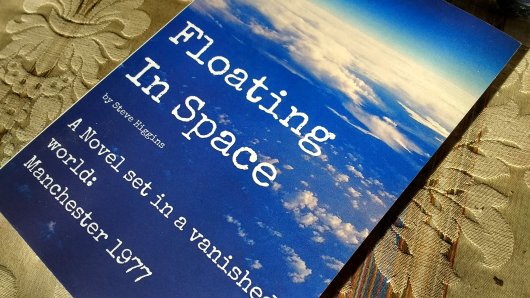
Click here to visit Amazon and download Floating in Space to your Kindle or order the paperback version.

Click here to visit amazon and purchase Timeline, my new anthology.

Holiday Book Bag 2024 (Part 2)

Last week I gave you part one of my Holiday Book bag so here we go with part 2, more of my holiday reads and also what happened when tragedy occurred and I ran out of books.

Let’s kick off with this one, a Christmas pressy from Liz and a book I’ve been dying to read but purposely kept to read on holiday.

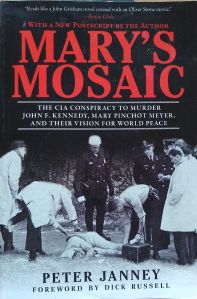
Mary’s Mosaic by Peter Janney

Liz bought me this book for Christmas and I’ve been saving it for a time when I can sit and read it undisturbed. After the assassination of President Kennedy there were numerous deaths of various witnesses in Dallas and elsewhere. One such death was of a lady named Mary Pinchot Mayer. She was the ex-wife of CIA agent Cord Mayer and one of JFK’s many mistresses. The author reckons she not only introduced the President to mind altering drugs but also agreed strongly with Kennedy’s desire for peace. He goes a little too far perhaps in making the case that Mary was the force behind JFK’s commencement address at American University in October, 1963 in which Kennedy called for both the USA and the Soviet Union to

‘direct attention to our common interests and to the means by which those differences can be resolved. And if we cannot end now our differences, at least we can help make the world safe for diversity. For, in the final analysis, our most basic common link is that we all inhabit this small planet. We all breathe the same air. We all cherish our children’s future. And we are all mortal.’

Mary was shocked by the murder of the President but came to realise the part played by the CIA and wanted to bring attention to the false story of the Warren Commission report. One day in Washington in October 1964, whilst walking along the towpath of the Chesapeake and Ohio canal towpath, she was murdered. Mary was shot once in the head and once in the chest and in this remarkable book the author goes on to trace the man who he thinks may have been the assassin.

A very fascinating read indeed.

So that was it, by the start of our third week I had read all my books. What could I read next? Well, there wasn’t much in our rented villa’s bookcase so I read one of Liz’s books, Shall we Tell the President?.

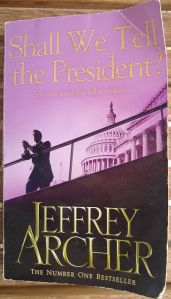
Shall we Tell the President? by Jeffrey Archer.

I’ve actually read this book before, many years ago but this was a new edition, rewritten by the author himself. In the original, the president in question was Edward Kennedy but of course, in real life Kennedy never made it to the White House, his challenge cut short by the ghost of what happened to Mary Jo Kopechene at Chappaquiddick. In this rewrite then, the author puts his own fictional president, President Kane in charge at the White House.

The FBI learn of a plot to murder the president. A Greek waiter, an illegal immigrant learns of the plot whilst working as a waiter at a restaurant in Washington DC. He calls the FBI and the two agents assigned to the case report quickly to their superior. Soon, one of the agents and their boss, as well as the informant are dead leaving only one agent who by chance has survived a murder attempt. He has six days to track down the assassins.

The book kept me interested but I can’t say it was a great read and I thought some of the dialogue was a little poor, in particular the FBI agent who kept referring to his new girlfriend constantly as ‘pretty lady’ was a little cringeworthy to say the least. Sorry Mr Archer but I’d have to give this one a five out of ten.

The Long Dark Night by Susan Lund

This was a bit of a first for me. Liz had nothing else that I wanted to read so she said she would sort me out something on her Kindle. She searched for free books and I chose this one by Susan Lund. It was about ex-FBI detective Michael Carter who is now working for the police on cold cases. He is asked to look into the discovery of a dead body on a property that is currently being renovated. As more bodies are unearthed, Carter links the bodies to some current cases and feels that a serial killer might be at work.

Later, two young boys are abducted but one escapes and Carter finally has a clue to work on. Could the killer be an ex-police officer?

The book was a fairly interesting read in part but the author seems to lose direction towards the end and the finale seemed to me to be a bit of an anti-climax.

Even so, the book kept me interested for a few days.

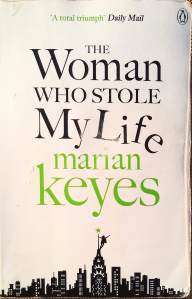
The Woman who Stole My Life by Marian Keyes.
This final holiday read was a book Liz took with her. She read it first, thought it was good and passed it on to me. I thought it was probably standard chick-lit fodder but actually it was a really good read, trotting along in a very chit chatty way, just like my own stories. It flips about timeline wise talking about things in the present and then flipping back to events of some years ago but once you got used to the situation it turned out to be a really enjoyable read.

Stella, many years ago was looking after her family when she was struck down by a mysterious illness which rendered her paralysed and unable to move or talk. Her neurologist Mannix, manages to communicate with her by getting her to blink, so he would go through the alphabet and she would blink at a particular letter and eventually they would put words and sentences together.

Gradually she begins to find that Mannix is becoming quite important to her especially when her husband and children don’t seem to be interested in either her or her predicament. When she gets well, she finds that 1, she has fallen for Mannix and 2, he has fallen for her, so much so that he has self-published a book called One Blink at a Time, a book of based on the notes he has made of their blinking conversations. Anyway, by a series of fluke events the book becomes a best seller in the USA and the two move to New York to promote the book.

All in all, a very enjoyable book indeed and I might even look at reading some more of Marian Keyes books.

That was my holiday book bag. What books are you planning to read on holiday?


What to do next: Here are a few options.

Share this post on your favourite social media!

Hit the Subscribe button. Never miss another post!

Listen to my podcast Click here.

Buy the book! Click here to purchase my new poetry anthology.

Click here to visit Amazon and download Floating in Space to your Kindle or order the paperback version.


10 Reasons to Read Books!

Every blog post on this site will end with a familiar call to buy my book, Floating in Space. Floating, in case you are a first time visitor to this site, is a short novel about the life of a young working class lad in urban Manchester in 1977. A number of reviewers have heaped praise on the book, others did not find it so praiseworthy. Why should you then consider it as an addition to your library? Why should you read it? Why should you even read books in the first place? Let me give you a few reasons . . .

Knowledge

One of the biggest reasons why we read books is to increase our knowledge. Books are a rich source of information. Reading books on varied subjects imparts information and increases your range and depth of knowledge. Whenever you read a book, you learn new information that otherwise you would not have known.

Improving your brain.

Studies have shown that reading has strong positive effects on the brain. By staying mentally stimulated, you can prevent Dementia and Alzheimer’s disease. Keeping your brain active is important because the brain is a muscle and like other muscles in the body, exercise keeps it strong and healthy. Similar to solving puzzles, reading books is a great way to exercise your brain and keep it healthy.

Stress Reduction.

Reading a book can relieve stress better than taking a walk or listening to music. According to studies, people who read more tend to have lower stress levels.

Building vocabulary

Reading improves your vocabulary and command of the language. As you read, you come across new words, new phrases and writing styles. A bigger and better vocabulary helps in conversation, with job interviews and in your own writing.

Improves writing skills

Reading a well-written book helps you to become a better writer. Many successful authors gained their expertise by reading the works of others. A great book will inspire you and urge you to write as good if not better than works you have read. If you want to become a better writer, start by learning from previous masters.

Improves communication skills

Improving your vocabulary and writing skills  go hand in hand with developing your communication skills. The more you read and write, the better you communicate. Increasing your ability to communicate, improves your relationships and even makes you better at your job or at your studies.

Portable entertainment

Books are portable and light in weight. They are not like bulky computers and games that take too much space. With a book, you can pack it in your handbag or pocket and easily carry it anywhere. You can read in a plane as you travel, in your bed before you sleep, or even relaxing on the beach during your holiday.

Helps you sleep better

Poor sleep leads to low productivity. This is why so many experts recommend that you establish regular de-stressing routine before you sleep to help calm your mind and therefore sleep better. Reading a book is one of the best ways to calm yourself before you go to bed. Instead of watching television or spending too much time on your smart phone, take some time to read. The bright lights from the electronic devices will only affect your sleep. On the other hand, a book will help you sleep better.

No side effects of the digital world

Spending too much time watching television or playing video games can affect your eye health in the long run. On the other hand, books are safe and easy. No one has ever gone blind from reading too many books. There are no known side effects or dangers of reading great books. There are only benefits.

Enjoyment.

There is much to enjoy in this world: Nature, the joys of swimming in the sea or relaxing on a beautiful beach. Listening to music or visiting the cinema can both be magical experiences but finding a really wonderful book and taking in the thoughts and ideas of another person, sometimes even the thoughts of someone who has passed away years earlier is for me a truly wonderful feeling. I think the first time I read David Copperfield by Charles Dickens was when I realised how wonderful a book could be. Floating in Space can hardly compare to a towering work like that but, well I kind of like it!


Floating in Space is a novel by Steve Higgins set in Manchester 1977. Click the links at the top of the page to buy or for more information.

4 Simple Secrets of Self Publishing

One of the bylines I use on Twitter is ‘hear it straight from a self-published author’ so I thought it might be an idea to write a post about just that, about being a self-published author.

1. The first thing to remember in the world of self-publishing is that it’s just you, no one else, just you.

You are the writer, the editor and the proofreader all rolled into one and there is only you to tell you that that bit is good and that other bit is not so good and that the book is too long or too short, or anything else for that matter. Sometimes you might find you need a little help, particularly in the area of proofreading. After I wrote my book and then rewrote it a few times I personally began to develop a sort of word blindness and I tended to see only the words I thought I had written and not the ones I actually had written. Spelling and grammar checkers will pick up things like repeated words, bad spelling and so on but a really good idea is to get someone to proofread your work. How many mistakes Liz has spotted in my work I shudder to think!

2. Once you have clicked the button at Amazon to publish then another thought may begin to enter your head: Who is going to buy your epic work? How will they even know about it?

The answer is marketing, and who will be marketing your book? Well, for a self published author, it’s going to be you! Yes, that’s your cue to start Facebooking, Tweeting and Blogging so you can get your message out to all those eagerly waiting readers; a new book is available, come and get it.

A thousand websites are out there that will tell you about the intricacies of marketing and blogging. Some will drop a tiny sliver of free info onto your doorstep, others want you to sign up for their webinars and their courses all guaranteed to sell your book, at a price of course.

For me there are a few select websites that I read regularly and I do follow their advice,  particularly when I decide to shell out some money and actually advertise. Apart from advertising, I publicise Floating in Space in all the usual places I have mentioned plus I have a raft of videos to bombard the public with, some short and snappy and others that go into more detail. Then of course, there is this humble blog, going out once a week in the hope that these short missives about life, the universe, books and classic films will hopefully entice a few people to buy my book and bring me in a few sales. Will you be a best seller and make lots of money? Some writers do of course but when £5 a month drops into my bank account, sometimes more, sometimes less, I count myself very happy indeed.

Got yourself an author blog? No? Get yourself one ASAP. An author blog is a way of communicating straight to the book buying public. WordPress is a great way to start, fairly easy and free. The only thing I pay for at WordPress is my website address, http://www.stevehigginslive.com

3. Have you self-published at amazon?

Well if you have, having your author page at amazon is very important too. Get yourself a good bio sorted and some juicy stuff about your book. Another place that’s important is Goodreads. Take some time to set up your author page there too and try to interact with readers and other authors. Take a look at my Goodreads page here.

4. One last thought.

Ok, you’ve gone down the self-publishing route but that doesn’t mean you have to stay self-published. Keep on researching publishers and keep on sending off your manuscripts!

Oh and one other thing, just because you have found these four ‘secrets’ published on the Internet, that doesn’t mean that they are right, or good or even worthwhile listening to. I am just like a thousand other writers knocking out works like this that float off into the internet. I have no editor to tell me my post wasn’t helpful or interesting or generally up to much. I just have me and some grammatical support from my lovely proofreader who labours away correcting my tenses and spelling and other errors for no monetary gain at all, although I do take her out for a meal now and again.

So if you fancy becoming a self published author and blogger, join the club. Floating in Space is currently rated by Amazon as the 520,413th most popular book on their site. Almost a year ago it had hit the dizzy heights of 4,536th most popular so that is quite a fall, maybe it’s time to consult my head of marketing (me) and maybe sort out a new video from my personal video producer (me) for a new ad campaign!


Floating in Space is a novel set in Manchester, 1977. Click the links at the top of the page to buy or for more information.


Never Judge a Book by its Cover

The Problems of a Self-published Writer.

quotescover-jpg-91I was at a pub quiz the other week and one of the questions was ‘name an author who has written 723 novels.’ Seven hundred and twenty-three novels. Can you believe that? The answer, in case you didn’t know is Barbara Cartland. She has a place in the Guinness book of records and is known as one of the world’s most prolific authors. At the other end of the scale there is me, Steve Higgins, with my one book, Floating in Space.
I have probably written more words, in my blogs and tweets and other social media posts promoting my book, than are actually in the book itself. Oh well, that is one of the facts of the self-publishing world: Writing a book is one thing but marketing is an entirely different ball game altogether and of course the competition is fierce with more than 5000 new books released on Kindle every day! Is it worth it you might ask? Why do I do it? Well, quite simply I do it because I like doing it and when the enjoyment has gone I’ll start thinking about doing something else with my spare time.

Nothing improves and hones your writing skills more than the writing process itself and as a blogger with a deadline of 10:00 am on a Saturday morning I have even started to feel like something of a professional writer. Nothing gives me more pleasure than to log into WordPress and find someone has liked one of my posts, or better still has left a comment. I’ve always thought that an intrinsic element of the human condition is finding that out that there are others in the world who think the same way as you do and like the things that you like.

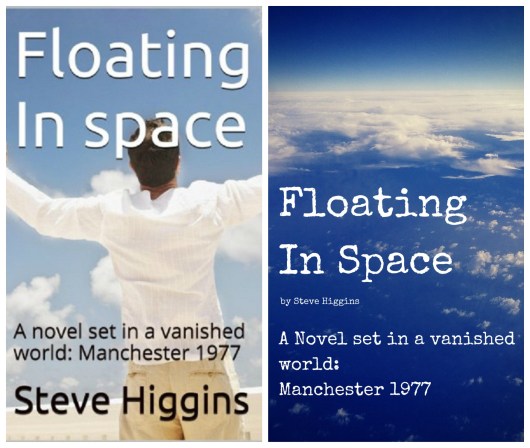
I do tinker quite a lot with Floating in Space and some time ago I added a version which hopefully corrected the book’s various grammatical mistakes and I also added a small index to help explain 1977 to my younger readers. Recently I went a step further. I’ve not always been completely happy with the cover of my book. I used the cover designer built into createspace and KDP select to create a cover from various stock elements but I’ve always thought I could do better.

Using the web site canva.com which has a Kindle cover template I designed a new cover using a background photograph I had taken myself. I’ve always envisioned the cover as being a lovely cloud filled sky and the image of a man floating there, hands outstretched. That image is the whole essence of floating in space and although I’d like to explain further I don’t want to give away the ending for any potential readers. Anyway, there is no floating man on the new cover (yet) but there is a rather lovely cloud filled sky. I was pretty pleased with the result so I exported it to Kindle and there it was, working pretty well I thought as my new cover. Take a look below at the old and new versions.

picmonkeybook-collage

Old cover to the left, new cover to the right.

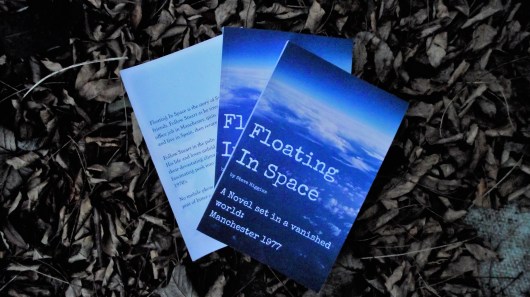
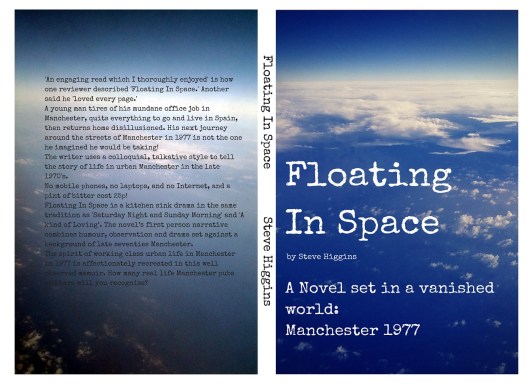
I then added it to my paperback version in createspace and after uploading it I ordered a copy for promotional purposes. Now I’m glad I did that because the book arrived with its smart new cover but I found there was no lettering on the spine and the entire back cover blurb had gone. Now, after some research, I find that to create a cover for the paperback, you have to create a full book jacket including the front and rear of the book! Looks like it’s back to the drawing board for now for the paperback cover!

I’ve had to be a little creative in using the paperback for my web site photos. The one below shows the new version but the one underneath showing the rear cover is the old version!

dscf1792_31219045553_o

A lot of the videos I have on this site were made at animoto.com and it was great to find I can just edit my original videos, take out photos of the old cover and insert the new one, except of course for shots where I’m actually holding a copy of the book.

Wonder if Hemingway ever had all this trouble!


If you want more information about Floating in Space click the links at the top of the page. Have a look at the updated video below to hear more about the way the novel was written and a little bit of background information:

Update.
I wrote the above post last week and now, after a few days work, here’s the finished cover which is now live on Amazon if you fancy a paperback to read while you while away those dark winter nights.
webversbook-cover

The Secret of my Success

successThe secret of my success. What’s that about, you might wonder? Well, I thought it was time to write something about Floating In Space again and update you with how it’s going. Success of course is pretty relative. Floating In Space isn’t a blockbuster hit, in fact it’s currently rated at 677,726 on Amazon so there’s a bit of a way to go before we start challenging the current number one paperback. Still, from my point of view, that of an amateur self published writer, I’m reasonably pleased with myself. I wrote Floating for me, for my own personal pleasure and the fact that so many people have read it is great.

Last year, 2015, I was averaging a few quid in royalties each month. A fiver means I’ve sold about ten Kindle copies and I was selling at that rate per month for most of 2015; sometimes less, occasionally more. In November I thought that was the time to crank up the pressure and get ready for the Christmas rush. I took some of my profits and invested them in a couple of advertisements. One on Twitter and one on Facebook. It’s interesting how advertising on the Internet works. You can target people by age, gender and interests, by geographical location, by personal interests, by all sorts of things. My Facebook ads didn’t seem to do so well, indeed various versions were not accepted due to the text used in my images. Facebook doesn’t like text within images but images on the Internet are highly important as you probably know. Posts with images attract much more interaction than posts without images. Anyway, I eventually solved the issue by using text free images thus making them more Facebook friendly.

On Twitter, I promoted an existing Tweet about Floating and it went pretty well. Well, I thought so at first, the only thing is that my December sales were nil. Same for January and February. In fact it was only mid 2016 that they seemed to recover. The current ad I am using is on Goodreads. It’s a pay-per-click ad which is doing really well. A huge amount of people have seen it, although only a few have actually clicked on the ad, and it’s then, when a viewer clicks on the ad, that I pay a few cents.

This blog, with its various posts and videos was started originally to sell my book. After all, it’s one thing to publish a book, it’s another to start selling it and people need to know it’s out there first. However, this website has taken on a life of its own. My own writing has improved and its a great to have a deadline  -10:00AM every Saturday which just seems to hone my writing. I work towards that deadline every week and so far, with the help of my standby or banker posts, I’ve always made it OK.

My posts go out automatically every Saturday to all my social media. Facebook, Twitter, Google+ and Tumblr accounts and I have a fair few followers on all those sites, especially Twitter. On Facebook, my writer page has only about 150 followers and probably less on Tumblr and Google+ but on Twitter, I have a whopping 3,684 followers. Yes, 3,684! Now, I’d like to be able to tell you how I did that but I’m not sure I can. The only answer I can give you is that networking, constant networking, eventually pays off. I usually post four times a day on Twitter, just links to my posts and videos, all coupled with a picture that I hope readers will find interesting enough to click on.

Here’s the interesting thing, the really crazy thing. Often, my stats at WordPress won’t match with Twitter. Take a highly retweeted post on Twitter, linking to a wordpress post and my Twitter stats will show a pretty hefty number of retweets and likes but on wordpress there are not always the same figures. That’s because, I think, my fellow promoters and networkers at Twitter don’t necessarily click the link on the tweets in the first place, they just take them at their face value and like or retweet as they think fit. Why? Because they have their own agenda which doesn’t necessarily fit in with mine.

Internet etiquette means that I’ll tend to retweet the tweets of my retweeters and if I do that, boom, those tweets are going straight to my 3684 followers, just as my retweeters wanted. Yes, the Internet can be a pretty ruthless place. My pretty large following gives me a certain sort of power, it makes me pretty popular and means that my following is just expanding organically. My latest stats say I’m getting another 2 followers every day so please check the date and update that 3684 figure incrementally when you read this!

So, is it still possible to find success as a self published author or Internet writer? Believe me, I won’t be giving up my day job anytime yet but it’s not impossible to at least make a living. 50 Shades of Grey started out as a self published novel, and so did many other books. In fact click here to read about the top 10 best-selling self published authors.

Still what is success really? If Floating In Space hits the best seller lists and I make a huge amount of money from it, I’d only fritter it away in restaurants and pubs, spend far too much time in some sunny resort, and probably drive about the country in a ridiculously expensive car. Do I really need success? Do I really want it?

Of course I do!


If you enjoyed this post, why not try my book, Floating In Space? Click the links at the top of the page for more information but in the meantime, check out my one minute video below!

My Holiday Book Bag (2)

A long time ago I was reading a biography about Richard Burton, in fact it I think it was ‘Rich,’ the biography by Melvyn Bragg. Bragg used Burton’s own diaries in his work and wrote, amongst other things, about Burton’s love of books and when Burton went on holiday he looked forward with delight to the contents of his ‘book bag.’ I know it’s a pretty tenuous link but one thing I have in common with Richard Burton is a love of books and when I go on holiday, one of the delights of lying under a warm sun on my sun bed is a good undisturbed read. OK, I read a lot at home and on my lunch breaks at work but it’s a few minutes here and a few minutes there and whenever I get interrupted it kind of breaks the flow. Some books, as we all know, are just made for a really long, uninterrupted read.

DSCF0004edOK, That was the intro copied from my earlier post Holiday Book Bag part 1. You might be thinking what is this about? A Holiday book bag in January? Yes, well here’s the thing, I’ve saved up my holidays for a winter escape from the UK and believe me, there is nothing more satisfying that calling up friends in the UK from sunny Lanzarote, where we are staying for six (yes six) weeks and asking ‘What’s the weather like back in the UK?’ Especially when they answer, as you knew they would, ‘It’s freezing cold and lashing it down!’
Anyway, I’m sure it’ll still be cold in February when we return so let’s move quickly on to the book bag. There is nothing more exciting for an avid reader like me, and the aforementioned Richard Burton, to plan what to pop into a book bag. Going to Lanzarote there are some restraints of course. One, we are flying so we only have limited luggage space so straight away I eliminated my hard back books which is something of a pity as I have some cracking hardbacks ready to be read. Anyway, I’ve stuck with paperbacks, some I have purchased recently and some have come my way as Christmas presents. Here is my final list.

Charlie Chaplin by Peter Ackroyd.

Peter wrote an excellent book about one of my writing heroes, Charles Dickens and I felt that this book was going to be in the same sort of mould. Long, intense and full of detail. Actually it’s a pretty slim volume and not the intense scrutiny of Chaplin that I was expecting. However, on the credit side, it’s a thoughtful and detailed look at Chaplin, his movies and his personal life and a cracking read it is too. One hundred years ago Chaplin was the most famous man in the world. I’m not sure who would qualify for that title today as despite global communications and the Internet age, the world is separated by many different languages and cultures. A hundred years ago there was no language barrier for Chaplin, and his silent films with their universal language of comedy, went all the way round the globe and he was as famous in countries such as Russia or Africa as he was in Europe or the USA.

Albert Speer: His Battle With Truth by Gitta Sereny.

This is a classic of World War 2 literature and concerns Albert Speer who was Hitler’s architect and then rose quickly in the ranks of the Nazi hierarchy to become Armaments Minister. He was spared the fate of hanging at the Nuremberg trials after admitting that the Nazi leadership, himself included, should take responsibility for the crimes of the Third Reich. What is interesting about the Nazi years is the way Hitler himself seemed to entrance people by the power of his personality. Much has been written about his speeches to the Nazi faithful and the many Nazi rallies of the 20’s and 30’s and yet, looking back at archive film, he looks to be almost something of a madman. However, those who attended the rallies speak of his almost magnetic power as an orator. Speer himself was surprised at first seeing Hitler speak because the speech he heard that day was about unifying Germany, bringing back employment and pride to the German worker, not about death to the Jews. It struck a chord with Speer and he began to follow him. It was the same with many people and as is pointed out in this book, had Hitler died in 1937, he would perhaps have gone down in history as a great German, not the mass murderer he turned out to be. There is an embarrassment among Germans of Speers’ generation; a feeling of how could Hitler have lied to them, how could he have done those terrible things? Something repeated many times is the feeling ‘if only the Führer knew! The fact is, Hitler did know but did Speer know too? An answer, of sorts, is the conclusion to the book.

One of the great aspects of this book is that the author’s journey into Speer’s life is a personal journey and one she shares with the reader. In the final pages we hear about how the author returns home after a weekend away and sees her telephone answering machine winking with various messages. The first one is a message from Speer himself, saying he was in London for a BBC interview and wondered if Gitta and her husband wanted to meet up. The next message is one from a television news company asking her to comment on the death of Speer!

Bleak House by Charles Dickens.

David Copperfield is my favourite Dickens book and one of my favourite books ever but I’ve had difficulty getting into Dickens’ other books. I gave up on the Pickwick Papers, although I liked Oliver Twist and Great Expectations but that’s about it. Hope this will be a good read especially as it’s the only novel I have brought.

The Life of Noel Coward by Cole Lesley.

I do love biographies and this memoir of Noel Coward’s life looks good. One of the reviewers quoted on the back cover says reading this is like ‘a holiday in a rented Rolls!’ One aspect of the earlier part of the book -I’m only partway through as I write this- is Coward’s visits to Manchester where he stayed at the Midland hotel when he was in his late teens. Even then he was a self assured young man about town and on the verge of fame. He charmed many of the rich and famous of the time and was always in demand as a country manor guest for weekends at home or abroad. Noel was a man who liked to travel, especially after a long spell of hard work, and he liked, at times, to travel alone. Indeed, the author quotes from a poem by Noel which reads in part; ‘ When the dream is ended and passion has flown, I  travel alone.’ Noel always took with him on holiday a portable typewriter, lined foolscap writing pads, and his ‘bursting’ book bag. This apparently contained the latest good novels, two or three classics and always Roget’s Thesaurus and Clement Wood’s Rhyming Dictionary.  Not a bad choice! I look forward to reading more about the witty Noel Coward and his life.

The Collected Dorothy Parker by Dorothy Parker.

Dorothy Parker was a jazz age writer and she chronicled the decadent twenties and thirties in her witty stories and reviews. Born in 1893 Parker sold her first poem to Vanity Fair magazine in 1914 and was then engaged by the magazine to write captions for fashion photographs and drawings. She later became drama critic for Vanity Fair and the central figure of the famous Algonquin Hotel Round Table, a group of celebrated authors and writers. I’ve already had a glance through the first few short stories and they look very well observed and entertaining so far.

Those are my January holiday books. Check out the video version of this post below!


If you are already planning for your holidays don’t neglect your reading matter. Why not take a copy of ‘Floating In Space’ along? Click the links at the top of the page or click on the icon below . .

Floating in Space

Questions, Answers, and the Wild One

quotescover-JPG-88I don’t know if you ever used to watch that classic TV show The Prisoner. Number 6 played by Patrick McGoohan was trapped in a mysterious village and those who ran the place wanted to know the answer to one question: why did number 6 resign?
Prisoner_smThey had a saying in the village-‘Questions are a burden to others, answers a prison to one’s self’. The village was a surreal place and number 6 became increasingly paranoid in that sinister, almost sci-fi world and although he came close to answering the resignation question a few times, ultimately, he never did.
The thing is, as we go innocently about our business, there are plenty of people wanting to upset us by asking questions.

There was a time, just after I left school when I thought great; exams over, won’t be answering any more questions like that again. The thing is though, exams of one form or another are sent to try us throughout our life. Trying for a new job is a form of examination, there’s the application form to fill in which is always pretty hard work and if you get through that then there’s the interview to contend with.

Just recently I applied for a job as a team manager and while I wasn’t totally successful I did end up with a temporary promotion, filling in as team manager for two months. Sounded great at first but then there was a whole lot of people management and paperwork that I didn’t realise would be so hard, or so time consuming. No more quiet moments in which to churn out my blogs!

Still, this recent promotion got me thinking about interviews in the past and where I’d gone wrong. One was an Inspector’s job when I worked for GM Buses. The job I wanted was a post at Hyde road depot which was only ten minutes away from my home. I didn’t have a car but there was a great bus service so it would have been perfect. There were two Inspector posts available, one at Hyde road and another at our Tameside depot in Rochdale.
During the interview in which I thought I’d done pretty well, the three interviewers asked me to step outside. I returned a few minutes later and they asked me, “Steve, what would you say if we offered you the Rochdale Inspectors job?”
Well, that was the job I didn’t want. I wanted the other one, the one that was only ten minutes away and another thing, at the time I didn’t have a car so how could I get to Rochdale? So what did I do? Well, I’m sure you can guess. As usual I took the worst possible option: I turned them down!
Even as I walked away I knew I’d done the wrong thing and every time I have an interview I think of that moment. Still, in a way that’s a good thing. Remember the mistakes you’ve made and move on. Do the right thing next time. Be positive.

Another time I applied for a job at Manchester Airport. It wasn’t a great job but it looked interesting and I hoped I might have passed the interview but it floundered when the interview veered off into an odd direction.
“How will you get to work?” asked the interviewer.
“By car.”
“But what if your car breaks down?”
“Well, I could always use the wife’s car.”
“But what if she needs it for work?”
“Well, I could get the bus.”
“But you might have to start work at 5 in the morning.”
“Well the first bus from Stockport is 04:15 in the morning.”
“The buses don’t run that early.”
“Yes they do, I know as I currently work in bus timetable enquiries.”
“Well suppose they are on strike?”
“Well I’d have to go on my bicycle.”
“What would happen if you had a flat tyre?”
I paused for a moment then asked: “Are you joking?”
Needless to say, I didn’t get that job either. I didn’t understand the interviewer’s line of questioning at all and a little frustration had crept in to my answers.

Now, in the 21st century questions are a part of life. They come at you when you are least expecting them. This morning, I was trying to get ready for work and the phone started ringing so I ran through to the lounge to pick it up. The caller said, “Good morning? Is that Mr Higgins?”
“Yes, speaking.”
“Mr Higgins, do you own your own home?”
“Excuse me?” I ask.
“Do you own your own home?”
“None of your business” I answered as I put the phone down, rather offended at this intrusion into my private life and not only that, I’d put my toast back in the toaster as it wasn’t quite done enough and when I legged it back to the kitchen it popped up black and burnt! Not happy!

When I was younger and working in city centre Manchester I used to spend my lunchtimes either in a pub somewhere down Oxford road or sometimes I’d sit in St Peter’s Square if it was nice and sunny and eat my sandwiches there. The annoying thing was I’d usually have to run a gauntlet of canvassers asking me questions.
“Excuse me, if I told you of a new bank account that would save you money would you change accounts?”
“No, I wouldn’t.”
“You wouldn’t? Why not?”
Nowadays I’d just say ‘none of your business’ but back then when I was young and polite I’d tend to try and justify myself and say why I was happy with my bank and why I didn’t want to change and so on. If I had been number 6 I’d have probably said ‘I will not be pushed, filed, briefed, debriefed or numbered!’
As it was, by the time I’d got rid of the interviewer that would be half of my dinner break gone!

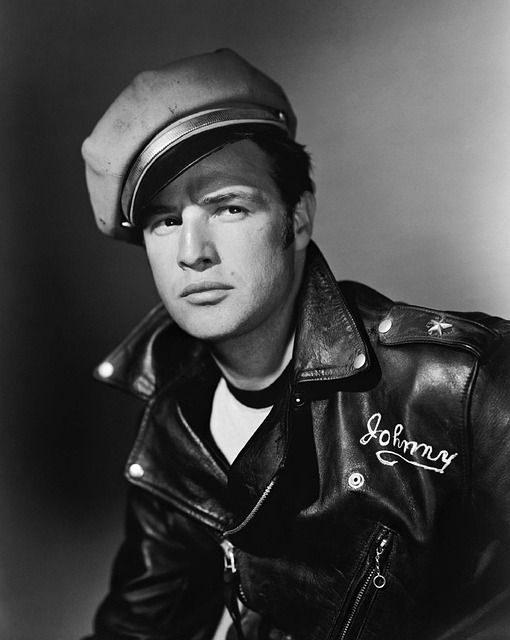
marlon-brando-392902_640Perhaps my old school friend Clive Hornchurch (once again, names have been changed to protect the innocent!) felt a certain amount of frustration too. He was by far the brainiest lad in the school and was constantly upheld as an example to other pupils. I remember once Miss Tyass, our history teacher telling me how hard I would have to work to pass the History O-level and perhaps I should use Clive’s notebook to revise from because he himself wouldn’t need it!
Yes Clive was the man; every teacher knew he would pass with flying colours and perhaps be off to university, if such a thing was possible from our urban jungle roughhouse comprehensive school.
On the day of our O -level examinations Clive added his name to the top of his paper, and then put down his pen. His blank test paper was passed in and naturally he failed. I often wonder what became of him and why he did what he did. Perhaps he was frustrated; perhaps he was tired of being held up as a shining example of all that is brilliant in a school boy. I sometimes wonder if I had asked him what he was rebelling against would he have answered, like Marlon Brando in The Wild One; “What have you got?”


What to do next:

Share this post on your favourite social media!

Hit the Subscribe button. Never miss another post!

Buy the book! Click here to visit Amazon and download Floating in Space to your Kindle or order the paperback version.


Why Writers can’t do Without Dreams

image courtesy fotolia

image courtesy fotolia

Dreams; there’s a subject. I woke up a few mornings ago in sunny Lanzarote (sorry, just had to rub that in) after a crazy dream in which I was out with a friend I hadn’t seen for years, and somehow, don’t ask me how, I had lost all my clothes. We had been out drinking and were walking home then something happened and I woke up somewhere without any clothes. I woke up then but that wasn’t the end of it.

The next night I had a sort of follow on dream. I was wandering around with no clothes, although I had come across a blanket somehow and with me was Michael Portillo (yes, the ex-MP who hosts a show on BBC about railway journeys.) Well we ended up in this hotel and I was starting to worry. Well, who wouldn’t? No clothes, no wallet, no mobile. Who could I call? Should I try and cancel my bank cards? What happened to my keys? Where am I and what has Michael Portillo got to do with it?

Michael was standing nearby and using his influence as a famous former MP. Someone brought him a phone and he started chatting into it. Clothes were brought for him and I could hear him chatting to his bank. It actually brought to mind that sequence at the beginning of one of the Bond films where Pierce Brosnan has been in a Chinese prison, escapes and finds himself in Hong Kong. He walks into this posh hotel, his hair long and unkempt, his clothes in rags and the guy at reception says “Will you be wanting your usual suite Mr Bond?”

Some people just have that manner about them don’t they? Me, I’d have been unceremonially kicked out of that hotel, assuming I’d even made it past the front door! I can just imagine the scene:
Your usual suite Mr Higgins? Just a moment please?”
The manager beckons to a large man looking similar to Oddjob from the Bond movie Goldfinger. The next moment, Mr Higgins hurtles through the front door. As he is propelled into the street he murmurs, “that’s a ‘no’ then is it?”

I often wonder where dreams actually come from. What is it in the deep recesses of the mind that produce these spurious dramas? When I was younger I don’t really recall ever dreaming that much. As I grew older I seemed to dream more but tended to forget most of my dreams very quickly. These days I do dream quite a lot and I dream pretty sensible things too. The ending of ‘Floating In Space’ was something I dreamt one night and I typed it up and replaced the original finale which, although inspired by real events, was a little unbelievable. Also, I have an entire story which I’ve partly written into a screenplay which I dreamt one night and which played out in front of me as vividly as if I was sitting at the front row of a picture house. It is about a man who appears one night wearing a white suit and who gets involved in some strange circumstances. So strange that those around him begin to believe the man is a kind of Saviour; a sort of new Jesus figure, and his companions become disciples in the way of those who followed Jesus himself. I still have my notes from that dream and the story is on my ‘to do’ list to finish.

Dreaming a story and making it into a novel or a screenplay isn’t quite as strange as it seems. In 1898 an American writer, Morgan Robertson wrote a story about an unsinkable ship called the Titan which sailed from England to the USA, hit an iceberg and sank. The story was published fourteen years before the Titanic disaster. I remember reading the story of this writer years ago, even that the writer saw the story played out in front of him like a movie but all the research I did on the internet for this blog seems to imply that the author was a man who knew his business where ships were concerned, felt that ships were getting bigger and bigger and that a disaster like that of the Titanic was inevitable.

Wikipedia describes dreams like this: Dreams are successions of images, ideas, emotions, and sensations that occur involuntarily in the mind during certain stages of sleep. It’s easy to think that perhaps the basis of dreams, the make-up of dreams comes from within but it’s possible external forces can affect dreams too. Paul McCartney once said that he didn’t write his songs but that they were out there, waiting for him to catch them; to pick them up. Perhaps dreams too are there just waiting for us to dream them.

One other kind of dream is the daydream and T E Laurence once said that those who dream in the day are dangerous men: “All men dream: but not equally. Those who dream by night in the dusty recesses of their minds wake in the day to find that it was vanity: but the dreamers of the day are dangerous men, for they may act their dreams with open eyes, to make it possible.”

I have to confess to being a daydreamer but as for being dangerous, well, I think not. I do have a persistent daydream though, one of becoming a best-selling author.


What to do next:

Share this post on your favourite social media!

Hit the Subscribe button. Never miss another post!

Buy the book! Click here to visit Amazon and download Floating in Space to your Kindle or order the paperback version.


Floating In Space: Last day to download free on Kindle!

Yes, you can download ‘Floating In Space’ free for your Kindle until 22nd January.

It’s a novel following the adventures of a young man in Manchester in 1977. No mobile phones, no Internet and a pint of bitter cost only 25p. Here’s me talking about it in Manchester;