Three Restored Movie Classics

edclapperboard-311792_1280So what actually is a ‘restored’ movie? Well, it is simply this; an old movie restored to its original condition, with deleted scenes added, lost scenes and dialogue inserted and basically restored to its former glory. In some cases, movies are restored to more than their former glory as on many occasions, producers, sensitive to preview audiences and running times, have unscrupulously cut movies and left many a director fuming. A lot of older films, unless preserved in the studio vault have been lost and restorers have hunted down copies of those lost films and those excised scenes that have been lost over the years. Here are three classic restored films.

Lost Horizon
Directed by Frank Capra and starring Ronald Colman, Lost Horizon was shot in 1936 and seriously went over budget. Issues that contributed were scenes shot in a cold storage area, used to replicate the cold of Tibet: The cold affected the film equipment and caused delays. There was also a great deal of location shooting and scenes where Capra used multiple cameras shooting lots of film. Wikipedia reports that the first cut of the film ran for six hours! Studio Boss Harry Cohn was apparently unhappy with the film and edited it himself, producing a version that ran for 132 minutes. Further cuts were later made and as a result, Capra filed suit against Columbia pictures. The issue was later resolved in Capra’s favour. The film did not turn a profit until it was re-released in 1942. A frame by frame digital restoration of the film was made in 2013 and various missing elements of the film were returned, including an alternative ending.
Lost Horizon is one of my favourite books ever and this movie adaptation is nothing short of wonderful, in fact it is one of my favourite films of all time. The casting of the urbane Ronald Colman as diploment Robert Conway is perfect. If you see this movie on DVD make sure you take it home and settle down for a wonderful film experience.

Spartacus.
You probably thought film restoration was only about really old films from the early years of cinema but it’s about any classic film that needs work. Spartacus was made in 1960 meaning it is 56 years old this year and was restored in 1991. The movie was produced by and starred Kirk Douglas and was directed by Stanley Kubrick, whom Douglas brought in to direct after becoming disenchanted with the original director, Anthony Mann. The film is the story of a revolution, or at least a near revolution in ancient Rome. Spartacus, played by Kirk Douglas is a slave who starts off a rebellion in a gladiator camp; the rebellion gets bigger and bigger until it threatens the entire fabric of ancient Rome. Laurence Olivier played the part of the Roman general and politician Marcus Licinius Crassus who uses the rebellion to further his own dreams of dictatorship. Peter Ustinov plays the gladiator school owner and Charles Laughton plays Roman senator Gracchus. Ustinov, Olivier, and Laughton are a wonderful trio, their performances superb, so much so that other actors who share the screen with them seem to pale in comparison.
Tony Curtis plays another slave who calls out famously; ‘I am Spartacus’ towards the end of the film, heralding a chorus of similar calls.
In the restoration, 37 mins of cuts were restored to the film including a scene where Anthony Hopkins had to dub the sound for a sequence involving Laurence Olivier who had died two years previously.

Lawrence of Arabia.

Directed by David Lean from a screenplay by Robert Bolt, Lawrence of Arabia is a visually stunning film, shot in 70mm. The movie is based on the book ‘Seven Pillars of Wisdom’ by the enigmatic T.E. Lawrence himself, and won seven academy awards including Best Director and best Picture.
Peter O’Toole stars as Lawrence although he was not the first choice for the part. Lean actually wanted Albert Finney but Finney had reservations about the film and wasn’t keen on being locked into a long term contract so he declined, despite shooting an expensive test at MGM studios in Borhamwood. It was then that Lean cast O’Toole after being impressed by his performance in ‘The Day they robbed the Bank of England’.
Director Lean wasn’t too pleased with the original script so Robert Bolt was brought in to essentially rewrite the film. A further complication was added when Bolt was arrested for his part in an anti-nuclear protest in London and so the production started without Bolt’s completed re write.
The film is famous for a number of classic shots. One is the cut from Lawrence blowing out a match to a shot of the rising sun in the desert and another is the famous long shot of Sherif Ali, played by Omar Sharif, who trots from the horizon astride his camel towards the well where Lawrence has stopped for water.

Steven Speilberg has been quoted as saying that this was the film that made him want to be a director and perhaps that is why so many of his productions have a sort of ‘David Lean’ feel about them.

The film was restored in 1989 with various cuts returned to the film. One sequence involved the late actor Jack Hawkins and Charles Gray had to dub dialogue for Hawkins’ character.


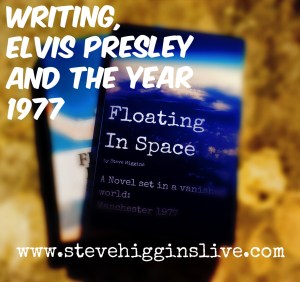
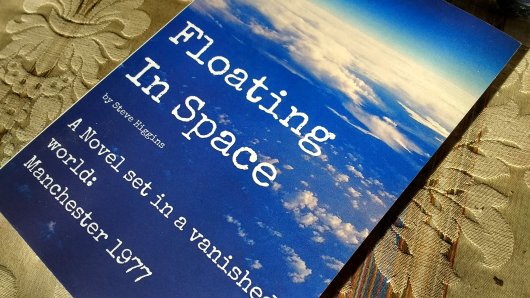
If you enjoyed this post, why not try my book, Floating In Space, a novel set in Manchester, 1977. Click the links at the top of the page for more information, or the icon below to go straight to Amazon.

Favourite Movie Directors Part 2 Oliver Stone

oliver stoneFavourite movie director part 1, which you can read by clicking here, is about Woody Allen. Allen has a directoral style that lets the viewer’s eye roam roam the scene. Oliver Stone on the other hand has a much more forceful style, a highly visual style which takes a firmer hand with the viewer.

To start with, here’s some biographical stuff about Stone:

Oliver Stone was born on September 15th, 1945. The only son of Louis Stone, a successful stockbroker and Jacqueline Goddet. His mother was a French student who his father, then in the Army, eloped with as a war bride in Paris in 1945. He grew up in New York and attended Trinity School on the west side of Manhattan and later attended The Hill, a boarding school in Pottstown, Pennsylvania.

Stone attended Yale University in 1964-65 but dropped out after one year. In 1967 he enlisted in the US Army and served in Vietnam with the 25th Infantry and later the 1st Cavalry.
Back in the USA he enrolled at university in New York and studied filmmaking. Martin Scorsese was one of his teachers. Vietnam was among the first subjects of his student films.

Oliver Stone

Image courtesy Wikipedia

Stone graduated in 1971 and took on various jobs while he wrote screenplays. His breakthrough success was in 1978 with the screenplay for the film Midnight Express for which he won the Academy Award for best adapted screenplay.

The first Oliver Stone movie I ever saw was the 1986 movie ‘Platoon.’ Stone wrote and directed the movie set during the Vietnam War and based on some of his own experiences. It focuses on a new recruit, played by Charlie Sheen and follows through pretty much what happened to Stone himself when he arrived in Vietnam. It shows Sheen getting used to the situation in Vietnam, the weather, the jungle patrols and so on. It also shows the disregard that the other soldiers have for Sheen and any other soldier new to the front line. A newcomer’s life was less valuable than the others who had served their time and put years into the war. It’s a reversal of what you might expect in warfare but the Vietnam conflict was a different war. The combatants were wondering what were they doing there, thousands of miles away from home and for what, and who, were they fighting ? That sort of thinking bred a selfish soldier. Platoon tells the story of those soldiers, all of whom are brutalised in some way by the conflict.

Oliver Stone followed up the movie with another Vietnam film, ‘Born on the 4th of July’ about Vietnam veteran Ron Kovic. Kovic was a Vietnam vet shot and paralysed from the waist down in the jungle and it is a truly shocking film, perhaps even more so than Platoon. After he has been wounded, Kovic returns to a veteran’s hospital in the USA that is grim and disgusting and as I watched it, it contrasted sharply with another war film from a different era, Reach for the Sky. Kenneth More stars as Douglas Bader who, after a terrible crash, is taken to a hospital full of crisp white sheets and antiseptic cleanliness. The contrast between the two hospitals is shocking. A third film completed Oliver Stone’s Vietnam trilogy, Heaven and Earth released in 1993.

Wall Street was a hit movie for Oliver Stone in the eighties and the character of Gordon Gekko played by Michael Douglas became an eighties screen icon. Gekko is a ruthless Wall Street player, a stockbroker and financier who looks at a hundred deals a day. Martin Sheen plays Bud Fox, a young salesman determined that one of those deals will be with him. Fox is ultimately corrupted by Gekko as he becomes involved in many shady schemes but in the end he betrays Gekko to the authorities. In Wall Street Stone first develops a mesmerising visual style almost akin to a music video and it is a style that many film-makers seem to have picked up.

In JFK, Stone takes this visual style to another level and combines various film formats to produce a stylish visual montage. The subject is a controversial one, the shooting of President John Kennedy in Dallas in 1963. Stone decides to use the investigation by New Orleans District Attorney Jim Garrison as a vehicle to explore the various theories about the shooting although ultimately an amorphous military industrial complex is blamed for the conspiracy. Criticism rained down on Oliver Stone from anti conspiracy theorists but I personally felt that the movie was a fair one and everything that was conjecture was shown as conjecture. The great treat for me was the combining of the different visuals and the inter weaving of documentary film with new footage. The movie also led to calls to release more information and led to the Assassinations Records Review Board recommending that all assassination materials be released by 2017. The John F Kennedy Assassinations Records Collection Act 1992 has since become known as the JFK act. Stone went on to make two more films about American presidents, Nixon and W, the latter film about George W Bush.

In recent years Stone made a TV series called ‘Oliver Stone’s Untold History of the USA.‘ I thought, or was led to believe by the hype, that this TV series would be a complete retelling of history. Secrets hidden from the public would perhaps emerge to show how history and events have been manipulated. To be fair, there is some of that. The dropping of Henry Wallace from Franklin D Roosevelt’s Presidential ticket was shown as a blatant manipulation of the democratic process. I might have felt more sympathy for Henry Wallace had the show not preceded this by a disparaging of Churchill in a prior segment. Stone seemed to think that Roosevelt was a man who had the measure of Stalin, especially at their last meeting but it is clear to me that in fact it was Churchill who understood Stalin and Roosevelt who only thought he did.

I have a number of Oliver Stone DVD’s in my collection. Platoon, Born on the 4th of July, JFK, Wall Street, The Doors, not to mention the TV series mentioned above which I have only just started to watch. I still think of Oliver Stone as one of the great movie directors. He is passionate about cinema and has highly political views and yet is still able to laugh at himself. In 1993 he played a small part in the movie ‘Dave’ playing himself as a conspiracy theorist who believes the President has been replaced by a double. Actually, if you have seen the movie, he has!

Oliver Stone’s latest movie is Snowden, the incredible untold personal story of Edward Snowden, the polarizing figure who exposed shocking illegal surveillance activities by the NSA and became one of the most wanted men in the world. He is considered a hero by some, and a traitor by others.


If you liked this post, why not try my novel, Floating In Space. Click the links at the top of the page or the icon below to go to Amazon!

The Secret of my Success

successThe secret of my success. What’s that about, you might wonder? Well, I thought it was time to write something about Floating In Space again and update you with how it’s going. Success of course is pretty relative. Floating In Space isn’t a blockbuster hit, in fact it’s currently rated at 677,726 on Amazon so there’s a bit of a way to go before we start challenging the current number one paperback. Still, from my point of view, that of an amateur self published writer, I’m reasonably pleased with myself. I wrote Floating for me, for my own personal pleasure and the fact that so many people have read it is great.

Last year, 2015, I was averaging a few quid in royalties each month. A fiver means I’ve sold about ten Kindle copies and I was selling at that rate per month for most of 2015; sometimes less, occasionally more. In November I thought that was the time to crank up the pressure and get ready for the Christmas rush. I took some of my profits and invested them in a couple of advertisements. One on Twitter and one on Facebook. It’s interesting how advertising on the Internet works. You can target people by age, gender and interests, by geographical location, by personal interests, by all sorts of things. My Facebook ads didn’t seem to do so well, indeed various versions were not accepted due to the text used in my images. Facebook doesn’t like text within images but images on the Internet are highly important as you probably know. Posts with images attract much more interaction than posts without images. Anyway, I eventually solved the issue by using text free images thus making them more Facebook friendly.

On Twitter, I promoted an existing Tweet about Floating and it went pretty well. Well, I thought so at first, the only thing is that my December sales were nil. Same for January and February. In fact it was only mid 2016 that they seemed to recover. The current ad I am using is on Goodreads. It’s a pay-per-click ad which is doing really well. A huge amount of people have seen it, although only a few have actually clicked on the ad, and it’s then, when a viewer clicks on the ad, that I pay a few cents.

This blog, with its various posts and videos was started originally to sell my book. After all, it’s one thing to publish a book, it’s another to start selling it and people need to know it’s out there first. However, this website has taken on a life of its own. My own writing has improved and its a great to have a deadline  -10:00AM every Saturday which just seems to hone my writing. I work towards that deadline every week and so far, with the help of my standby or banker posts, I’ve always made it OK.

My posts go out automatically every Saturday to all my social media. Facebook, Twitter, Google+ and Tumblr accounts and I have a fair few followers on all those sites, especially Twitter. On Facebook, my writer page has only about 150 followers and probably less on Tumblr and Google+ but on Twitter, I have a whopping 3,684 followers. Yes, 3,684! Now, I’d like to be able to tell you how I did that but I’m not sure I can. The only answer I can give you is that networking, constant networking, eventually pays off. I usually post four times a day on Twitter, just links to my posts and videos, all coupled with a picture that I hope readers will find interesting enough to click on.

Here’s the interesting thing, the really crazy thing. Often, my stats at WordPress won’t match with Twitter. Take a highly retweeted post on Twitter, linking to a wordpress post and my Twitter stats will show a pretty hefty number of retweets and likes but on wordpress there are not always the same figures. That’s because, I think, my fellow promoters and networkers at Twitter don’t necessarily click the link on the tweets in the first place, they just take them at their face value and like or retweet as they think fit. Why? Because they have their own agenda which doesn’t necessarily fit in with mine.

Internet etiquette means that I’ll tend to retweet the tweets of my retweeters and if I do that, boom, those tweets are going straight to my 3684 followers, just as my retweeters wanted. Yes, the Internet can be a pretty ruthless place. My pretty large following gives me a certain sort of power, it makes me pretty popular and means that my following is just expanding organically. My latest stats say I’m getting another 2 followers every day so please check the date and update that 3684 figure incrementally when you read this!

So, is it still possible to find success as a self published author or Internet writer? Believe me, I won’t be giving up my day job anytime yet but it’s not impossible to at least make a living. 50 Shades of Grey started out as a self published novel, and so did many other books. In fact click here to read about the top 10 best-selling self published authors.

Still what is success really? If Floating In Space hits the best seller lists and I make a huge amount of money from it, I’d only fritter it away in restaurants and pubs, spend far too much time in some sunny resort, and probably drive about the country in a ridiculously expensive car. Do I really need success? Do I really want it?

Of course I do!


If you enjoyed this post, why not try my book, Floating In Space? Click the links at the top of the page for more information but in the meantime, check out my one minute video below!

(Almost) Unseen TV

tv documentaryIt’s interesting that on TV, the same movies come at us time after time. The Great Escape, wonderful film though it is, has been broadcast so many times I know the script off by heart. The Bond films are a staple of UK TV. They and the Die Hard films, the Carry on series and a hundred others–they are all constantly on British TV. Old TV shows are another staple of the new free view channels.

In fact, just lately a lot of my favourite shows from when I was a school boy are currently being shown on TV: The Saint, Land of the Giants, The Invaders and many more. (Wish they’d get around to showing the Time Tunnel though!) Some things that rarely, if ever, are repeated, are old TV documentaries and old made for TV movies. Here are three of my favourites, two documentaries and one made for TV movie, preserved for my viewing pleasure on trusty old VHS video tape.

The Peter Sellers Story: As He Filmed It.

The BBC Arena team made this film about Peter Sellers in 1995. It was created largely from cine film shot by Sellers himself, who was a lifelong camera enthusiast. The original documentary was made in 1995 and if I remember correctly, Sellers’ widow, Lynne Frederick had died and left behind a lot of Sellers’ effects, including his home movies which is how the film came to be made.

Normally, I’d say that you have to be interested in movie people and how movies are made to like this documentary but this film is so special I don’t think that rule applies.

The original film was in three parts and began with Sellers’ early days, and his early films. The first cine films we see are black and white movies and as Sellers’ career takes off, his cine equipment also improves and he upgrades to colour and then on to sound. His own images show his young self as a sort of ‘spiv’, a Flash Harry sort of character with his double-breasted and shoulder padded jackets. An uneasy relationship with his mother emerges, as does a rather spoilt and volatile personality. His first wife talks about their early days and their life together and friends like Spike Milligan talk happily about successes like the Goon show and their beginnings in show business. Milligan had a 8mm camera and Sellars a 16mm one. Of course ‘Peter was richer,’ comments Milligan. ‘Richer by 8 millimetres!’

Sellers’ cine film is blended with interviews from various people who played a part in Sellers’ life.

Sellers as Group Captain Mandrake in Dr Strangelove.

Sellers as Group Captain Mandrake in Dr Strangelove.

A fascinating section concerned Casino Royale, the spoof James Bond film. Various directors were involved but Joe McGrath shot one segment with Peter Sellers and Orson Welles. McGrath was a TV director relishing the move into feature films, that is until Sellers told him he didn’t want to be in the same shot as co-star  Welles. A heated debate ensued which became physical. Sellers said he was going off to calm down. He never returned and if you ever see the completed movie, you’ll understand why Sellers’ character abruptly disappears too!

Sellers claimed to have no personality of his own and ‘borrowed’ them from the characters he impersonated. It’s interesting to watch the TV interviews  included in the film where Sellers seems to mimic the Yorkshire tones of Michael Parkinson and again, in other snippets he is taking on the accents and style of his interviewers.

The film overall has a sort of melancholy feeling which I feel accurately represents Sellers’ persona. He was a sad character, disappointed in his life and loves. He was not happy with his last wife, Lynne Frederick and he even junked many of his cine films prior to his death as they didn’t seem to match his expectations. The mood of the film is further enhanced by a wonderful soundtrack full of sad saxophones and jazz tones.

There are some that put down documentaries that are full of so-called ‘talking heads’ but personally, if the talking head has something interesting to say, I like to hear them. However, in 2002 the BBC re edited the film by taking the soundtracks from the ‘talking heads’ and combined them with Sellers’ self filmed visuals. The result is now available as a BBC DVD. The original is much better though.

Barry Sheene. Photo courtesy Wikipedia

Barry Sheene. Photo courtesy Wikipedia

Barry Sheene. Daytona 1975.

This is a film about the late motorcycle racer Barry Sheene. He was a star of the 1970’s motorcycle racing scene. A long-haired, chain-smoking racer who had Donald Duck on his crash helmet and who famously gave the V sign to one of his opponents, I think it was Kenny Roberts, at a race at Silverstone in 1979. In this film Sheene goes to Daytona and is flat-out testing his bike when the engine locks up. He yanks in the clutch but is still sent hurtling along the track breaking several bones in the process. The film follows him to hospital where he joked with colleagues, even saying to his team manager, ‘the staff really hurt me. I’m glad I didn’t tell them about that pain I’ve got in my shoulder.’ His manager looks confused for a moment and says, ‘well, don’t you think you should tell them?’

Sheene is pinned back together with various metal rods and is later seen hobbling away from the hospital but even so, later in the film, we see him back on his motorbike once again.

The film was produced and directed by Canadian documentary maker Frank Cvitanovich and is a fascinating insight into the world of Barry Sheene. It is clear he lived and breathed motorcycles. In later life he retired and became a sports commentator in Australia. He died of cancer at the age of only 52

Across the Lake.

Across the Lake was a BBC film made in 1988. It starred Anthony Hopkins as speed king Donald Campbell in the final days of his life as he tried to raise the water speed record to over 300 miles per hour. Hopkins gives a lovely performance as Donald Campbell, a man who believed himself to be living in the shadow of his father, record breaker Sir Malcolm Campbell. He decided to take his old Bluebird boat, update her and try to break the 300 mph mark on Coniston water in the lake district. The jet boat flipped over and Campbell was killed. His body was not found until 2001.

The film shows the unglamorous side to record-breaking. Waiting in poor weather, the endless delays, the mechanical issues, the press waiting for something to happen. Something drove Campbell onwards in his pursuit of records. He was short of money and had sold all sorts of rights to his name, his films of record-breaking and so on. This was all before the days of big time sponsorship in the speed and motor racing industry and Hopkins shows us a Donald Campbell undefeated, perhaps even a little desperate but still with considerable style.

The record-breaking team disperse for Christmas and then return after the holidays. They begin their preparations again until a fine January morning appeared. Campbell powered up his speedboat and did a run of 297 mph but lost his life on his second run.

Having written this post about three old films I watch now and again on my old TV with the built-in VHS cassette player, it was interesting to find, during research, that all three can be seen online.

The original three-part version of The Peter Sellers Story: As he filmed it can be seen on vimeo. Click here to watch it.

Frank Cvitanovich’s Barry Sheene Daytona 1975 documentary is on you tube. Watch it here.

Across the Lake is also on youtube. Watch it here.

Perhaps those old films are not as unseen as I thought!


If you enjoyed this post, why not try my book, Floating In Space, a novel set in Manchester, 1977. Click the links at the top of the page for more information, or the picture below to go straight to my amazon page.

Floating in Space

Floating In Space One Minute Promo


A Child of the Universe


quotescover-png-67Getting older is a strange sensation. Once you reach a big birthday like sixty you start to re examine yourself and start to silently ask lots of questions. Inside, I’m the same person I always was: The same in fact, that I have been since I was a child, at least to me, at any rate. It’s only the outer layer that has changed. The outer layer has got fatter, heavier, and somewhat grayer. But inside, the essence that is me, the real me, is essentially unchanged. What is my essence though? What am I? How did I come to be, what purpose, if any, have I served?

Those questions are ones which people have been asked over and over for millennia and of course, will continue to be asked over and over again. As for the answers, well that is something different. I could quite easily be an accident of fate, just like the rest of the population, like the insect and animal world, like plant life, like the earth itself. It could be that the Creator of All Things, God, Allah, or whatever you like to call Him created us all, and that every step we take has been pre-ordained in some way. It could be that when we die we vanish, or it could be that our spirits live on, that you and I have lived before and will live again. Who knows?

It’s interesting to think that in some eastern religions, they believe that we are all born with a finite set of breaths. Breath then, in such a religion, is life itself, and when our allotment of breaths has gone, we are no more. Yoga, the understanding and practice of breathing was understandably very important to ancient people, perhaps for that very reason itself, for by controlling breath, one can live longer. It’s an interesting thought.

Another interesting concept is Samsara. In the Buddhist faith there are three primary states, birth, death and rebirth. Samsara is the wheel of life and only those Buddhist scholars who can escape from the cycle of life by meditation are those who achieve enlightenment, which in its highest form is nirvana, freedom from rebirth.

Normally, I think I would have probably taken my new birthday and my age in its stride but the big six zero does have an effect. Recently I have been on the look out for new jobs. Something more challenging, something different to what I do at present. I’ve started looking at roles outside of what I do in my day job, jobs involving social media, blogging and so on. Of course things aren’t like the old days, in the 21st century you cannot get a job without a qualification and the fact that I’ve been writing this blog for two years now, and single-handedly producing the graphics and the videos and promoting it all on Facebook and Twitter doesn’t really mean anything, not to an employer anyway. A degree in social media is what employers want. Anyway, two letters I received lately stopped me in my job hunting tracks. One was from an old employer saying they were ready to pay my pension and how and when did I want it: A lump sum? Monthly payments or a combination? Interesting, I thought. Then I got one from my current employer telling me I could retire if I wanted to or go part-time; semi retired. Well, wasn’t expecting that.

Yes, the thought of working part-time is starting to appeal to me. I’ll have more time to write, to make my videos and to create my graphics. Time to finish that second novel. Perhaps even time to take up a social media course! I’m not sure what to do but, if I continue to think about life, the universe and everything, taking up a philosophy course and really looking into the meaning of life might be an option!

It may be that the only meaning to this life is the one that you yourself give to it. I’ve always taken inspiration from that fine poem the Desiderata that says in part, ‘no doubt the universe is unfolding as it should.’

We can only suppose it is.

quotescover-png-ed289

If you enjoyed this post, why not try my books? Both are available from Amazon as a Kindle download or as a traditional paperback. Floating in Space is a novel set in 1977. A Warrior of Words is a poetry anthology. Click the links at the top of the page to buy or for more information.

The Birthday Blues of an Unknown Author

quotescover-png-57October 3rd was the birthday of Manchester author and blogger Steve Higgins.

At a press conference this past Monday morning at Wetherspoons in Southport Mr Higgins, reputedly now 60 years of age, was asked numerous questions about his advancing years. He was heard to ask “Pint of lager, please mate,” numerous times but did not seem willing to discuss his birthday further.

Although Mr Higgins seemed somewhat reluctant to engage with people, he responded to a question about television in the early years of the second half of the twentieth century.
He confirmed there were, in the 1960’s when he was a child, only two TV channels. There were further gasps from people when he mentioned, almost nonchalantly that he and his family were at one time forced to watch programmes in black and white!

As Mr Higgins moved onto his next pint he enlarged upon his theme. “Yes, in those days there was no colour TV, no Internet and no mobile phones.”
“How did people send messages?” One journalist asked.
“Well,” said Mr Higgins. “The only way was to get some paper and a pen or pencil and laboriously write out a message. Afterwards it had to be sealed in an envelope and posted after of course, adding a stamp.”
“What, you mean it wasn’t free?”
“Of course not!” snapped Mr Higgins, rather testily. “Not only that, you had to take it round to the post box and mail it yourself.”
“How long would the process take?” asked another.
“Well, it could be anything from a couple of days to almost a week”

A young lady reporter fainted and was revived by splashing cold water on her face. As she came round, she looked up at Mr Higgins and asked, “How did you carry on, how did you survive?”

“Well,” answered Mr Higgins. “I suppose we were a tough generation. It was hard then. You lot have things so easy!” Returning to the bar, Mr Higgins waved over to the bar staff and commented. “This lager is a bit naff. Have you got any dark beers? What about a pint of mild?”

Picture courtesy perfectpint.com

Picture courtesy perfectpint.co.uk

“Mild?” replied the barmaid, a young Romanian girl of about nineteen. “What iz zat?”
Mr Higgins looked a little frustrated until the bar manager came over and revealed that Theakstons mild was one of the guest beers that day. Mr Higgins immediately perked up and called for a pint.
“Lovely jubbly” he commented, “cracking pint. Now, what else do you lot need to know? I’ve got some serious drinking to do.”
“What about films?” someone asked. Surely it was just like today; surely you could download a movie onto your tablet and watch at your convenience?
Mr Higgins, now onto his fourth pint seemed to jump on the word tablet and exclaim “Tablet? In my day that was something you took for a headache! If you wanted to see a film, you had to go down to the picture house, pay your money and go in and get your seat and watch the film.”
Someone asked if the term ‘picture house’ could be explained.
“The picture house! Cinema! A big place with a huge screen where they projected the picture!”
“Do you mean you had to sit with other people?”
“Of course you pillock!” replied Mr Higgins. He turned back to the bar just as his all day breakfast arrived. “Right, that’s it now. If you want to learn about the old days, like the seventies, just get yourselves a copy of my book, ‘Floating in Space!’”

It was a bright sunny day in Southport as we left Mr Higgins. He appeared contented and happy with a pint in one hand and his all day breakfast in the other. I did notice him quietly slip an iPad onto the table and he glanced back at me and commented; “technology, you’ve got to embrace it haven’t you? Otherwise you’ll just get left behind.”

This exclusive report was by Johhny Lizt


Find out more about Floating In Space. Click the links at the top of the page for information, video, and background.

Cheese, Wine, and a few other French Reflections.

It’s probably only natural that when, after a lovely holiday in France, thoughts often linger on those now gone idyllic days sipping wine and relaxing with a crusty french loaf and some fromage.

Tea.
I do love my tea. It is one of the great British contributions to world culture. What sort of a world would it be without a tea break? Dear me, I shudder to think. Naturally, Liz had us well stocked with PG Tips for our french trip. The French are a nation of coffee drinkers but they do also drink tea. In fact, you can find bottles of tea in the chilled area of every french supermarket. Chilled tea? Yes, chilled bottles of tea! Still, what can you expect from the nation that gave us frogs legs . .?

As I settle back into work, those long lazy days out in the french countryside seem as if they happened years ago.  Five o’clock was a nice part of the day. A final swim in the pool then Liz would start preparing the salad while I cranked up the barbecue and topped up the decanter with some nice french red.

dining

Wine, salad, bread, just waiting for the barbeque!

Wine.
I do love the cheap french red from supermarkets like Intermarché. A nice quaffable smooth red like a merlot is perfect for an evening.  In the supermarkets here, as you can probably imagine, there is an excellent selection and it comes in all shapes and sizes. There are wine boxes, bottles, cartons and even plastic bottles of the cheap rough table wine. I like an after dinner glass of port and there is a good choice of ports in the shops too. In France this year I picked up quite a few bottles for transportation back to the UK and I also discovered a nice white port. One interesting thing I have noticed whilst scouring the shelves of French supermarkets, there is a huge whisky collection in every french supermarket I have visited. All imported from the UK of course but brandy, a product of France, seems to be very scarce indeed and, when finally found, rather expensive.
After the kebabs and burgers, or whatever meat we have grilled over the coals, a short intermission is in order before the arrival of the cheese.

Cheese.
I do like my french cheese and the usual fromage course after a meal here is always a delight. Cheese is a different experience in France. In the warm evening the cheese softens and is spread easily on a slice of crusty french bread. The french themselves prefer to tear their bread but we English of course are more civilised and slice it before buttering.
Here are three of my favourite French cheeses;

    Rondelé
Not something I’ve ever seen in the UK, Rondelé is a sort of light cheese which comes in various varieties but the one I favour is Rondelé Bleu. A light almost whipped cheese with a not too powerful blue cheese flavour. Lovely on some crusty french bread or on a cracker.

    Cœur De Lion Coulommiers.
Not sure if I’ve seen this in the UK. This is a lovely, creamy soft cheese, perfect when it has melted slightly in the warmth of a summer evening. Not as strong as camembert but not as mild as a brie. Lovely.

    Chaume.
A very tasty cheese, rather like Saint Paulin which I have seen in supermarkets in the UK. It has a firm, pliable texture but is much creamier than the aforementioned Saint Paulin.

MicrolightI’m not a great fruit eater but in France I do like a small pear or something after a meal. Then it’s time to just sit back and enjoy the evening as the sun begins to go down. At about six thirty to seven o’clock the local microlight drones past overhead. I can sort of imagine him looking down and thinking ‘there’s that English couple again, still supping wine!’

Bonsoir monsieur, until next year! À l’année prochaine!


If you liked this post, why not try my book, Floating In Space? Click the links at the top of the page for more information.


The Rise and Fall of the Kennedys

The Last brotherThe Last Brother by Joe McGinniss

The Last Brother as you can see, is subtitled, the Rise and fall of Teddy Kennedy. In a lot of ways Teddy is only incidental to the story told here because it is really the story of his father, Joe Kennedy, and his rise to success. Joe’s success lay not only in the business of banking but during the prohibition years he made a fortune in bootlegging and naturally rubbed shoulders with a number of gangsters. When he became successful, Joe wanted something more; he wanted political power. It was then that he attached himself to Franklin D Roosevelt. He helped Roosevelt’s campaign in many ways and when Roosevelt became president, he, like all presidents, had to reward those who had helped him. Joe became ambassador to the UK and it was there that his fall from grace began.

The ambassador and his family quickly became celebrities in England. In fact, Teddy Kennedy made his first public appearance as a young boy, the ‘baby’ of the Kennedy family and the son of the Ambassador, when he was invited to open pets’ corner at London Zoo.

However, In Joe’s eyes the coming war with Nazi Germany spelled the end of all he had worked for. He could not see how the UK could resist the might of the Nazis and was not slow in saying so. Kennedy advised Roosevelt that the British were finished. However, when Winston Churchill became prime minister in 1940, Churchill opened up direct communications with Roosevelt himself making Ambassador Kennedy almost superfluous.   Later, the family returned to America with Joe not perhaps in disgrace but acutely out of step, and the relationship between Churchill and Roosevelt flourished.

PC 8 The Kennedy Family at Hyannis Port, 1931. L-R: Robert Kennedy, John F. Kennedy, Eunice Kennedy, Jean Kennedy (on lap of) Joseph P. Kennedy Sr., Rose Fitzgerald Kennedy (behind) Patricia Kennedy, Kathleen Kennedy, Joseph P. Kennedy Jr. (behind) Rosemary Kennedy. Dog in foreground is "Buddy". Photograph by Richard Sears in the John F. Kennedy Presidential Library and Museum, Boston.

The Kennedy Family at Hyannis Port, 1931. L-R: Robert Kennedy, John F. Kennedy, Eunice Kennedy, Jean Kennedy (on lap of) Joseph P. Kennedy Sr., Rose Fitzgerald Kennedy (behind) Patricia Kennedy, Kathleen Kennedy, Joseph P. Kennedy Jr. (behind) Rosemary Kennedy. Dog in foreground is “Buddy”. Photograph by Richard Sears in the John F. Kennedy Presidential Library and Museum, Boston.

Kennedy left the Roosevelt administration but he wanted political power for himself and made sure he would find it through his financial wealth, and through his sons.

Joe Kennedy junior was the son that Joe meant to make into America’s first catholic president. His brother, John Kennedy, known as Jack by the family, was a poorly lad afflicted by Addisons disease and constant back pain. In World War 2 Jack joined the navy but began an affair with a Dutch journalist, Inga Arvad. Inga was thought to be a Nazi spy so Joe immediately arranged for Jack to be posted well away from Inga to South Carolina. Bored with his desk job in South Carolina, Kennedy volunteered for the Motor Torpedo Boat Squadrons and later took charge of his own boat, PT 109. He was awarded the Purple Heart for his bravery in rescuing his men when his torpedo boat was sliced in two by a Japanese destroyer.

Joe Kennedy Jr was not at all happy when he heard about the award. Competitiveness was drilled into the Kennedy clan from an early age and Joe did not want his younger brother to top him. Perhaps that is why he volunteered for a dangerous mission. The mission involved a radio controlled plane, full of explosives that were to be remotely steered to a target in Germany. Joe’s job was to take the aircraft into the air then bale out when the radio control was activated. Sadly the aircraft’s explosives were detonated prematurely and Joe was killed.

Jack knew then that it was he who would have to fulfil his father’s desire for the presidency.

Joe used his influence, and his money, to get Jack first a seat in congress and then a seat in the senate. In 1960 it was time for him to fulfil his father’s dream and go for the presidency. Lyndon Johnson wanted the democratic ticket that year and he began by attacking the the Kennedy candidacy. He described him as ‘a little scrawny fellow with rickets’ but soon the influence of father Joe came to bear and Johnson ceased his attacks. Johnson knew that that Joe Kennedy would pull out all the stops for his son to win but he hoped that if the vote wasn’t decisive on the first ballot he would have a chance on the second one. As it happened, John F Kennedy won the nomination on the first ballot. According to McGinnis it was Joe who wanted Johnson as JFK’s running mate; perhaps that was payback for Johnson laying off his attacks on Kennedy’s health issues.

The election was close, very close indeed and Joe decided he needed help from a rather unsavoury corner; he turned to his former prohibition gangster contacts, notably Sam Giancana to help him secure victory for his son. That help would come at a price. Giancana wanted back the casinos in Cuba that used to make millions for the mob until Castro overthrew the Batista regime, closed down the casinos and threw the gangsters out of Cuba. Giancana wanted them back.

Kennedy won the election by a narrow margin but things went wrong almost straight away. CIA backed revolutionaries were training in secret Florida locations for an assault on Cuba but the plans were in disarray and the president rejected many of them, When the attack came it was a disaster. Kennedy accused the CIA of trying to force him into a full scale US assault on Cuba and he would have none of it. Giancana would not get his casinos back. Worse, the president had engaged his brother, Robert Kennedy as attorney general and he began an assault on organised crime in the USA. One of the mafia bosses was heard to mutter in Sicilian, “who will get the stone out of my shoe?” It was more of a threat than a question.

Joe Kennedy was struck down by a stroke at the age of 88 and rendered unable to speak. The chief fixer, paymaster and head of the Kennedys was unable to carry on talks with the mafia and the time had come to remove the stone from Giancana’s shoe.

Dealey Plaza

Dallas 1963

President Kennedy was assassinated in Dallas in 1963 and his presumed assassin Lee Oswald murdered days later inside the Dallas Police headquarters. At the Kennedy home in Hyannis Port nobody wanted to tell Joe. He must have known something was wrong but he could only point numbly at the TV in his room that remained firmly switched off. Ted Kennedy, who was sent to tell his father the news, struggled to get the words out until his sister Eunice blurted out the truth.

Robert Kennedy was shot in 1968 as he prepared for a late campaign for the Democratic ticket. After winning the California primary he said a few words to his supporters and was shot moments later.

Ted Kennedy now had a surplus of Kennedy advisors and aides, all willing him on to go forward and run for the presidency. He declined even though a ‘draft Ted Kennedy’ movement had started to gain momentum. Instead people looked forward to 1972 when Teddy, the last remaining Kennedy brother would restore the lost kingdom, the lost Kennedy leadership but it was not to be.

In 1969 Kennedy attended a boating regatta at a small island called Chappaquiddick. Numerous parties were planned for the weekend; one was a gathering of the so-called ‘boiler room girls’ – a group of women who had been part of Robert Kennedy’s campaign team in 1968.

Kennedy apparently left the party late in the evening, supposedly to go to the island ferry with one of the girls, Mary Jo Kopechne but instead turned across a small bridge that led to the beach. Kennedy lost control of the car and the vehicle plunged upside down into a small lake. Kennedy somehow escaped leaving Mary to die in the car. Police divers found her body the next day, her head in a small air pocket in the foot well of the upside down car. Kennedy did not report the incident until nine hours later. What happened in those nine hours is open to question but the Police seemed to gloss over the numerous inconsistencies in Kennedy’s story and eventually he received a suspended sentence for leaving the scene of an accident.

On the cover of the book is a remark from the Daily Mail reviewer that he couldn’t put the book down. I was just the same and was engrossed from beginning to end. The writer seems convinced of his central thesis, that Joe Kennedy’s pact with the mafia was a poisoned chalice that became the downfall of his sons and his family. Maybe that is true, maybe not but McGinniss puts forward an interesting theory and a fabulous read.

Joe Kennedy died in 1969, his dream of securing the presidency for his sons lay in ruins, leaving nothing but heartache and sadness. Fate had delivered many cruel blows to him but lying mute and unable to communicate while his family suffered must have been the worst.

Ted Kennedy continued in the senate until his death in 2009 from brain cancer.

What to do next:

Share this post on your favourite social media!

Hit the Subscribe button. Never miss another post!

Buy the book! Click here to purchase my new poetry anthology.

Click here to visit Amazon and download Floating in Space to your Kindle or order the paperback version.


The Holiday Diary of a So-Called Writer!

Somebody once said that the only things in life that are certain are death and taxes. The other thing that comes to mind are holidays. Yes they too must come to an end sooner or later. The time will come when you have to say goodbye to your holiday home or hotel room and hand it over to some other lucky holidaymaker. As you, the reader reads this, I will be well into my first day back at work, yes, Saturday – what a day to go back to work!

All holidays end with a certain amount of sadness, saying goodbye to new friends and acquaintances. Leaving behind memories of lovely places, beaches, or resorts. I’ve spent almost a month in France; three weeks in the Cher region and a final five days in the Loire valley in a place called Doué la Fontaine.

a so called writer!I began my holiday with a few set tasks to complete; in fact, here’s a quick scan through my itinerary, both the planned version and the actual:

08:00 AM Planned. Into the lounge with my laptop for some creative writing. Starting off with any blog post ideas then straight into my follow-up novel. Hoping to get a good few pages cranked off.

08:00 AM Actual. Sleeping.

10:00 AM Planned. Cup of tea and slice of toast.

10:00 AM actual. Still sleeping.

11:00 AM Planned. Cup of tea.

11:00 AM actual. Cup of tea.

11:30 to 12:00. Planned: More writing.

11:30 to 12:00. Actual: Sip tea while checking e-mails, surfing facebook and pinning various pictures to Pinterest.

12:00 to 01:00 Planned: Lunch.

12:00 01:00 Actual: Breakfast.

01:00 to 02:00 Planned: Swimming.

01:00 to 01:30 Actual: Swimming. 1:30 to 02:00 reading.

02:00 to 16:00 Planned: writing.

02:00 to 16:00 Actual: Dozing, reading and swimming.

16:00 to 17:00 Planned: Swimming

16:00 to 17:00 Actual: Swimming/ reading/ sleeping.

17:00 to 21:00 Planned: Barbecue preparation, lighting, cooking and dining.

17:00 to 21:00 Actual: Pouring of wine, barbecue preparation, lighting of barbecue, pouring of more wine. Drinking wine. Cooking and dining. Drinking wine.

21:00 to 22:00. Planned: Editing and review of days work.

21:00 to 22:00. Actual: Wine, chatting and Facebook surfing.

Looks like the follow up novel may have to wait until next year. C’est la vie as the french say.  . .


If you liked this post, why not try my book, Floating In Space? Click the links at the top of the page for more information.