Marilyn Monroe: Suicide, the Kennedys, and a Red Notebook

mmpicmonkey-imageIn my book collection, which is pretty big, I’ve probably got more books about Marilyn Monroe than any other single subject although I only have two of her movies on DVD. Some like it Hot directed by the Great Billy Wilder and her very last completed movie, The Misfits. I suppose I’m just more interested in her, the woman herself rather than her films. The woman born Norma Jeane Mortensen, according to her birth certificate, who went on to become the movie star Marilyn Monroe.

Funnily enough, June the 1st, only a few days ago as I write this post, would have been Marilyn’s 89th birthday. It’s hard to imagine Marilyn, this icon of movie star allure as an old woman. Marilyn will never age and our image of her is fixed not only by her movies but by the many clips and photographs of her that fill cyberspace. She was a woman loved by the camera but she had a hard battle to become the person she wanted to be, a serious actress in charge of her own fate as a movie star and in control of her career and her roles.

It seems to me after reading many books about Marilyn, she lived her life in compartments and in each separate compartment were different and separate people. You may have read a book about her by Robert F Slatzer, ‘The Life and Curious Death of Marilyn Monroe,’ who claimed to have married Marilyn only to have had the marriage annulled at the request of her movie bosses. Slatzer was kept in a separate compartment from Bill Purcell, who features in my most recent Marilyn book purchase; IMGA0351‘Marilyn Monroe: Private and Undisclosed’ in which the author refers to a long time relationship between him and Marilyn. Slatzer and Purcell, and indeed her three husbands, Jim Dougherty, Arthur Miller and Joe DiMaggio, were all kept by Marilyn in separate compartments which only occasionally connected.

Marilyn claimed she only wanted to settle down and have children but stardom was something she could never give up. She had worked so hard for it and when her struggles to have a child failed, or when her relationships themselves failed, her movie career was always there to fall back on.

She died in 1962 aged 36. The coroner said she died as a result of a probable overdose. Indeed, she had a history of overdosing and Arthur Miller, her third husband, saved her from death more than once. Many writers have attributed her sacking from her final film ‘Something’s Got To Give’ as a contributing factor in her suicide but in fact Marilyn had been reinstated to the film at an increased salary. On top of that she had many film projects planned, including a movie biopic about Jean Harlow, so did she commit suicide? Was it an accidental overdose, or was she murdered? Who would want to murder Marilyn Monroe and why?

The fact of the matter is that Marilyn had become rather dangerous to quite a few people and she was in possession of some pretty interesting information because of her involvement with President John Kennedy. Kennedy, who was a serial womaniser, was not amused at her overtly sexual performance at his birthday party and decided to end his association with her. FBI boss J Edgar Hoover had made Kennedy painfully aware he knew of his trysts with another woman named Judith Campbell, who was also intimate with mafia boss Sam Giancana. Anxious perhaps not to give Hoover further ammunition against him, the President tasked his brother, Attorney General Bobby Kennedy to do the dirty work and smooth over things with Marilyn.

Some books and articles claim that was exactly Bobby Kennedy’s mission with Marilyn; damage limitation and keeping her quiet. Others say things had gone further and Marilyn had another affair, this time with Bobby Kennedy himself. Marilyn was someone who had spent a lifetime trying to better herself in the arts and literature. She was a great reader and she began taking notes of her conversations with the Attorney General in order to research their topics and appear confident and knowledgeable. Those conversations included, incredibly, highly secret things within the US government including attempts to topple the communist government of Fidel Castro in Cuba. She wrote these notes down in a red notebook which she showed to Robert Slatzer. He advised her it was an extremely dangerous notebook to have but as her affair with Bobby Kennedy cooled, if indeed it was an affair, Marilyn grew more and more angry. She claimed to friends she was fed up of being tossed around ‘like a piece of meat’ and threatened to blow the lid on her dealings with the Kennedys in a press conference. Bobby Kennedy wanted that notebook destroyed and Marilyn kept quiet. The mafia wanted derogatory information on the Kennedys and had even had Marilyn’s home bugged. The press conference was arranged for Monday August 6th, 1962. Sadly, Marilyn was found dead in the early hours of the 5th.

mm5409683410_8350501c78_oOn the last day of her life, August 4th, 1962, Marilyn was not depressed but making plans for the future. The day before, the 3rd, she spoke on the telephone with handyman Ray Tolman and arranged for him to visit the next week to sort out some repairs on her house, 12305 5th Helena Drive in Brentwood. She also ordered various plants and shrubs for her garden. She spoke with her publicist Pat Newcomb and invited Pat to stay the night. The two women dined locally and turned in to bed early.

The next day, 4th August, Marilyn was awake when the housekeeper arrived at 8am. She spoke with numerous people on the telephone and arranged for Masseur Ralph Roberts to come over for a barbeque the next night.
Pat Newcomb arose around 12 noon and felt that Marilyn was not in a good mood. Pat had slept well while Marilyn, who had a long history of sleeping problems, had slept badly. This seemed to cause some friction between the two women. Shortly after 1 pm Ralph Greenson, Marilyn’s psychiatrist arrived. Marilyn and Greenson had a therapy session together while Pat spent the afternoon sunbathing by the pool as previously arranged.

At around 3pm Pat Newcomb says Greenson asked her to leave as he wanted to work alone with Marilyn.
Later, Eunice Murray, Marilyn’s housekeeper dropped Marilyn off at Peter Lawford’s beach house while she did some shopping. At about 4pm she returned home and Doctor Greenson also returned for presumably, more therapy.

At 5pm Peter Lawford called and asked Marilyn to a supper later that evening but she declined. Marilyn received numerous telephone calls during the day some of which Eunice Murray had fielded by telling callers Marilyn was busy or not at home. Many times this was simply not true. A call from Ralph Roberts was answered by Dr Greenson who said sharply “Not here,” and put down the phone.

At 7 pm Greenson says he left, leaving Marilyn alone with housekeeper Eunice Murray. At around this time Marilyn took a call from Joe DiMaggio Jr. Joe had broken off his engagement to his fiancée and found Marilyn to be in good spirits. At about 7.30 Peter Lawford called again to ask Marilyn to dinner. His description of Marilyn contrasts with Joe Jr as Lawford states Marilyn’s speech was slurred and that she appeared disorientated. Towards the end of the call Lawford stated famously that Marilyn said, “say goodbye to the President and say goodbye to yourself because you’re a nice guy.” Mexican actor Jose Balleros also claimed to have spoken on the telephone with Marilyn that night, he claims Marilyn was lucid and awake in contrast to Peter Lawford’s statements. The fact is Lawford and Eunice Murray both gave varying reports of what happened on Marilyn’s last evening and neither’s statements can be completely trusted.

According to Murray she noticed a light on under Marilyn’s door but the door was locked. She went outside and saw Marilyn either asleep or unconscious on the bed. This was 10 pm in the first version Eunice told. Later on it was moved forward to 3 am. She called Ralph Greenson who advised her to break a window with a poker. Greenson himself then arrived at the house, broke another window and gained entry through the window and found Marilyn dead.

When Police Sgt Clemmons arrived at 4.25 am he saw Marilyn lying face down in what he called the ‘soldier’s position.’ He said “her hands were by her side and her legs perfectly straight. It was the most obviously staged death scene I have ever seen.” Not only that, all the sheets on the bed were clean and Mrs Murray was busy doing the laundry. Clemmons also noted the unusually long time that had elapsed before calling the police and asked why wait until gone 4 in the morning? Greenson and Murray said the film studios had to be informed first. Later, Murray changed her story saying she saw the light on in Marilyn’s room at midnight, went back to bed then awoke later and saw it was still on at 3am then she called Greenson. Greenson then called Doctor Hyman Engleberg and both doctors arrived shortly after. It was Hyman Engleberg who pronounced Marilyn dead.

Eunice Murray admitted in a BBC interview in 1985 for the documentary say Goodbye to the President that Bobby Kennedy was at Marilyn’s house on the day of her death. Eunice’s son in law and Marilyn’s handyman, Norman Jefferies told author Donald Wolfe that Bobby Kennedy arrived late on the Saturday evening with two unknown men and asked Jefferies and Murray to leave while he spoke with Marilyn alone. When they returned Marilyn was comatose in one of the guest cottages attached to her house. Jefferies and Murray called an ambulance but Marilyn died from an overdose. Was it a suicide or an accident? Was it murder? It seems to me that at this late stage we can never know but the autopsy showed that Marilyn’s blood level contained a lethal level of Chloral hydrate and Nembutal but there was no residue from the pills in her stomach, in fact, Marilyn would have had to swallow 38 to 66 capsules of Nembutal plus the chloral hydrate, and would have lost consciousness long before swallowing all of the pills. Was an injection given? The autopsy showed no trace of any needle marks and the final result was noted as a ‘probable suicide.’ Other versions of this story state that an ambulance was called and Marilyn expired on the way to hospital. Presumably it was the ambulance crew that pumped her stomach removing the pill residue. Recently an ambulance driver named James Hall claimed he attended Marilyn’s home that night and Marilyn was responding to treatment when a doctor whom he identified as Ralph Greenson injected Marilyn in the chest with a hypodermic syringe with a long needle. It was he said an inept amateur injection that broke one of her ribs however, these claims were not substantiated by the autopsy. The body was then returned to her home in order to give Robert Kennedy time to leave Los Angeles. I cannot for a moment imagine Bobby Kennedy as a murderer but he certainly would not want to be associated in any way with a movie star suicide. To this day John Bates, a friend of Kennedy’s claims that Bobby and his family spent the weekend with him at his ranch in Gilroy, south of San Francisco.

The final tragedy of this drama is that former husband Joe DiMaggio was set to remarry Marilyn. The date of the wedding should have been August 8th. Instead Joe attended Marilyn’s funeral on that day.

DiMaggio sent half a dozen red roses to her crypt three times a week for the next twenty years. He died in 1999 aged 84 and never remarried. He never spoke about Marilyn publically ever again. When Robert Kennedy visited the Yankee stadium in 1965, DiMaggio took a discreet step back when it was time to shake Kennedy’s hand.

"Marilyn Monroe crypt2" by User:Oleg Alexandrov. Original uploader was Oleg Alexandrov at en.wikipedia - Transferred from en.wikipedia(Original text : Made by Kodak Easy Share camera by User:Oleg Alexandrov). Licensed under Public Domain via Wikimedia Commons - https://commons.wikimedia.org/wiki/File:Marilyn_Monroe_crypt2.jpg#/media/File:Marilyn_Monroe_crypt2.jpg

“Marilyn Monroe crypt2” by User:Oleg Alexandrov. Original uploader was Oleg Alexandrov at en.wikipedia – Transferred from en.wikipedia(Original text : Made by Kodak Easy Share camera by User:Oleg Alexandrov). Licensed under Public Domain via Wikimedia Commons – https://commons.wikimedia.org/wiki/File:Marilyn_Monroe_crypt2.jpg#/media/File:Marilyn_Monroe_crypt2.jpg

Sources: The Assassination of Marilyn Monroe by Donald Wolfe

Marilyn Monroe: Private and Undisclosed by Michelle Morgan

Goddess by Anthony Summers

Say Goodbye to the President: 1985 BBC documentary

Websites: http://www.lovingmarilyn.com

http://www.cursumperficio.net

For a recent daily Mail article, click here.


The British Grand Prix

This is the premier weekend of British motorsport, yes, the British Grand Prix. Time once again for Hamilton and Rosberg to do battle, along with the Ferraris of Vettel and Raikkanon and the Williams cars of Bottas and Massa, and all the lesser teams who gather at Silverstone to fight it out on the tarmac for the spoils of victory.

Years ago, when I was a schoolboy and followed Formula One with a religious fervour, the British Grand Prix alternated between Silverstone, the flat former airfield circuit in Northamptonshire and Brands Hatch, the picturesque track in Kent full of twists, turns and dips.

Today, it seems to me as though Silverstone is trying to turn itself into Brands Hatch because in the past decade they have added various twisty sections and an entire new pit and garage complex. Many other traditions have vanished too in F1 such as the annual post British Grand Prix cricket match; not possible today unfortunately as the latest drivers are prone to dash off home at the end of the race at the earliest possible opportunity. Even a DNF (did not finish) is not all bad if it fits in with an earlier flight.

Now that the F1 teams are flying off to ever more distant lands for their racing; places like Singapore, Soshi in Russia and Bahrain to name but three, it’s good to see the drivers return to a track where the greats of the past also raced. Fangio and Moss competed at Silverstone, as did Stewart and Clark, and Prost and Senna. What they think of the current Silverstone is anybody’s guess but perhaps I’m being mean, looking back when I should be looking forward. Silverstone today is the UK’s premier track and to a great extent, the UK is the centre of the Formula One world. Most of the current F1 teams are based within a stone’s throw of Silverstone and even Mercedes, the current number one team are based in the UK despite their German background. Within 80 minutes of Silverstone is an area nicknamed motorsports alley and the teams that are based here include Mercedes, McLaren, Lotus, Red Bull, Force India, Williams, and F1 minnows Manor Marussia. In many ways, the British Grand Prix is the home race, even for the Mercedes!

I’ve not visited Silverstone since 1992 when it was £60 just to walk in through the gates. What it costs nowadays to gain entrance I shudder to think. Even so, Lewis Hamilton and Nico Rosberg should hopefully deliver a performance that will make the entrance fee well worth paying.

My favourite Grand Prix was the 1987 event. I visited Silverstone that year to watch the qualifying and then returned home to watch the race on Sunday on television. Nigel Mansell won a terrific race after changing tyres and then chasing and finally overhauling team mate and race leader Nelson Piquet for a memorable victory.

Nigel Mansell German GP 1988 photo by author

Nigel Mansell German GP 1988 photo by author

Formula One team bosses are currently in something of a panic. Investors have poured millions of pounds into F1, not because they like the sport but because they find their investment can pay off big style in these days of multi million pound global TV and advertising deals. Reports of failing interest in the sport however has rung alarm bells and throughout the motorsporting media there have been calls to make F1 more interesting. Why are the cars not louder? Why are Mercedes winning all the time? Should we bring back refuelling? Is the high tech aspect ruining the driver input? There are even calls for Bernie Ecclestone, the aging F1 emperor to hand over to someone else. Only time will tell what will happen. It sometimes makes me smile when I compare Formula 1 to other sports like cricket. Can you if imagine if Ecclestone and his investors had a stake in cricket and the TV viewing figures were down? What would happen then? Increase the number of overs? Maybe have an extra ball in each over,  seven instead of six?  Change the wooden ball to a rubber one? Add an extra stump? Or even helmet cams on the batsman! Now there’s an idea!


What to do next:

Share this post on your favourite social media!

Hit the Subscribe button. Never miss another post!

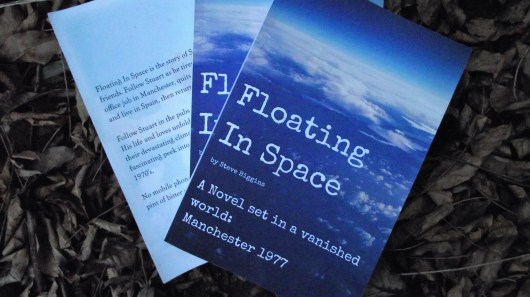
Buy the book! Click here to visit Amazon and download Floating in Space to your Kindle or order the paperback version.

My Love Affair With Back To The Future

The world of the cinema is filled with great movies; Stanley Kubrick’s 2001: A Space Odyssey, Orson Welles’ Citizen Kane, John Ford’s The Searchers and Michael Curtiz’ Casablanca, to name but a few.
One movie, that I saw described on one web page as a ‘phenomenon of popular culture’ is a movie as good, certainly as entertaining and probably more accessible than any in the list above. Yes, I’m talking about Back To The Future.
The movie was directed by Robert Zemeckis. Zemeckis and Bob Gale wrote the screenplay and Steven Speilberg produced and the stars of the picture were Michael J Fox and Christopher Lloyd.

5274270428_c4dff8b634_bIt was released in 1985 and was the biggest grossing movie of that year. It was also in the headlines again this year because 2015 was featured in Back To The Future 2 and the reality in 2015 was a little different to what the producers imagined! No hover boards, no self tying shoelaces!
Even so, Back To The Future is one of those movies that I loved straight from the opening titles and one that gets a regular airing on my DVD player.

Just in case you didn’t know, the movie is about a scientist called Doctor Emmet Brown who invents a time machine and installs it in his DeLorean. Michael J Fox plays Marty McFly who is helping him in his experiments but things go awry and it’s Marty who ends up in 1955 and he turns to the Doc’s younger self for help. The younger Doc Brown agrees to assist but warns Marty not to interact with anyone from 1955 in case the future is affected. Too late because Marty’s Mum – the 1955 version that is – already has a crush on him and Marty needs to get her focussed on his future Dad George, otherwise he’ll cease to exist!

Now what I really love about the movie is that all the little things that you see come together to make the plot work. The lady in the town square who is collecting for the clock tower restoration fund and the flyer she gives away that proves to be the key to getting 20,000 gigawatts of power into the time machine. (That’s the time machine that’s built in the Docs car, a DeLorean DNC-12.) The guy who works in the coffee shop who we know will become Mayor in 1985. The ‘enchantment under the sea’ ball where we know Marty’s Mum and Dad will fall for each other. I could go on, so there’s so much I love in this movie!

Huey Lewis and the News play the wonderful title track ‘The Power of Love’ and Huey himself makes an appearance in the movie as a judge at a talent competition who rejects Marty and his band for being too loud.

To finish here’s a couple of things you didn’t know about Back To The Future:

Michael J Fox was the first choice to play Marty McFly but the producers of his TV show Family Ties refused to release him from the show. The producers then engaged Eric Stoltz to play the role, however during filming, Zemeckis felt that Stoltz’ portrayal was a little dramatic. They were after someone more like, well more like Michael J Fox, so they went back to the TV show producers, came to an agreement and Michael was given the OK to star in the movie, but only after his day’s shooting was finished on the TV show. That meant a full day on the TV set for Michael, and then he started shooting on Back To The Future in the afternoons and evenings. Most of the daytime shots were done on the weekends as of course on a weekday he was still doing the TV show. Must have been one heck of a work schedule for Michael!

Ever wonder why Marty’s Dad doesn’t appear much in the sequels? Crispin Glover played the part of George McFly, Marty’s dad and both he and Lea Thompson who played Marty’s mum had to age from teenagers to middle age in the movie. Glover fell into a dispute with the producers because he asked for too much money to appear in part 2, so they dropped him. That’s the reason!

US President Ronald Reagan quoted the film in his 1986 State of the Union Address. Apparently when he first saw the joke about him being President, he asked the projectionist to stop the film, rewind and play the sequence again.

This year, 2015, the thirtieth anniversary of the film’s original release should see the first performance of a Back To the Future musical based on the original movie.


What to do next: Here are a few options.

Share this post on your favourite social media!

Hit the Subscribe button. Never miss another post!

Listen to my podcast Click here.

Buy the book! Click here to purchase my new poetry collection.

Click here to visit Amazon and download Floating in Space to your Kindle or order the paperback version.

Click here to visit amazon and purchase Timeline, my new anthology.

James Dean and A Manchester Record Store

James DeanMany years ago in my mid-teens I was in Manchester doing pretty much what I have always done, then and now, whenever I have free time on a Saturday, either looking at records in a music store or looking at books in a book shop.

In 2015 there are not many record stores left; the whole culture of buying records is a different ball game these days, downloading instead of taking home a hard physical copy. Anyway, that’s a whole different blog. To get back to this one, back in that record shop I’d thumbed through the discs, checked out all the cheap records and then began flipping through the posters. This must have been mid-seventies so the posters were people like David Bowie, Marc Bolan, Elton John, Rod Stewart but there was one poster of a man in his mid-twenties wearing a white t-shirt and jeans. He was pulling a moody sort of look but there was something about him that was interesting. Anyway, he turned out to be an actor that I’d never heard of and the shop assistant pointed out a book about him in the store, a paperback, so I picked it up and read about the actor’s life. He was called James Dean.

James Dean courtesy wikipedia.

James Dean courtesy wikipedia.

Dean was born in Indiana and his mother died of cancer when Dean was only nine years old. There is a haunting passage in that paperback I bought that tells of how Dean’s father, Winton, sent little Jimmy Dean back to his Aunt and Uncle’s home in Indiana on the train carrying his mother’s coffin. Jimmy was brought up in Marion, Indiana by his Aunt Ortense and Uncle Marcus and later went to college to study acting.

His first movie was East of Eden directed by Elia Kazan who had introduced method acting to the American stage and had worked with Marlon Brando in ‘A Streetcar named Desire’. ‘Rebel Without a Cause’ was Dean’s second cinematic outing. Directed by Nick Ray it is probably Dean’s most iconic film. This is the movie in which he wears his famous outfit of red jacket, white t-shirt, and jeans.

His third and final movie was ‘Giant’ in which he stars with Elizabeth Taylor and Rock Hudson and plays Texan bad boy Jett Rink. Dean was killed in a car crash only days after finishing shooting. He was a keen amateur racer and had bought a new Porsche speedster only days earlier. The car, nicknamed ‘little bastard’ had collided with another vehicle, a station wagon at the junction of route 41 and 466. Dean suffered a broken neck and was declared dead on arrival at a hospital in Paso Robles.

I was looking through my old VHS videos the other day and I came across a documentary called ‘James Dean’s last day’. It’s an interesting film and a sad one too as it counts down Dean’s last hours, his leaving Hollywood and his departure for a racing event at Salinas. There are so many ‘if onlys’ that unfold before me as I watch the film: I keep thinking if only Dean had left the Porsche on the trailer instead of driving it to the race track. If only the speeding ticket he was given a few hours earlier had made him slow down. If only a man called Donald Turnupseed had seen Dean and not turned across him. Such a shame, such a tragedy. Dean, I’m sure, would have gone on to make so many more great films and perhaps would even have directed some too.

I’m not sure why a council house boy from Northern England should connect so closely with James Dean, an American actor but back in the seventies Dean became one of my personal heroes. I remember going to a cinema in Oxford road to see back to back showings of East of Eden and Rebel Without a Cause on a very hot summers day. I bought a soundtrack album of those movies too, in the days before video and DVD. Dean was a counterpoint to actors like Richard Burton; he mumbled and mispronounced things. I think that was what I liked about him, he was natural and imperfect. He had an image more rock star than 50’s actor. There was a great documentary about him made in the 70s and the music of the times, Bowie and Elton John featured heavily. Anyone remember that eagles track ‘James Dean?’

Today, years later, thousands of fans make pilgrimages every year to see Dean’s home in Fairmount, Indiana, and to the intersection on highway 466 where he died. At his graveside in Fairmount fans chisel away bits of his gravestone for mementos and a bust of Dean by the sculptor Kenneth Kendall was ripped from its plinth. In 1977 a Japanese businessman named Seita Ohnishi had a chromium sculpture erected at the crash site on highway 466 in memory of Dean.

So why do people still hanker after James Dean all these years later? Well, I simply don’t know. As a young man I thought Dean was the epitome of cool and like many others I made him into my hero. Whilst doing some research about Jimmy Dean I came across this line on another site: “Some people are living lodestones. They get under the skin of people. You can’t explain why.” I can’t disagree.

Still, heroes come and heroes fade away. My heroes today are not the ones I used to love and worship thirty years ago. The thing is though, after writing this essay about Jimmy Dean I felt that I must find the time to look at some of his films again. Did I happen to mention what I bought in the HMV sale not long ago? The James Dean Box Set. Perhaps old heroes never completely fade away.


What to do next: Here are a few options.

Share this post on your favourite social media!

Hit the Subscribe button. Never miss another post!

Listen to my podcast Click here.

Buy the book! Click here to purchase my new poetry anthology.

Click here to visit Amazon and download Floating in Space to your Kindle or order the paperback version.


The Joy of a Second Hand Bookshop (and two particular gems)

There is nothing more pleasurable, certainly to me, than messing about, not in boats but in a second hand book shop. I do love flicking through the old and worn books on the shelves and if you persevere and have patience you will always find at least one book worthy of your attention. Here are two of my finds, one new and one old.

Michael Powell: a life in the movies.
IMG_20150608_221725edMichael Powell is perhaps not a name that leaps out at you but he was a movie director who made movies in partnership with screenwriter Emeric Pressburger. His most famous film is probably ‘A Matter of Life and Death’, a movie starring David Niven and Kim Hunter. Niven plays a pilot who miraculously survives certain death in plane crash returning from a bombing mission in World War 2 Germany. He is then visited by a conductor from the next world, advising that his survival is a mistake and he should be dead and he now must be prepared to enter the next world. Niven decides this is not on at all as now he has fallen in love with Kim Hunter and he decides to appeal. This fantasy is interwoven with another explanation of his issue, that of a serious brain trauma that needs the help of a neurosurgeon. I loved that movie and you can see it for yourself as it’s regularly shown on British TV.
Powell and Pressburger made numerous movies together but hit a downturn in their fortunes when they made the controversial film ‘Peeping Tom’. The film was about a murderer who films the death of his victims and was not well received at the time.
Years later, directors like Martin Scorsese revived the film and praised it as a lost classic but at the time Powell and Pressburger’s career stalled fatally.
Powell’s autobiography is a wonderful read. His career as a film maker spanned some exciting times in the industry and the book is divided into three sections: Silent, Sound, and Colour. Not many directors can boast of covering a filmmaking span like that. The book is a wandering, meandering look at Powell’s life and career. It’s a rather disjointed read -Powell tends to go off at a tangent about various things- but somehow that seems to add to the enjoyment of the book rather than detract from it.

Little bit disappointed though to get to the end of this pretty hefty book to find that it’s only volume one! Better get back to the shop and see if they have volume two!

James Hilton: Lost Horizon.
8391034163_f7c1b5accb_bI picked up this wonderful gem of a book at charity shop years ago for the bargain price of twenty five pence and if I could convert the pleasure this book has given me into pounds, shillings, and pence, it would be a figure that far eclipses that initial outlay. James Hilton has become one of my favourite writers and one of my personal writing heroes. (Check out my blog about him here!) This highly original novel reflects the fear and sadness that many must have felt in the days prior to World War 2. There must have been a feeling then that with new technology the approaching conflict could be the end of civilisation.
In this wonderful book, a group of lamas in a monastery hidden from the world by a chance of geographical fate decide to look ahead and ensure that the riches of the world, not gold or silver, but literature, art and music, should be preserved should a holocaust engulf the world. To ensure that their creed of respect and compassion endures they select a British diplomat, Conway, to carry on their work and set about bringing him to Shangri-La. Shangri La is a small community in Tibet insulated from the world by mountains on all sides and the people here enjoy unheard of longevity.
Despite his capture Conway is taken into the confidence of the High Lama and given his task of continuing the community and its traditions but his fellow captives have differing ideas, especially Mallinson, his young vice-consul who is desperate to escape.
I won’t spoil things for you just in case you come across the book, or the outstanding 1937 movie directed by Frank Capra but I will say that this novel is one of my top ten books of all time, and one I return to time after time.


What to do next:

Share this post on your favourite social media!

Hit the Subscribe button. Never miss another post!

Buy the book! Click here to purchase my new poetry anthology.

Click here to visit Amazon and download Floating in Space to your Kindle or order the paperback version.


Restaurants I have Known and one or two Memorable Meals!


Restaurants I have known and one or twoGoing out for a meal has to be one of the great pleasures in life. It’s certainly one of my favourite things to do. There are many things that make for a great dining experience. The food of course is the important factor but it’s not just that. The restaurant and the atmosphere play a big part. The location too, is important and the table, but after the food the most important thing is service.

St Annes and Lytham have some wonderful restaurants embracing various food cultures. There is Anatolia serving Turkish food, The Greek Flame serving, not unsurprisingly, Greek food. The Marrakech has a lovely Moroccan menu. Woks Cooking in Lytham is my favourite Chinese eating house and Ego, also in Lytham serves Mediterranean food with a smile and outstanding service.

One of my all-time favourite meals was at my favourite French restaurant not far from Calais in a place we found on a country road, miles from anywhere. Liz and I stopped there many years ago for an early evening meal. For starters I chose celery soup and Liz ordered the pate.
I was a little disappointed with the rather small dish that was presented to me but then a huge tureen of soup arrived which was wonderful and produced about four small servings, one of which went to Liz while I sampled her pate which was full of rustic flavours and was perfect served with fresh French bread.
The main course was a simple omelette, light and fluffy with a fresh salad and Liz’s fish was lovely with a creamy curry like sauce, unusual for French country cooking.

Another great French restaurant is in Saumur, my favourite French town. Again, I don’t know the name of it and it’s always hard to find, in fact we usually tend to stumble upon it after walking around for a while. It’s a small restaurant that spills out on the pavement and I do so love those three lovely courses that French restaurants serve; starter, main and a cheese course, served with red wine and plenty of crusty bread. There is no rush in a French restaurant and there’s plenty of time to watch life and people pass by as you dine.

IMGA0302Tapas are pretty fashionable in the UK these days and we sampled some lovely tapas at the Blue Note restaurant at the Marina Rubicon in Playa Blanca earlier this year. The highlight was the Canarian potatoes served with mojo sauce, lovely.

Yes, I’ve come a long way as a diner from the Plaza Cafe in Manchester where my friends and I used to call in the early hours of Sunday morning after a late night drinking and chatting up the girls. The Plaza served curry and there were three options: mild, hot, and suicide! Yes, how we used to laugh as we called up “Three suicides please!”

A lot of people seem to think I’m a fast eater. I’m not sure if I am but if that is the case; it surely comes from late night curries like the one above. If you are with six boozed up guys and you want something to eat, you have to grab it and get it on your plate as soon as possible otherwise you might just end up with nothing but a plateful of rice as my friends used to clear the table faster than a horde of locusts.

My one hate of restaurants though is this. Do waiters lie in wait for me to take a big mouthful of food before coming to the table? Many times I’ll try my food then nibble on small portions just in case the waiter approaches. When I finally think, ok, he’s not coming over, I’ll shovel in a good mouthful and out of nowhere a waiter is sure to appear.
“Is everything all right for you sir?”
All I can usually do is nod and try to mime someone enjoying their meal . .


If you liked this post, why not try my book? Click the icon below to buy!

What Happened to my White Jacket and my 70’s Pop Star Heroes?

David Cassidy

image courtesy wikipedia

image courtesy wikipedia

I wasn’t so much a fan of David Cassidy, I just wanted to look like him. I always thought he was a pretty cool dude and although I didn’t rush out and buy his music I always kind of liked him.( You can click here to see what happened when I went for a David Cassidy haircut!) Cassidy was an unexpected superstar, the son of actor Jack Cassidy who crops up frequently in classic Columbo episodes.

David began working as an actor and musician and was signed up by Universal studios in 1969. He worked on many TV shows of the time like Ironside and Bonanza until he was signed up for a part in a show called ‘The Partridge family’. Cassidy and the show became a runaway hit and ten albums produced during the show’s run sold over a million copies each. David became a teen idol and his personal concerts were sell outs but a Cassidy mania, not unlike that experienced by the Beatles years earlier, caused numerous problems and culminated in a stampede at White City stadium where many people were injured and one girl fan sadly died.
Today Cassidy is still singing and writing and has appeared in many stage shows and musicals. You might even have seen him in a TV version of his life story, ‘The David Cassidy Story’.

Gary Glitter
Gary Glitter’s first big hit, back in the early seventies was ‘Rock n’ Roll’ parts 1 and 2, a double-sided single which on part 2 was mainly instrumental with group chants of ‘rock n roll’. Glitter followed this up with a string of hits throughout the early seventies with singles like ‘I’m the leader of the gang’, ‘I love you love me love’, ‘Do you wanna touch me?’ and ‘Hello hello, I’m back again’. His career faded afterwards but in the early 90’s his records were discovered by a new generation of record buyers and many modern artists have acknowledged that he was an inspiration to them in earlier years.

The late 1990’s saw his image become fatally destroyed by his arrest and conviction in 1999 for possession of child pornography. Some years later, in 2006, Glitter faced criminal charges and deportation from Vietnam after a court found him guilty of obscene acts with minors. Glitter was deported back to Britain and placed on the Sex Offenders’ Register for life. These convictions turned Glitter from being one of the best-loved stars in British pop history, into a hated and reviled figure. As much as I like the glam music of the seventies, I actually feel bad today playing Gary Glitter’s music.

blogpicheroes

David Essex.
David Essex was another performer who made his name in the early seventies. I remember seeing his album in a record shop and thinking what a cool dude he looked. The album was ‘Rock On’ and the single went to number 3 in the UK charts in 1973. The next year David released one of my all-time favourite tracks ‘Gonna make you a Star’ which went all the way up to number 1. He also appeared on the double album ‘Jeff Wayne’s War of the Worlds’ and went on to star in many musicals such as ‘Godspell’ and ‘Evita’. In 2011, he joined the cast of TV soap ‘EastEnders’.

david-essex-rock-on-cbsThe White Jacket
David Essex sang ‘Rock On’ wearing a white suit on ‘Top of the Pops’ and as I have said above, I thought he was a real cool guy and it seemed that one way to transform my gangling self-conscious self into somebody ‘cool’ might be to get that very same white suit. I couldn’t afford a suit at the time so I settled for a jacket, a white jacket and I well remember admiring myself in the mirror before my first Saturday night out wearing it sometime back in 1973.

The first problem came on the bus into town. I sat on the back seat and in those days, the back seats of our local buses were a little notorious for being dusty and grimy as they were over the engine and absorbed all the engine fumes and also there were people who put their feet up on the seats leaving marks to which people like me (the twerp in the white suit) were highly susceptible. Another thing too is that all my life I have been cursed with being clumsy and once I had met up with my friends I managed to spill beer all down my sleeve. Anyway, the night went on, more or less successfully. I certainly remember having a good time although the white jacket failed in its primary function, that of attracting gorgeous girls. Later on we stopped at the kebab shop and somehow I managed to land a sizeable portion of chilli sauce down my front. Rather than feeling like David Essex, I felt a little like Alec Guinness in that film ‘The Man In The White Suit’, wanting to get away from everyone! I never wore the stained jacket again and it lingered sadly in the back of my wardrobe until my Mum decided my room was cluttered up enough and threw it out.

Of course, it could have been worse, I could have gone out wearing jeans, a white t-shirt and a red jacket and tried to look like James Dean! (Actually, that was another night!)


If you liked this blog, why not buy my book? Click the picture below to go straight to my Amazon page!

Floating in Space


Why I wrote a Novel and 10 Reasons Why You Should Buy It!

Why write a book? Why indeed. Why would anyone want to spend months, or in my case years, writing a book? There is so much to it, and so much involved. It’s so difficult and once done writers are instantly faced with another question; why would anyone want to spend a lot of their hard earned money buying it?

Screenshot 2015-02-08 15.55blog title ed2Well, to start with the writing part first. Why write? The answer is easy for me because I’ve always wanted to be a writer, I write for me, for my own personal pleasure and enjoyment and if anyone reads my work, well that’s just a bonus!

I love reading and I love movies and TV, and remember; before a word can be filmed on a movie, we need a script, and scripts need writers! As long as I can remember I’ve always had ideas forming in my head: Scenarios and stories, and I’ve always written them down. My home is full of old notebooks and computer files littered with half started stories and story ideas. When I was a school boy I used to write scripts and always noted down who would play the character on screen but looking back at one of them in particular, I think my producers would have been hard pushed to attract Steve McQueen to play a secret agent based in Manchester!

So there it is; I write because I want to, and because my imagination is at work churning out ideas randomly. Some time ago though, I looked at the things I was writing and felt that in order to be saying something worthwhile I had to turn away from sci fi and espionage and write about the life that was right in front of me, working class life in Manchester and the North West of England. I’ve spun a story in my book ‘Floating In Space’ that was more observation than anything; a northern world from the late seventies recreated not necessarily with accuracy but pretty much how I remember it. Buses with bus conductors, pubs and barmaids, music and beer, and men and women and their attraction to each other. I suppose it’s a bit of a flashback to fiction from an earlier generation. Remember those working class ‘kitchen sink dramas’ from the late fifties and early sixties, things like ‘A Kind Of loving’ and ‘Saturday Night and Sunday Morning’? Floating In Space is similar to those works but set in the late seventies and I’ve tried to recreate the atmosphere of the pubs and bars of those times, especially the busman’s working men’s club, as well as I can.

The answer then is that I like to write, in fact I love writing and as I have said so often before, my blog gives me a taste, be it ever so small, of being a real writer and putting something together every week for my deadline, my one weekly deadline of Saturday morning.
Next question: So why should you buy it? Why should you shell out your hard earned cash to read my book when you can go out and buy the two classics mentioned above straight away for a guaranteed wonderful read?
Well, here are a few reasons:

1. Support new writers! If we don’t support new and up and coming writers then the publishing industry will die on its feet and what are we hungry readers going to read then?
2. The Kindle version is just over a pound so surely it’s worth taking a chance for a measly one pound ten pence!
3. You might just enjoy it!
4. Think about me up there in the rainy north of England! Who is going to support me if you don’t buy my book?
5. Still unsure? Why not go to the Floating In Space page here and check out some more information?
6. Even better, check out this video of me talking about my book!
7. For two unbiased, impartial reviews go to my amazon page here! (No they absolutely were not written by two of my mates who had been plied with alcohol!)
8. For a little taster have a look at this excerpt when two of the characters visit an Oxford Road pub!
9. I’ll be upset if you don’t buy it!
10. After all the months and years of writing, editing and re-editing, would you really deny a new writer the chance to be heard?

Anyway, that’s your ten reasons, so why not buy the book: Click the links at the top of the page for more information!

How Cars Have Changed Life as we know it!

quotescover-JPG-14It always used to be that the top prize on a TV gameshow, especially in the heyday of the game show in the 80s, was a car: A brand new top of the range family car. The motor car is probably one of the great status symbols of our time and also one of those things that give us unprecedented freedom, certainly compared to our ancestors. Turn the clock back to the 1950s: If people wanted to get out and about and enjoy the great outdoors on a bank holiday the only way to travel was by bus or train. Yes, public transport was crammed with people in those days, all on their way to enjoy the great British seaside destinations.

Today, we are free of all those past restrictions, no waiting for trains or buses. It’s just a simple matter to pop outside, start up the motor and you’re off. The only restriction is probably traffic congestion. How many of us spend our bank holidays stuck in some traffic jam that clogs up the roads to the holiday hotspots?

Traffic is just a nightmare in the UK but then when you consider the densely populated nature of the UK it’s hardly surprising. That’s why I just love driving on the roads of France. OK, Paris may be just like driving in the UK, if not worse but out in the country in departments like the Loire, Brittany and Burgundy the auto route and the A roads are just a joy to drive on. Forget also the drab overpriced service areas in the UK. In France it’s so nice to drive into an ‘aire’ as they call them, a lovely picnic area with toilets and picnic tables. How often have Liz and I stopped at one of these delightful places and opened our sandwiches and bottles of water to find a French couple stop at the next table and open a hamper the size of a house complete with wine, salad, cold meats and God only knows what else.

It’s relatively easy in the UK to drive over to France on the ‘shuttle’. A quick trip to Folkestone, drive onto the train, handbrake on and off we chug down and under the channel.  Thirty minutes later and we are driving off in Calais. Sometimes I think about my very first car and wonder if I could have made that journey in that car. Possibly not as my very first car was a Bond Bug. A what?  Do I hear you might ask?

9o698i3bgeI’m probably pushed to tell you the registration number of my current car but the registration of my Bond Bug, PDB 71M, is still firmly anchored in my old memory bank.  A Bond Bug, for those of you who don’t know was a sporty little three wheeler car and I bought one because I failed my driving test twice and I could drive the Bug on my motorbike licence.

It was actually a pretty eye catching car for a three wheeler. No doors but the roof lifted up to gain access and the side windows were plastic held on by Velcro. I always remember bringing it home and showing it off to my family with a certain amount of pride and my Dad looking at it and saying “How are we all going to get into that?” Perhaps he thought I was going to take us all away for a holiday! It certainly wasn’t a car for travelling over to France in!

Still, we had some nice times, me and the Bond Bug but then one cold and snowy Christmas I decided to chance going out to a Christmas party in the car even though it was losing coolant. I topped it up with water and went off for a night of Christmas cheer. I walked home sensibly, I might add, but when I returned the next day I found that the car had frozen overnight and it ended up having to have an engine rebuild. That was a pretty expensive night out! Later when I passed my driving test I got myself a proper car.

The author and his, well ok not his actually, just some random Ferrari!

The author and his, well ok not his actually, just some random Ferrari!

I’m pretty happy with my current car generally, it’s a Renault Megane convertible and I kind of like being just a bit of a poser, driving round when it’s sunny with the roof down and looking generally pretty cool what with my leather seats and my shades but you do get those days when things go wrong.

I spent a lot of time the other day burning a few new cds to play in my car and just as I joined the motorway on the way to work I pressed the eject button on my CD player but the old cd wouldn’t eject. I could hardly pull over on the motorway so already my journey had not started well.

The other thing is that one of my electric windows, the rear off side one to be exact, has jammed. OK, at least it jammed in the up position but the car automatically drops the windows when raising or lowering the roof, so that means I can’t open my roof.  Add to that the prospect of spring and hopefully some lovely weather – perfect for open top driving – and as you can imagine, I’m not happy!

Anyway, I have to look on the bright side. When I pulled up at work and switched off the radio, my CD ejected! At least I was OK for music on the return journey and now I’ve had the window fixed expect to see me cruising around Lytham with my roof down, posing!

If you liked this blog, why not buy my book; available as a paperback or a Kindle download:

FIScoverbuynow

Questions, Answers, and the Wild One

quotescover-JPG-88I don’t know if you ever used to watch that classic TV show The Prisoner. Number 6 played by Patrick McGoohan was trapped in a mysterious village and those who ran the place wanted to know the answer to one question: why did number 6 resign?
Prisoner_smThey had a saying in the village-‘Questions are a burden to others, answers a prison to one’s self’. The village was a surreal place and number 6 became increasingly paranoid in that sinister, almost sci-fi world and although he came close to answering the resignation question a few times, ultimately, he never did.
The thing is, as we go innocently about our business, there are plenty of people wanting to upset us by asking questions.

There was a time, just after I left school when I thought great; exams over, won’t be answering any more questions like that again. The thing is though, exams of one form or another are sent to try us throughout our life. Trying for a new job is a form of examination, there’s the application form to fill in which is always pretty hard work and if you get through that then there’s the interview to contend with.

Just recently I applied for a job as a team manager and while I wasn’t totally successful I did end up with a temporary promotion, filling in as team manager for two months. Sounded great at first but then there was a whole lot of people management and paperwork that I didn’t realise would be so hard, or so time consuming. No more quiet moments in which to churn out my blogs!

Still, this recent promotion got me thinking about interviews in the past and where I’d gone wrong. One was an Inspector’s job when I worked for GM Buses. The job I wanted was a post at Hyde road depot which was only ten minutes away from my home. I didn’t have a car but there was a great bus service so it would have been perfect. There were two Inspector posts available, one at Hyde road and another at our Tameside depot in Rochdale.
During the interview in which I thought I’d done pretty well, the three interviewers asked me to step outside. I returned a few minutes later and they asked me, “Steve, what would you say if we offered you the Rochdale Inspectors job?”
Well, that was the job I didn’t want. I wanted the other one, the one that was only ten minutes away and another thing, at the time I didn’t have a car so how could I get to Rochdale? So what did I do? Well, I’m sure you can guess. As usual I took the worst possible option: I turned them down!
Even as I walked away I knew I’d done the wrong thing and every time I have an interview I think of that moment. Still, in a way that’s a good thing. Remember the mistakes you’ve made and move on. Do the right thing next time. Be positive.

Another time I applied for a job at Manchester Airport. It wasn’t a great job but it looked interesting and I hoped I might have passed the interview but it floundered when the interview veered off into an odd direction.
“How will you get to work?” asked the interviewer.
“By car.”
“But what if your car breaks down?”
“Well, I could always use the wife’s car.”
“But what if she needs it for work?”
“Well, I could get the bus.”
“But you might have to start work at 5 in the morning.”
“Well the first bus from Stockport is 04:15 in the morning.”
“The buses don’t run that early.”
“Yes they do, I know as I currently work in bus timetable enquiries.”
“Well suppose they are on strike?”
“Well I’d have to go on my bicycle.”
“What would happen if you had a flat tyre?”
I paused for a moment then asked: “Are you joking?”
Needless to say, I didn’t get that job either. I didn’t understand the interviewer’s line of questioning at all and a little frustration had crept in to my answers.

Now, in the 21st century questions are a part of life. They come at you when you are least expecting them. This morning, I was trying to get ready for work and the phone started ringing so I ran through to the lounge to pick it up. The caller said, “Good morning? Is that Mr Higgins?”
“Yes, speaking.”
“Mr Higgins, do you own your own home?”
“Excuse me?” I ask.
“Do you own your own home?”
“None of your business” I answered as I put the phone down, rather offended at this intrusion into my private life and not only that, I’d put my toast back in the toaster as it wasn’t quite done enough and when I legged it back to the kitchen it popped up black and burnt! Not happy!

When I was younger and working in city centre Manchester I used to spend my lunchtimes either in a pub somewhere down Oxford road or sometimes I’d sit in St Peter’s Square if it was nice and sunny and eat my sandwiches there. The annoying thing was I’d usually have to run a gauntlet of canvassers asking me questions.
“Excuse me, if I told you of a new bank account that would save you money would you change accounts?”
“No, I wouldn’t.”
“You wouldn’t? Why not?”
Nowadays I’d just say ‘none of your business’ but back then when I was young and polite I’d tend to try and justify myself and say why I was happy with my bank and why I didn’t want to change and so on. If I had been number 6 I’d have probably said ‘I will not be pushed, filed, briefed, debriefed or numbered!’
As it was, by the time I’d got rid of the interviewer that would be half of my dinner break gone!

marlon-brando-392902_640Perhaps my old school friend Clive Hornchurch (once again, names have been changed to protect the innocent!) felt a certain amount of frustration too. He was by far the brainiest lad in the school and was constantly upheld as an example to other pupils. I remember once Miss Tyass, our history teacher telling me how hard I would have to work to pass the History O-level and perhaps I should use Clive’s notebook to revise from because he himself wouldn’t need it!
Yes Clive was the man; every teacher knew he would pass with flying colours and perhaps be off to university, if such a thing was possible from our urban jungle roughhouse comprehensive school.
On the day of our O -level examinations Clive added his name to the top of his paper, and then put down his pen. His blank test paper was passed in and naturally he failed. I often wonder what became of him and why he did what he did. Perhaps he was frustrated; perhaps he was tired of being held up as a shining example of all that is brilliant in a school boy. I sometimes wonder if I had asked him what he was rebelling against would he have answered, like Marlon Brando in The Wild One; “What have you got?”


What to do next:

Share this post on your favourite social media!

Hit the Subscribe button. Never miss another post!

Buy the book! Click here to visit Amazon and download Floating in Space to your Kindle or order the paperback version.